AR
AR  EN
EN  BN
BN  UR
UR  TR
TR  ID
ID  RU
RU 
This guide covers the main factors that affect sodium alginate pricing, what to look for when comparing quotes, and how to avoid common sourcing mistakes driven by price alone.
Raw Material Cost: The Largest Price Driver
Seaweed Species and Harvest Region
Chinese-produced sodium alginate — the largest volume source globally — uses primarily cultivated Laminaria japonica as raw material. Cultivated seaweed allows more consistent raw material quality and year-round production, which supports more stable pricing compared to wild-harvest-dependent production.
Seaweed Market Price Fluctuation
Seaweed prices are subject to seasonal and cyclical fluctuation driven by harvest yield, aquaculture disease events, and competing demand from food and other industries. These fluctuations flow through to sodium alginate prices, sometimes with a lag of one to two quarters as producers work through existing raw material inventory.
When evaluating long-term supply agreements or bulk purchase pricing, ask suppliers how they handle raw material price fluctuations in their pricing structure — whether they offer fixed pricing for a defined period, price escalation clauses tied to seaweed market indices, or purely spot pricing. Understanding this helps you anticipate how quoted prices may change over the duration of a supply relationship.

Product Grade and Specification: The Specification Premium
Viscosity Grade
Higher viscosity grades — produced from higher molecular weight alginate polymer — generally cost more than lower viscosity grades. Producing high molecular weight alginate requires careful control of extraction conditions to minimize polymer degradation, which typically limits throughput and requires tighter process management. Low viscosity grades, which can be produced either by targeting lower molecular weight extraction or by controlled depolymerization of higher molecular weight material, are generally less expensive.
When comparing prices between suppliers for nominally the same viscosity grade, confirm that the viscosity specifications are comparable — the same measurement concentration, temperature, and method. A grade specified as “high viscosity” by one supplier may have a different actual viscosity range than “high viscosity” from another supplier if measurement conditions differ.
Purity Grade
Purity — primarily active content and NaCl specification — has a significant effect on price. Higher-purity grades require more extensive washing of the alginate precipitate during manufacturing to remove residual sodium chloride, which increases production cost. Industrial grades with active content of 70–85% (dry basis) are substantially less expensive than higher-purity grades with active content above 90% or approaching 99%.
Degree of Substitution (DS)
DS affects production complexity — achieving consistent DS across batches requires precise control of the substitution reaction, and higher DS grades generally require more reagent and more controlled reaction conditions. DS-related price differences between grades are typically smaller than viscosity or purity differences, but they are present and worth understanding when comparing quotes across different DS specifications.
Mesh Size (Particle Size)
Finer mesh grades require additional milling and classification steps in production, which adds cost relative to coarser grades. The price difference between, for example, a 40 mesh and an 80 mesh grade of the same viscosity and purity specification reflects the additional processing cost of achieving the finer particle size classification.
As noted in the discussion of mesh size for textile applications, finer mesh grades offer faster dissolution but do not inherently offer better performance once the paste is fully dissolved. Specifying finer mesh than your application requires adds cost without functional benefit.
Order Quantity: Volume Pricing and MOQ
How Volume Affects Unit Price
Understanding the volume break points in a supplier’s pricing structure — the quantities at which unit price decreases meaningfully — allows you to assess whether consolidating orders or increasing order frequency could reduce your per-unit cost without increasing inventory holding risk.
Minimum Order Quantity (MOQ) and Its Implications
Suppliers set minimum order quantities based on production batch sizes, packaging minimums, and logistics efficiency. MOQ below production batch size typically means the supplier is drawing from inventory rather than producing to order, which may affect freshness and shelf life of the material received.
For initial orders or trials, many suppliers offer sample quantities below their standard MOQ at a higher unit price or at cost. If a supplier requires full MOQ commitment before any sample evaluation is possible, this is worth noting in your evaluation — it increases the procurement risk of switching to a new supplier or grade.
Logistics and Delivery Terms: A Significant Variable in Total Cost
Incoterms and What They Include
An EXW price from a Chinese supplier does not include freight, insurance, export handling, or import duties. A CIF price includes freight and insurance to the destination port but not import duties or inland delivery. A DDP price includes everything to your door. The difference between these terms can represent 15% to 30% or more of the EXW price depending on destination, freight rates, and applicable import duties.
When comparing quotes from multiple suppliers, convert all prices to the same Incoterm basis before comparison. If suppliers quote on different terms, ask each supplier to provide a full landed cost estimate to your destination port or facility so you are comparing total cost of ownership rather than headline price.
Freight Rate Volatility
International freight rates — particularly container shipping from China — are subject to significant volatility. Quotes that include freight (CIF or similar) should specify the validity period of the freight component, as freight rates can change substantially between quotation and order placement.
For regular procurement, establishing a freight cost baseline at the time of supplier evaluation and updating it periodically gives a more accurate picture of total landed cost than relying on a single quoted CIF price.
Certifications and Documentation: When They Add Cost
Standard Documentation vs. Premium Certification
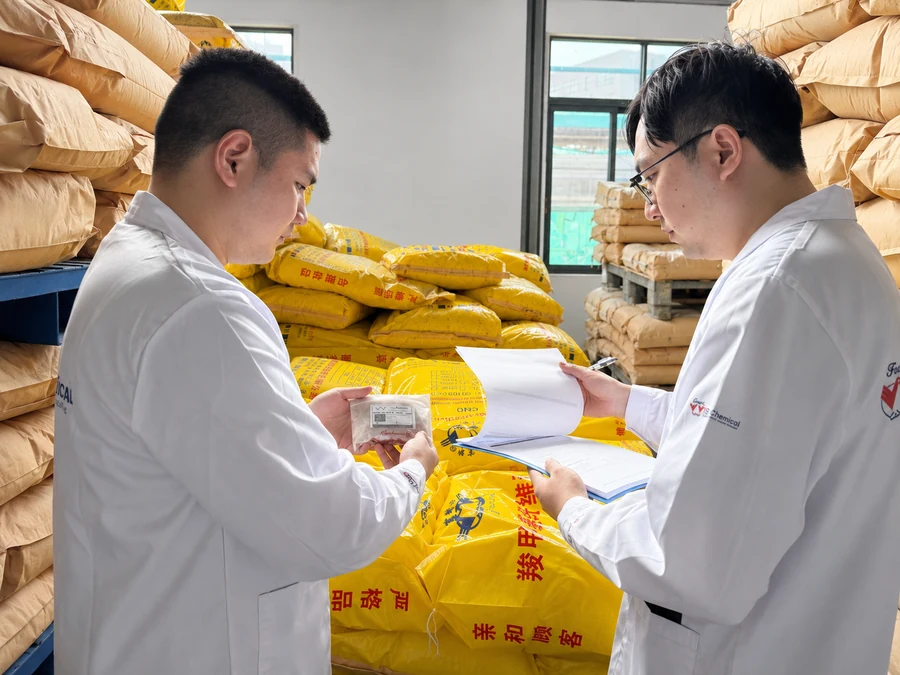
Standard industrial sodium alginate supply includes TDS, SDS, and CoA as basic documentation at no additional cost. Some suppliers charge for additional documentation — for example, specific test reports, third-party analysis, or documentation formatted for particular regulatory submissions.
Third-party certifications — such as organic certifications, specific food-grade approvals, or environmental certifications — add genuine cost to the product because they require third-party auditing, testing, and ongoing compliance management. If these certifications are required for your application or buyer specifications, the associated price premium is legitimate. If they are not required, paying for certified product when uncertified industrial grade would meet your needs represents an unnecessary cost.
Be cautious of suppliers who claim certifications but cannot provide certificate numbers, issuing bodies, and validity dates. A claimed certification that cannot be verified does not justify a price premium and may indicate misleading marketing rather than genuine compliance.
How to Evaluate Sodium Alginate Quotes Effectively
Creating a Like-for-Like Comparison Framework
To compare quotes from multiple sodium alginate suppliers meaningfully, establish a comparison framework that normalizes for the variables above. For each quote, confirm and document:
- Grade specification — viscosity range and measurement method, DS range, purity (active content and NaCl specification), mesh size, moisture content
- Incoterm and delivery basis — convert to a common Incoterm for comparison, ideally landed cost at your facility
- Order quantity — confirm that all quotes are for the same quantity; request break-point pricing if you are evaluating different volume scenarios
- Documentation included — TDS, SDS, CoA as standard; any additional documentation required and whether it is included or charged separately
- Lead time and payment terms — these affect cash flow and supply chain risk even when unit price is comparable
- Sample availability — whether a pre-order sample is available and at what cost or quantity
Total Cost of Ownership vs. Unit Price
Unit price is the most visible element of a sodium alginate quote, but it is not the only cost relevant to your procurement decision. Total cost of ownership includes:
- Landed unit cost (including freight, duties, and handling)
- Quality control and incoming inspection cost
- Paste preparation efficiency (dissolution time, waste from substandard batches)
- Production impact of quality variation (rework, color inconsistency, screen blockage)
- Supplier management cost (communication, documentation, dispute resolution)
A supplier offering a lower unit price but with inconsistent batch quality, slow documentation response, or unreliable delivery may have a higher total cost of ownership than a supplier with a higher unit price but reliable performance. Factoring these elements into your evaluation — even qualitatively — gives a more complete picture than unit price comparison alone.
Red Flags in Sodium Alginate Quotes
The following characteristics in a quote or supplier interaction are worth treating with caution:
- Vague specification — a quote that describes the product only as “high viscosity sodium alginate” without specifying viscosity range, DS, purity, or measurement method is not a comparable quote
- Price significantly below market range — prices that are substantially lower than other quotes for comparable specifications may reflect lower actual specification, undisclosed raw material substitution, or unreliable supply
- Reluctance to provide CoA or sample — standard in industrial chemical supply; reluctance is a signal worth noting
- Claimed certifications without verifiable documentation — a price premium for certifications that cannot be verified is not justified
- Delivery commitments that seem unrealistic — very short lead times for large quantities from overseas suppliers should prompt questions about where the material is coming from and whether it has been tested
How FSX Chemical Approaches Pricing Transparency
Next steps:
- Request a Quote — provide your target grade specification and order quantity for a fully detailed price proposal
- Request a TDS — confirm full specification detail before comparing against other supplier quotes
- Request a Sample — evaluate performance before committing to bulk volume
- Contact Our Technical Team — for help interpreting specification differences between competing quotes📧 Email: Service@fsxchemical.com