Batch Quality Control for Textile Printing Chemicals: COA, Testing and Release
Reliable textile chemical quality requires more than testing the final batch. Effective QA and QC...
Batch quality control for textile printing chemicals should connect raw-material qualification, controlled manufacturing, representative sampling, method-defined laboratory tests, application checks, COA review, release authorization, retained samples and traceability. A sodium alginate, CMC, CMS or compound thickener is commercially reliable only when future batches remain inside the approved technical and production window.
This is why quality should not be reduced to a statement such as “every batch is tested.” Effective batch control requires a connected system that begins with raw materials and continues through manufacturing, in-process checks, laboratory testing, application verification, batch release, packaging, documentation and traceability.
Quality Control, or QC, identifies whether materials and finished batches meet defined requirements. Quality Assurance, or QA, builds the procedures and controls intended to prevent unacceptable variation from occurring in the first place.
Both are necessary. Testing without process control may detect a problem only after a batch has already been produced. Process control without final verification may allow an unexpected deviation to reach the customer.
Why Batch Consistency Matters in Textile Chemicals
Textile chemicals operate inside production systems that may be sensitive to relatively small changes in viscosity, solids, pH, hydration, filtration or chemical compatibility.
For printing thickeners in particular, a batch variation that appears modest in a laboratory result can become more visible after the material is mixed with dyes, salts, alkalis, binders or other auxiliaries.
Batch variation can affect preparation
Changes in hydration, particle profile or viscosity development can force operators to adjust water, mixing time or thickener dosage.
Batch variation can affect machinery
Differences in filtration or rheology may influence pumping, circulation, screen passage, coating uniformity or production speed.
Batch variation can affect finished fabric
Print definition, penetration, solid-area uniformity, wash-off and final handle may all change when the paste behaves differently.
Repeated recipe correction, additional laboratory testing, machine cleaning, rejected fabric and production downtime may cost far more than a small difference in raw-material price.
The purpose of batch QC is therefore not to create identical numerical results every time. It is to keep meaningful variation inside an approved operating range.
Quality Control vs Quality Assurance
QC and QA are closely related, but they serve different functions.
Area
Pengendalian Mutu
Quality Assurance
Main question
Does this material or batch meet the requirement?
Is the system designed to produce consistent batches?
Main focus
Testing and verification
Process design and prevention
Typical activities
Viscosity, pH, moisture, filtration and application checks
SOPs, training, calibration, change control and traceability
Timing
Incoming, in-process and final batch
Throughout the manufacturing system
Result
Accept, investigate, reprocess or reject
Reduce the probability of future deviation
A strong textile chemical manufacturing system connects both approaches.
The Complete Batch Quality Chain
Batch quality should be controlled as a sequence rather than as one final laboratory test.
Approved raw-material sources and specifications
Incoming material identification and inspection
Controlled weighing and formula execution
Documented manufacturing conditions
In-process testing
Representative batch sampling
Final laboratory QC
Application testing where appropriate
QA review and batch release
Controlled packaging and labeling
COA and shipping documentation
Retained sample and batch record storage
Customer feedback and complaint investigation
Weakness at any one stage can make later test results less meaningful.
1. Define a Permanent Commercial Grade
Quality assurance begins by defining exactly what product is being manufactured.
A laboratory sample should not remain an informal description such as “high viscosity alginate” or “special CMC.” Once a product is approved for commercial supply, it should be linked to a permanent grade code.
The grade identity should connect
Spesifikasi produk
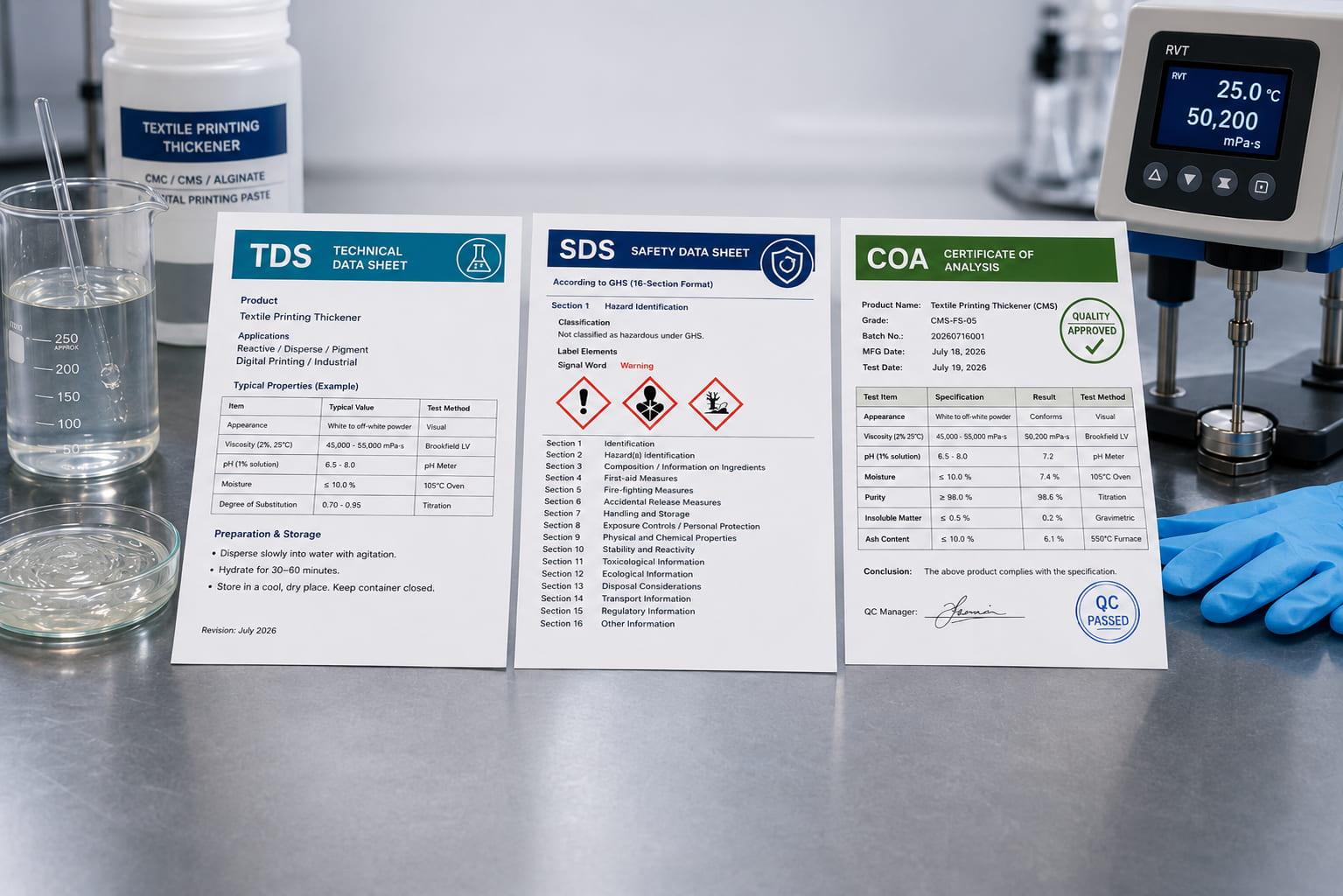
TDS
SDS
Internal formulation or manufacturing instruction
Sample label
Penawaran Harga
Purchase order
Batch produksi
Package label
COA
This connection is essential when a buyer needs to verify that a bulk shipment corresponds to the grade originally tested.
2. Qualify and Control Raw Materials
Final batch consistency begins with the materials entering the factory.
Raw-material controls may include
Supplier and material identity
Supplier batch number
Packaging condition
Penampilan
Specified incoming parameters
Supporting supplier documents where required
Critical materials require stronger control
Not every ingredient needs the same testing panel. Materials with a strong influence on viscosity, substitution, chemical stability or final application performance may require closer incoming control.
Supplier changes should not be invisible
A change in the source or specification of a critical raw material may affect the finished textile chemical even when the formula weight remains unchanged.
3. Control Weighing and Formula Execution
Even a well-designed formulation can produce inconsistent batches when ingredients are weighed or added incorrectly.
Critical controls include
Correct product and batch identification
Verified weighing equipment
Correct target quantity
Controlled weighing tolerance
Defined addition sequence
Operator confirmation where required
Documented corrections
Addition order can be a quality parameter
In polymer and thickener systems, changing the sequence of water, salts, polymers, pH modifiers or other components can change hydration and viscosity even when the final formulation contains the same ingredients.
4. Standardize Critical Manufacturing Parameters
Manufacturing instructions should define the process conditions that can materially affect the final product.
Depending on the product, these may include
Batch size
Mixing sequence
Mixing speed
Mixing duration
Suhu
Reaction or modification time
pH adjustment
Drying condition
Milling or particle processing
Blending time
Screening or filtration
The objective is not simply to record numbers. The manufacturer should identify which parameters are critical to product performance and control them accordingly.
5. Use In-Process Quality Checks
Waiting until a batch is completely finished can make deviations more difficult and expensive to correct.
In-process testing can help detect
Incorrect concentration
Unexpected pH
Incomplete mixing
Viscosity developing outside the expected range
Physical nonuniformity
Moisture or solids variation
The appropriate checkpoints depend on the chemistry and manufacturing process.
In-process control is particularly useful when an adjustment can still be performed safely and reproducibly before the batch reaches its final stage.
6. Standardize Sampling Procedures
Laboratory data is only useful when the sample represents the batch.
Sampling procedures should define
When the batch is ready for sampling
Sampling location
Required sample quantity
Sample container
Sample identification
Handling and conditioning before testing
Powder uniformity matters
Powder batches may require suitable blending and representative sampling because a small sample from one position may not describe the entire batch.
Liquid uniformity matters
Liquid or paste products should be adequately mixed before sampling when settling or separation could affect the result.
7. Use Method-Controlled Final Laboratory Testing
A specification number has limited meaning unless the test method is controlled.
A useful QC method defines
Sample preparation
Konsentrasi
Water or solvent
Suhu
Peralatan
Instrument settings
Measurement time
Calculation basis
Reporting unit
If the laboratory method changes from one batch to another, apparent product variation may actually be measurement variation.
8. Control Viscosity Correctly
Viscosity is one of the most important QC parameters for textile printing thickeners, but it is highly dependent on the test method.
For viscosity results, record
Konsentrasi produk
Cara pembuatan
Waktu hidrasi
Suhu pengukuran
Viscometer
Poros, rotor, atau geometri
Kecepatan putaran
Waktu membaca
Do not compare unrelated viscosity numbers
Two products tested at different concentrations or rotational speeds should not be considered equivalent simply because the reported values are similar.
Viscosity is not the entire QC system
A batch can meet viscosity requirements and still differ in filtration, hydration, rheology or application behavior.
9. Evaluate Filtration and Physical Uniformity
Filtration is particularly relevant for textile printing products because gels, coarse particles and contamination can affect screens and application equipment.
A controlled filtration test should define
Sample concentration
Hydration procedure
Filter material
Opening or mesh size
Jumlah sampel
Filtration condition
Residue evaluation
Filtration should be interpreted together with appearance and hydration. Residue can come from incomplete preparation as well as the product itself.
10. Use Application Testing Where It Matters
Physical specifications cannot always predict textile printing performance. For critical grades, application testing can provide an additional level of quality verification.
Application checks may evaluate
Paste preparation
Chemical compatibility
Screen or coating behavior
Definisi cetak
Penetrasi
Keseragaman area padat
Pengikatan atau pengeringan
Dapat dibilas
Pegangan kain akhir
The appropriate testing frequency depends on the product, production process, risk level and agreed quality plan.
Sodium alginate, CMC, CMS and compound printing thickeners should not automatically share one identical QC panel.
A release specification should identify
Critical test parameters
Defined methods
Acceptance ranges
Required documentation
Responsible release authority
Use ranges where technically appropriate
Industrial chemicals normally operate within an acceptable specification range. Requiring every batch to produce an identical single numerical result may not reflect meaningful manufacturing control.
Separate specification from typical data
A typical value on a TDS should not automatically be interpreted as a guaranteed batch-release limit.
12. Issue Meaningful Certificates of Analysis
A Certificate of Analysis should identify a specific batch and report the parameters relevant to the agreed commercial specification.
A useful COA commonly includes
Manufacturer or supplier identification
Commercial product grade
Batch or lot number
Selected test parameters
Specification or acceptance range where applicable
Batch test results
Relevant units
Authorized document information
The COA should match the package
Product code and batch number on the COA should correspond to the shipped material.
COA does not replace application testing
A compliant COA confirms selected batch properties. It does not prove that every customer’s formulation, fabric and machine will produce the same result.
13. Maintain Retained Samples
Retained samples are one of the most useful tools for investigating a reported batch difference.
A retained-sample program should consider
Representative sampling
Identifikasi batch
Suitable container
Storage conditions
Retention period
Access control
Why retained samples matter
When a customer reports that a new shipment behaves differently, the manufacturer can compare the retained batch with the complaint sample, previous approved material and production records.
14. Build Batch Traceability
Traceability connects a finished product with the records required to investigate its history.
A useful traceability chain can connect
Finished product batch
Production date
Manufacturing record
Critical raw-material lots
In-process results
Final QC results
Packaging records
COA
Retained sample
Shipment information
The level of traceability should be appropriate to the manufacturer’s quality system and product risk.
15. Control Packaging and Labeling
A batch that passes laboratory QC can still reach the customer in poor condition if packaging is unsuitable or incorrectly identified.
Packaging controls may include
Correct packaging material
Clean and intact bags, drums or containers
Correct net weight
Suitable closure or sealing
Correct product label
Batch or lot number
Storage and handling information where required
Powder products require moisture protection
Sodium alginate, CMC, CMS and other hygroscopic or water-sensitive powders can change physical condition if packaging is damaged or storage is unsuitable.
16. Manage Changes Before They Reach Customers
Quality assurance should control changes that could influence product performance.
Potentially significant changes include
Critical raw-material supplier
Raw-material specification
Formula
Manufacturing process
Major production equipment
Critical QC method
Packaging system
A controlled change process should assess whether additional laboratory, application or customer verification is appropriate before routine implementation.
17. Handle Nonconforming Batches
When a batch result falls outside an approved specification, the first response should be investigation rather than automatic correction.
Confirm the test result
Review sample identity, laboratory preparation, instrument condition, temperature and method execution.
Review manufacturing records
Check raw materials, weighing, process conditions and in-process results.
Control batch status
Material under investigation should remain clearly identified so that it is not accidentally released.
Document disposition
Any reprocessing, reclassification, rejection or other disposition should follow the manufacturer’s controlled quality procedure.
A customer complaint should begin with data collection rather than with an assumption that either the customer or manufacturer is responsible.
Collect customer information
Product grade
Batch number
Complaint sample where available
Current TDS or specification used by the customer
Viscosity method
Preparation process
Formulasi lengkap
Fabric and printing equipment
Photographs or printed-fabric samples
Compare against retained material
The questioned batch can be compared with a retained sample and previous reference batch using the same method.
Separate material and application causes
A compliant batch may still perform differently if water, temperature, formulation, fabric or machine conditions have changed.
Use corrective and preventive action where appropriate
When a root cause is confirmed, the investigation should identify both immediate correction and measures intended to reduce recurrence.
19. Monitor Batch-to-Batch Trends
A batch can remain inside specification while its results gradually move toward one side of the operating range.
Reviewing historical data can identify gradual shifts before they become customer problems.
Trend monitoring may include
Viskositas
Moisture or solids
pH
Penyaringan
Application results
Complaint frequency
Trend analysis is one of the clearest differences between simply testing batches and actively managing quality.
20. Verify the First Commercial Batch After Sample Approval
One of the highest-risk points in B2B chemical purchasing is the move from laboratory sample to commercial shipment.
Do not stop at sample approval
The buyer should confirm that the commercial grade and specification are the same ones represented by the approved sample.
Check the first production batch
Compare critical laboratory properties against the approved reference.
Complete an application check
For critical textile-printing applications, a controlled first-batch printing trial can reduce conversion risk.
Record the approved commercial baseline
Once accepted, the first commercial batch can become a useful reference for future incoming and complaint investigations.
QC Priorities for Sodium Alginate
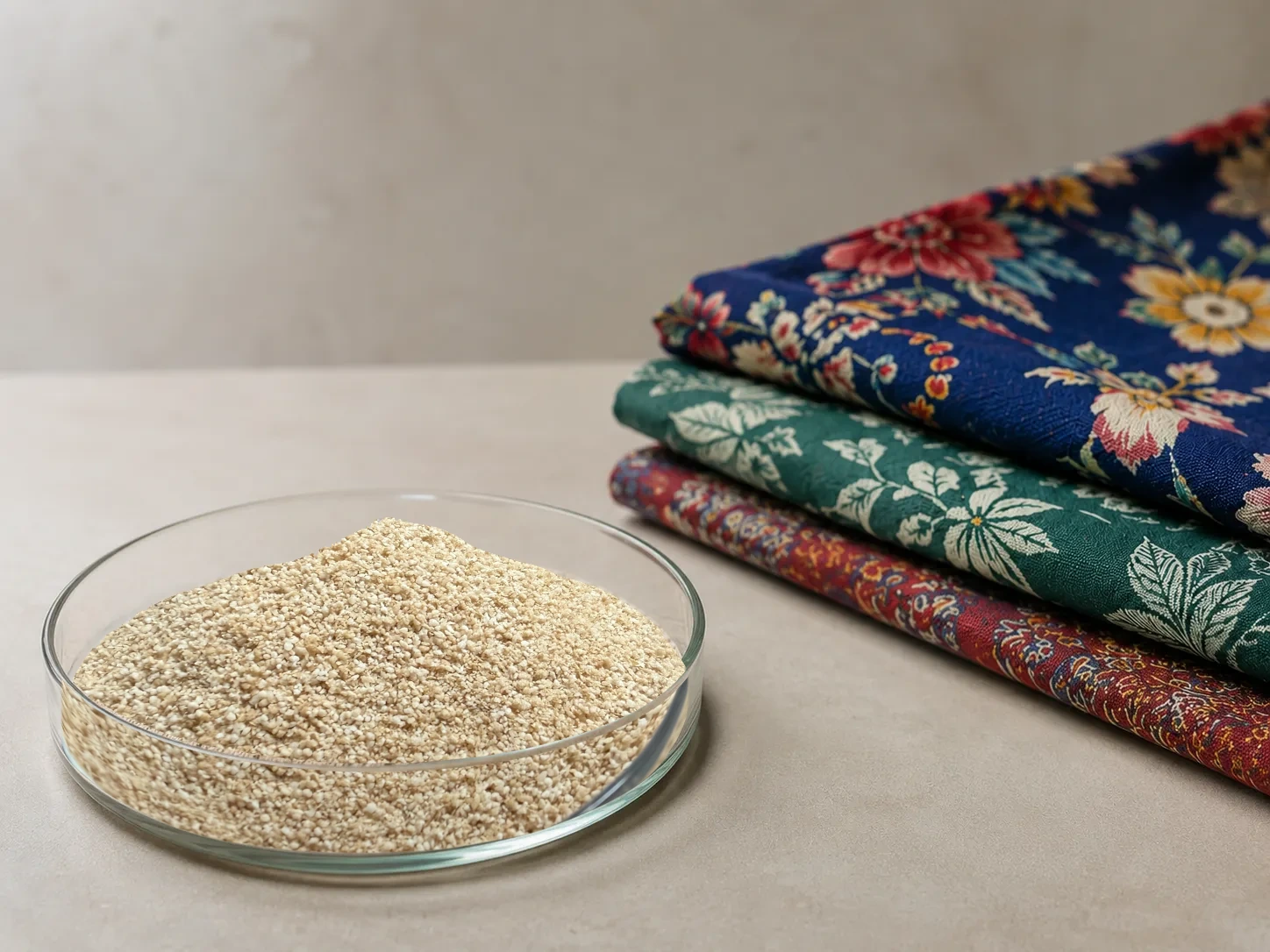
Textile-grade natrium alginat is commonly evaluated for reactive textile printing, where viscosity and printing behavior are important.
Potential QC priorities include
Identitas kelas komersial
Penampilan
Moisture where specified
Viscosity under a defined concentration and method
nilai pH jika berlaku
Hydration behavior
Penyaringan
Application performance where required
High, medium and low viscosity descriptions should always be connected to an actual test method rather than treated as universal numerical grades.
QC Priorities for CMC
Karboximetil Selulosa grades can vary significantly in viscosity and other structural characteristics.
Potential QC priorities include
Grade identity
Penampilan
Moisture where specified
Viskositas dan konsentrasi uji
pH
Degree of substitution where specified
Purity or related parameters where applicable
Hidrasi
Penyaringan
The exact panel should reflect the intended commercial application rather than one universal CMC specification.
QC Priorities for CMS
Pati Karboksimetil is another modified polysaccharide route that can require its own product-specific controls.
Potential QC priorities include
Identitas kelas komersial
Penampilan
Kelembapan, jika relevan
Viskositas berdasarkan metode standar
pH
Hydration behavior
Penyaringan
Application-specific performance where required
CMS should not automatically share the same acceptance ranges as CMC or sodium alginate simply because all three products function as rheology modifiers in selected applications.
QC Priorities for Digital Printing Paste and Compound Thickeners
Pre-formulated products contain multiple components, so quality control should evaluate the final system rather than only one polymer.
For pasta cetak digital and other compound textile thickeners, relevant checks may include:
Product identity
Penampilan
Viskositas
pH
Solids where applicable
Penyaringan
Stabilitas fisik
Menjaga stabilitas
Application performance
Chemical compatibility and finished-fabric evaluation become especially important when the product is designed for a specific reactive, disperse or pigment printing route.
What Buyers Should Check on a Textile Chemical COA
A COA is most useful when buyers know how to interpret it.
COA Item
Pertanyaan Pembeli
Product grade
Is this the exact grade I tested and ordered?
Batch number
Does it match the package and shipment?
Test item
Is this parameter relevant to my application?
Specification
Is this an agreed range or only a typical value?
Result
Is it a batch-specific measured result?
Viskositas
What concentration, temperature and instrument were used?
Document identity
Can this COA be connected to the commercial shipment?
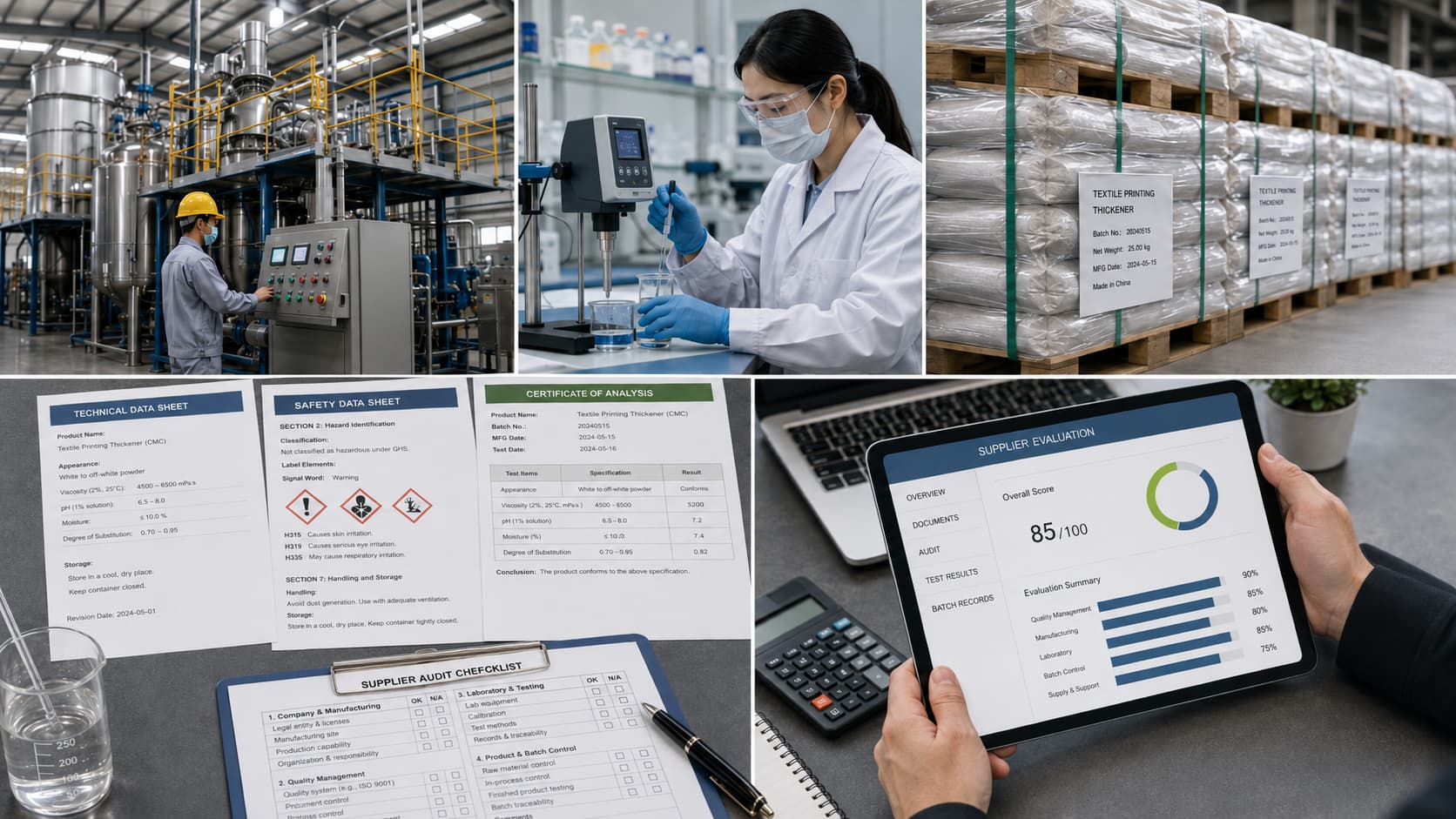
When qualifying a textile chemical supplier, buyers should look beyond the product brochure.
Ask how the supplier controls
Identitas kelas komersial
Critical raw materials
Manufacturing instructions
Batch records
Sampling
Laboratory test methods
Instrument calibration or verification
Final product release
COA issuance
Retained samples
Ketertelusuran batch
Nonconforming material
Customer complaints
Process changes
The objective is not to find a supplier claiming that variation never occurs. A more useful question is whether the supplier has a controlled system for detecting, investigating and managing variation.
Sample-to-Bulk Quality Verification Workflow
Step 1: Define the sample
Record the permanent product grade and relevant TDS.
Step 2: Align laboratory methods
Ensure supplier and buyer understand concentration, preparation, temperature and instrument settings.
Step 3: Complete side-by-side laboratory testing
Compare the candidate against the current approved reference.
Step 4: Complete application testing
Use actual fabric, printing chemistry and production-relevant conditions.
Step 5: Approve a permanent commercial grade
Avoid approving an unnamed or temporary laboratory sample.
Step 6: Confirm the agreed specification
Identify which parameters and test methods are commercially important.
Step 7: Produce the first commercial batch
Connect its grade and batch number to the approved sample route.
Step 8: Review the batch COA
Confirm that relevant results meet the approved commercial requirements.
Step 9: Verify the first shipment
Repeat critical incoming tests and, where appropriate, a controlled printing trial.
Step 10: Establish routine incoming control
After successful qualification, define the ongoing QC checks required for future shipments.
Common Batch QC Mistakes
Testing only viscosity
Viscosity does not reveal every difference in hydration, filtration, rheology or application behavior.
Using an incomplete viscosity method
A number without concentration, temperature and instrument settings has limited value.
Confusing typical values with specifications
Typical TDS data should not automatically be treated as mandatory batch release limits.
Approving an unnamed sample
A sample that cannot be connected to a permanent commercial grade creates unnecessary sample-to-bulk risk.
Assuming a passing COA guarantees printing performance
COA data confirms selected product parameters but does not replace a customer’s complete application evaluation.
Changing raw materials without evaluating impact
Formula weight may remain unchanged while application performance changes.
Releasing questionable batches before investigation
Product under review should remain under controlled status until its disposition is determined.
Ignoring trend data
Repeated values near one end of the specification range can be an early warning even when each individual batch technically passes.
Pertanyaan yang Sering Diajukan
What is the difference between a TDS, specification and COA?
A TDS describes the product and often shows typical values. A specification defines agreed acceptance limits. A COA reports batch-specific results against the applicable specification.
Should every batch receive an application test?
The testing plan should follow product and customer risk. Critical or newly approved grades may need complete-paste or printing verification, while mature products may use a justified frequency supported by process control and trend data.
How should a textile chemical batch be sampled?
Use a written sampling plan that defines the container selection, sampling location, tools, composite or individual samples, sample quantity, labeling and retained-sample conditions.
What happens when a result is outside specification?
Keep the batch under controlled status, investigate method and process causes, document the deviation, decide disposition through authorized review and implement corrective or preventive action where needed.
How can a buyer verify sample-to-bulk consistency?
Approve an identified commercial grade, align test methods, define critical limits, compare first-batch COA and retained samples, and repeat side-by-side laboratory and application checks on the first shipment.
How FSX Chemical Supports Quality Verification
FSX Chemical supplies sodium alginate, CMC, CMS, digital printing paste and related textile thickener routes for printing mills, formulation companies, distributors and importers.
Product qualification can begin by comparing the customer’s existing material, test method and printing requirements rather than relying only on a general product description.
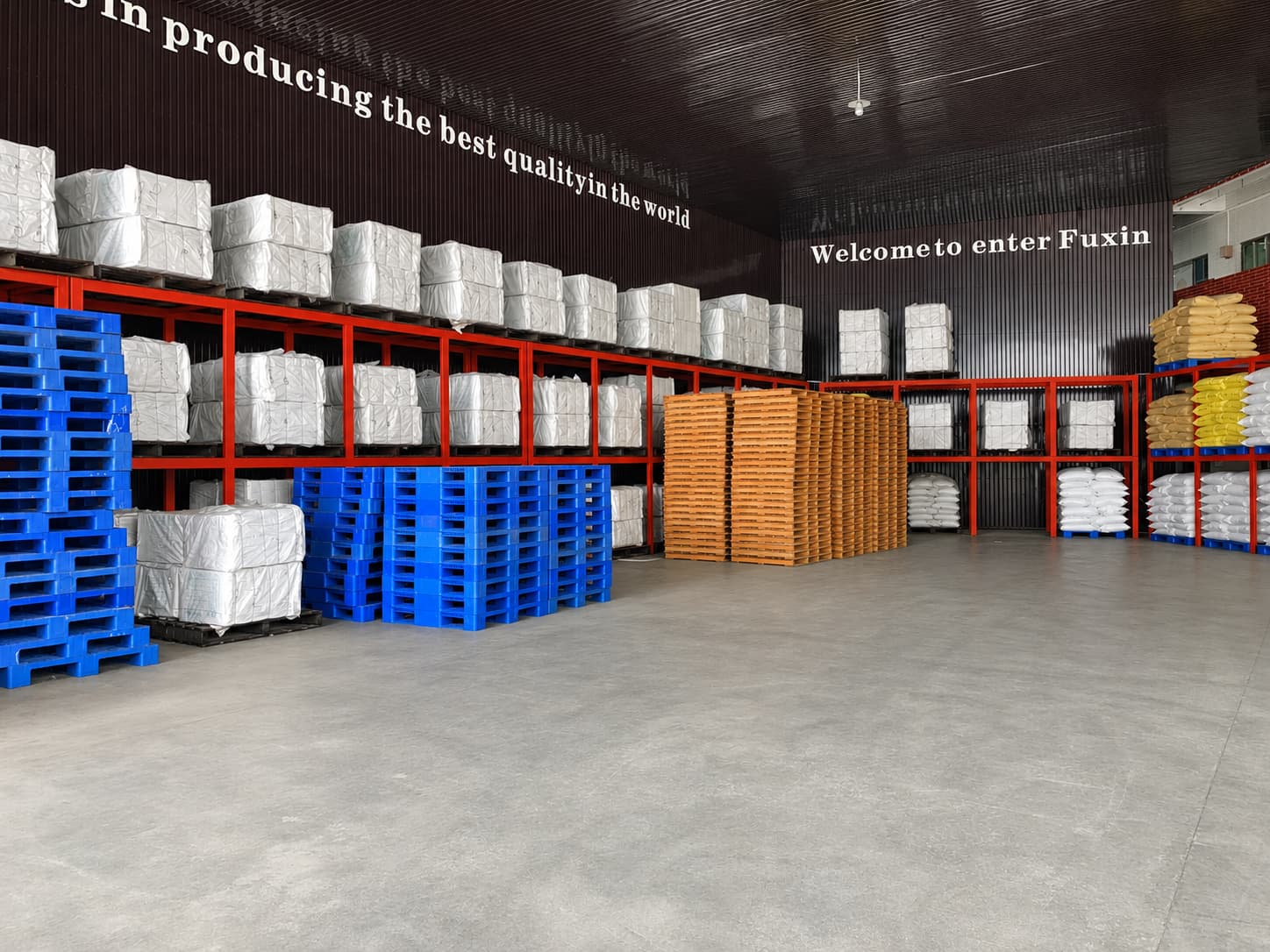
Buyers can review the company’s general manufacturing and quality information through Manufaktur & Kualitas .
Technical qualification may include
Review of the customer’s current TDS or physical sample
Pelajari perbedaan antara dokumen TDS, SDS, dan COA, hal-hal yang perlu diverifikasi oleh pembeli produk cetak tekstil, serta cara memeriksa spesifikasi, data keselamatan, metode pengujian, hasil pengujian per batch, dan penerbit dokumen.
Pelajari cara mengevaluasi produsen pengental untuk pencetakan tekstil dengan memeriksa identitas perusahaan, kapasitas produksi, metode pengujian, keterlacakan batch, dokumen teknis, dukungan sampel, dan pasokan ekspor.
Sodium alginat banyak digunakan dalam pencetakan tekstil sebagai pengental yang stabil dan tahan cuci untuk pasta cetak reaktif. Pelajari cara mengevaluasi tingkat viskositas, kemurnian, dan kesesuaian penggunaannya sebelum membeli, serta bagaimana FSX Chemical mendukung pembeli di seluruh dunia dengan data teknis dan sampel.
Memilih pemasok CMC yang tepat tidak hanya sekadar membandingkan harga. Panduan ini membahas kriteria evaluasi, daftar periksa dokumentasi, dan proses uji coba yang harus diikuti oleh tim pengadaan sebelum memutuskan untuk melakukan pemesanan dalam jumlah besar.
Pasta cetak berbasis CMC digunakan dalam pencetakan tekstil pigmen, reaktif, dan digital. Panduan ini menjelaskan parameter apa saja yang penting, cara membandingkan pemasok, serta hal-hal yang perlu diminta sebelum melakukan pemesanan dalam jumlah besar.
Memahami sumber bahan baku natrium alginat serta proses pembuatannya dapat membantu tim pengadaan mengajukan pertanyaan yang lebih tepat dan mengevaluasi pemasok secara lebih efektif. Panduan ini membahas spesies rumput laut, langkah-langkah ekstraksi, asal-usul pengotor, serta seperti apa proses produksi yang konsisten sebagaimana tercantum dalam dokumentasi pemasok.
Penyimpanan yang tidak tepat merupakan salah satu penyebab paling umum dari masalah kinerja natrium alginat dalam pencetakan tekstil. Panduan ini membahas kondisi penyimpanan bubuk dan pasta, perkiraan masa simpan, indikator degradasi, serta hal-hal yang perlu diperiksa saat menerima kiriman baru.
Lembar data teknis (TDS) memiliki format dan tingkat kelengkapan yang bervariasi antar pemasok, dan tidak semua kolom memiliki tingkat penting yang sama untuk setiap aplikasi. Panduan ini akan memaparkan lembar data teknis (TDS) natrium alginat secara umum bagian demi bagian, menjelaskan arti setiap parameter serta cara mengidentifikasi kekurangan atau tanda-tanda peringatan.
Many suppliers market "customized sodium alginate," but the term covers very different things in practice. This guide explains which parameters are genuinely adjustable, which are fixed by fundamental chemistry, and how to evaluate a supplier's customization claims.
Ketika terjadi cacat cetak pada lantai, tantangannya adalah mengidentifikasi penyebabnya dengan cepat. Panduan referensi ini mengelompokkan cacat-cacat umum yang terkait dengan pasta natrium alginat berdasarkan gejalanya, dengan penyebab yang mungkin diurutkan berdasarkan tingkat kemungkinannya serta langkah-langkah pemeriksaan awal yang praktis untuk masing-masing kasus.
Pembelian natrium alginat dalam jumlah besar tidak hanya sekadar membandingkan harga satuan. Panduan ini menjelaskan bagaimana pembeli di bidang pencetakan tekstil dapat memastikan viskositas, ukuran jaring, tingkat kemurnian, kemasan, Sertifikat Analisis (COA), pengujian sampel, dan konsistensi batch sebelum melakukan pemesanan dalam jumlah besar.
Memilih pemasok bahan kimia untuk pencetakan tekstil tidak hanya sekadar membandingkan nama produk dan harga. Panduan ini menjelaskan bagaimana pembeli dapat mengevaluasi ragam produk, dokumen teknis, pengujian sampel, konsistensi batch, komunikasi, dan dukungan pemasok sebelum menjalin kerja sama.
Berikan nama produk, kegunaan, jumlah, tujuan pengiriman, serta TDS,
foto sampel, atau dokumen lain yang sudah Anda miliki. FSX Chemical akan meninjau
informasi tersebut dan merekomendasikan langkah selanjutnya terkait penawaran harga, pencocokan sampel,
atau pemilihan produk.
Informasi ProdukNama produk, kelas, model, foto label, atau referensi pemasok.
Dokumen yang TersediaTDS, SDS, COA, foto sampel, daftar produk, atau data pengujian.
Rincian PesananPerkiraan jumlah, kemasan, negara tujuan, pelabuhan, atau syarat perdagangan.
Permohonan atau MasalahProses pencetakan tekstil, kebutuhan formulasi, masalah terkini, atau target kinerja.

 ID
ID  EN
EN  BN
BN  ES
ES  TR
TR  FR
FR  RU
RU  AR
AR  UR
UR  VI
VI  TL
TL  HI
HI  UK
UK  KK
KK  KA
KA  UZ
UZ