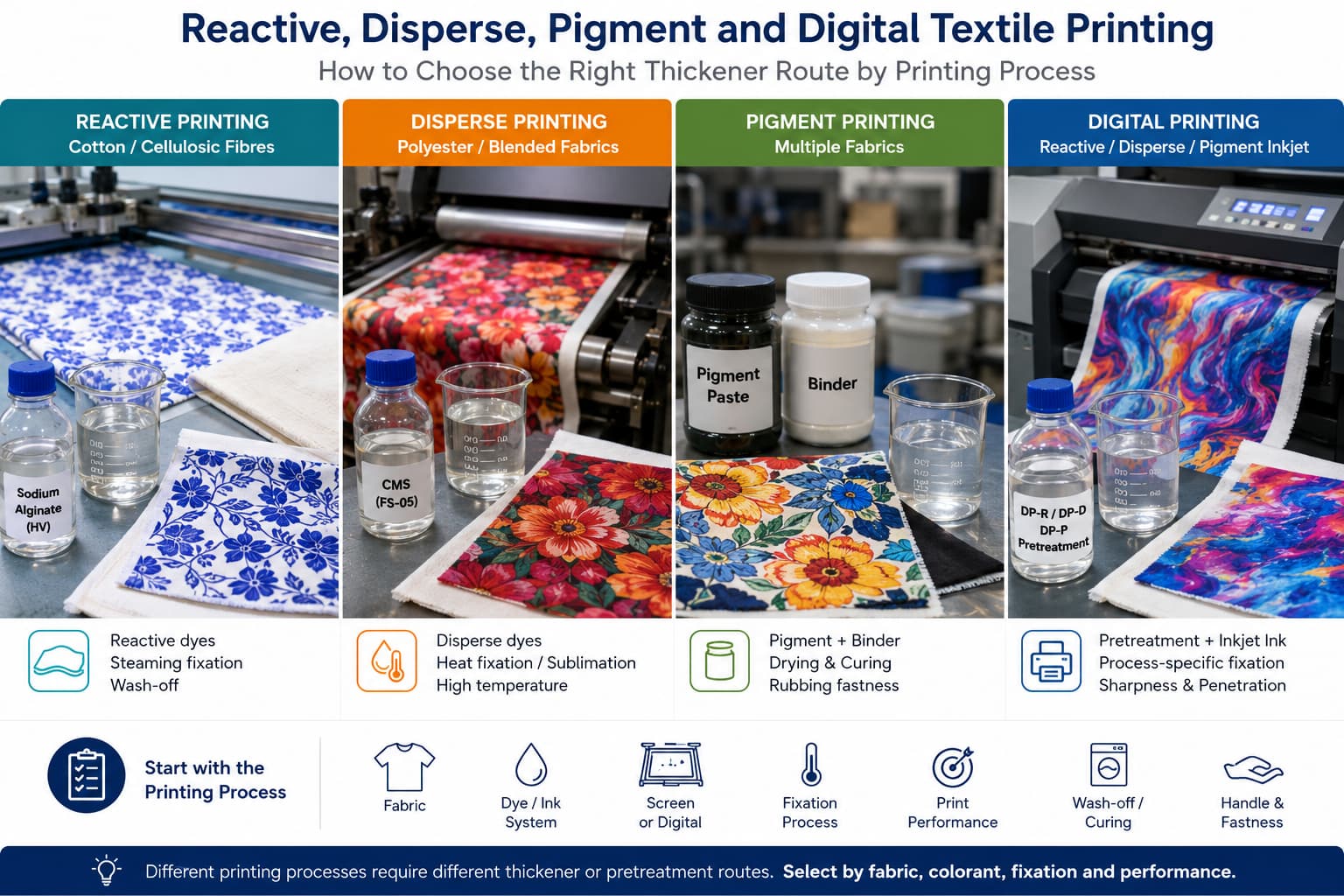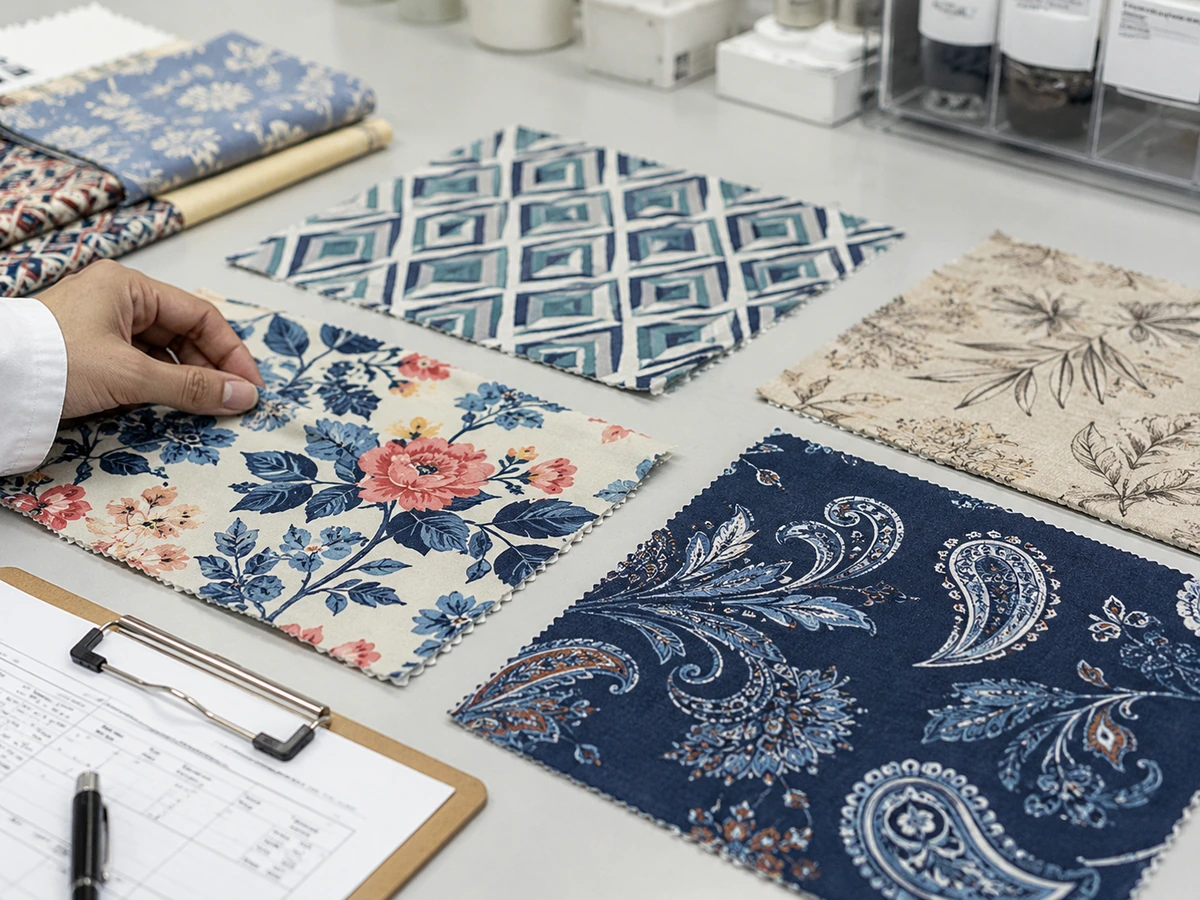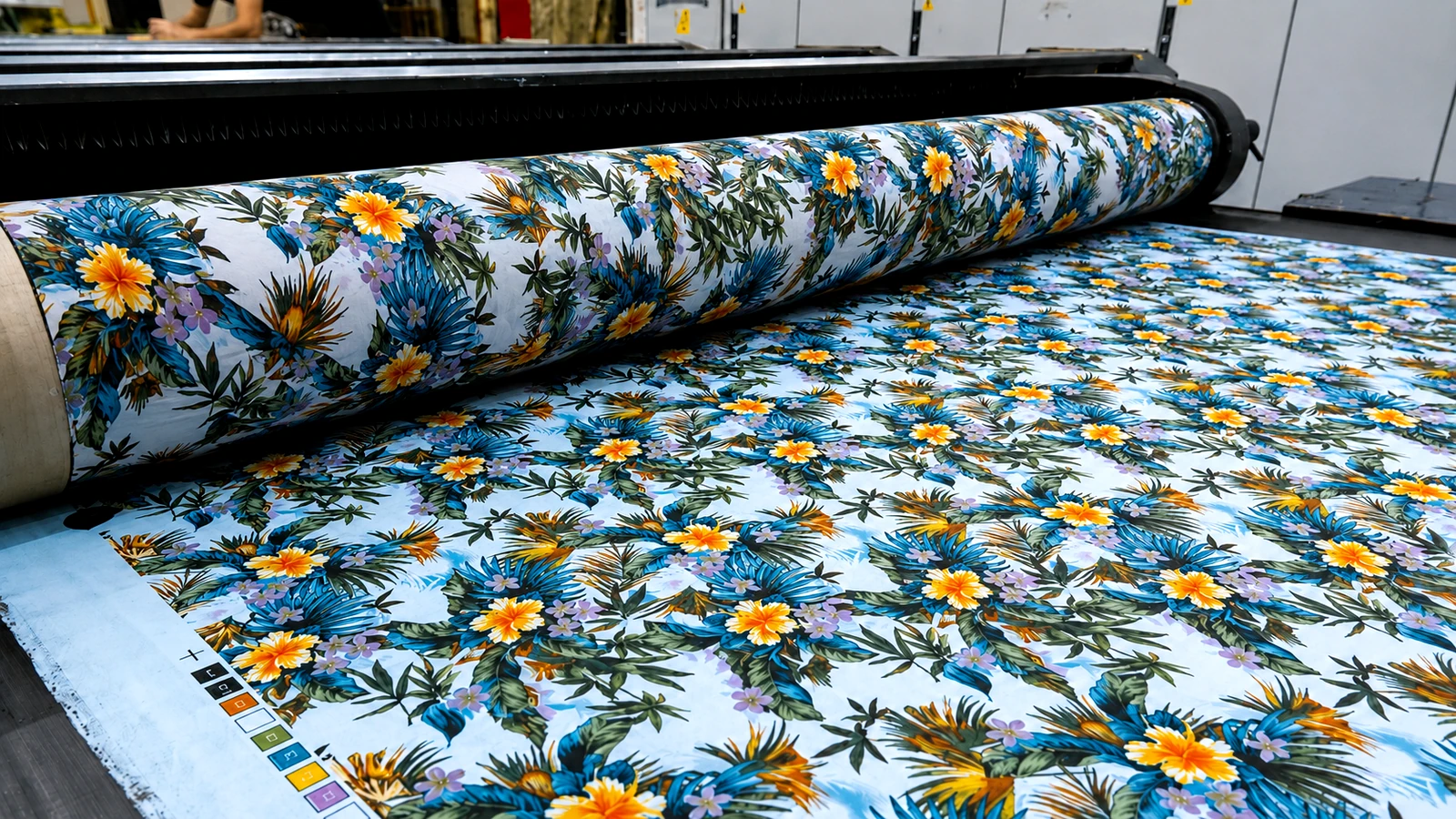















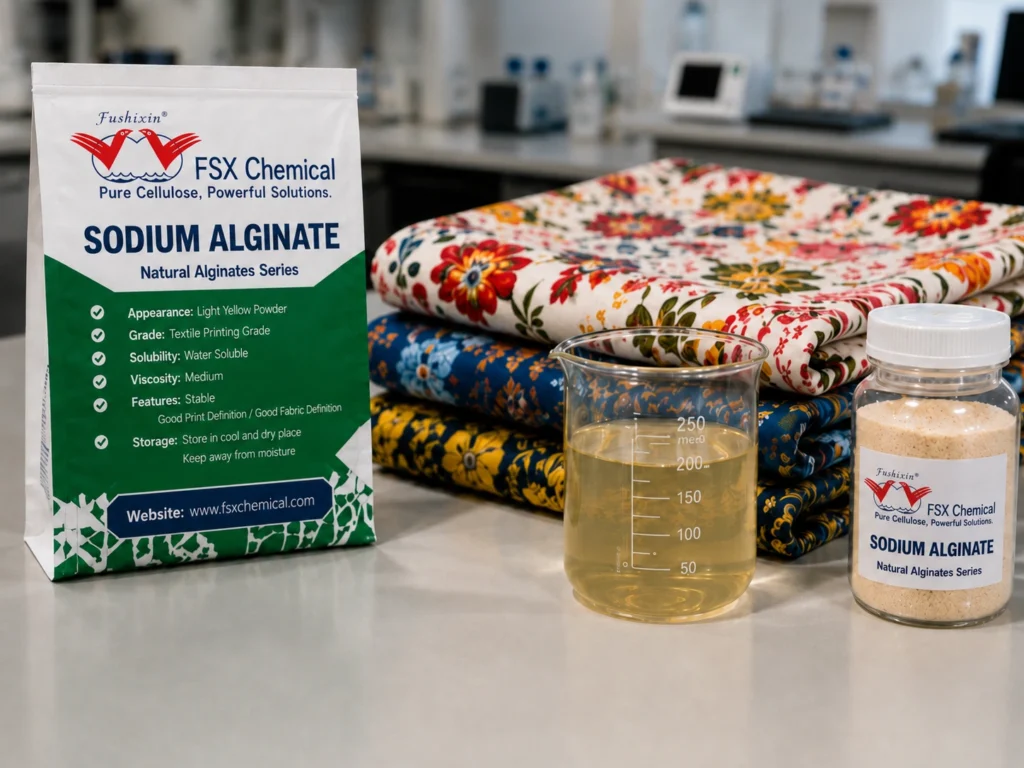
In reactive dye printing, the thickener must do more than increase viscosity. It must help control paste flow, support pattern definition, remain compatible with the dye and auxiliaries, tolerate the printing process and leave the fabric during washing-off.
The appropriate grade depends on the complete printing system: fabric, dye class, stock-paste concentration, machine type, screen conditions, auxiliary package, fixation route and final fabric requirements.
Why Sodium Alginate Is Used in Reactive Dye Printing
Low reactivity with reactive dyes
Reactive dyes are designed to form covalent bonds with suitable functional groups in fibres under controlled alkaline conditions. This makes thickener compatibility especially important.
Many conventional polysaccharide thickeners contain reactive primary hydroxyl groups that can interact with reactive dyes under printing conditions. Such interaction may reduce dye availability or alter paste behavior.
This comparatively low dye reactivity is one reason sodium alginate has become an established thickener route for reactive printing. It should not, however, be treated as completely independent of the formulation. Dye chemistry, pH, salts, water quality and auxiliaries can still affect the working paste.
Useful wash-off behavior
After fixation, the thickener should be removed together with unfixed dye and residual paste components. Sodium alginate is water-dispersible and can support practical washing-off when the grade, formula and process are properly matched.
Wash-off performance is not determined by sodium alginate alone. Stock-paste concentration, fixation conditions, water quality, dye hydrolysis, washing sequence and equipment also affect the final result.
The Technical Functions of Sodium Alginate in Printing Paste
Controlling paste viscosity
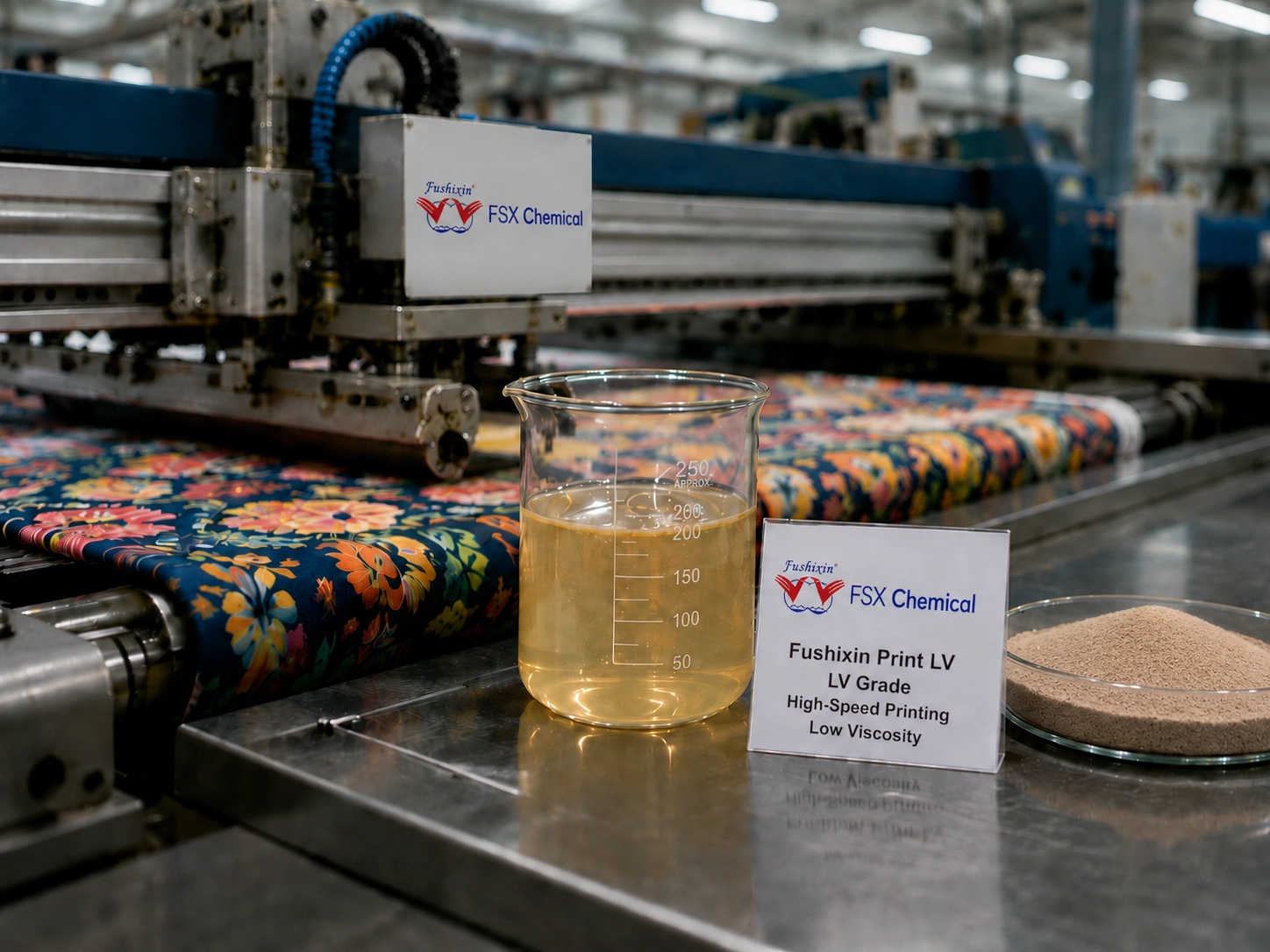
A high-viscosity grade may produce the required paste body at a lower concentration, while a lower-viscosity grade may be evaluated at a higher stock-paste concentration. These descriptions are only useful when the concentration and test method are stated.
Managing flow under shear
Screen-printing paste is exposed to different shear conditions during mixing, pumping, squeegee movement and screen transfer. The paste should flow when force is applied and recover enough structure afterward to help hold the printed pattern.
This is why one Brookfield-style viscosity result cannot fully describe printing performance. Two pastes with similar apparent viscosity may have different shear-thinning, recovery, elasticity and time-dependent behavior.
Published rheological research comparing sodium alginate with other gums confirms that equal concentration does not mean equal flow or viscoelastic behavior. Production trials therefore remain necessary even when laboratory viscosity values appear similar.
Supporting print definition
After passing through the screen, the paste should resist uncontrolled spreading. Appropriate paste rheology can help support edge definition, line clarity and pattern consistency.
If the paste flows too easily after application, bleeding and loss of sharpness may occur. If it is too structured or recovers too strongly, screen passing, penetration or surface uniformity may become difficult.
Balancing penetration and surface coverage
The required penetration depends on the fabric construction, print design, screen, squeegee settings and end-use requirement. A lightweight fabric, dense woven fabric and heavy knitted material may require different paste behavior.
Grade selection should therefore consider both outline definition and penetration. Optimizing one result without checking the other can produce a print that looks sharp on the surface but does not meet the required coverage or handle.
Where Sodium Alginate Is Commonly Evaluated
Reactive printing on cotton
The exact recipe depends on the dye system, fixation route and supplier recommendations. A formula used for one reactive dye class should not automatically be transferred to another without validation.
Reactive printing on viscose
Viscose is also printed with reactive dyes, but its absorbency and paste penetration behavior can differ from cotton. A sodium alginate grade that works on cotton should be checked independently on the actual viscose fabric.
Important observations include penetration, edge definition, shade response, fixation, washing-off and fabric handle.
Flat-screen and rotary-screen printing
Flat-screen and rotary-screen printing expose the paste to different machine speeds, screen geometries and shear conditions. A grade suitable for a slower, high-body flat-screen paste may not be the best starting point for a high-speed rotary process.
HV, MV and LV descriptions can help organize a trial shortlist, but they are not universal technical standards. The viscosity concentration and method must be checked before comparing suppliers or grades.
Reactive digital-printing pretreatment
Sodium alginate may also be used in selected pretreatment systems for reactive digital textile printing. This is a different application from conventional screen-printing paste.
Digital pretreatment requires attention to coating or padding uniformity, filtration, fabric absorbency, drying, ink response and storage stability. A conventional screen-printing alginate should not be assumed to function as a digital pretreatment grade without separate testing.
Key Sodium Alginate Specifications Buyers Should Compare
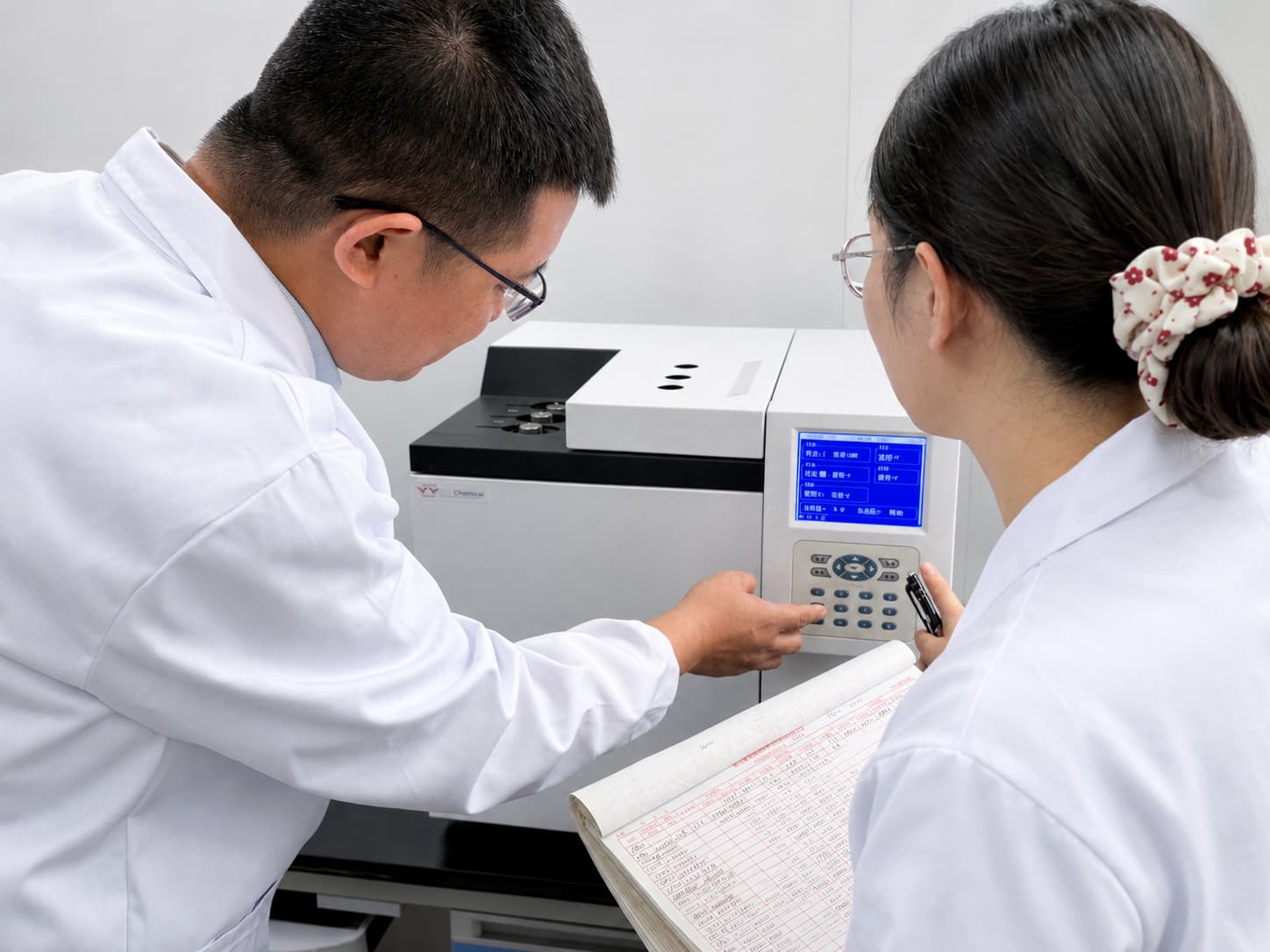
Viscosity with complete test conditions
A viscosity result is meaningful only when the test conditions are provided. Buyers should request:
- Solution concentration
- Suhu air dan kualitas air
- Mixing and hydration procedure
- Waktu istirahat sebelum pengukuran
- Suhu pengukuran
- Viscometer or test method
- Spindle and rotational speed where applicable
- Hasil dan satuan pengukuran
For example, an HV grade measured at one concentration cannot be compared directly with an MV grade measured at a different concentration, even if the reported viscosity range is similar.
Hydration and solubility behavior
Sodium alginate should disperse and hydrate without excessive lumping, gel particles or insoluble residue under the agreed preparation conditions.
Hydration behavior affects preparation time, filtration, screen cleanliness and batch reproducibility. The laboratory trial should record how the powder wets, disperses and develops viscosity over time.
Filtration and insoluble matter
Gel particles and insoluble material can create filtration problems or contribute to screen blockage. Buyers should evaluate both the prepared stock paste and the complete color paste.
A visually smooth solution is not always sufficient. Use a filtration method relevant to the factory’s screen or coating process.
pH
The pH of the sodium alginate solution should be reviewed together with the complete reactive-printing formula. Alkali is commonly required for reactive dye fixation, but excessive alkalinity or long paste-holding time can increase dye hydrolysis before fixation.
Do not evaluate alginate pH as an isolated number. Monitor the pH and stability of the final paste over the normal factory holding period.
Moisture and storage condition
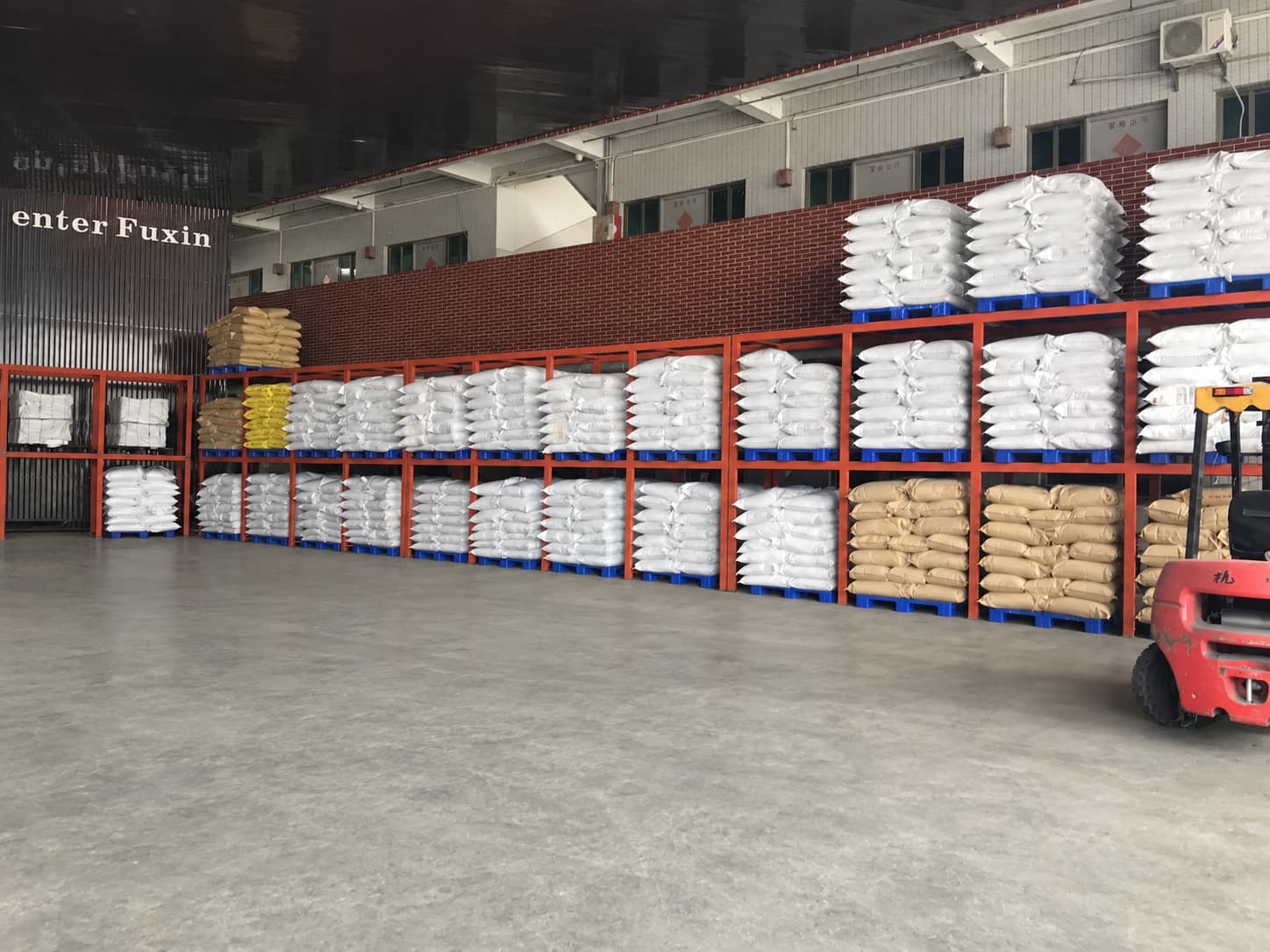
Sodium alginate is hygroscopic and should be protected from moisture during transport and storage. Moisture uptake can affect powder handling, weighing accuracy and solution preparation.
Confirm packaging, warehouse conditions, shelf life and resealing requirements after opening.
Water quality and multivalent ions
Alginate behavior can be affected by multivalent ions such as calcium. Hard water or uncontrolled contamination may contribute to local gel formation, filtration problems or changes in paste behavior.
Reference and candidate grades should therefore be prepared with the same water source. If water hardness varies significantly at the plant, include it in the trial plan.
Konsistensi batch
One successful sample does not automatically confirm bulk consistency. Agree on the specification parameters that matter to production and review the batch-specific COA for the supplied lot when available.
Important controls may include viscosity, pH, moisture, appearance, solubility-related requirements and other grade-specific parameters stated by the supplier.
HV, MV and LV Sodium Alginate: What the Labels Really Mean
HV, MV and LV generally refer to high-, medium- and low-viscosity directions, but the labels are not enough for purchasing decisions. Suppliers may use different concentrations and methods to define them.
| Grade direction | Possible starting use | What the trial should verify |
|---|---|---|
| HV | Higher paste-body direction or lower-concentration evaluation | Hydration, screen passing, recovery, definition, penetration and cost-in-use |
| MV | General reactive-printing comparison route | Paste stability, print balance, washing-off and routine machine operation |
| LV | Smoother-flow or higher-concentration direction for selected high-speed processes | Rotary-screen behavior, spreading, penetration, holding stability and fabric handle |
These are trial directions rather than universal application rules. Final selection should be based on the buyer’s formula and production result.
How to Prepare Sodium Alginate Stock Paste for Comparison
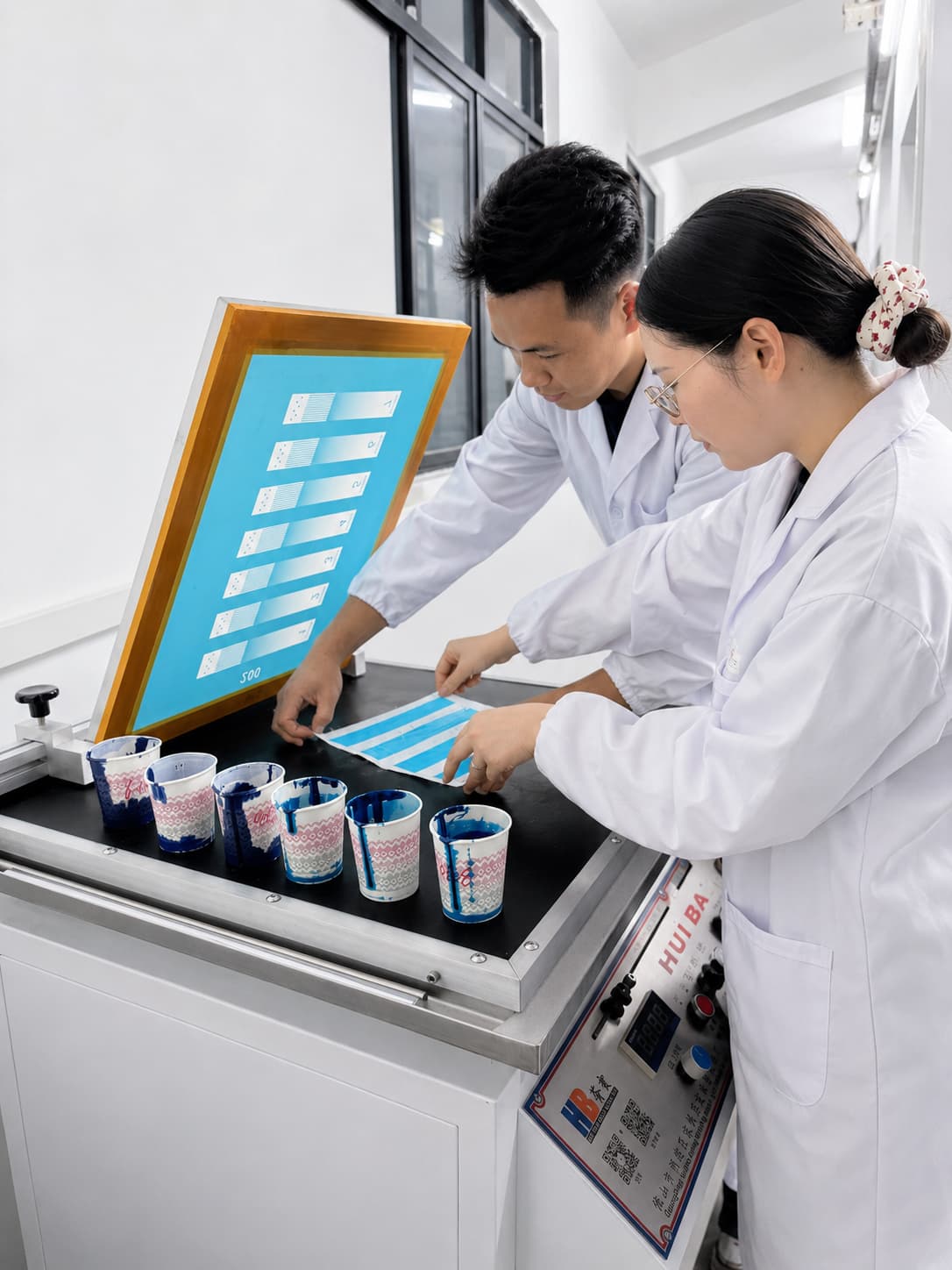
A controlled preparation method is essential when comparing grades. Inconsistent water temperature, addition speed or hydration time can create misleading results.
Recommended comparison procedure
- Define the concentration: Use the concentration stated in the relevant TDS or the agreed matching method.
- Control the water: Use the same water source, temperature and sample quantity for every grade.
- Add the powder consistently: Introduce the powder gradually under controlled agitation to reduce lump formation.
- Use one mixing method: Keep equipment, speed, mixing time and container geometry consistent.
- Allow full hydration: Do not compare viscosity before each sample has completed the agreed hydration and resting period.
- Inspect the paste: Check smoothness, foam, gel particles, insoluble residue and filtration behavior.
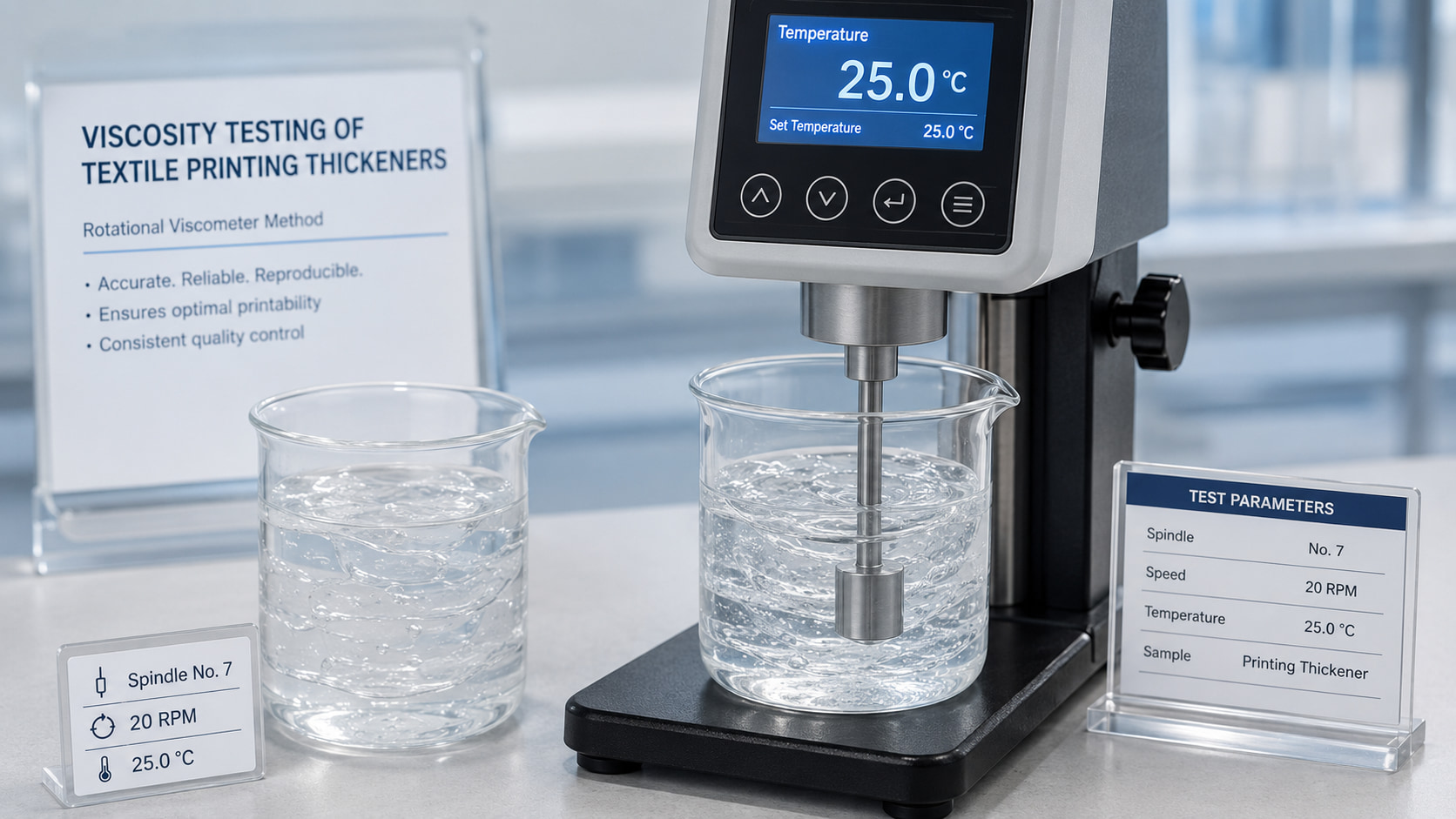
- Measure viscosity: Use the same instrument, temperature, spindle, speed and reporting unit.
- Record holding stability: Repeat relevant observations after the normal factory holding period.
Do not add dye, alkali or other auxiliaries until the base-paste preparation method has been defined. After the base comparison, test the candidate in the complete formula.
How to Run a Production-Relevant Printing Trial
Step 1: Establish the reference
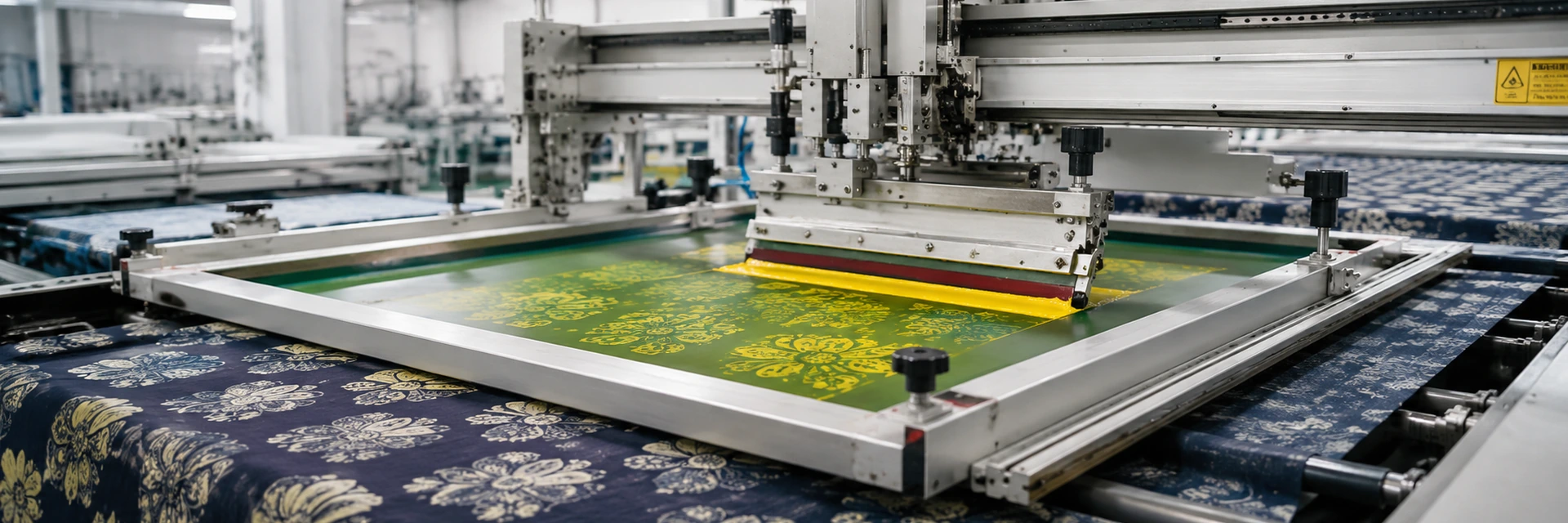
Record the current sodium alginate grade, stock-paste concentration, preparation method, color-paste formula, fabric, screen, machine settings and acceptance criteria.
Step 2: Normalize the candidate
Compare the candidate at equivalent target paste behavior. Equal dosage may not be a fair comparison when thickening efficiency differs.
Step 3: Test the complete color paste
Add the actual reactive dye, alkali and auxiliaries. Monitor viscosity, pH, appearance and stability over the factory’s normal holding period.
Step 4: Run the print
Use the same fabric, screen, squeegee or rotary conditions and machine settings for the reference and candidate.
Step 5: Apply the same fixation process
Use consistent drying, steaming or other confirmed fixation conditions. Record temperature, time and relevant moisture conditions.
Step 6: Use the same washing-off sequence
Evaluate unfixed dye removal, residual thickener, rinsing demand, shade, handle and any redeposition issue under the same post-treatment conditions.
Step 7: Confirm sample-to-bulk controls
Before volume purchasing, agree on the specification, COA parameters, packaging, traceability and procedure for handling an out-of-specification batch.
Trial Results Buyers Should Record
| Tahap evaluasi | Apa yang perlu direkam | Main purchasing question |
|---|---|---|
| Stock-paste preparation | Wetting, hydration, lumps, foam, filtration and preparation time | Can the grade be prepared consistently using available equipment? |
| Laboratory testing | Viscosity method, pH, appearance and holding stability | Are the reported specifications reproducible? |
| Complete color paste | Compatibility with dye, alkali, salts and auxiliaries | Does the grade remain stable in the actual formula? |
| Pencetakan | Screen passing, definition, penetration, bleeding and machine behavior | Does it perform reliably under production-relevant shear? |
| Fixation and washing | Shade response, wash-off, residue, handle and relevant fastness results | Apakah kain hasil akhir tersebut memenuhi kriteria penerimaan? |
| Persetujuan komersial | Dosage, preparation cost, batch controls, documents and packaging | Is the candidate practical for controlled bulk purchasing? |
Common Problems and What to Check
Lumps or gel particles during preparation
Possible contributors include rapid powder addition, insufficient agitation, unsuitable water quality, incomplete hydration or moisture-damaged powder.
Check the addition sequence, mixing equipment, water hardness, storage condition and agreed preparation method before rejecting the grade.
Viscosity is lower or higher than expected
Confirm concentration, temperature, hydration time, instrument, spindle, speed and unit. Also check whether the reference and candidate were measured by the same method.
Viscosity changes during storage
Review water quality, microbial control where relevant, pH, salts, auxiliaries, holding temperature and container condition. Test the complete color paste over the actual production holding period.
Bleeding or poor print definition
The paste may not recover enough structure after screen transfer, but fabric absorbency, screen geometry, squeegee pressure, paste concentration and auxiliary balance may also contribute.
Insufficient penetration
Check paste rheology, fabric construction, screen, machine settings, wetting behavior and application amount. Selecting a lower-viscosity label alone may not solve the problem.
Difficult wash-off or harsh handle
Review stock-paste concentration, fixation conditions, washing sequence, residual thickener, dye hydrolysis and water quality. Do not attribute the result to alginate grade without checking the complete process.
Shade variation between batches
Compare dye batch, alginate batch, water quality, paste preparation, holding time, fabric pretreatment, fixation and washing conditions. Request batch-specific documents for the parameters included in the purchasing specification.
What Sodium Alginate Buyers Should Request
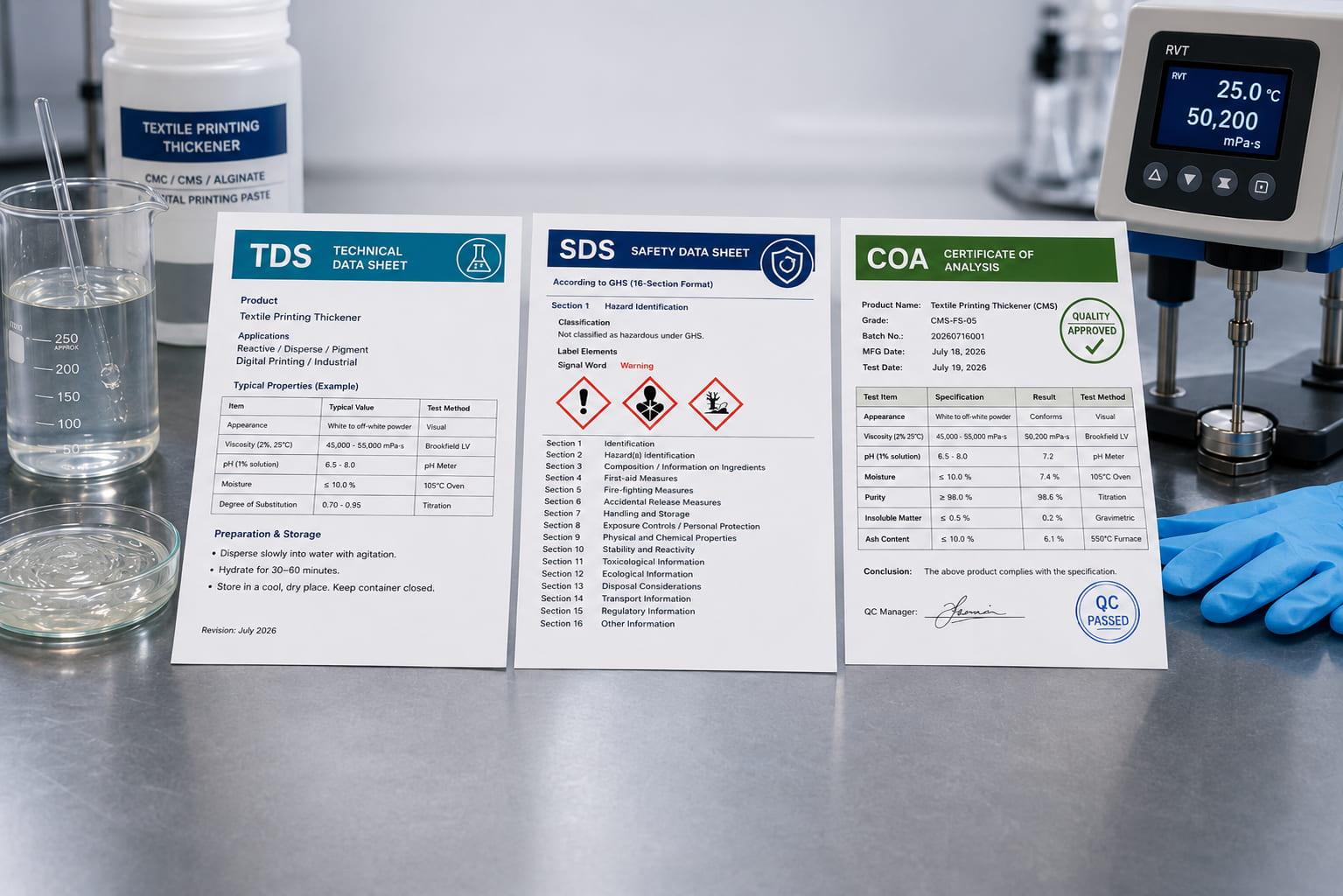
- TDS with viscosity concentration and test method
- SDS yang memuat informasi mengenai penanganan, penyimpanan, dan pengangkutan
- Grade-specific specification
- Batch-specific COA when available
- Preparation and hydration guidance
- Sample suitable for laboratory and pilot evaluation
- Informasi mengenai kemasan dan masa simpan
- Batch code and traceability information
- Supporting evidence for any compliance or environmental claim
Avoid accepting absolute descriptions such as “100% pure,” “universally compatible” or “eco-friendly” without a defined specification and product-specific supporting documentation.
How FSX Chemical Can Support Sodium Alginate Grade Matching
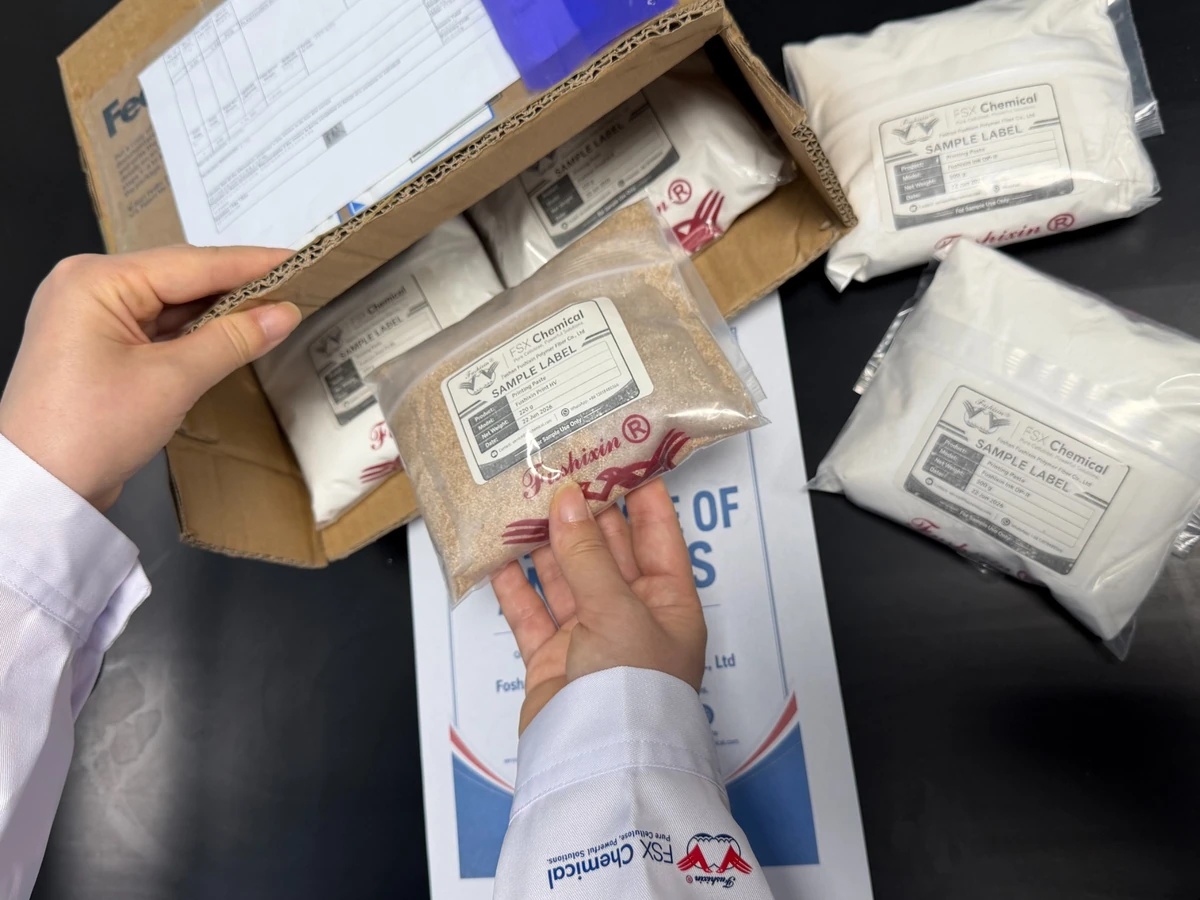
To improve the quality of the recommendation, provide:
- Current sodium alginate TDS or representative sample information
- Target viscosity with concentration and test method
- Fabric type and reactive dye system
- Stock-paste and color-paste information
- Metode pencetakan dan jenis mesin
- Masalah utama dalam produksi
- Estimated quantity, packaging requirement and destination
Request Sodium Alginate Grade Matching
Send your current TDS, viscosity target, stock-paste concentration, fabric type and printing conditions. FSX Chemical can review whether an HV, MV or LV grade should be considered as the starting point for a controlled sample trial📧 Email: Service@fsxchemical.com