Why Supplier Evaluation Matters for CMC Procurement
Batch Consistency and Grade Stability
Ask for the agreed viscosity acceptance range, test method and deviation process. Historical CoA (Certificate of Analysis) records can show reported results for the listed lots and tests when methods and specifications are comparable. They do not alone establish process capability, representative sampling or performance in your formulation.
The Cost of Switching Suppliers Mid-Production
Define specifications and sample trials before a bulk commitment so that unresolved compatibility issues can be identified before production release. This is particularly true for printing paste and sizing applications where the CMC interacts with multiple other components in the formulation.

Key Criteria for Evaluating a CMC Supplier
Product Specification Transparency
- DS (degree of substitution), its assay method and agreed reporting or acceptance basis where required
- Viscosity specification: concentration basis, water, preparation, temperature, instrument, spindle or geometry, speed and reading time
- Assay or CMC-content basis and the relevant NaCl, sodium glycolate or other impurity limits and methods
- Moisture content and particle size where relevant
If a critical item is not documented, clarify whether it is untested, unavailable, confidential or outside the proposed specification. Record the limitation and resolve any buyer-required acceptance gap before release. A missing noncritical item alone does not establish the supplier’s overall technical capability.
Documentation Availability
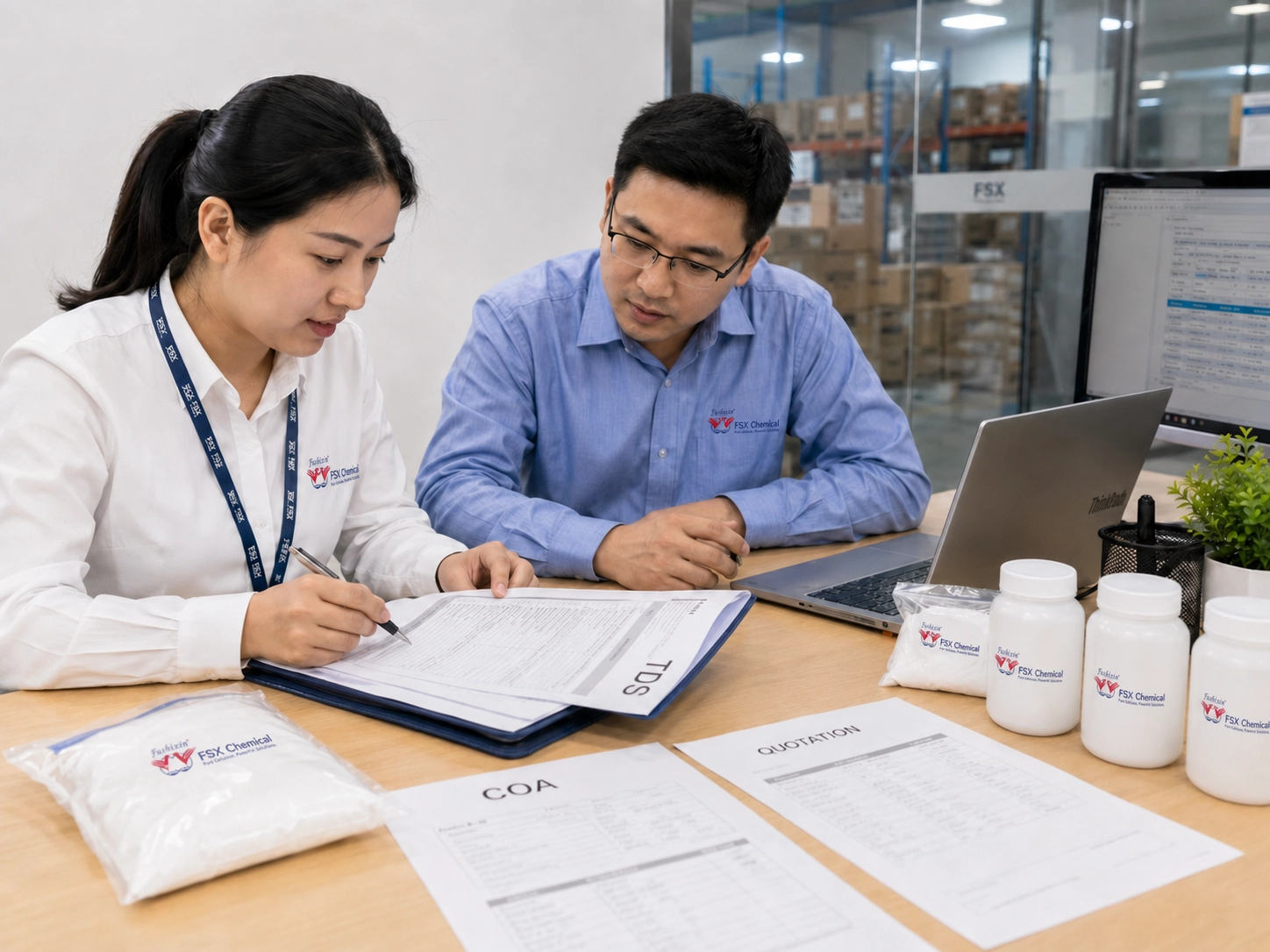
- TDS (Technical Datasheet) — the current grade description, methods and stated limits; separate typical guidance from the agreed purchase specification
- SDS (Safety Data Sheet) — the applicable product safety information for the intended supply market; it is not proof of printing suitability or food-contact acceptance
- CoA (Certificate of Analysis) — agreed lot-specific results linked to the shipment; before a future lot exists, ask what representative or redacted history can be shared and when the shipment CoA will be issued

Technical Support Capability
For procurement teams that are switching CMC grades, formulating new paste recipes, or troubleshooting production issues, access to technical support from the supplier is a practical advantage.
Useful technical support includes: grade recommendation based on your application parameters, guidance on dissolution and preparation methods, and response to formulation compatibility questions. Evaluate whether the supplier has technical staff who can engage with your specific process requirements, rather than only a sales team.
Sample and Trial Process
Before a bulk commitment, agree a representative sample or another documented qualification route. Confirm the commercial grade, sample lot, quantity, sample and freight charges, payment terms and the tests it can support. A sample’s availability or price alone does not establish supplier quality; an unrepresentative or untested grade leaves the application risk unresolved.
When requesting a sample, specify the application, the substrate or fabric type, your existing formulation parameters, and any performance criteria you are testing for. This allows the supplier to send the most appropriate grade and provide relevant application guidance alongside the sample.
Grade Verification: What to Test Before You Commit
Viscosity Consistency Across Batches
Request recent same-grade lot records where available and compare only results with matching methods, concentration bases and specification versions. Review viscosity and any DS tests actually reported. Set the record scope according to the procurement risk; a few CoAs are examples of reported lot results, not sufficient proof of long-term process capability. Record any evidence gap.

DS Verification and Solubility Testing
If DS is an agreed control item, request the stated assay method and relevant grade or lot evidence. A dissolution, clarity or filtration check measures preparation behaviour; it does not verify average DS or substitution distribution. Confirm performance separately in the actual dye, auxiliary, binder or fixation system where applicable.
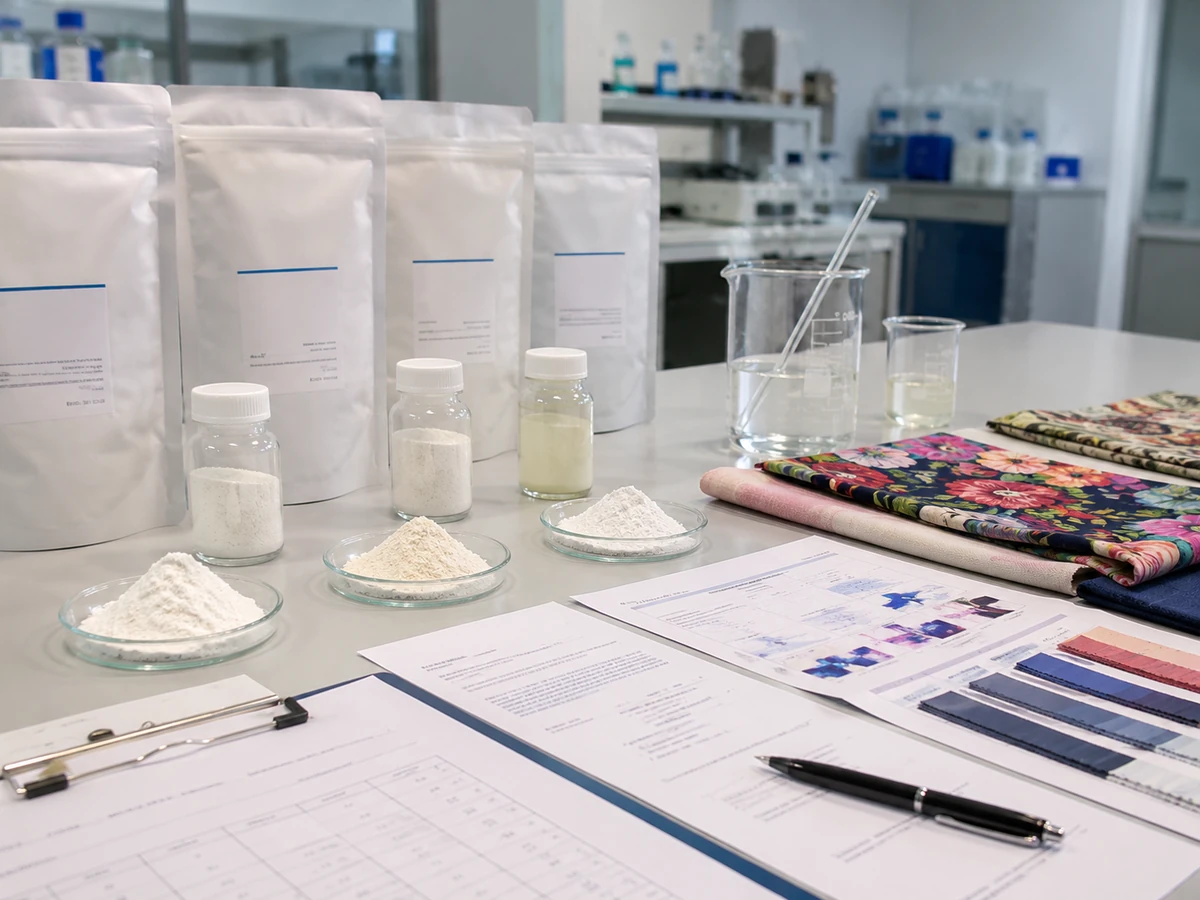
For a powder CMC preparation screen, record addition sequence, water, concentration basis, mixing, temperature and elapsed time, then inspect dispersion and any retained residue using an agreed procedure. A shared-SOP screen tests that preparation route; application qualification may require each grade’s documented preparation endpoint. Investigate lumps or residue before scaling up, but do not assume every laboratory issue will increase at production scale.
Nouryon’s CMC technical guide provides manufacturer background on grade, preparation and measurement effects. It is not an FSX specification or a substitute for the selected grade’s agreed method. The qualification steps here are proposed buyer checks.
Compatibility Testing with Your Formulation
Before a production trial, evaluate the complete intended sizing bath, printing paste or fabric-pretreatment formulation, including the actual colorant and auxiliaries where used. Check the required flow, application, fixation or drying, and finished-textile performance. Do not transfer a result between these routes or infer printer-ink suitability from a fabric trial.
Define checks immediately after preparation and at times covering the intended routine and maximum holding window, with stated temperature, container and re-mixing conditions. Monitor the relevant viscosity method, appearance, separation or residue and repeat application tests where required. Any accelerated or extended challenge needs its own interpretation; a holding check alone does not approve shelf life or printing performance. These are proposed buyer checks, not an FSX-tested universal schedule.
Red Flags to Watch for When Sourcing CMC
Vague or Unverifiable Compliance Claims
Ask for evidence matched to the exact claim and commercial grade. For a certificate, verify its holder, issuing body, number, scope and validity. For a test report, declaration or registration, check the applicable method or requirement, covered material and limitations. These document types are different; none establishes compliance with every market or use.
If a supplier references compliance with a specific regulation or certification that seems unrelated to industrial CMC, it is worth asking clarifying questions before relying on those claims.
Reluctance to Provide Documentation
Agree the required records, timing and any special reporting costs before purchase. If a document is delayed or restricted, request the reason, expected availability and an acceptable evidence route. An unresolved critical document gap at the agreed release point is a reason to hold approval; a fee or lead time alone does not prove poor quality or an industry-norm violation.
Keep unresolved traceability, buyer or audit requirements in the qualification record and identify who must accept them before the material is released.
No Sample or Trial Option
For a first order or changed grade, clarify whether the proposed payment terms permit representative testing before bulk commitment and who carries the unresolved risk. Agree a staged trial, conditional release or other workable qualification route where possible. Payment terms alone do not establish whether the product is suitable.
If a representative sample is unavailable, ask for the reason and what evidence or later trial can resolve the gap. Avoid releasing a changed or unqualified grade solely on broad assurances; record the buyer’s decision and any restrictions.
How FSX Chemical Approaches Supplier Transparency
Share the current grade, fabric, colorant system, preparation method and one defined performance problem with the sample-matching team. Confirm the proposed sample grade and lot, quantity, charges, timing and trial scope before proceeding. Keep the approved sample identity connected to the first commercial lot.
Send specific market, buyer and documentation requirements before ordering and ask what can be supported for the selected grade. Obtain confirmation of the evidence and its scope; an inquiry or general product description is not application or regulatory approval.
Келесі қадамдар:
- Request a TDS — review grade specifications before committing to a trial
- Үлгіні сұрау — evaluate performance in your own formulation and process
- Ask for Grade Matching — share your application details for a targeted recommendation
- Техникалық командамызбен байланысыңыз — for documentation requirements or formulation support: Service@fsxchemical.com