
















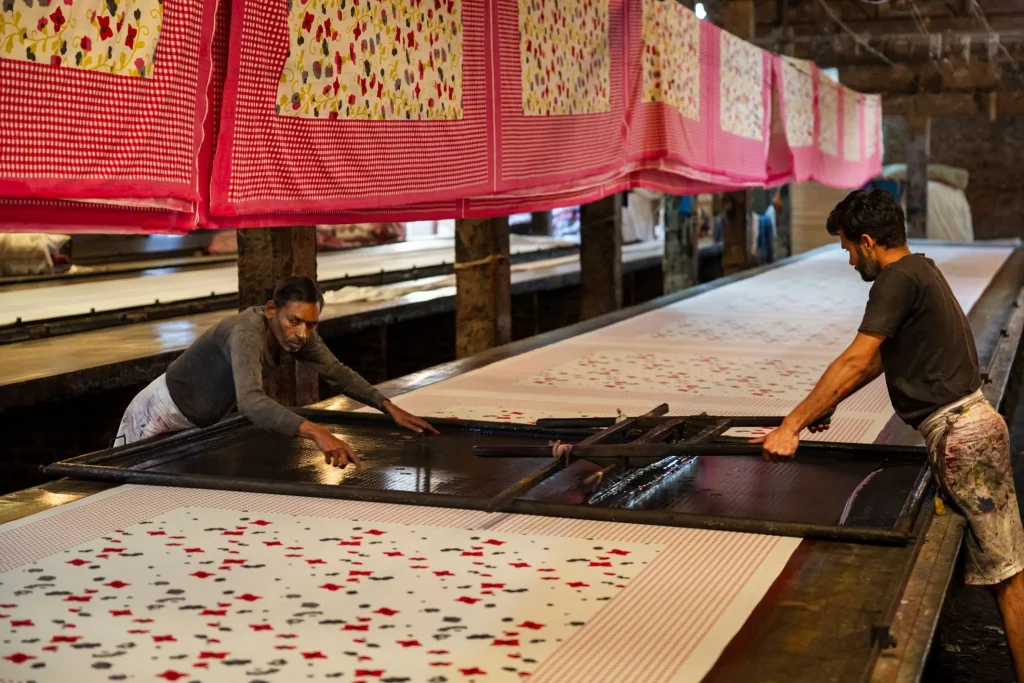
Sodium alginate for textile printing is mainly evaluated for reactive printing on cotton, viscose and other suitable cellulosic fabrics. Choose a grade by its documented viscosity method, hydration, filtration and complete-paste trial; the highest viscosity reading does not establish the best printing performance.
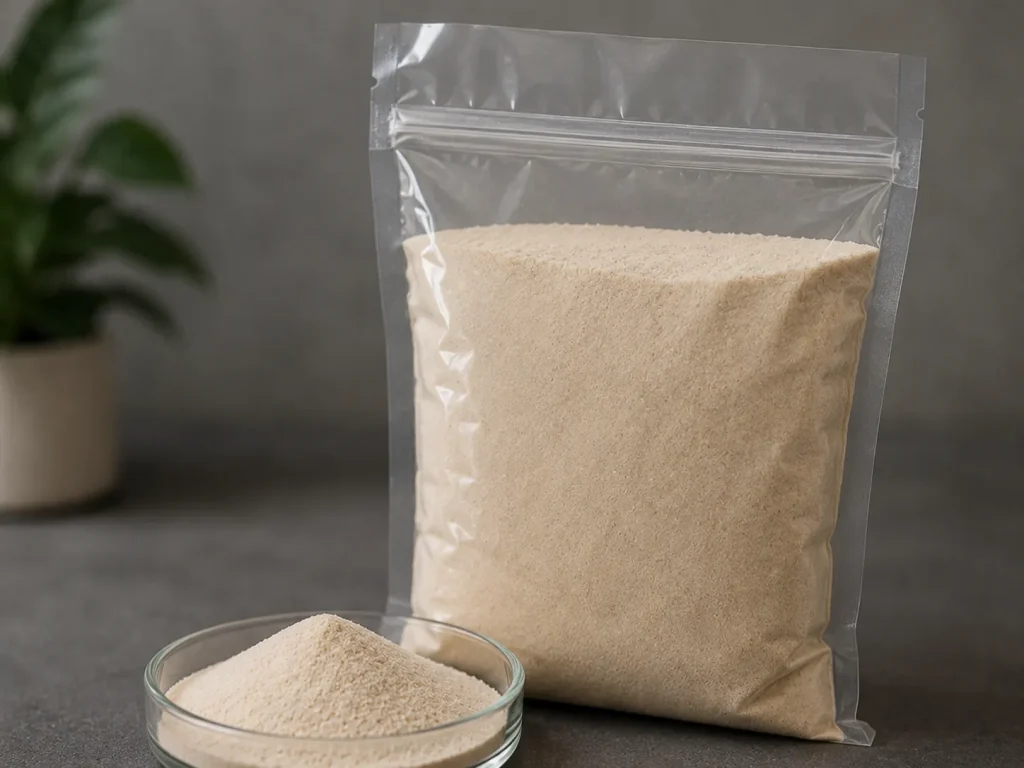
Sodium alginate carries the reactive dye in a temporary printing paste and helps control paste flow and transfer. Dye fixation still depends on the dye, fabric, alkali and fixation conditions. Paste stability and wash-off must be demonstrated in the intended formulation, rather than assumed from the alginate name.
Натрий алгинаты мата басуда қандай қызмет атқарады?
Helps Control Printing Paste Viscosity
Sodium alginate helps build printing-paste body. Screen transfer and pattern retention depend on flow across the relevant shear conditions, not one apparent-viscosity reading. If recovery after screen transfer matters, assess it with a defined shear history and elapsed time; shear thinning alone does not prove a rapid recovery profile.
Supports Sharper Pattern Definition
It also helps reduce excessive spreading during printing. This is important for factories that need stable line definition, clean edges, and repeatable printing results across different batches.
Suitable for Reactive Dye Printing Systems
In reactive dye printing, sodium alginate is often preferred because it can work well in printing paste systems where dye performance and fabric hand feel are important. However, the final result depends on the formulation, dye type, fabric, process conditions, and the selected alginate grade.
Where Is Sodium Alginate Commonly Used?
Reactive Screen Printing
Sodium alginate is widely used in reactive screen printing for cotton and other cellulosic fabrics. A candidate grade must still be checked for complete preparation, flow, holding stability and removal during the intended wash-off sequence.
For screen printing applications, buyers usually need to check viscosity, solubility, paste smoothness, and batch consistency before confirming the grade.
Rotary and Flatbed Textile Printing
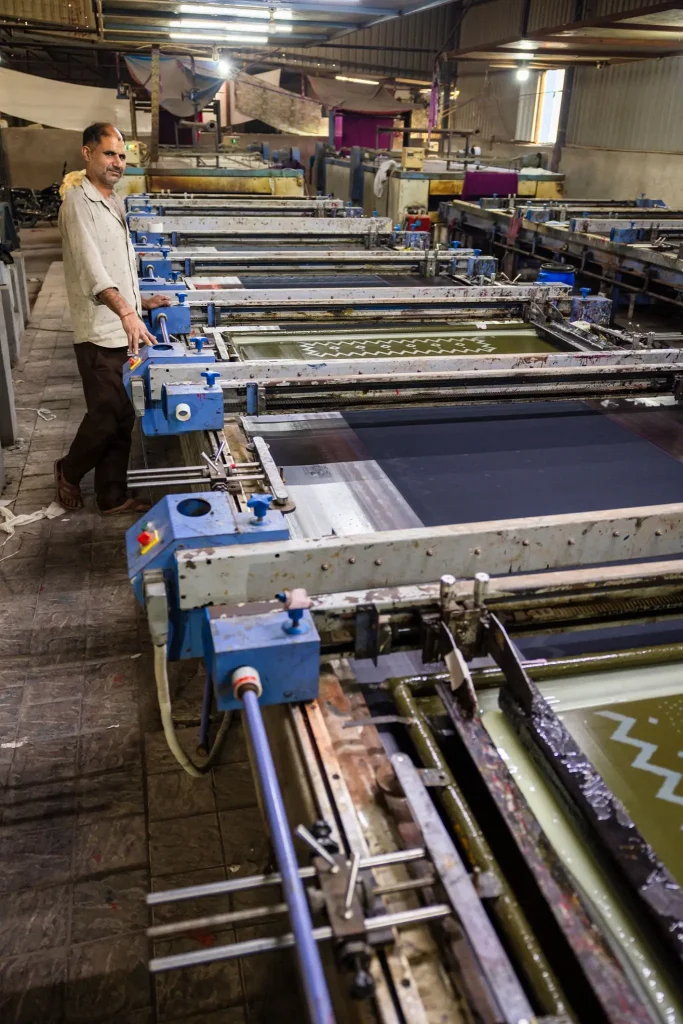
In rotary and flatbed printing, paste stability and flow behavior are important. If the thickener grade is not suitable, the factory may face problems such as poor pattern definition, unstable paste viscosity, or uneven printing performance.
A proper sodium alginate grade should match the printing machine, screen type, fabric structure, and production speed.
Textile Printing Paste Preparation
Prepare the grade using its documented powder-addition, mixing and hydration procedure. Check dispersion and residue before judging the completed stock paste, then measure the full colour paste after dyes and auxiliaries are added and through the intended holding period. A stable stock paste does not establish stability of the complete formula.
Before bulk purchase, it is recommended to test the product in the customer’s own formulation because different factories may use different dyes, auxiliaries, water quality, and process conditions.

Key Parameters Buyers Should Check
Тұтқырлық дәрежесі
Viscosity is one of the most important purchasing parameters. A higher viscosity grade is not always better. The right choice depends on the printing process, paste concentration, fabric type, and required printing effect.
Request the concentration and its as-supplied or dry-matter basis, water quality, preparation and conditioning times, instrument, spindle, speed, temperature, reading time and units. Compare COA results only under the agreed method. For different grades, separate a shared-SOP preparation challenge from application trials in which each grade is appropriately prepared.
Solubility and Paste Smoothness
Undissolved material can reflect poor powder dispersion, incomplete hydration, water-related gels, contamination or material insolubles. Record preparation conditions and inspect filter residue before assigning a product defect. Compare a retained reference under the agreed preparation and filtration method, then confirm the usable paste endpoint.
For textile printing factories, paste smoothness is especially important when printing fine patterns or high-detail designs.
Moisture Content and Storage Stability
Moisture changes the dry matter delivered by a given as-supplied powder weight and can affect caking and handling. State the test method and reporting basis. Dry matter may include salts and other components, so a moisture result is not an active-alginate assay; compare it with the agreed TDS and batch COA requirements.
The product should be stored in a dry and well-ventilated place, away from moisture and direct contamination.
pH Range and Batch Consistency
Distinguish the pH of the specified product test solution from the pH of the complete dye/alkali paste. Compare the same grade and preparation method across lots, and assess full-paste viscosity, holding behaviour and finished-print performance against a retained approved reference.
For distributors, stable batch quality can reduce customer complaints and make repeat orders easier to manage.
How to Choose the Right Sodium Alginate Grade
Match Viscosity with the Printing Process
The best way to choose sodium alginate is not only to compare price. Buyers should first confirm the target application and required paste performance.
For example, a factory producing fine reactive prints may need a grade with good paste smoothness and stable viscosity. A distributor supplying different printing mills may need several viscosity options to cover different customer needs.
Check Compatibility with Dyes and Auxiliaries
Different printing formulations may include different dyes, auxiliaries, alkali systems, and water conditions. These factors can affect paste behavior and final printing performance.
Testing the alginate grade in the actual customer formulation is the most reliable way to confirm suitability.
Көп мөлшерде сатып алар алдында тексеру
Use three approval steps: verify grade identity and the agreed incoming-QC method; trial the appropriately prepared candidate in the complete printing formula; then confirm a production-relevant run through fixation and wash-off. Record actual as-supplied dosage, transfer, definition, retained colour, residue, handle and required fastness against the approved reference. Match the commercial batch COA and package code to the qualified grade before release.

What Support Can FSX Chemical Provide?
TDS, COA and Sample Support
FSX Chemical supplies sodium alginate and other textile printing thickeners for textile printing and related industrial applications.
We can provide TDS, COA, sample support, and grade matching suggestions based on the customer’s printing process, target viscosity, fabric type, and application requirements.
Grade Matching for Textile Printing Applications
For customers who are not sure which grade to choose, our team can help review the application and recommend a suitable starting grade for testing.
Export Packaging and Technical Communication
For overseas buyers and distributors, stable packaging, clear product information, and responsive technical communication are important for long-term purchasing. FSX Chemical can support customers with product documents and application discussion before order confirmation.
Request TDS or Sample for Grade Matching
If you are looking for sodium alginate for textile printing paste, reactive printing, or thickener formulation, you can contact FSX Chemical for technical information.
Please share your application, required viscosity range, printing process, and current formulation if available. Our team can provide TDS, sample support, and grade matching suggestions before bulk purchase.
Need Help Choosing a Sodium Alginate Grade?
Send us your printing process, target viscosity, fabric type, and current paste formulation. FSX Chemical can help you request TDS, samples, and grade matching suggestions for textile printing applications.
Техникалық командамызбен байланысыңыз
Related Products and Resources
Текстильді басуға арналған натрий алгинаты
Тіндік баспаға арналған қоюлағыш
