














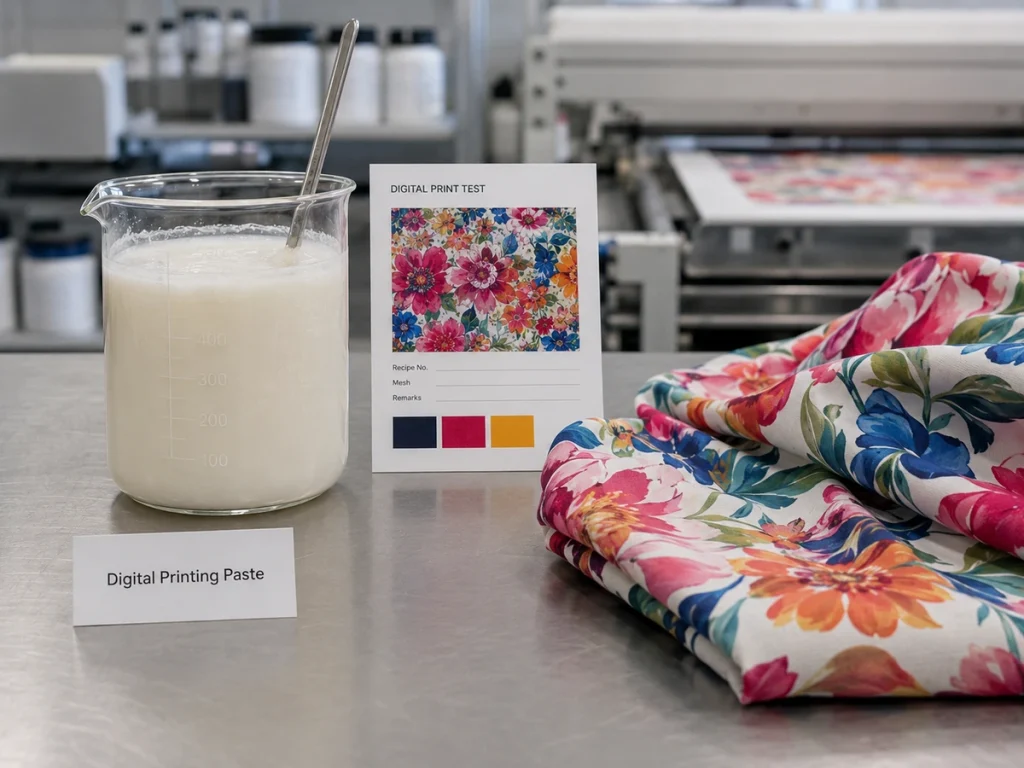
Evaluate a sodium alginate claim by identifying the exact commercial grade, the claimed outcome, the evidence and its limits. A seaweed origin or an “eco-friendly” label does not establish the environmental performance of a finished printing process. Performance claims also need a defined reference recipe, test conditions and finished-fabric results.
For a proposed process improvement, agree what will be measured before requesting a sample. Keep supplier statements, independent reports and results from your own printing trial distinct; none automatically establishes the other.
Use the review below to decide whether a claim is sufficiently supported to influence grade selection, or whether a specific document or controlled comparison is still needed.
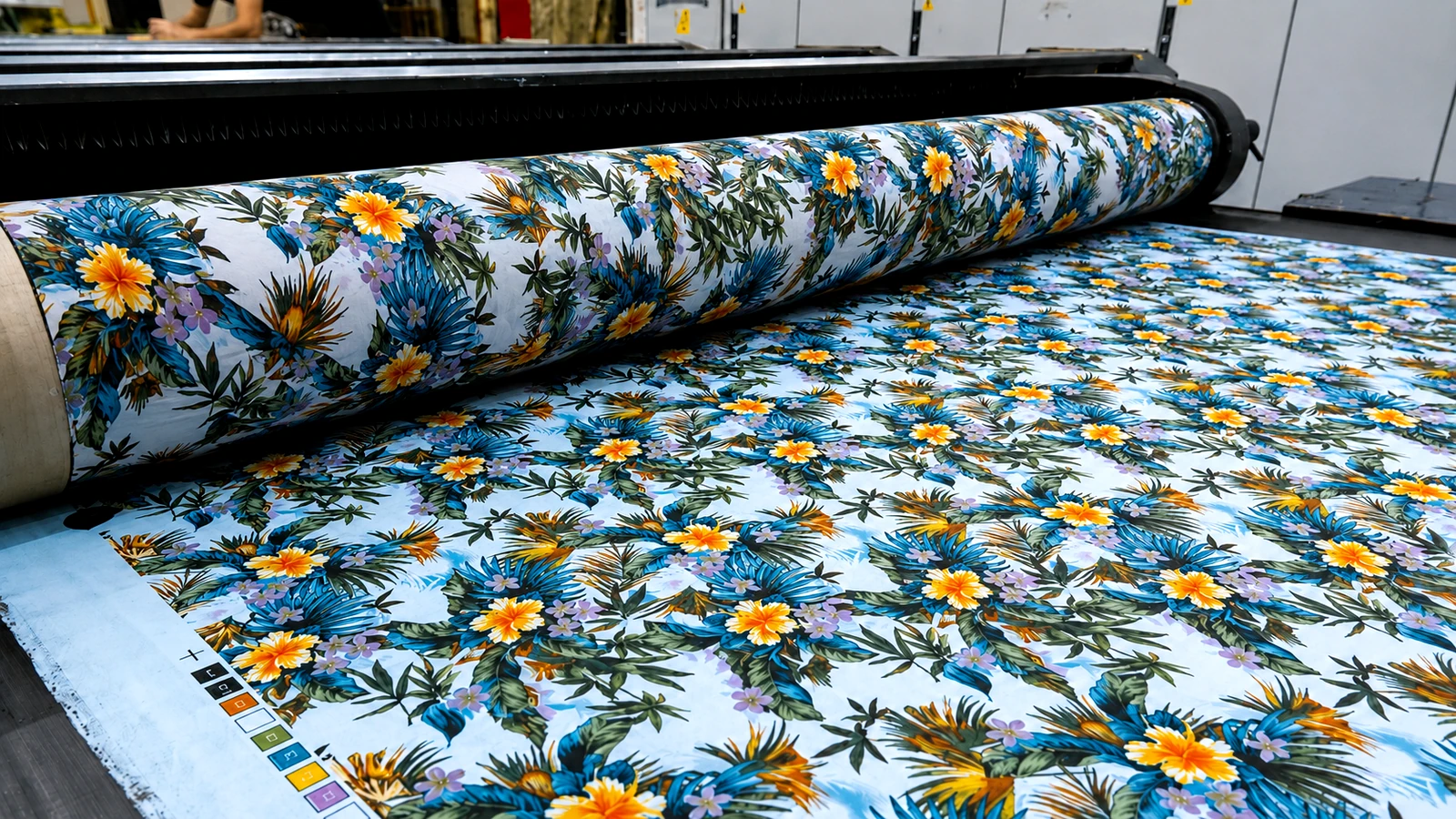
Why Sodium Alginate Remains Important in Textile Printing
Reactive Printing Paste Requires Controlled Viscosity
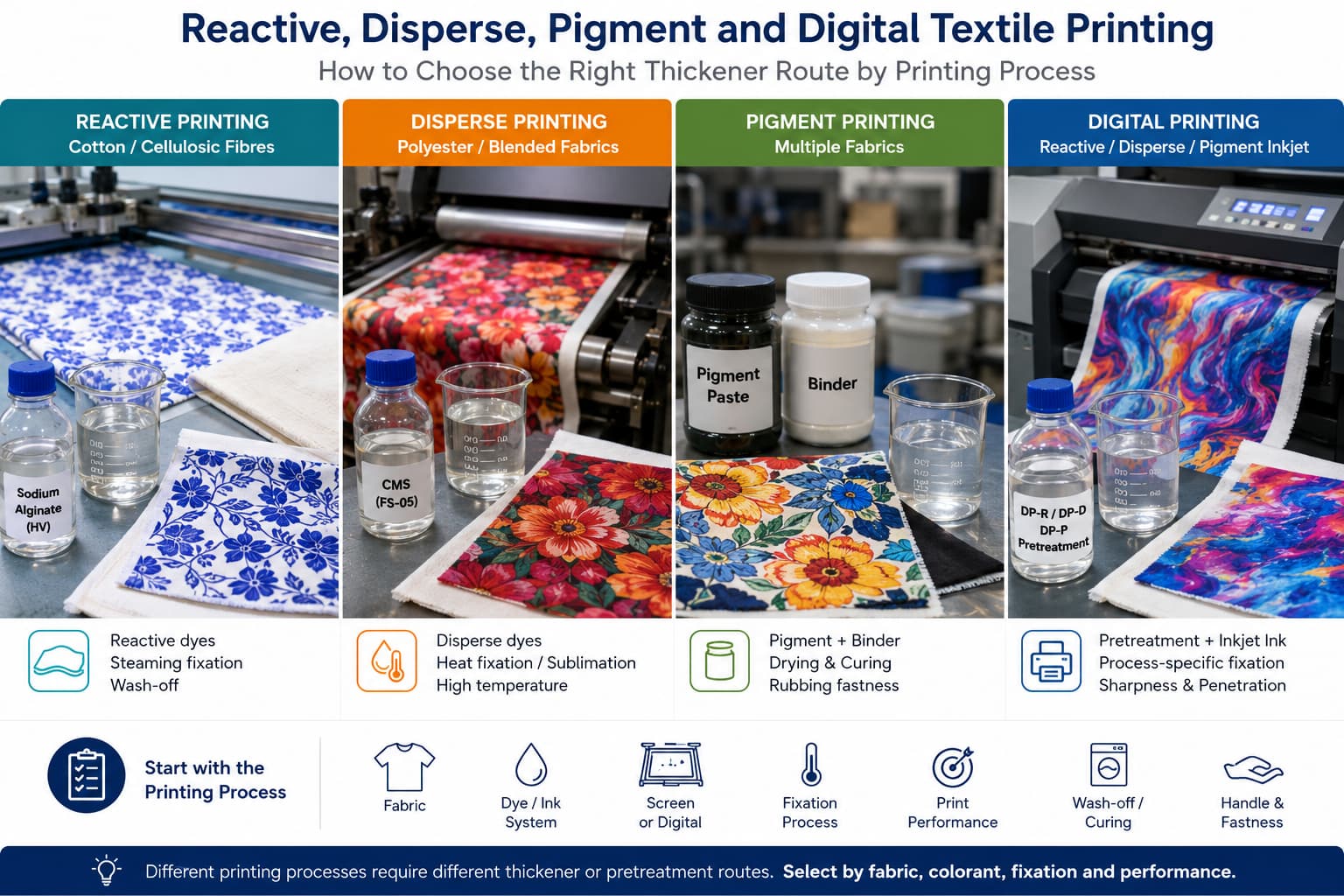
The suitable grade depends on the target paste viscosity, printing method, fabric type, dye system, water quality, and preparation process.
Dissolution and Paste Smoothness Affect Production Handling
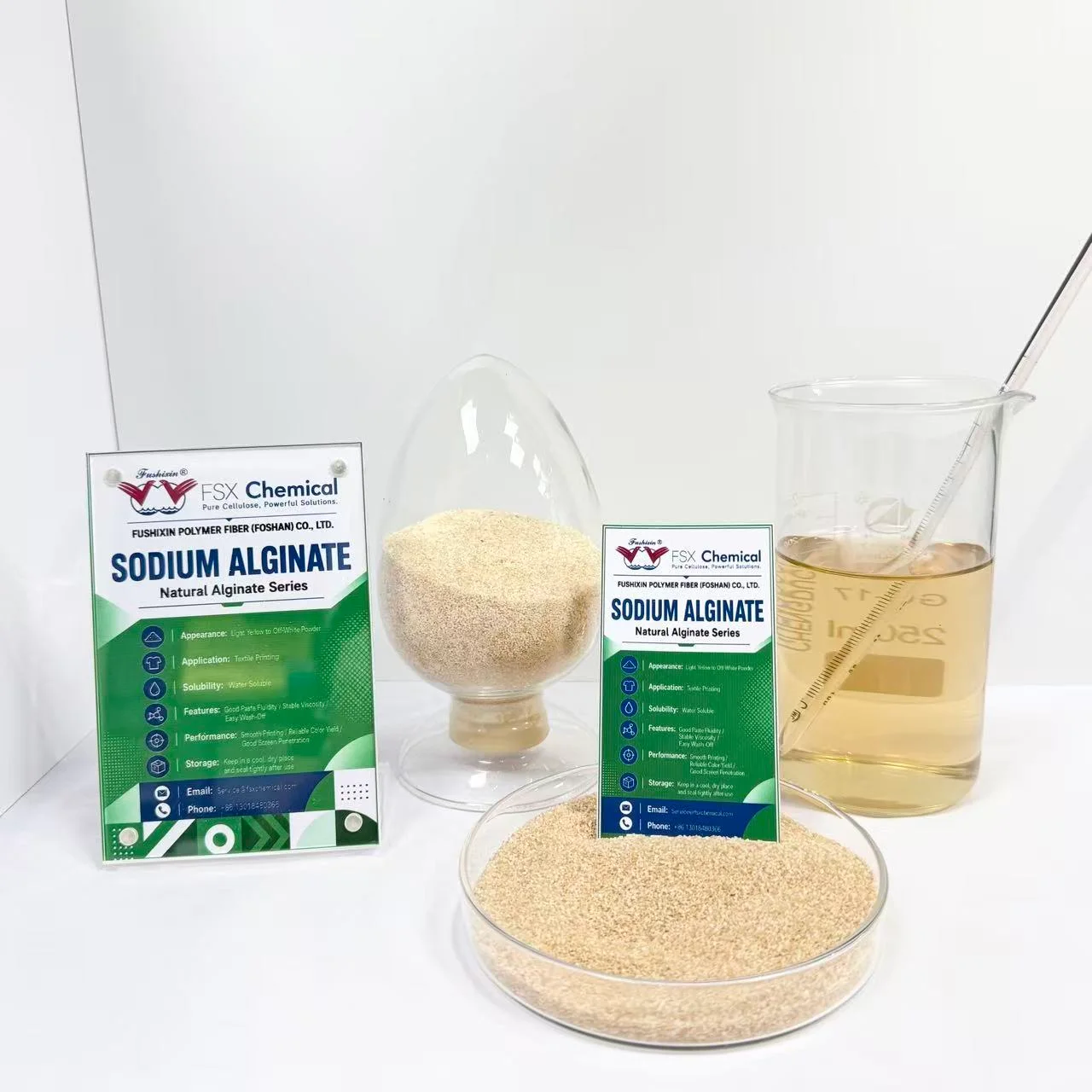
Besides viscosity, dissolution behavior is also important. If sodium alginate hydrates unevenly, the paste may contain lumps, show poor smoothness, or create filtration difficulty.
Buyers should evaluate dissolution behavior under their own water quality, stirring method, addition sequence, preparation time, and formulation conditions.
Different Printing Processes May Need Different Grades
There is no single sodium alginate grade that fits every textile printing process. A grade suitable for one formulation may not perform the same in another production system.
For this reason, grade selection should be based on actual application data and sample testing rather than broad supplier claims.
How Buyers Should Treat Eco-Friendly and Performance Claims
Environmental Claims Need Supporting Documents
Terms such as “eco-friendly,” “biodegradable,” “non-toxic,” or “compliant” should be reviewed carefully in B2B chemical sourcing. If these claims matter to the buyer’s internal approval or customer audit, supporting documents should be requested before order confirmation.
Depending on the buyer’s requirement, this may include SDS, supplier statements, restricted-substance information, customer questionnaires, or third-party testing documents where applicable.
Build a Claim-to-Evidence Record
Use this proposed review record before comparing claims across suppliers. A document should identify the product it covers and explain the measurement or assessment behind the statement.
| Claim | Evidence to request | Limit to record |
|---|---|---|
| “Lower dosage” or “higher color yield” | Reference grade, complete recipe, dose basis, fabric, printing and post-treatment conditions, and finished-fabric results. | An optimized recipe is a separate comparison from a replacement at unchanged dosage. Record both where relevant. |
| “Biodegradable” | Exact tested material, method, conditions, duration and result in the underlying report. | A result for one material or test environment does not establish removal or environmental impact in the mill’s wastewater system. |
| “Restricted-substance compliant” | Applicable requirement, exact grade, document issuer, scope, version and date; obtain product-specific evidence as required by the buyer. | A general supplier declaration or SDS is not interchangeable with a requested analytical report or certification. |
| “Less washing” or “lower wastewater load” | Comparable accepted fabric output, wash recipe and measured water or pollutant load on the same stated basis. | Do not infer a lower total load from a single concentration reading or from polymer origin. |
Record an unresolved claim as “not yet substantiated for this decision.” This keeps it out of the purchasing score until the relevant evidence is supplied. ISO 14021 provides a framework for evaluating self-declared environmental claims. Use this checklist to organize evidence; a reference to the standard does not establish certification for a product.
Reference: ISO 14021: self-declared environmental claims.
Performance Claims Should Be Tested in the Buyer’s Formulation
Claims about color performance, printing sharpness, paste stability, or production efficiency should not be accepted only as marketing language. Final performance depends on the buyer’s formulation and production process.
Buyers should test the recommended sodium alginate grade in their own paste preparation and printing conditions before bulk purchase.
Regulatory or Certification Requirements Should Be Clarified Early
If the buyer needs specific certification, restricted-substance confirmation, or customer compliance documents, those requirements should be discussed before quotation or shipment.
A practical supplier should clearly explain which documents can be provided and which claims require formal third-party testing or certification.
Key Specifications Buyers Should Review
Viscosity Grade and Test Method
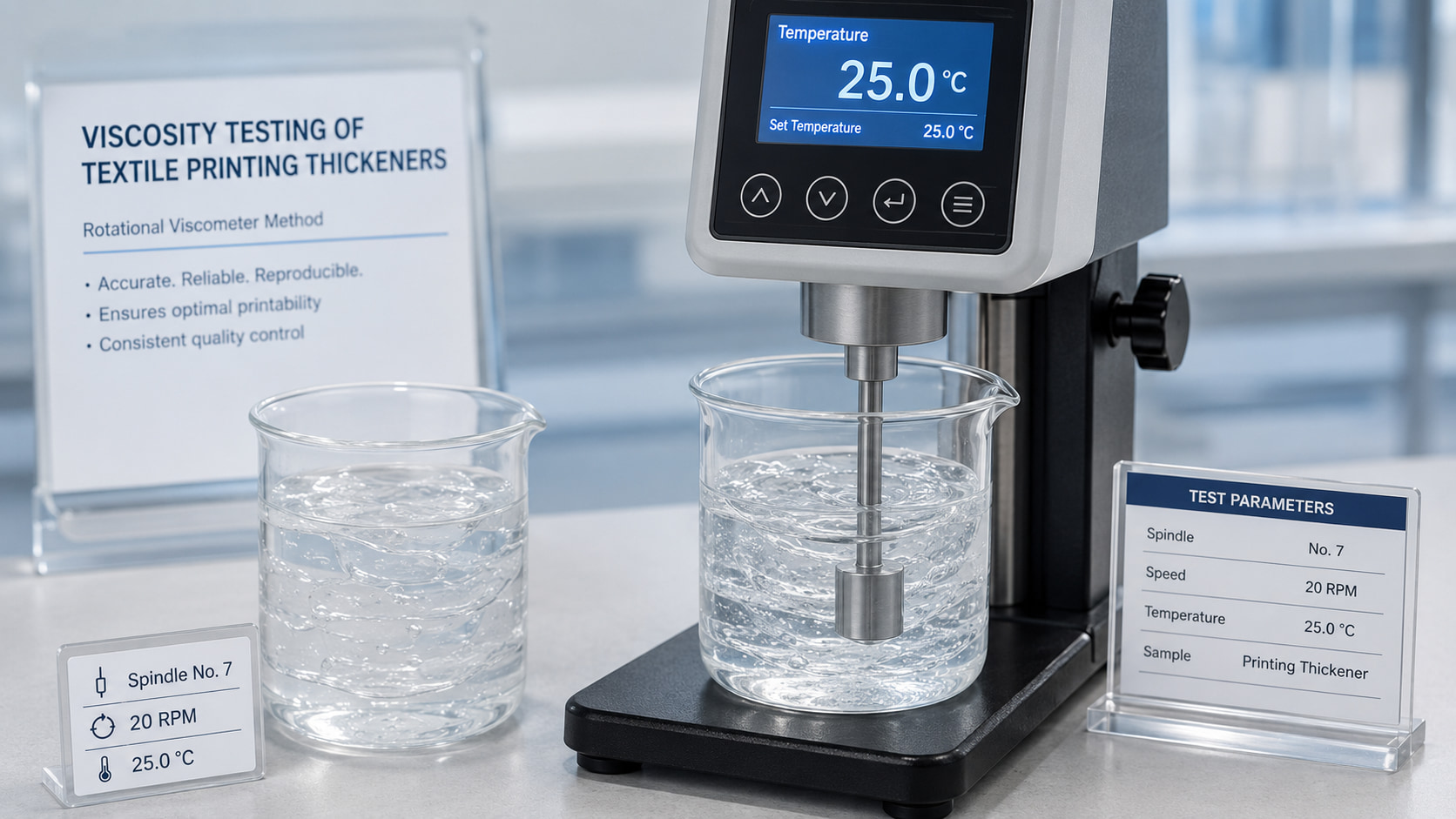
Viscosity is one of the most important parameters for sodium alginate used in textile printing paste. Buyers should review the viscosity range together with the test concentration, temperature, instrument method, and unit.
Without a clear test method, viscosity values from different suppliers may not be directly comparable.
Mesh Size and Dissolution Behavior
Mesh size can influence dispersion and hydration during paste preparation. However, actual dissolution behavior also depends on water quality, stirring speed, addition method, and preparation time.
Buyers should test the product under their own preparation conditions instead of relying only on mesh size data.
Moisture, pH and Appearance
Moisture, pH, and appearance are basic but important quality indicators. They affect storage, handling, quality control, and repeat purchasing.
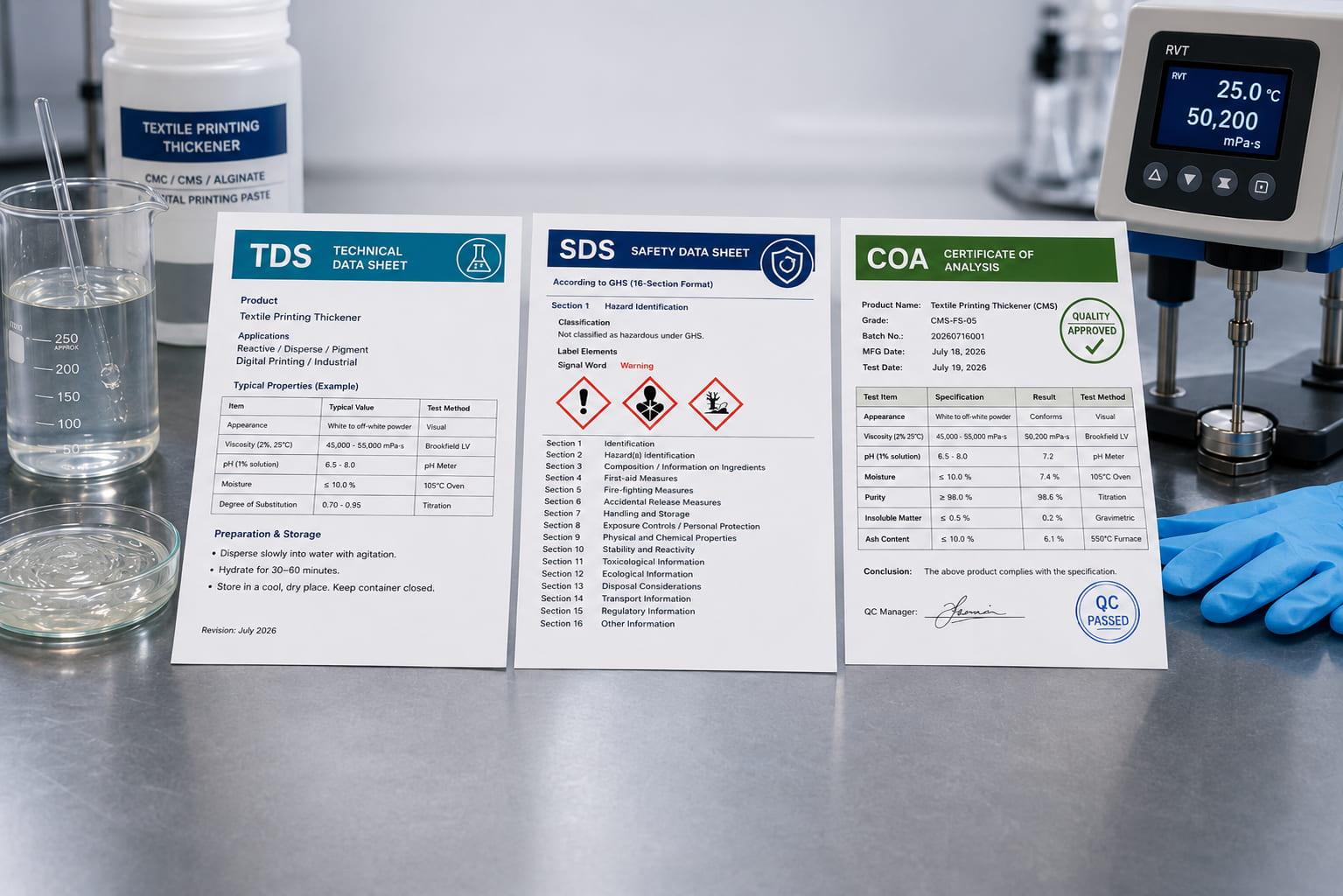
These parameters should be reviewed in the TDS and confirmed through COA data for each batch.
Partiyalar bo‘yicha barqarorlik
For repeat orders, batch consistency matters. If viscosity, moisture, pH, or dissolution behavior changes significantly between batches, the buyer may need to adjust the formulation again.
COA review helps buyers confirm whether batch data remains within the agreed specification range.
Documents Buyers Should Request Before Purchase
TDS for Specification Review
The Technical Data Sheet helps buyers review the standard product specification. It should include key parameters such as appearance, viscosity, mesh size, moisture, pH, storage conditions, and testing method.
The TDS is useful for technical comparison, but it should not replace sample testing in the buyer’s own formulation.
COA for Batch Confirmation
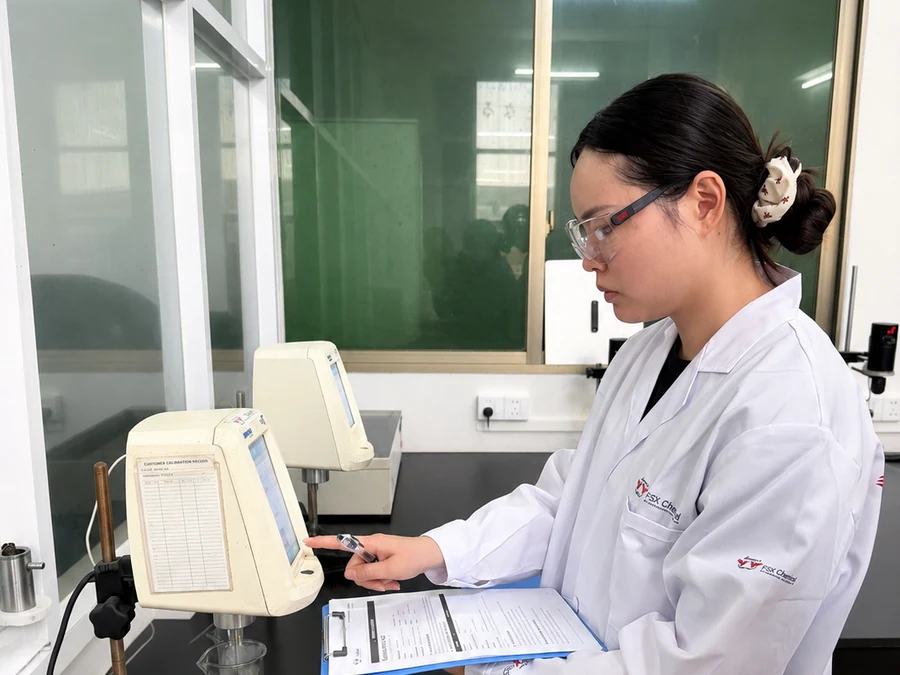
The Certificate of Analysis confirms the actual data of a specific production batch. It is important for bulk orders, repeat purchasing, distributor supply, and internal quality control.
Buyers can compare COA records across shipments to check whether key parameters remain stable over time.
SDS for Handling and Transport Review
The Safety Data Sheet supports handling, storage, transport, and internal safety review. For international purchasing, SDS may also be needed for shipment and customs-related communication.
Buyers should make sure the SDS product name and supplier information match the order documents.
Additional Environmental or Restricted-Substance Documents
If the buyer needs environmental statements, restricted-substance information, customer audit documents, or certification support, these requirements should be clearly requested before order confirmation.
Suppliers should explain which documents can be provided and which claims require third-party testing or formal certification.
How to Test Sodium Alginate Before Bulk Purchase
Test in the Actual Printing Paste Formulation
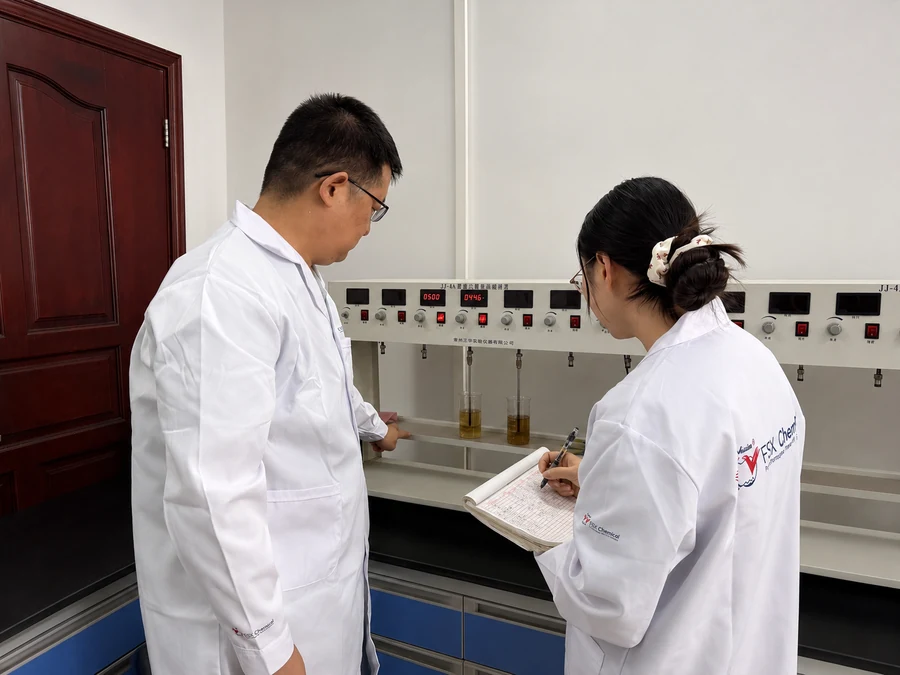
Sample testing should be done in the buyer’s own formulation whenever possible. Dyes, auxiliaries, water quality, pH, stirring method, paste concentration, and storage time can all affect final paste behavior.
Testing only in clean water may not be enough to confirm whether the sodium alginate grade is suitable for production.
Observe Paste Smoothness and Filtration
During testing, buyers should observe dissolution speed, paste smoothness, lump formation, filtration behavior, viscosity stability, and application handling.
For textile printing paste, these practical observations are often as important as the basic specification data shown in the TDS.
Compare Approved Sample with Bulk Shipment
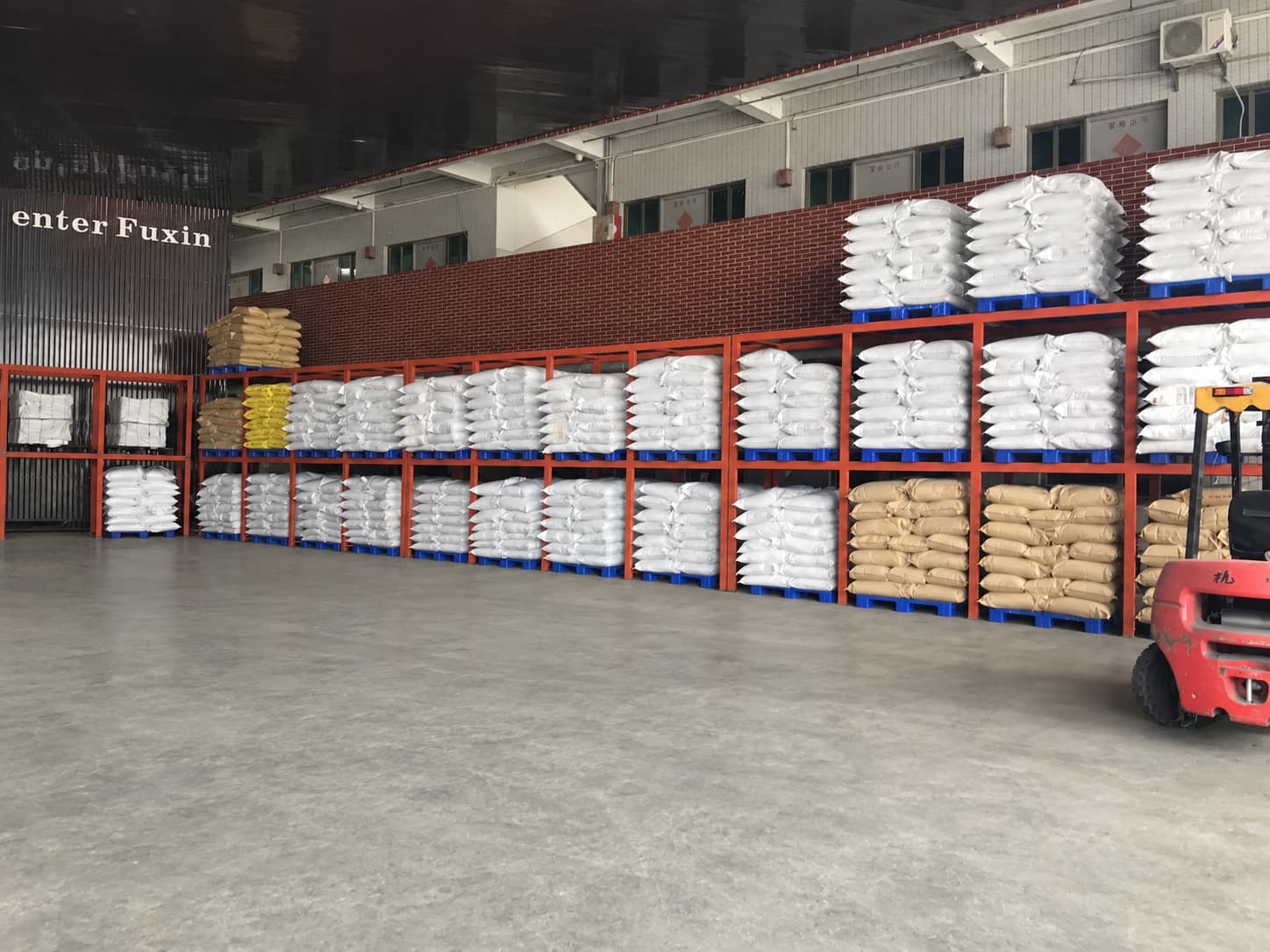
Before confirming a bulk order, buyers should check whether the approved sample and bulk shipment will follow the same viscosity range, mesh size, packaging format, batch traceability, and COA requirements.
This helps reduce the risk of sample-to-bulk mismatch.
Common Mistakes When Following Sodium Alginate Trends
Choosing by Trend Words Instead of Application Needs
Words such as “green,” “high-performance,” or “advanced” do not define whether a sodium alginate grade is suitable for a specific printing process.
Buyers should start with application requirements, not marketing descriptions.
Ignoring the Viscosity Test Method
Viscosity values measured under different concentrations, temperatures, or instruments may show different results.
Before comparing suppliers, buyers should check whether the test method is clearly stated.
Overlooking Sample-to-Bulk Consistency
This is especially important for distributors and factories that require stable repeat supply.

How FSX Chemical Supports Sodium Alginate Buyers
Next Steps
- Share Your Application — tell us your printing process, fabric type, dye system, target viscosity, and current paste formulation.
- Clarify Document Requirements — explain whether you need SDS, restricted-substance statements, customer questionnaires, or third-party certification documents.
- TDSni so'rang — review viscosity range, mesh size, pH, moisture, appearance, storage conditions, and testing method.
- Request a COA — confirm whether batch data matches the agreed specification range before shipment.
- Namuna so'rang — test the recommended sodium alginate grade in your own paste preparation and printing conditions before confirming bulk orders.
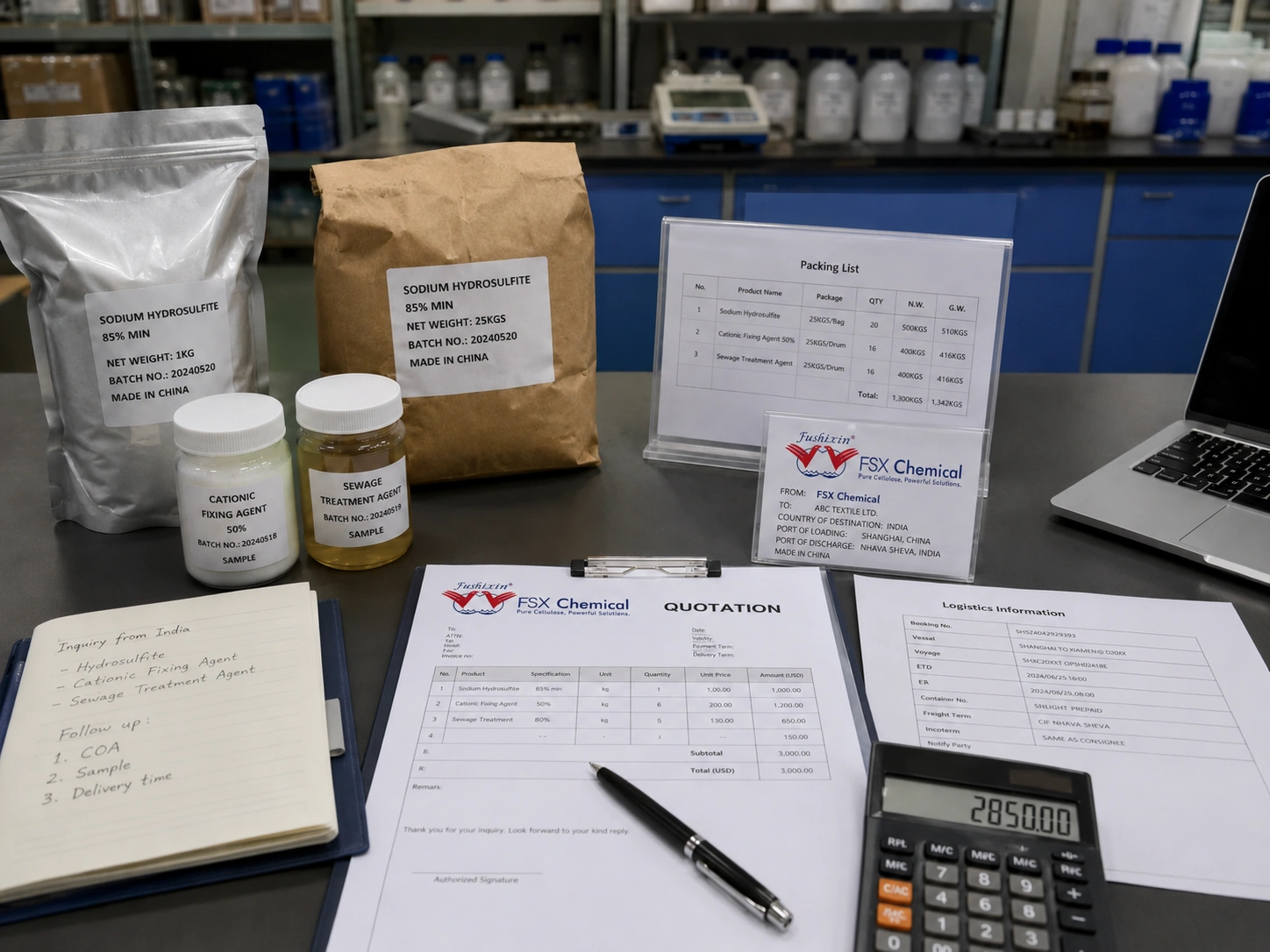
- Confirm Packaging and Export Documents — check bag size, labels, batch traceability, SDS, invoice, packing list, and other required documents before shipment.
- Request Grade and Evidence Review — share the exact claim, current TDS and printing conditions so that the required documents and comparison trial can be identified.📧 Elektron pochtaService@fsxchemical.com