Best Digital Printing Pastes for Disperse and Reactive Inkjet Systems
The best digital printing paste is the one matched to the ink chemistry, fabric and...
The best digital printing paste is not necessarily the product with the highest viscosity, the lowest dosage or the longest list of claimed applications. It is the product that is compatible with the ink chemistry, fabric, pretreatment method, printing equipment and fixation route.
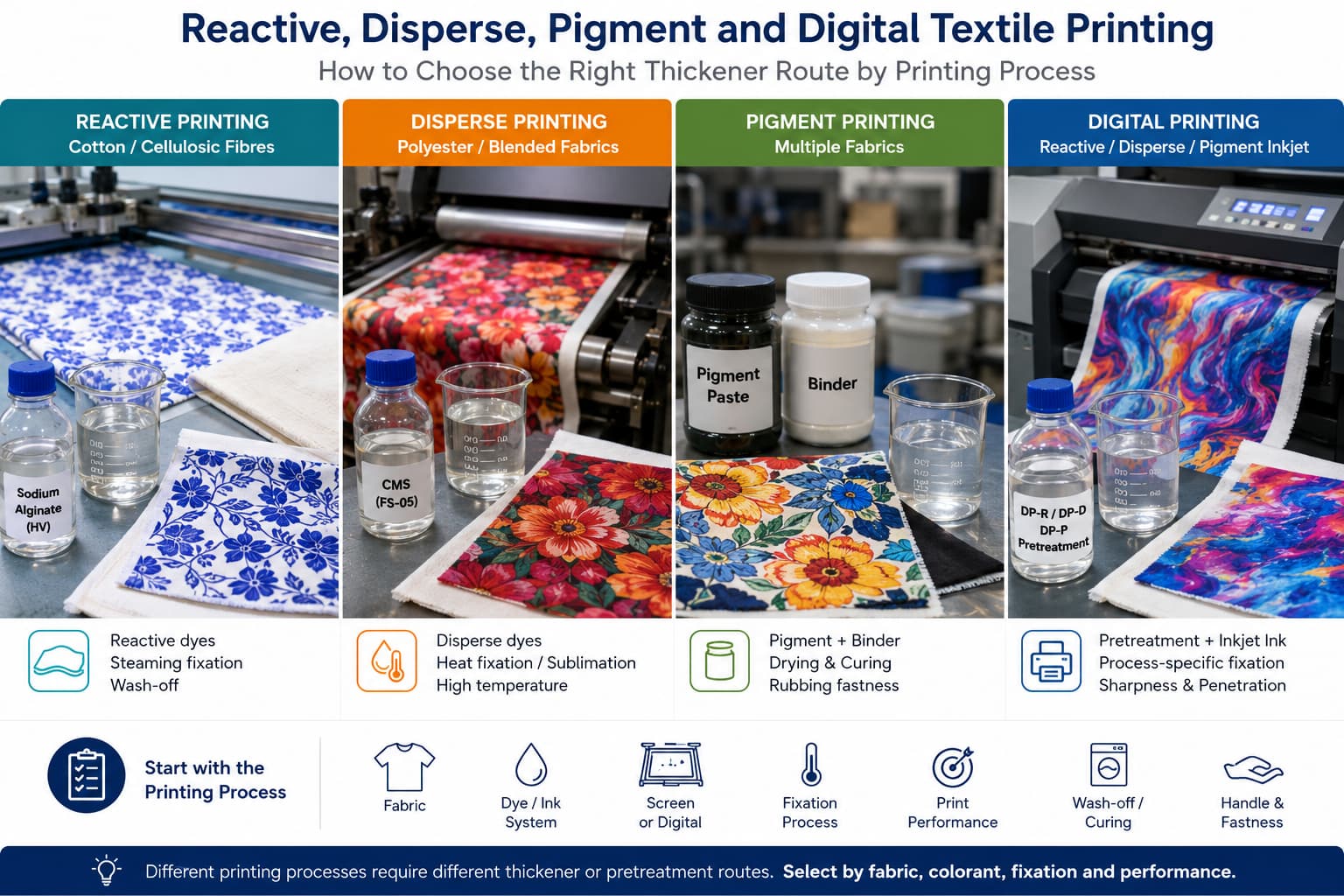
Reactive and disperse inkjet systems use different fibers and dye-fixation mechanisms. A pretreatment developed for reactive ink on cotton should not be assumed to work with disperse ink on polyester, and a product used for direct disperse printing may not be relevant to sublimation transfer printing.
This guide explains how buyers can select and test digital printing pastes for reactive and disperse inkjet systems without relying on generic “universal product” claims.
Quick answer: Start with a reactive-specific pretreatment route for reactive ink on cotton, viscose or other suitable fibers. Start with a direct-disperse-specific route for disperse ink printed directly on polyester. Confirm both through controlled sample testing before bulk purchase.
There Is No Universal Best Digital Printing Paste
Digital printing performance depends on the complete system. The same pretreatment may produce different results when the ink brand, fabric construction, coating pickup, printer, drying or fixation conditions change.
For this reason, “best” should be defined by measurable acceptance criteria. These may include edge definition, color yield, penetration, filtration, storage stability, wash-off, fastness, fabric handle and total cost in use.
Begin with the Ink Route
The first selection question should be whether the system uses reactive, direct disperse, sublimation transfer, pigment or another ink chemistry. Each route requires different pretreatment and fixation conditions.
This article focuses on reactive inkjet and direct disperse inkjet. Pigment printing and transfer-paper coating should be evaluated separately.
Then Confirm the Fabric
Reactive inkjet is commonly evaluated on cotton, viscose and other compatible cellulosic fabrics. Some protein fibers may also use reactive systems, but the pH and fixation requirements can differ from cotton.
Disperse inkjet is mainly associated with polyester and polyester-rich materials. Fiber blends need additional testing because each fiber component may respond differently during printing and fixation.
Finally Confirm the Fixation Route
Reactive dyes generally require moisture, controlled alkalinity and steaming, followed by washing. Direct disperse dyes require a suitable thermal or steaming route to develop and fix the color in polyester.
A product selected without understanding the fixation process may provide acceptable print definition before fixation but poor final color or fastness.
Digital Printing Paste Is Not the Same as Ink
In many digital textile systems, printing paste refers to a pretreatment or coating formulation applied to the fabric before inkjet printing. It controls how the fabric receives and holds the ink droplets.
The ink itself is a separately engineered fluid designed for the printer and printhead. A fabric pretreatment paste should not be mixed into the ink unless the ink and equipment supplier has specifically approved that practice.
Functions of Fabric Pretreatment
Control lateral ink spreading
Support line and edge definition
Manage penetration into the fabric
Hold fixation chemicals in a uniform layer
Support color development during steaming or heat treatment
Reduce uneven absorption caused by fabric variation
Why Pretreatment Uniformity Matters
Even a technically suitable formulation can fail if coating or padding is uneven. Variation in pickup across the fabric width can produce shade bands, inconsistent sharpness and irregular fixation.
Buyers should evaluate both the chemical product and the method used to apply it.
Reactive vs. Disperse Inkjet Systems
Selection Factor
Reactive Inkjet
Direct Disperse Inkjet
Typical Fiber
Cotton, viscose and other compatible fibers
Polyester and polyester-rich fabrics
Colorant
Reactive dye ink
Disperse dye ink
Fixation Principle
Reaction between dye and fiber under suitable moisture, alkali and heat
Diffusion of disperse dye into polyester under controlled heat
Main Pretreatment Role
Control droplet spreading and provide a suitable chemical environment for fixation
Control wetting, migration, penetration and surface color development
Typical Post-Treatment
Steaming followed by washing-off
Thermofixation or steaming, with washing or clearing where required
Key Risks
Bleeding, low fixation, hydrolyzed dye, poor wash-off and uneven coating
Migration, low color development, surface residue, poor rubbing and thermal yellowing
These are general process directions. Actual conditions must follow the ink supplier, fabric requirements and production equipment.
Selecting Paste for Reactive Inkjet Printing
What the Reactive Pretreatment Must Do
A reactive inkjet pretreatment needs to control ink-drop spreading while maintaining sufficient moisture and chemical conditions for fixation. It should produce a uniform coating without excessive stiffness or visible residue.
The formulation may contain a thickener, alkali, humectant and other auxiliaries. The exact composition depends on the reactive dye class, fabric, application method and steaming process.
Thickener and Rheology
The thickener helps control how ink droplets spread on the fabric surface. If the pretreatment provides insufficient control, fine lines may widen and adjacent colors may bleed.
Excessive thickener or unsuitable rheology can reduce penetration, create a stiff handle or make washing more difficult. Selection should be based on printed results rather than the viscosity of the pretreatment bath alone.
Role of Sodium Alginate
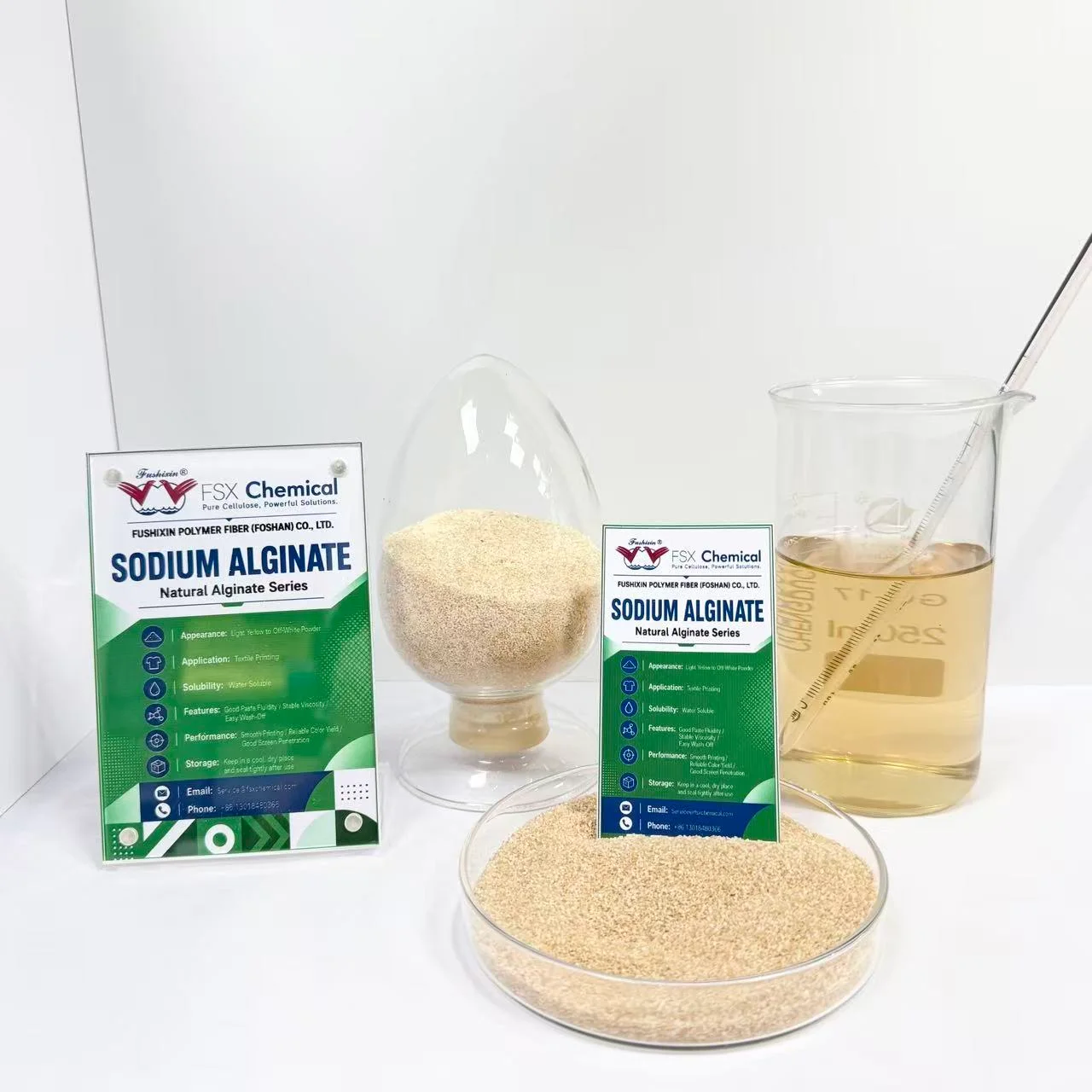
Sodium alginate is commonly evaluated in reactive printing because its anionic structure generally limits interaction with many reactive dyes. It can also support moisture and rheology control in suitable pretreatment systems.
However, a screen-printing sodium alginate grade is not automatically suitable for digital pretreatment. Filtration, particle cleanliness, coating uniformity and dried residue need separate evaluation.
Alkali and pH Control
Reactive dye fixation requires a suitable alkaline environment, but excessive or poorly controlled alkalinity can contribute to premature hydrolysis or shade instability. The selected alkali system should match the ink and fixation process.
Do not copy a pH or alkali dosage from an unrelated ink system. Confirm the ink supplier’s guidance and validate the pretreatment after storage and drying.
Moisture and Humectant Balance
Moisture supports dye dissolution, fiber swelling and diffusion during steaming. Insufficient moisture can reduce fixation, while excessive moisture may increase spreading or migration.
Humectant selection and dosage should be evaluated together with steaming conditions, fabric pickup and environmental requirements.
Reactive Pretreatment Trial Criteria
Coating or padding uniformity
Dried-fabric appearance
Ink-drop spreading and edge definition
Color yield after steaming and washing
Penetration and solid-area levelness
Wash-off and staining of white areas
Wash and rubbing fastness
Fabric handle after washing
Selecting Paste for Direct Disperse Inkjet Printing
What the Disperse Pretreatment Must Do
In direct disperse printing, the ink is printed directly onto polyester rather than onto transfer paper. Pretreatment may be used to manage wetting, droplet spreading, penetration and dye migration before thermal fixation.
The product also needs to remain compatible with the selected heat-treatment process. Residual chemicals should not cause unacceptable yellowing, odor, deposits or changes in fabric handle.
Control Ink Spreading on Polyester
Polyester constructions vary in yarn type, weave, knit structure, surface finish and absorbency. A pretreatment that works on one fabric may produce excessive spreading or poor coverage on another.
Evaluate fine lines, small text, solid areas and color-to-color boundaries. Testing only a color block may not reveal definition problems.
Manage Penetration and Surface Color
Too much penetration can reduce surface color strength, while too little penetration may concentrate dye near the surface and affect rubbing or levelness. The target depends on fabric construction and end use.
Pretreatment pickup, drying and fixation should be adjusted as a system rather than changing thickener dosage alone.
Thermal Stability
Direct disperse printing requires controlled heat for color development. The pretreatment should be checked for discoloration, residue and performance changes under the actual fixation conditions.
Do not assume that a product is thermally suitable based only on room-temperature paste stability.
Disperse Pretreatment Trial Criteria
Wetting and coating uniformity
Print definition and bleeding
Color development after fixation
Penetration and surface coverage
Dry and wet rubbing fastness
Wash or clearing performance where required
Thermal yellowing and residue
Fabric handle
Direct Disperse vs. Sublimation Transfer
Direct disperse inkjet and sublimation transfer both use disperse dye chemistry, but they are different production routes.
Direct Disperse Inkjet
The ink is applied directly to the polyester fabric. A fabric pretreatment may be required to control ink behavior, followed by thermal fixation and any necessary washing or clearing.
Sublimation Transfer
The ink is printed onto coated transfer paper and then transferred to polyester using heat and pressure. In this system, the transfer-paper coating is a critical component, while the fabric may not use the same pretreatment paste required for direct printing.
Why Buyers Must Identify the Route
A request for “disperse digital printing paste” is incomplete unless the buyer states whether the process is direct printing or transfer printing. The recommended product, test method and commercial requirement can be entirely different.
Key Parameters Buyers Should Compare
Ink and Fabric Compatibility
The candidate product should be tested with the actual ink and fabric. Compatibility cannot be confirmed only from a general statement that the product is for reactive or disperse printing.
Viscosity and Rheology
Viscosity affects coating pickup, leveling and handling. Compare values only when concentration, temperature, hydration time, instrument, spindle and speed are the same.
Application behavior can also depend on shear thinning and recovery, so one viscosity number may not predict coating or printing performance.
Filtration and Insoluble Matter
Particles, gels and incompletely dissolved material can create coating streaks or deposits on the fabric. For reactive alginate-based products, hard-water ions may also contribute to gel formation.
Use actual process water and the intended filtration procedure during sample testing.
pH and Ionic Content
pH and ionic content can affect dye fixation, paste stability and interaction with inks or auxiliaries. These parameters should be controlled within the range approved for the specific ink route.
Storage and Standing Stability
Measure viscosity and appearance after the normal production holding period. Check for separation, sediment, microbial change, odor or gel formation.
Drying Behavior
The pretreated fabric should dry uniformly without unacceptable tack, powdering, yellowing or migration. Confirm whether the treated fabric can be stored before printing and under which conditions.
Fixation Compatibility
The pretreatment should support the required steaming or thermal process without creating residue or restricting color development.
Finished-Fabric Performance
Evaluate after-fixation and after-wash color, sharpness, penetration, fastness and handle. Before-fixation appearance alone is not sufficient for approval.
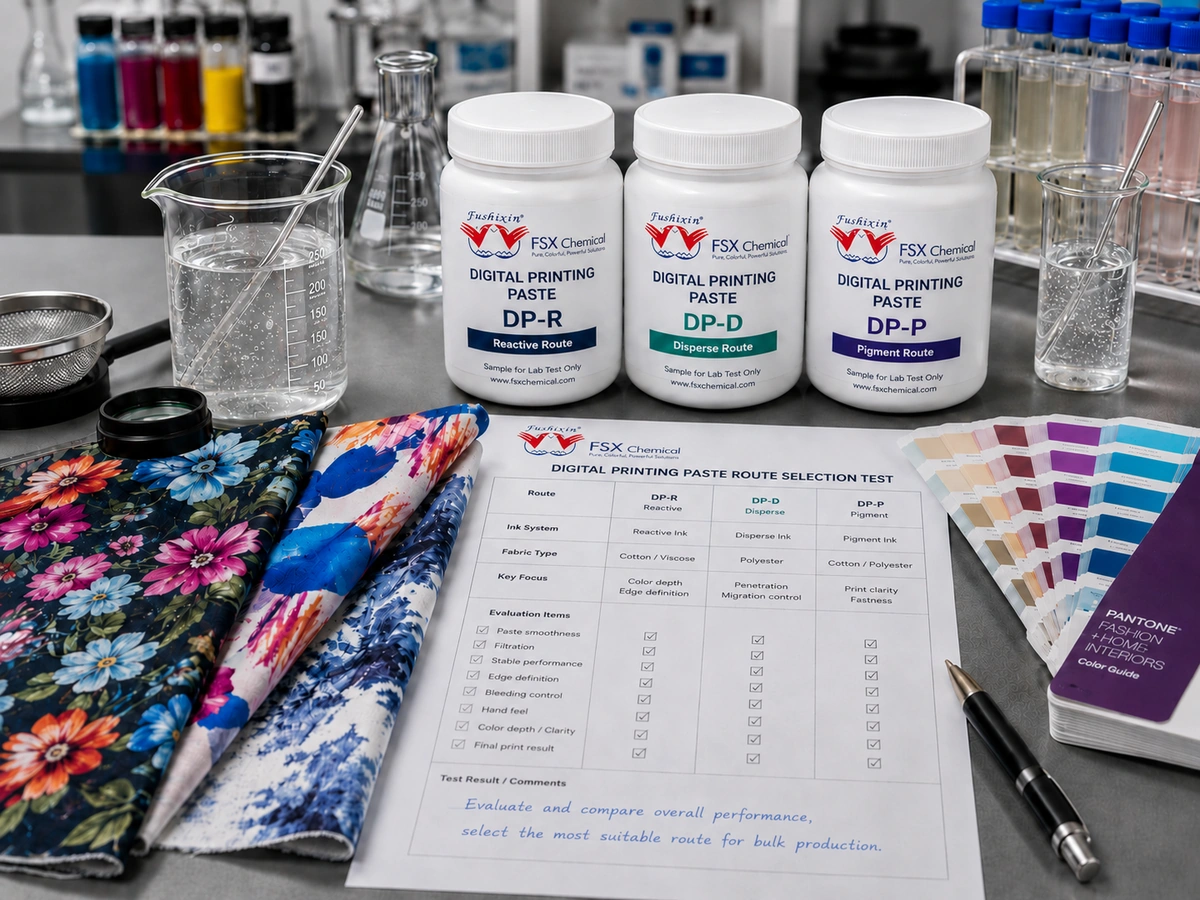
DP-R and DP-D as Starting Evaluation Routes
FSX Chemical currently separates its digital printing products by ink route rather than presenting one universal paste. DP-R is the starting route for reactive digital printing trials, while DP-D is the starting route for direct disperse printing trials.
FSX Route
Initial Application Direction
Information Required Before Sampling
DP-R
Reactive inkjet pretreatment for compatible fabrics
Reactive ink, fabric, application method, pickup, drying, steaming and washing
DP-D
Direct disperse inkjet on polyester
Disperse ink, polyester construction, direct-printing method, drying and thermal fixation
These codes are FSX Chemical product routes, not universal industry standards. Buyers should request the current TDS and confirm the available sample before testing.
DP-R and DP-D should not be compared as competing grades because they serve different ink and fiber systems.
Laboratory and Production Trial Protocol
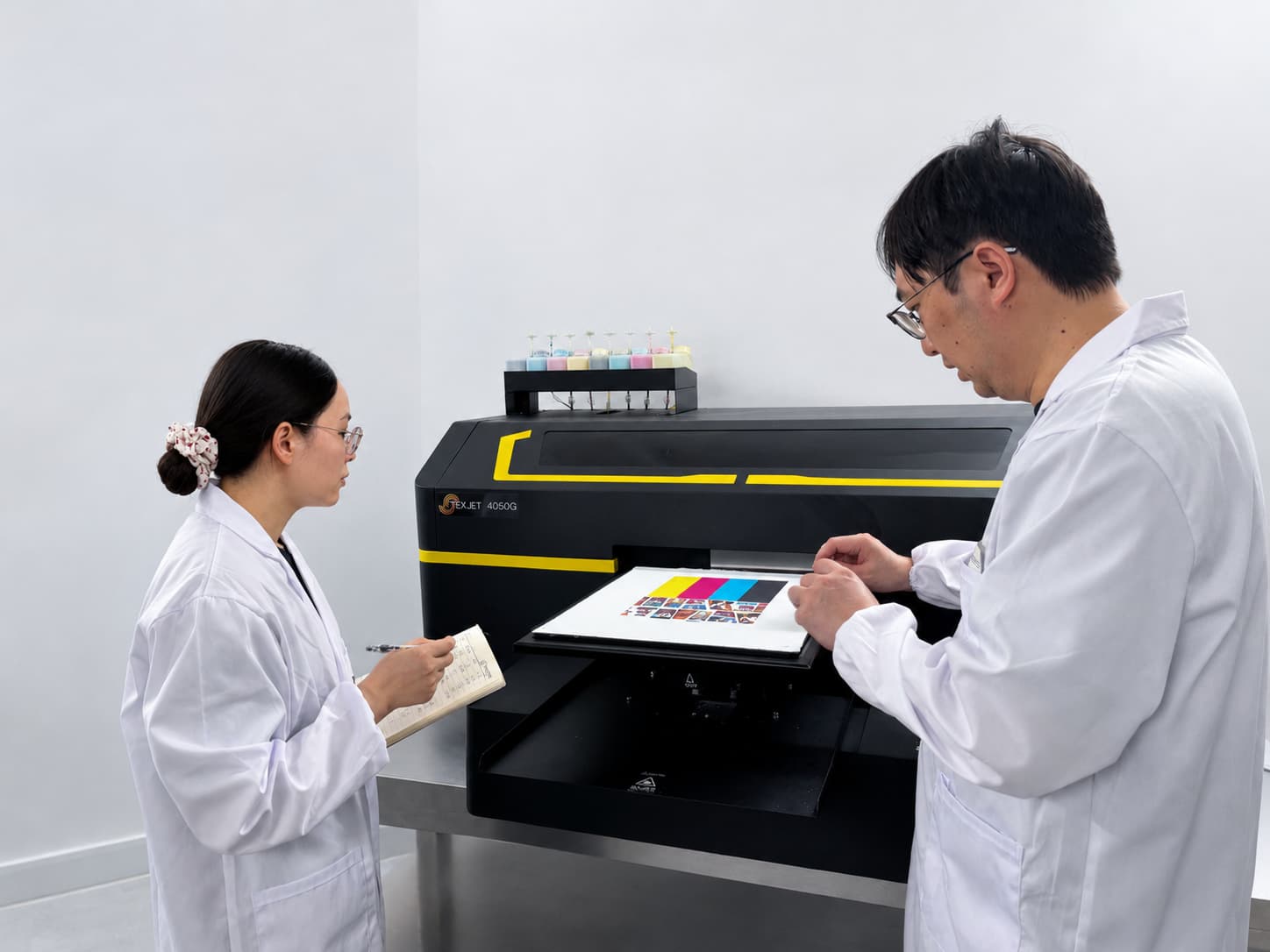
Step 1: Define the Printing Route
Record whether the process is reactive inkjet, direct disperse inkjet or sublimation transfer. Confirm the fabric, ink supplier and fixation equipment.
Step 2: Establish the Reference
Use the current approved pretreatment as the control where possible. Record its dosage, pH, viscosity, application method and pickup.
Step 3: Prepare the Candidate Paste
Follow the candidate supplier’s initial preparation instructions. Record water quality, mixing sequence, temperature, hydration, foam and filtration.
Step 4: Apply the Pretreatment
Use the same coating, padding or spraying method for the reference and candidate. Measure wet pickup or dry add-on using the mill’s approved procedure.
Step 5: Dry Under Controlled Conditions
Use the same drying settings and conditioning period. Check for unevenness, tack, powdering or visible residue.
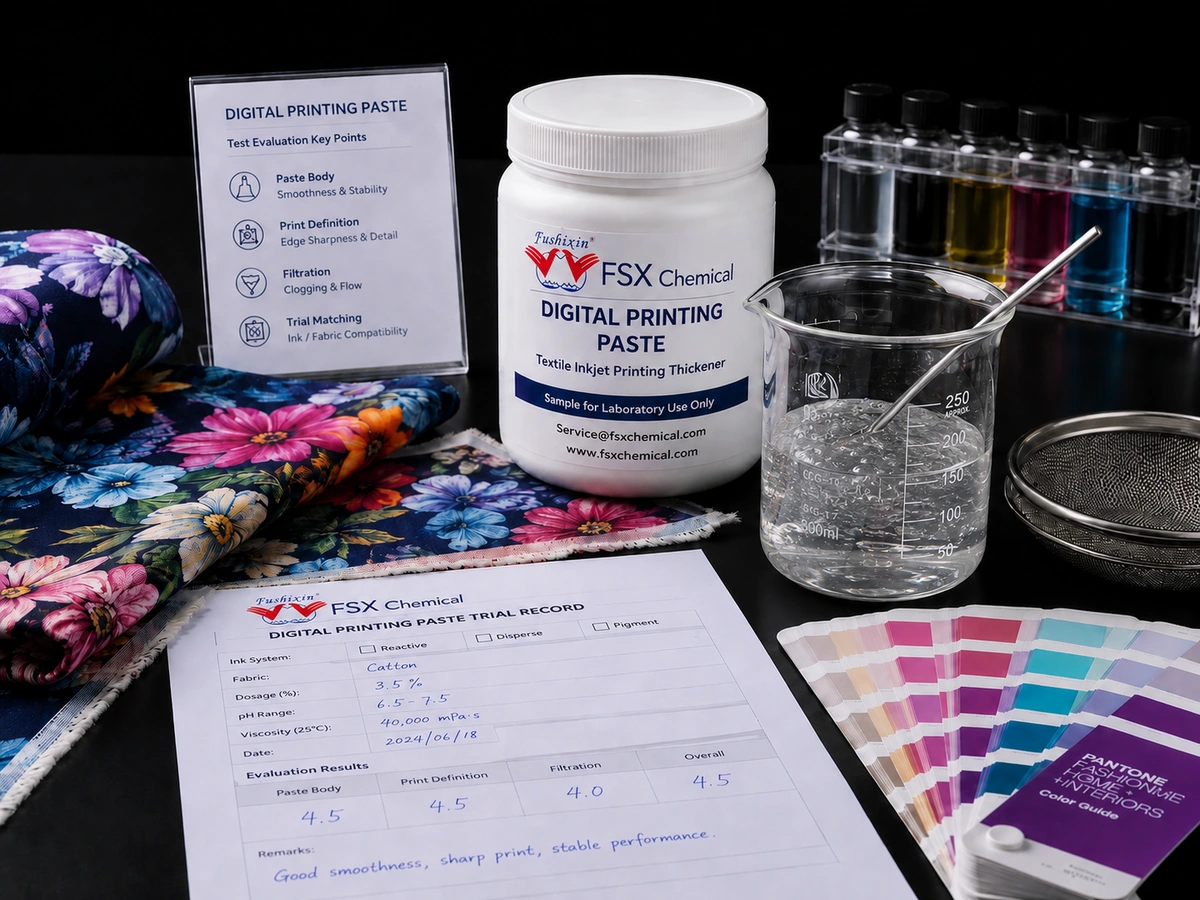
Step 6: Print a Standard Test Target
The target should include fine lines, small text, gradients, solid areas and color-to-color boundaries. Use the same printer settings and ink lot for all candidates.
Step 7: Fix and Wash
Apply the standard steaming or thermal process. Complete the normal washing or clearing route where required.
Step 8: Evaluate Finished Results
Color yield and color difference
Line width and edge sharpness
Bleeding and color-to-color migration
Penetration and solid-area levelness
Wash and rubbing fastness
White-area staining
Fabric handle and residue
Step 9: Complete a Production Trial
A laboratory trial should be followed by a controlled production run before high-volume approval. Confirm mixing, coating, drying, printer runnability, fixation and washing at normal production speed.
Troubleshooting Common Digital Printing Problems
Problem
Possible Pretreatment or Process Causes
First Checks
Blurred lines or bleeding
Insufficient spreading control, excessive wetting, high pickup or uneven drying
Dosage, viscosity, pickup, fabric absorbency and drying
Low reactive color yield
Uneven pretreatment, unsuitable alkali or moisture, poor steaming or excessive wash loss
pH, pickup, steam quality, fixation and after-wash K/S
Low disperse color development
Low pickup, excessive penetration, unsuitable fixation or ink-fabric mismatch
Pretreatment add-on, polyester construction and thermal conditions
Uneven shade across the width
Uneven coating, fabric moisture, dryer airflow or fixation distribution
Pickup profile, drying and steamer or heat-unit uniformity
Poor wet rubbing fastness
Unfixed surface color, incomplete washing, excessive surface concentration or residue
Fixation, washing, penetration and pretreatment dosage
Stiff fabric handle
Excess pretreatment, difficult wash-off, residue or unsuitable polymer
Dry add-on, thickener grade, washing and finishing
Coating streaks
Gel particles, foam, incomplete hydration, poor filtration or equipment contamination
Mixing, water hardness, filtration and coating equipment
Yellowing after disperse fixation
Thermal sensitivity of fabric, pretreatment or auxiliaries
Temperature profile, dwell time and blank-fabric control
Do not change the ink, pretreatment dosage and fixation conditions in the same trial. A one-variable-at-a-time approach makes the source of improvement or failure easier to identify.
Cost-in-Use Evaluation
The lowest product price does not necessarily produce the lowest digital printing cost. Pretreatment dosage, pickup, drying, ink consumption, washing and rejected fabric all affect the result.
A cost comparison should include:
Delivered pretreatment-paste cost
Dosage per kilogram or meter of fabric
Mixing and filtration loss
Drying energy
Ink required to reach the target color
Steaming or thermal-fixation cost
Water and chemicals used for washing
Cleaning, downtime, reprinting and rejected fabric
A candidate with a higher price may still be economical if it meets the target at lower dosage or reduces rework. These savings should be demonstrated through recorded trials rather than estimated marketing percentages.
Documents to Request Before Purchasing
Before Sample Testing
Product-specific TDS
Current SDS
Product route and grade code
Recommended preparation method
Reference dosage or application direction
Viscosity and pH test methods
Before Bulk Approval
Agreed purchasing specification
Approved grade code
Packaging and storage requirements
Batch-specific COA requirements
Required compliance documents
Commercial quotation and shipment terms
If compliance with a restricted-substance program or market regulation is required, request current documents that identify the holder, product, test scope and validity. Do not rely only on a general certification logo.
How FSX Chemical Supports Digital Printing Buyers
FSX Chemical supplies separate digital printing paste routes for reactive, disperse and pigment systems. For the applications covered in this guide, buyers can request DP-R for reactive evaluation or DP-D for direct disperse evaluation.
Grade selection can begin with a current TDS, sample, ink system, fabric, dosage, pH, application method and print problem. FSX Chemical can recommend a starting sample route, but final approval remains subject to the buyer’s actual process test.
Information to Send
Reactive or disperse ink system
Ink brand or technical requirements where shareable
Learn how to choose thickener and pretreatment routes for reactive, disperse, pigment and digital textile printing based on fabric, dye or ink, fixation, wash-off and print-quality requirements.
Compare CMC, CMS, sodium alginate and digital printing paste for textile printing. Learn how each route fits reactive, disperse, pigment and digital processes, and what buyers should review before sample testing, grade matching and bulk purchase.
Sodium alginate is widely used in textile printing as a stable and washable thickener for reactive printing paste. Learn how to evaluate viscosity grade, purity, and application suitability before purchasing, and how FSX Chemical supports global buyers with technical data and samples.
Digital inkjet printing on textiles has different paste and pre-treatment requirements compared to screen printing. This guide explains how sodium alginate is used in digital textile printing and what grade parameters procurement teams should specify.
Choosing a textile printing chemical supplier requires more than comparing product names and prices. This guide explains how buyers can evaluate product range, technical documents, sample testing, batch consistency, communication, and supplier support before cooperation.
Carboxymethyl Starch CMS can be evaluated for selected textile sizing, printing paste, and digital printing formulation systems. This guide explains how buyers should review viscosity grade, dissolution behavior, pH, moisture, film behavior, formulation compatibility, TDS, COA, SDS, sample testing, and batch consistency before bulk purchase.
Sodium alginate is commonly used as a thickener in reactive textile printing paste, but other textile uses require application-specific validation. This guide compares printing, digital pretreatment, warp sizing, dyeing-related formulations, coating, and finishing by function, technical requirements, risks, documents, and sample tests.
Grade matching is not simply finding a product with a similar viscosity. This guide explains how textile printing mills can compare paste grades through application review, controlled preparation, printing trials and sample-to-bulk verification.
Textile printing performance depends on a coordinated chemical system, not one universal additive. This guide explains ten important chemical groups, their functions, where they fit and what buyers should verify before production trials.
Viscosity control in digital textile printing involves two different systems: the jetting ink and the fabric pretreatment formulation. This guide explains how temperature, formulation, measurement methods and process conditions affect jetting stability and print quality.
Laboratory evaluation of a printing thickener should cover more than one viscosity result. This guide explains powder inspection, stock-paste preparation, rheology, formulation compatibility, printing trials, wash-off and final performance assessment.
Digital printing pastes should be selected by ink chemistry, fabric, application method and post-treatment. This guide compares sodium alginate, CMC, CMS, synthetic polymer and compound pretreatment routes for textile inkjet printing.
Share the product name, application, quantity, destination and any TDS,
sample photo or document you already have. FSX Chemical will review the
information and recommend the next step for quotation, sample matching
or product selection.
Product InformationProduct name, grade, model, label photo or supplier reference.
Available DocumentsTDS, SDS, COA, sample photo, product list or test data.
Order DetailsEstimated quantity, packaging, destination country, port or trade term.
Application or IssueTextile printing process, formulation need, current issue or target performance.

 EN
EN  BN
BN  ES
ES  TR
TR  FR
FR  ID
ID  RU
RU  AR
AR  UR
UR  VI
VI  TL
TL  HI
HI  UK
UK  KK
KK  KA
KA  UZ
UZ