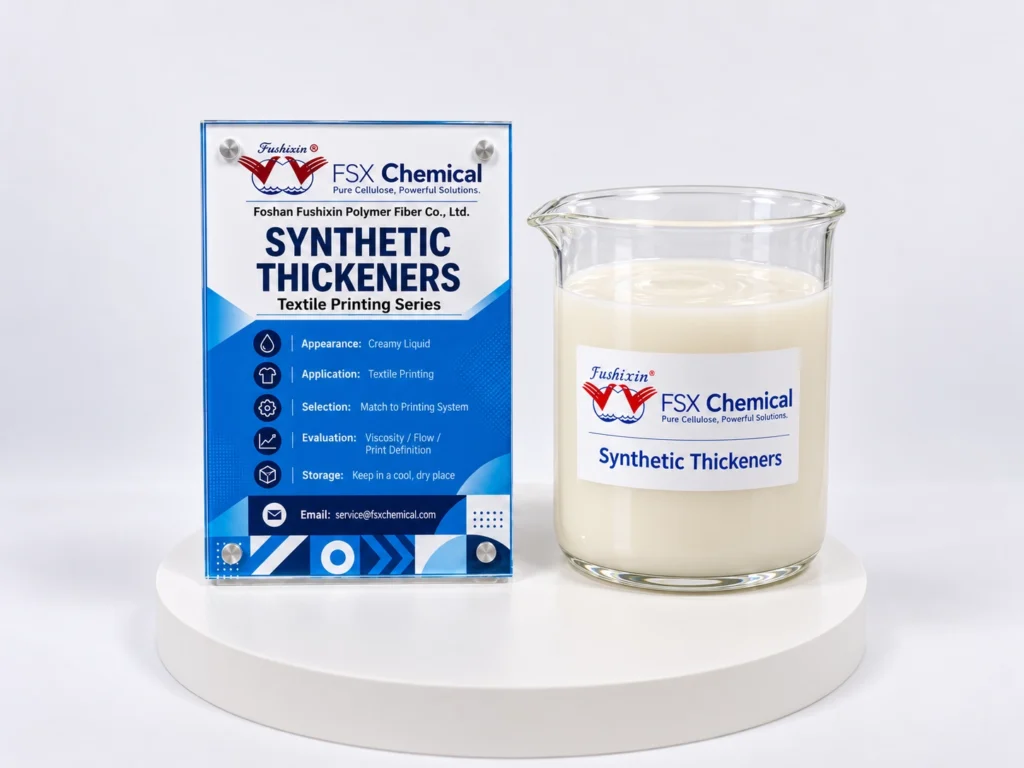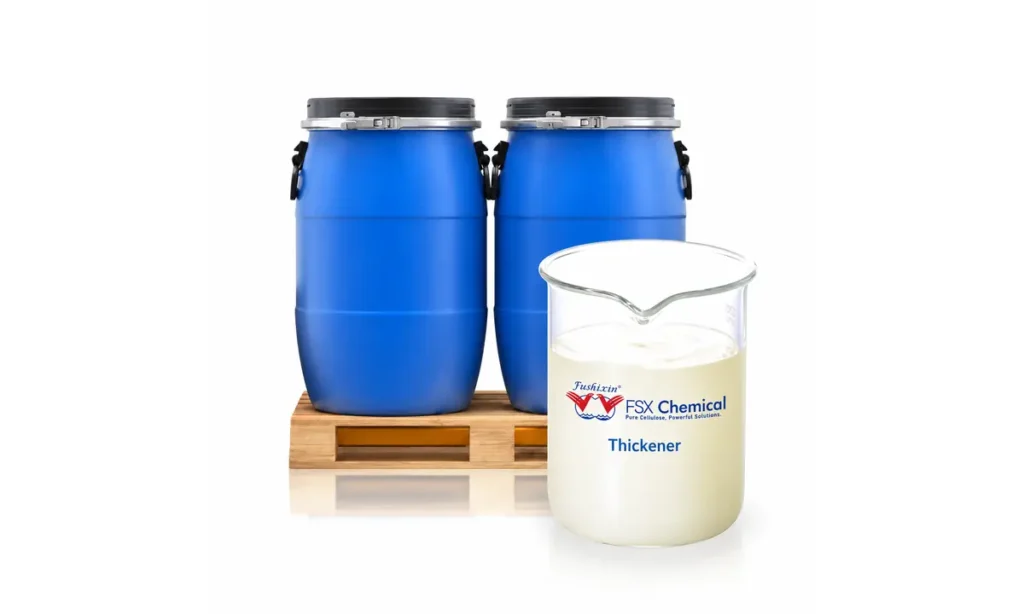















Reactive Printing Thickener · Sodium Alginate Alternative
Evaluating a Reactive Printing Thickener as a Sodium Alginate Alternative
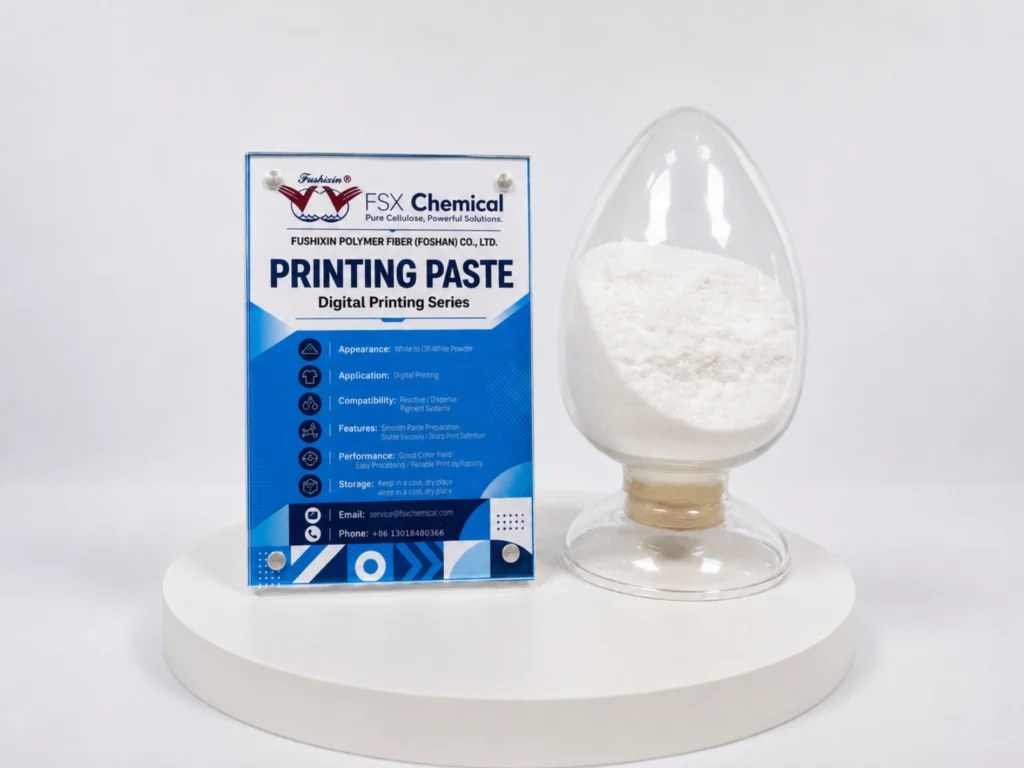
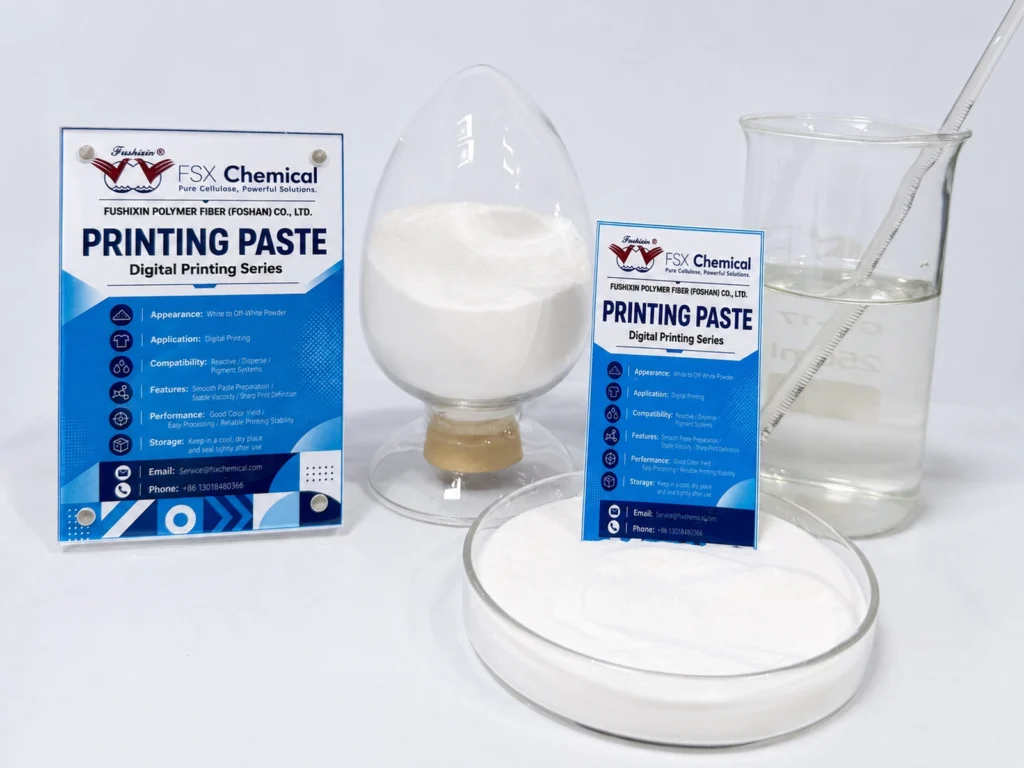
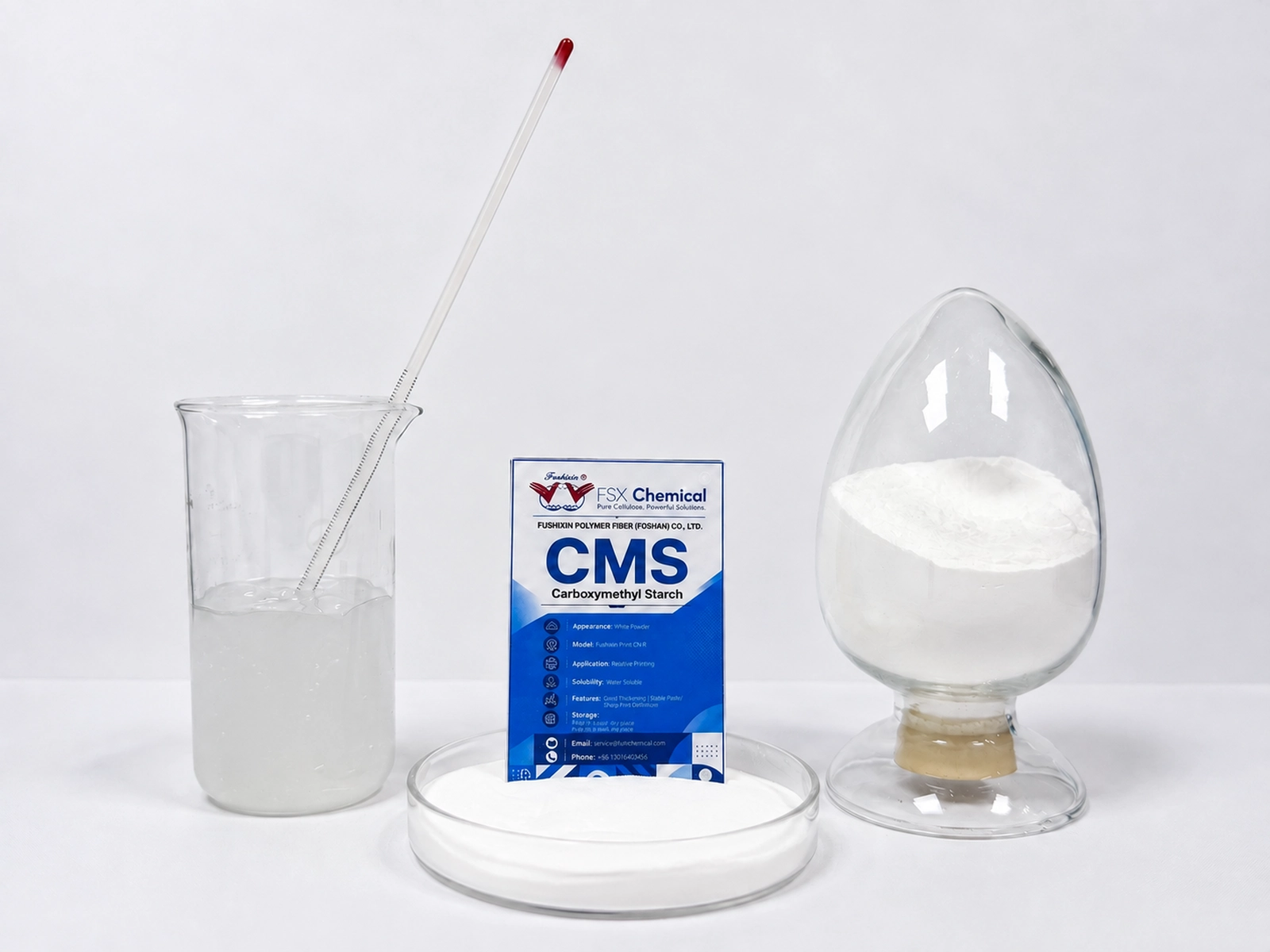
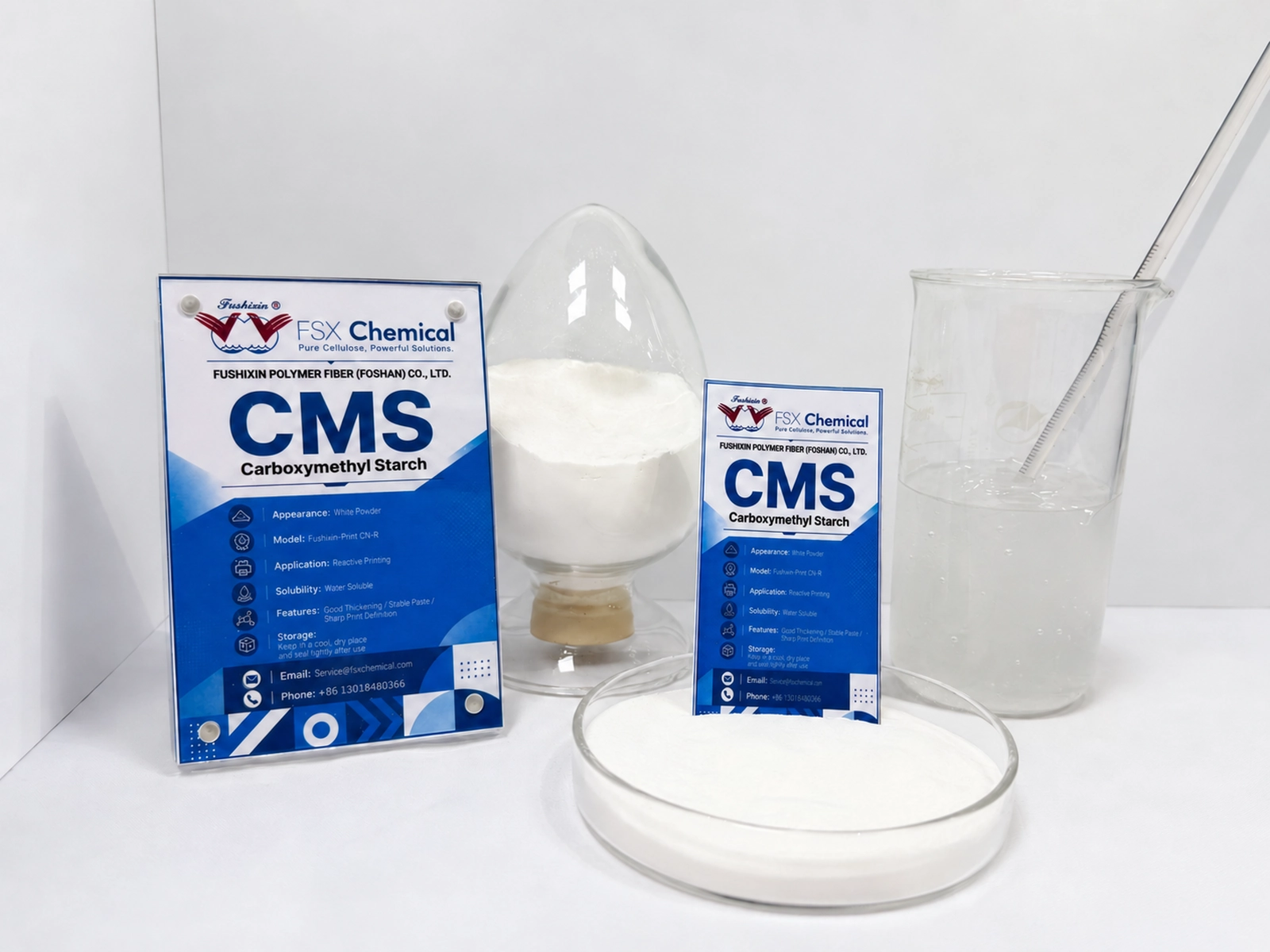
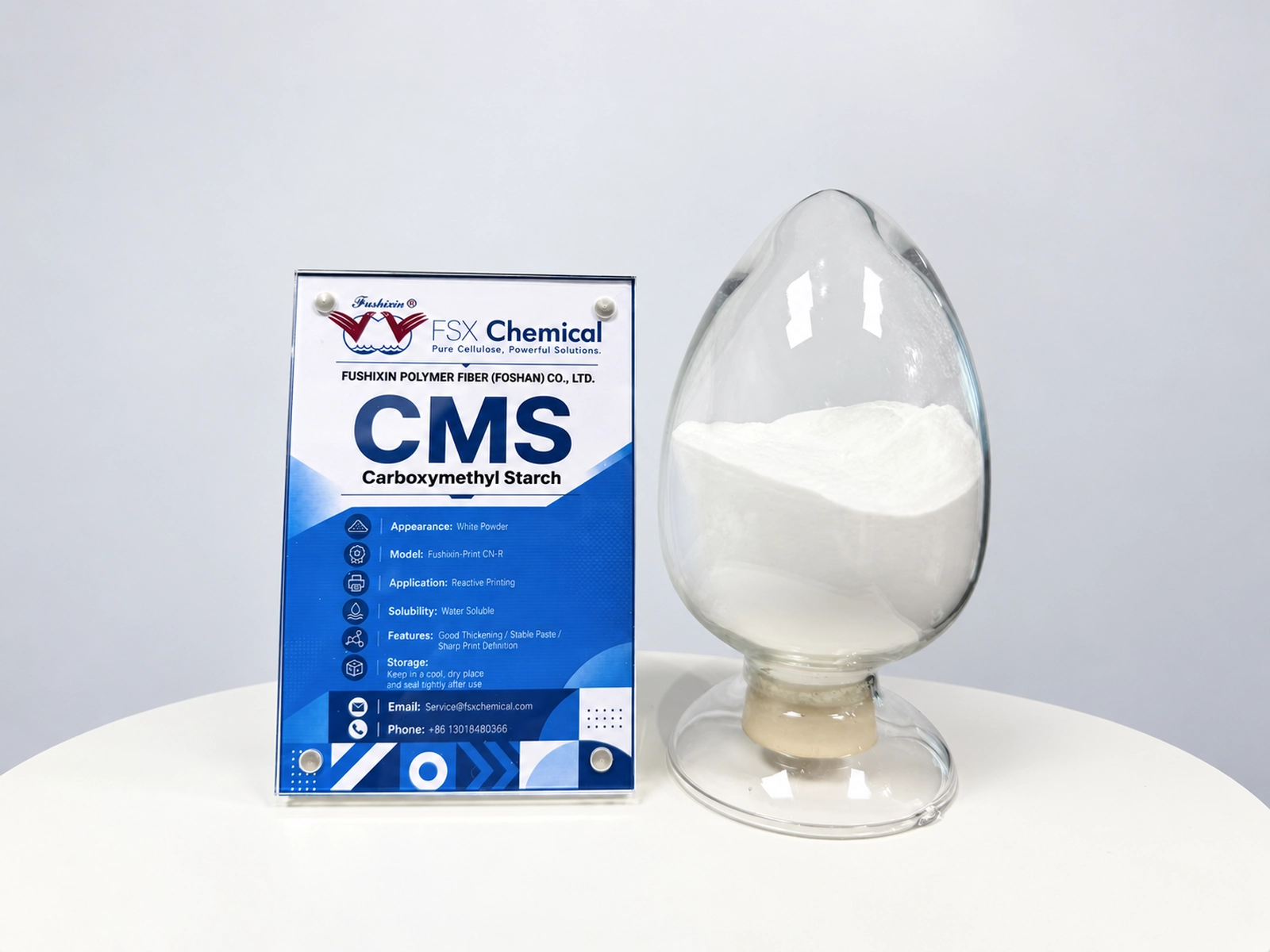
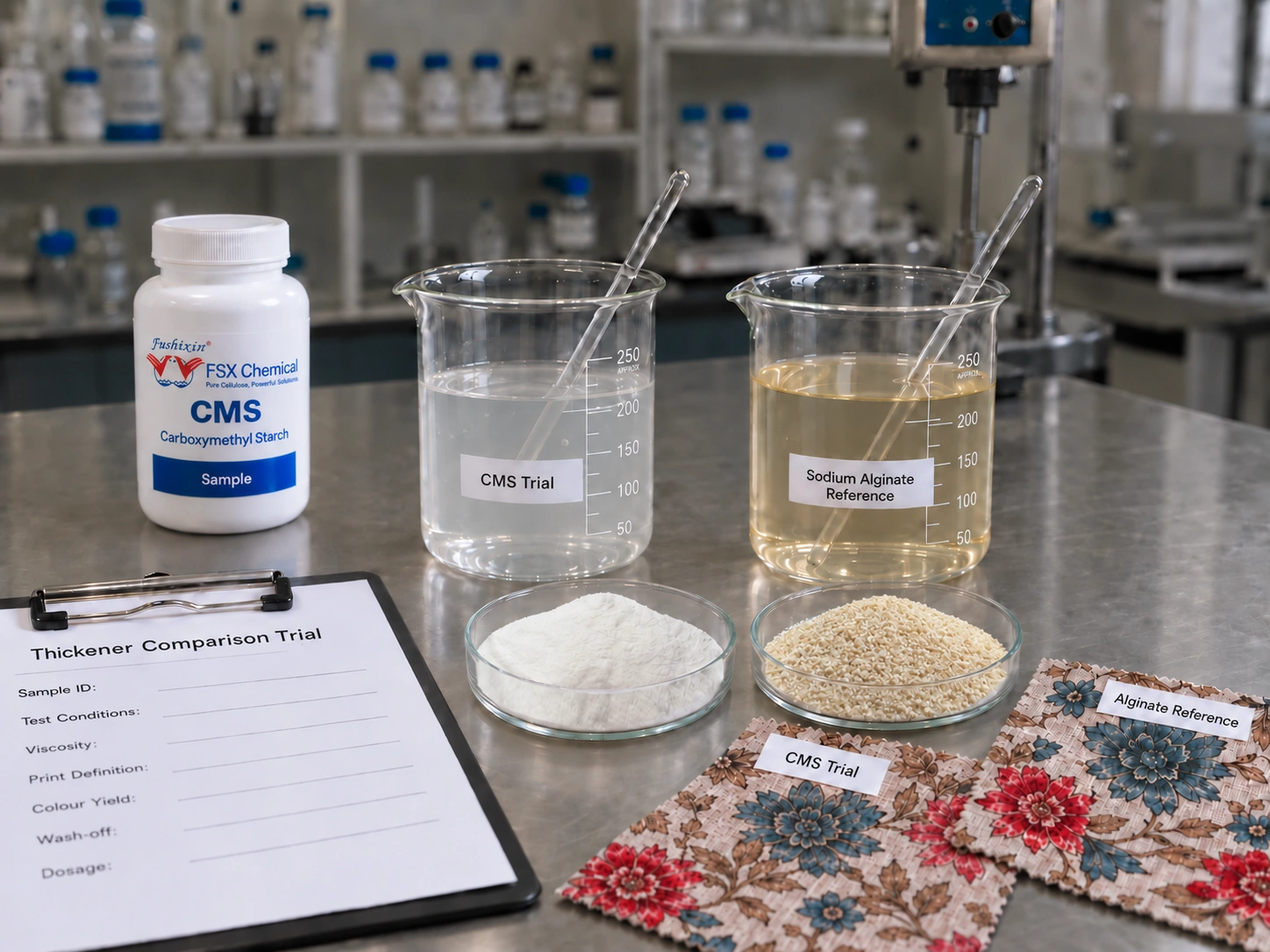
For reactive dye printing on cotton and viscose, an alternative printing thickener can be evaluated against sodium alginate by comparing paste viscosity, screen performance, colour yield, wash-off and actual dosage under the same production conditions. Final replacement suitability should be confirmed through laboratory and production trials.
Reactive Dye Printing Performance
Compare paste viscosity, screen running, print definition, colour yield and wash-off under the actual fabric, dye system and reactive printing conditions.
Sodium Alginate Alternative Trial
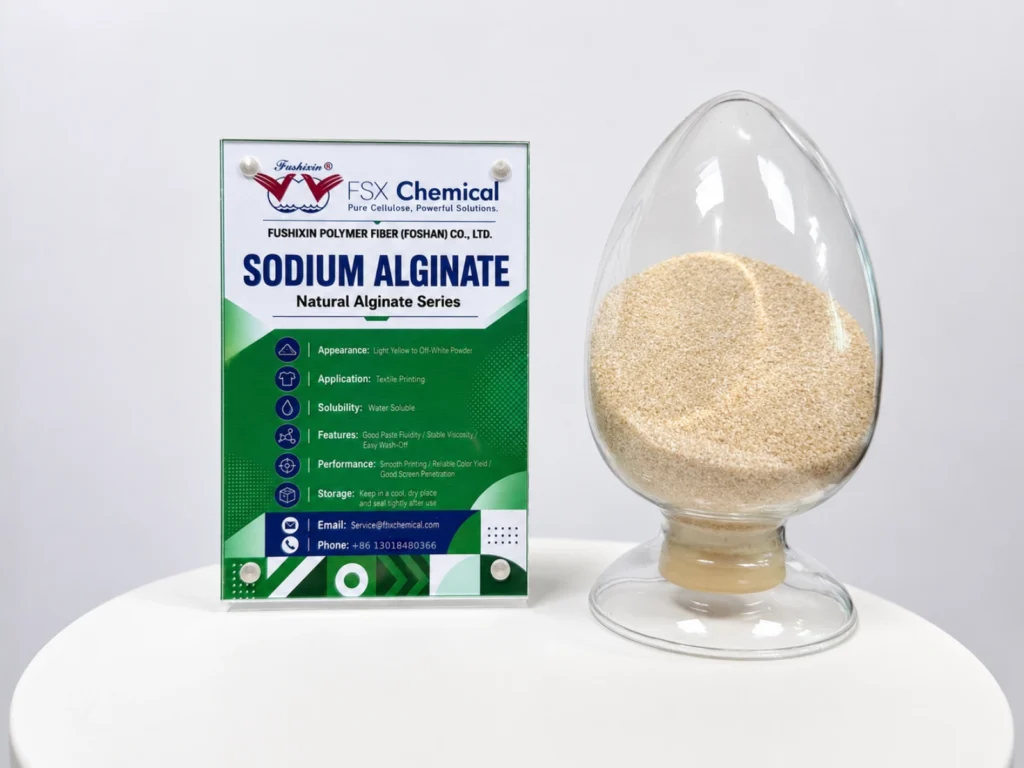
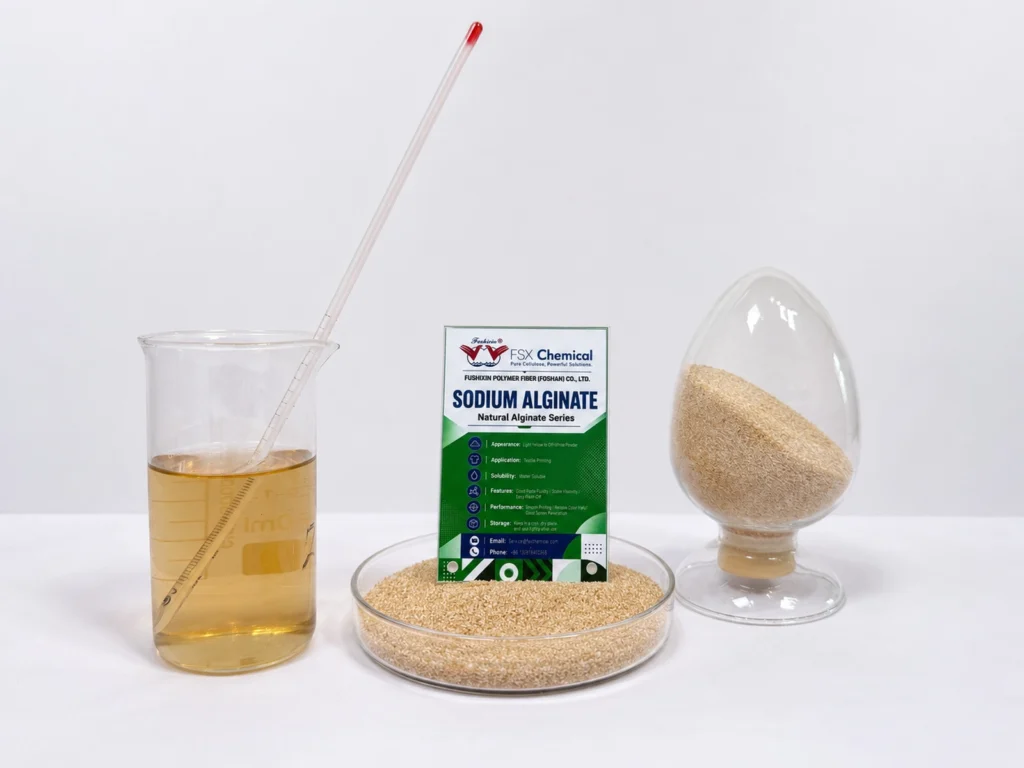
Compare the alternative reactive printing thickener with your current sodium alginate using the same formulation, target viscosity and printing conditions. The suitable replacement level should be confirmed through controlled laboratory and production trials.
Dosage & Cost-in-Use
Compare the actual thickener dosage required to reach the same target paste viscosity and printing performance rather than comparing price per kilogram alone. Final cost-in-use should be based on actual trial consumption.
Specialty Printing · Textile Thickener
Specialty Printing Thickener for Vat, Discharge & Burn-Out Printing
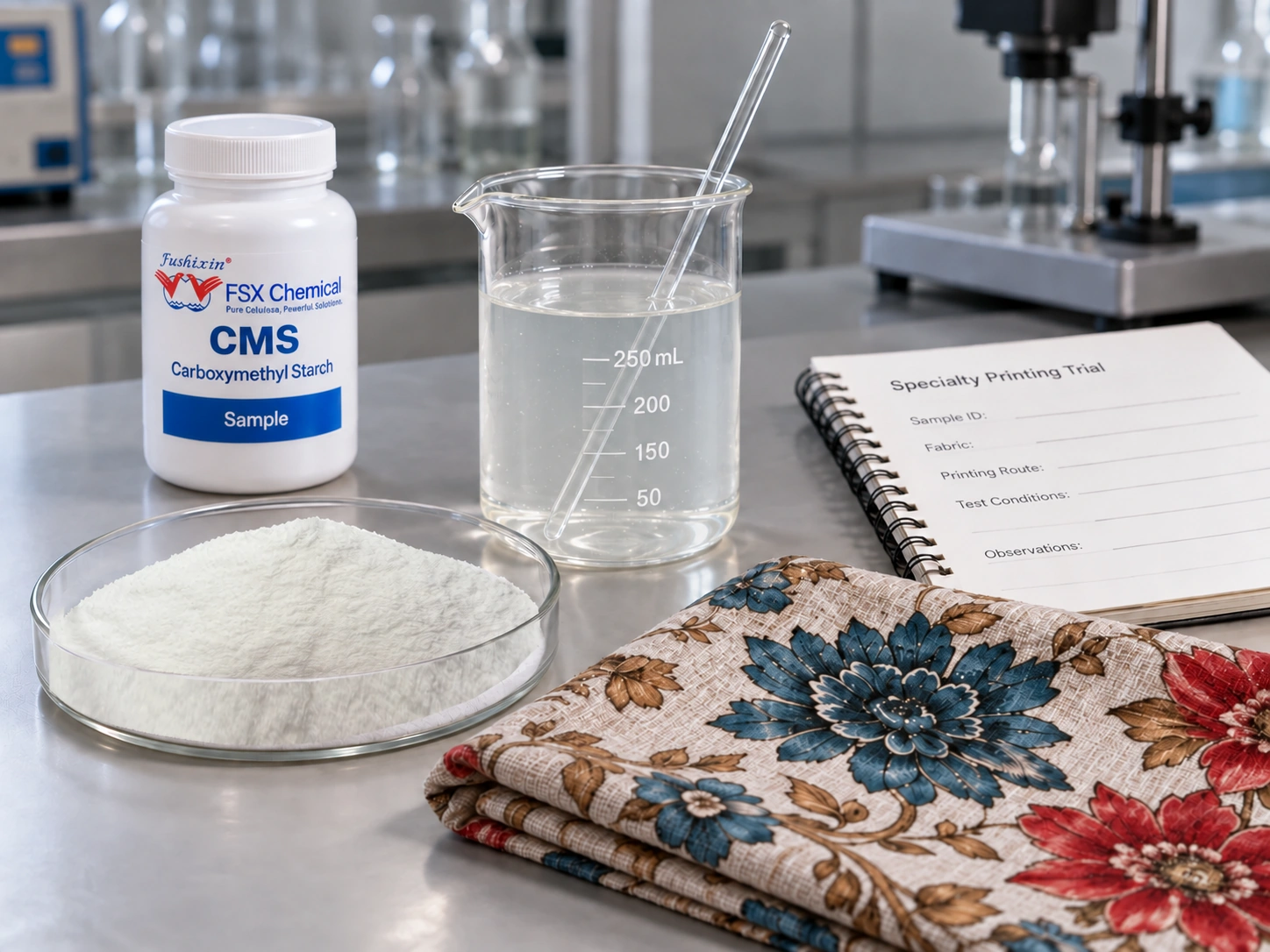
FSX Chemical provides specialty printing thickener solutions for vat dye, discharge and selected burn-out or devoré textile printing. The suitable grade should be selected according to the fabric, chemical system, paste preparation and required printing effect. H5 is one internal FSX grade available for evaluation within this specialty printing route.
Specialty Printing Route
Thickener route for specialty textile printing where paste preparation, process compatibility and final printing effects require controlled evaluation.
Vat & Discharge Printing
Evaluate viscosity, paste behavior and printing performance according to the dye system, discharge chemistry and fabric.
Burn-Out / Devoré Printing
Confirm fibre composition, paste formulation, chemical conditions and the required final pattern effect before use.
Grade Matching & Trial
Select the appropriate FSX grade through sample, TDS and controlled printing trials before confirming bulk use.
- Paste Preparation
- Viscosity
- Screen Running
- Pattern Effect
- Post-Treatment
Specialty printing thickener grades should be evaluated against the buyer's existing printing process. Laboratory data can support initial screening, but final selection should be based on printing behavior and the finished textile result.
Share the fabric composition, printing route, current thickener or TDS, paste system and key production requirements.
Compare viscosity, screen running, pattern development and post-treatment result under matched conditions.
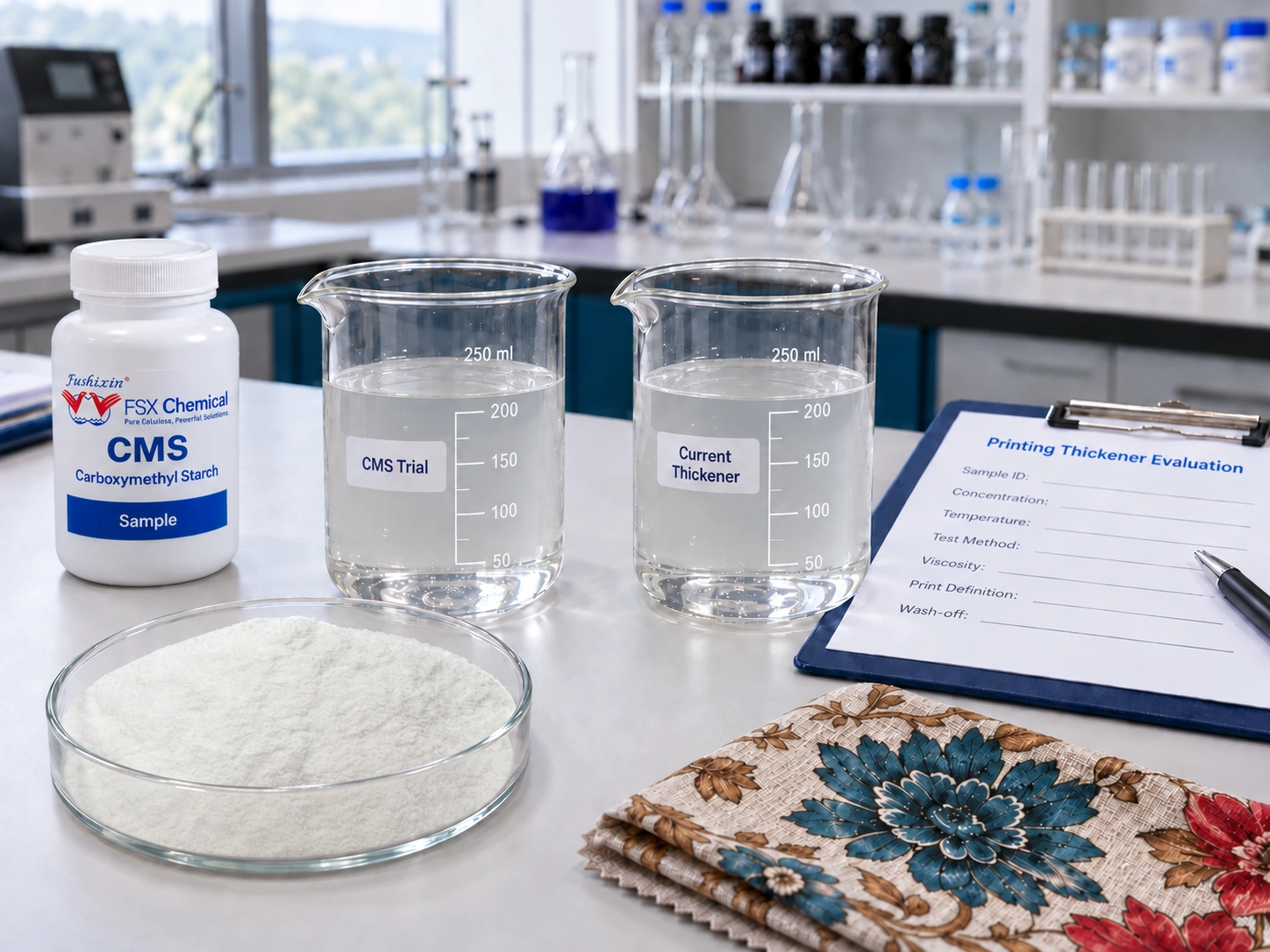
Printing Thickener Selection · Production Trial
How to Evaluate a Printing Thickener Before Bulk Use
A textile printing thickener should be selected by process fit and actual trial performance rather than by grade name alone. Review the printing route, viscosity test basis, paste behavior and finished textile result under matched conditions before confirming bulk supply.
Confirm the Printing Process
Define the reactive, disperse or specialty printing route, fabric composition, dye system and current paste formulation. When replacing an existing thickener, provide the current sample or TDS for comparison.
Match the Viscosity Test Conditions
Compare viscosity using the same solution concentration, temperature, instrument, spindle and test speed. Values measured under different conditions should not be compared directly.
Run a Controlled Printing Trial
Evaluate paste preparation, screen running, print definition, colour yield, penetration and wash-off. Specialty processes should also confirm pattern development and post-treatment results.
Confirm Supply & Technical Documents
After the trial is approved, confirm the selected grade, order quantity, production lead time, packing requirements, TDS and SDS. Batch COA is prepared according to the confirmed production batch.
Printing Thickener Supplier Evaluation
What to Compare When Evaluating a Printing Thickener Supplier
When reviewing a new or backup textile printing thickener supplier, compare product performance, test conditions, batch consistency, technical support and supply terms before deciding whether to proceed with a sample or production trial.
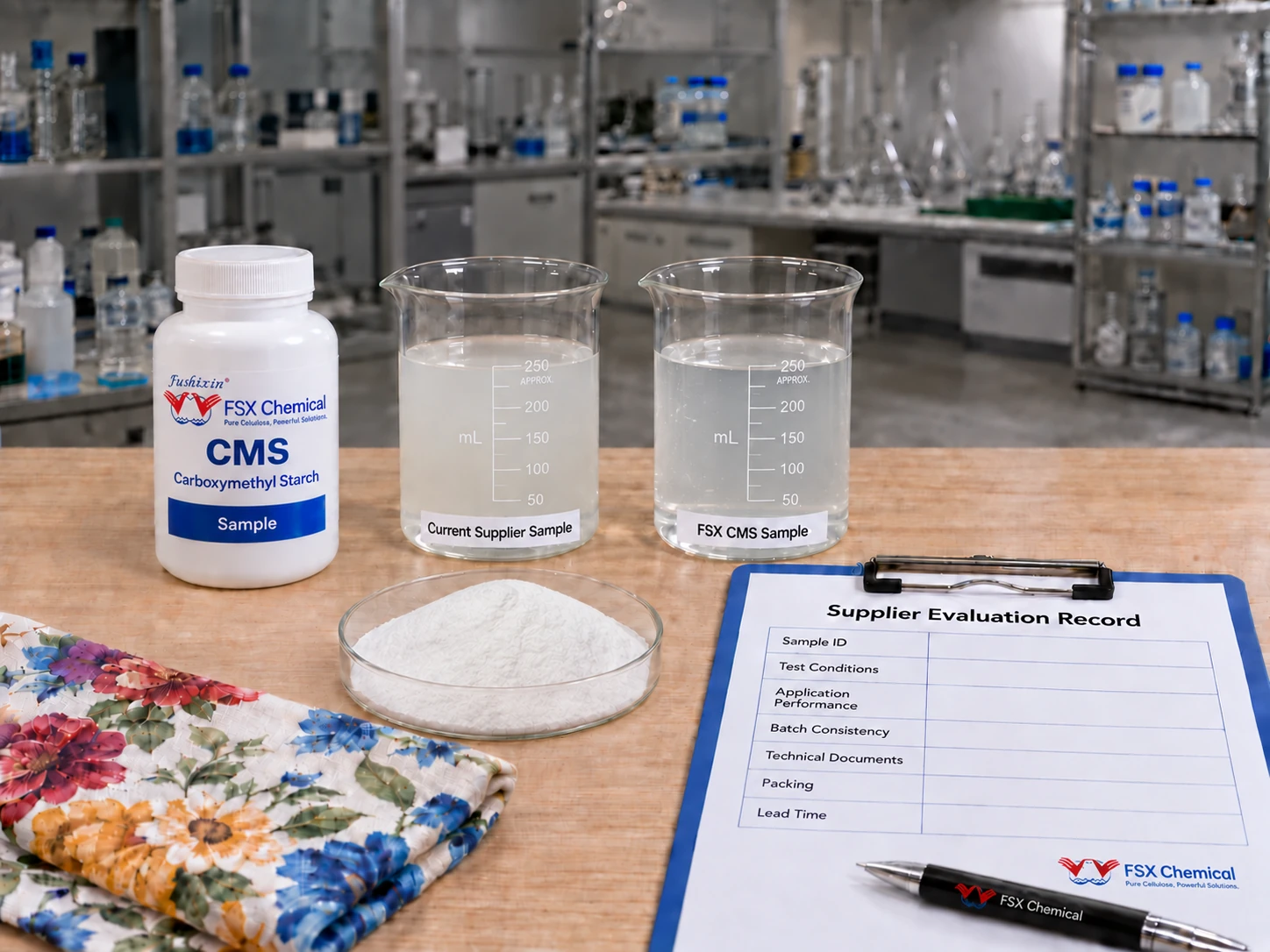
Compare More Than Price or a Single Viscosity Value
A potential printing thickener supplier should be evaluated using the current product, matched test conditions, actual printing process and commercial supply requirements together.
Compare the current supplier grade, product sample, specification and existing paste requirements.
Align concentration, temperature, instrument, spindle and test method before comparing viscosity results.
Review reactive, disperse or specialty printing together with the actual fabric, dye system and paste conditions.
Review batch consistency, order quantity, packing, lead time, technical documents and supply coordination.
Printing Thickener FAQ · Technical & Procurement
Textile Printing Thickener FAQs
Practical answers for buyers evaluating reactive printing thickeners, sodium alginate alternatives, viscosity test conditions, sample trials and technical documents before commercial purchasing.
01
What should I look for in a reactive printing thickener?
For reactive dye printing, compare paste viscosity, screen running, print definition, colour yield, wash-off and dosage under the actual cotton, viscose or other cellulosic fabric conditions. Evaluation should use the buyer's real dye system, formulation and printing process rather than specification values alone.
02
Can a reactive printing thickener be used as a sodium alginate alternative?
An alternative reactive printing thickener can be evaluated against the current sodium alginate under matched formulation, viscosity and printing conditions. The suitable replacement level should be confirmed through laboratory and production trials rather than assumed as a fixed one-to-one ratio.
03
What should I compare when testing a sodium alginate substitute?
Compare the current sodium alginate and alternative thickener using the same target paste viscosity and production conditions. Important checks include dosage, colour yield, wash-off, screen performance, print definition, paste stability and final cost-in-use. Price per kilogram alone is not enough to judge the more economical option.
04
How should printing thickener viscosity values be compared?
Viscosity values should only be compared under matched test conditions. Use the same solution concentration, temperature, instrument, spindle, speed and measurement method. FSX CN-R and FS-05 reference values are measured at 5% solution, while H5 is measured at 8%, so those values should not be compared directly without considering the test basis.
05
How do I select a textile printing thickener for different printing processes?
Start with the printing process rather than an internal product code. Reactive, disperse, vat, discharge and burn-out printing have different paste and performance requirements. FSX can review the fabric, dye or chemical system, current thickener and trial objectives before recommending an appropriate grade for evaluation.
06
What information is needed for a sample trial or quotation?
Provide the printing process, fabric type, current product sample or TDS if available, viscosity requirement and test method, paste conditions, expected printing result, estimated quantity and destination. TDS and SDS can support product evaluation, while batch COA is prepared according to the confirmed production batch.