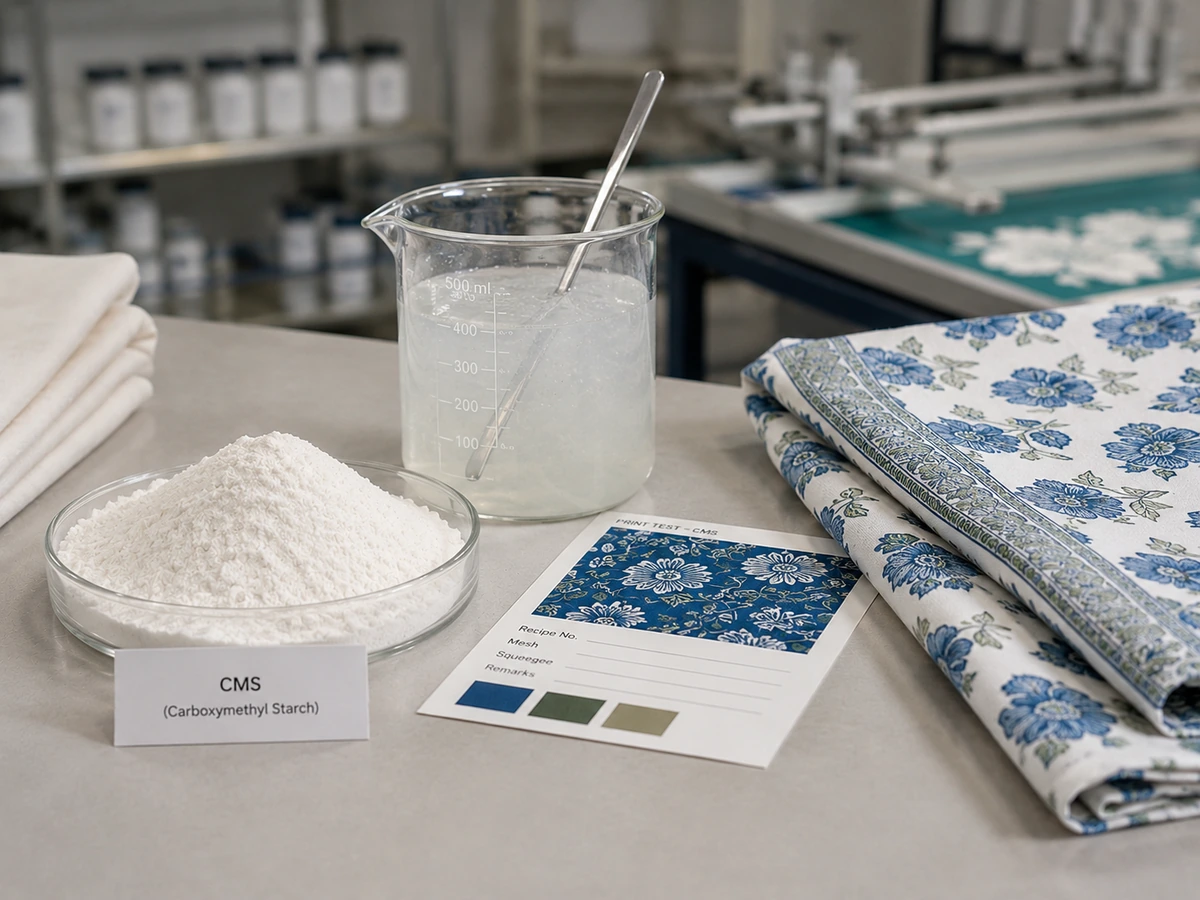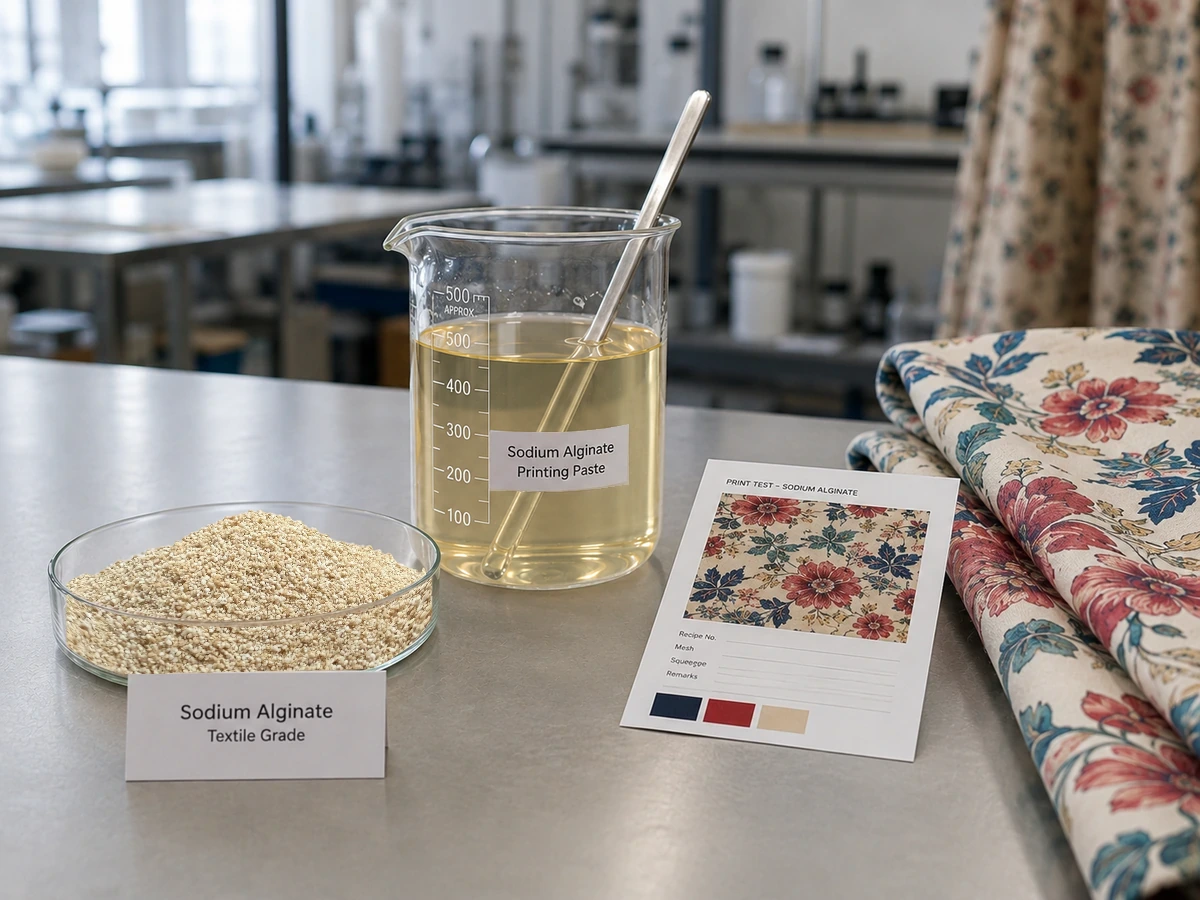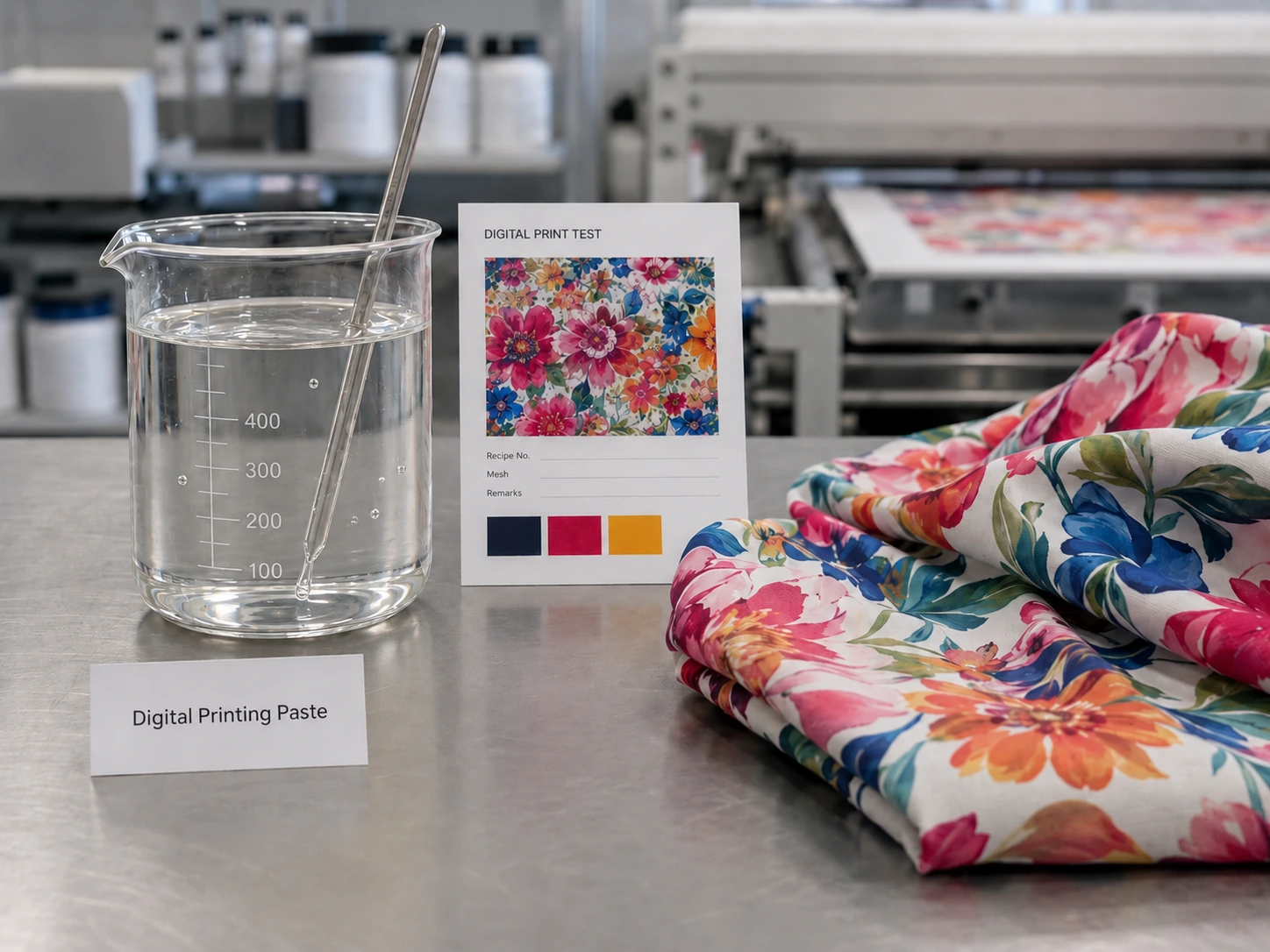
















Textile Printing Chemical Applications

Explore how FSX Chemical supports reactive, disperse, pigment, and digital textile printing with CMC, CMS, Sodium Alginate, Digital Printing Paste, and matched thickener systems.

Application Route Overview

Choose the Right Thickener Route for Your Printing Process

Compare CMC, CMS, sodium alginate and digital printing paste routes by printing process, dye or ink system, fabric type and target paste performance. Open the relevant application page or send your current sample or TDS for route matching.
Need help choosing an application route?

Send your current sample or TDS, dye or ink system, fabric type, target viscosity and production issue. FSX Chemical can compare the available routes and suggest a starting sample for laboratory or production trials.

Request Route Matching
Printing Process Selection Guide

Select a Thickener Route by Textile Printing Process

Reactive, disperse, digital, vat, discharge and pigment printing require different paste properties. Compare the recommended starting routes below, then confirm the final product through matched trials.

01 Cellulosic Fabrics

Reactive Dye Printing

For reactive printing on cotton, viscose, lyocell and suitable cellulosic blends, review wash-off, print definition, color yield and paste stability. Sodium alginate is the main starting route, while CMS may be tested for selected cost-performance requirements.

Suggested Route Sodium Alginate / CMS Trial
Check First Dye system, fibre, viscosity and wash-off target
Review Reactive Route
02 Polyester Fabrics

Disperse Printing

For polyester and suitable blends, disperse printing requires stable paste behavior, clear pattern definition and compatibility with the selected fixation process. A CMS disperse route can be evaluated under the mill’s actual production conditions.

Suggested Route CMS Disperse Route / Matched Thickener
Check First Fabric, dye system, paste stability and fixation
Review Disperse Route
03 Textile Inkjet

Digital Textile Printing

Start with the ink system. DP-R is evaluated for reactive inkjet, DP-D for disperse inkjet and DP-P for pigment inkjet printing. Confirm the route by fabric, pretreatment, equipment, fixation conditions and final print performance.

Suggested Route DP-R / DP-D / DP-P
Check First Ink system, fabric, pretreatment and equipment
Review Digital Route
04 Special Printing

Vat and Discharge Printing

Vat, discharge and selected burn-out or devoré printing require compatibility with reducing agents, alkali and processing temperature. CMS H5 or another matched route should be confirmed with the complete formulation and fabric conditions.

Suggested Route CMS H5 / Process-Matched Thickener
Check First Reducing agent, alkali, fabric and temperature
Match This Process
05 Binder and Curing

Pigment Printing

Conventional pigment printing requires compatibility between the thickener, pigment and binder system, together with suitable screen performance, curing, hand feel and rubbing fastness. For pigment inkjet printing, review the DP-P route.

Suggested Route Matched Thickener / DP-P for Inkjet
Check First Printing method, binder, fabric and curing target
Match Pigment Route
Process route not clear?

Send your current sample or TDS, printing method, dye or ink system, fabric, viscosity target and process conditions. FSX Chemical can recommend a practical starting route for controlled trials.

Request Process Matching
Printing Process Selection Guide

Select a Thickener Route by Printing Process

Reactive, disperse, digital, vat, discharge and pigment printing require different paste properties. Use this guide to identify a starting route, then confirm the final grade through matched trials.

01 Cellulosic Fabrics

Reactive Dye Printing

Reactive printing on cotton, viscose, lyocell and suitable cellulosic blends requires clean wash-off, print definition, color yield and stable paste behavior.

Suggested Route
Sodium Alginate CMS Trial
Check First

Dye system, fibre, viscosity and wash-off target

Review Route
02 Polyester Fabrics

Disperse Printing

Disperse printing on polyester and suitable blends requires stable paste behavior, clear pattern definition and compatibility with the selected fixation process.

Suggested Route
CMS Disperse Route Matched Thickener
Check First

Fabric, dye system, paste stability and fixation

Review Route
03 Textile Inkjet

Digital Textile Printing

Select the digital printing paste route by ink system, fabric, pretreatment method, equipment and required print performance.

Suggested Route
DP-R Reactive DP-D Disperse DP-P Pigment
Check First

Ink system, fabric, pretreatment and equipment

Review Route
04 Special Printing

Vat and Discharge Printing

Vat, discharge and selected burn-out or devoré printing require paste stability under reducing agents, alkali and process temperature.

Suggested Route
CMS H5 Process-Matched Thickener
Check First

Reducing agent, alkali, fabric and temperature

Match Process
05 Binder and Curing

Pigment Printing

Pigment printing requires compatibility between the thickener, pigment and binder system, together with suitable curing, hand feel and rubbing fastness.

Suggested Route
Process-Matched Thickener DP-P for Inkjet
Check First

Printing method, binder, fabric and curing target

Match Process
Process route not clear?

Send your current sample or TDS, printing method, dye or ink system, fabric, viscosity target and process conditions. FSX Chemical can recommend a starting route for controlled trials.

Request Process Matching
Application Matching Workflow

How FSX Matches a Thickener to Your Printing Process

Share your printing method, fabric, dye or ink system, target viscosity and current production issue. FSX Chemical can review the available information and suggest a suitable starting route for sample testing.
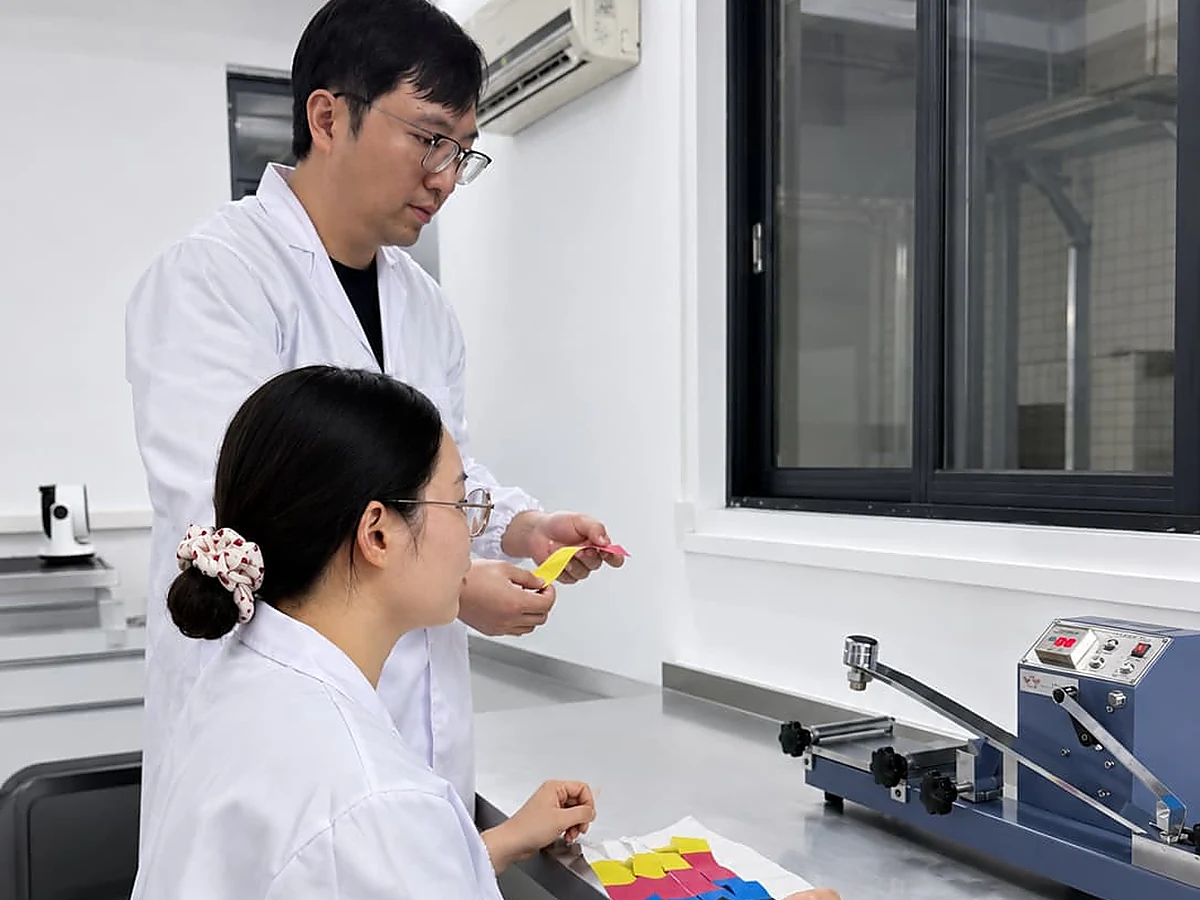
FSX Chemical technicians reviewing textile printing samples and application requirements
01

Define the Printing Conditions

Tell us the printing process, fabric, dye or ink system, viscosity target and main issue, such as paste stability, wash-off, print sharpness, penetration or hand feel.

Process · Fabric · Target
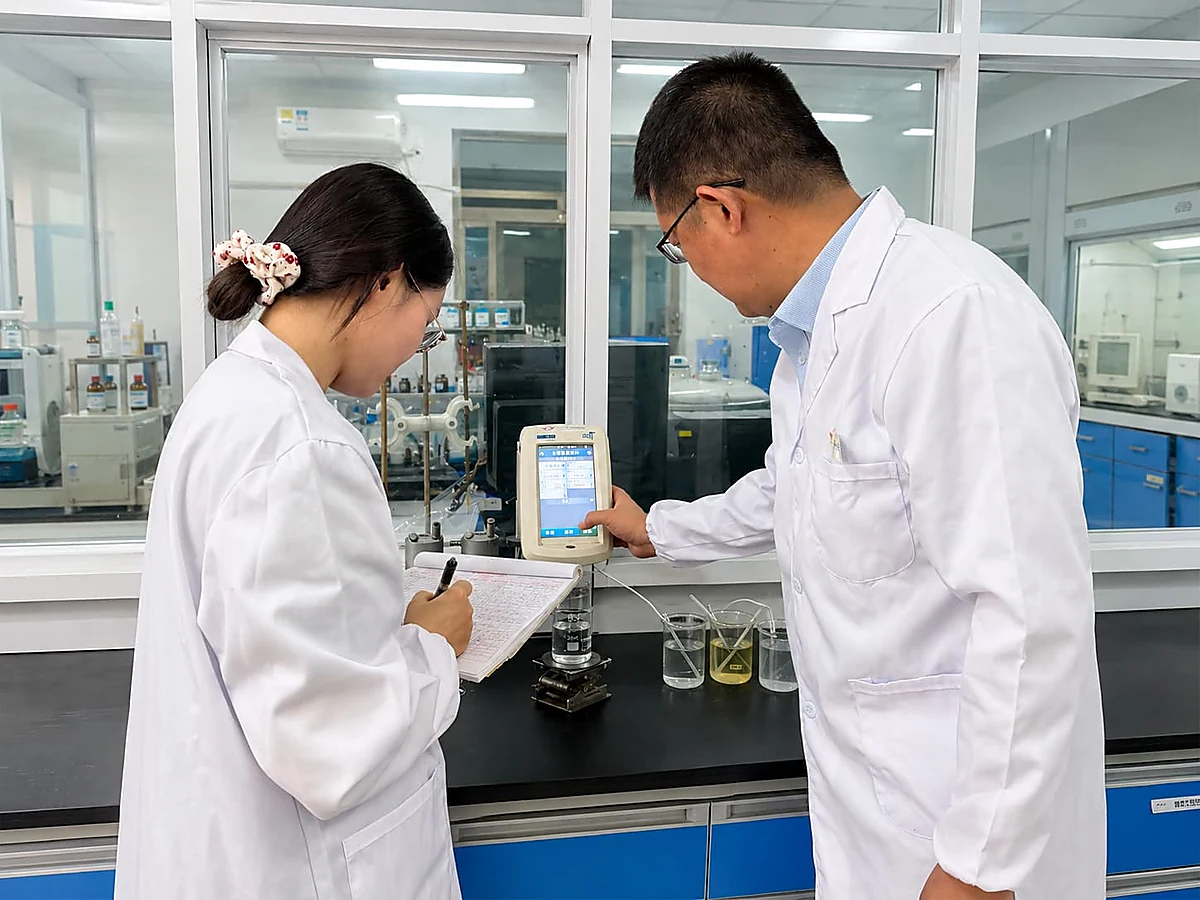
FSX Chemical laboratory reviewing a thickener sample and technical data sheet
02

Share a Sample or Reference

A current sample, TDS, grade name, viscosity test condition or paste preparation method gives us a useful reference for comparing the next trial direction.

Sample · TDS · Test Data
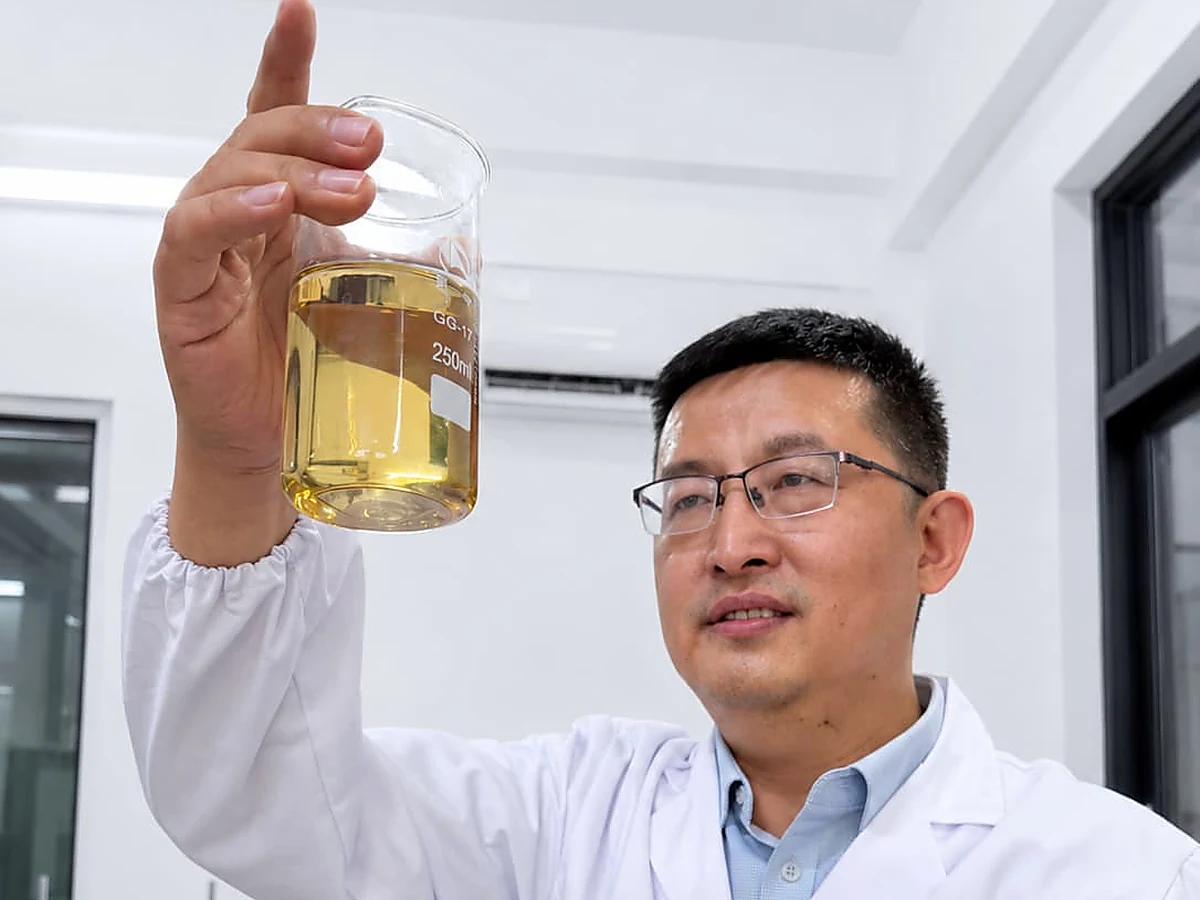
FSX Chemical textile printing thickener route and performance comparison
03

Review the Relevant Product Routes

FSX reviews the relevant CMC, CMS, sodium alginate, digital printing paste or matched thickener route against your application and testing target.

Product · Process · Compatibility
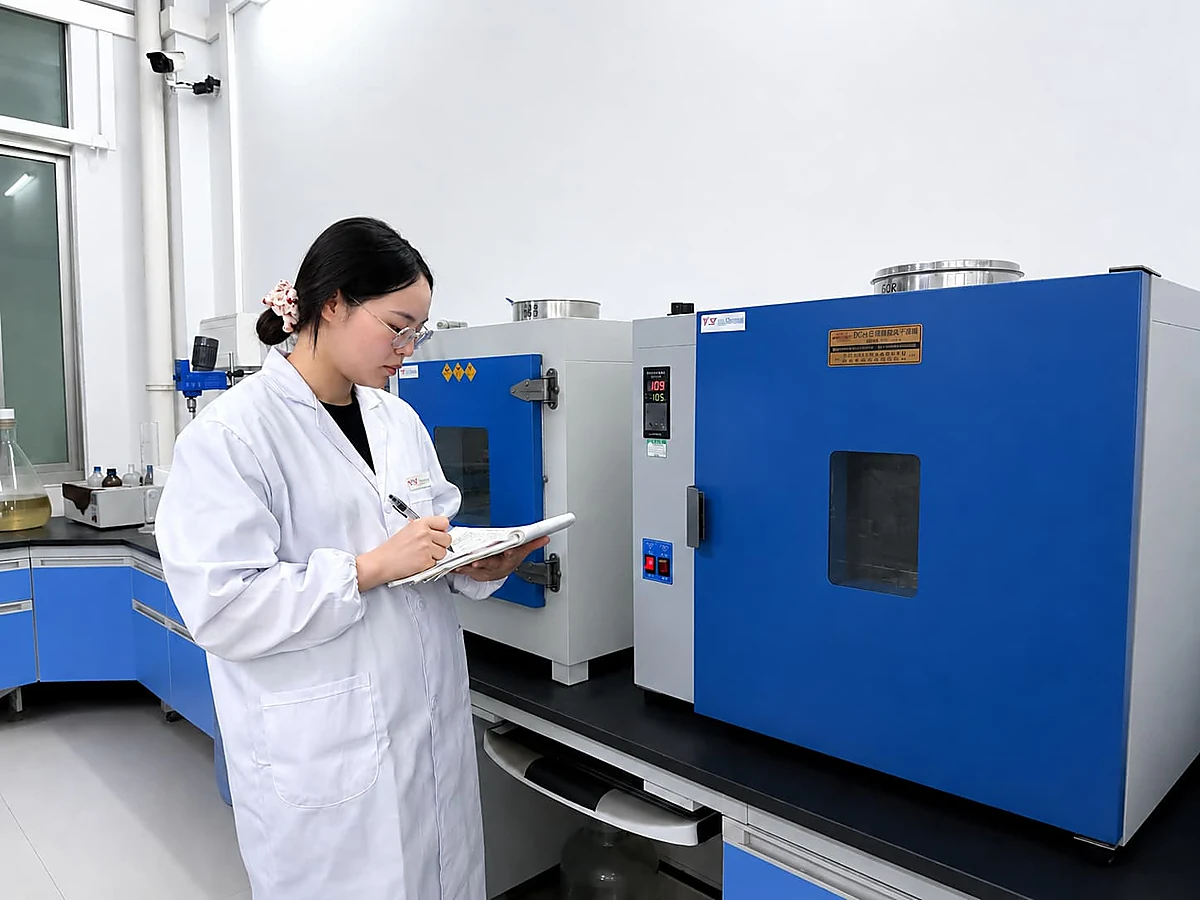
FSX Chemical recording textile printing trial data for thickener grade selection
04

Test the Suggested Starting Grade

FSX suggests a starting grade or sample direction for laboratory or production trials. The final selection is confirmed from your viscosity, stability and print results.

Sample · Trial · Feedback

Product Inquiry & Support

Send Your Product Requirement

Share the product name, application, quantity, destination and any TDS, sample photo or document you already have. FSX Chemical will review the information and recommend the next step for quotation, sample matching or product selection.

Product Information Product name, grade, model, label photo or supplier reference.
Available Documents TDS, SDS, COA, sample photo, product list or test data.
Order Details Estimated quantity, packaging, destination country, port or trade term.
Application or Issue Textile printing process, formulation need, current issue or target performance.