














Textile Printing Chemical Applications
Explore how FSX Chemical supports reactive, disperse, pigment, and digital textile printing with CMC, CMS, Sodium Alginate, Digital Printing Paste, and matched thickener systems.
Choose the Right Thickener Route for Your Printing Process
Start with your printing process, dye system, fabric type, or paste performance issue. This overview helps you compare CMC, CMS, sodium alginate, and digital printing paste routes before opening a specific application page or sending details for grade selection.
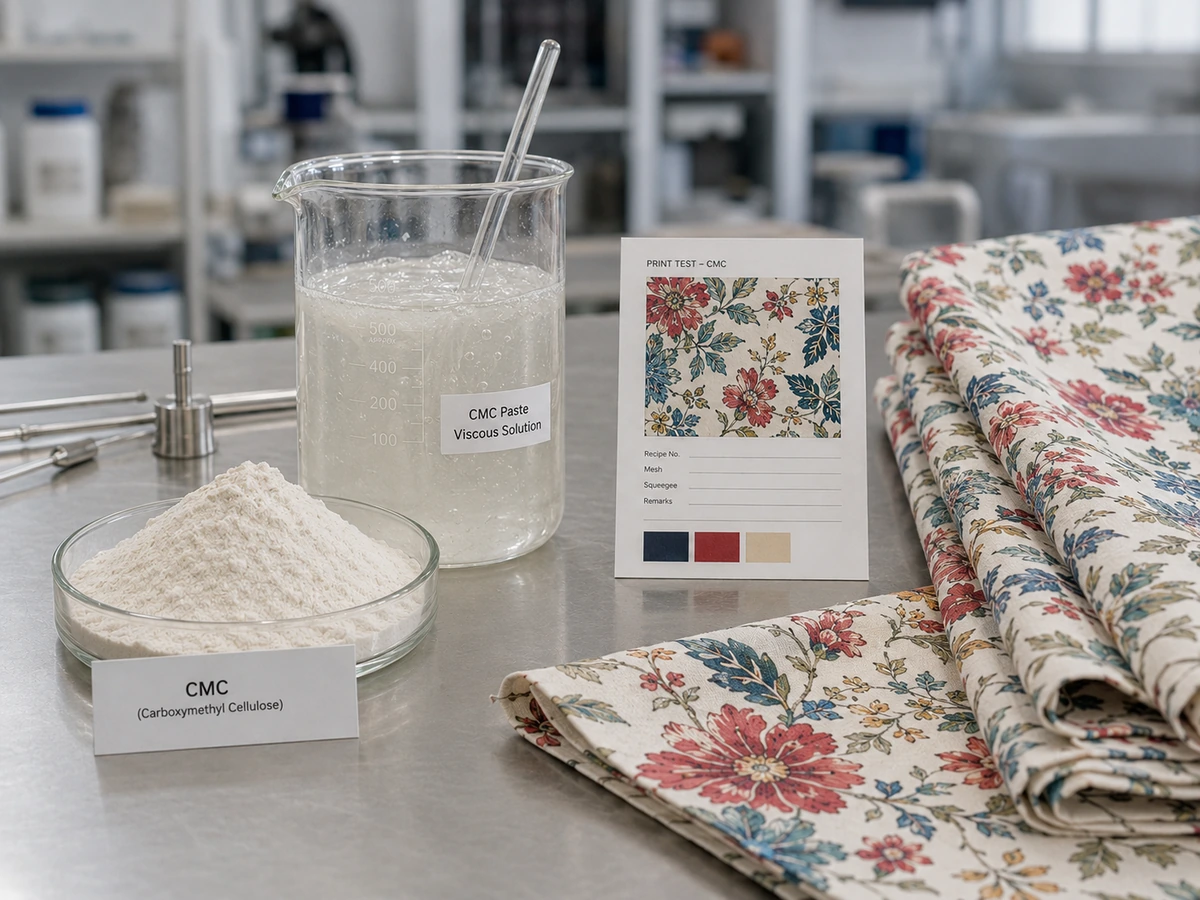
تطبيق CMC
Use this route when viscosity control, hydration behavior, and paste stability are the first concerns. CMC can be reviewed for textile printing paste adjustment and other applications that need a cellulose-based thickener.
- Typical Focus
- Viscosity control
- Product Route
- Carboxymethyl Cellulose
- Starting Point
- Current viscosity target or TDS
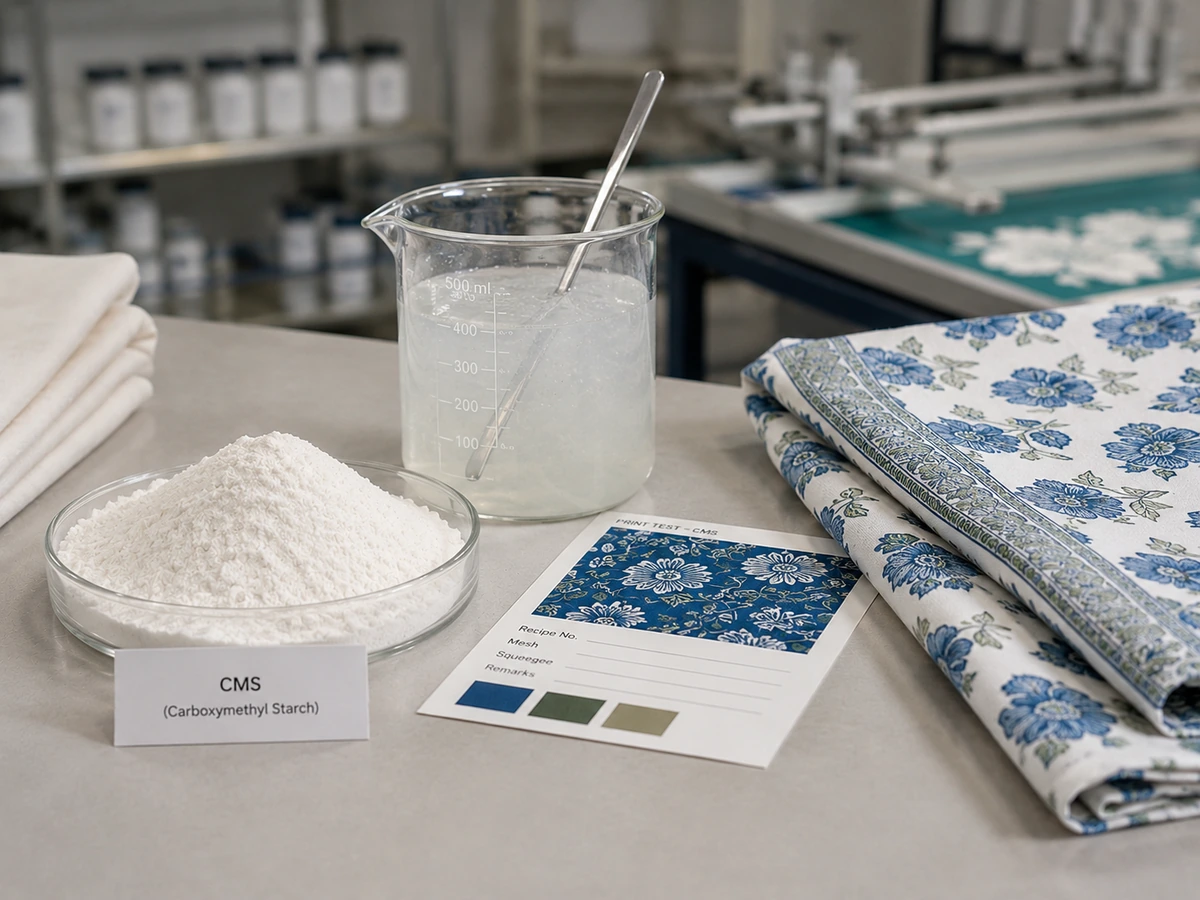
تطبيق CMS
Use this route when a mill needs to balance cost, paste stability, wash-off behavior, and production adaptability in reactive, disperse, or pigment printing.
- Typical Focus
- Cost-performance balance
- Product Route
- Carboxymethyl Starch
- Starting Point
- Dye system and fabric type
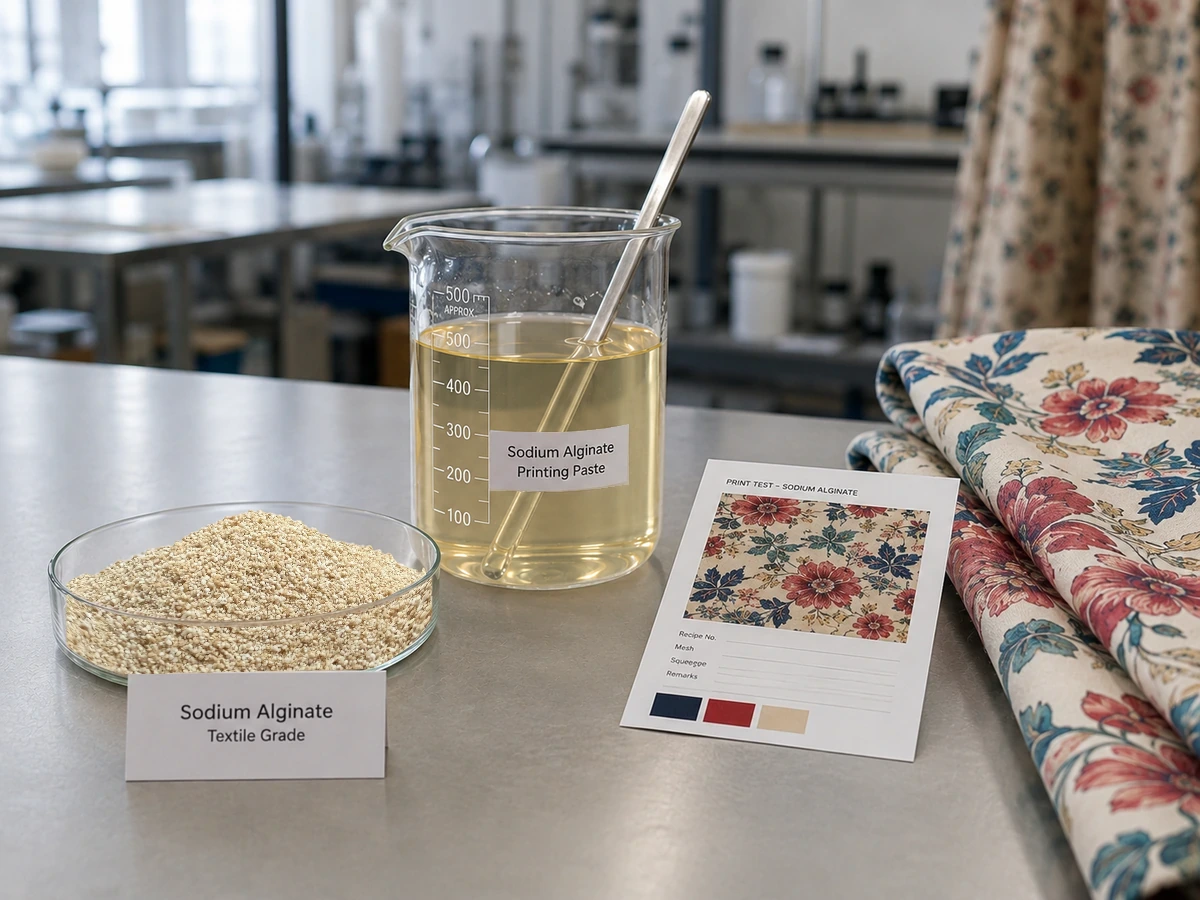
تطبيقات ألجينات الصوديوم
Review this route for reactive dye printing on cotton, viscose, and blended fabrics where clean wash-off, sharp outlines, and stable paste behavior are important.
- Typical Focus
- Clean wash-off
- Product Route
- ألجينات الصوديوم
- Starting Point
- Reactive dye and fabric details
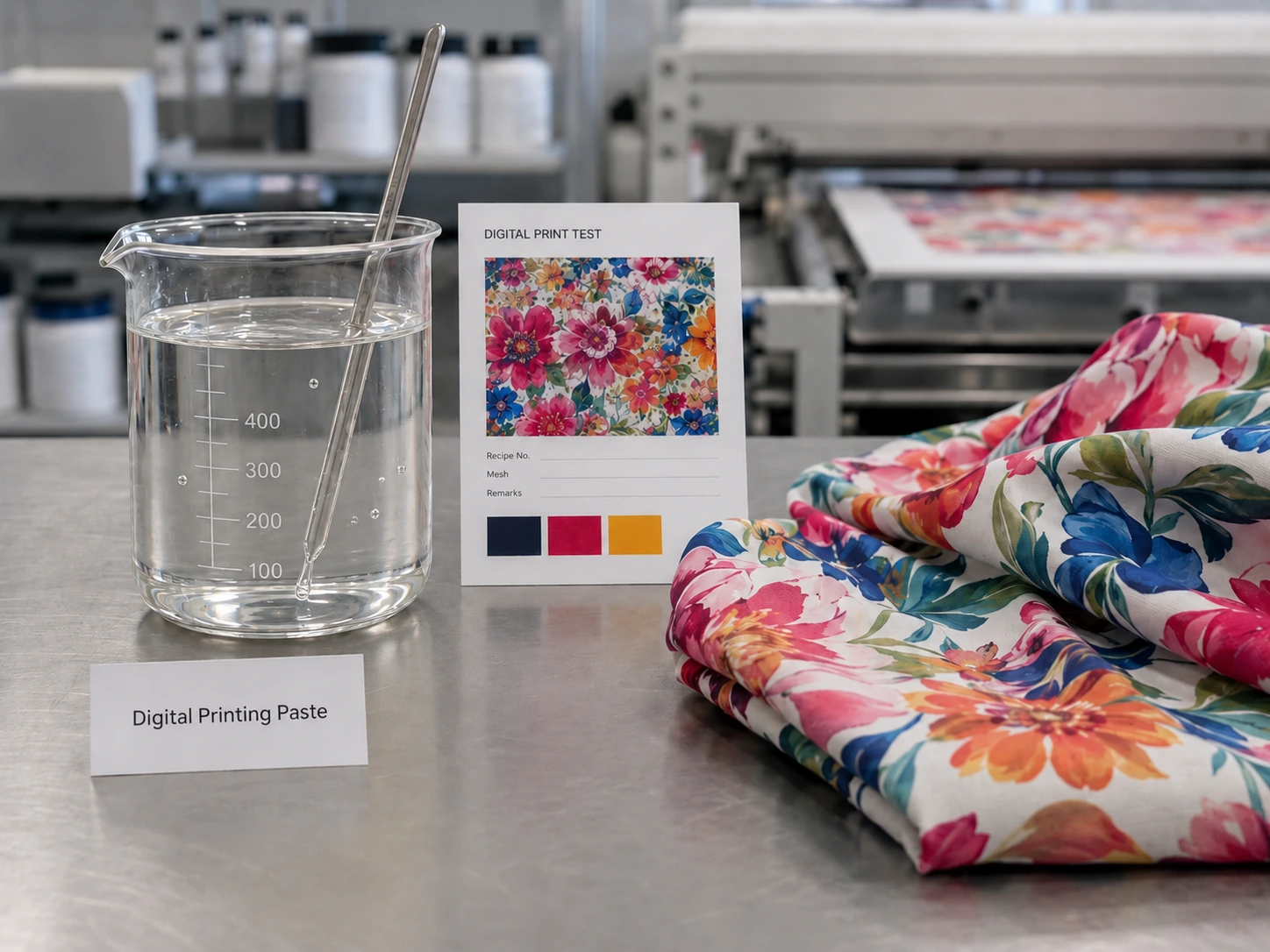
تطبيقات الطباعة الرقمية
Review this route for textile inkjet pretreatment and digital printing lines where ink compatibility, fabric penetration, color fixation, and print sharpness need to be checked.
- Typical Focus
- Inkjet process compatibility
- Product Route
- معجون الطباعة الرقمية
- Starting Point
- Printer, fabric, and ink system
Send your current sample, TDS, target viscosity, fabric type, dye system, or production issue. FSX Chemical can help compare product routes and suggest a suitable test direction before bulk order evaluation.
Choose a Practical Thickener Route for Each Printing Process
Reactive, disperse, digital, vat / discharge, and pigment printing do not ask for the same paste behavior. Use this guide to compare common thickener routes before opening a product page, sending a TDS, or starting sample matching.
الطباعة التفاعلية
For cotton, viscose, and blended fabrics, reactive printing often needs clean wash-off, good colour yield, and sharp pattern definition. Sodium alginate is usually the first route to review, while CMS or matched thickeners may be compared when cost or process conditions matter.
الطباعة المتفرقة
For polyester and synthetic fabrics, disperse printing usually depends on paste stability, penetration, and production consistency. CMS or textile printing thickener routes can be reviewed based on fabric type and the steaming or curing process.
الطباعة الرقمية
For textile inkjet lines, the pretreatment paste needs to work with the printer, ink system, fabric, and fixation method. The digital printing paste route focuses on penetration, colour fixation, print sharpness, and process compatibility.
Vat / Discharge Printing
For vat dye, discharge, or carving-style printing, paste stability under reducing agents, alkali, and process temperature is the first thing to check. If the formula is not clear, process matching is safer than choosing by product name only.
Pigment Printing
For pigment printing, the thickener route needs to balance binder compatibility, paste handfeel, screen performance, and curing stability. CMS or compound thickener routes can be compared before sample testing.
For mixed processes, vat discharge systems, or existing formulas that are hard to identify, FSX Chemical can review your current sample, TDS, target viscosity, and process conditions before recommending a practical test route.
Match Each Printing Process with a Practical Thickener Route
Each printing process puts different pressure on paste stability, wash-off, penetration, fixation, and production control. Use this guide as a starting point before reviewing a product page, sending a TDS, or starting sample matching.
الطباعة التفاعلية
Reactive printing on cotton, viscose, or blended fabrics usually needs clean wash-off, good color yield, and sharp pattern edges.
Dye type, fabric, viscosity target, wash-off requirement
الطباعة المتفرقة
Disperse printing on polyester or synthetic fabrics often focuses on paste stability, fabric penetration, and steady production performance.
Polyester type, paste stability, steaming or curing process
الطباعة الرقمية
Textile inkjet printing needs the pretreatment paste to work with the printer, ink system, fabric, fixation method, and production speed.
Printer type, ink system, fabric, pretreatment method
Vat / Discharge Printing
Vat dye and discharge-style printing need paste stability under reducing agents, alkali, temperature, and other special process conditions.
Reducing agent, alkali level, fabric, process temperature
Pigment Printing
Pigment printing needs to balance binder compatibility, paste handfeel, screen performance, curing stability, and production consistency.
Binder system, handfeel target, screen mesh, curing process
For mixed processes, vat discharge systems, or existing formulas that are hard to identify, FSX Chemical can review your current sample, TDS, target viscosity, and process conditions before recommending a practical test route.
Not Sure Which Thickener to Test First?
Send us what you are printing, the fabric, dye or ink system, target viscosity, and what is not working in production. FSX Chemical can compare your current sample or TDS and suggest a practical route to test first.
Tell Us Your Printing Conditions
We first look at your printing process, fabric type, dye or ink system, viscosity target, and the problem you want to solve — such as wash-off, sharpness, penetration, handfeel, or paste stability.
Process · Fabric · Problem
Share a Sample or TDS
A current sample, supplier TDS, grade name, formula note, or preparation method gives us a reference point. It helps us understand what is working now and where the paste needs improvement.
Sample · TDS · Reference
Compare the Possible Routes
We do not choose by product name only. CMC, CMS, sodium alginate, digital printing paste, or compound thickener options are compared against your process conditions and testing target.
Compare · Route · Target
Start with a Test Grade
You receive a practical grade or sample direction to test first, with attention to viscosity, stability, compatibility, wash-off, sharpness, handfeel, and application fit.
Grade · Trial · Feedbackأرسل متطلبات منتجك
يرجى إرسال اسم المنتج، والتطبيق، والكمية، والوجهة، وأي بيانات تقنية (TDS)، أو صورة عينة أو مستند متوفر لديكم بالفعل. وستقوم شركة FSX Chemical بمراجعة هذه المعلومات وتقديم توصية بشأن الخطوة التالية سواء كانت تقديم عرض أسعار، أو مطابقة العينة، أو اختيار المنتج.