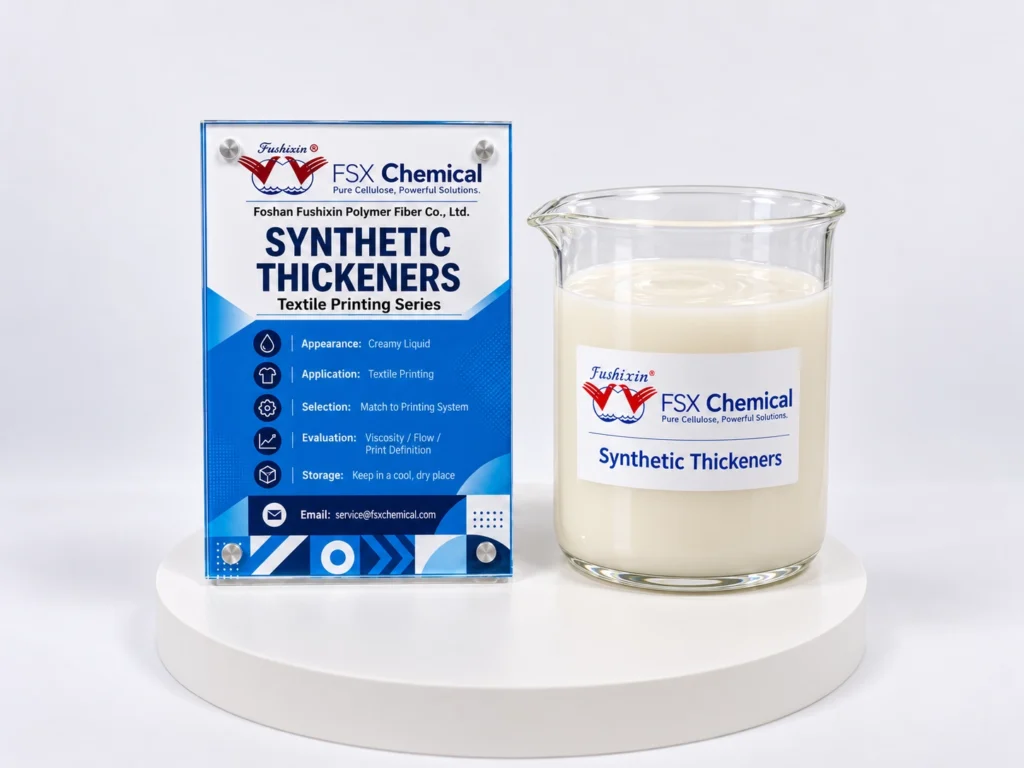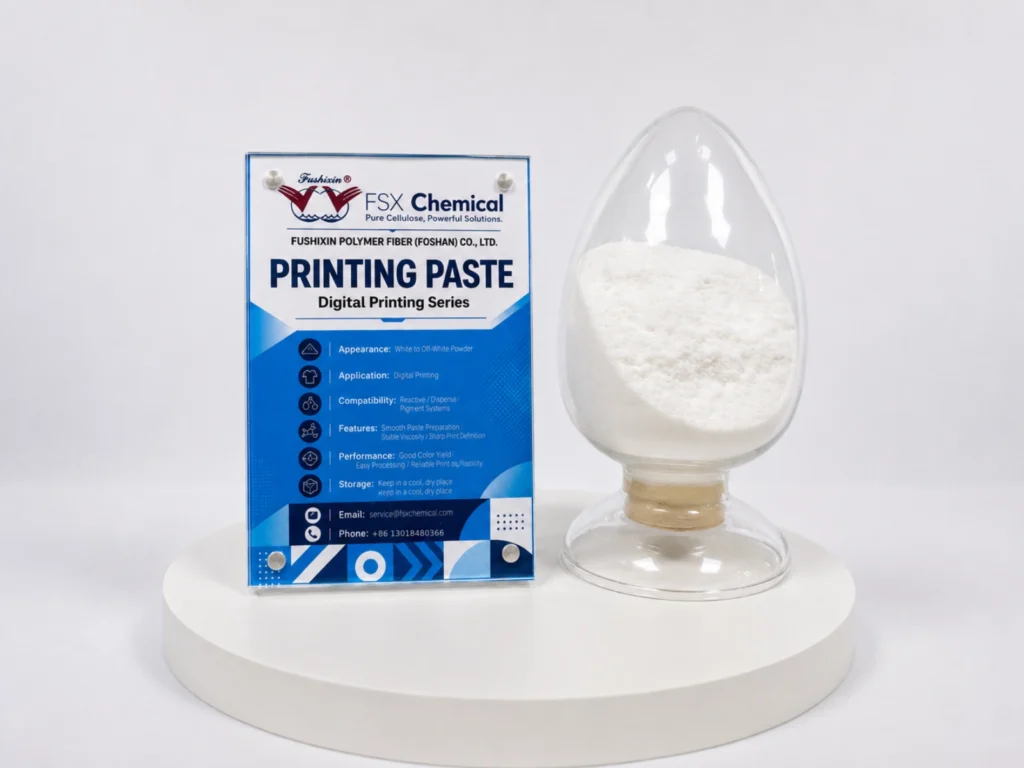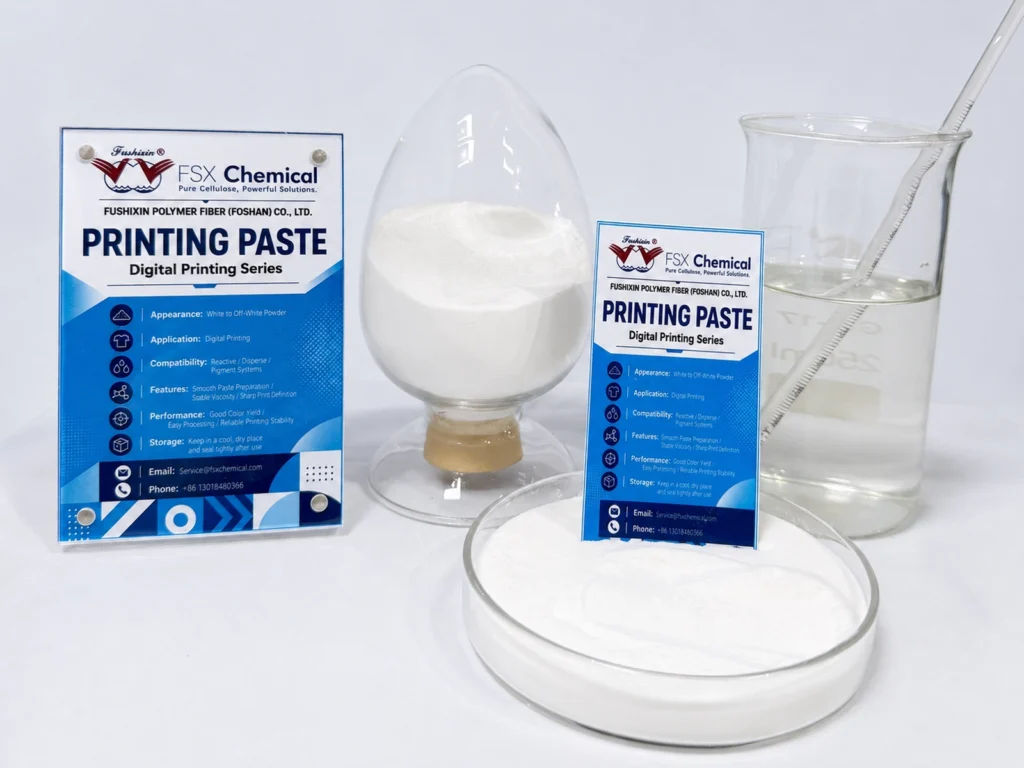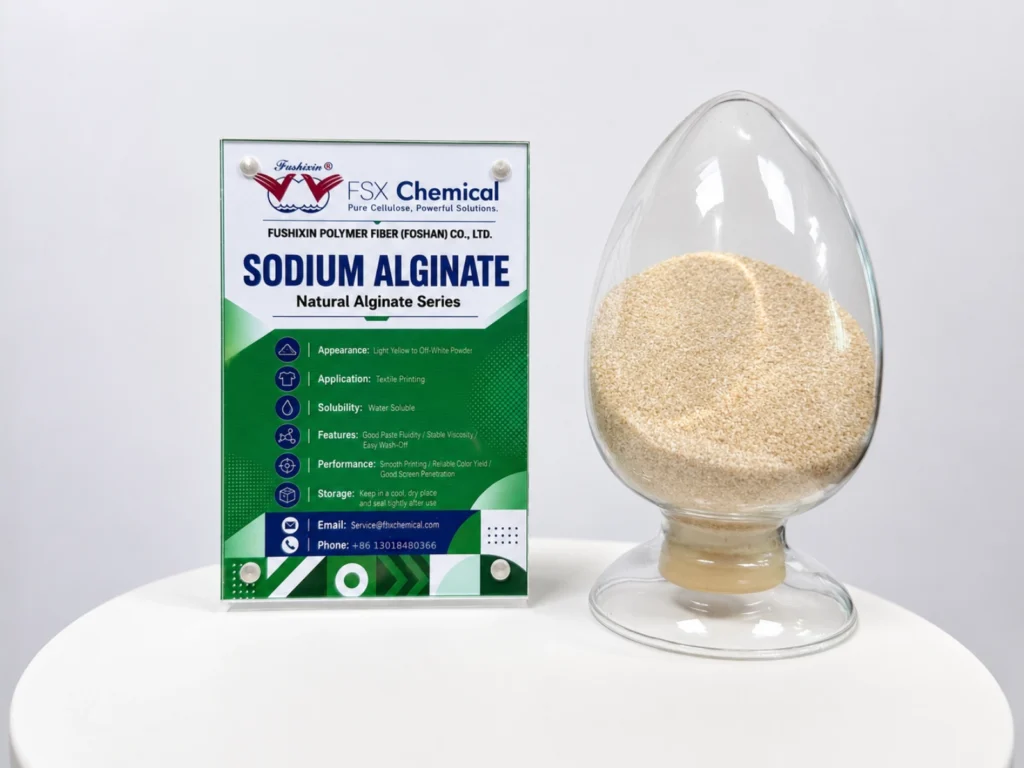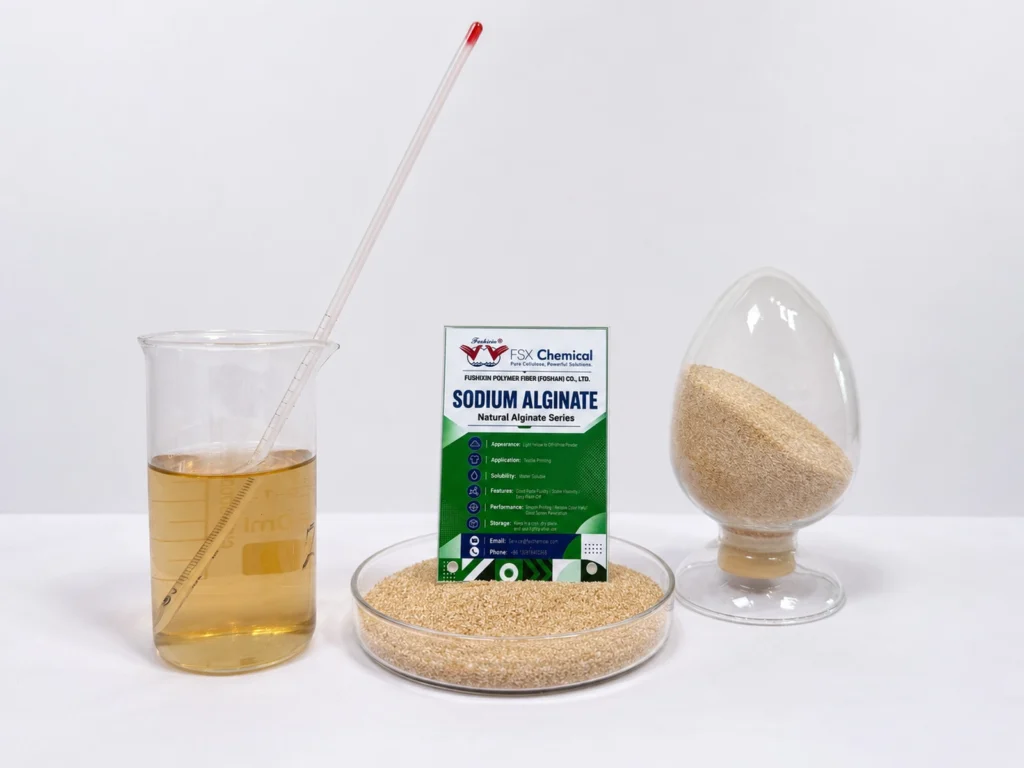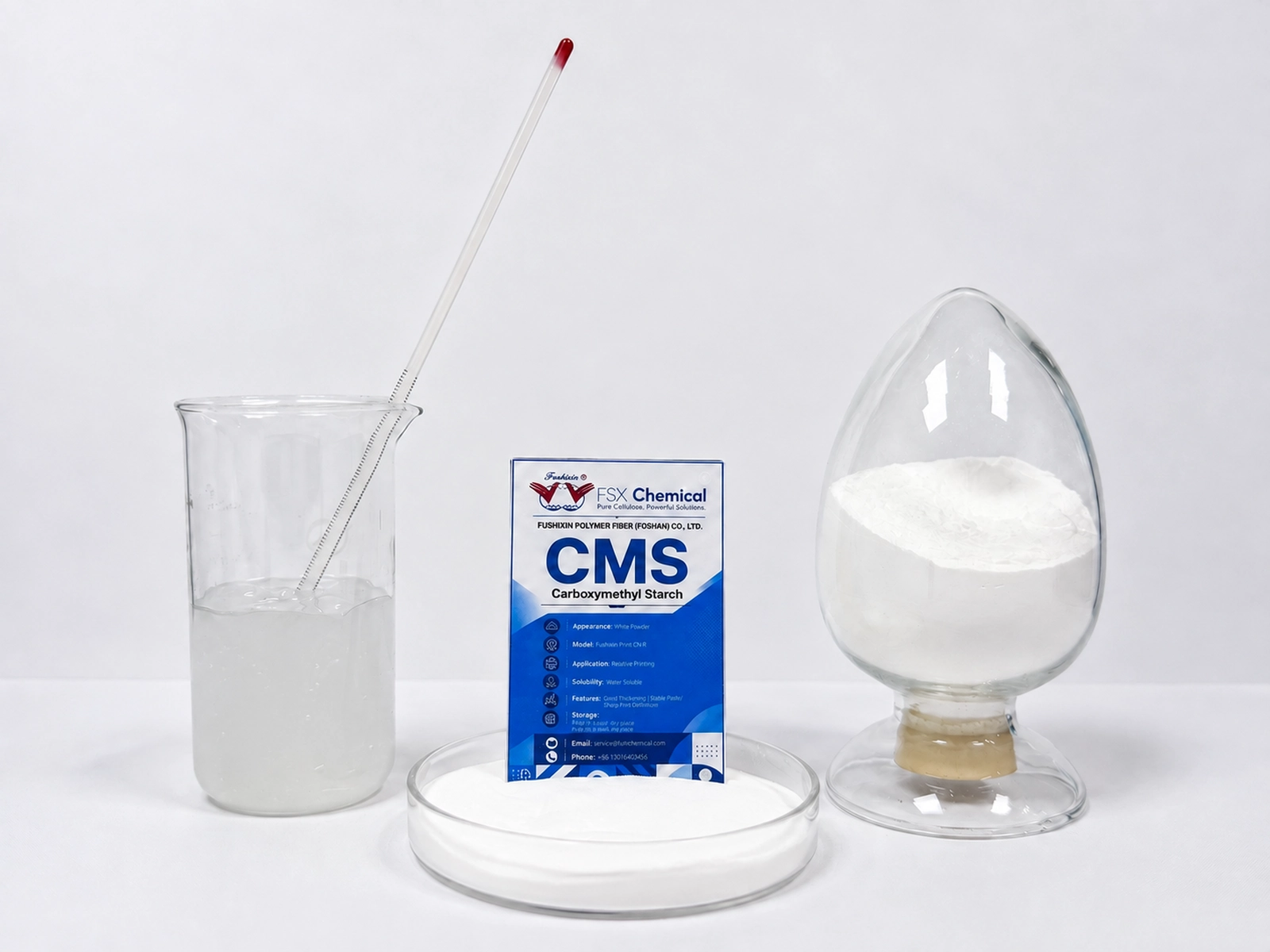
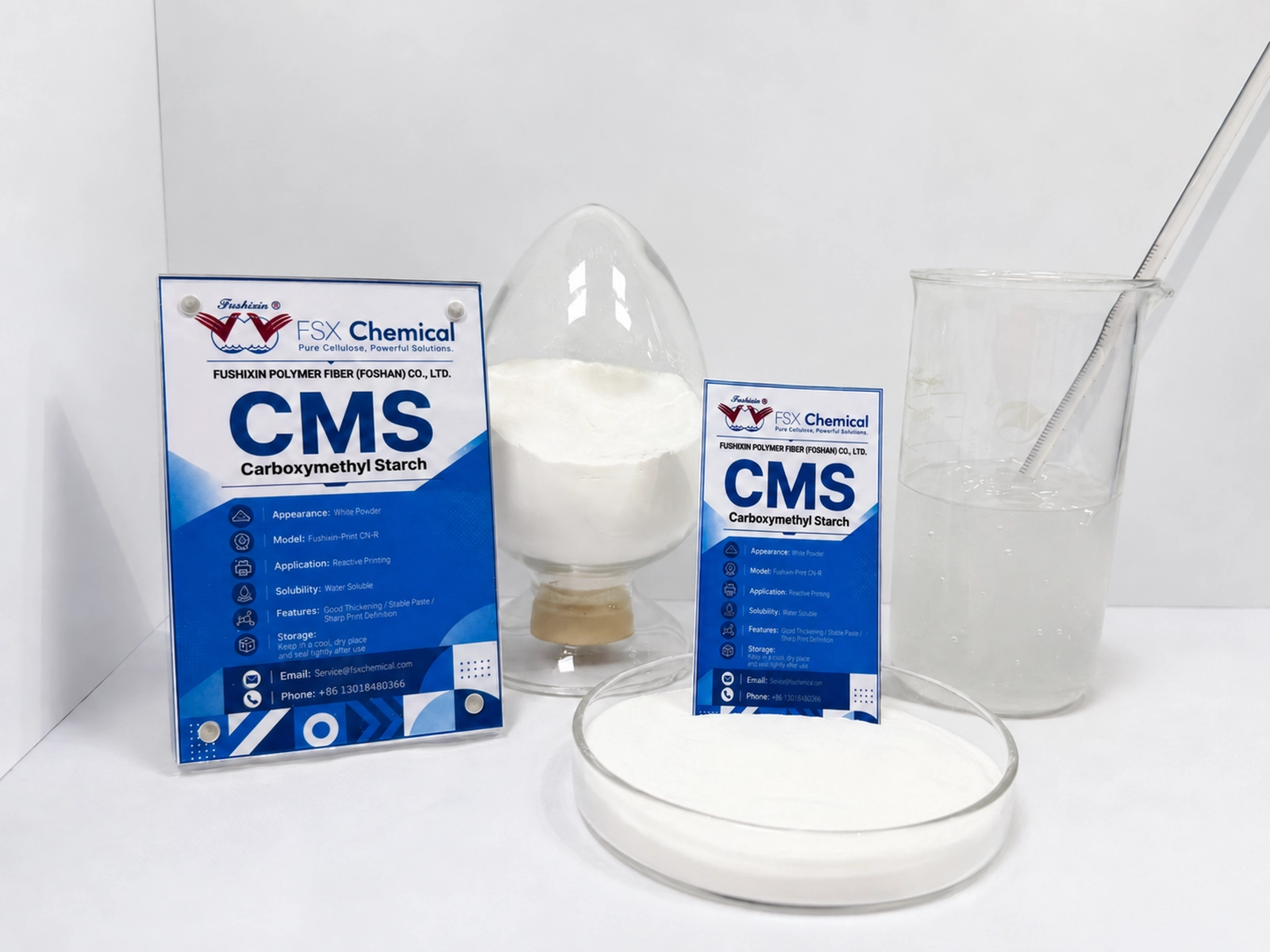
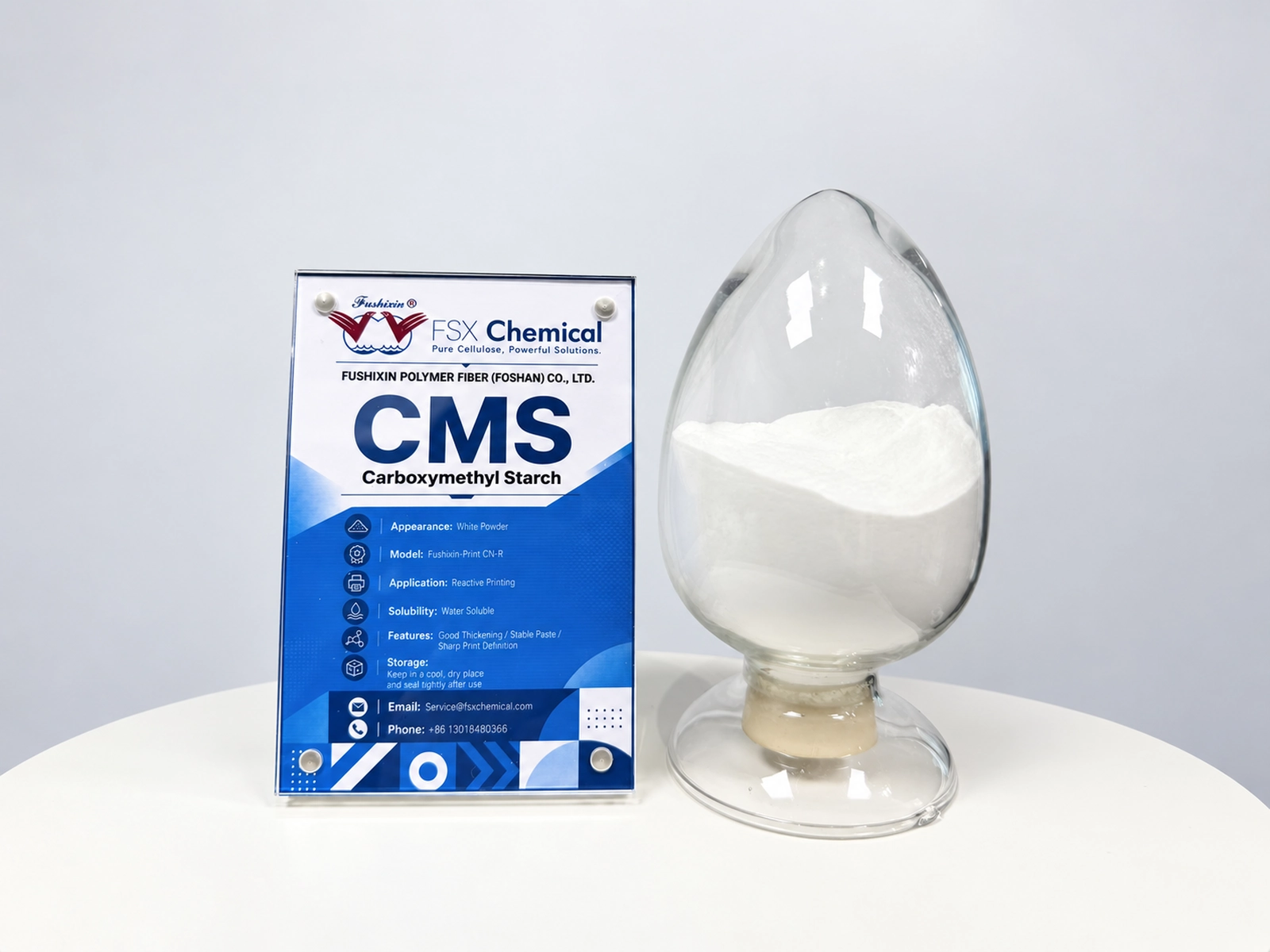
Tagagawa ng pampalapot para sa reaktibong pagpi-print

Ang FSX Chemical ay gumagawa ng mga pampapalapot para sa pagpi-print ng tela na nakabase sa CMS para sa mga aplikasyon ng reaktibo, disperse, at espesyal na pagpi-print. Maaaring suriin ang aming mga solusyon sa pampapalapot para sa reaktibong pagpi-print sa koton at viscose bilang alternatibo sa sodium alginate sa ilalim ng angkop na kondisyon sa pagpi-print, na may libreng pagtutugma ng sample, teknikal na dokumento, at direktang pabrika na maramihang suplay.

Paglilipat ng Makapal na Pampalapot para sa Pagpi-print ng Tela

Pagpi-print ng mga pampalapot ayon sa proseso

Nagbibigay ang FSX Chemical ng mga pampapalapot para sa pagpi-print ng tela na nakabase sa CMS para sa reaktibo, disperse, at espesyal na pagpi-print. Piliin ang angkop na ruta ayon sa sistema ng tina, tela, at mga kinakailangan sa produksyon.

Reaktibong Pagpi-print FSX CN-R
Pampalapot para sa reaktibong pagpi-print ng tina Para sa reaktibong pagpi-print ng koton at viskosa, kasama ang mga alternatibong pagsubok ng sodium alginate. Kotón · Bisós · Reaktibong tina
Pagsasabog ng Pag-iimprenta FSX FS-05
Palapot para sa Pag-iimprenta ng Pagkakalat Para sa pagpi-print ng disperse na tela kung saan kinakailangan ang katatagan ng paste, kalinawan ng pagpi-print, at mahusay na pagganap sa pagtakbo. Disperse na Tinta · Pagpi-print sa Tela
Espesyal na Pagpi-print FSX H5
Palapot para sa Pag-iimprenta ng Vat at Pagpapalabas Pampalapot na may malalaking flake para sa vat, discharge, at piling aplikasyon ng burn-out sa pagpi-print ng tela. VAT · Paglabas · Pagkasunog

Reaktibong pampalapot para sa pagpi-print · Alternatibo sa sodium alginate

Pagtatasa sa isang reaktibong pampalapot para sa pagpi-print bilang alternatibo sa sodium alginate

For reactive dye printing on cotton and viscose, an alternative printing thickener can be evaluated against sodium alginate by comparing paste viscosity, screen performance, colour yield, wash-off and actual dosage under the same production conditions. Final replacement suitability should be confirmed through laboratory and production trials.

Pagganap ng Reactive na Pagpi-print ng Tinta

Compare paste viscosity, screen running, print definition, colour yield and wash-off under the actual fabric, dye system and reactive printing conditions.

Alternatibong Pagsubok ng Sodyum Alginate

Compare the alternative reactive printing thickener with your current sodium alginate using the same formulation, target viscosity and printing conditions. The suitable replacement level should be confirmed through controlled laboratory and production trials.

Dosis at Gastos sa Paggamit

Compare the actual thickener dosage required to reach the same target paste viscosity and printing performance rather than comparing price per kilogram alone. Final cost-in-use should be based on actual trial consumption.
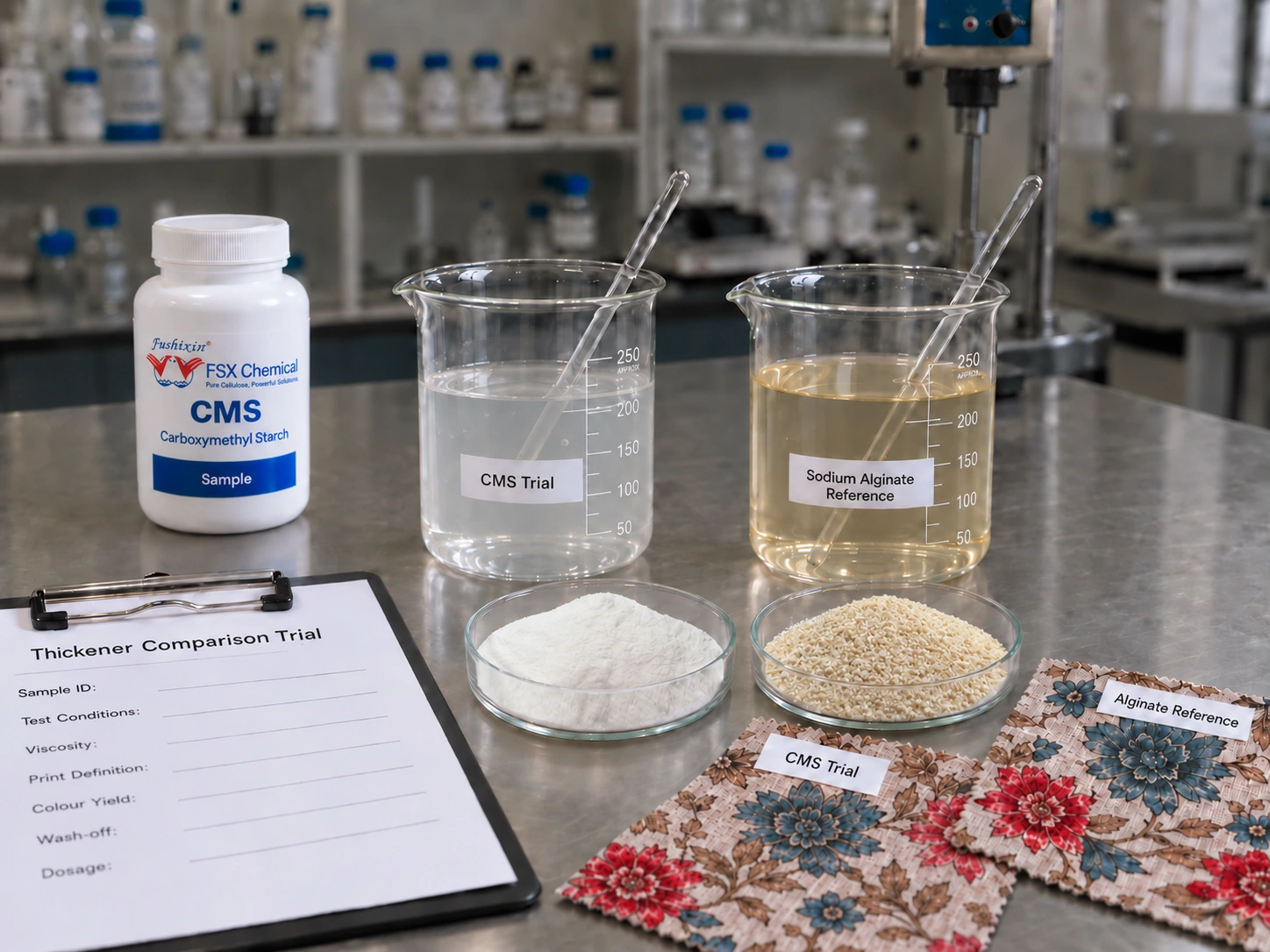
Ebalwasyon sa laboratoryo ng pampapapayat para sa reaktibong pagpi-print gamit ang alternatibong pagsubok sa sodium alginate
Paghahambing sa Laboratorio Pampalapot para sa reaktibong pagpi-print Ihambing sa iyong kasalukuyang sodium alginate sa magkakatulad na mga kondisyon.
Lapot Kahusayan ng kulay Hugasan lang Dosis

Pulbos na hilaw na materyal · Sanggunian na panimulang pormula

Paghahanda ng pampalapot para sa reaktibong pagpi-print at panimulang pormula

Ipinapaloob bilang konsentradong pulbos na hilaw na materyal sa halip na likidong pasta na handa nang gamitin. Handaan muna ang pampalapot ng stock gamit ang tubig, pagkatapos ay gamitin ito sa reaktibong pasta ng pagpi-print ayon sa sistema ng tina, tela, at nais na lapot.

01 Unang Paghahanda

Ihanda ang pampalapot ng sabaw.

Ang pulbos ay hinahalo sa tubig bago ito gamitin sa pangwakas na pasta para sa pagpi-print.

Halimbawa ng FSX CN-R Simulang Sanggunian
Pulbos na pampalapot para sa reaktibong pagpi-print 5%
Tubig 95%
Standard na pampalapot 100%
02 Pasta sa pagpi-print

Ihanda ang reaktibong kulay na pasta.

Gamitin ang inihandang pampalapot ng stock bilang bahagi ng pangwakas na reaktibong pormulasyon sa pagpi-print.

Karaniwang panimulang istruktura Kabuuan 100%
Standard na pampalapot 60–70%
Urea 10–20%
Labanan ang asin 1%
Sodium bikarbonato 2–3%
Mga reaktibong tina Ayon sa kinakailangan Ayon sa anino
Tubig Balanse I-adjust ang kabuuan sa 100%
Pulbos na hilaw na materyal

Koncentrado Pulbos — Ihanda sa lokal bago gamitin

Ito ay pampalapot na gawa sa hilaw na materyal, hindi isang tapos na likidong pasta. Nagdaragdag ang pabrika ng tela ng tubig sa lugar upang ihanda ang pampalapot na stock.

Suplay ng pulbos Standard na pampalapot Pasta sa pagpi-print
Gastos sa Paggamit

Ihambing ang aktwal na dosis, hindi lang ang presyo kada kilo.

Ang suplay ng nakapokus na pulbos ay nag-aalis ng pangangailangang bumili ng paunang hinalong likidong sistema at nagpapahintulot sa gilingan na i-optimize ang paghahanda at dosis nang lokal.

Presyo ng pulbos × Tunay na Dosis = Gastos sa Paggamit

Espesyal na Pag-iimprenta · Pampalapot ng Tela

Pampalapot para sa espesyal na pagpi-print sa vat, discharge, at burn-out

FSX Chemical provides specialty printing thickener solutions for vat dye, discharge and selected burn-out or devoré textile printing. The suitable grade should be selected according to the fabric, chemical system, paste preparation and required printing effect. H5 is one internal FSX grade available for evaluation within this specialty printing route.
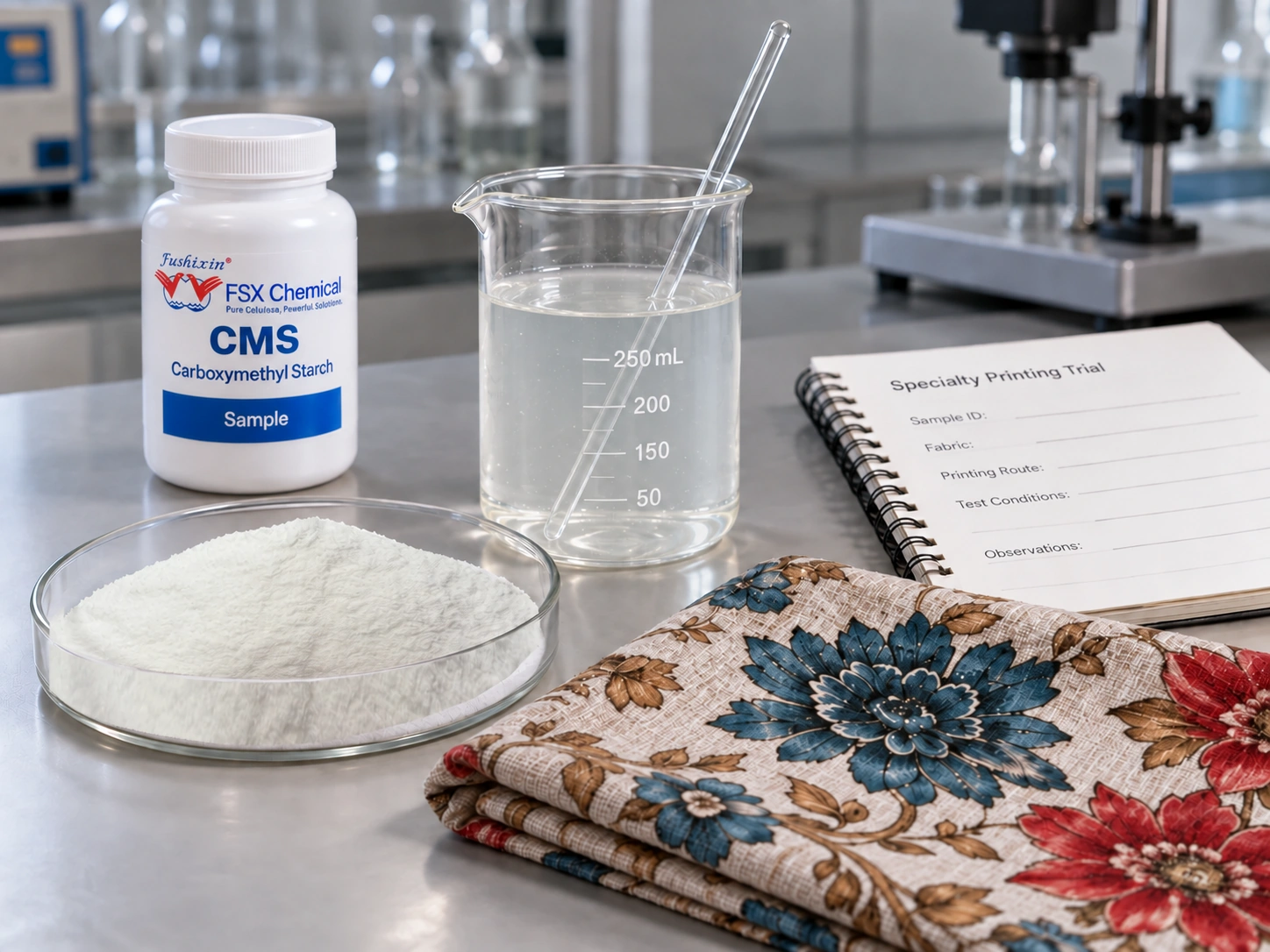
Espesyal na pampapaplit para sa pagpi-print ng makapal na tina sa vat dye discharge at burn-out na pagsusuri sa pagpi-print ng tela
Daan ng Espesyal na Pag-iimprenta VAT, Paglabas at Pag-burn-out sa Pagpi-print Piliin ang antas ayon sa iyong aktwal na proseso ng pagpi-print.
Pamilya ng Produkto Pampapalapot para sa Espesyal na Pag-iimprenta
Daan ng Aplikasyon Vat / Paglabas / Pagkasunog
Halimbawa ng Grado sa FSX H5 · Panloob na Antas
01

Daan ng Espesyal na Pag-iimprenta

Thickener route for specialty textile printing where paste preparation, process compatibility and final printing effects require controlled evaluation.

02

Pag-imprenta ng VAT at Paglabas

Evaluate viscosity, paste behavior and printing performance according to the dye system, discharge chemistry and fabric.

03

Pagkasobra sa Pagod / Pagsunog sa Pag-imprenta

Confirm fibre composition, paste formulation, chemical conditions and the required final pattern effect before use.

04

Pag-uugnay ng Grado at Pagsubok

Select the appropriate FSX grade through sample, TDS and controlled printing trials before confirming bulk use.

Pagtatasa ng paglilitis Ihambing sa ilalim ng iyong aktwal na kondisyon ng produksyon.
  • Paghahanda ng pandikit
  • Lapot
  • Pagpapatakbo ng screen
  • Epekto ng Pattern
  • Pagkatapos ng paggamot
Paghihirang ng Grado Bago ang Maramihang Pagsubok Select by process performance, not by an internal grade name alone.

Specialty printing thickener grades should be evaluated against the buyer's existing printing process. Laboratory data can support initial screening, but final selection should be based on printing behavior and the finished textile result.

01
Ibigay ang iyong kasalukuyang proseso

Share the fabric composition, printing route, current thickener or TDS, paste system and key production requirements.

02
Isagawa ang isang kontroladong paghahambing

Compare viscosity, screen running, pattern development and post-treatment result under matched conditions.
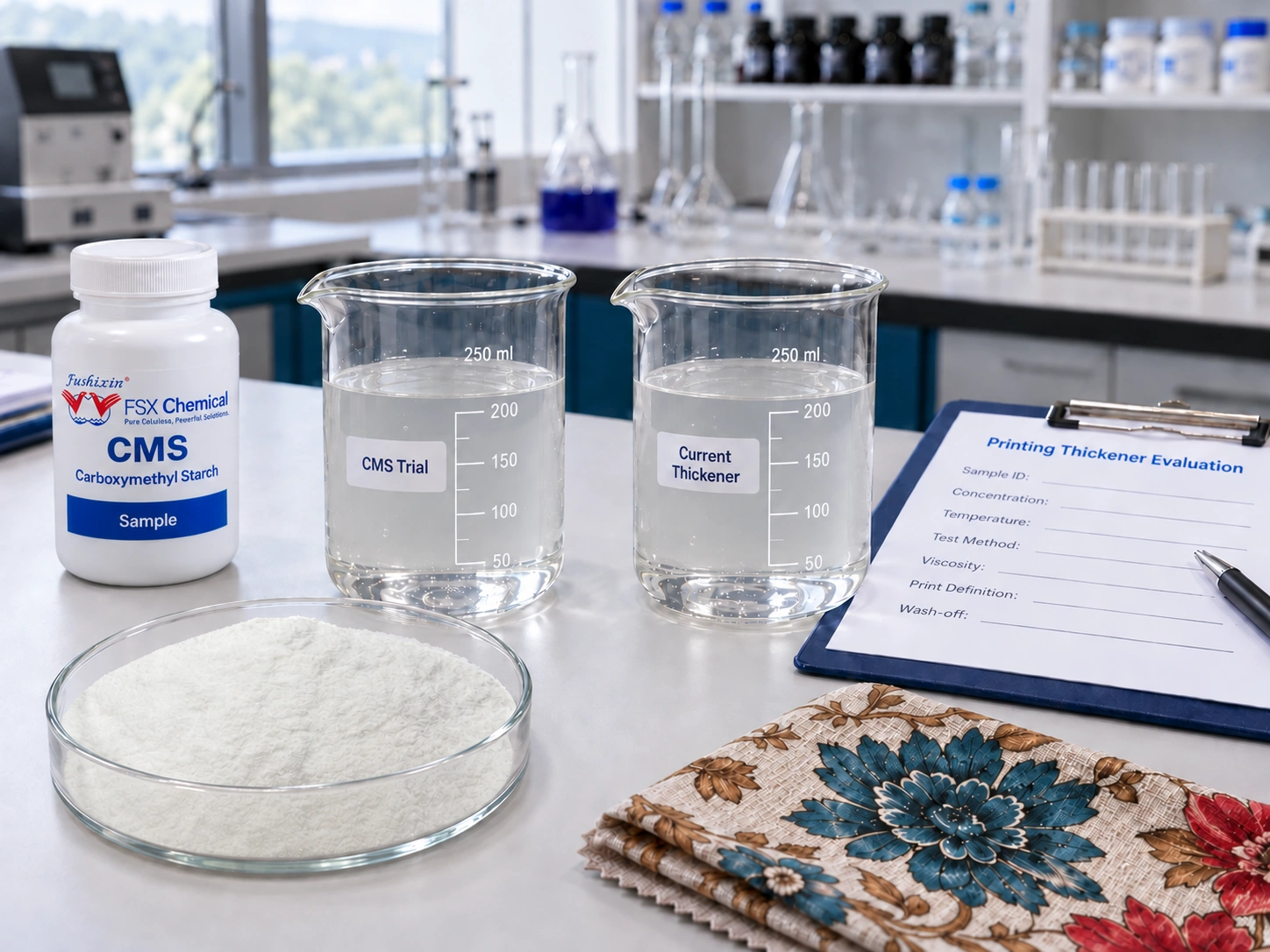
Gumagamit ka na ba ng pampalapot para sa espesyal na pagpi-print? Send your current sample or TDS, printing process and fabric information for grade matching and laboratory evaluation.

Teknikal na Datos · Paghahambing ng mga Pampalapot sa Pag-iimprenta

Teknikal na Espesipikasyon ng Pampalapot para sa Pagpi-print ng Tela

Tingnan ang teknikal na datos para sa mga grado ng pampataba sa pagpi-print ng FSX na ginagamit sa mga reaktibo, disperse, at espesyal na ruta ng pagpi-print ng tela. Ihambing ang ruta ng aplikasyon, anyo ng produkto, batayan ng pagsusuri ng viskosidad, at pH bago pumili ng grado para sa kontroladong pagsubok sa laboratoryo o produksyon.

Teknikal na espesipikasyon ng pampalapot para sa pagpi-print ng tela sa FSX: paghahambing ng CN-R, FS-05 at H5
FSX Grado Daan ng Pagpi-print Mukha Pagtukoy sa Viskosidad pH Pokus ng paglilitis
CN-R Antas ng pampalapot para sa reaktibong pagpi-print Reaktibong Pagpi-print Tela ng koton · Tela ng visose · Mga telang selulosiko Puting pulbos 70,000–90,000 mPa·s 5% na solusyong tubig · 25°C 7.0–8.0 1% na solusyong tubig
Katatagan ng pandikit Kahusayan ng kulay Hugasan lang
FS-05 Antas ng pampapalapot para sa pag-iimprenta na pagkalat Pagsasabog ng Pag-iimprenta Pagtatasa ng pagpi-print sa tela Puting pulbos 30,000–45,000 mPa·s 5% na solusyong tubig · 25°C 7.0–8.0 1% na solusyong tubig
Katatagan ng pandikit Pagpapatakbo ng screen I-print ang kahulugan
H5 Panloob na espesyal na grado sa pagpi-print Pag-imprenta ng VAT at Paglabas Piniling burn-out / devoré Puting mga maliliit na piraso 30,000–40,000 mPa·s 8% na solusyong tubig · 25°C 10.0–12.0 1% na solusyong tubig
Paghahanda ng pandikit Epekto ng Pattern Pagkatapos ng paggamot
Batayan ng Pagsusuri Gamitin ang parehong pamamaraan bago ihambing ang mga pampalapot para sa pagpi-print.

I-ayon ang konsentrasyon ng solusyon, temperatura, instrumento, spindle, at bilis ng pagsubok sa kasalukuyang datos ng supplier bago suriin ang pagkakaiba ng viskosidad sa pagitan ng mga grado ng pampalapot para sa pagpi-print.

CN-R · 5% FS-05 · 5% H5 · 8%
Mga Teknikal na Dokumento TDS · SDS · COA ng Batch

May suporta para sa TDS at SDS para sa pagpi-print ng pagsusuri ng pampalapot. Inihahanda ang batch COA at mga dokumento ng pagpapadala ayon sa nakumpirmang batch ng produksyon at mga kinakailangan ng order.

TDS SDS Maramihang COA
Kasalukuyang Pagtatambay ng mga Pampalapot Kailangan mo ba ng tulong sa paghahambing ng mga espesipikasyong ito sa iyong kasalukuyang pampapalapot para sa pagpi-print?

Ipadala ang iyong kasalukuyang TDS o sample kasama ang paraan ng pagsusuri ng viscosity at ang ruta ng pagpi-print para sa kontroladong paghahambing sa laboratoryo.

Humiling ng paghahambing ng halimbawa
Paglilipat ng pampalapot para sa pagpi-print ng tela gamit ang mga katugmang kondisyon ng pagsubok sa viskosidad at mga pagsubok sa produksyon
Proseso ng Pag-iimprenta · Batayan ng Pagsubok · Resulta ng Pagsubok

Pagtatasa ng pagpili ng pampalapot para sa pagpi-print · Subok sa produksyon

Paano Suriin ang Pampalapot para sa Pagpi-print Bago ang Maraming Gamit

A textile printing thickener should be selected by process fit and actual trial performance rather than by grade name alone. Review the printing route, viscosity test basis, paste behavior and finished textile result under matched conditions before confirming bulk supply.

01

Kumpirmahin ang proseso ng pagpi-print

Define the reactive, disperse or specialty printing route, fabric composition, dye system and current paste formulation. When replacing an existing thickener, provide the current sample or TDS for comparison.

02

Iayon ang mga kondisyon ng pagsubok sa viskosidad

Compare viscosity using the same solution concentration, temperature, instrument, spindle and test speed. Values measured under different conditions should not be compared directly.

03

Isagawa ang isang kontroladong pagsubok sa pagpi-print.

Evaluate paste preparation, screen running, print definition, colour yield, penetration and wash-off. Specialty processes should also confirm pattern development and post-treatment results.

04

Kumpirmahin ang mga dokumento ng suplay at teknikal

After the trial is approved, confirm the selected grade, order quantity, production lead time, packing requirements, TDS and SDS. Batch COA is prepared according to the confirmed production batch.

Lohika ng Pagtatapon
Pagkakaangkop sa Proseso Tugmang Pagsusulit Pagpi-print ng pagsubok Kumpirmasyon ng Maramihan

Ebalwasyon ng Tagapagtustos ng Pampalapot para sa Pag-iimprenta

Ano ang Ihahambing sa Pagtatasa ng Tagapagtustos ng Pampalapot para sa Pagpi-print

When reviewing a new or backup textile printing thickener supplier, compare product performance, test conditions, batch consistency, technical support and supply terms before deciding whether to proceed with a sample or production trial.
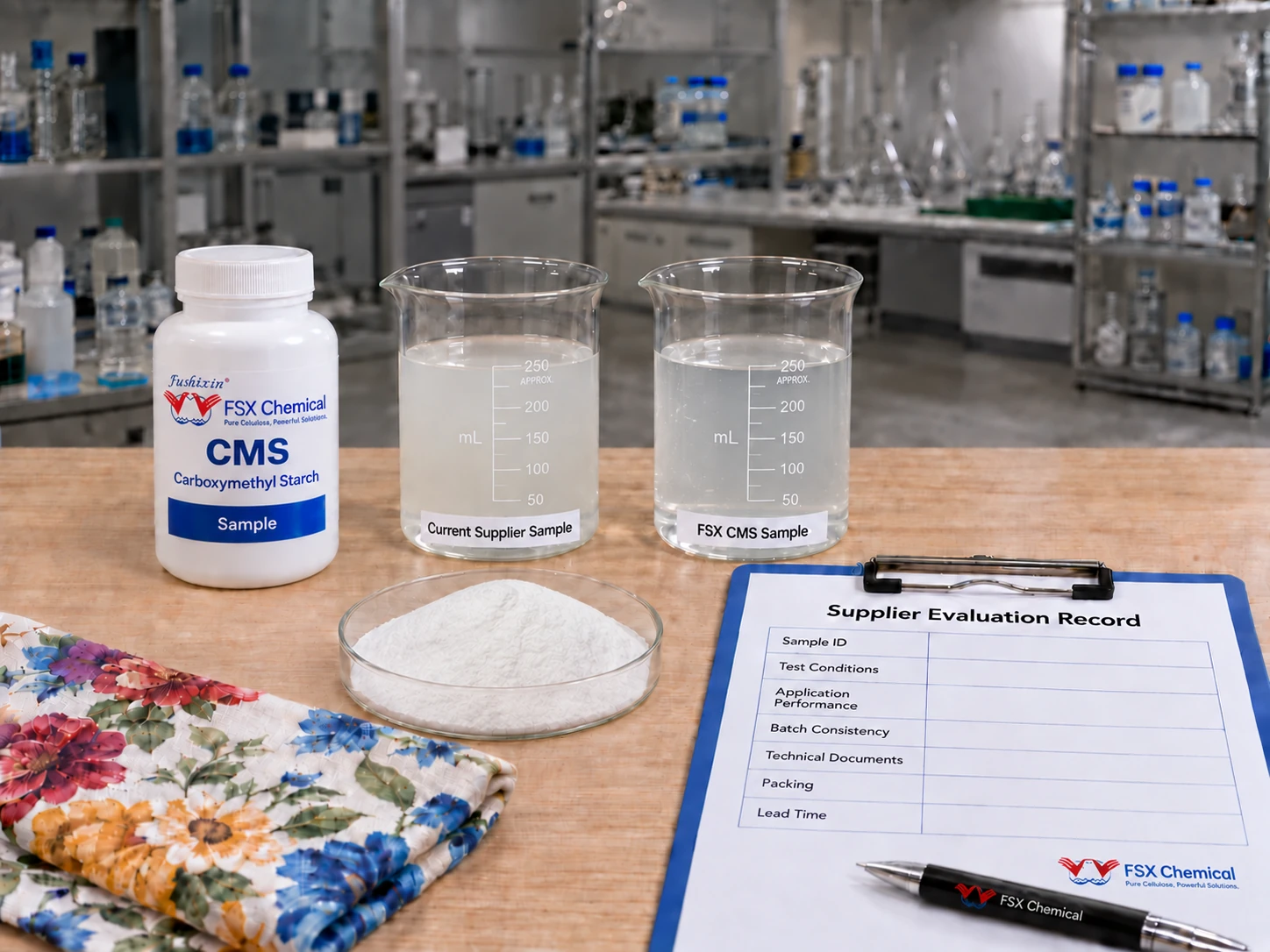
Pagtatasa sa tagapagtustos ng pampalapot para sa pagpi-print ng tela gamit ang kasalukuyang sample na TDS at katugmang pagsubok ng viskosidad
Kasalukuyang Produkto · Pagtatasa sa Laboratoryo

Pagsusuri sa Pagtatasa ng Tagapagtustos

Send your current sample or TDS for a matched laboratory comparison before deciding whether a new supplier should move to the next trial stage.

Direktang Mula sa Pabrika Pagsusuri sa Lab Maramihang QC
Simulan ang Pagtatasa ng Tagapagtustos
Ano ang mga pagsusuri ng FSX bago ang pagsubok ng tagapagtustos

Ihambing ang higit pa kaysa sa presyo o isang solong halaga ng viskosidad.

A potential printing thickener supplier should be evaluated using the current product, matched test conditions, actual printing process and commercial supply requirements together.

01
Kasalukuyang Produkto Pagsusuri ng Halimbawa at TDS

Compare the current supplier grade, product sample, specification and existing paste requirements.

02
Batayan ng Pagsusuri Iangkop ang mga kondisyon ng viskosidad

Align concentration, temperature, instrument, spindle and test method before comparing viscosity results.

03
Proseso ng pagpi-print Itugma ang Ruta ng Aplikasyon

Review reactive, disperse or specialty printing together with the actual fabric, dye system and paste conditions.

04
Kakayahan sa Suplay Ihambing ang Suplay ng Pabrika

Review batch consistency, order quantity, packing, lead time, technical documents and supply coordination.

Batayan ng Pagtatasa Use trial results to decide whether the supplier is suitable for further evaluation.
Pagganap Dosis Gastos sa Paggamit Pagkakapareho ng Batch

Mga Madalas Itanong Tungkol sa Pagpi-print ng Pampalapot · Teknikal at Pagkuha

Mga Madalas Itanong Tungkol sa Pampalapot para sa Pagpi-print ng Tela

Practical answers for buyers evaluating reactive printing thickeners, sodium alginate alternatives, viscosity test conditions, sample trials and technical documents before commercial purchasing.
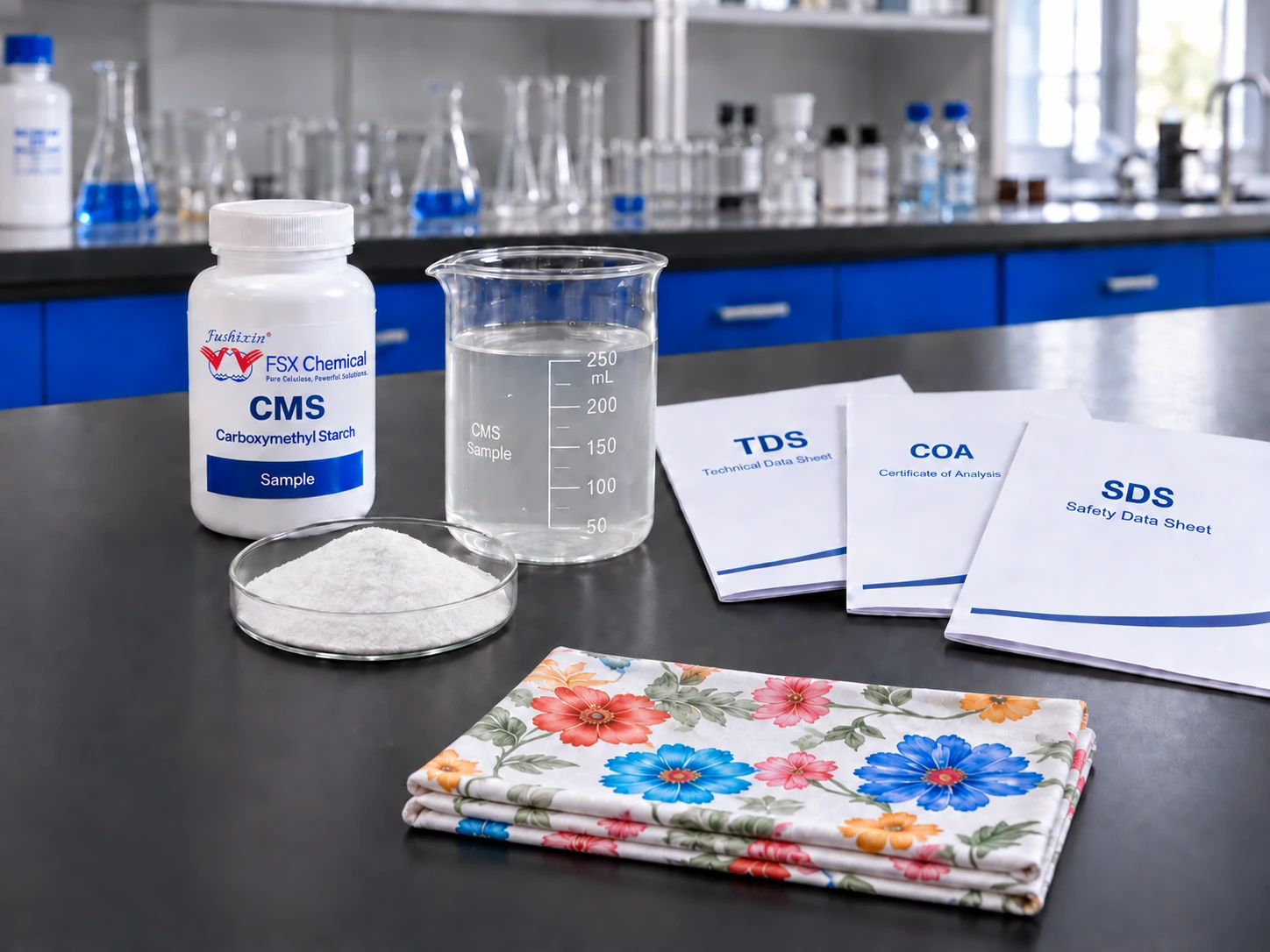
FSX Chemical CMS carboxymethyl starch textile printing thickener with sample and technical evaluation support
Halimbawa · Teknikal na Datos · Pagsusuri ng Subok Suriin bago mag-supply nang maramihan

Compare application, test conditions and printing performance before confirming a grade.

Halimbawa ng pagsubok TDS at SDS Pagsusuri sa Lab
01

Ano ang dapat kong hanapin sa isang pampalapot na reaktibo para sa pagpi-print?

For reactive dye printing, compare paste viscosity, screen running, print definition, colour yield, wash-off and dosage under the actual cotton, viscose or other cellulosic fabric conditions. Evaluation should use the buyer's real dye system, formulation and printing process rather than specification values alone.

02

Maaari bang gamitin ang isang reaktibong pampalapot para sa pagpi-print bilang alternatibo sa sodium alginate?

An alternative reactive printing thickener can be evaluated against the current sodium alginate under matched formulation, viscosity and printing conditions. The suitable replacement level should be confirmed through laboratory and production trials rather than assumed as a fixed one-to-one ratio.

03

Ano ang dapat kong ikumpara kapag sinusubok ang pamalit na sodium alginate?

Compare the current sodium alginate and alternative thickener using the same target paste viscosity and production conditions. Important checks include dosage, colour yield, wash-off, screen performance, print definition, paste stability and final cost-in-use. Price per kilogram alone is not enough to judge the more economical option.

04

Paano dapat ikumpara ang mga halaga ng viskosidad ng pampalapot para sa pagpi-print?

Viscosity values should only be compared under matched test conditions. Use the same solution concentration, temperature, instrument, spindle, speed and measurement method. FSX CN-R and FS-05 reference values are measured at 5% solution, while H5 is measured at 8%, so those values should not be compared directly without considering the test basis.

05

Paano ako pipili ng pampalapot para sa pagpi-print ng tela para sa iba't ibang proseso ng pagpi-print?

Start with the printing process rather than an internal product code. Reactive, disperse, vat, discharge and burn-out printing have different paste and performance requirements. FSX can review the fabric, dye or chemical system, current thickener and trial objectives before recommending an appropriate grade for evaluation.

06

Anong impormasyon ang kailangan para sa isang sample trial o quotation?

Provide the printing process, fabric type, current product sample or TDS if available, viscosity requirement and test method, paste conditions, expected printing result, estimated quantity and destination. TDS and SDS can support product evaluation, while batch COA is prepared according to the confirmed production batch.