In-Depth Product Comparison: Sodium Alginate vs. CMC in Textile Printing
Sodium alginate and CMC can both control printing-paste viscosity, but they are not interchangeable in...
Sodium alginate and carboxymethyl cellulose (CMC) are both water-soluble polymers that can control the viscosity and flow of textile printing pastes. However, they have different chemical structures, dye interactions and application limits, so they should not be treated as universal one-to-one substitutes.
For procurement teams, the correct question is not simply whether sodium alginate or CMC is better. The more useful question is which material, grade and dosage are suitable for the fabric, dye system, printing machine, fixation process and required print quality.
This guide compares sodium alginate and CMC from a textile printing perspective. It also explains which specifications to request, how to conduct a controlled comparison and when a blended formulation may be worth evaluating.
Important: The comparisons below describe common technical tendencies rather than guaranteed results. Performance varies with polymer grade, degree of substitution, viscosity method, paste recipe, water quality, dye chemistry, fabric and production conditions.
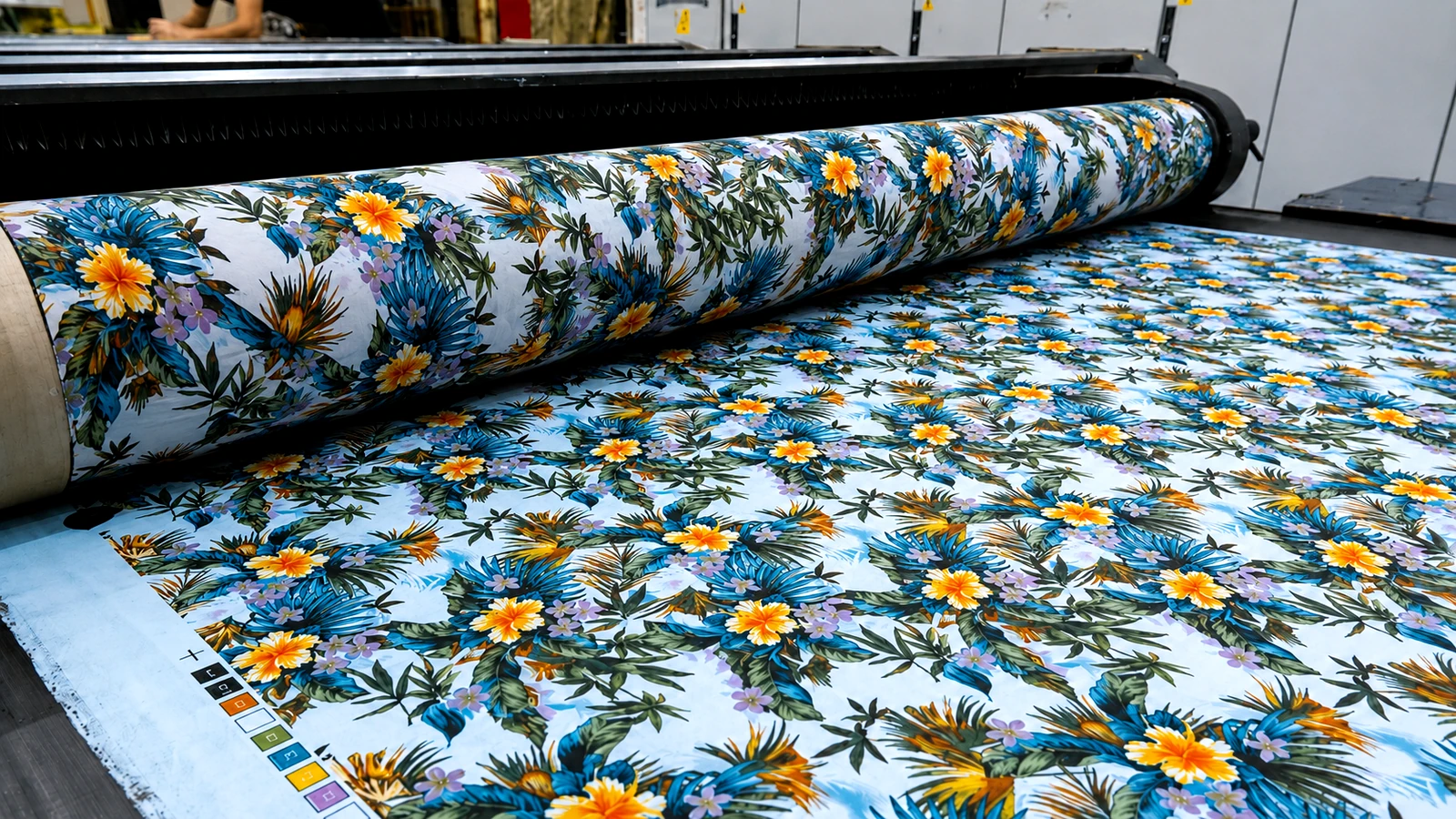
For conventional reactive dye printing on cotton, viscose and other cellulosic fabrics, sodium alginate is normally the first benchmark to evaluate. Its anionic structure limits interaction with many reactive dyes and can support dye transfer, print definition and wash-off when the grade and process are properly matched.
CMC may be considered for selected reactive, disperse, pigment or compound printing systems. Its suitability depends heavily on the degree of substitution, substitution distribution, purity, viscosity profile and compatibility with the complete printing formulation.
Specialized CMC grades may perform differently from general-purpose industrial CMC. Therefore, a buyer should not approve or reject CMC based only on the product name.
Printing Requirement
Recommended Starting Route
Buyer Verification
Reactive printing on cotton or viscose
Sodium alginate as the initial benchmark
Color yield, sharpness, wash-off, fabric handle and paste stability
Dye interaction, degree of substitution, dosage and total cost in use
Disperse printing on polyester
Evaluate CMC, CMS, synthetic or compound systems
Dye dispersion, screen passage, fixation residue and wash-off
Pigment printing
Evaluate the thickener with the actual binder system
Binder compatibility, viscosity stability, fabric handle and rubbing fastness
Reactive digital pretreatment
Use a digital-printing-specific grade or formulation
Filtration, residue, coating uniformity, ink response and fixation
Why Sodium Alginate and CMC Behave Differently
Sodium Alginate Chemistry
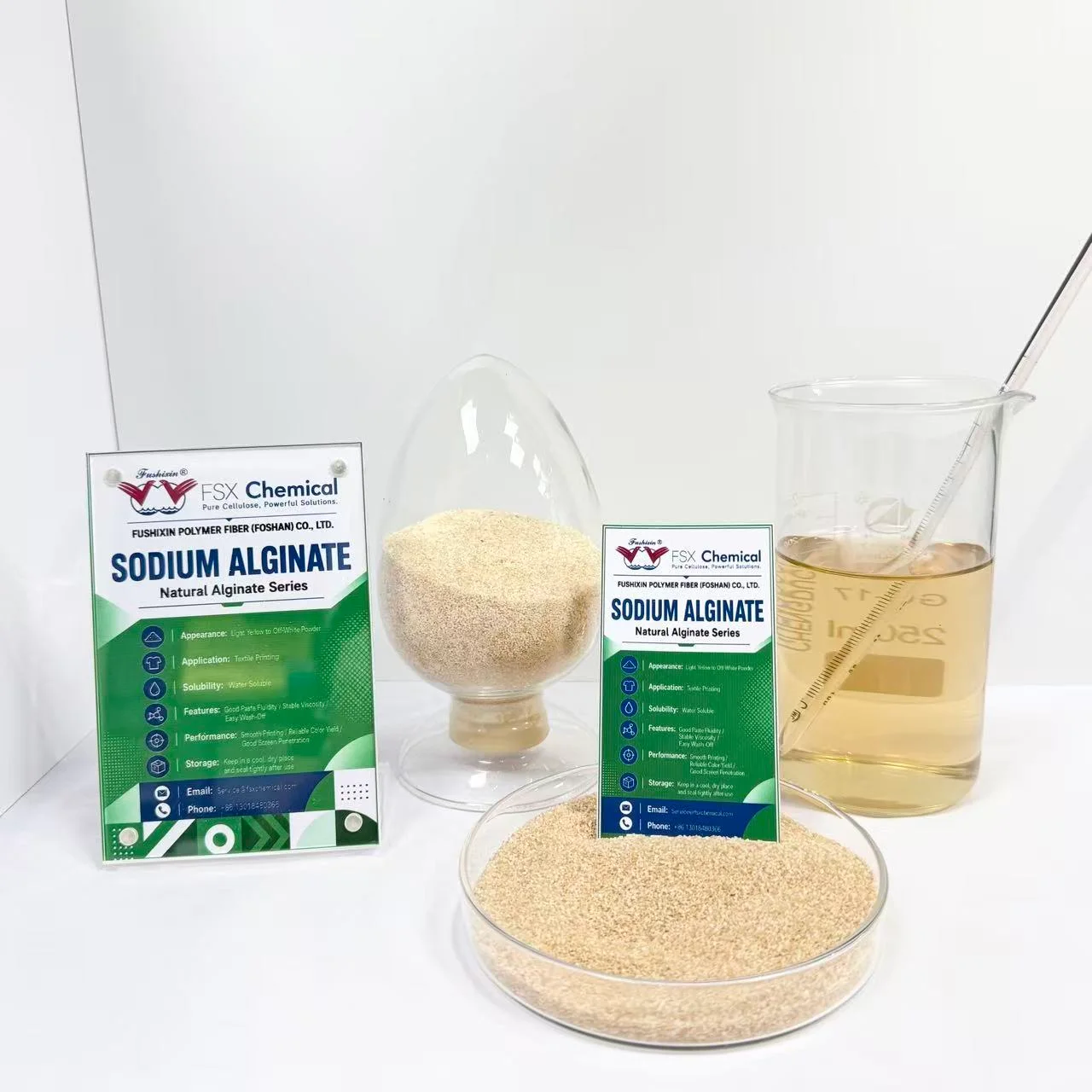
Sodium alginate is an anionic polysaccharide derived from brown seaweed. Its polymer chain contains carboxylate groups that influence water solubility, viscosity and interaction with ions in the printing paste.
In alkaline reactive printing systems, the negatively charged alginate and many reactive dyes have limited attraction. Compared with polysaccharides containing more accessible reactive hydroxyl groups, alginate normally has a lower tendency to consume reactive dye intended for the fiber.
This is one reason sodium alginate is widely used as a benchmark thickener for reactive printing. It does not mean that every sodium alginate grade will produce the same color yield, rheology or washing performance.
CMC Chemistry and Degree of Substitution
CMC is a cellulose ether produced by introducing carboxymethyl groups onto a cellulose backbone. Its performance is influenced by molecular weight, degree of substitution, substitution distribution, purity and the manufacturing process.
The degree of substitution, commonly abbreviated as DS, indicates the average number of hydroxyl positions substituted by carboxymethyl groups on each anhydroglucose unit. Remaining hydroxyl groups may still interact with certain reactive dyes under printing and fixation conditions.
For this reason, a general industrial CMC should not automatically be used as the sole thickener for reactive dye printing. Higher-substitution or specially engineered printing grades may behave differently, but their suitability still needs to be demonstrated with the buyer’s dyes and process.
Why Product Names Are Not Enough
Two products both described as “high-viscosity CMC” may have different DS values, viscosity methods, salt tolerance and rheological profiles. The same is true for two sodium alginate grades with similar nominal viscosity.
Procurement decisions should therefore be based on complete test conditions, agreed specifications and application trials rather than a generic product name.
Direct Comparison: Sodium Alginate vs. CMC
Comparison Factor
Sodium Alginate
CMC
Polymer source
Seaweed-derived polysaccharide
Cellulose-derived ether
Common printing direction
Reactive dye printing on cellulosic fabrics
Selected reactive, disperse, pigment and compound systems depending on grade
Reactive dye interaction
Generally limited under properly controlled conditions
Grade-dependent; remaining hydroxyl groups may interact with some reactive dyes
Often used where clean wash-off is important in reactive printing
Varies with grade, dye interaction, dosage and washing process
Water-quality sensitivity
Can gel or form particles in the presence of multivalent ions
May also be affected by salts and multivalent ions; behavior is grade-dependent
Cost evaluation
Evaluate delivered price, dosage and process performance
Evaluate delivered price, dosage, yield, washing and production risk
Reactive Dye Compatibility
Reactive dyes are designed to form covalent bonds with suitable functional groups on fibers such as cotton and viscose. If the thickener also reacts with part of the dye, less dye may remain available for fixation on the fabric.
Sodium alginate is normally selected because its structure reduces this competition. This can support color yield and washing performance, but the result still depends on dye type, alkali, steaming, fabric preparation and washing.
CMC compatibility is more variable. A specialized printing grade may be suitable in a selected reactive system, while a general-purpose or insufficiently substituted grade may reduce color yield, create more residue or contribute to a harsher fabric handle.
Rheology and Print Definition
Both sodium alginate and CMC solutions can show shear-thinning behavior. The paste becomes easier to move under the shear generated by a pump, squeegee or screen, then recovers part of its structure after application.
The extent of shear thinning and viscosity recovery depends on grade, concentration and formulation. It is not technically reliable to state that every alginate grade has better rheology than every CMC grade.
For fine lines and detailed designs, buyers should evaluate viscosity at more than one shear condition where possible. Screen passage, edge sharpness, penetration and paste recovery after shear are more useful than a single static viscosity value.
Color Yield
In reactive printing, sodium alginate frequently provides a strong reference point because of its limited interaction with many reactive dyes. However, color yield is not controlled by the thickener alone.
Dye selection, fabric absorbency, moisture, alkali level, steaming conditions and washing all influence the final shade. Any statement that a thickener increases color yield by a fixed percentage should be supported by a documented test using defined conditions.
When comparing CMC with alginate, use the same dye batch, fabric, recipe, printing equipment, fixation and washing procedure. Measure instrumental color strength where possible, but also assess shade, levelness and visual definition.
Wash-Off and Fabric Handle
After fixation, the thickener and unfixed dye need to be removed from the fabric. Sodium alginate is commonly selected for reactive printing partly because it can be washed out effectively under a properly controlled washing process.
CMC is also water-soluble, but actual removal depends on grade, dosage and whether interaction has occurred among the CMC, reactive dye and fabric. Residual thickener can influence fabric handle, shade and subsequent finishing.
A wash-off comparison should record washing temperature, water volume, time, detergent or soaping agent and number of rinses. Without these conditions, statements such as “easy wash-off” cannot be compared objectively.
Water Hardness and Multivalent Ions
Sodium alginate is sensitive to multivalent ions such as calcium. Excessive calcium or other multivalent ions can produce local gel particles, poor filtration, uneven paste or screen blockage.
CMC can also respond to salts and multivalent ions, although the visible effect and tolerance depend on its grade and formulation. Neither product should be tested only with laboratory deionized water if the factory uses hard process water.
Buyers experiencing lumps or filtration problems should test the thickener with actual production water. Water hardness, sequestering-agent use and the order of ingredient addition should be documented.
Paste Preparation and Hydration
Both products require controlled dispersion and hydration. Adding powder too quickly can produce fish-eyes or partially hydrated lumps that remain even after prolonged mixing.
Particle size influences wetting and dissolution. Very fine powder may hydrate quickly but can be more difficult to disperse without suitable mixing, while coarse particles may require more time to hydrate completely.
Comparative testing should use the supplier’s recommended addition method first, followed by the buyer’s standard production procedure. Record mixing time, hydration time, temperature, foam and filtration residue.
Storage Stability and Microbial Control
Water-based polysaccharide pastes can change during storage. Viscosity loss, odor, surface growth or separation may indicate microbial activity, contamination or chemical instability.
Storage stability depends on water quality, hygiene, temperature, pH, additives and holding time. Buyers should not assume that either sodium alginate or CMC stock paste can be stored indefinitely.
If paste is routinely stored before use, include viscosity retention and microbiological risk in the evaluation. Any preservative must be reviewed for compatibility and applicable regulatory requirements.
Total Cost in Use
Comparing price per kilogram is not enough because two grades may require different dosages. A less expensive CMC grade may not reduce total cost if it requires more material, produces lower color yield or increases washing and rework.
Similarly, a higher-priced sodium alginate grade is not automatically more economical. It still needs to demonstrate suitable thickening efficiency, print quality and production consistency.
Basic material-cost calculation: thickener dosage per 1,000 kg of finished paste multiplied by the delivered price per kilogram.
A complete cost-in-use analysis should also consider mixing time, filtration loss, screen cleaning, dye consumption, washing demand, rejected fabric, rework and the risk of production interruption.
Application-Based Selection Guide
Reactive Printing on Cotton
Sodium alginate should normally be used as the initial benchmark for conventional reactive printing on cotton. It is especially relevant when color yield, clean wash-off and fabric handle are priority requirements.
A specialized CMC or alginate-CMC blend may be tested when the mill is evaluating alternative rheology or cost. The trial should include multiple dye colors because thickener interaction may not be identical for every reactive dye.
Reactive Printing on Viscose or Lyocell
Viscose and lyocell can respond differently from cotton because of their absorbency, swelling and surface characteristics. Sodium alginate remains an important starting route, but penetration and outline definition may require grade or recipe adjustment.
When CMC is evaluated, monitor fabric handle and washing carefully. A result obtained on cotton should not automatically be transferred to viscose or lyocell production.
Disperse Printing on Polyester
Disperse printing does not use the same fiber-reactive fixation mechanism as reactive printing. CMC, CMS, synthetic and compound thickeners may all be considered depending on the dye dispersion and fixation process.
Sodium alginate has no automatic chemical advantage in this application. The selected product should be evaluated for screen passage, dye dispersion stability, print definition, fixation residue and wash-off.
Pigment Printing
In pigment printing, pigment particles are held on the fabric by a binder film. Thickener selection therefore depends heavily on compatibility with the pigment dispersion, binder, crosslinker and other auxiliaries.
CMC should not be described as universally compatible with every pigment binder. Run a full formulation test and assess viscosity stability, print definition, fabric handle, rubbing fastness and equipment cleanability.
Digital Reactive Pretreatment
Digital printing requires greater attention to filtration, dried residue, coating uniformity and interaction with the ink system. A screen-printing grade should not automatically be used in digital pretreatment.
When comparing sodium alginate and CMC for digital use, include filtration, nozzle-area contamination risk, fabric coating uniformity, color response and storage stability. A dedicated digital printing paste may be more appropriate than either polymer alone.
Specifications Buyers Should Compare
Parameters for Sodium Alginate
Viscosity value and complete measurement method
Recommended concentration and hydration procedure
pH range
Moisture specification
Particle size or mesh distribution
Insoluble matter or filtration performance
Calcium and hard-water sensitivity where relevant
Recommended storage conditions and shelf life
Parameters for CMC
Viscosity value and complete measurement method
Degree of substitution
Recommended concentration and hydration procedure
pH range
Moisture specification
Purity or active-content information where relevant
Particle size
Salt and electrolyte tolerance
Suitability for the proposed dye or binder system
Why the Viscosity Method Must Be Identical
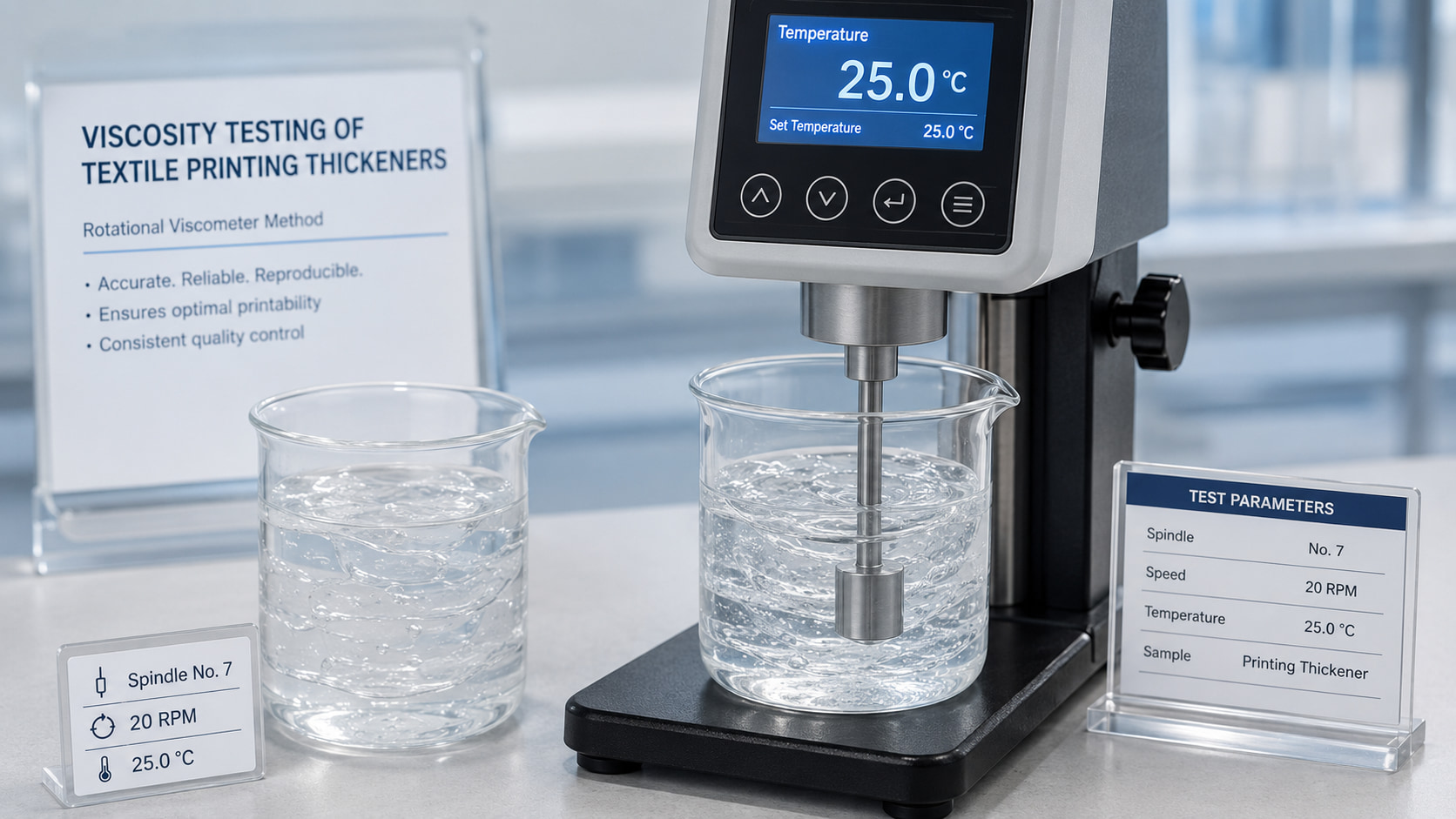
A viscosity value cannot be compared without its test conditions. Concentration, temperature, hydration time, viscometer, spindle and rotational speed all affect the reported result.
If two suppliers use different methods, request samples and test both products with the buyer’s internal procedure. Do not convert values using an assumed ratio unless a validated correlation is available.
Documents to Request
Product-specific TDS
Current SDS
Representative sample
Batch-specific COA for the confirmed shipment
Recommended paste-preparation procedure
Packaging and storage information
Current compliance documents when required
Laboratory Comparison Protocol
Stage 1: Review the Product Information
Confirm the product code, viscosity method, recommended dosage, pH, moisture, particle size and application direction. For CMC, request the DS value or agreed DS range where it is relevant to the proposed use.
Identify any difference between the supplier’s test method and the mill’s internal method before comparing reported values.
Stage 2: Prepare the Stock Paste
Prepare sodium alginate and CMC samples using the same water source and controlled conditions. If the recommended concentrations are different, test both an equal-concentration comparison and a target-viscosity comparison.
Record powder dispersion, lump formation, mixing time, hydration time, foam, temperature and final viscosity. Retest viscosity after the normal factory holding period.
Stage 3: Prepare the Complete Printing Paste
Add the actual dye or pigment, alkali, urea, binder and auxiliaries according to the production recipe. Observe any immediate or delayed viscosity change.
Check paste homogeneity, filtration, screen passage and storage behavior. A stable stock paste may become unstable after salts, dyes or auxiliaries are added.
Stage 4: Conduct the Printing Trial
Use the same fabric, screen, squeegee conditions, machine speed and paste application level. Include fine lines, solid areas and design elements that reveal bleeding or poor penetration.
Where possible, test light, medium and dark shades. Different dye concentrations can change viscosity, fixation and wash-off behavior.
Stage 5: Fix and Wash Under Standard Conditions
Use the mill’s standard drying, steaming, curing and washing route. Do not adjust the process for one thickener unless the purpose of the trial is to develop a new process.
Record washing time, temperature, water volume and chemicals. Assess whether either sample requires additional washing to reach an acceptable handle or shade.
Stage 6: Evaluate the Printed Fabric
Color strength and shade difference
Line sharpness and edge bleeding
Surface coverage and penetration
Levelness in solid areas
Fabric handle after washing
Residual thickener
Relevant colorfastness results
Production observations and cleaning requirements
Stage 7: Calculate Total Cost in Use
Compare the dosage and delivered price first, then add any measurable differences in dye demand, preparation time, washing, rework and rejected fabric.
The most economical product is the one that meets the technical acceptance criteria at the lowest controlled production cost, not necessarily the product with the lowest price per bag.
Can Sodium Alginate and CMC Be Blended?
Sodium alginate and CMC may be combined in selected printing formulations to adjust paste body, shear response, dosage or material cost. A blend can be relevant when a mill wants to retain part of the alginate performance while evaluating an alternative polymer route.
However, blend viscosity cannot always be predicted by averaging the individual product data. Polymer interaction, water hardness, mixing order, concentration, dye and electrolyte level can produce nonlinear results.
In reactive printing, the addition of CMC may also change dye interaction and wash-off. Begin with a small formulation matrix and compare each blend with a 100% sodium alginate reference.
No blend ratio should be promoted as universally suitable. The approved ratio must come from the buyer’s application test and cost analysis.
Common Selection Mistakes
Comparing Only Price per Kilogram
A price comparison that ignores dosage, dye yield, washing and production loss can lead to the wrong decision. Ask suppliers to quote the specific grade being tested rather than a general product family.
Comparing Viscosity Values from Different Methods
A higher number does not necessarily mean a stronger or better thickener. Confirm concentration, temperature, hydration time, spindle and RPM before comparing values.
Using General-Purpose CMC in Reactive Printing
CMC grades are not chemically or functionally identical. A grade intended for detergent, ceramic, paper or adhesive use should not be assumed to suit reactive printing.
Testing Only the Stock Paste
Viscosity in water does not prove compatibility with dyes, salts, alkali, binders and auxiliaries. Complete paste and printed-fabric testing are required.
Assuming a Laboratory Result Will Scale Automatically
Production mixing energy, batch size, holding time, screen conditions and washing equipment may differ from laboratory conditions. Use a pilot or controlled production trial before approving a high-volume order.
Making Environmental Claims Without Data
Seaweed-derived or cellulose-derived does not automatically mean that the complete printing process is environmentally preferable. Environmental evaluation should consider dosage, wastewater load, washing demand, preservatives and applicable test data.
How FSX Chemical Supports Grade Matching
FSX Chemical supplies sodium alginate and CMC grades for textile printing and related industrial applications. Grade recommendations can be based on the buyer’s fabric, dye system, printing method, current TDS, viscosity method and production problem.
Buyers can request samples of both product routes for a controlled comparison. The sample should be evaluated using the same formulation and test conditions before commercial approval.
FSX Chemical can also provide product-specific TDS and SDS documents. A batch-specific COA should be requested for the confirmed product and production batch.
For a more accurate recommendation, provide:
Fabric type
Dye, pigment or ink system
Flat-screen, rotary-screen or digital process
Current thickener and dosage
Target viscosity with the complete test method
Current TDS or retained sample
Main problem, such as bleeding, low color yield or difficult wash-off
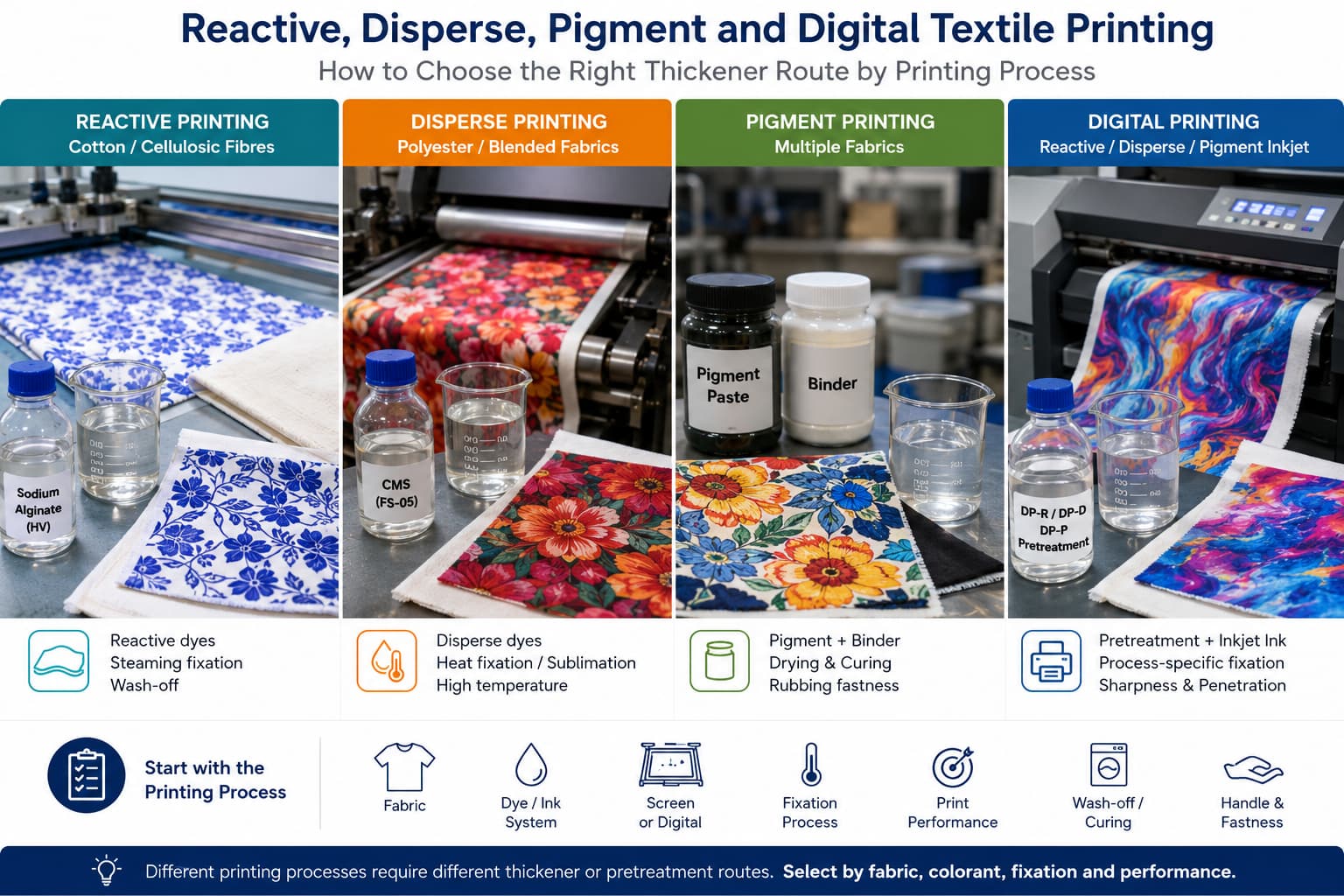
Learn how to choose thickener and pretreatment routes for reactive, disperse, pigment and digital textile printing based on fabric, dye or ink, fixation, wash-off and print-quality requirements.
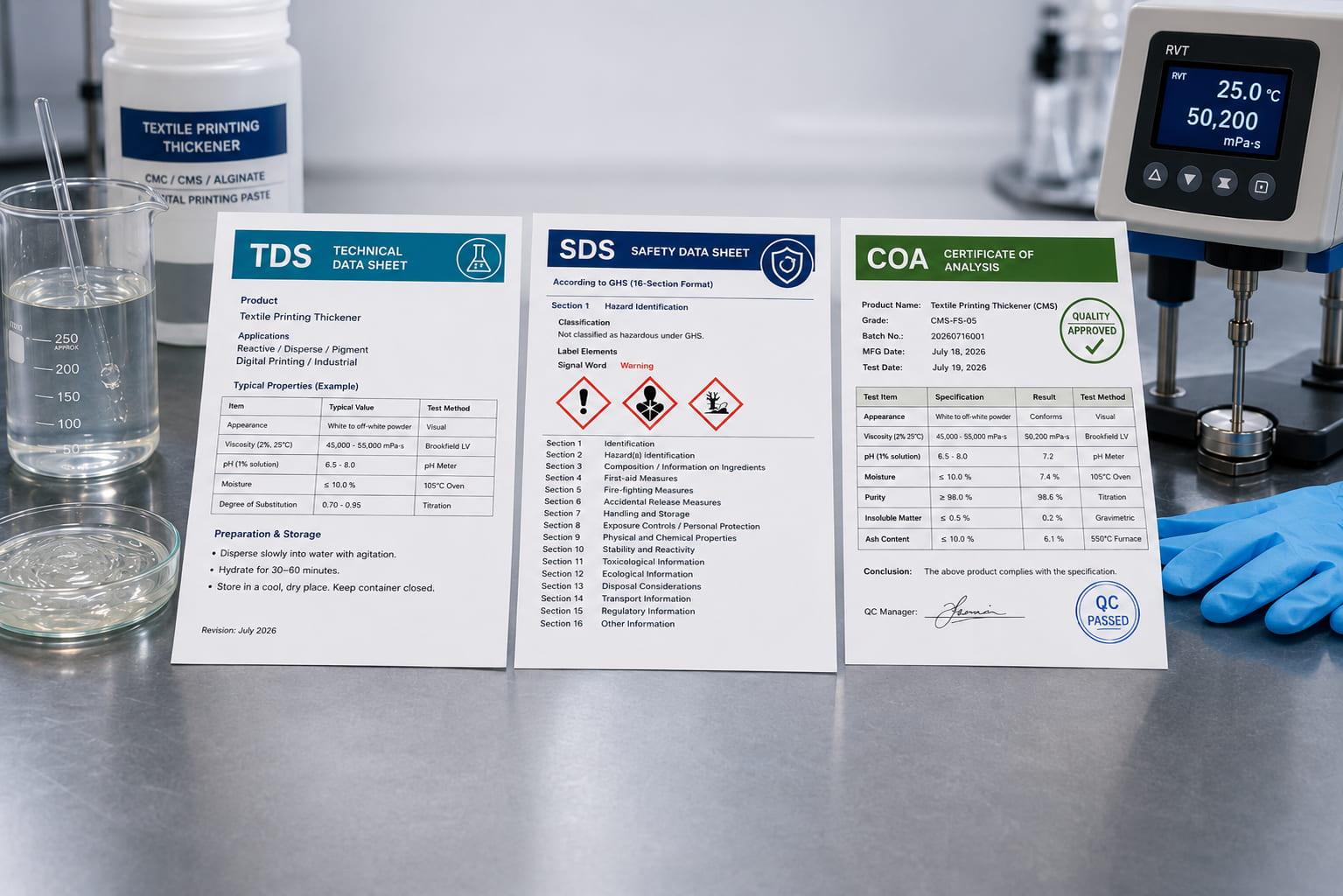
Learn the difference between TDS, SDS and COA documents, what textile printing buyers should verify, and how to check specifications, safety data, test methods, batch results and document issuers.
Compare CMC, CMS, sodium alginate and digital printing paste for textile printing. Learn how each route fits reactive, disperse, pigment and digital processes, and what buyers should review before sample testing, grade matching and bulk purchase.
Sodium alginate is widely used in textile printing as a stable and washable thickener for reactive printing paste. Learn how to evaluate viscosity grade, purity, and application suitability before purchasing, and how FSX Chemical supports global buyers with technical data and samples.
Carboxymethyl cellulose (CMC) is widely used in the printing, sizing, and dyeing processes of textiles. This guide will explain how to evaluate CMC grades, which parameters are most important, and how FSX Chemical can support purchasing decisions.
Carboxymethyl cellulose is used as a thickener and stabilizer in water-based inks, gravure printing, and inkjet pre-treatment. This guide covers the key grade parameters and sourcing considerations for procurement teams.
Choosing the right CMC supplier involves more than comparing price. This guide covers the evaluation criteria, documentation checklist, and trial process that procurement teams should follow before committing to a bulk order.
Both sodium alginate and CMC are used as thickeners in textile printing, but they suit different dye systems and process conditions. This guide explains the key differences and when to use each.
Digital inkjet printing on textiles has different paste and pre-treatment requirements compared to screen printing. This guide explains how sodium alginate is used in digital textile printing and what grade parameters procurement teams should specify.
Food-grade and industrial-grade CMC share the same base chemistry but differ significantly in purity, DS range, and regulatory requirements. This guide explains the key differences and why using the wrong grade creates production problems.
Correct paste preparation is as important as grade selection in reactive dye textile printing. This guide covers sodium alginate dissolution methods, concentration ranges by application, storage conditions, and how to troubleshoot common preparation problems.
Share the product name, application, quantity, destination and any TDS,
sample photo or document you already have. FSX Chemical will review the
information and recommend the next step for quotation, sample matching
or product selection.
Product InformationProduct name, grade, model, label photo or supplier reference.
Available DocumentsTDS, SDS, COA, sample photo, product list or test data.
Order DetailsEstimated quantity, packaging, destination country, port or trade term.
Application or IssueTextile printing process, formulation need, current issue or target performance.

 EN
EN  BN
BN  ES
ES  TR
TR  FR
FR  ID
ID  RU
RU  AR
AR  UR
UR  VI
VI  TL
TL  HI
HI  UK
UK  KK
KK  KA
KA  UZ
UZ