How to Compare CMC Brands and Grades for Textile Printing
Comparing CMC brands for textile printing requires more than brand reputation or one viscosity value....
Direct answer: A fair CMC brand comparison starts with equivalent commercial grades, not the supplier name. Standardize concentration, water quality, hydration, temperature, instrument, spindle, speed and reading time; then compare degree of substitution, salt response, filtration, rheology, color yield, wash-off, batch consistency and total cost in use. One similar viscosity value does not prove a universal 1:1 replacement. See the viscosity test-method guide y CMC procurement guide before qualification.
Comparison scope: Brand and product names belong to their respective owners. This editorial procurement framework uses general public product positioning and is not a market-share or performance ranking. Buyers should verify the current commercial grade, supplier documents and application results directly.
Carboxymethyl cellulose, commonly called CMC or sodium CMC, is used in selected textile printing formulations as a thickener, rheology modifier, stabilizer and component of compound printing pastes.
Buyers looking for textile-grade CMC can choose from large international specialty-chemical companies, application-focused manufacturers and factory-direct suppliers. The challenge is that two CMC products with similar descriptions can behave very differently during hydration, filtration, mixing and printing.
For this reason, a useful CMC brand comparison should not rank suppliers according to company size, reputation or one published viscosity value. Procurement teams should compare the actual commercial grade, test method, degree of substitution, rheology, dissolution, batch consistency, documentation and performance in the customer’s printing process.
This article compares selected CMC supplier routes with documented relevance to CMC, textiles or printing: FSX Chemical, Lamberti CARBOCEL®, Nouryon Finnfix® and Ashland Blanose™. The selection is intended as a practical sourcing comparison rather than an official market-share or quality ranking.
What Does “Top CMC Brand” Really Mean?
The phrase “top CMC brand” can be misleading because textile printing mills do not all require the same carboxymethyl cellulose grade.
A global specialty-chemical company may offer broad technical resources, international supply coverage and a large cellulose-ether portfolio. A textile-focused manufacturer may instead provide more direct grade matching, flexible sample comparison and factory-level technical communication.
Neither supplier model is automatically better. The more useful question is whether a supplier can provide a commercial CMC grade that fits the customer’s formulation, equipment, quality requirements and sourcing strategy.
A strong CMC supplier should be evaluated by evidence
Relevant CMC product range
Clear commercial grade identity
Defined viscosity testing method
Degree of substitution information where relevant
Technical documentation
Sample availability
Application support
Batch quality control
Reliable commercial supply
Why CMC Brand Comparisons Are Difficult
CMC is a product family rather than one standardized material. Suppliers can manufacture grades with different molecular characteristics, degrees of substitution, viscosity ranges, purity levels, particle profiles and dissolution behavior.
Commercial grade names are not universal
One manufacturer’s high-viscosity grade should not automatically be considered equivalent to another manufacturer’s high-viscosity grade.
Viscosity values may use different methods
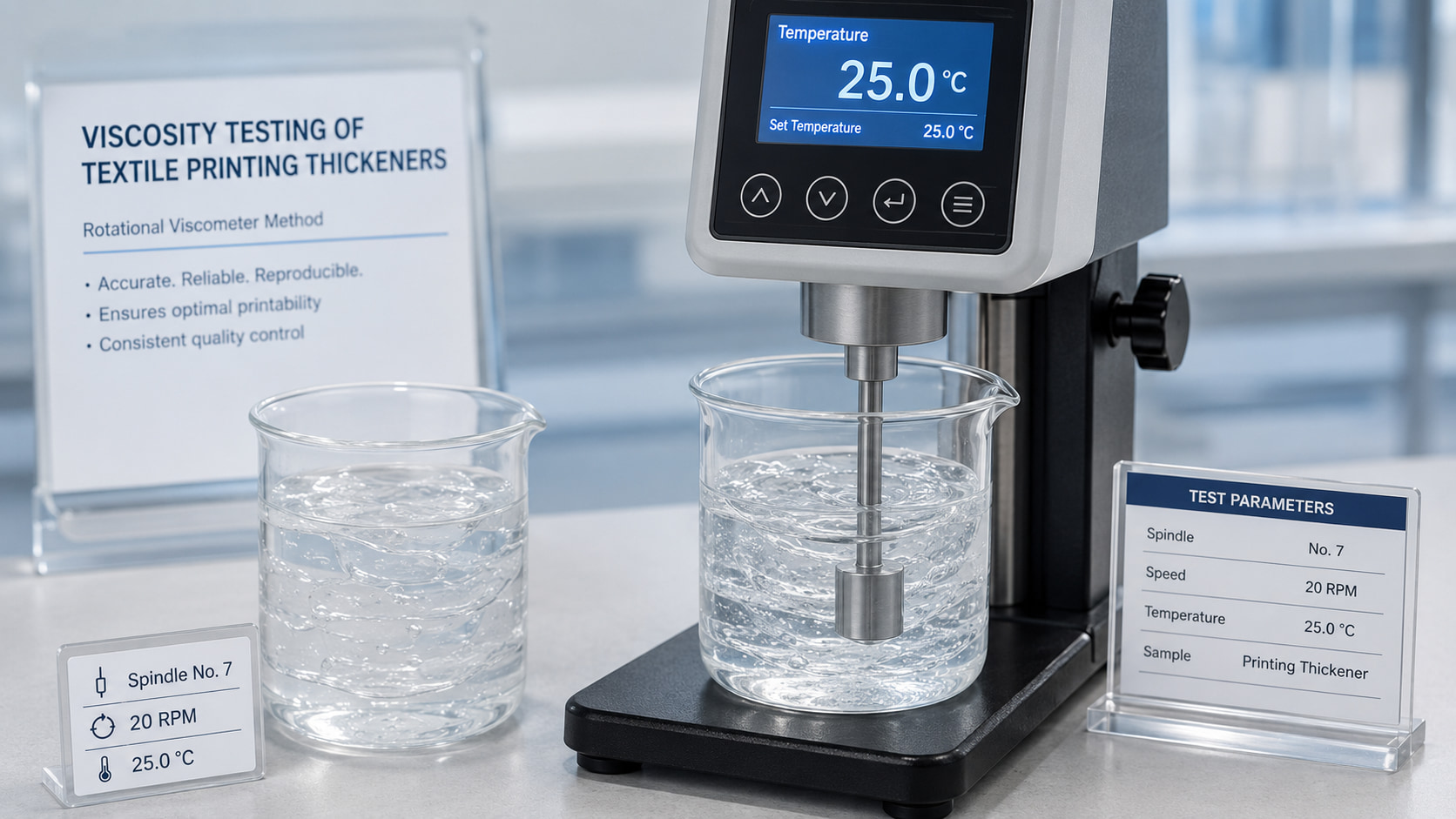
Concentration, temperature, viscometer, spindle, rotational speed, hydration time and sample preparation can all change the reported result.
Application focus differs by supplier
Some CMC portfolios cover many industrial markets, while others are structured more closely around textile printing, coatings, ceramics, paper or other selected applications.
Buyers should therefore compare actual commercial grades rather than comparing brand names alone.
Quick Comparison of Selected CMC Brands
Supplier / Brand
General CMC Positioning
Textile / Printing Relevance
Recommended Evaluation Approach
FSX Chemical
CMC grades for textile printing and selected industrial applications
Textile-focused grade matching and printing-paste evaluation
Send current TDS, sample and printing conditions for candidate matching
Lamberti CARBOCEL®
Cellulosic ethers and CMC for multiple industrial markets
Relevant to textile applications including sizing and printing
Confirm the specific CARBOCEL® grade recommended for the process
Nouryon Finnfix®
Industrial sodium CMC portfolio with multiple grade options
Textile is one of the application areas associated with the product family
Match viscosity, rheology and application requirements to a specific grade
Ashland Blanose™
Established carboxymethyl cellulose product platform
Relevant to printing-related formulations
Confirm textile-specific suitability for the selected commercial grade
This comparison describes supplier positioning rather than assigning a quality ranking. Individual commercial grades may differ substantially within each product portfolio.
1. FSX Chemical CMC
FSX Chemical ofrece carboxymethyl cellulose for textile printing and selected industrial thickening applications. Grade selection can be based on viscosity, degree of substitution, dissolution behavior, formulation compatibility and actual printing performance.
Textile-focused grade matching
One practical feature of the FSX sourcing route is the ability to begin with an existing supplier product instead of asking the buyer to select a CMC grade from a generic viscosity list.
Customers can provide their current CMC sample, TDS, viscosity test method, degree of substitution where available, printing formulation, fabric and performance target.
Different CMC grade directions
Different commercial CMC grades can be developed around different viscosity and substitution requirements. Internal or supplier-specific grade names should not be treated as universal industry standards. Technical data and side-by-side testing remain more important than the grade abbreviation itself.
Who may find the FSX route useful?
Printing mills qualifying an additional CMC supplier
Importers seeking a factory-direct CMC source
Formulators comparing CMC by viscosity and degree of substitution
Customers with an existing physical reference sample
Buyers who prefer laboratory grade matching before bulk purchasing
The objective is not to claim that FSX automatically replaces another brand. The current product can instead be used as a technical benchmark for controlled comparison.
2. Lamberti CARBOCEL®
Lamberti’s CARBOCEL® product family includes cellulose-derived functional polymers used across multiple industrial applications. Cellulosic ethers can provide rheology modification, water retention and film-forming properties relevant to textile processing.
Lamberti has documented textile-related applications for cellulose ethers, including sizing and printing, making the CARBOCEL® route relevant when buyers are building a shortlist of established specialty-chemical suppliers.
Potential purchasing strengths
Established specialty-chemical organization
Broad cellulose-derivative expertise
Experience across several industrial applications
Textile-related application positioning
What should textile buyers still confirm?
CARBOCEL® represents a broader product family. Buyers should request the exact commercial grade recommended for their printing process and compare its viscosity method, degree of substitution, dissolution, rheology and actual printing behavior with the existing product.
Brand reputation does not remove the need for application testing.
3. Nouryon Finnfix® CMC
Nouryon’s Finnfix® portfolio is based on sodium carboxymethyl cellulose and includes grades designed to provide different rheological characteristics for industrial applications.
Textile applications are among the areas associated with Finnfix® CMC, together with functions such as thickening, water retention, stabilization and film formation.
Potential purchasing strengths
Large international specialty-chemical supplier
Established industrial CMC portfolio
Multiple grade and viscosity options
Experience across multiple industrial applications
Important limitation when comparing grades
Finnfix® products are used across several industrial sectors. A grade performing well in one application should not automatically be assumed to match a textile printing paste.
Procurement teams should identify the exact grade proposed for their textile process and perform application-specific testing.
4. Ashland Blanose™ CMC
Ashland’s Blanose™ brand is an established carboxymethyl cellulose platform used as a functional water-soluble polymer across multiple formulation areas.
Ashland also uses CMC within printing-related formulation solutions, making Blanose™ relevant when procurement teams are reviewing large international cellulose-derivative suppliers.
Potential purchasing strengths
Established multinational specialty-material supplier
Broad cellulose-derivative technology
Industrial formulation experience
CMC presence in printing-related applications
Textile buyers should verify the exact application
Printing is a broad category. A CMC grade developed for another printing system may not automatically be optimized for textile printing paste.
Buyers should therefore confirm the suitability of the proposed Blanose™ grade for the actual textile, formulation and equipment.
Brand Reputation vs Application Fit
A large global brand can offer substantial technical resources, documentation and international supply infrastructure. A specialized or factory-direct manufacturer can offer another advantage: closer grade matching to a customer’s existing product and more direct formulation communication.
For a textile printing mill, the preferred commercial choice is the grade that satisfies both supplier qualification and application requirements.
7 Parameters That Matter More Than Brand Name
Viscosity under a defined test method
Grado de sustitución
Dissolution and hydration
Rheology under application shear
Filtration and screen passage
Compatibility with the complete printing formulation
Batch consistency and technical documentation
A buyer who collects these parameters can compare CMC products more objectively than a buyer who relies on brand recognition alone.
Viscosidad y método de ensayo
Viscosity is usually one of the first CMC specifications buyers compare, but it is meaningful only when the test conditions are known.
Record at least
CMC concentration
Water source
Preparation method
Hora de hidratarse
Temperatura
Viscometer
Spindle or rotor
Rotational speed
Reading time
Reported unit
Two supplier TDS viscosity values should not be compared directly if the concentration or measurement conditions differ.
Grado de sustitución
Degree of substitution, commonly abbreviated as DS, describes the average extent to which hydroxyl groups in the cellulose structure have been substituted by carboxymethyl groups.
DS can influence solubility, ionic behavior and formulation compatibility, but a higher DS should not automatically be described as a higher-quality CMC.
Why DS matters in supplier comparison
If a customer currently uses a particular DS range successfully, moving to a substantially different grade can change complete-paste behavior even when viscosity appears similar.
DS should therefore be evaluated together with viscosity, purity, rheology, filtration and application testing.
Dissolution and Hydration
CMC must be properly dispersed and hydrated before its viscosity and application properties can be evaluated.
Comparar
Powder wetting behavior
Lump formation
Hora de hidratarse
Solution uniformity
Viscosity development over time
Generación de espuma
A product that reaches the target viscosity but requires difficult or inconsistent preparation can increase the real production cost.
Rheology and Paste Transfer
Textile printing pastes experience different shear conditions during mixing, pumping, screen passage and application.
Two CMC grades adjusted to the same standing viscosity can still show different flow and structural-recovery behavior.
Useful evaluation areas include
Multi-speed viscosity
Flow under shear
Recuperación estructural
Transferencia por pasta
Leveling
Control of lateral spreading
For high-definition printing, rheology can be more informative than one viscosity number.
Filtration and Screen Passage
Poor filtration can contribute to screen blockage, uneven transfer and production interruptions.
Use the same filtration method for all brands
Define filter material, opening size, sample quantity and filtration conditions before comparing results.
Inspect retained material
Residue may come from incomplete hydration, gel particles, contamination or chemical precipitation in the complete formula.
A well-known brand name does not guarantee that every CMC grade will meet every textile printing mill’s filtration requirement.
Chemical Compatibility
CMC should be tested in the complete printing formulation rather than only as a water solution.
Evaluate interaction with
Dyes or pigments
Salts
Alkalis
Binders
Humectants
Wetting agents
Other polymers
A grade that is stable in one chemical system may not behave the same in another.
Batch Consistency and Documentation
Supplier selection should also consider whether the approved sample can be connected to routine commercial production.
Useful documentation may include
Permanent commercial grade
Ficha técnica
Ficha de datos de seguridad
Batch or lot identity
Certificate of Analysis
Agreed commercial specification
Buyers should distinguish typical TDS values from guaranteed commercial specification limits.
When changing suppliers, the first commercial batch should be compared against the approved laboratory sample before routine production.
Direct Factory Sourcing vs Global Specialty-Chemical Supply
Different purchasing organizations may prefer different supplier models.
Global specialty-chemical suppliers may be attractive when
Multinational procurement alignment is important
A broad international technical organization is required
Existing corporate supplier relationships are already established
Global supply infrastructure is an important purchasing factor
Factory-direct suppliers may be attractive when
The buyer wants to match an existing CMC grade
Direct technical communication is important
Customized grade evaluation is required
Factory-direct commercial comparison is a priority
A buyer does not necessarily need to select only one sourcing model. Printing mills can qualify an additional supplier while retaining their original source.
How to Compare CMC Prices Correctly
Price per kilogram is only the beginning of a commercial comparison.
Compare delivered price
Include packaging, freight and the required trade term.
Compara la dosis efectiva
Different CMC grades may require different concentrations to achieve the desired paste behavior.
Comparar el costo de preparación
Hydration time, mixing, filtration and labor should be considered.
Compare production performance
Screen cleaning, downtime, waste and production speed can change the true economic result.
Compara la calidad de las telas terminadas
A cheaper product is not necessarily a lower-cost product if it increases rejected fabric, rework or post-treatment requirements.
How to Conduct a Side-by-Side CMC Trial
Step 1: Select the approved reference
Use a representative sample from the CMC currently approved in production.
Step 2: Record the TDS and test method
Note viscosity concentration, degree of substitution, pH and other important specifications.
Step 3: Prepare both samples together
Use the same water, concentration, mixer, hydration time and temperature.
Step 4: Compare basic solution performance
Disolución
Viscosidad
pH
Filtración
Reología
Step 5: Prepare the complete printing paste
Use identical dyes or pigments, auxiliaries, concentration and order of addition.
Step 6: Test holding stability
Repeat viscosity, appearance and filtration after the normal production holding period.
Step 7: Print the same fabric
Include fine lines, small details, sharp corners and large solid areas.
Step 8: Complete fixation and post-treatment
Evaluate the finished fabric rather than judging only the wet print.
Step 9: Optimize dosage
After establishing the baseline, determine the practical dosage for each candidate separately.
Step 10: Verify a commercial batch
The first bulk shipment should be checked against the approved trial before unrestricted production use.
Why the Same Viscosity Does Not Mean the Same CMC
Buyers sometimes assume that matching one viscosity value is enough to substitute one CMC brand for another.
This can fail because the products may differ in:
Grado de sustitución
Molecular characteristics
Purity and residual salts
Particle profile
Hydration rate
Comportamiento de fluidez por cizallamiento
Recuperación estructural
Respuesta electrolítica
Comportamiento de filtración
Equivalent viscosity is therefore a useful starting point, not proof of equivalent printing performance.
When CMC Should Not Be the Primary Thickener
A responsible brand comparison should also recognize that CMC is not automatically the correct primary thickener for every textile printing process.
In conventional reactive dye printing on suitable cellulosic fabrics, alginato de sodio is a common benchmark thickener because of its established application characteristics in reactive printing.
CMC can be evaluated in selected textile printing, compound thickener or auxiliary formulations, but the dye chemistry, printing behavior and wash-off requirements should be confirmed experimentally.
Pigment, disperse and digital printing systems may require different rheology routes depending on binder, ink, fabric and application equipment.
Even a high-quality CMC cannot solve an application in which CMC itself is not the appropriate polymer route.
How to Qualify an Alternative CMC Supplier
Changing suppliers does not need to be an all-or-nothing decision. A controlled qualification process can reduce technical and purchasing risk.
Stage 1: Technical document review
Compare the candidate TDS with the current commercial specification.
Stage 2: Physical sample comparison
Test both products using identical preparation and laboratory methods.
Stage 3: Complete formulation trial
Verify chemical compatibility rather than relying only on water-solution data.
Stage 4: Fabric printing trial
Evaluate the actual textile quality requirements.
Stage 5: Commercial quotation
Compare delivered price, dosage, packaging and supply conditions.
Stage 6: First-batch verification
Confirm that bulk product corresponds to the approved commercial grade.
Stage 7: Backup-supplier qualification
If the candidate passes testing, the buyer can maintain the alternative supplier as an additional sourcing option without immediately replacing the existing brand.
How FSX Chemical Can Be Compared with Your Current Brand
The objective is not to claim that an FSX grade is automatically identical to CARBOCEL®, Finnfix®, Blanose™ or another supplier’s CMC. The objective is to identify a technically relevant candidate and use controlled testing to determine whether it can serve as an alternative.
Preguntas frecuentes
Which is the best CMC brand for textile printing?
There is no universal best brand. The correct choice depends on the commercial grade, degree of substitution, viscosity method, rheology, formulation compatibility, printing performance, supplier support and total cost in use.
Is a global CMC brand automatically better than a smaller manufacturer?
No. Large global suppliers may offer extensive technical and supply infrastructure, while specialized manufacturers may offer more direct grade matching and commercial flexibility. Actual printing performance should be verified through testing.
Can FSX Chemical replace Finnfix® CMC?
A direct replacement should not be assumed. The existing Finnfix® grade, TDS, viscosity method, degree of substitution and physical sample should first be compared with a candidate FSX grade under identical conditions.
Can FSX Chemical replace CARBOCEL®?
A candidate can be evaluated against the current CARBOCEL® grade, but equivalence should be demonstrated through laboratory and application testing rather than product-name matching.
Can FSX Chemical replace Blanose™ CMC?
The current Blanose™ grade should be identified first. A candidate FSX CMC can then be selected according to degree of substitution, viscosity, dissolution and intended printing application.
Is higher-viscosity CMC always better?
No. Excessive viscosity or unsuitable rheology can reduce paste transfer, screen passage and leveling.
Is higher DS always better?
No. Higher degree of substitution changes CMC characteristics, but the preferred range depends on the formulation and required performance.
Can two CMC brands with the same viscosity be used at the same dosage?
Not automatically. Different grades may have different substitution, rheology, purity, hydration and chemical response, so dosage should be optimized experimentally.
What information should I request from a CMC supplier?
Request a permanent grade name, TDS, SDS, viscosity test method, relevant degree-of-substitution information, representative sample, commercial specification and batch documentation appropriate to the order.
What is the safest way to change CMC suppliers?
Compare the current and candidate grades under the same laboratory method, test the complete formulation and fabric, conduct a controlled production trial and verify the first commercial batch before full conversion.
Want to Compare Your Current CMC Brand with an FSX Grade?
Send FSX Chemical the TDS or physical sample of the CMC you currently use together with its degree of substitution, viscosity, test concentration, formulation and textile printing application.
If you currently use CARBOCEL®, Finnfix®, Blanose™ or another commercial CMC, include the exact commercial grade rather than the brand name alone.
FSX Chemical can review the available technical information and recommend a candidate CMC grade for controlled side-by-side testing. Final suitability should be confirmed through the customer’s own printing formulation and production process.
Descubre por qué no se pueden comparar los valores de viscosidad de los espesantes para la impresión textil sin tener en cuenta la concentración, la temperatura, el instrumento, el husillo, la velocidad, el método de preparación y el tiempo de prueba.
Compara CMC, CMS, alginato de sodio y pasta para impresión digital en la impresión textil. Descubre cómo cada opción se adapta a los procesos reactivos, dispersos, pigmentados y digitales, y qué deben tener en cuenta los compradores antes de realizar pruebas de muestras, comparar calidades y realizar compras a granel.
El alginato de sodio se utiliza ampliamente en la impresión textil como espesante estable y lavable para las pastas de impresión reactivas. Descubre cómo evaluar el grado de viscosidad, la pureza y la idoneidad para cada aplicación antes de comprar, y cómo FSX Chemical apoya a los compradores de todo el mundo con datos técnicos y muestras.
La carboximetilcelulosa (CMC) se utiliza ampliamente en los procesos de estampado, encolado y teñido de textiles. En esta guía se explica cómo evaluar los distintos grados de CMC, qué parámetros son los más importantes y cómo FSX Chemical puede ayudarte a tomar decisiones de compra.
La carboximetilcelulosa se utiliza como espesante y estabilizador en tintas a base de agua, impresión en huecograbado y pretratamiento para impresión de chorro de tinta. Esta guía aborda los parámetros clave de los grados y las consideraciones de abastecimiento para los equipos de compras.
Elegir al proveedor adecuado de CMC implica mucho más que comparar precios. Esta guía aborda los criterios de evaluación, la lista de verificación de la documentación y el proceso de prueba que los equipos de compras deben seguir antes de comprometerse a realizar un pedido a granel.
La pasta de impresión a base de CMC se utiliza en la impresión textil con pigmentos, reactiva y digital. Esta guía explica qué parámetros son importantes, cómo comparar proveedores y qué solicitar antes de realizar un pedido al por mayor.
Tanto el alginato de sodio como la CMC se utilizan como espesantes en la impresión textil, pero se adaptan a diferentes sistemas de tinte y condiciones de proceso. Esta guía explica las diferencias clave y cuándo utilizar cada uno.
El CMC de grado alimenticio y el de grado industrial comparten la misma composición química básica, pero difieren significativamente en cuanto a pureza, rango de DS y requisitos normativos. Esta guía explica las diferencias clave y por qué el uso de un grado incorrecto genera problemas de producción.
La preparación correcta de la pasta es tan importante como la selección del grado en la impresión textil con tintes reactivos. Esta guía aborda los métodos de disolución del alginato de sodio, los rangos de concentración según la aplicación, las condiciones de almacenamiento y cómo resolver problemas comunes en la preparación.
La tasa de fijación del colorante afecta directamente al rendimiento del color, a la solidez al lavado y a la carga de aguas residuales en la estampación con colorantes reactivos. Esta guía explica cómo el alginato de sodio favorece la fijación del colorante, qué parámetros de la pasta influyen en la tasa de fijación y cómo resolver los problemas de baja fijación en la producción.
El tamaño de partícula (malla) del alginato de sodio influye en la rapidez con la que se disuelve el polvo, en la uniformidad con la que se hidrata y en el desempeño de la pasta resultante en la serigrafía. Esta guía explica las implicaciones prácticas de la especificación de la malla para aplicaciones de pastas de impresión textil.
Comparta el nombre del producto, su aplicación, la cantidad, el destino y cualquier ficha técnica (TDS),
foto de muestra o documento que ya tenga. FSX Chemical revisará la
información y le recomendará el siguiente paso para la cotización, la comparación de muestras
o la selección del producto.
Información del productoNombre del producto, categoría, modelo, foto de la etiqueta o referencia del proveedor.
Documentos disponiblesTDS, SDS, COA, foto de muestra, lista de productos o datos de pruebas.
Detalles del pedidoCantidad estimada, embalaje, país de destino, puerto o término comercial.
Solicitud o problemaProceso de impresión textil, requisitos de formulación, problema actual o objetivo de rendimiento.