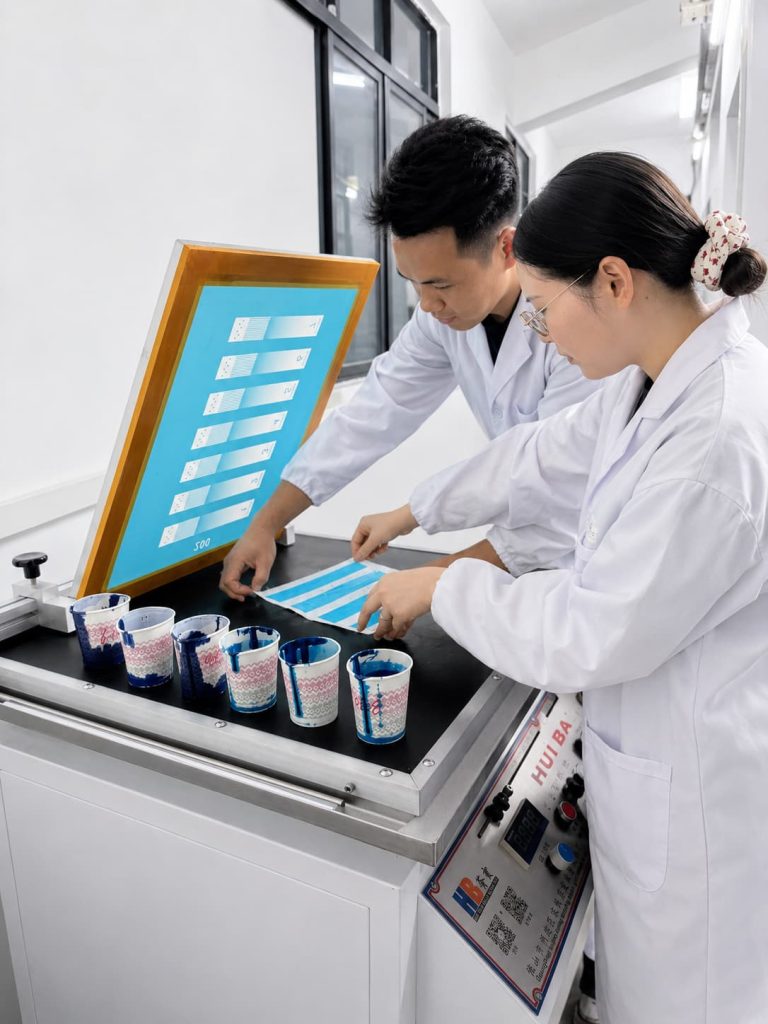
Reactive dye fixation is the portion of applied dye that forms stable bonds with the fiber under the defined process. Sodium alginate supports accurate dye placement, moisture management, rheology and wash-off, but it does not fix the dye by itself. Dye reactivity, alkali, fabric condition, drying, steam quality, time and temperature determine the full fixation result.
This guide addresses conventional reactive printing on cellulosic fabric. It separates paste placement from dye–fiber chemistry and shows which records are needed to investigate low retained color. A thicker paste or darker pre-wash print does not demonstrate a higher fixation percentage.
| Result or test | What it indicates | Important limitation |
|---|---|---|
| Pre-wash color depth | Total apparent color before removal of unfixed dye | Cannot distinguish fixed dye from unfixed or hydrolyzed dye. |
| Post-wash reflectance or K/S | Comparative retained color under a standardized wash-off | Useful for controlled comparisons, but not a direct universal fixation percentage. |
| Wash-off liquor or extraction analysis | Amount and behavior of removable dye under the selected method | Depends on sampling, extraction, calibration and mass-balance assumptions. |
| Wash and rubbing fastness | Resistance of the processed print to defined test conditions | Affected by fixation, wash-off, surface deposition, fabric and test method. |
| Direct fixation calculation | Applied dye compared with validated fixed and unfixed measurements | Requires a documented analytical method and controlled material balance. |
¿Qué es la fijación del colorante y por qué es importante?
Fixation Rate and Its Practical Consequences
En la estampación con tintes reactivos, la fijación se refiere al enlace covalente que se forma entre el grupo reactivo de la molécula de tinte y un grupo hidroxilo de la fibra de celulosa durante el tratamiento con vapor en un ambiente alcalino. No todas las moléculas de colorante de la pasta se fijan a la fibra; algunas reaccionan con el agua (hidrólisis) y forman un colorante hidrolizado que no puede unirse a la fibra y debe eliminarse mediante lavado.
Fixation rate is the percentage of the total dye applied that successfully bonds to the fiber. Lower fixation can leave more removable dye and increase the washing burden at a given application. However, dye addition, retained shade and effluent concentration are separate quantities: check applied mass, wash conditions and analytical method before estimating additional dye demand or wastewater load.
La relación entre la fijación y la solidez al lavado
Fixation percentage and wash fastness are related but not identical. Stable dye–fiber bonding and adequate removal of unfixed dye both matter. A high fixation percentage alone does not guarantee the required fastness grade, and a lower retained shade can still have good fastness after adequate wash-off. Residual unfixed dye can cause staining or deterioration in laundering performance; assess fastness separately after the validated washing sequence.
Control fixation and subsequent washing-off together, then test the required fastness grades separately. Paste formulation and alginate selection can affect application and removal, but neither a grade change nor a higher post-wash color value alone establishes the cause of a fastness result.
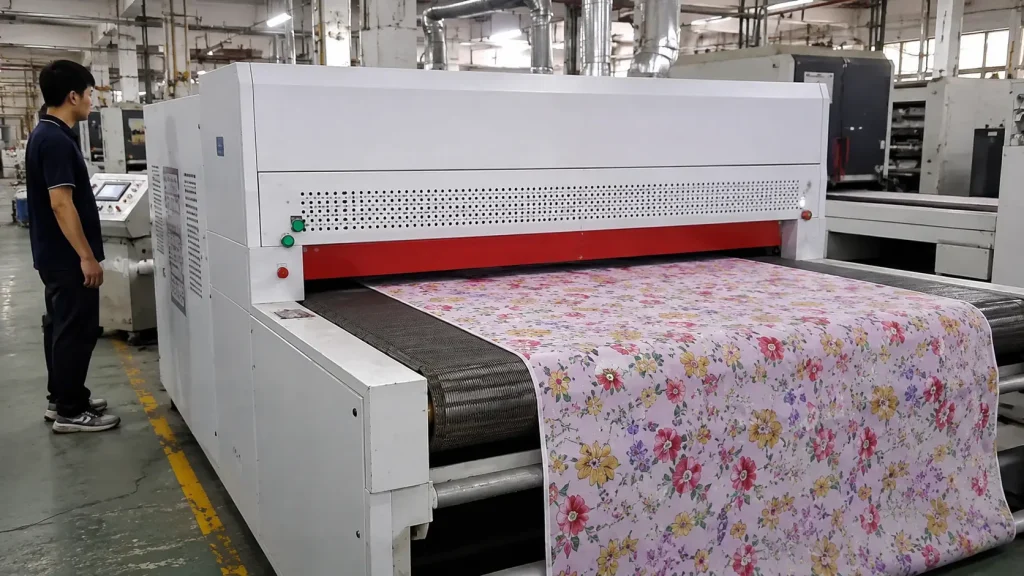
Cómo contribuye el alginato de sodio a la fijación del colorante
Low Dye Reactivity Is Not a Fixation Guarantee
Alginate is used as a reference thickener in reactive printing because its reaction with reactive dyes is limited compared with some hydroxyl-rich thickeners. That compatibility does not prevent dye hydrolysis in an alkaline paste or guarantee that all applied dye will fix to cellulose.
Some hydroxyl-containing thickeners can interact chemically with reactive dyes under particular alkaline conditions. The extent depends on the material, dye and process. Treat loss of available dye as a hypothesis to test; lower retained color in a CMC, starch-derivative or blended system does not by itself prove dye–thickener reaction.
Alkaline compatibility must be checked in the complete recipe and over the actual holding period. Alginate solution viscosity can fall during strongly alkaline storage; therefore a general statement of dye compatibility should not be read as unlimited pH stability.
Retención de humedad durante la cocción al vapor
La fijación del colorante reactivo requiere humedad para llevarse a cabo: la fibra debe estar hinchada para que las moléculas de colorante se difundan en la estructura de la fibra y reaccionen con los grupos hidroxilo. En la etapa de vaporización, la pasta que se encuentra en la superficie de la tela debe conservar la humedad adecuada para facilitar este proceso.
The complete paste, its humectants and the fabric’s moisture condition influence rewetting and dye transfer during steaming. Evaluate these together with the steamer conditions; alginate grade alone is not a measure of moisture availability or fixation.
Drying is a normal stage before steaming. The investigation should check whether the printed fabric rewets uniformly and receives the dye supplier’s required fixation conditions, rather than assuming that every dry paste film is a fixation failure.
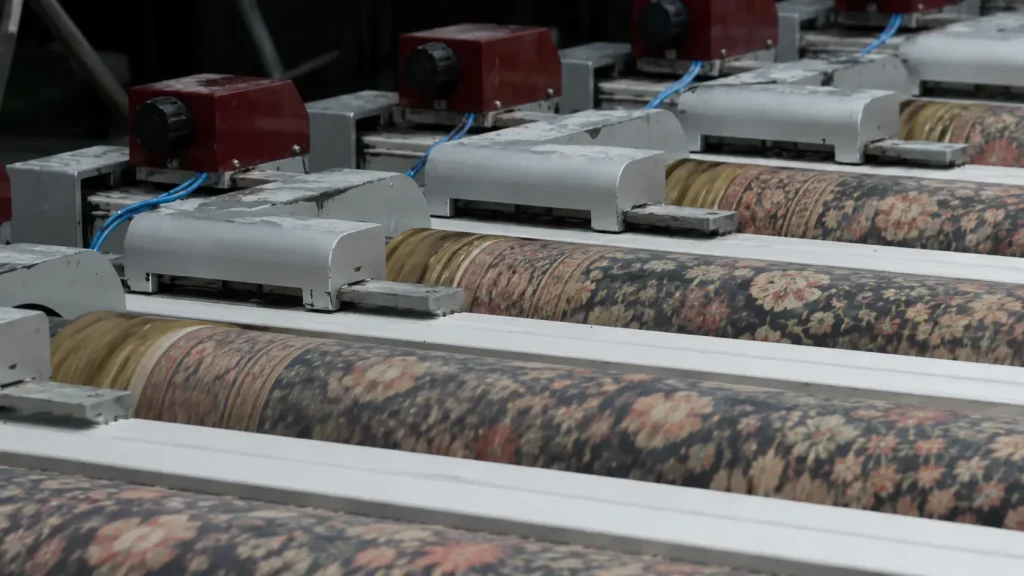
Distribución del colorante y control de la migración
Even dye distribution in the paste before and during steaming is important for achieving uniform fixation across the printed area. If dye migrates within the paste film before fixation — moving toward the edges of the printed area or toward moisture gradients in the fabric — the result is uneven color depth and potentially variable fixation across the print.
Alginate rheology helps restrict unwanted flow and hold the pattern before fixation. During steaming, dye must transfer from the paste into the fiber. Raising a single viscosity reading does not prove better fixation: compare print add-on, edge definition, penetration and retained color under controlled drying and steaming.
Pegue los parámetros que influyen en la tasa de fijación
Concentración y viscosidad del alginato de sodio
Changing alginate concentration changes paste solids and application behavior. It may also change print add-on or penetration, so a color difference after a dosage change cannot automatically be assigned to a change in dye–fiber reaction.
Use the approved grade TDS and complete paste recipe as the starting point; there is no single concentration range that specifies every stock paste and final color paste. Record whether the dosage refers to dry powder, stock paste or final paste. For a grade comparison, match the intended application rheology and measure print add-on; for a dosage study, change only the selected dosage variable and document the resulting flow change.
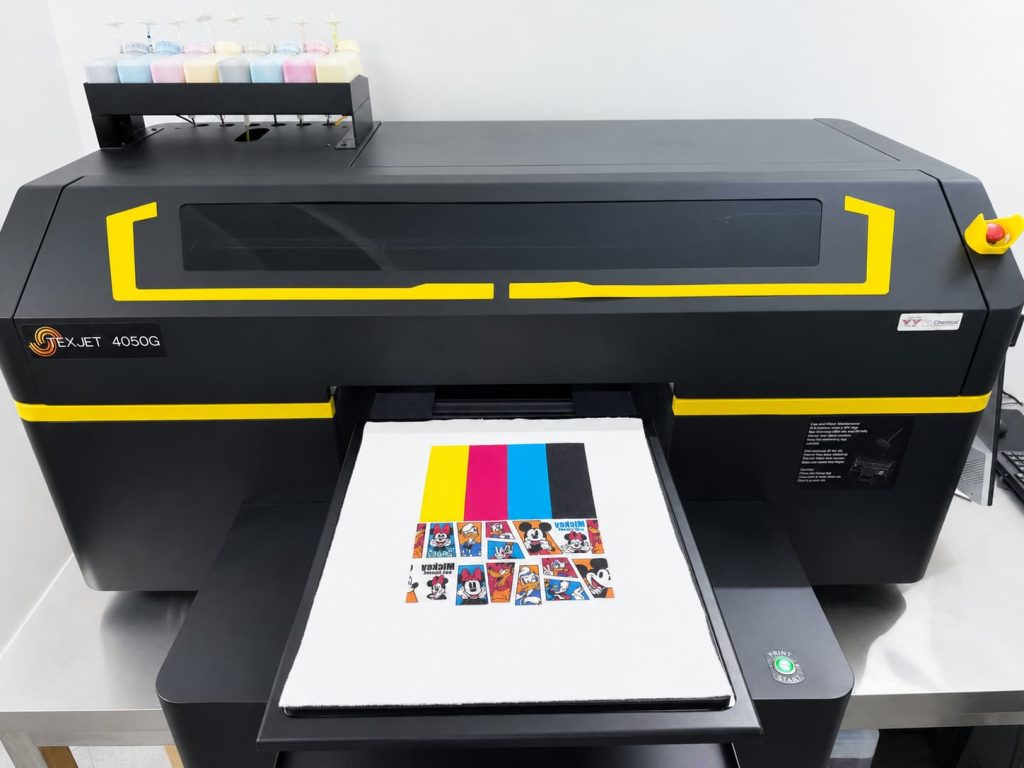
Tipo y concentración de álcali en la pasta
El componente alcalino de la pasta de impresión con tintes reactivos es esencial para la fijación, ya que eleva el pH al nivel necesario para que el tinte reactivo se una a los grupos hidroxilo de la fibra. Entre las fuentes alcalinas más comunes se encuentran el carbonato de sodio, el bicarbonato de sodio y las mezclas de ambos.
La concentración de álcali afecta tanto a la velocidad de fijación como a la estabilidad de la pasta. Una cantidad insuficiente de álcali reduce la fijación; una cantidad excesiva puede provocar la hidrólisis prematura del colorante reactivo en la pasta antes del tratamiento con vapor, lo que reduce la cantidad de colorante disponible para la fijación en la fibra. El nivel óptimo de álcali depende de la clase específica de colorante reactivo y de las condiciones del tratamiento con vapor.
If viscosity changes after alkali addition, compare the stock paste with the complete color paste at the same temperature and reading time. Record alkali type, final pH, water source, ingredient order and paste age. Consider the full formulation and alginate stability instead of excluding the thickener from the investigation.
Urea y agentes higroscópicos
La urea se agrega comúnmente a la pasta de impresión con tintes reactivos como agente higroscópico: atrae y retiene la humedad en la película de la pasta durante el tratamiento con vapor, lo que favorece la disolución y la difusión del tinte en la fibra. La urea también ayuda a disolver los tintes reactivos en concentraciones más altas.
Use the validated humectant recipe for the dye system. Investigate steam supply, air removal, condensate, loading and dwell conditions before changing urea to address a steamer fault. A recipe change should not be treated as evidence that the required steam conditions have been achieved.
Condiciones de cocción al vapor y su interacción con la formulación de la pasta
Requisitos de temperatura y tiempo
Use the dye supplier’s fixation schedule for the dye class, fabric and chosen process. Record the steamer setpoint, measured process conditions, fabric loading and actual dwell time. A general temperature/time range cannot substitute for the validated recipe or demonstrate complete fixation.
A temperature or dwell time below the validated fixation schedule can contribute to incomplete fixation. Lower retained color or poor wash fastness does not uniquely diagnose under-steaming, and adequate washing-off can produce acceptable fastness even at a lower retained shade. Investigate recorded steam conditions, application and wash-off separately. Excess moisture or uncontrolled rewetting can also promote migration and bleeding; appearance alone does not establish excessive steaming time.
Saturación de vapor y contenido de humedad
For a recipe validated with saturated steam, verify that the chamber conditions match that recipe. Temperature alone does not establish steam quality: check air removal, pressure where relevant, steam distribution, condensate and the fabric’s rewetting behavior. Diagnose a discrepancy before changing thickener grade.
If retained color remains below the target despite the specified dwell time, review the measured chamber conditions and rewetting alongside paste age, application and wash-off. Correct dwell time alone does not establish that the complete fixation schedule was met.
Cómo influye la formulación de la pasta en la penetración del vapor
Record actual paste add-on and film distribution when assessing heavy print areas. Grade viscosity, powder dosage and deposited film thickness are different quantities; a high-viscosity grade does not by itself prove a thick film or a fixation gradient.
For heavy fabrics or dense print areas, compare actual paste add-on, fabric rewetting and the validated steamer conditions. Use these observations to decide whether an application or formulation change needs a controlled trial.
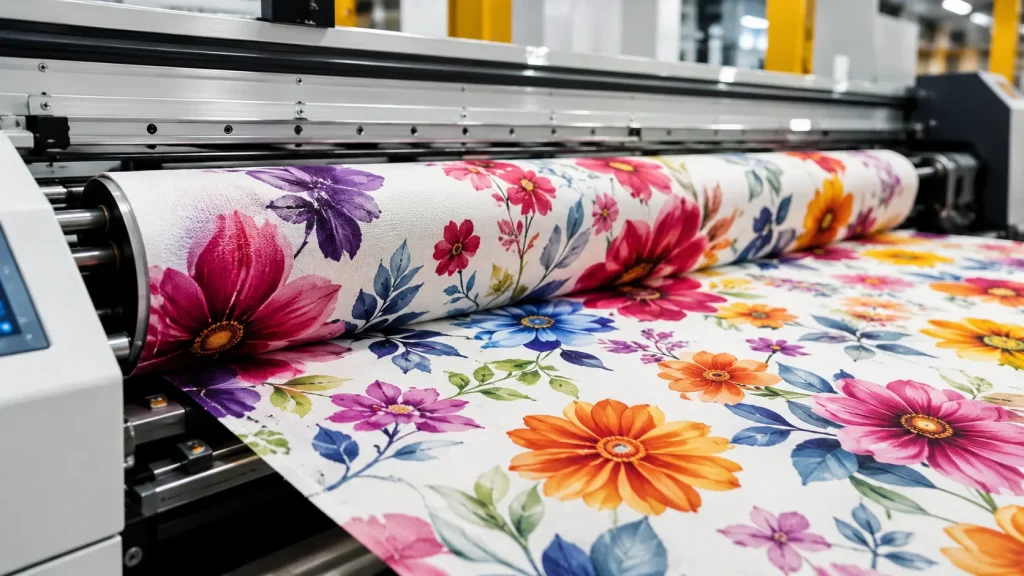
Problemas comunes relacionados con la baja fijación y causas relacionadas con la pasta
Bajo rendimiento de color a pesar de que la concentración del colorante es correcta
Si el rendimiento del color es sistemáticamente inferior al esperado para la concentración de colorante utilizada, y se confirma que las condiciones de vaporización son correctas, las causas relacionadas con la pasta que deben investigarse incluyen: una concentración de álcali por debajo del umbral efectivo, la competencia del espesante con el colorante reactivo (si se utiliza un espesante que no sea alginato o una mezcla), un contenido insuficiente de urea para las condiciones de vaporización, o la degradación de la pasta antes de la vaporización (lo que reduce la disponibilidad del colorante).
Compare fresh and held paste from the same recipe under the same print, drying, fixation and washing conditions. An improvement with fresh paste suggests an age-related effect, but it does not exclude variation in print add-on or steamer conditions unless those were controlled.
Fijación desigual a lo ancho de la tela
Streaks or uneven color depth across the width can result from application, fabric preparation or moisture, drying, chamber conditions or washing. They are not direct evidence of a fixation gradient. Within-batch paste variation is another possibility; incomplete preparation or separation should be investigated rather than inferred from the appearance alone.
To screen vessel uniformity, collect defined locations at matched paste age and measure under the same temperature, instrument settings and sample-handling history. Repeat suspect readings and compare them with the method’s repeatability and agreed operating tolerance before declaring the batch nonuniform or changing preparation. Record filtration and visual observations as additional evidence.
Alto contenido de colorante no fijado en el efluente de lavado
A strongly colored first rinse can contain unfixed or hydrolyzed dye, but it is not a direct fixation measurement. Dye correctly bonded to cellulose is not the material targeted by normal wash-off. Compare the validated washing sequence, fabric mass, liquor conditions and retained color before assigning the cause.
If post-wash color is lower than expected, investigate print add-on, dye condition, alkali, fabric preparation, drying, fixation and wash-off one variable at a time. Report it as lower retained color unless a validated analytical method establishes that fixation percentage has fallen.
Cómo evaluar el rendimiento de la fijación al probar un nuevo grado
For a fixed-dose substitution screen, keep the defined recipe and process unchanged and record the resulting application differences. For an application-matched grade comparison, use grade-appropriate preparation and a declared thickener dosage while holding dye, alkali and other non-thickener ingredients on the same final-paste mass basis. Verify the agreed flow window and measure print add-on; do not assume both are equal. Keep fabric, dye lot, printing settings, drying, steaming and wash-off controlled and report departures. Reflectance or K/S is a comparative outcome, not by itself a direct measurement of fixation percentage.
A direct fixation calculation requires a validated laboratory method that accounts for applied dye and the fixed or unfixed fraction, such as an extraction or mass-balance approach with suitable spectrophotometric measurement. The method, sampling and calculation must be documented; reflectance alone should not be labeled as a universal direct fixation rate.
Where direct fixation analysis is unavailable, compare post-wash K/S or shade, wash-off liquor behavior and relevant fastness results under the same controlled process. Consistent results support process and batch comparability, but they do not prove that sodium alginate alone caused the outcome.
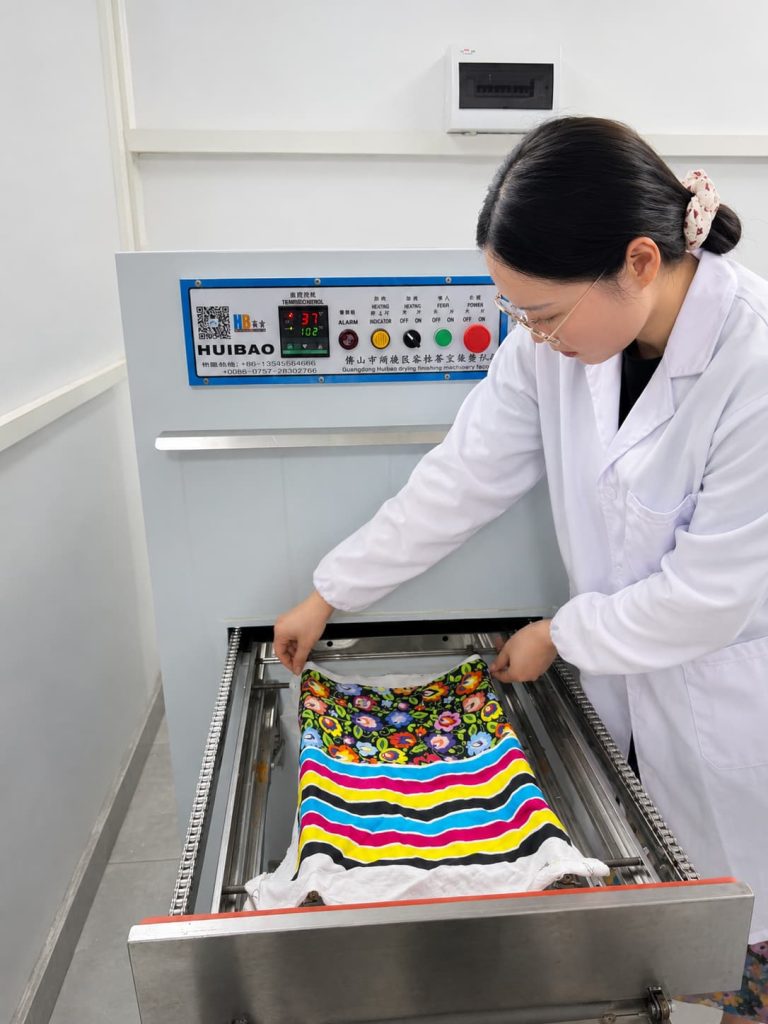
Suggested control pairs for low retained color
Use matched trials to test a specific cause. These are diagnostic suggestions, not measured FSX outcomes.
| Question | Control pair | Interpretation limit |
|---|---|---|
| Does paste age matter? | Fresh and held paste, same recipe and print/fix/wash conditions | Record pH, viscosity and add-on; a shade change alone does not identify hydrolysis. |
| Does thickener grade matter? | Current and candidate grade with documented application rheology and add-on | Retained color is one endpoint alongside sharpness, penetration and wash-off. |
| Does the steamer vary across the width? | Matched positions on the same run with uniform paste and fabric | Check application and chamber conditions before calling the difference a fixation defect. |
| Does wash-off change the apparent result? | Same fixed print evaluated with the validated washing sequence and a controlled repeat | Rinse color and K/S do not independently provide a direct fixation percentage. |
Technical references: research on alginate/carboxymethyl starch/polyacrylic mixed thickeners in reactive printing; FAO alginate viscosity and pH behavior; CottonWorks printing, fixation and afterwashing overview. The paper uses CMS to mean carboxymethyl starch, not the FSX commercial CMS family. These sources explain defined research systems or general process principles; they do not validate an individual FSX grade.
Preguntas frecuentes
Does sodium alginate chemically fix reactive dye to cellulose?
No. The dye-fiber reaction occurs under the required alkaline and thermal or steaming conditions. Sodium alginate mainly supports paste rheology, placement, moisture behavior and removal.
Is K/S the same as fixation percentage?
No. Post-wash K/S is useful for comparing retained color under controlled conditions. A direct fixation percentage requires a validated method that accounts for applied, fixed and unfixed dye fractions.
Why can retained color fall even when paste viscosity is unchanged?
Dye hydrolysis, alkali condition, fabric moisture, drying, steam saturation, time, temperature and wash-off can change while the measured viscosity remains similar.
How should two sodium alginate grades be compared for fixation-related performance?
State whether this is a fixed-dose substitution screen or an application-matched comparison. For matching, document each grade’s preparation and dosage, keep non-thickener ingredients on the same final-paste basis and verify the flow window and measured add-on. Control fabric, dye lot, machine settings, drying, steaming and wash-off; record remaining differences. Compare complete-paste behavior, post-wash K/S, filtration, fastness and reproducibility.
What production data helps diagnose low fixation?
Provide fabric preparation, dye and alkali levels, complete paste recipe, viscosity method, paste age, print add-on, drying, steaming records, wash-off sequence and pre- and post-wash results.
For grade comparison, submit the current TDS, test method and trial results through FSX Chemical Samples & Matching. For whole-process troubleshooting, see How to Improve Color Yield and Fastness in Reactive Printing. For sodium alginate procurement and repeatability checks, see Sodium Alginate Color Quality and Process Control.
Cómo FSX Chemical te ayuda a optimizar tu fijación
Reseña FSX sodium alginate grades and request the current grade TDS and a representative sample. Agree the viscosity method, preparation conditions and application trial before comparing a candidate with the approved production grade.
Si está resolviendo problemas relacionados con una baja tasa de fijación o evaluando un cambio de grado, nuestro equipo técnico puede ayudarle con la revisión de la formulación y ofrecerle recomendaciones sobre la selección del grado, según su sistema de tintes, el tipo de tela y su equipo de vaporización.
Próximos pasos:
- Solicitar un TDS — Revisa las especificaciones de calidad relevantes para tu proceso de impresión con tintes reactivos
- Solicitar una muestra — Realizar pruebas de fijación antes de comprometerse con un volumen a granel
- Solicita la equiparación de calificaciones — Indica el tipo de tinte, el tipo de tela y las condiciones de vaporización para recibir una recomendación específica
- Póngase en contacto con nuestro equipo técnico — para la revisión de la formulación de la pasta o para recibir apoyo en la resolución de problemas de fijación: Service@fsxchemical.com