Cómo mejorar el rendimiento y la solidez del color en la impresión con tintes reactivos
Low color yield or poor fastness in reactive dye printing rarely has a single cause....
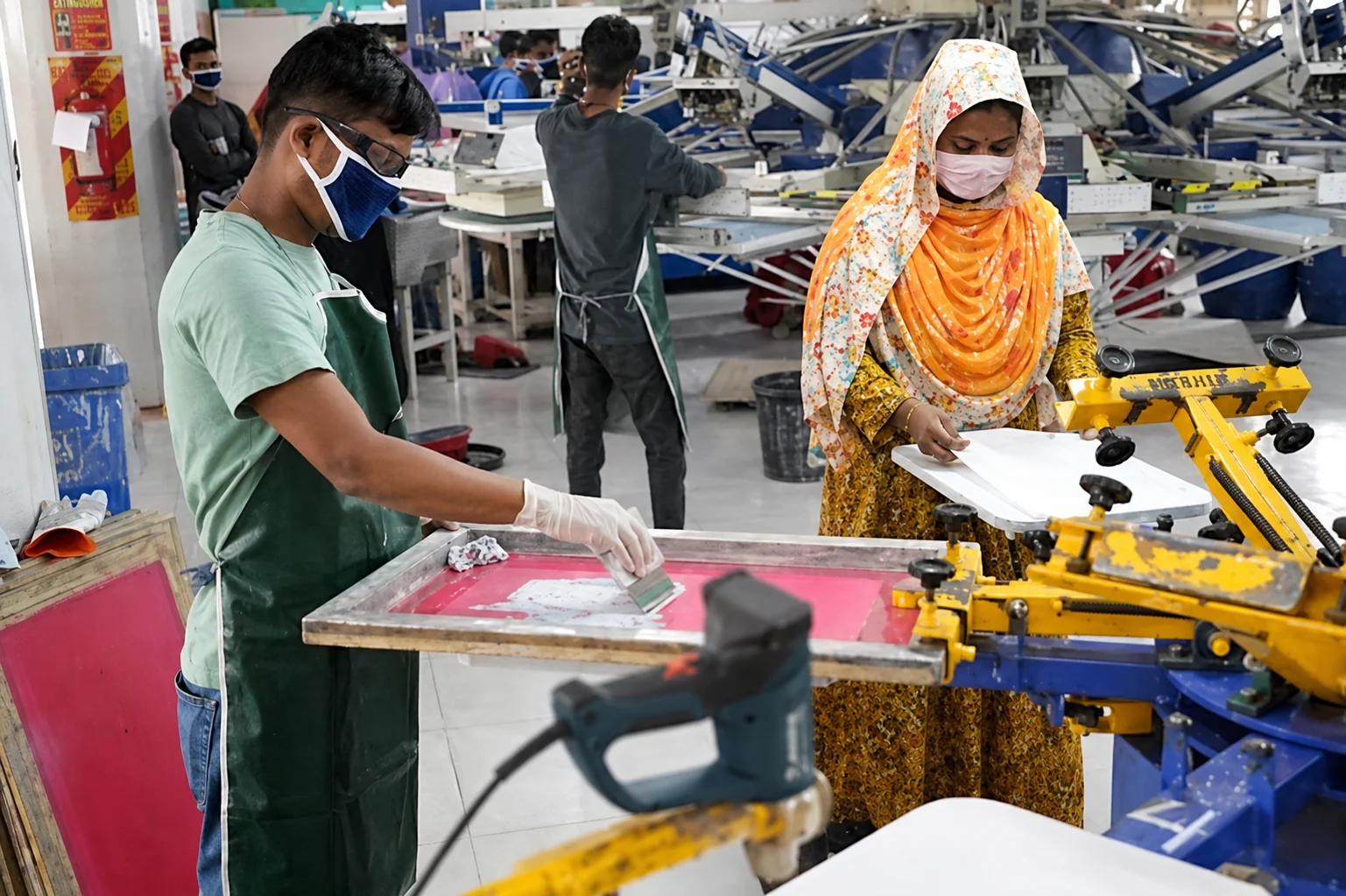
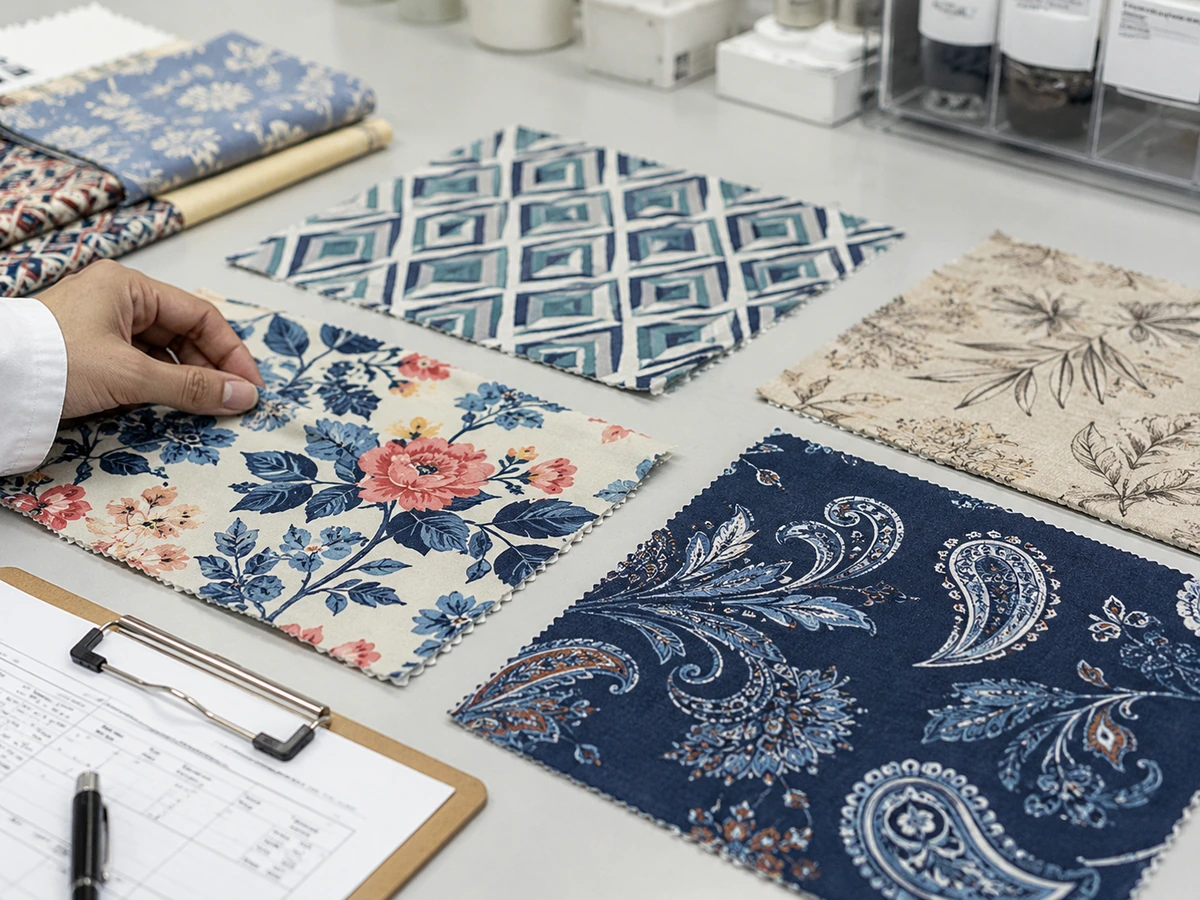
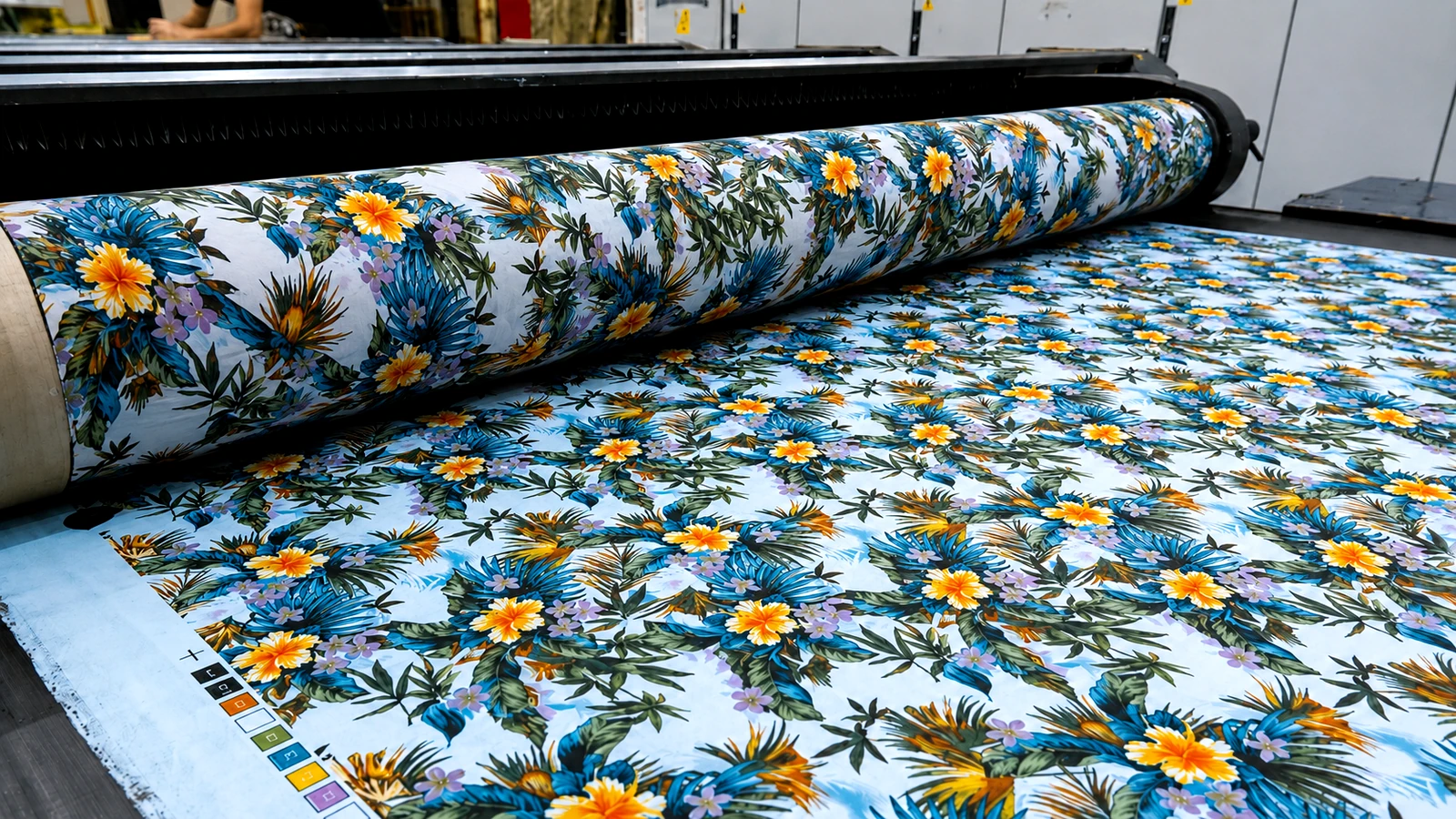
Improve reactive-printing color yield and fastness by controlling fabric preparation, dye dissolution, paste rheology, alkali, moisture, drying, steaming and wash-off as one system. Diagnose the failing stage before changing dye dosage or thickener: a dark print before washing can still contain substantial unfixed or hydrolyzed dye.
Reactive dye performance depends on a controlled chemical reaction between the dye and the fiber. The printing paste must place the dye accurately, retain enough moisture for fixation and release unfixed material during washing without causing staining or excessive residue.
Improvement therefore requires a process-based approach. Fabric absorbency, dye chemistry, paste rheology, alkali, drying, steaming and washing should be evaluated as one connected system rather than as isolated variables.
Punto clave: A darker print before washing does not necessarily indicate better fixation or fastness. Unfixed and hydrolyzed dye can temporarily increase apparent color depth but may be removed during washing or cause poor wet fastness.
Color Yield, Fixation and Fastness Are Not the Same
What Is Color Yield?
Color yield describes the apparent depth or strength of color produced by a given amount of dye. It can be assessed visually or instrumentally, commonly through reflectance measurements such as K/S.
Color yield is influenced by dye concentration, fabric structure, surface distribution, penetration, fixation and washing. A high K/S value alone does not prove that all measured color is chemically fixed to the fiber.
What Is Dye Fixation?
Fixation is the formation of a covalent bond between the reactive dye and suitable functional groups on the fiber. In cellulosic printing, alkali activates the cellulose and allows the dye-fiber reaction to proceed during steaming or another approved fixation process.
At the same time, reactive dye can react with water. This hydrolysis produces dye that remains colored and water-soluble but can no longer form the intended bond with the fiber.
What Is Color Fastness?
Color fastness describes how well the printed color resists a defined exposure. Relevant tests may include washing, dry and wet rubbing, perspiration, water, light or other end-use conditions.
Fixation and fastness are related but not identical. A print may have reasonable fixation but poor wet rubbing fastness if hydrolyzed dye, surface color or thickener residue has not been removed effectively.
Use the Correct Measurement for Each Question
Question
Useful Measurement
Is the shade deep enough?
K/S, reflectance, visual shade and color difference
How much color remains after washing?
K/S before and after a standardized wash
Is unfixed surface dye still present?
Wet rubbing, wash liquor observation and staining assessment
Is the process consistent?
Batch-to-batch K/S, color difference, paste viscosity and fastness results
Is the product suitable for its end use?
Applicable wash, rubbing, perspiration and light-fastness methods
An internal ratio of K/S after washing to K/S before washing can help compare trials. It should not be described as an absolute fixation percentage unless the analytical method has been validated for that purpose.
Start with Consistent Fabric Preparation
Reactive printing cannot compensate for poorly prepared fabric. Oils, waxes, size, residual alkali, uneven bleaching and inconsistent absorbency can all create lower or uneven color yield.
Confirm Desizing and Scouring
Residual size can block water and dye penetration, particularly on woven fabrics. Incomplete scouring leaves natural waxes, lubricants or processing oils that produce uneven wetting and local shade variation.
Use a consistent absorbency test across the fabric width and between lots. A single drop test may be useful for screening, but production control should also consider wetting uniformity and residual impurities.
Control the Bleach Base
Uneven whiteness changes the visual appearance of light and bright printed shades. Residual peroxide or other oxidizing chemicals may also affect sensitive dyes if neutralization and washing are incomplete.
Record whiteness, absorbency and residual chemical conditions before printing. If the base fabric changes, do not assume that the same printing recipe will produce the same shade.
Check Fabric pH
Uneven or excessive residual alkalinity can cause premature dye reaction or hydrolysis. Acidic residues may reduce activation during fixation.
The acceptable fabric pH should be defined by the mill’s process and dye supplier. More important than one universal number is maintaining a narrow and uniform range across the roll.
Manage Fabric Moisture
Fabric that enters printing with uneven moisture can show changes in paste penetration, spreading and drying. Moisture variation across the width may later appear as shade variation.
Condition fabric consistently and avoid uncontrolled exposure to high humidity before printing.
Match the Reactive Dye to the Fixation Process
Reactive Dyes Do Not All Behave the Same
Reactive dyes differ in reactive group, molecular size, solubility, substantivity and sensitivity to alkali and temperature. A fixation condition suitable for one dye class may be unsuitable for another.
Before changing the recipe, confirm the dye manufacturer’s recommended pH, fixation route and compatibility information. Mixed shades should be built from dyes with reasonably compatible fixation behavior.
Control Dye Strength and Lot Variation
Changes in commercial dye strength can alter the final shade even when the recipe weight remains unchanged. Incoming quality control should compare new dye lots with an approved standard using a defined method.
Do not correct every shade difference by changing the thickener. First confirm the dye lot, fabric base, weighing accuracy and process conditions.
Ensure Complete Dye Dissolution
Undissolved dye can produce specks, filtration problems and uneven color. Dissolution conditions should follow the dye supplier’s guidance, particularly for concentrated dark shades.
Check water temperature, mixing sequence, dissolution time and filtration. Avoid holding a reactive dye solution longer than the validated process allows.
Minimize Premature Hydrolysis
Reactive dye hydrolysis accelerates after exposure to alkaline conditions. A one-phase printing paste containing both dye and alkali therefore has a limited useful holding period.
Prepare only the quantity needed for the validated production window. Where the dye chemistry and equipment allow, a two-phase route may separate dye application from alkali application and provide a different control strategy.
Optimize the Printing Thickener and Rheology
Why Sodium Alginate Is Commonly Used
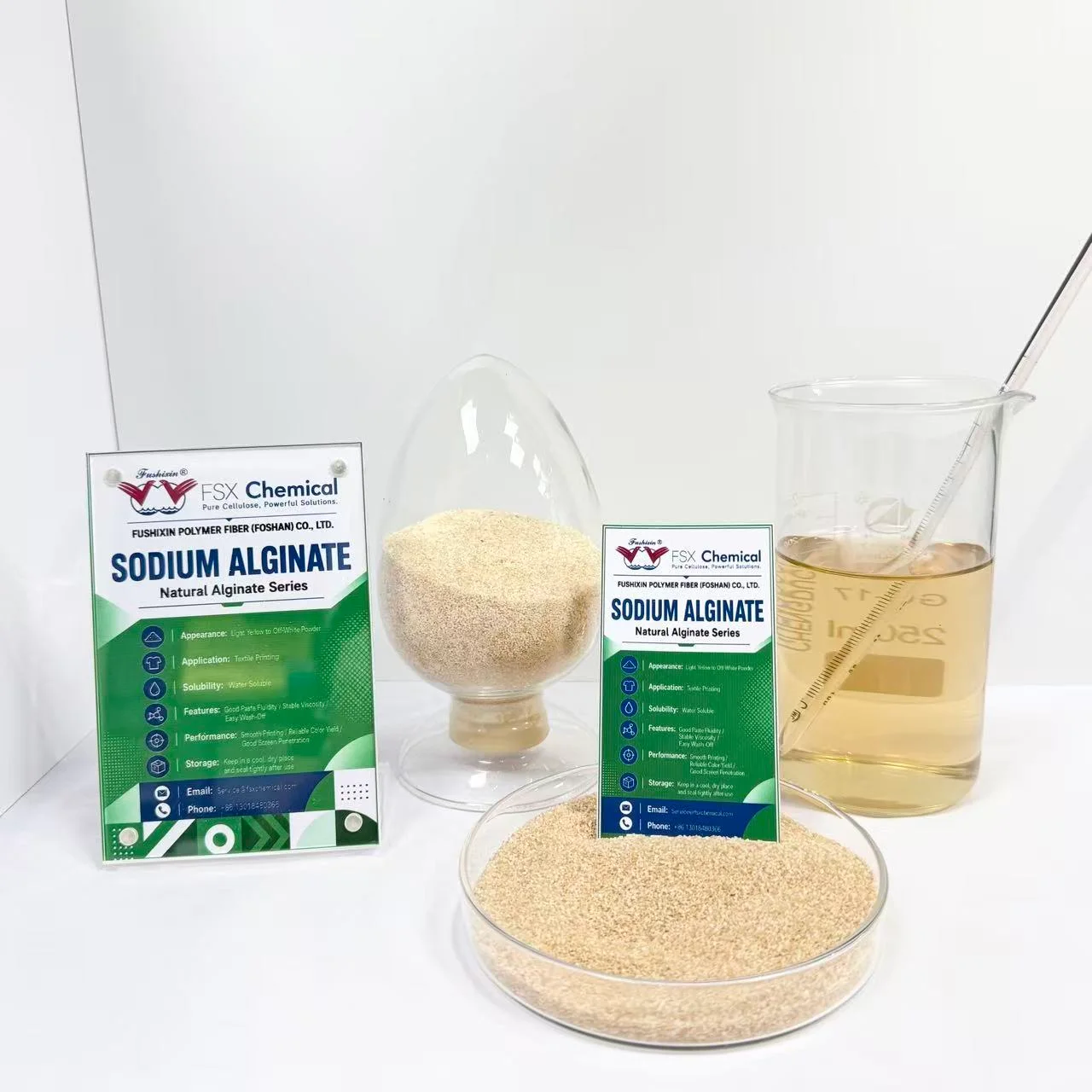
Sodium alginate is widely used for reactive printing on cotton, viscose and other cellulosic fabrics. Its anionic structure generally limits interaction with many reactive dyes compared with polysaccharides containing more accessible reactive hydroxyl groups.
This helps preserve dye for transfer and fixation on the fiber. Sodium alginate also supports paste rheology and can normally be removed during a properly controlled washing process.
It should not be claimed that sodium alginate directly guarantees higher fastness. Final fastness still depends on dye selection, fixation, hydrolysis and washing-off.
Control Viscosity, Not Just Thickener Dosage
If paste viscosity is too low, the print may spread, penetrate excessively or lose fine-line definition. If viscosity is too high, screen passage, paste transfer, dye diffusion and steam penetration may be affected.
The optimum viscosity depends on the printing machine, screen, design, fabric and paste composition. Increasing thickener concentration is not a universal solution for low color yield or poor sharpness.
Compare Viscosity Using the Same Method
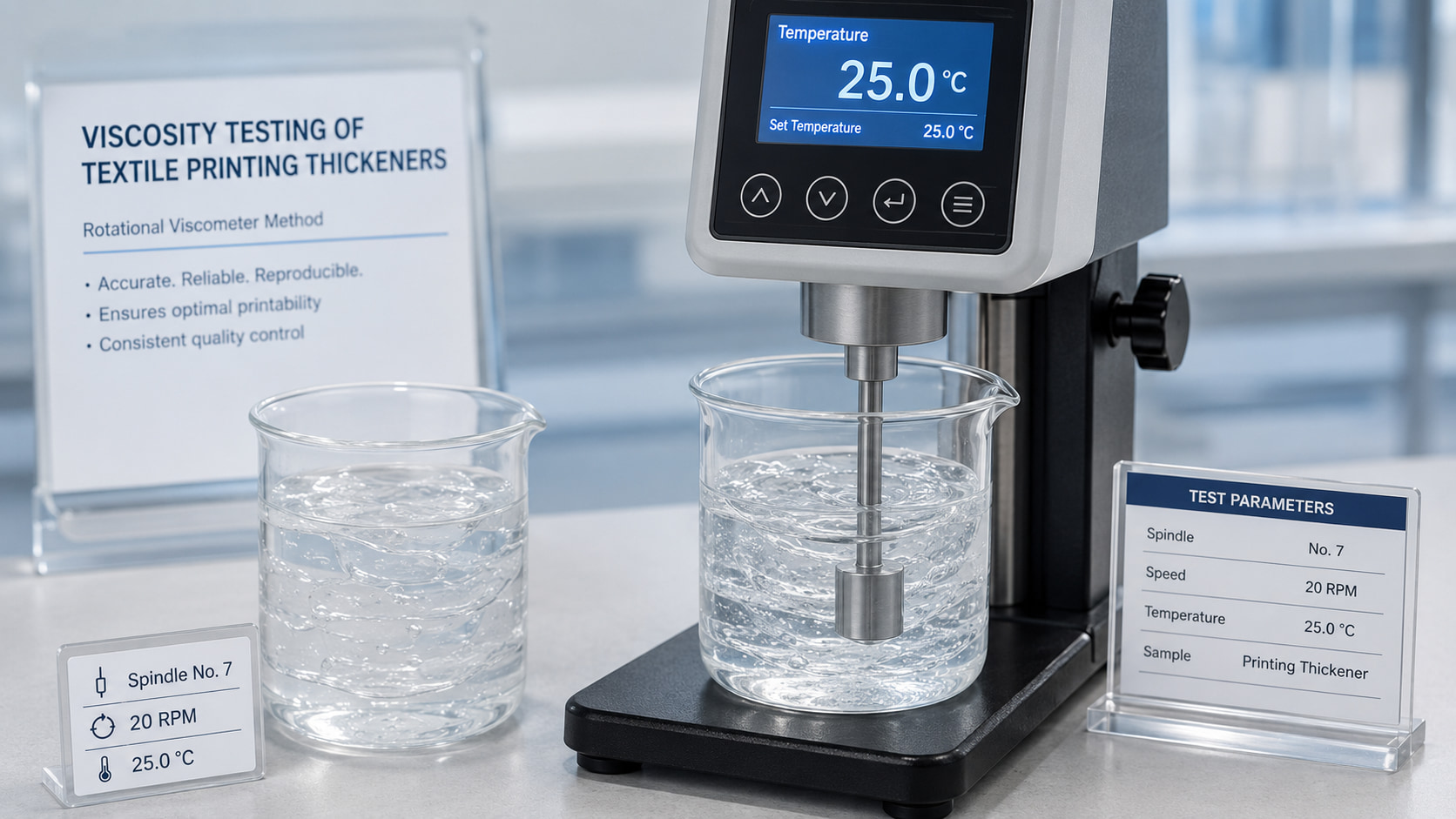
A viscosity result is meaningful only when concentration, temperature, hydration time, viscometer, spindle and rotational speed are defined. Values obtained using different methods should not be compared directly.
When evaluating a new sodium alginate grade, prepare the current and proposed products with the same water and test procedure. Compare both initial viscosity and viscosity after the normal holding period.
Check Solubility and Filtration
Partially hydrated particles can block screens, produce streaks and create local differences in paste application. Add the powder gradually under suitable agitation and allow enough hydration time before final adjustment.
Filterability, insoluble matter and hard-water sensitivity should be evaluated with actual production water. Multivalent ions such as calcium can cause gel particles in alginate systems.
Evaluate the Complete Paste
A thickener may be stable in water but change after dye, alkali, electrolyte or other auxiliaries are added. Measure viscosity and observe stability after the complete paste has been prepared.
For critical production, compare the rheology before printing and after the expected holding time. This helps identify paste ageing, contamination or ingredient incompatibility.
Control Alkali, Moisture and Paste Age
Use Enough Alkali for Activation, but Avoid Excess
Alkali is required to activate the cellulose and reactive dye system. Insufficient alkalinity can reduce fixation, while excessive or premature alkalinity can accelerate dye hydrolysis before fixation.
The correct alkali type and dosage depend on the dye class, printing route and fixation conditions. Follow the dye supplier’s process recommendation and validate adjustments one variable at a time.
Control Water and Humectant Balance
Water is required for dye dissolution, fiber swelling, diffusion and reaction. If the paste film becomes too dry before or during fixation, dye mobility and fixation may decrease.
Excess moisture can cause migration, bleeding or loss of outline definition. Humectants such as urea may support moisture management and dye dissolution, but their use and dosage should be evaluated against process, wastewater and regulatory requirements.
Standardize the Mixing Sequence
The order of addition can affect dissolution, viscosity and paste stability. A documented mixing procedure should identify when the thickener, dissolved dye, auxiliaries and alkali are added.
Operators should not make undocumented additions of water, alkali or thickener during production. Each correction should be recorded and evaluated against an approved procedure.
Define Paste Holding Time
Paste age affects reactive dye stability, viscosity and microbial risk. Record preparation time, alkali-addition time, storage temperature and printing completion time.
If fresh paste performs better than stored paste, investigate hydrolysis, viscosity change, contamination or separation before changing the dye concentration.
Stabilize Printing and Drying Conditions
Control Paste Add-On
Uneven paste application changes the amount of dye delivered to the fabric. Screen condition, squeegee pressure, magnet setting, machine speed and paste viscosity should be monitored together.
Compare fabric weight before and after printing where an add-on check is practical. For digital printing, monitor pretreatment pickup or coating uniformity separately from ink laydown.
Maintain Screen and Equipment Condition
Blocked mesh, damaged screens, worn squeegees and inconsistent pressure can produce local color loss or uneven coverage. These mechanical causes may be incorrectly diagnosed as a chemical problem.
Include equipment inspection in the troubleshooting process before reformulating the paste.
Avoid Uncontrolled Dye Migration During Drying
Drying should immobilize the printed design without causing excessive migration. Slow or uneven drying can move dye toward pattern edges, while severe overdrying may change the moisture available at the start of steaming.
Monitor dryer temperature, air distribution, fabric speed and residual moisture. The approved setting should be linked to the fabric construction and paste add-on.
Optimize Steaming for Dye Fixation
Control Time, Temperature and Steam Quality Together
Reactive dye fixation requires suitable temperature, moisture and time. Under-steaming can leave dye incompletely fixed, while excessive or poorly controlled steaming can increase hydrolysis, migration or shade variation.
There is no universal steaming condition for every reactive dye, fabric and machine. Use the dye supplier’s starting recommendation, then validate it on the actual production equipment.
Verify Steam Saturation
A temperature display alone does not confirm that the printed fabric is exposed to suitable moist steam. Unsaturated or superheated conditions may dry the paste film instead of supporting fiber swelling and dye diffusion.
If fixation remains low despite apparently correct temperature and time, inspect steam distribution, air removal, condensation and fabric loading.
Check Variation Across the Steamer
Uneven shade across the fabric width may be caused by uneven steam flow or moisture. Compare test pieces at different positions and review whether the variation follows the machine rather than the paste batch.
For recurring problems, record actual process conditions instead of relying only on control-panel settings.
Run a Controlled Fixation Curve
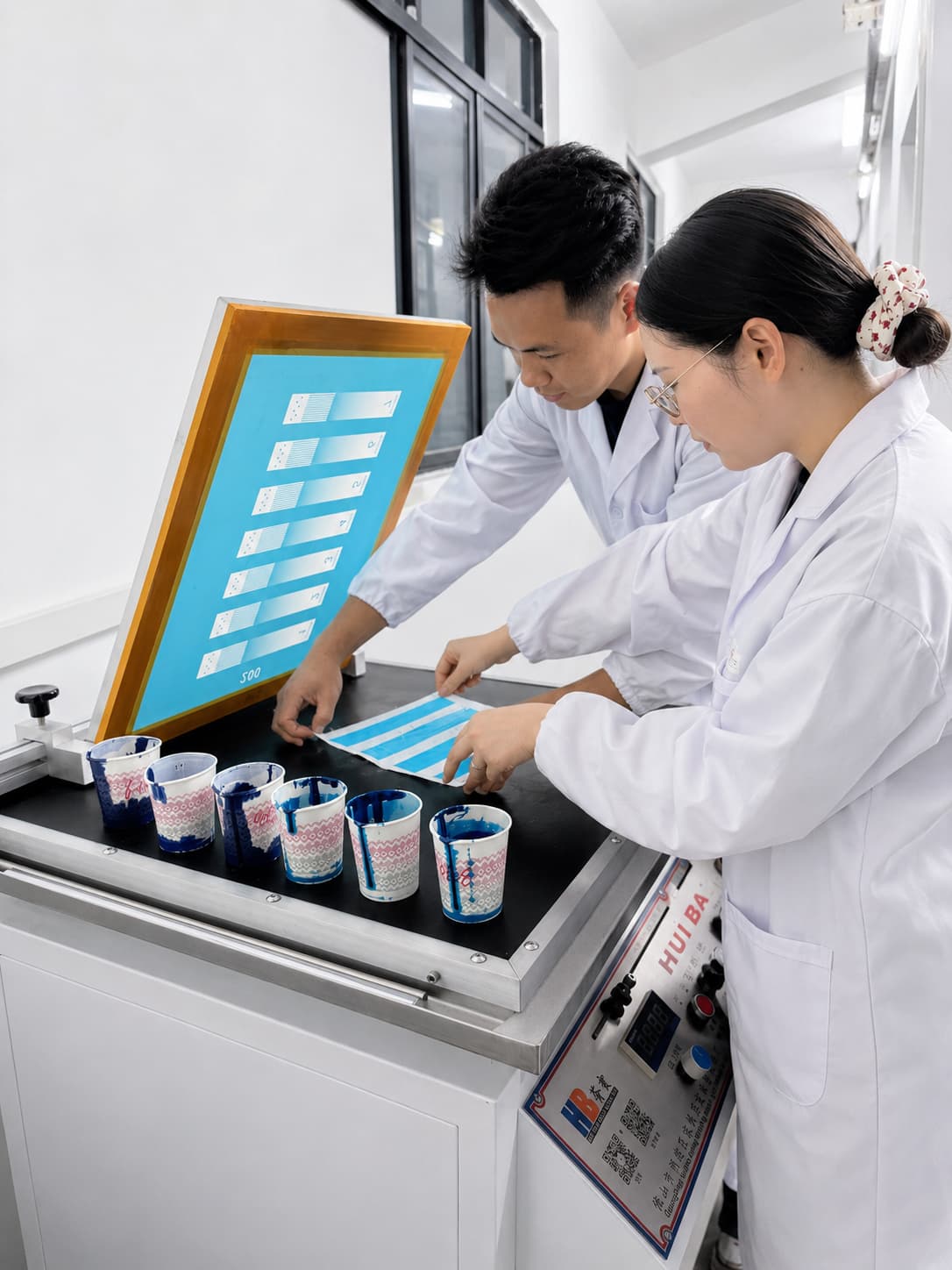
To optimize the process, test a limited matrix of fixation conditions while keeping fabric, paste, dye and washing constant. Measure after-wash color yield, shade, definition and fastness.
Avoid changing alkali, thickener and steaming conditions in the same trial. Changing one factor at a time makes the result easier to interpret.
Improve Washing-Off
Remove Unfixed and Hydrolyzed Dye
After fixation, hydrolyzed and physically retained dye must be removed from the fabric. If washing is incomplete, the print may initially look dark but show poor wash or wet rubbing fastness.
Washing-off also needs to remove residual thickener and auxiliary chemicals. The correct sequence depends on dye class, fabric, shade depth and available equipment.
Use a Controlled Washing Sequence
A typical process may include initial rinsing, progressively warmer washing, soaping and final rinsing. The exact temperatures, chemicals and times should follow the dye supplier’s guidance and the mill’s validated procedure.
Starting immediately with unsuitable hot conditions can promote staining in some systems, while insufficient temperature or washing action may leave hydrolyzed dye on the fabric.
Prevent Backstaining
Dirty wash liquor can redeposit removed dye onto printed or unprinted areas. Control water flow, liquor renewal, fabric loading and the effectiveness of the washing agent.
Monitor the whiteness of unprinted areas and staining on adjacent fibers, not only the depth of the printed color.
Confirm the Final Fabric pH
Residual alkali can affect shade stability, finishing and some fastness results. Complete the washing and neutralization process according to the fabric and finishing requirements.
Check final fabric pH using a defined method rather than relying only on the last wash-bath pH.
Rheology, paste add-on, drying and steam conditions
Screen blockage or streaks
Incomplete thickener hydration, insoluble particles, hard-water ions or undissolved dye
Preparation method, filtration, water hardness and raw-material quality
Asa de tela resistente
Thickener residue, incomplete washing, unsuitable thickener interaction or finishing issue
Wash-off, residual solids, thickener grade and final finishing
Batch-to-batch shade variation
Fabric, dye, thickener, weighing, viscosity or process variation
Incoming QC, batch records, COA, process settings and retained samples
Use a One-Variable-at-a-Time Approach
Changing dye concentration, thickener dosage, alkali and steaming together may improve one trial, but it will not reveal which change produced the result.
Start with the most likely cause, keep other variables constant and document the result. A structured trial is usually more useful than repeated undocumented recipe corrections.
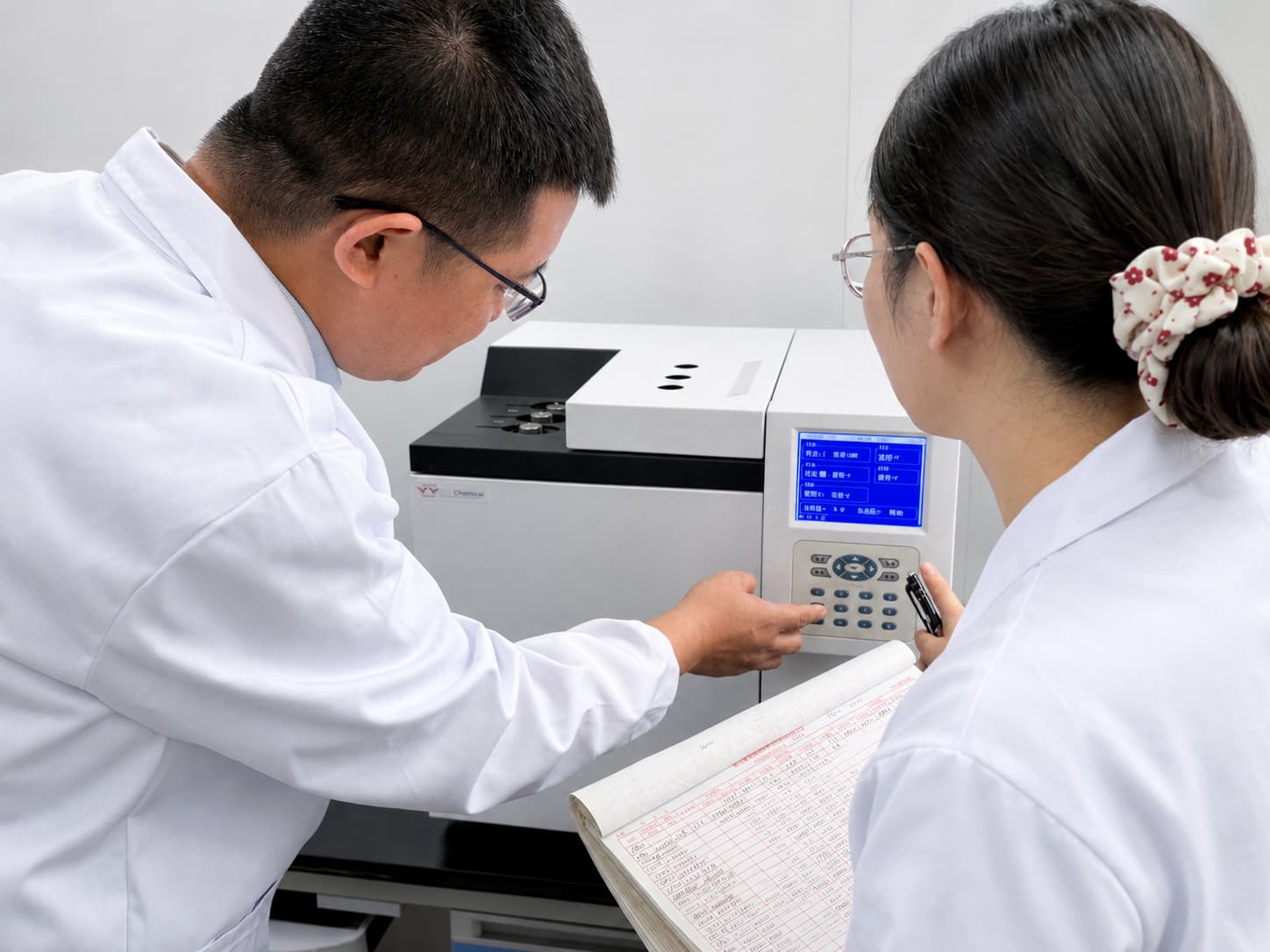
Laboratory and Production Quality Control
Raw Material Checks
Dye strength and shade against the approved standard
Thickener viscosity using the approved method
Thickener pH, moisture and filtration where relevant
Water hardness and conductivity
Alkali and auxiliary identity and concentration
Paste Checks
Initial and aged viscosity
pH after complete formulation
Filtration and screen passage
Preparation and alkali-addition time
Storage temperature and holding time
Printed Fabric Checks
Paste add-on or pretreatment pickup
Color depth and color difference
Line sharpness, penetration and levelness
After-wash K/S
Wash and dry/wet rubbing fastness
Staining of unprinted or adjacent areas
Fabric handle and residual thickener
Use Applicable Standard Methods
Fastness tests should follow the method required by the buyer, product category or destination market. Record the standard designation, current edition, equipment and evaluation conditions.
Do not compare results produced by different methods as if they were directly equivalent.
Raw Material Specifications Buyers Should Review
Sodium Alginate Specifications
Viscosity range and complete test method
Recommended concentration
pH and moisture
Tamaño de las partículas
Sustancias insolubles o rendimiento de filtración
Hydration procedure
Hard-water sensitivity where relevant
Storage conditions and shelf life
Documentos técnicos
Request a product-specific TDS and current SDS before sample evaluation. For a confirmed commercial shipment, request a batch-specific COA showing the parameters agreed in the purchasing specification.
Check that the product code on the TDS, sample, quotation, package label and COA is consistent.
Supplier Change Evaluation
When changing sodium alginate or printing-paste supplier, use the approved formulation as the control. Compare powder behavior, hydration, viscosity, paste ageing, printing, fixation and wash-off.
A similar viscosity result does not prove that two grades are equivalent. Rheology, ionic sensitivity, insoluble matter and dye-release behavior may still differ.
Preguntas frecuentes
What is the first check for low color yield in reactive printing?
Compare the standardized post-wash shade, not only the print before washing. Then verify fabric preparation, dye strength and dissolution, paste formulation, printing add-on, drying and steaming records.
Why can a darker print still have poor wash or rubbing fastness?
Unfixed or hydrolyzed dye can increase apparent color before washing but later desorb, stain adjacent material or reduce wet fastness. Evaluate color depth after controlled wash-off together with fastness.
Does increasing sodium alginate dosage improve fixation?
Not automatically. Higher dosage changes viscosity, transfer, penetration and wash-off. Optimize the complete paste using a defined viscosity method and printing trial.
How should steaming conditions be evaluated?
Record time, temperature, steam quality, fabric loading and moisture condition together. A nominal temperature alone does not prove uniform fixation.
When evaluating a new thickener, which results should remain controlled?
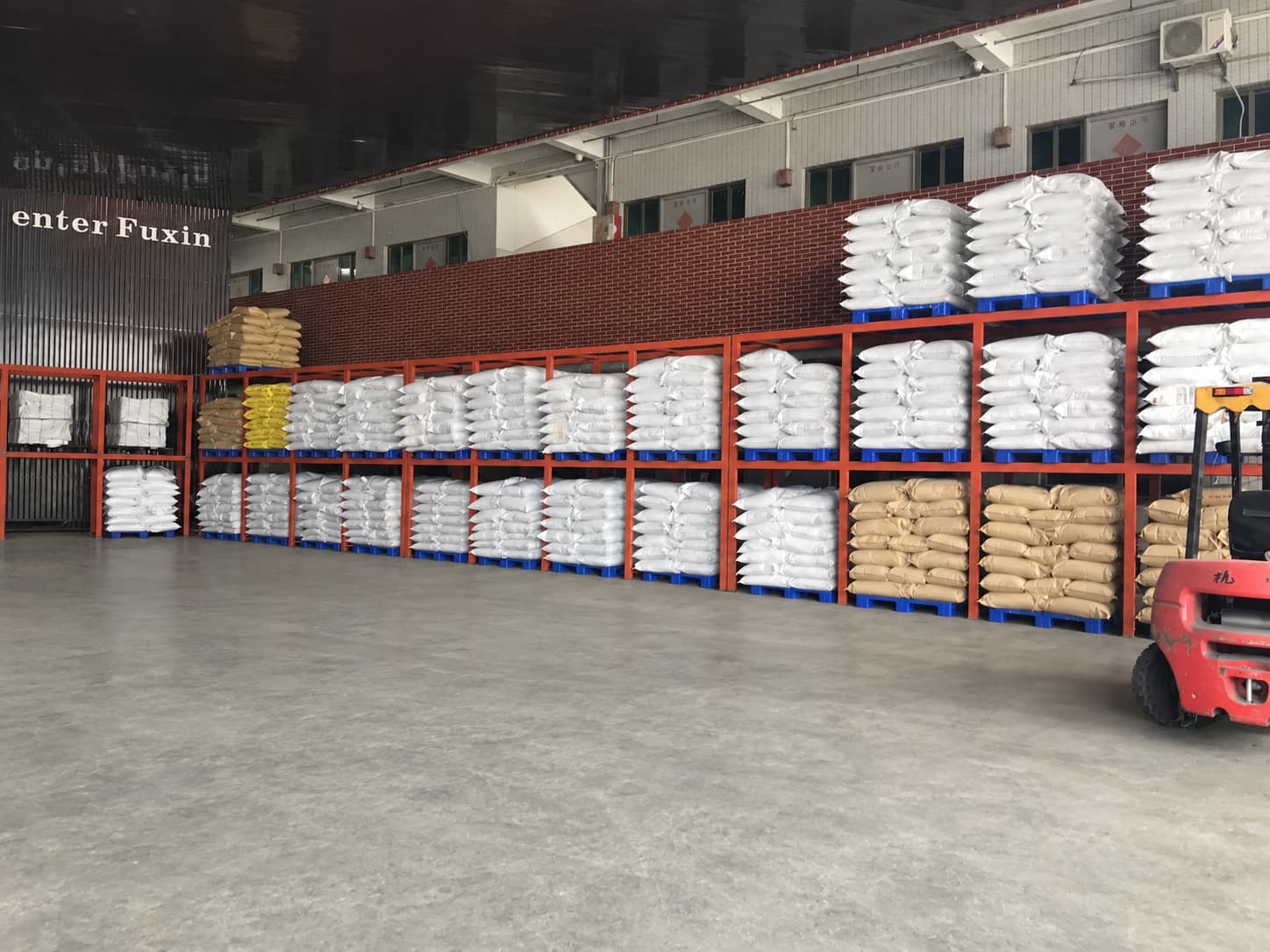
FSX Chemical supplies sodium alginate and related textile printing thickeners for B2B buyers. Grade selection can begin with the buyer’s fabric, reactive dye system, printing method, target viscosity and current production problem.
Buyers can request a product-specific TDS and a trial sample before bulk purchasing. If an existing grade is being replaced, the current TDS, viscosity method and retained sample can be used for initial comparison.
FSX Chemical can recommend a starting thickener grade, but final color yield and fastness must be confirmed through the buyer’s own printing, steaming and washing process.
Descubre por qué no se pueden comparar los valores de viscosidad de los espesantes para la impresión textil sin tener en cuenta la concentración, la temperatura, el instrumento, el husillo, la velocidad, el método de preparación y el tiempo de prueba.
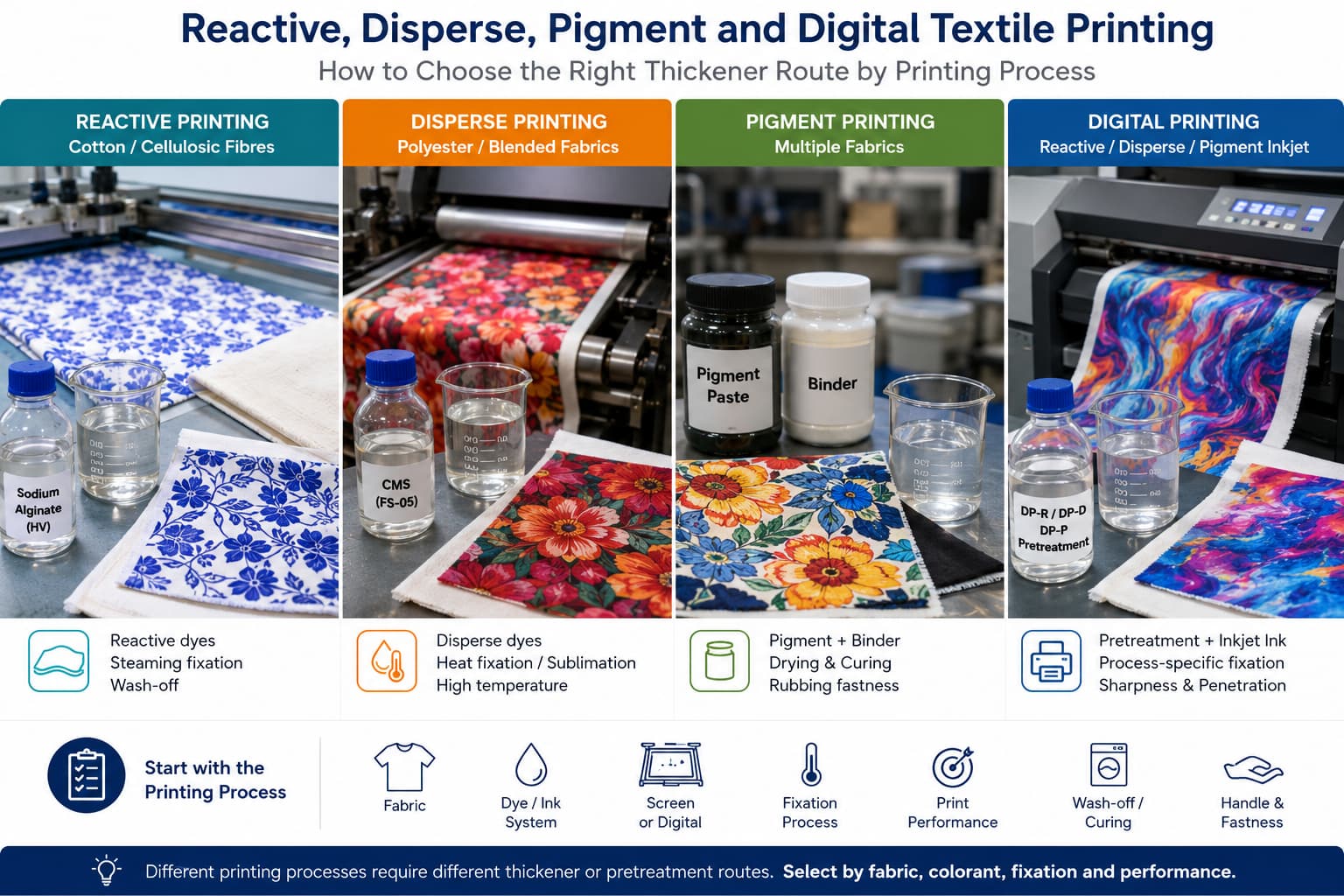
Aprende a elegir espesantes y métodos de pretratamiento para la impresión textil reactiva, dispersa, con pigmentos y digital, según los requisitos del tejido, el colorante o la tinta, la fijación, la resistencia al lavado y la calidad de impresión.
Compara CMC, CMS, alginato de sodio y pasta para impresión digital en la impresión textil. Descubre cómo cada opción se adapta a los procesos reactivos, dispersos, pigmentados y digitales, y qué deben tener en cuenta los compradores antes de realizar pruebas de muestras, comparar calidades y realizar compras a granel.
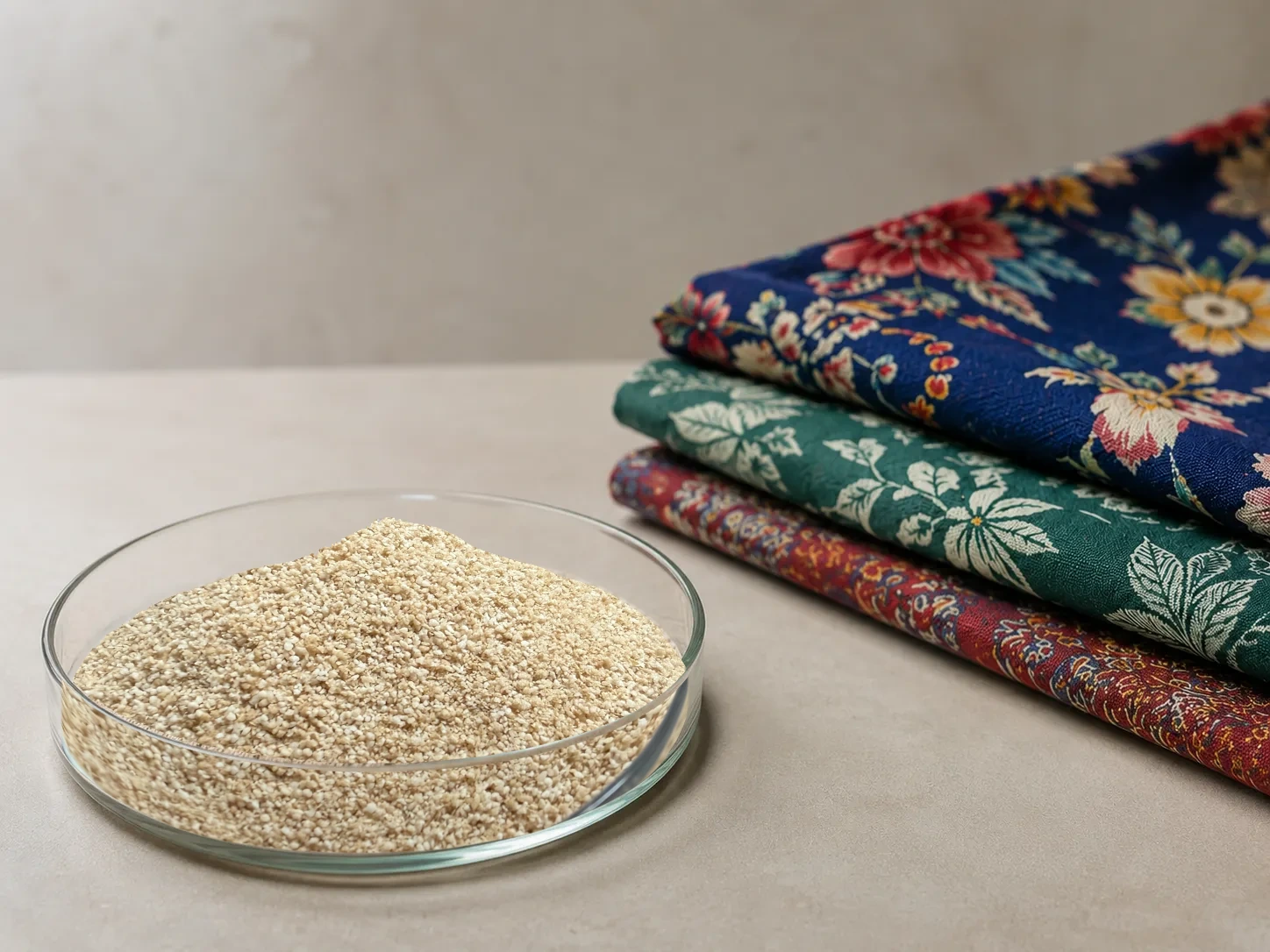
El alginato de sodio se utiliza ampliamente en la impresión textil como espesante estable y lavable para las pastas de impresión reactivas. Descubre cómo evaluar el grado de viscosidad, la pureza y la idoneidad para cada aplicación antes de comprar, y cómo FSX Chemical apoya a los compradores de todo el mundo con datos técnicos y muestras.
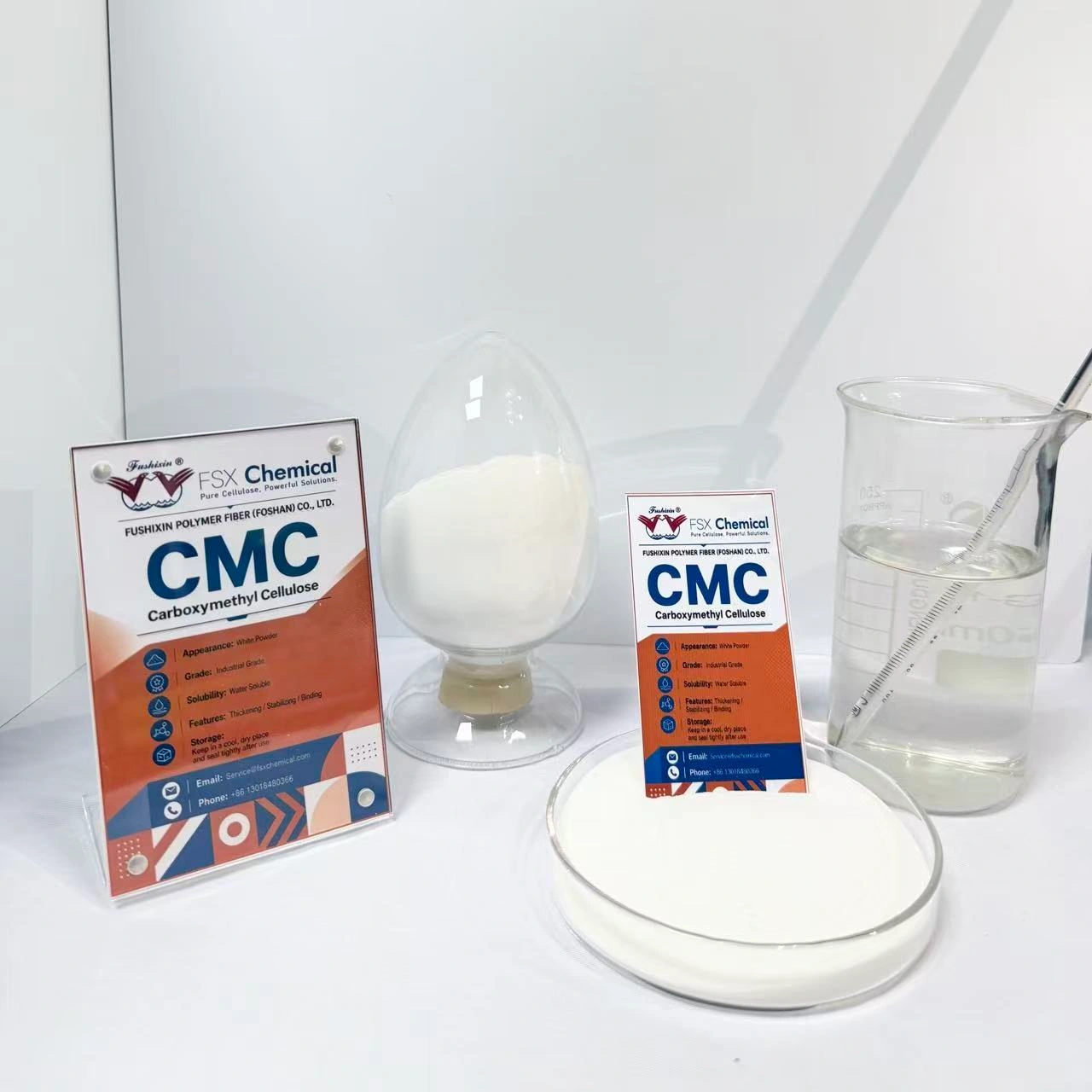
La carboximetilcelulosa (CMC) se utiliza ampliamente en los procesos de estampado, encolado y teñido de textiles. En esta guía se explica cómo evaluar los distintos grados de CMC, qué parámetros son los más importantes y cómo FSX Chemical puede ayudarte a tomar decisiones de compra.
La pasta de impresión a base de CMC se utiliza en la impresión textil con pigmentos, reactiva y digital. Esta guía explica qué parámetros son importantes, cómo comparar proveedores y qué solicitar antes de realizar un pedido al por mayor.
Tanto el alginato de sodio como la CMC se utilizan como espesantes en la impresión textil, pero se adaptan a diferentes sistemas de tinte y condiciones de proceso. Esta guía explica las diferencias clave y cuándo utilizar cada uno.
La impresión digital por inyección de tinta sobre textiles tiene requisitos distintos en cuanto a pastas y pretratamiento en comparación con la serigrafía. Esta guía explica cómo se utiliza el alginato de sodio en la impresión textil digital y qué parámetros de calidad deben especificar los equipos de compras.
La preparación correcta de la pasta es tan importante como la selección del grado en la impresión textil con tintes reactivos. Esta guía aborda los métodos de disolución del alginato de sodio, los rangos de concentración según la aplicación, las condiciones de almacenamiento y cómo resolver problemas comunes en la preparación.
El alginato de sodio es un polímero natural y biodegradable, pero su uso en la impresión textil genera aguas residuales que requieren un tratamiento adecuado. Esta guía aborda el perfil ambiental del alginato de sodio, las características de los efluentes de lavado y lo que los equipos de compras deben saber sobre la elección de espesantes y el impacto ambiental.
La tasa de fijación del colorante afecta directamente al rendimiento del color, a la solidez al lavado y a la carga de aguas residuales en la estampación con colorantes reactivos. Esta guía explica cómo el alginato de sodio favorece la fijación del colorante, qué parámetros de la pasta influyen en la tasa de fijación y cómo resolver los problemas de baja fijación en la producción.
El tamaño de partícula (malla) del alginato de sodio influye en la rapidez con la que se disuelve el polvo, en la uniformidad con la que se hidrata y en el desempeño de la pasta resultante en la serigrafía. Esta guía explica las implicaciones prácticas de la especificación de la malla para aplicaciones de pastas de impresión textil.
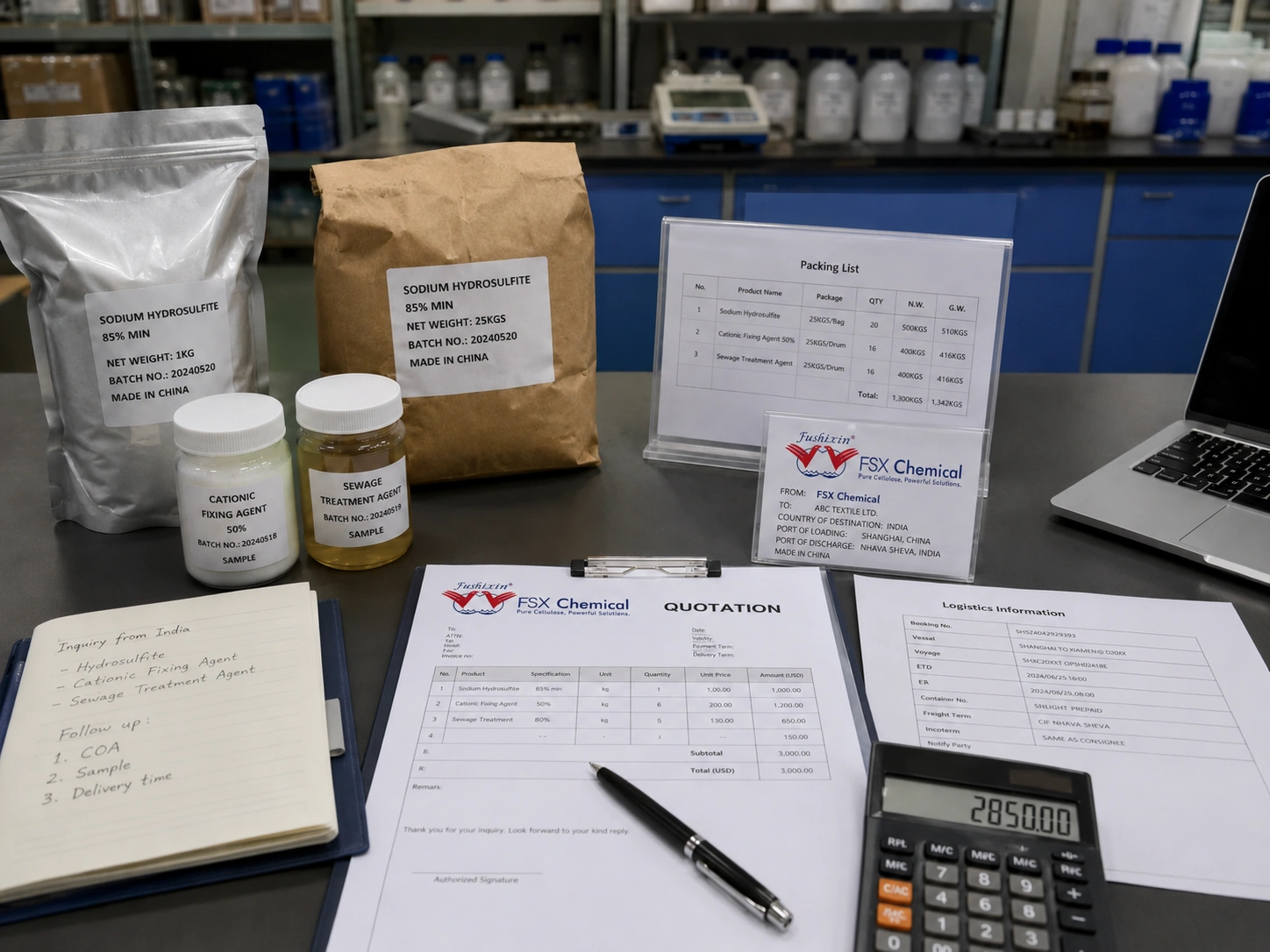
Comparta el nombre del producto, su aplicación, la cantidad, el destino y cualquier ficha técnica (TDS),
foto de muestra o documento que ya tenga. FSX Chemical revisará la
información y le recomendará el siguiente paso para la cotización, la comparación de muestras
o la selección del producto.
Información del productoNombre del producto, categoría, modelo, foto de la etiqueta o referencia del proveedor.
Documentos disponiblesTDS, SDS, COA, foto de muestra, lista de productos o datos de pruebas.
Detalles del pedidoCantidad estimada, embalaje, país de destino, puerto o término comercial.
Solicitud o problemaProceso de impresión textil, requisitos de formulación, problema actual o objetivo de rendimiento.

 ES
ES  EN
EN  BN
BN  TR
TR  FR
FR  ID
ID  RU
RU  AR
AR  UR
UR  VI
VI  TL
TL  HI
HI  UK
UK  KK
KK  KA
KA  UZ
UZ