Comparación detallada de productos: alginato de sodio vs. CMC en la impresión textil
Tanto el alginato de sodio como la CMC pueden controlar la viscosidad de la pasta de impresión, pero no son intercambiables en...
Tanto el alginato de sodio como la carboximetilcelulosa (CMC) son polímeros solubles en agua que permiten controlar la viscosidad y la fluidez de las pastas de impresión textil. Sin embargo, presentan estructuras químicas, interacciones con los colorantes y límites de aplicación diferentes, por lo que no deben considerarse sustitutos universales en una proporción de uno a uno.
Para los equipos de compras, la pregunta correcta no es simplemente si es mejor el alginato de sodio o la CMC. La pregunta más útil es qué material, grado y dosificación son los adecuados para el tejido, el sistema de tintes, la máquina de impresión, el proceso de fijación y la calidad de impresión requerida.
Esta guía compara el alginato de sodio y la CMC desde la perspectiva de la impresión textil. Además, explica qué especificaciones se deben solicitar, cómo realizar una comparación controlada y en qué casos puede valer la pena evaluar una formulación combinada.
Importante: Las comparaciones que se presentan a continuación describen tendencias técnicas comunes, más que resultados garantizados. El rendimiento varía según el tipo de polímero, el grado de sustitución, el método de medición de la viscosidad, la fórmula de la pasta, la calidad del agua, las propiedades químicas del colorante, el tejido y las condiciones de producción.
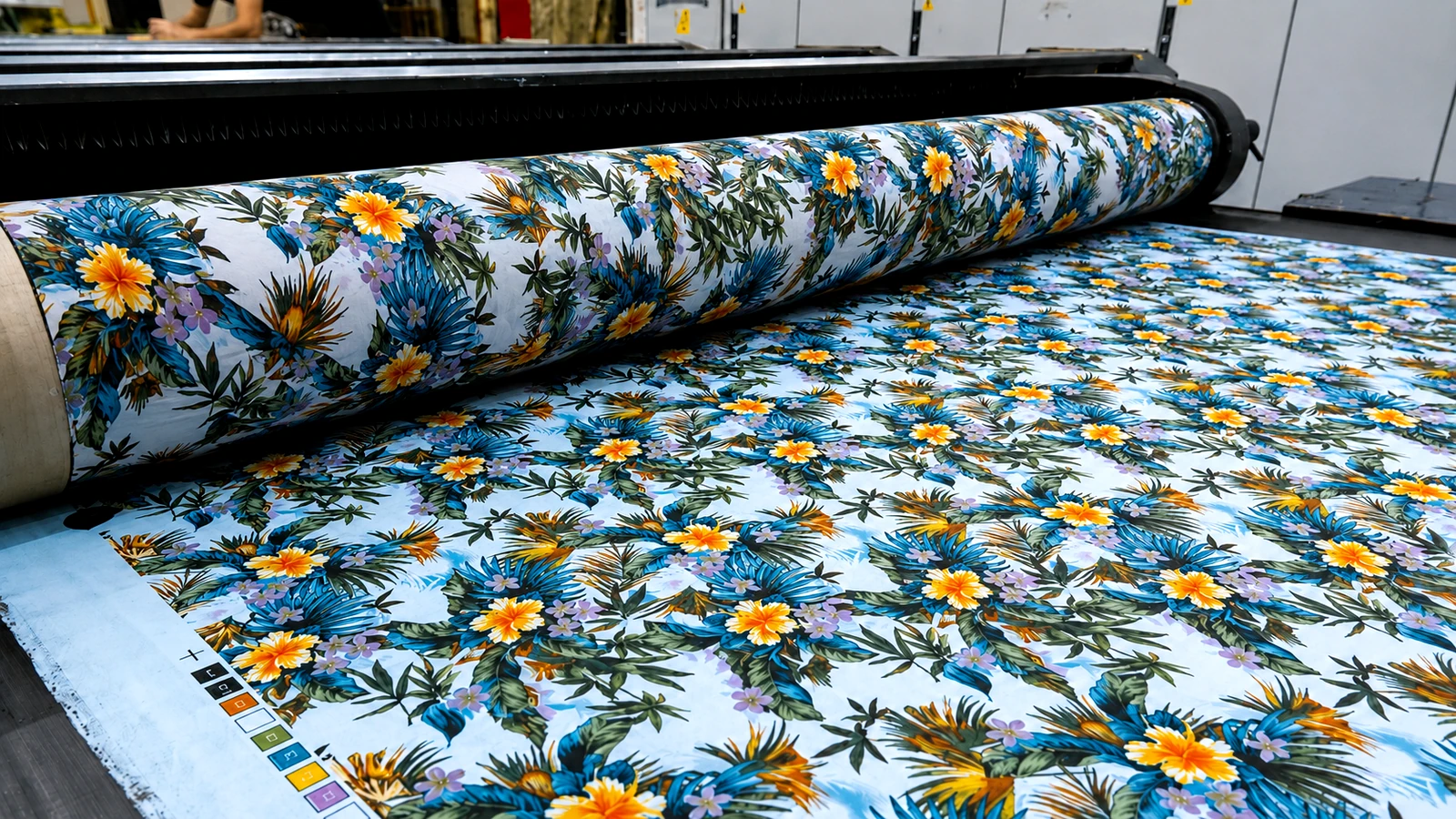
Para la impresión convencional con tintes reactivos sobre algodón, viscosa y otros tejidos celulósicos, el alginato de sodio suele ser el primer parámetro de referencia que se evalúa. Su estructura aniónica limita la interacción con muchos tintes reactivos y puede favorecer la transferencia del tinte, la definición de la impresión y el lavado, siempre y cuando el grado y el proceso se combinen adecuadamente.
El CMC puede considerarse para determinados sistemas de impresión reactivos, dispersos, con pigmentos o compuestos. Su idoneidad depende en gran medida del grado de sustitución, la distribución de la sustitución, la pureza, el perfil de viscosidad y la compatibilidad con la formulación completa de impresión.
Los grados especializados de CMC pueden presentar un comportamiento diferente al del CMC industrial de uso general. Por lo tanto, el comprador no debe aprobar ni rechazar el CMC basándose únicamente en el nombre del producto.
Requisitos de impresión
Ruta inicial recomendada
Verificación del comprador
Estampado reactivo sobre algodón o viscosa
El alginato de sodio como punto de referencia inicial
Rendimiento del color, nitidez, resistencia al lavado, tacto del tejido y estabilidad de la pasta
Formulación reactiva seleccionada que requiere una evaluación de costos
Alginato, CMC especializado o una mezcla controlada
Interacción del colorante, grado de sustitución, dosificación y costo total de uso
Impresión por dispersión sobre poliéster
Evaluar los sistemas CMC, CMS, sintéticos o compuestos
Dispersión del colorante, paso por el tamiz, residuo de fijación y lavado
Impresión con pigmentos
Evalúa el espesante con el sistema de aglutinante real
Compatibilidad del aglutinante, estabilidad de la viscosidad, tacto del tejido y resistencia al roce
Pretratamiento digital reactivo
Utilice un tipo de papel o una fórmula específica para la impresión digital
Filtración, residuos, uniformidad del recubrimiento, respuesta a la tinta y fijación
¿Por qué el alginato de sodio y el CMC se comportan de manera diferente?
Química del alginato de sodio
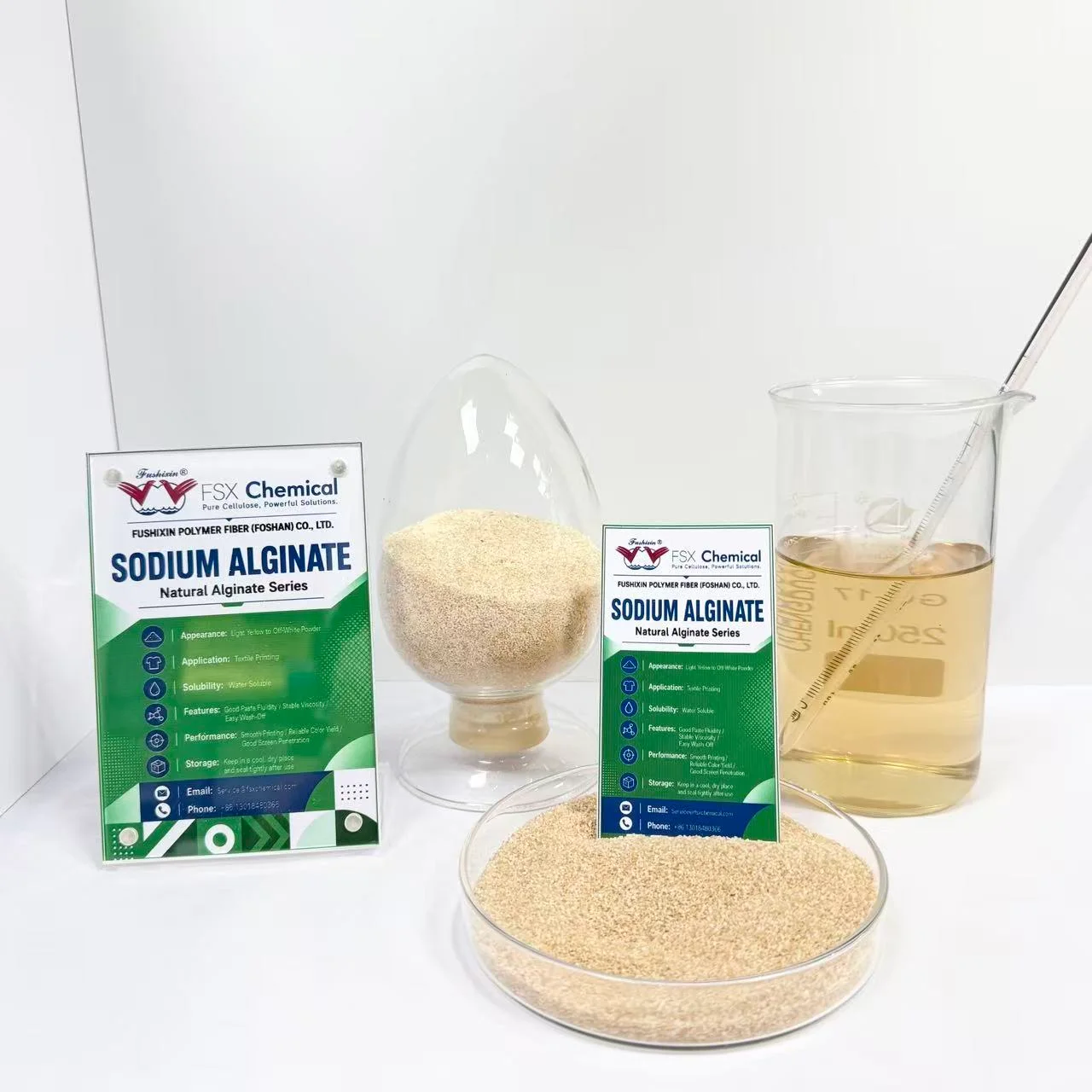
El alginato de sodio es un polisacárido aniónico derivado de las algas pardas. Su cadena polimérica contiene grupos carboxilatos que influyen en la solubilidad en agua, la viscosidad y la interacción con los iones presentes en la pasta de impresión.
En los sistemas de estampado reactivo alcalino, el alginato, que tiene carga negativa, y muchos tintes reactivos presentan una atracción limitada. En comparación con los polisacáridos que contienen grupos hidroxilo reactivos más accesibles, el alginato suele tener una menor tendencia a absorber el tinte reactivo destinado a la fibra.
Esta es una de las razones por las que el alginato de sodio se utiliza ampliamente como espesante de referencia para la impresión reactiva. Sin embargo, esto no significa que todos los grados de alginato de sodio vayan a producir el mismo rendimiento de color, las mismas propiedades reológicas o el mismo rendimiento de lavado.
Química de los CMC y grado de sustitución
El CMC es un éter de celulosa que se produce al introducir grupos carboximetilo en la cadena principal de la celulosa. Su rendimiento depende del peso molecular, el grado de sustitución, la distribución de la sustitución, la pureza y el proceso de fabricación.
El grado de sustitución, comúnmente abreviado como DS, indica el número promedio de posiciones hidroxílicas sustituidas por grupos carboximetilo en cada unidad de anhidroglucosa. Los grupos hidroxílicos restantes aún pueden interactuar con ciertos colorantes reactivos en condiciones de estampado y fijación.
Por esta razón, no se debe utilizar automáticamente un CMC industrial de uso general como único espesante para la impresión con tintes reactivos. Los grados para impresión con mayor sustitución o diseñados especialmente pueden comportarse de manera diferente, pero aún así es necesario demostrar su idoneidad con los tintes y el proceso del comprador.
Por qué los nombres de los productos no son suficientes
Dos productos descritos ambos como “CMC de alta viscosidad” pueden presentar diferentes valores de DS, métodos de medición de la viscosidad, tolerancia a la sal y perfiles reológicos. Lo mismo ocurre con dos grados de alginato de sodio con viscosidad nominal similar.
Por lo tanto, las decisiones de adquisición deben basarse en condiciones de prueba completas, especificaciones acordadas y pruebas de aplicación, en lugar de en el nombre genérico de un producto.
Comparación directa: alginato de sodio frente a CMC
Factor de comparación
Alginato de sodio
CMC
Fuente de polímeros
Polisacárido derivado de algas marinas
Éter derivado de la celulosa
Dirección habitual de impresión
Estampado con tintes reactivos sobre telas celulósicas
Sistemas seleccionados de reactivos, dispersiones, pigmentos y compuestos, según el grado
Interacción de los colorantes reactivos
Por lo general, se limita a condiciones debidamente controladas
Depende del grado; los grupos hidroxilo restantes pueden interactuar con algunos colorantes reactivos
Parámetros críticos de compra
Método de viscosidad, materia insoluble, pH, humedad, tamaño de las partículas y sensibilidad iónica
Método de viscosidad, DS, pureza, pH, humedad, tamaño de partícula y tolerancia a los electrolitos
Se enjuaga
Se utiliza con frecuencia en aplicaciones de impresión reactiva en las que es importante que el producto se elimine fácilmente con agua
Varía según el grado, la interacción con el colorante, la dosis y el proceso de lavado
Sensibilidad a la calidad del agua
¿Puede gelificarse o formar partículas en presencia de iones multivalentes?
También puede verse afectado por las sales y los iones multivalentes; su comportamiento depende del grado
Evaluación de costos
Evaluar el precio de entrega, la dosis y el rendimiento del proceso
Evaluar el precio de entrega, la dosis, el rendimiento, el lavado y los riesgos de producción
Compatibilidad con los colorantes reactivos
Los colorantes reactivos están diseñados para formar enlaces covalentes con grupos funcionales adecuados en fibras como el algodón y la viscosa. Si el espesante también reacciona con parte del colorante, es posible que quede menos colorante disponible para su fijación en la tela.
Normalmente se elige el alginato de sodio porque su estructura reduce esta competencia. Esto puede favorecer el rendimiento del color y el desempeño en el lavado, pero el resultado sigue dependiendo del tipo de colorante, el álcali, el tratamiento con vapor, la preparación del tejido y el lavado.
La compatibilidad con CMC varía más. Un tipo de tinta especializado para impresión puede ser adecuado en un sistema reactivo específico, mientras que un tipo de uso general o con sustitución insuficiente puede reducir el rendimiento del color, generar más residuos o hacer que el tacto de la tela sea más áspero.
Reología y definición de impresión
Tanto las soluciones de alginato de sodio como las de CMC pueden presentar un comportamiento de fluidez por cizallamiento. La pasta se vuelve más fácil de mover bajo el cizallamiento generado por una bomba, una rasqueta o una malla, y luego recupera parte de su estructura después de la aplicación.
El grado de adelgazamiento por cizallamiento y la recuperación de la viscosidad dependen del tipo de producto, la concentración y la formulación. No es técnicamente confiable afirmar que todos los tipos de alginato tengan mejores propiedades reológicas que todos los tipos de CMC.
Para líneas finas y diseños detallados, los compradores deben evaluar la viscosidad en más de una condición de cizallamiento, siempre que sea posible. El paso por la malla, la nitidez de los bordes, la penetración y la recuperación de la pasta después del cizallamiento son indicadores más útiles que un solo valor de viscosidad estática.
Rendimiento de color
En la impresión reactiva, el alginato de sodio suele servir como un punto de referencia sólido debido a su interacción limitada con muchos colorantes reactivos. Sin embargo, el rendimiento del color no depende únicamente del espesante.
La selección del colorante, la absorbancia del tejido, la humedad, el nivel de alcalinidad, las condiciones de vaporización y el lavado influyen en el tono final. Cualquier afirmación de que un espesante aumenta el rendimiento del color en un porcentaje fijo debe estar respaldada por una prueba documentada realizada en condiciones definidas.
Al comparar el CMC con el alginato, utilice el mismo lote de colorante, la misma tela, la misma fórmula, el mismo equipo de estampado y los mismos procedimientos de fijación y lavado. Mida la intensidad del color con instrumentos siempre que sea posible, pero evalúe también el tono, la uniformidad y la definición visual.
Lavable y con asa de tela
Después de la fijación, es necesario eliminar del tejido el espesante y el colorante no fijado. El alginato de sodio se utiliza habitualmente en la impresión reactiva, en parte porque puede eliminarse eficazmente mediante un proceso de lavado debidamente controlado.
El CMC también es soluble en agua, pero su eliminación real depende del grado, la dosis y de si se ha producido alguna interacción entre el CMC, el colorante reactivo y la tela. El espesante residual puede influir en el tacto de la tela, su tono y el acabado posterior.
En una comparación de facilidad de enjuague se deben registrar la temperatura de lavado, el volumen de agua, el tiempo, el detergente o agente jabonoso y el número de enjuagues. Sin estas condiciones, afirmaciones como “fácil de enjuagar” no pueden compararse de manera objetiva.
Dureza del agua e iones multivalentes
El alginato de sodio es sensible a los iones multivalentes, como el calcio. Un exceso de calcio u otros iones multivalentes puede provocar la formación de partículas de gel locales, una filtración deficiente, una pasta irregular o la obstrucción de la malla.
El CMC también puede reaccionar con sales e iones multivalentes, aunque el efecto visible y la tolerancia dependen de su grado y formulación. Ninguno de los dos productos debe probarse únicamente con agua desionizada de laboratorio si la fábrica utiliza agua de proceso dura.
Los compradores que detecten grumos o problemas de filtración deben probar el espesante con agua de producción real. Se debe documentar la dureza del agua, el uso de agentes secuestrantes y el orden de adición de los ingredientes.
Preparación e hidratación de la pasta
Ambos productos requieren una dispersión e hidratación controladas. Si se agrega el polvo demasiado rápido, pueden formarse grumos con aspecto de «ojo de pez» o grumos parcialmente hidratados que persisten incluso después de mezclar durante mucho tiempo.
El tamaño de las partículas influye en la humectación y la disolución. El polvo muy fino puede hidratarse rápidamente, pero puede ser más difícil de dispersar sin una mezcla adecuada, mientras que las partículas gruesas pueden requerir más tiempo para hidratarse por completo.
En las pruebas comparativas se debe utilizar primero el método de dosificación recomendado por el proveedor, seguido del procedimiento de producción estándar del comprador. Se deben registrar el tiempo de mezcla, el tiempo de hidratación, la temperatura, la espuma y el residuo de filtración.
Estabilidad durante el almacenamiento y control microbiano
Las pastas de polisacáridos a base de agua pueden sufrir cambios durante el almacenamiento. La pérdida de viscosidad, el olor, la aparición de biopelículas en la superficie o la separación pueden indicar actividad microbiana, contaminación o inestabilidad química.
La estabilidad del almacenamiento depende de la calidad del agua, la higiene, la temperatura, el pH, los aditivos y el tiempo de almacenamiento. Los compradores no deben dar por sentado que ni el alginato de sodio ni la pasta de CMC pueden almacenarse indefinidamente.
Si la pasta se almacena habitualmente antes de su uso, se deben incluir en la evaluación la retención de la viscosidad y el riesgo microbiológico. Se debe verificar la compatibilidad de cualquier conservante, así como los requisitos normativos aplicables.
Costo total de uso
Comparar el precio por kilogramo no es suficiente, ya que dos grados pueden requerir diferentes dosificaciones. Es posible que un grado de CMC más económico no reduzca el costo total si requiere más material, produce un menor rendimiento de color o aumenta el lavado y el reprocesamiento.
Del mismo modo, un tipo de alginato de sodio de mayor precio no resulta automáticamente más económico. Aún así, debe demostrar una eficiencia de espesamiento adecuada, calidad de impresión y consistencia en la producción.
Cálculo básico del costo de los materiales: la dosis de espesante por cada 1,000 kg de pasta terminada multiplicada por el precio de entrega por kilogramo.
Un análisis completo del costo de uso también debe tomar en cuenta el tiempo de mezcla, la pérdida por filtración, la limpieza de las mallas, el consumo de tinte, la necesidad de lavado, el tejido rechazado, el retrabajo y el riesgo de interrupción de la producción.
Guía de selección basada en la solicitud
Impresión reactiva sobre algodón
El alginato de sodio suele utilizarse como punto de referencia inicial para la impresión reactiva convencional sobre algodón. Es especialmente relevante cuando el rendimiento del color, el lavado limpio y el tacto del tejido son requisitos prioritarios.
Se puede realizar una prueba con un CMC especializado o una mezcla de alginato y CMC cuando la fábrica esté evaluando alternativas en cuanto a reología o costo. La prueba debe incluir varios colores de colorantes, ya que la interacción con el espesante puede no ser idéntica para todos los colorantes reactivos.
Impresión reactiva sobre viscosa o lyocell
La viscosa y el lyocell pueden comportarse de manera diferente al algodón debido a su capacidad de absorción, hinchamiento y características superficiales. El alginato de sodio sigue siendo una vía de partida importante, pero la penetración y la definición de los contornos pueden requerir ajustes en el grado o la fórmula.
Al evaluar el CMC, se debe prestar especial atención al manejo de las telas y a su lavado. Un resultado obtenido con algodón no debe aplicarse automáticamente a la producción de viscosa o lyocell.
Impresión por dispersión sobre poliéster
El estampado por dispersión no utiliza el mismo mecanismo de fijación reactivo con la fibra que el estampado reactivo. Se pueden considerar tanto el CMC como el CMS, así como espesantes sintéticos y compuestos, dependiendo del proceso de dispersión y fijación del colorante.
El alginato de sodio no ofrece ninguna ventaja química intrínseca en esta aplicación. El producto seleccionado debe evaluarse en cuanto a su paso por la malla, la estabilidad de la dispersión del tinte, la definición de la impresión, los residuos de fijación y la capacidad de lavado.
Impresión con pigmentos
En la impresión con pigmentos, las partículas de pigmento se fijan al tejido mediante una película aglutinante. Por lo tanto, la elección del espesante depende en gran medida de su compatibilidad con la dispersión de pigmento, el aglutinante, el reticulante y otros auxiliares.
No se debe afirmar que el CMC es universalmente compatible con todos los aglutinantes de pigmentos. Realice una prueba completa de formulación y evalúe la estabilidad de la viscosidad, la nitidez de la impresión, el tacto del tejido, la solidez al frotamiento y la facilidad de limpieza del equipo.
Pretratamiento reactivo digital
La impresión digital requiere prestar mayor atención a la filtración, los residuos secos, la uniformidad del recubrimiento y la interacción con el sistema de tinta. No se debe utilizar automáticamente un producto diseñado para la serigrafía en el pretratamiento digital.
Al comparar el alginato de sodio y la CMC para uso digital, se deben tomar en cuenta la filtración, el riesgo de contaminación en el área de la boquilla, la uniformidad del recubrimiento del tejido, la respuesta del color y la estabilidad de almacenamiento. Una pasta específica para impresión digital podría ser más adecuada que cualquiera de estos polímeros por separado.
Especificaciones que los compradores deben comparar
Parámetros del alginato de sodio
Valor de viscosidad y método de medición completo
Concentración recomendada y procedimiento de hidratación
rango de pH
Especificaciones de humedad
Distribución del tamaño de partícula o de malla
Sustancias insolubles o rendimiento de filtración
Sensibilidad al calcio y al agua dura, cuando corresponda
Condiciones de almacenamiento recomendadas y vida útil
Parámetros para CMC
Valor de viscosidad y método de medición completo
Grado de sustitución
Concentración recomendada y procedimiento de hidratación
rango de pH
Especificaciones de humedad
Información sobre la pureza o el contenido activo, cuando sea pertinente
Tamaño de las partículas
Tolerancia a la sal y a los electrolitos
Idoneidad para el sistema de colorante o aglutinante propuesto
Por qué el método de viscosidad debe ser idéntico
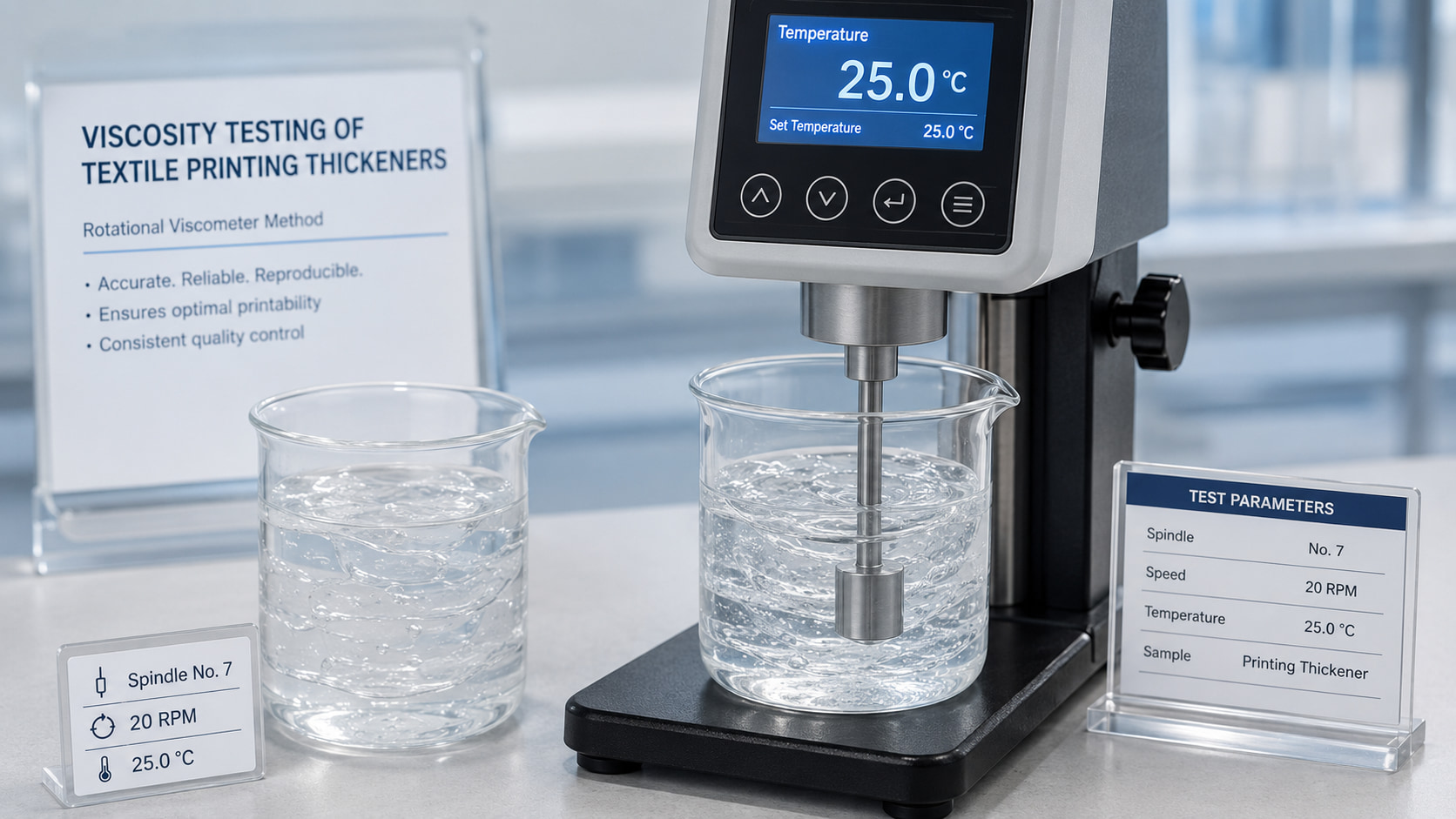
No se puede comparar un valor de viscosidad sin tener en cuenta las condiciones de la prueba. La concentración, la temperatura, el tiempo de hidratación, el viscosímetro, el husillo y la velocidad de rotación influyen en el resultado obtenido.
Si dos proveedores utilizan métodos diferentes, solicita muestras y evalúa ambos productos siguiendo el procedimiento interno del comprador. No conviertas los valores utilizando una relación estimada, a menos que se cuente con una correlación validada.
Documentos que se deben solicitar
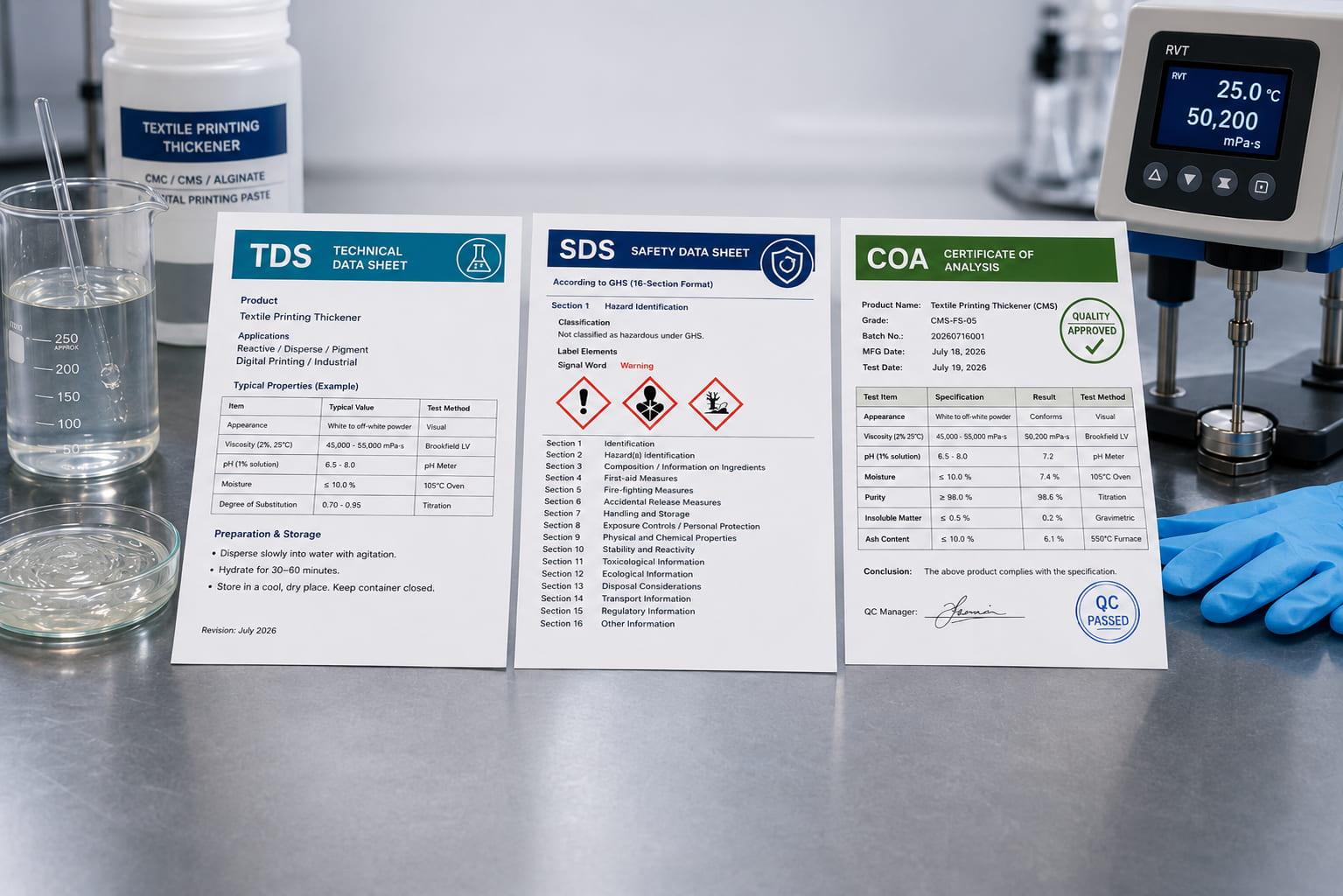
Ficha técnica específica del producto
Ficha de datos de seguridad (FDS) actual
Muestra representativa
Certificado de análisis específico del lote para el envío confirmado
Procedimiento recomendado para la preparación de la pasta
Información sobre el empaque y el almacenamiento
Documentos de cumplimiento vigentes, cuando sea necesario
Protocolo de comparación entre laboratorios
Etapa 1: Revisar la información del producto
Confirme el código del producto, el método de medición de la viscosidad, la dosis recomendada, el pH, la humedad, el tamaño de las partículas y la dirección de aplicación. En el caso del CMC, solicite el valor de DS o el rango de DS acordado cuando sea relevante para el uso propuesto.
Identifica cualquier diferencia entre el método de prueba del proveedor y el método interno de la fábrica antes de comparar los valores reportados.
Etapa 2: Preparar la pasta base
Prepara muestras de alginato de sodio y CMC utilizando la misma fuente de agua y en condiciones controladas. Si las concentraciones recomendadas son diferentes, realiza tanto una comparación de concentraciones iguales como una comparación de viscosidad objetivo.
Registra la dispersión del polvo, la formación de grumos, el tiempo de mezcla, el tiempo de hidratación, la espuma, la temperatura y la viscosidad final. Vuelve a medir la viscosidad después del período de reposo habitual de fábrica.
Etapa 3: Preparar la pasta de impresión completa
Agrega el colorante o pigmento, el álcali, la urea, el aglutinante y los aditivos según la receta de producción. Observa cualquier cambio de viscosidad, ya sea inmediato o retardado.
Verifica la homogeneidad de la pasta, la filtración, el paso por la malla y el comportamiento durante el almacenamiento. Una pasta madre estable puede volverse inestable tras la adición de sales, colorantes o productos auxiliares.
Etapa 4: Realizar la prueba de impresión
Utiliza la misma tela, la misma malla, las mismas condiciones de la rasqueta, la misma velocidad de la máquina y el mismo nivel de aplicación de la pasta. Incluye líneas finas, áreas sólidas y elementos de diseño que revelen sangrado o mala penetración.
Siempre que sea posible, prueba tonos claros, medios y oscuros. Las diferentes concentraciones de tinte pueden afectar la viscosidad, la fijación y el comportamiento al enjuagar.
Etapa 5: Fijación y lavado en condiciones estándar
Utilice el proceso estándar de secado, vaporización, curado y lavado de la fábrica. No modifique el proceso para un solo espesante, a menos que el objetivo de la prueba sea desarrollar un nuevo proceso.
Anota el tiempo de lavado, la temperatura, el volumen de agua y los productos químicos utilizados. Evalúa si alguna de las muestras requiere un lavado adicional para alcanzar un tono o una intensidad aceptables.
Etapa 6: Evaluar la tela estampada
Intensidad del color y diferencia de tono
Nitidez de las líneas y sangrado de los bordes
Cobertura y penetración en la superficie
Nivelación en áreas sólidas
Asa de tela después del lavado
Espesante residual
Resultados relevantes sobre la solidez del color
Observaciones sobre la producción y requisitos de limpieza
Etapa 7: Calcular el costo total de uso
Compara primero la dosis y el precio final; luego, suma cualquier diferencia cuantificable en el consumo de tinte, el tiempo de preparación, el lavado, el reprocesamiento y el tejido rechazado.
El producto más económico es aquel que cumple con los criterios técnicos de aceptación al menor costo de producción controlado, no necesariamente el producto con el precio más bajo por bolsa.
¿Se pueden mezclar el alginato de sodio y la CMC?
El alginato de sodio y la CMC pueden combinarse en ciertas formulaciones de impresión para ajustar la consistencia de la pasta, la respuesta al cizallamiento, la dosificación o el costo del material. Una mezcla puede ser conveniente cuando una fábrica desea conservar parte del rendimiento del alginato mientras evalúa una opción alternativa de polímeros.
Sin embargo, la viscosidad de la mezcla no siempre se puede predecir calculando el promedio de los datos de cada producto. La interacción de los polímeros, la dureza del agua, el orden de mezcla, la concentración y los niveles de colorante y electrolitos pueden dar lugar a resultados no lineales.
En la impresión reactiva, la adición de CMC también puede alterar la interacción del colorante y su eliminación por lavado. Comience con una matriz de formulación pequeña y compare cada mezcla con una muestra de referencia de alginato de sodio 100%.
No se debe promover ninguna proporción de mezcla como universalmente adecuada. La proporción aprobada debe basarse en las pruebas de aplicación y el análisis de costos realizados por el comprador.
Errores comunes en la selección
Comparación solo del precio por kilogramo
Una comparación de precios que no tome en cuenta la dosificación, el rendimiento del colorante, las pérdidas por lavado y las pérdidas de producción puede llevar a una decisión errónea. Pide a los proveedores que te den una cotización para el grado específico que se está probando, en lugar de para una familia general de productos.
Comparación de los valores de viscosidad obtenidos con distintos métodos
Un número más alto no significa necesariamente que el espesante sea más potente o de mejor calidad. Verifica la concentración, la temperatura, el tiempo de hidratación, el husillo y las RPM antes de comparar los valores.
El uso de CMC de uso general en la impresión reactiva
Los grados de CMC no son idénticos ni desde el punto de vista químico ni funcional. No se debe dar por sentado que un grado destinado a detergentes, cerámica, papel o adhesivos sea adecuado para la impresión reactiva.
Prueba únicamente con la pasta original
La viscosidad en agua no garantiza la compatibilidad con tintes, sales, álcalis, aglutinantes y productos auxiliares. Es necesario realizar pruebas completas con la pasta y con la tela impresa.
Suponer que un resultado de laboratorio se ajustará automáticamente
Los parámetros de producción, como la energía de mezcla, el tamaño del lote, el tiempo de reposo, las condiciones de tamizado y el equipo de lavado, pueden diferir de las condiciones de laboratorio. Realice una prueba piloto o un ensayo de producción controlado antes de aprobar un pedido de gran volumen.
Hacer afirmaciones ambientales sin datos
El hecho de que un producto se derive de algas marinas o de celulosa no significa automáticamente que todo el proceso de impresión sea más respetuoso con el medio ambiente. La evaluación ambiental debe tomar en cuenta la dosificación, la carga de aguas residuales, la necesidad de lavado, los conservantes y los datos de pruebas pertinentes.
Cómo FSX Chemical facilita la correspondencia de grados
FSX Chemical suministra alginato de sodio y CMC en distintos grados para la impresión textil y aplicaciones industriales relacionadas. Las recomendaciones sobre el grado adecuado pueden basarse en el tipo de tela del comprador, el sistema de tintes, el método de impresión, la ficha técnica (TDS) actual, el método de medición de la viscosidad y los problemas de producción.
Los compradores pueden solicitar muestras de ambas variantes del producto para realizar una comparación controlada. La muestra debe evaluarse utilizando la misma formulación y las mismas condiciones de prueba antes de su aprobación comercial.
FSX Chemical también puede proporcionar documentos de ficha técnica (TDS) y ficha de seguridad (SDS) específicos para cada producto. Se debe solicitar un certificado de análisis (COA) específico para cada lote del producto y lote de producción confirmados.
Para obtener una recomendación más precisa, indica:
Tipo de tela
Sistema de colorantes, pigmentos o tintas
Proceso de serigrafía plana, rotativa o digital
Espesante actual y dosis
Viscosidad objetivo según el método de prueba completo
TDS actual o muestra conservada
Problemas principales, como el sangrado, el bajo rendimiento del color o la dificultad para enjuagarlo
Descubre por qué no se pueden comparar los valores de viscosidad de los espesantes para la impresión textil sin tener en cuenta la concentración, la temperatura, el instrumento, el husillo, la velocidad, el método de preparación y el tiempo de prueba.
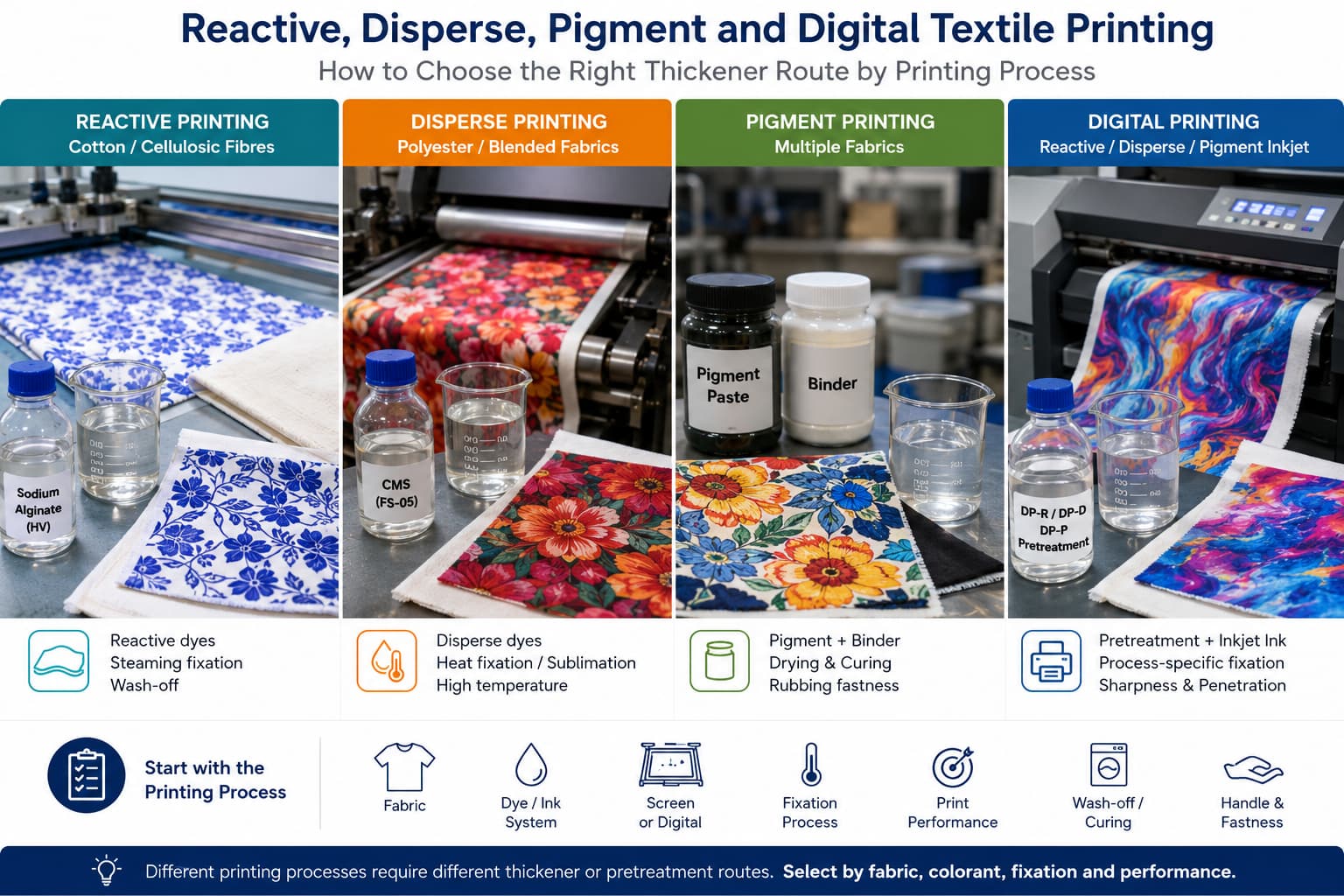
Aprende a elegir espesantes y métodos de pretratamiento para la impresión textil reactiva, dispersa, con pigmentos y digital, según los requisitos del tejido, el colorante o la tinta, la fijación, la resistencia al lavado y la calidad de impresión.
Aprende la diferencia entre los documentos TDS, SDS y COA, qué deben verificar los compradores de productos de impresión textil y cómo revisar las especificaciones, la información de seguridad, los métodos de prueba, los resultados de los lotes y los emisores de los documentos.
Compara CMC, CMS, alginato de sodio y pasta para impresión digital en la impresión textil. Descubre cómo cada opción se adapta a los procesos reactivos, dispersos, pigmentados y digitales, y qué deben tener en cuenta los compradores antes de realizar pruebas de muestras, comparar calidades y realizar compras a granel.
El alginato de sodio se utiliza ampliamente en la impresión textil como espesante estable y lavable para las pastas de impresión reactivas. Descubre cómo evaluar el grado de viscosidad, la pureza y la idoneidad para cada aplicación antes de comprar, y cómo FSX Chemical apoya a los compradores de todo el mundo con datos técnicos y muestras.
La carboximetilcelulosa (CMC) se utiliza ampliamente en los procesos de estampado, encolado y teñido de textiles. En esta guía se explica cómo evaluar los distintos grados de CMC, qué parámetros son los más importantes y cómo FSX Chemical puede ayudarte a tomar decisiones de compra.
La carboximetilcelulosa se utiliza como espesante y estabilizador en tintas a base de agua, impresión en huecograbado y pretratamiento para impresión de chorro de tinta. Esta guía aborda los parámetros clave de los grados y las consideraciones de abastecimiento para los equipos de compras.
Elegir al proveedor adecuado de CMC implica mucho más que comparar precios. Esta guía aborda los criterios de evaluación, la lista de verificación de la documentación y el proceso de prueba que los equipos de compras deben seguir antes de comprometerse a realizar un pedido a granel.
Tanto el alginato de sodio como la CMC se utilizan como espesantes en la impresión textil, pero se adaptan a diferentes sistemas de tinte y condiciones de proceso. Esta guía explica las diferencias clave y cuándo utilizar cada uno.
La impresión digital por inyección de tinta sobre textiles tiene requisitos distintos en cuanto a pastas y pretratamiento en comparación con la serigrafía. Esta guía explica cómo se utiliza el alginato de sodio en la impresión textil digital y qué parámetros de calidad deben especificar los equipos de compras.
El CMC de grado alimenticio y el de grado industrial comparten la misma composición química básica, pero difieren significativamente en cuanto a pureza, rango de DS y requisitos normativos. Esta guía explica las diferencias clave y por qué el uso de un grado incorrecto genera problemas de producción.
La preparación correcta de la pasta es tan importante como la selección del grado en la impresión textil con tintes reactivos. Esta guía aborda los métodos de disolución del alginato de sodio, los rangos de concentración según la aplicación, las condiciones de almacenamiento y cómo resolver problemas comunes en la preparación.
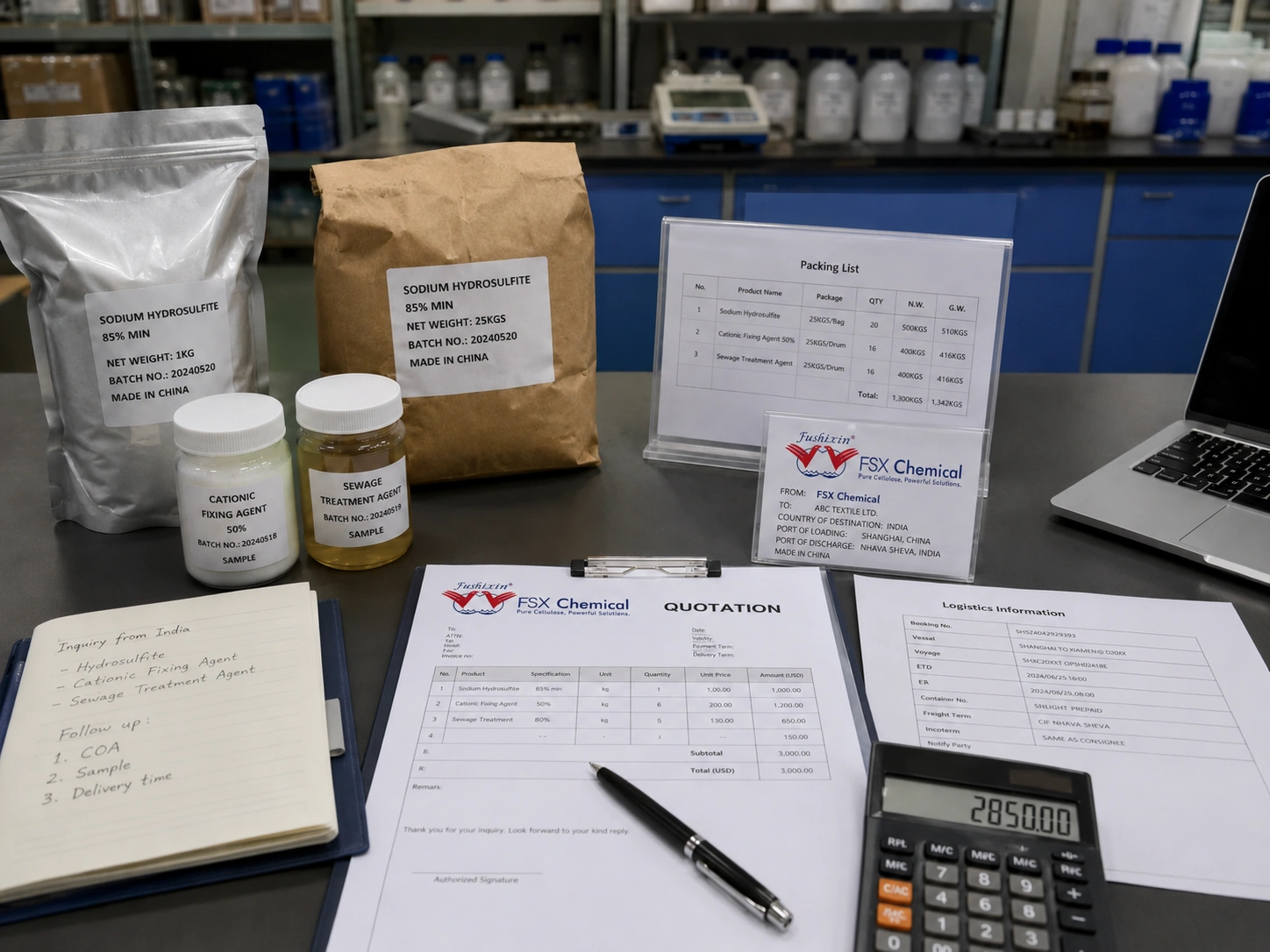
Comparta el nombre del producto, su aplicación, la cantidad, el destino y cualquier ficha técnica (TDS),
foto de muestra o documento que ya tenga. FSX Chemical revisará la
información y le recomendará el siguiente paso para la cotización, la comparación de muestras
o la selección del producto.
Información del productoNombre del producto, categoría, modelo, foto de la etiqueta o referencia del proveedor.
Documentos disponiblesTDS, SDS, COA, foto de muestra, lista de productos o datos de pruebas.
Detalles del pedidoCantidad estimada, embalaje, país de destino, puerto o término comercial.
Solicitud o problemaProceso de impresión textil, requisitos de formulación, problema actual o objetivo de rendimiento.

 ES
ES  EN
EN  BN
BN  TR
TR  FR
FR  ID
ID  RU
RU  AR
AR  UR
UR  VI
VI  TL
TL  HI
HI  UK
UK  KK
KK  KA
KA  UZ
UZ