Por qué FSX Chemical es el fabricante preferido de productos químicos para la impresión textil
FSX Chemical supplies CMC, CMS, sodium alginate and digital printing paste for different textile printing...
Choosing a textile printing chemical supplier is not simply a matter of comparing product names or unit prices. Printing mills and chemical distributors need to consider whether a supplier can match products to the actual printing process, provide testable samples, maintain agreed specifications and support each shipment with appropriate documents.
FSX Chemical supplies several product families used in textile printing, including carboxymethyl cellulose (CMC), carboxymethyl starch (CMS), sodium alginate and digital printing paste. For buyers, however, the important question is not whether one supplier offers many products. It is whether the supplier can help identify a suitable grade and provide enough evidence for technical and commercial approval.
Procurement note: The term “preferred factory” should not be treated as a universal ranking or third-party endorsement. A supplier becomes preferred only after its samples, specifications, batch documents, communication and delivery arrangements meet the buyer’s requirements.
What Should “Preferred Factory” Mean to a B2B Buyer?
In industrial procurement, a preferred supplier is not necessarily the company with the lowest quotation or the longest product list. It is usually a supplier that can meet a defined technical specification, communicate clearly and reproduce an approved product within agreed tolerances.
For textile printing chemicals, supplier evaluation should include both laboratory performance and supply reliability. A product that performs well in one test may still be unsuitable if the test method, production water, dye system or printing conditions are different from those used by the buyer.
Technical Fit Comes Before Commercial Approval
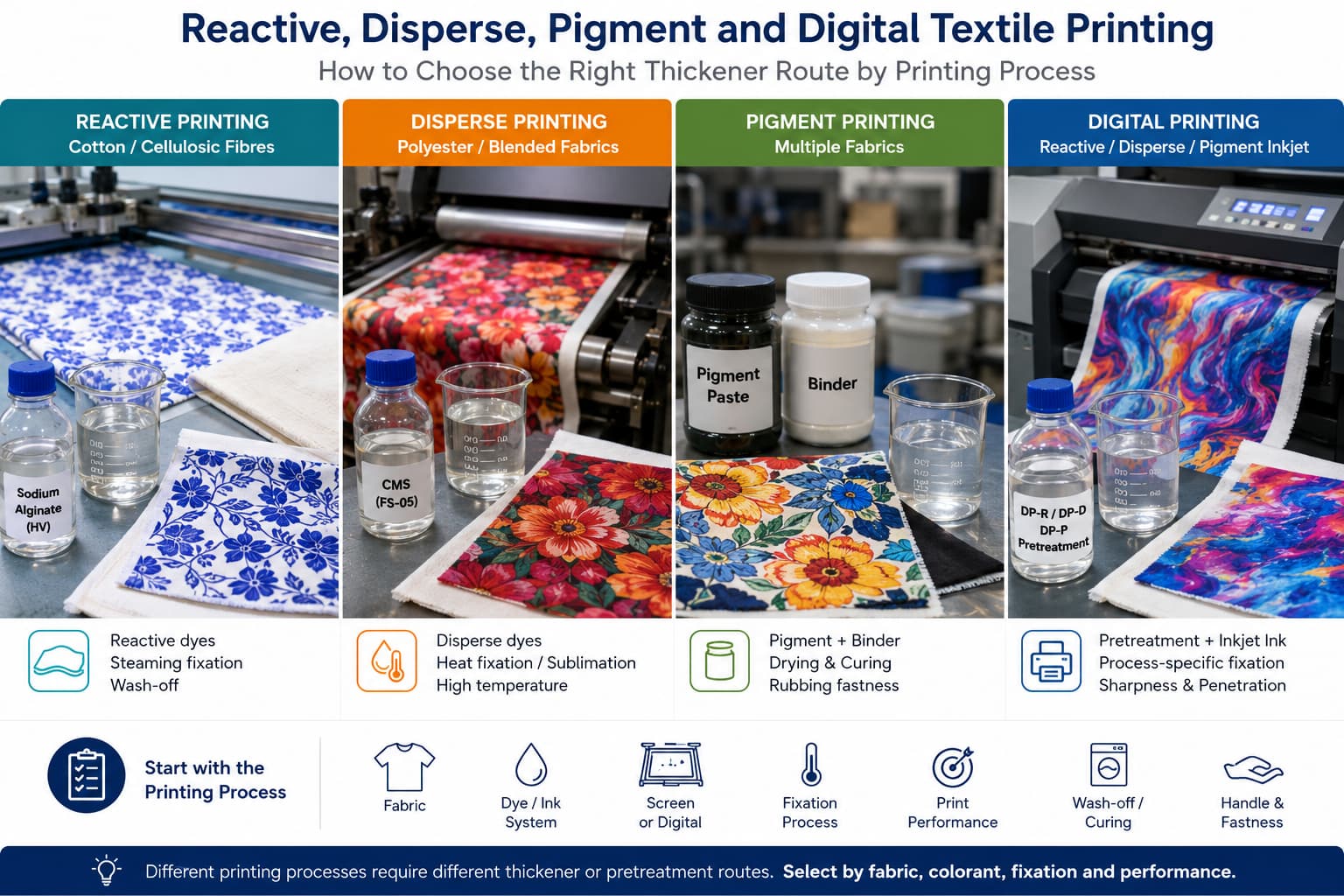
Before comparing commercial terms, buyers should determine whether the proposed grade is compatible with the fabric, dye or pigment system, printing method and after-treatment process. The required rheology for rotary-screen printing may be different from that needed for flat-screen or digital textile printing.
A credible supplier should therefore ask process-related questions instead of recommending a grade based only on a product name or a single viscosity value.
Specifications Must Be Measurable
Terms such as “high viscosity,” “good wash-off” and “excellent sharpness” are not sufficient for supplier approval. Buyers should convert these descriptions into measurable specifications and repeatable application tests.
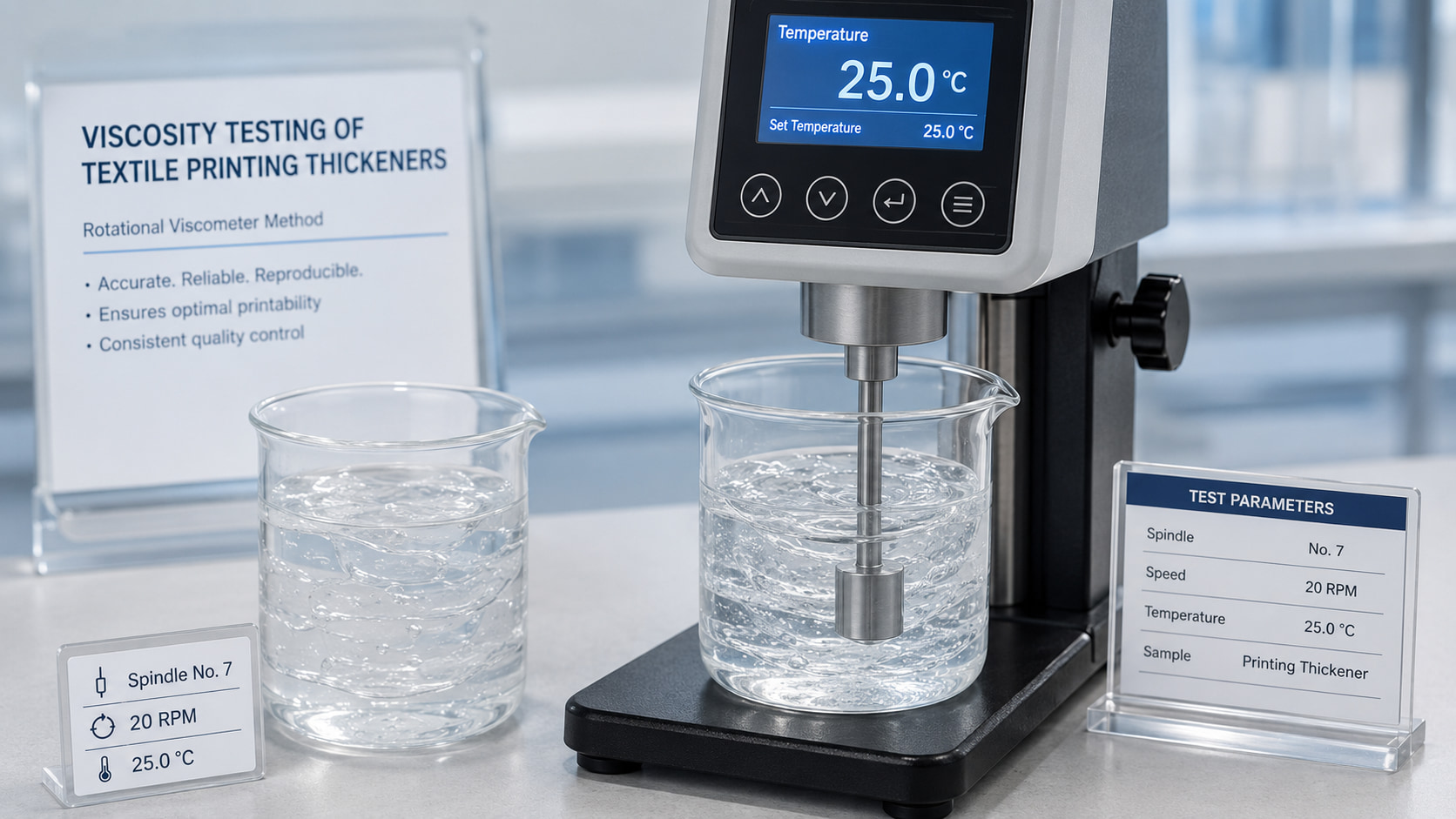
Viscosity, for example, should be compared only when concentration, temperature, hydration time, viscometer, spindle and rotational speed are defined. Results obtained with different test methods may not be directly comparable.
A Focused Portfolio for Textile Printing Applications
FSX Chemical focuses on water-soluble polymers and formulated products used in textile printing and related industrial applications. Its printing portfolio allows buyers to evaluate different thickener routes without treating all printing processes as technically identical.
Familia de productos
Typical Evaluation Direction
Important Buyer Checks
Alginato de sodio
Reactive dye printing on cotton and other cellulosic fabrics
Viscosity method, paste flow, color yield, print definition and wash-off
CMC
Selected printing formulations, compound thickeners and related process uses
Degree of substitution, viscosity, solubility, salt tolerance and compatibility
CMS
Selected reactive, disperse, vat, discharge or compound thickener systems
Paste stability, screen passage, flow behavior, wash-off and cost in use
Pasta para impresión digital
Pretreatment or paste systems for reactive, disperse and pigment inkjet routes
Ink compatibility, filtration, residue, storage stability and fabric response
Alginato de sodio para la impresión con tintes reactivos
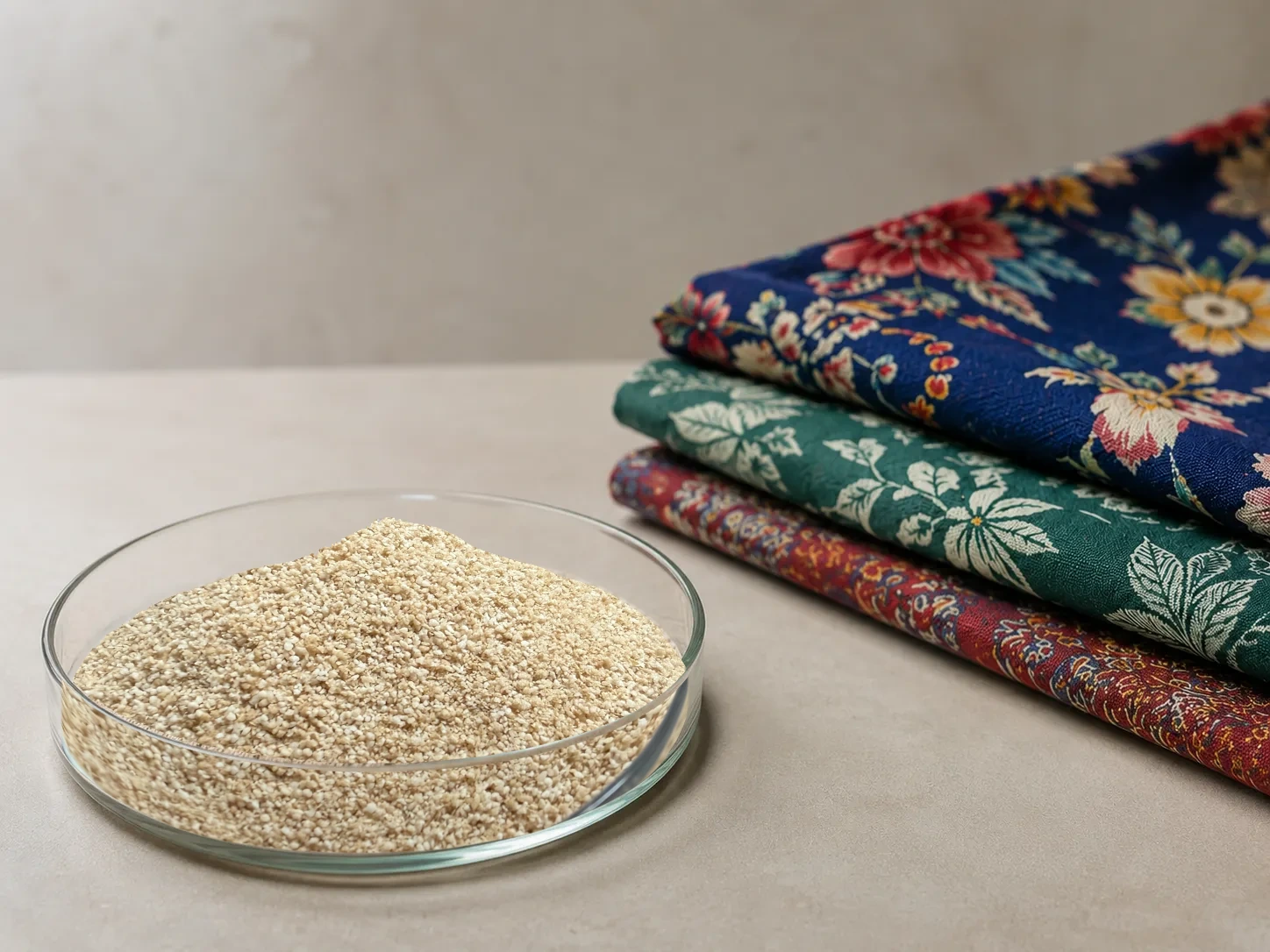
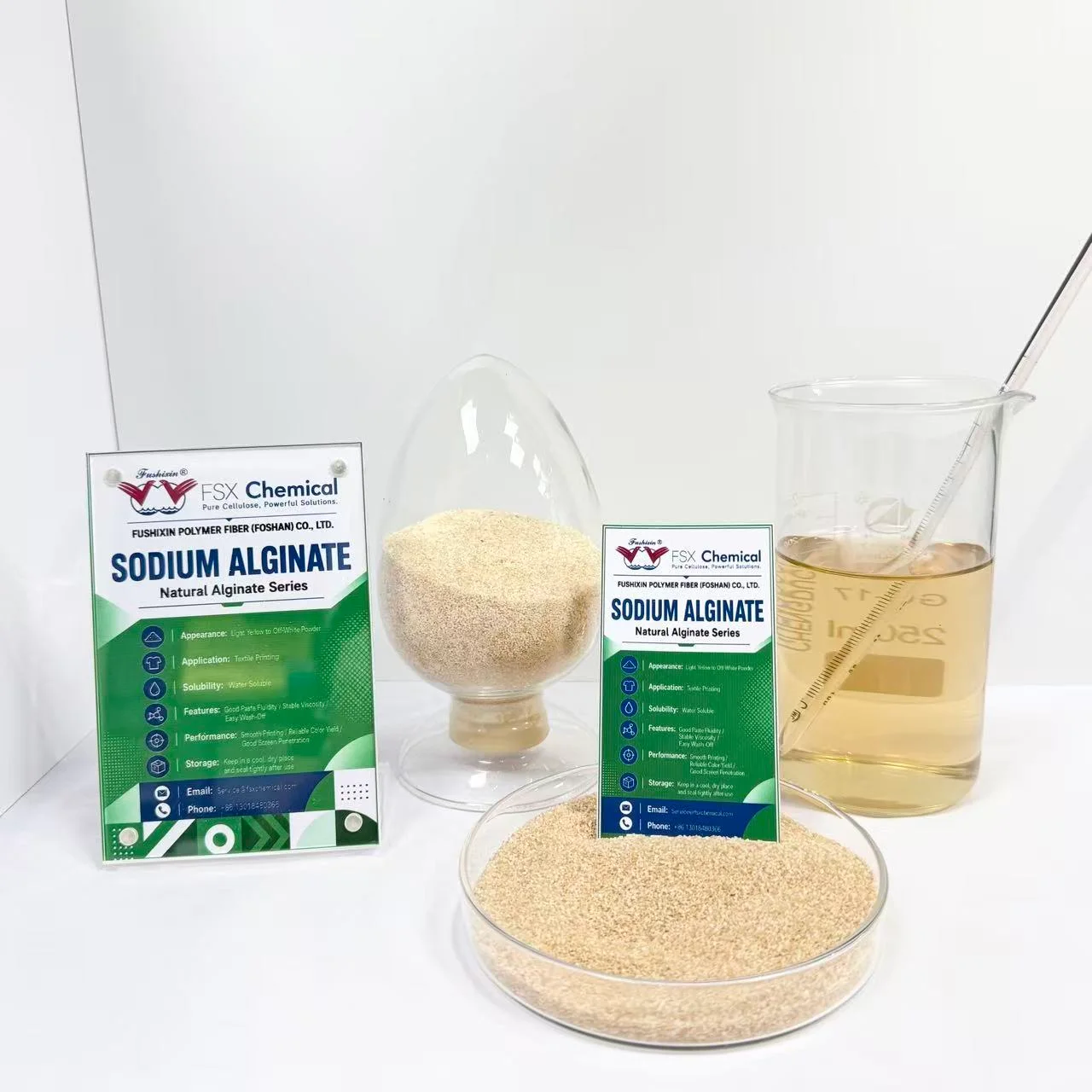
Sodium alginate is widely evaluated as a thickener for reactive dye printing on cotton and other cellulosic materials. Its role is to control paste flow, hold the design during printing and support dye transfer during fixation.
Buyers should not select sodium alginate by nominal viscosity alone. Paste preparation, solids content, water quality, electrolyte level, dye concentration, steaming conditions and washing procedures can all influence the final result.
CMC for Selected Printing Formulations
Carboxymethyl cellulose is available in different viscosity and substitution ranges. Depending on the grade and formulation, it may be considered for selected textile printing systems, compound thickeners or other formulation functions.
The evaluation should include hydration behavior, compatibility with salts and auxiliaries, filtration or screen passage, print definition and ease of removal. Compatibility with the selected dye or binder system must be confirmed through testing.
CMS for Cost and Rheology Evaluation
Carboxymethyl starch is used in selected textile printing formulations where buyers need to balance paste body, flow, wash-off and cost in use. A lower purchase price does not automatically produce a lower printing cost if additional dosage or processing adjustments are required.
CMS should be tested under the buyer’s actual paste recipe. The trial should check viscosity development, storage stability, screen behavior, penetration, color yield and washing performance.
Digital Printing Paste for Inkjet Processes
Digital textile printing requires closer control of pretreatment uniformity, residue, filtration and interaction with the ink system. A paste intended for reactive inkjet printing should not be assumed to work in the same way for disperse or pigment inks.
Buyers should identify the ink chemistry, fabric construction, coating method, drying conditions, fixation process and washing route before requesting a digital printing paste sample.
Why Buyers Evaluate FSX Chemical
1. Application-Based Grade Selection
A useful supplier recommendation begins with the printing process rather than the product catalogue. FSX Chemical’s published inquiry route asks buyers to provide information such as the fabric, dye or ink system, application method, target viscosity and current product information.
This approach is relevant because two products with similar names can behave differently in the same printing paste. Grade selection should consider the complete formulation and process, not only a viscosity number shown on a data sheet.
2. Sample and TDS Matching Before Bulk Ordering
Industrial buyers often approach a new supplier with an existing TDS, a retained sample or a target performance profile. These references can be used to identify a starting grade for laboratory comparison.
FSX Chemical offers sample and grade-matching support based on available technical information. This does not mean that a matched grade is automatically equivalent to the buyer’s current product. Equivalence should be confirmed through side-by-side testing using the same preparation and printing conditions.
A practical first request should include the proposed product TDS, an evaluation sample and the recommended test method. Buyers can then determine whether pilot-scale or production-scale testing is justified.
3. Manufacturing and Batch Control
FSX Chemical publishes a manufacturing and quality-control workflow covering raw-material review, production control, representative batch sampling, specification review and product release. Depending on the product and agreed specification, release parameters may include viscosity, pH, moisture, degree of substitution or particle size.
These controls are relevant to supplier qualification, but the existence of a quality-control process does not by itself guarantee identical application performance. Buyers should confirm which parameters are tested for the specific grade and which results will appear on the batch COA.
For critical applications, procurement teams may also request information about sample retention, change control, traceability and the procedure for handling out-of-specification material.
4. Technical and Shipment Documentation
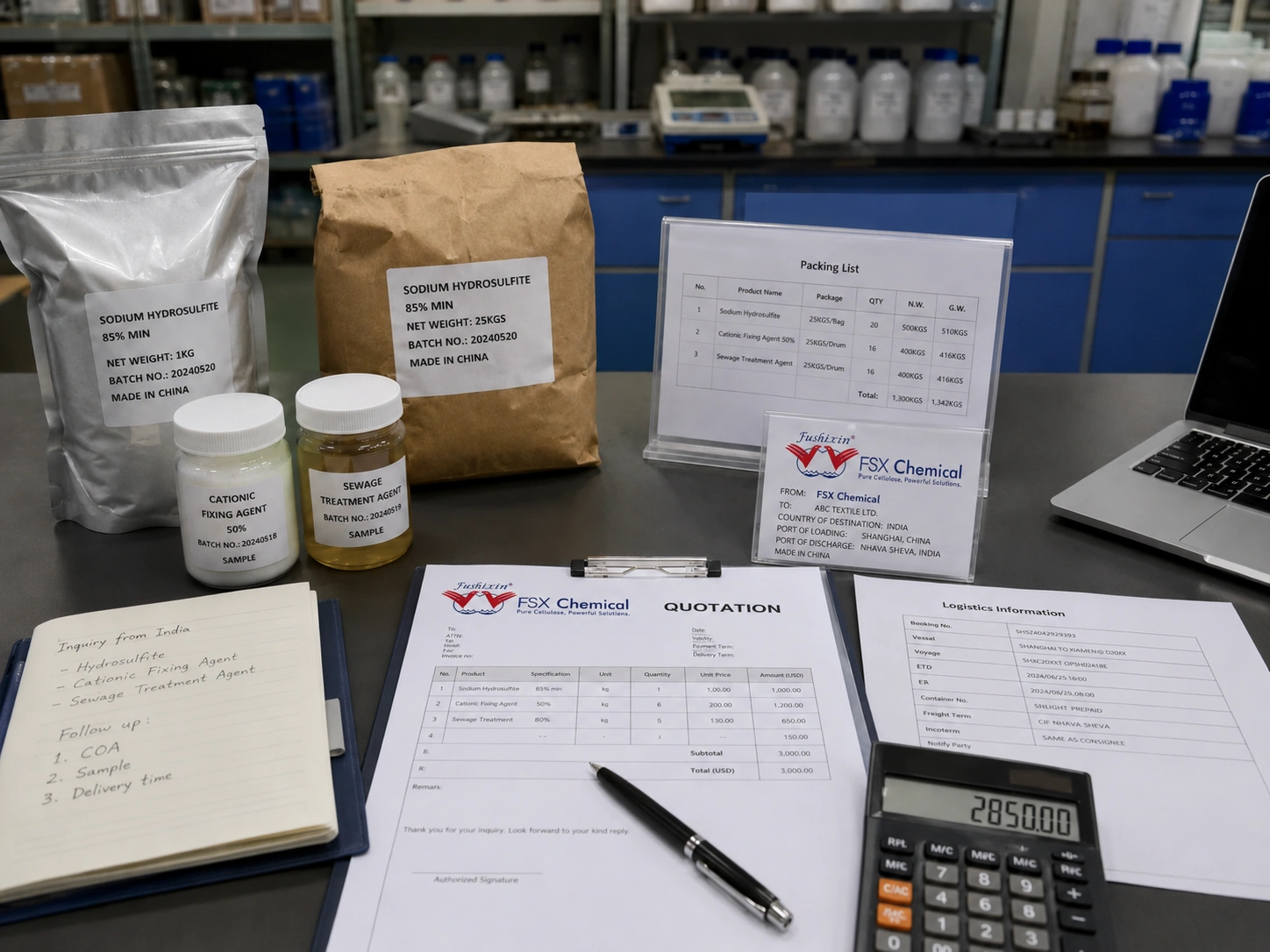
B2B chemical purchasing requires more than a commercial invoice. Buyers may need a TDS for grade evaluation, an SDS for handling and transport review, and a batch-specific COA for incoming quality inspection.
FSX Chemical states that these documents can be provided according to the product and order stage. The buyer should check that the product name, grade code, batch number and test method are consistent across the quotation, label, TDS and COA.
If certificates or compliance documents are required, request a current copy before placing the order. Verify the certificate holder, applicable product, scope, issuing organization and validity period instead of relying on a certification logo or general website statement.
5. Support for Supplier Replacement Projects
Changing a printing thickener supplier can affect paste preparation, viscosity, printing behavior, fixation and washing. For this reason, supplier replacement should be managed as a technical project rather than a simple purchasing substitution.
Buyers can provide a current TDS, a retained sample and a description of the production problem. FSX Chemical can use this information to recommend an initial grade, but the buyer should retain control of the approval protocol and acceptance criteria.
6. Multiple Product Routes from One Supplier
Mills and distributors may handle reactive, disperse, pigment and digital printing customers at the same time. Access to CMC, CMS, sodium alginate and formulated digital printing products can simplify initial supplier discussions.
However, product consolidation should not replace technical qualification. Each proposed product should still be approved for its own application, specification and production route.
7. Export-Oriented Commercial Support
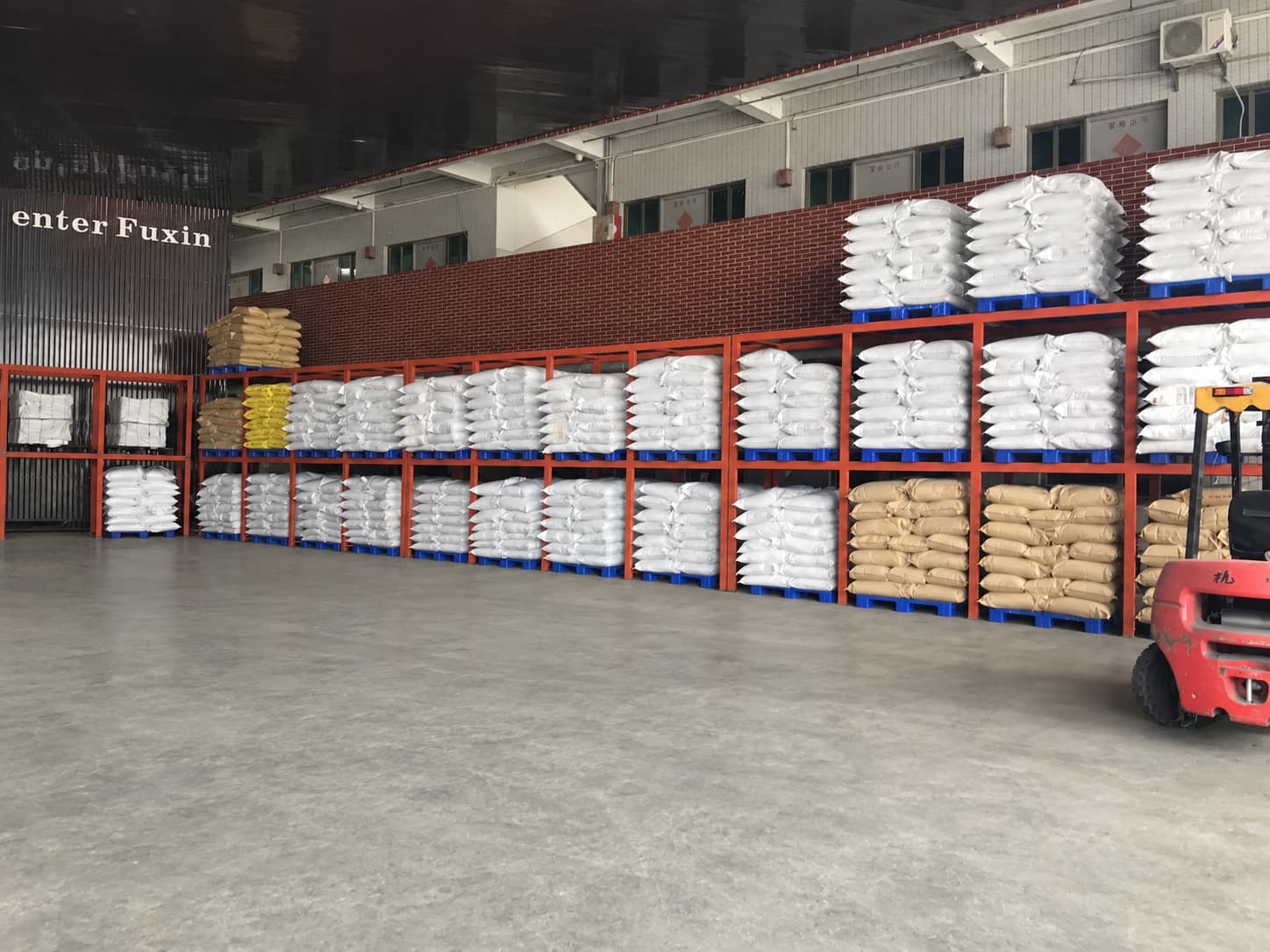
International orders require coordination of packaging, labels, shipping marks, pallet requirements and export documents. These details should be confirmed during quotation instead of after production has been completed.
Buyers should request written confirmation of packaging format, net weight, palletization, available loading quantity, production lead time and shipping terms. Delivery schedules remain order-specific and should not be presented as guaranteed until they are confirmed in the sales contract.
Matching Chemicals to Different Printing Processes
Impresión con tintes reactivos
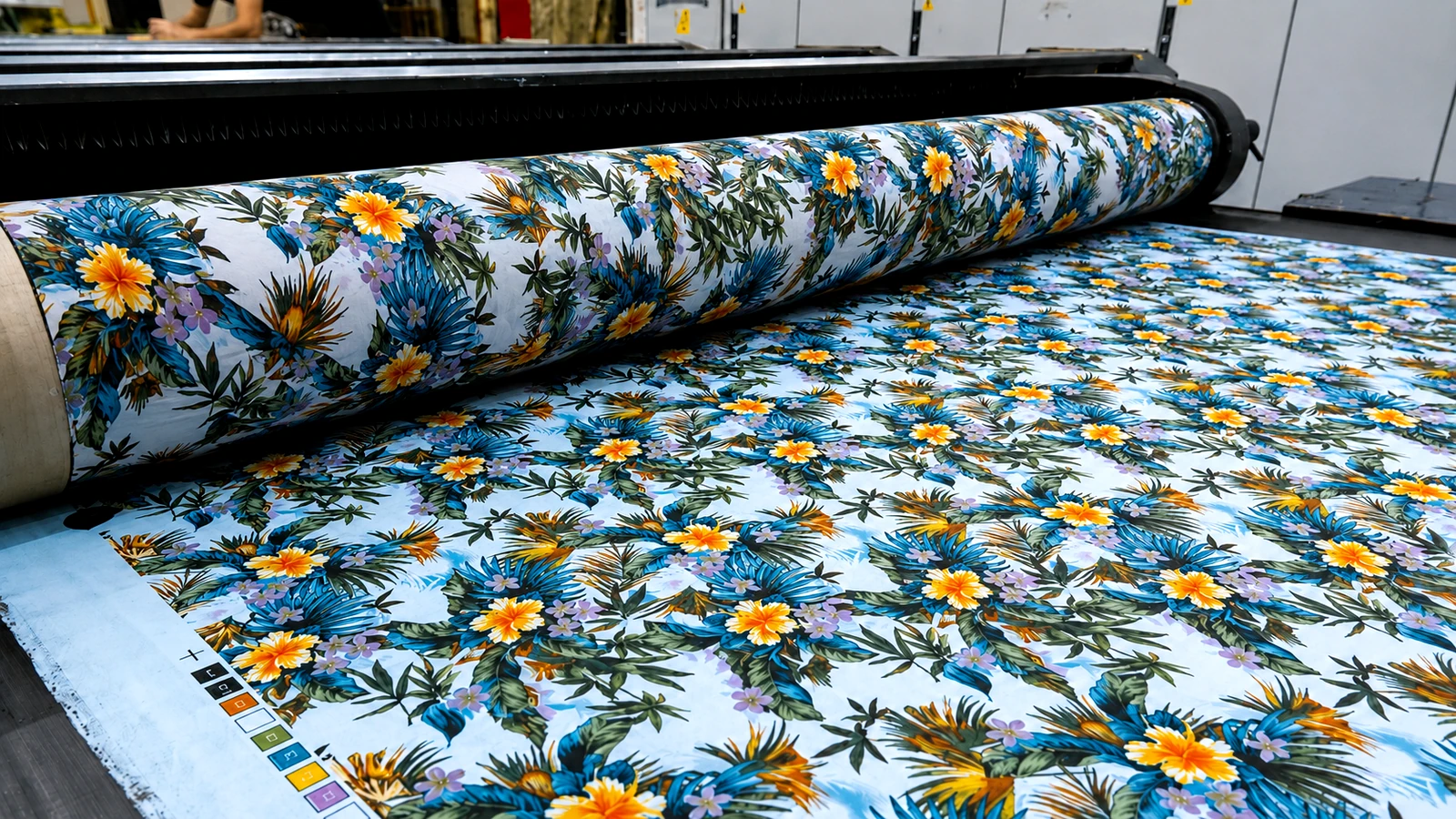
For reactive printing on cotton or other cellulosic fabrics, sodium alginate is commonly used as the starting thickener route. The evaluation should examine paste rheology, dye compatibility, print definition, color yield, fixation behavior and wash-off.
Alternative or compound thickener systems may also be considered, but they should be compared against the approved sodium alginate system under the same dye concentration and process conditions.
Impresión con tintes dispersos
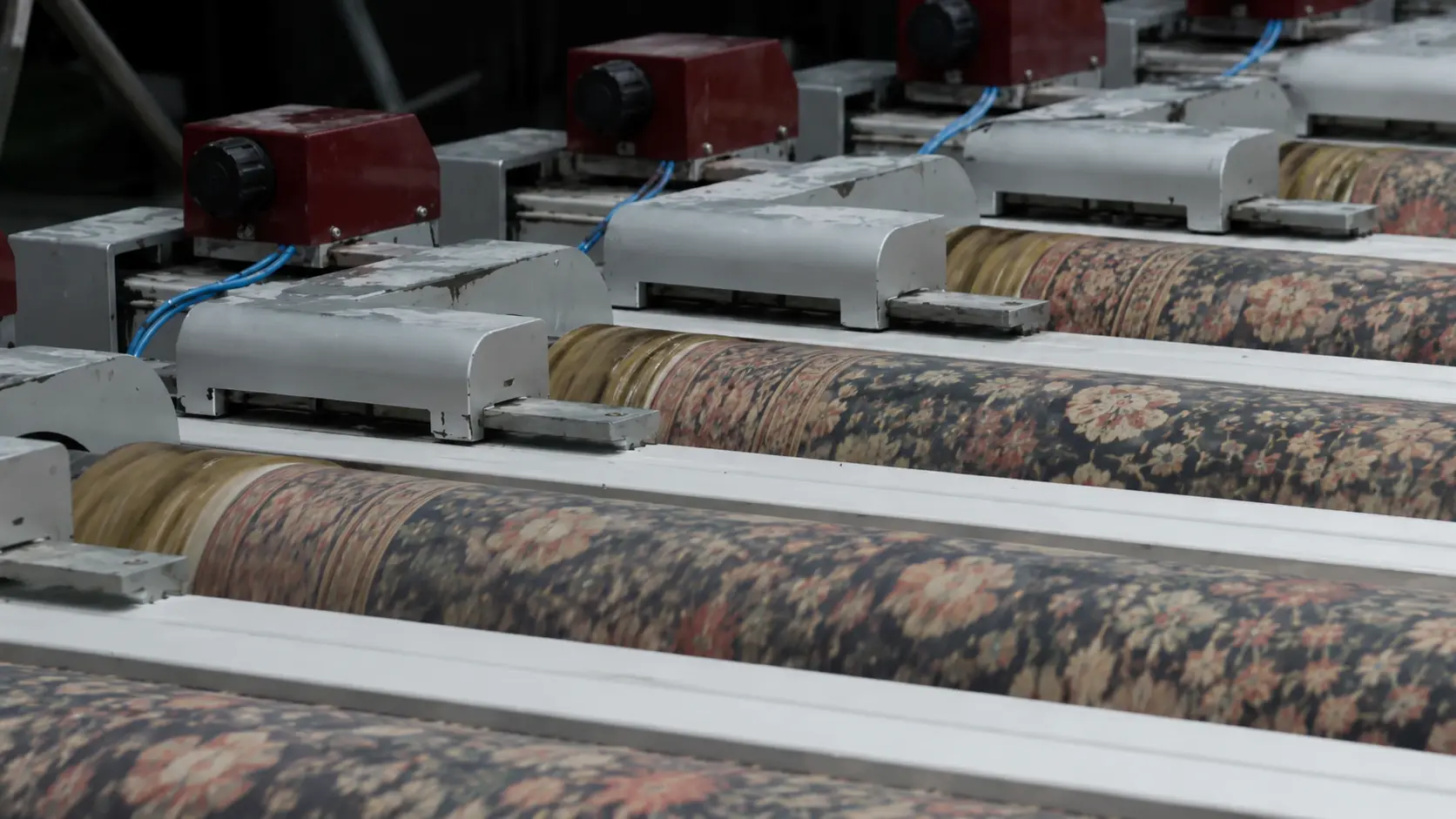
Disperse printing on polyester may use different synthetic, cellulose-derived, starch-derived or compound thickener systems. Selection depends on the printing equipment, dye dispersion, fixation method and required handle.
Buyers should monitor screen passage, paste stability, penetration, outline definition and residue after fixation and washing. A sample should be tested across light and dark color formulations where practical.
Impresión con pigmentos
Pigment printing performance depends on the interaction among thickener, pigment dispersion, binder, crosslinking system and other auxiliaries. The thickener must provide suitable flow without destabilizing the formulation.
Evaluation should include viscosity stability, screen or mesh passage, edge definition, fabric handle, rubbing fastness and equipment cleanability. Binder compatibility is particularly important.
Impresión digital sobre textiles
Digital printing paste or pretreatment must be selected for the ink chemistry and fabric. Reactive, disperse and pigment inkjet processes have different fixation and after-treatment requirements.
In addition to visual print results, buyers should evaluate coating uniformity, filtration behavior, dried residue, storage stability and the risk of contaminating production equipment. Large-scale testing should follow successful laboratory and pilot trials.
How to Qualify FSX Chemical Before Bulk Purchasing
A supplier profile can support initial screening, but it cannot replace technical qualification. The following checklist helps procurement and technical teams evaluate FSX Chemical or any other textile printing chemical manufacturer using the same criteria.
Request the Correct Technical Documents
Product-specific TDS with grade name and test methods
Current SDS in the required language or regulatory format
Representative or batch-specific COA, depending on the order stage
Recommended storage conditions and stated shelf life
Packaging specification, label format and pallet information
Current certificates only when required for the application or market
Define the Sample Test Method
Before testing, document the sample concentration, water quality, mixing sequence, hydration time, temperature and viscosity measurement conditions. Use the same method for the current product and the proposed replacement.
For printing trials, keep the fabric, dye or ink, auxiliary recipe, printing equipment, drying, fixation and washing conditions as consistent as possible. Record both laboratory measurements and production observations.
Agree on Acceptance Criteria
An approval decision should be based on predefined criteria. These may include viscosity range, hydration time, paste stability, screen passage, print sharpness, penetration, color yield, wash-off and total cost in use.
Not every parameter has the same priority for every mill. Technical and procurement teams should agree on critical, major and informational requirements before comparing suppliers.
Review Batch Documents Before Shipment
Once a grade has been approved, the purchase specification should identify the product code and agreed parameters. If a pre-shipment COA is required, this condition should be included in the purchase order.
Incoming inspection should use the same test method used during approval. Differences in sample preparation can create apparent batch variation even when the product remains within specification.
Information Buyers Should Provide for Grade Matching
The quality of a supplier recommendation depends heavily on the information provided by the buyer. A request that only asks for “high-viscosity printing thickener” leaves too many technical variables undefined.
For a more useful recommendation, provide the following details:
Printing process: rotary screen, flat screen, digital inkjet or another method
Fabric type and construction
Sistema de colorantes, pigmentos o tintas
Current thickener name, grade, TDS or retained sample
Target viscosity and complete measurement method
Current paste recipe and thickener dosage range
Water quality, pH and electrolyte conditions where relevant
Fixation, steaming, curing and washing conditions
Main problem to solve, such as bleeding, poor sharpness, screen blockage or difficult wash-off
Required packaging, destination and estimated order volume
Commercial volume should be discussed only after the application route is understood. Annual demand, order frequency and packaging requirements can influence the recommended supply and testing plan, but they do not determine technical suitability.
Recommended Procurement Workflow
Define the application. Record the fabric, dye or ink system, printing equipment, paste recipe and current production problem.
Request grade matching. Send the current TDS or sample and ask FSX Chemical for a proposed grade, TDS and recommended preparation method.
Run a controlled laboratory comparison. Compare the proposed sample with the approved reference using identical test conditions.
Complete a pilot or production trial. Confirm printing behavior, fixation, wash-off and equipment compatibility under realistic conditions.
Approve the commercial specification. Agree on the grade code, test parameters, packaging, documents, order quantity and shipment terms in writing.
Monitor incoming batches. Review the COA and perform incoming tests using the approved method before releasing the material to production.
This workflow requires more effort than comparing quotations alone, but it reduces the risk of selecting a technically unsuitable product or approving a grade based on an incomplete test.
What Buyers Should Expect from a Professional Factory Discussion
A productive supplier discussion should result in clear next steps. The supplier should understand the application, explain why a particular grade is being recommended and identify which information still needs to be confirmed.
Buyers should be cautious when a supplier promises universal compatibility, guaranteed performance improvement or an exact cost reduction without reviewing the process. Textile printing results depend on multiple interacting variables, including fabric preparation, water quality, formulation, equipment and fixation.
FSX Chemical can be evaluated as a potential factory partner because its product portfolio and published service process cover grade selection, samples, technical documents and batch information. Final approval should nevertheless remain based on the buyer’s own tests and written purchasing specification.
Preguntas frecuentes
Is FSX Chemical suitable for both mills and chemical distributors?
FSX Chemical works with textile printing products that may be evaluated by printing mills, formulators, importers and chemical distributors. The correct commercial and technical route depends on whether the buyer needs a finished grade, a replacement product or a portfolio for local distribution.
Can FSX Chemical match an existing printing thickener?
Buyers can provide an existing TDS, target specification or retained sample for initial grade matching. A recommended product should be treated as a candidate rather than an automatically equivalent replacement, and it should be verified through comparative testing.
Which documents should be requested before ordering?
Start with the product TDS and SDS. Before shipment, confirm whether a batch-specific COA, packing list, certificate of origin or other market-specific documents are required.
Does the same viscosity mean two thickeners are equivalent?
No. Products with similar viscosity values may have different rheology, solubility, electrolyte tolerance, screen behavior and wash-off performance. Viscosity results are also meaningful only when the measurement methods are the same.
Can one thickener be used for reactive, disperse and pigment printing?
A single product should not be assumed to suit every process. Reactive dyes, disperse dyes and pigments use different formulation and fixation systems, so compatibility must be confirmed separately.
Can certificates be used as proof of product performance?
Certificates may support supplier or compliance review, but they do not replace product testing. Buyers should verify the certificate holder, scope, applicable product and validity period, then evaluate the actual grade under production conditions.
Should a buyer approve a full container after one laboratory test?
For a new grade or supplier, a staged approval is generally more appropriate. Laboratory comparison should be followed by a pilot or controlled production trial before a large commercial commitment is made.
Request TDS, Samples or Grade Matching
If you are evaluating CMC, CMS, sodium alginate or digital printing paste, send FSX Chemical details of your fabric, printing method, dye or ink system, target viscosity and current production challenge.
The technical team can review the information and recommend a starting grade for evaluation. Buyers may also request the relevant TDS, an application sample and guidance for a comparative trial.
Descubre por qué no se pueden comparar los valores de viscosidad de los espesantes para la impresión textil sin tener en cuenta la concentración, la temperatura, el instrumento, el husillo, la velocidad, el método de preparación y el tiempo de prueba.
Aprende a elegir espesantes y métodos de pretratamiento para la impresión textil reactiva, dispersa, con pigmentos y digital, según los requisitos del tejido, el colorante o la tinta, la fijación, la resistencia al lavado y la calidad de impresión.
Compara CMC, CMS, alginato de sodio y pasta para impresión digital en la impresión textil. Descubre cómo cada opción se adapta a los procesos reactivos, dispersos, pigmentados y digitales, y qué deben tener en cuenta los compradores antes de realizar pruebas de muestras, comparar calidades y realizar compras a granel.
El alginato de sodio se utiliza ampliamente en la impresión textil como espesante estable y lavable para las pastas de impresión reactivas. Descubre cómo evaluar el grado de viscosidad, la pureza y la idoneidad para cada aplicación antes de comprar, y cómo FSX Chemical apoya a los compradores de todo el mundo con datos técnicos y muestras.
Tanto el alginato de sodio como la CMC se utilizan como espesantes en la impresión textil, pero se adaptan a diferentes sistemas de tinte y condiciones de proceso. Esta guía explica las diferencias clave y cuándo utilizar cada uno.
La impresión digital por inyección de tinta sobre textiles tiene requisitos distintos en cuanto a pastas y pretratamiento en comparación con la serigrafía. Esta guía explica cómo se utiliza el alginato de sodio en la impresión textil digital y qué parámetros de calidad deben especificar los equipos de compras.
La preparación correcta de la pasta es tan importante como la selección del grado en la impresión textil con tintes reactivos. Esta guía aborda los métodos de disolución del alginato de sodio, los rangos de concentración según la aplicación, las condiciones de almacenamiento y cómo resolver problemas comunes en la preparación.
El alginato de sodio es un polímero natural y biodegradable, pero su uso en la impresión textil genera aguas residuales que requieren un tratamiento adecuado. Esta guía aborda el perfil ambiental del alginato de sodio, las características de los efluentes de lavado y lo que los equipos de compras deben saber sobre la elección de espesantes y el impacto ambiental.
La tasa de fijación del colorante afecta directamente al rendimiento del color, a la solidez al lavado y a la carga de aguas residuales en la estampación con colorantes reactivos. Esta guía explica cómo el alginato de sodio favorece la fijación del colorante, qué parámetros de la pasta influyen en la tasa de fijación y cómo resolver los problemas de baja fijación en la producción.
El tamaño de partícula (malla) del alginato de sodio influye en la rapidez con la que se disuelve el polvo, en la uniformidad con la que se hidrata y en el desempeño de la pasta resultante en la serigrafía. Esta guía explica las implicaciones prácticas de la especificación de la malla para aplicaciones de pastas de impresión textil.
La preparación correcta de la pasta es tan importante como la selección del grado en la impresión textil con tintes reactivos. Esta guía aborda los métodos de disolución del alginato de sodio, los rangos de concentración según la aplicación, las condiciones de almacenamiento y cómo resolver problemas comunes en la preparación.
Las especificaciones de pureza del alginato de sodio van más allá de una simple cifra. Esta guía explica qué significan los datos sobre contenido activo, NaCl, materia insoluble y metales pesados para el rendimiento de las pastas de impresión textil, y en qué casos conviene especificar una pureza más alta en lugar de un grado industrial estándar.
Comparta el nombre del producto, su aplicación, la cantidad, el destino y cualquier ficha técnica (TDS),
foto de muestra o documento que ya tenga. FSX Chemical revisará la
información y le recomendará el siguiente paso para la cotización, la comparación de muestras
o la selección del producto.
Información del productoNombre del producto, categoría, modelo, foto de la etiqueta o referencia del proveedor.
Documentos disponiblesTDS, SDS, COA, foto de muestra, lista de productos o datos de pruebas.
Detalles del pedidoCantidad estimada, embalaje, país de destino, puerto o término comercial.
Solicitud o problemaProceso de impresión textil, requisitos de formulación, problema actual o objetivo de rendimiento.

 ES
ES  EN
EN  BN
BN  TR
TR  FR
FR  ID
ID  RU
RU  AR
AR  UR
UR  VI
VI  TL
TL  HI
HI  UK
UK  KK
KK  KA
KA  UZ
UZ