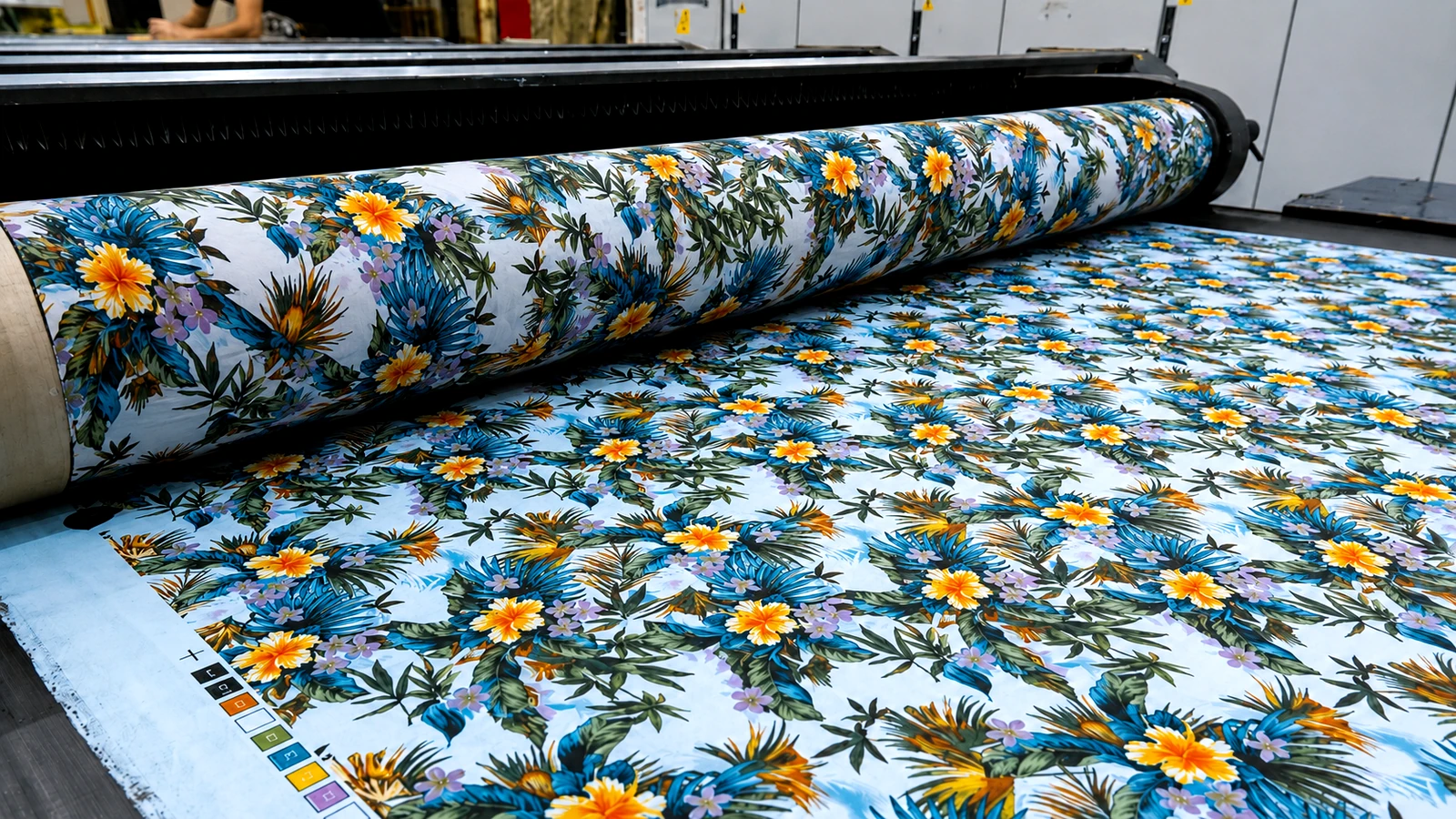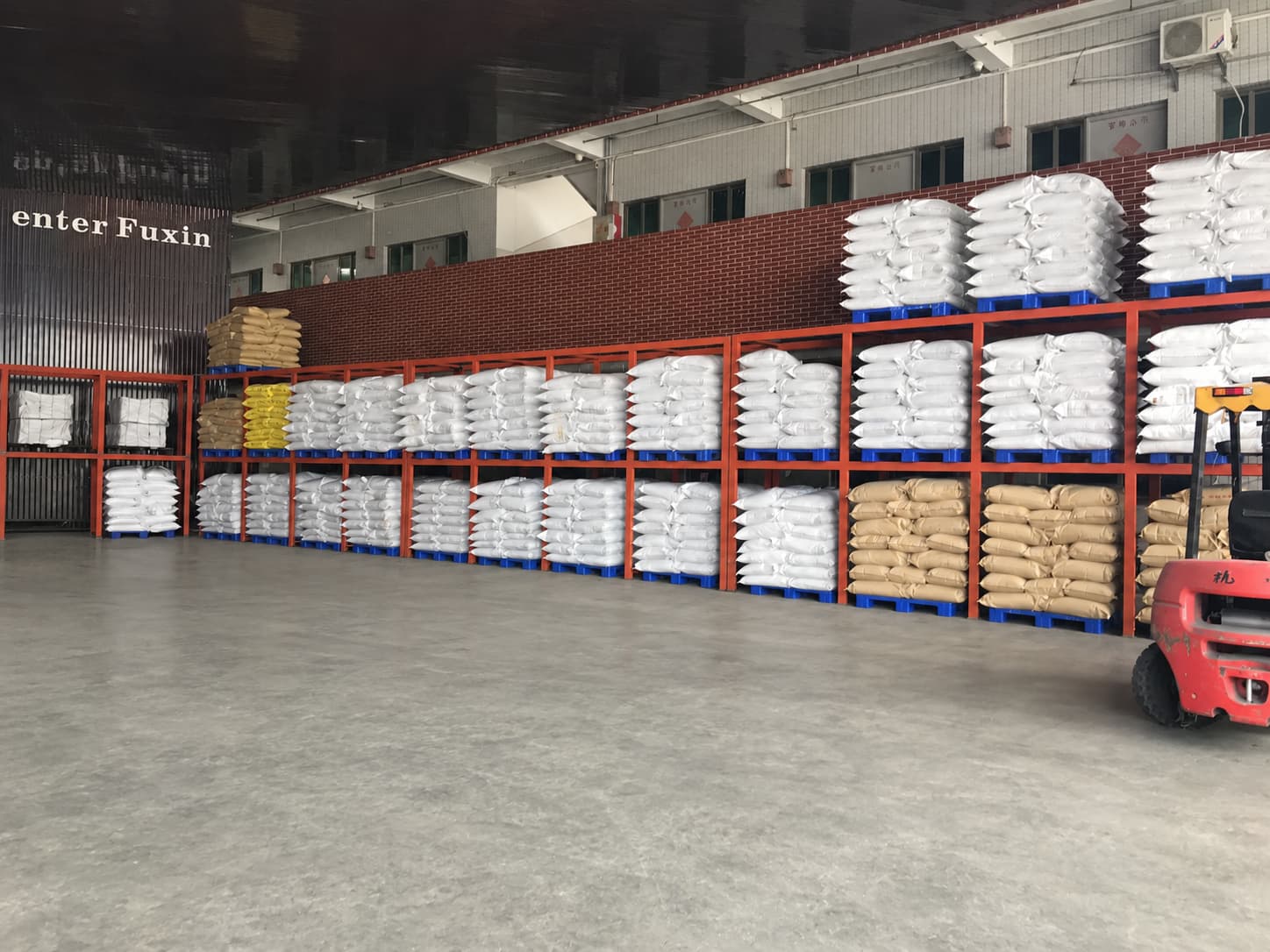
















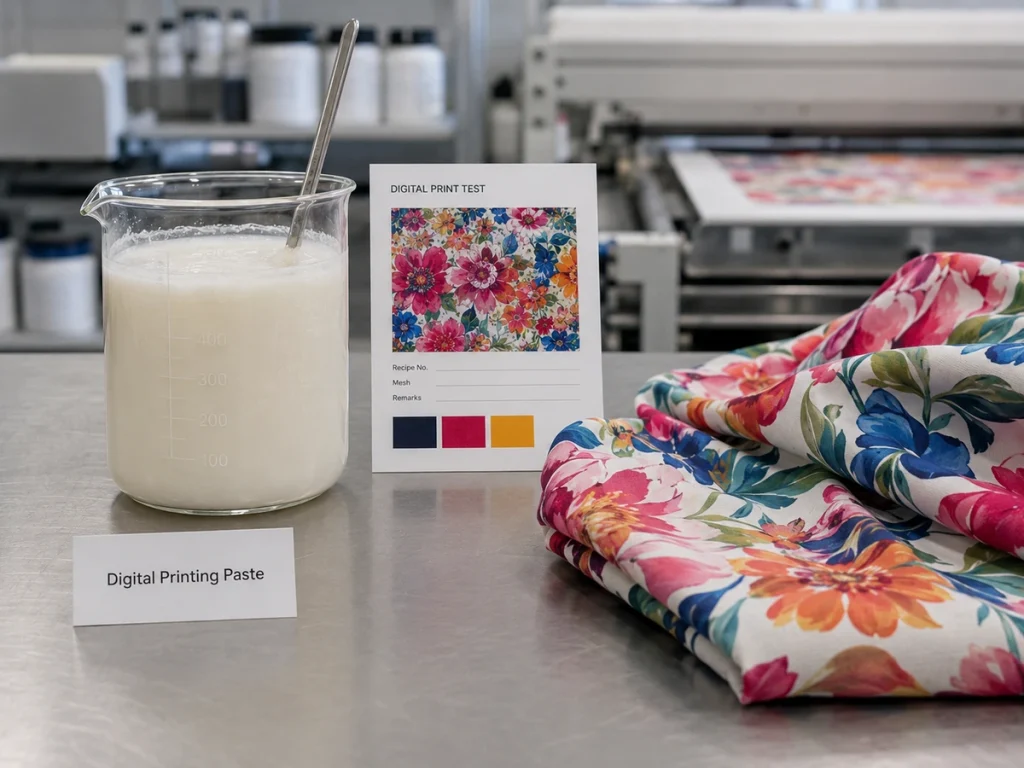
To request textile printing formulation support, start with the current product TDS, the actual printing route and one clearly described problem. Then agree the additional formulation and process data needed for a controlled comparison. A grade recommendation is a test candidate until it passes the buyer’s application and production criteria.
This guide explains what buyers should provide when requesting chemical formulation support, product matching, sample testing, and technical document review.
What Chemical Formulation Support Really Means
It Is Not the Same as Unlimited Custom Production
In practical textile printing procurement, chemical formulation support usually means reviewing the buyer’s application and recommending a suitable grade or adjustment direction. It may involve comparing an existing product, checking target viscosity, reviewing paste behavior, or arranging sample testing.
This is different from promising unlimited custom production for every possible process. A reliable supplier should explain what can be adjusted, what needs testing, and what may not be suitable for the product system.
Product Matching Starts from Real Application Data
A supplier cannot recommend the right product based only on a broad description such as “textile printing chemical” or “high-performance thickener.” Useful application data is necessary.
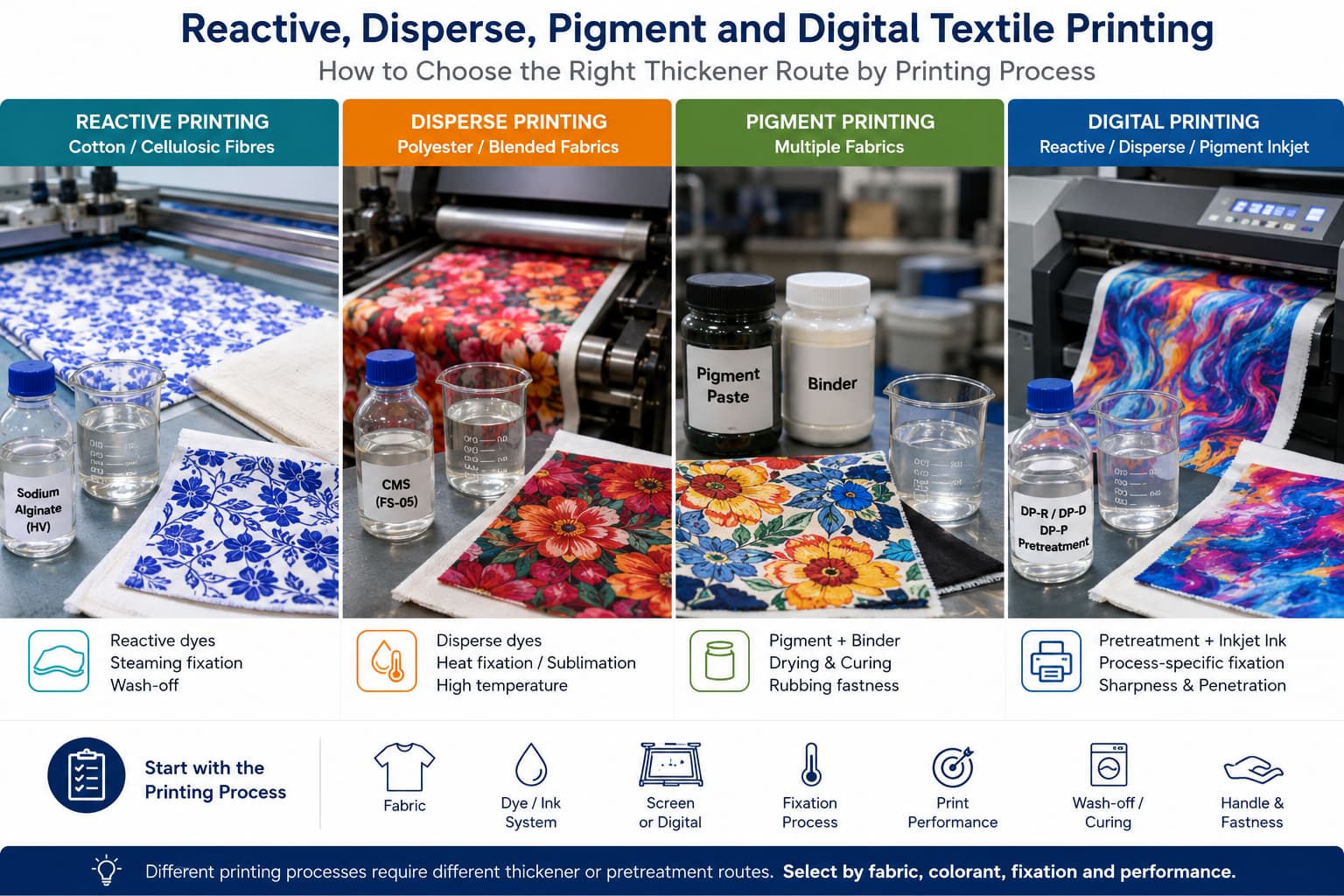
Start by identifying the dye or ink chemistry, fibre and application method separately. For digital printing, state whether the material is applied to the fabric as pretreatment; ordinary textile paste should not be proposed as a printhead-ink additive. Add target viscosity and its complete method when the review reaches grade comparison.
Sample Testing Is Necessary Before Bulk Confirmation
Even if a recommended grade looks suitable on paper, it should still be tested in the buyer’s own formulation. Dyes, auxiliaries, pH, stirring method, preparation time, and production conditions can all affect the final result.
Before confirming a bulk order, buyers should connect sample approval with specification range, COA data, packaging, and batch traceability.
When Buyers May Need Formulation Support
Replacing an Existing Thickener or Paste Product
Many buyers request formulation support when they want to replace an existing thickener, sodium alginate grade, CMC grade, CMS grade, or printing paste product.
In this situation, the best starting point is the existing product’s TDS, target viscosity, application process, and current dosage. This helps the supplier compare possible replacement options more accurately.
Adjusting Viscosity or Paste Handling
Viscosity is one of the most common reasons for product matching. Buyers may need a higher or lower viscosity grade, better paste smoothness, easier preparation, or more stable handling during production.
The suitable product should be selected according to the actual formulation and testing method rather than only by product name.
Solving Dissolution, Filtration or Stability Issues
Some buyers face problems such as slow dissolution, lumps, poor dispersion, filtration difficulty, unstable viscosity, or inconsistent batch behavior.
These issues may relate to product grade, mesh size, addition method, water quality, stirring speed, pH, or compatibility with other auxiliaries. Sample testing and formulation review can help identify a more suitable starting point.
Key Information Buyers Should Share
Printing Process and Fabric Type
Buyers should explain the actual printing or production process. Useful information includes reactive printing paste, screen printing, rotary printing, flatbed printing, dyeing support, or another application.
Fabric type is also important. Cotton, blended fabrics, and different textile materials may require different paste behavior and viscosity control.
Target Viscosity and Current Formulation
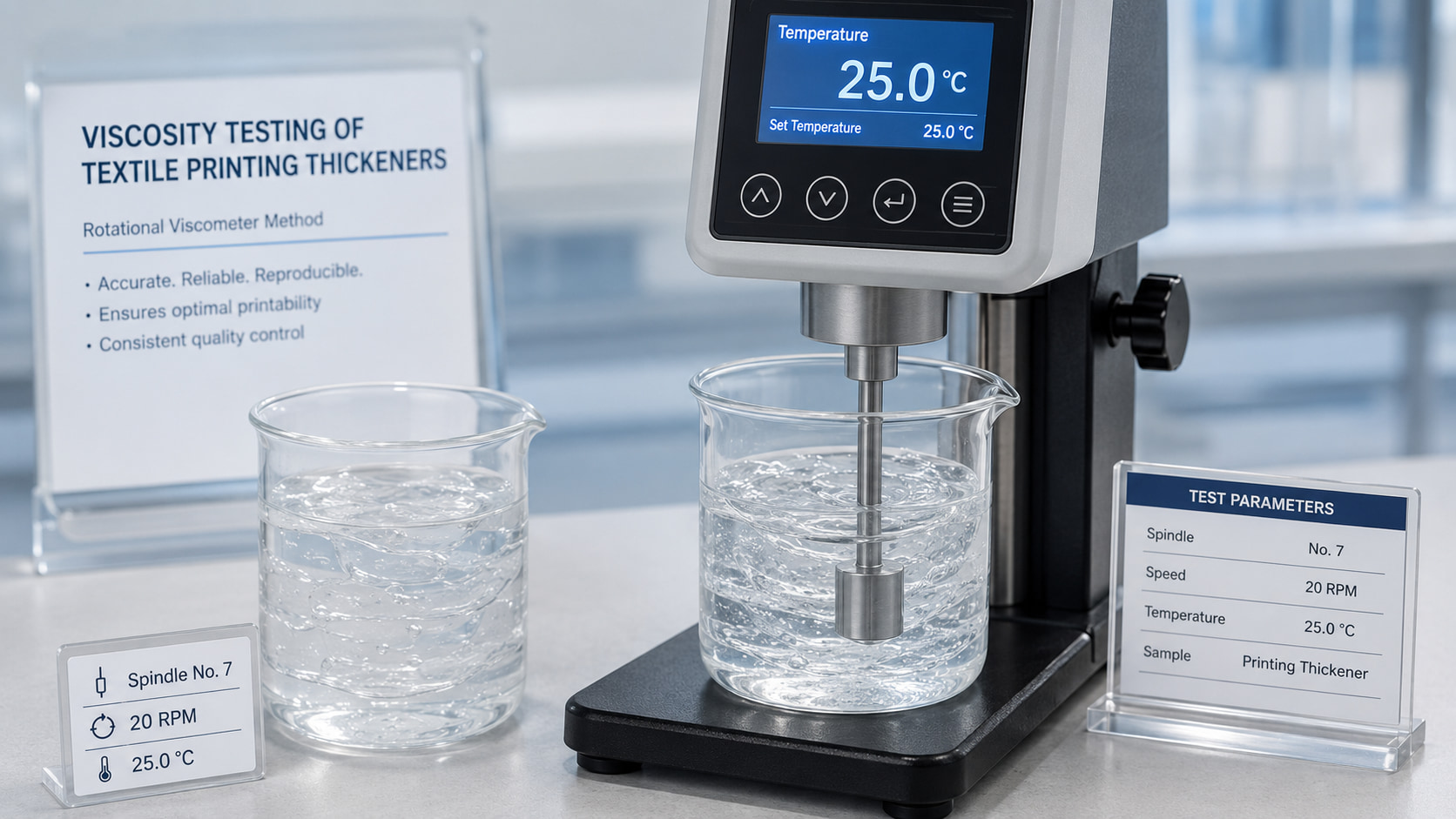
Target viscosity should be shared together with the test concentration, temperature, unit, and method if available. Without the test method, viscosity data from different suppliers may not be directly comparable.
Share only formulation information that you are authorized to disclose. Component functions, coded ingredients, dosage ranges and process conditions may be sufficient for an initial review; agree confidentiality before sharing proprietary recipes or customer information. Exact identities may later be necessary to resolve a specific compatibility question.
Existing Product Grade or TDS
If the buyer is replacing an existing product, the current product grade or TDS is very helpful. It allows the supplier to compare viscosity, pH, moisture, DS where applicable, mesh size where relevant, and storage conditions.
This does not guarantee a perfect one-to-one replacement, but it provides a useful technical reference for sample selection.
Production Problem and Testing Method
Buyers should describe the production issue clearly. For example, the problem may be unstable viscosity, slow dissolution, paste lumps, poor filtration, weak paste stability, or inconsistent results between batches.
It is also useful to explain how the buyer tests the product internally, including preparation time, water temperature, stirring speed, and evaluation criteria.
Products That May Be Considered
CMC for Viscosity Control and Thickening
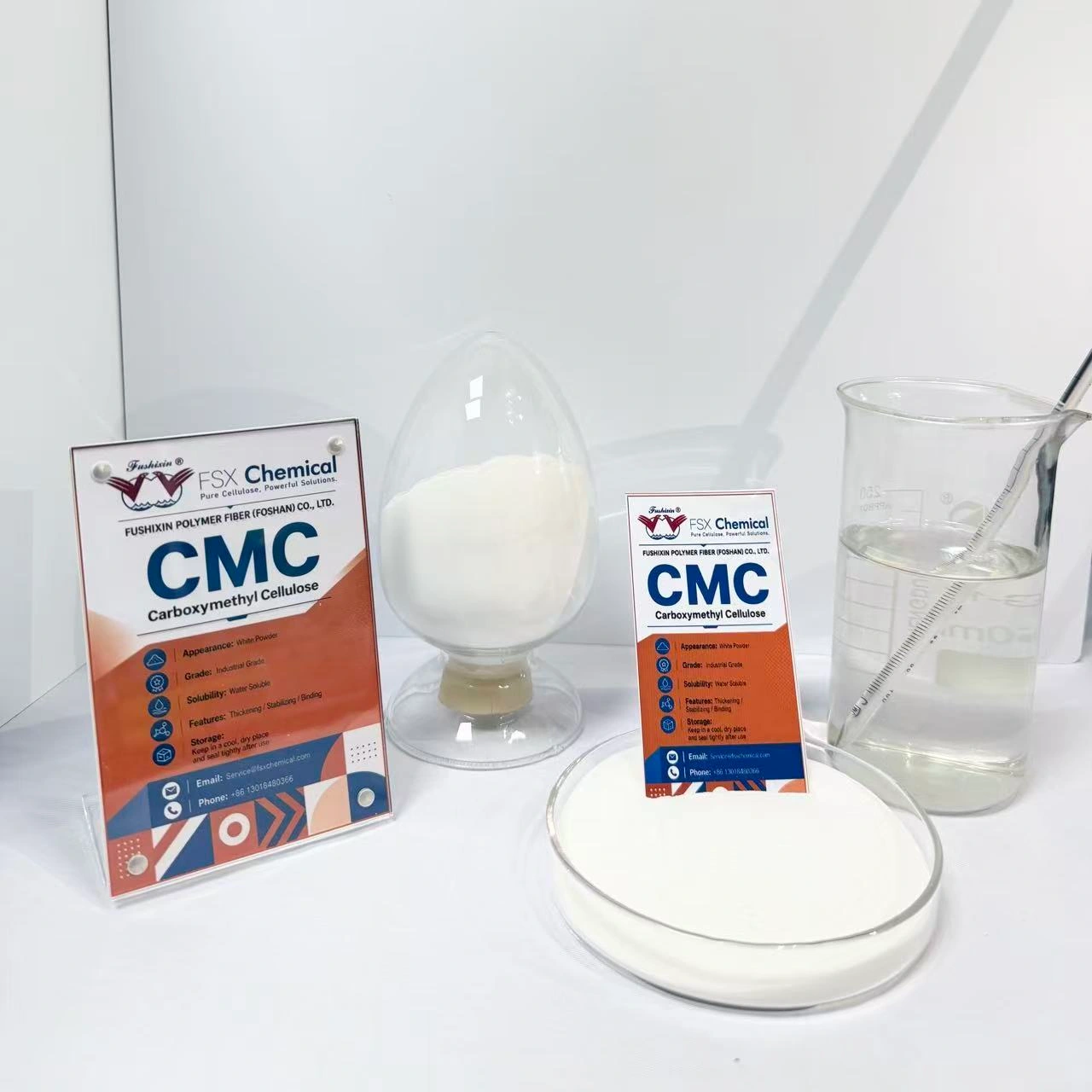
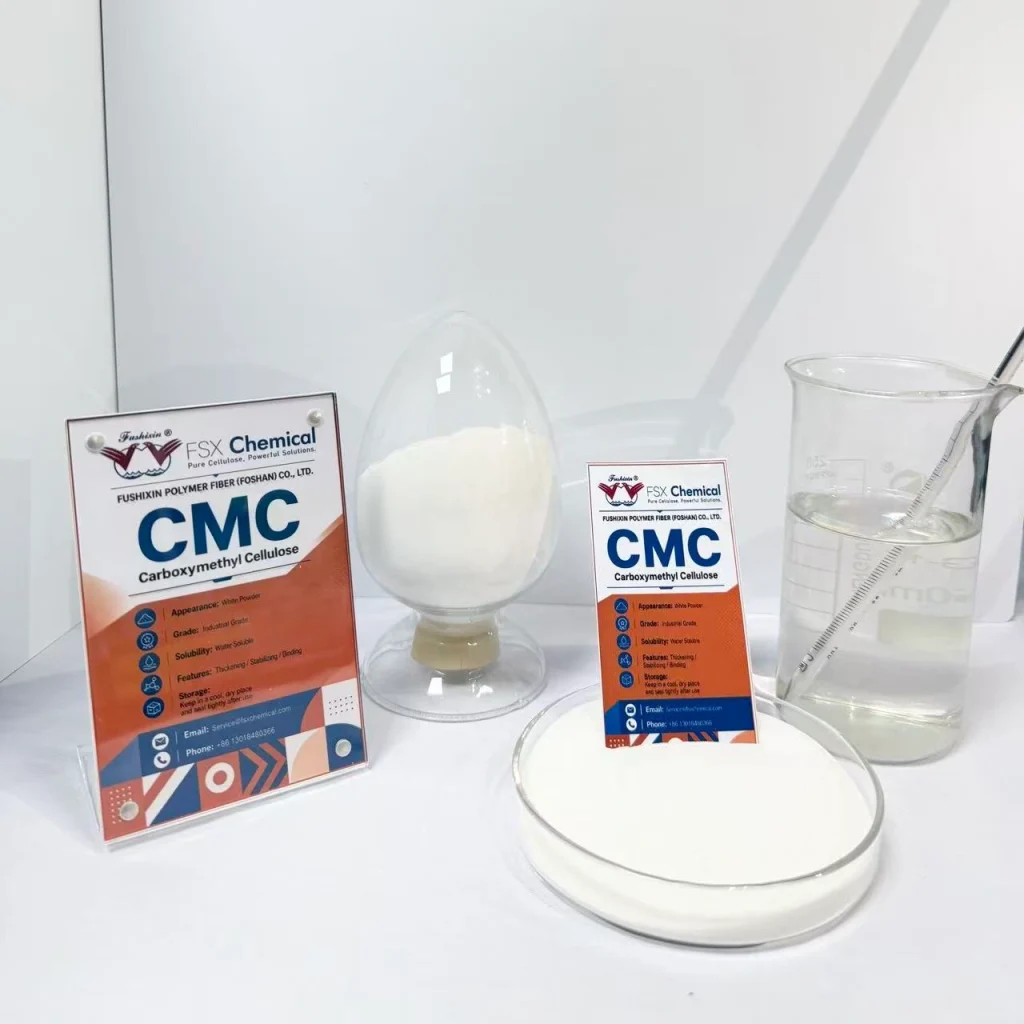
When matching CMC grades, buyers should review viscosity, degree of substitution, pH, moisture, solubility, and batch consistency.
CMS for Printing Paste Formulation Support
For an FSX CMS candidate, confirm the current commercial grade and product documentation. The abbreviation alone does not establish that the product is generic carboxymethyl starch or that a starch-specific DS test applies.
For CMS grade selection, align preparation and viscosity methods and evaluate the complete formulation. Request chemistry-specific parameters only where supported by the exact product documents. A matching viscosity is not evidence of a universal 1:1 replacement.
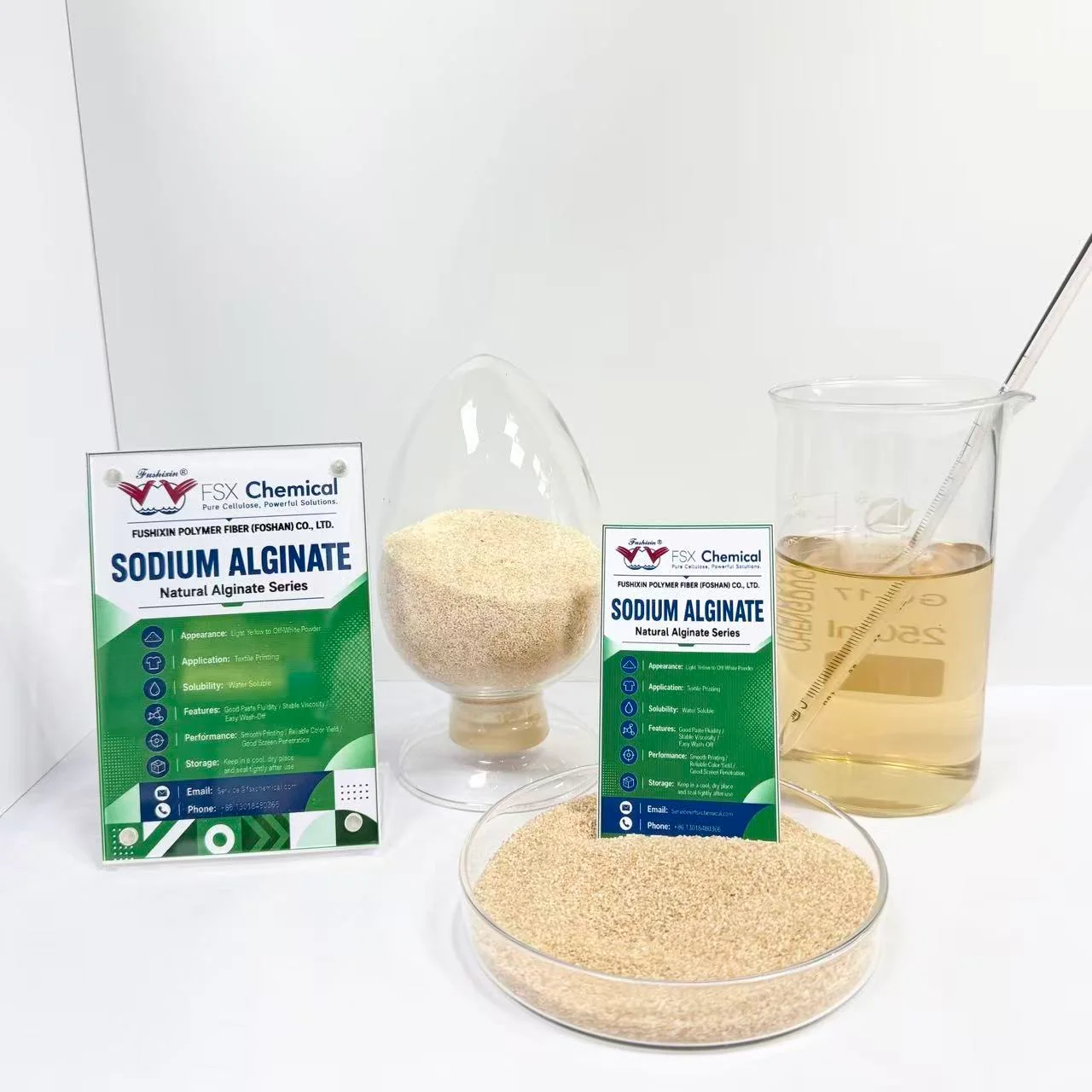
Alginato de sodio para pasta de impresión reactiva
The recommended sodium alginate grade should be tested in the buyer’s own paste formulation before bulk purchase.
Espesantes para impresión textil y productos de pasta de impresión
Some buyers need a single thickener, while others need a ready-to-test printing paste product or a recommendation for a specific printing process.
Documents and Testing Before Confirmation
TDS para la revisión de especificaciones
For viscosity-related products, buyers should check the test concentration, temperature, unit, and method.
COA para la confirmación de lotes
A COA reports selected batch results against identified methods and limits. Check that the product and lot match the sample or shipment. It supports traceability but does not establish that an untested formulation will work.
Los compradores pueden comparar los registros de los certificados de análisis (COA) de distintos envíos para verificar si los parámetros clave se mantienen dentro del rango acordado.
Fichas de datos de seguridad (FDS) y documentos de exportación, cuando sea necesario
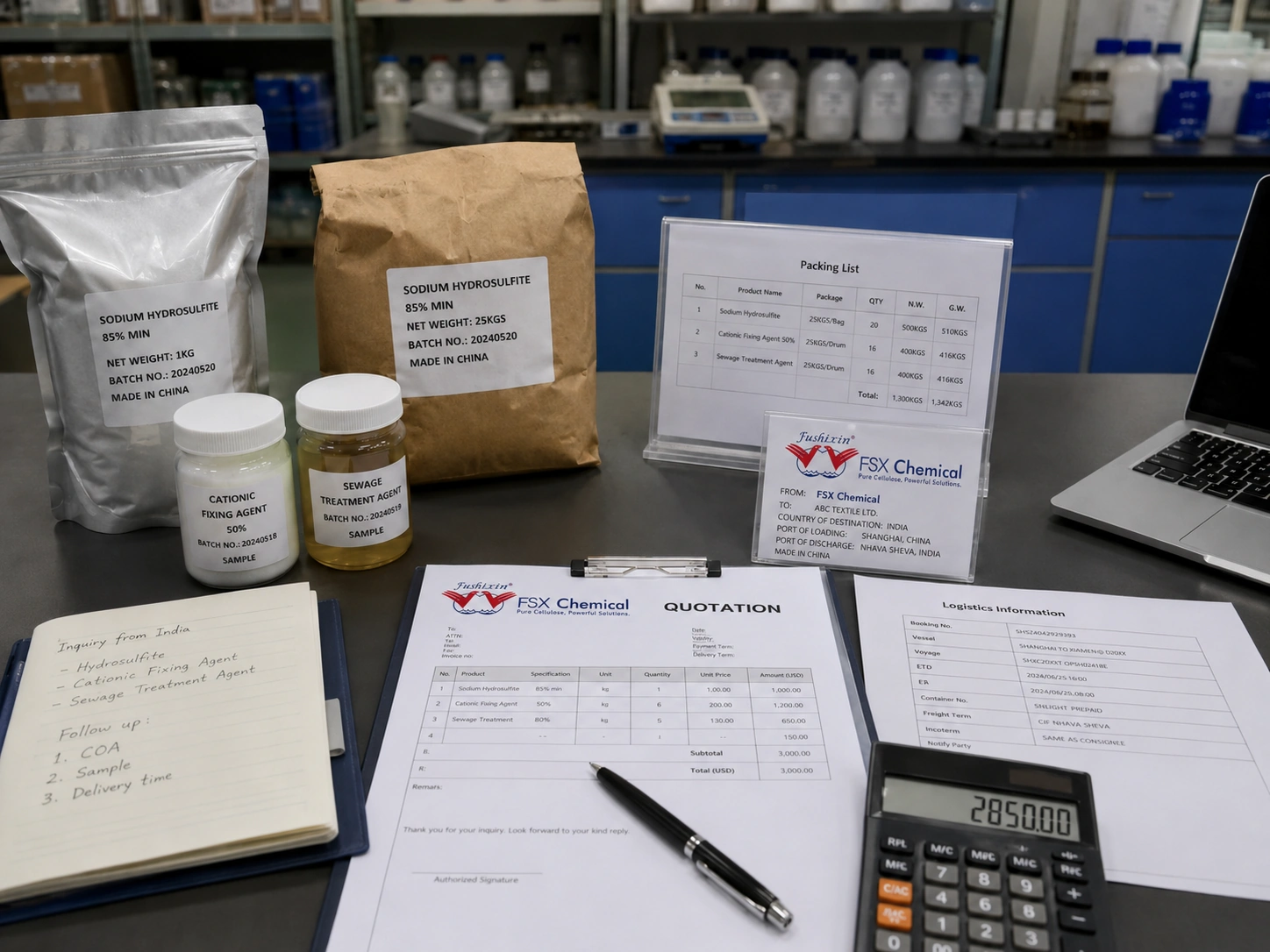
For international purchasing, buyers may need SDS, invoice, packing list, labels, and other export-related documents.
The required document list may vary by destination country, product type, and internal purchasing process, so it should be confirmed before shipment.
Sample Testing in the Buyer’s Own Formulation
Sample testing should be done in the buyer’s own formulation whenever possible. Water quality, dyes, auxiliaries, pH, stirring method, preparation time, and storage conditions can all affect the final result.
Realizar pruebas en condiciones reales ayuda a confirmar si el grado recomendado es adecuado antes de realizar una compra al por mayor.
A Short Brief That Leads to a Testable Recommendation
| Review Stage | Minimum Information | Expected Output |
|---|---|---|
| Initial route check | Current TDS, dye or ink route, fabric and one problem | Relevant product family or a reason it is unsuitable |
| Laboratory comparison | Authorized formula details, addition sequence, water and test method | Reference/candidate plan with acceptance limits agreed in advance |
| Production decision | Trial records, finished-fabric results and batch identity | Approved scope, dosage window and first-delivery checks |
Keep a successful reference in each test series. Change one factor for a simple diagnostic comparison; where interactions are suspected, use a planned multi-factor experiment with independent repeats. A supplier recommendation alone does not authorize production release. Submit the initial brief through Muestras y combinación.
How FSX Chemical Supports Formulation Matching
Próximos pasos
- Comparte tu solicitud — Indíquenos su proceso de impresión, el tipo de tela, el sistema de tinte, la viscosidad deseada y la formulación actual.
- Request Product Matching — ask for a suitable CMC, CMS, sodium alginate, textile printing thickener, or printing paste recommendation.
- Solicitar un TDS — Revisa la viscosidad, la densidad relativa (DS) cuando corresponda, el tamaño de malla cuando sea pertinente, el pH, la humedad, el aspecto, las condiciones de almacenamiento y el método de prueba.
- Solicitar un certificado de análisis (COA) — Verificar que los datos del lote se ajusten al rango de especificaciones acordado antes del envío.
- Solicitar una muestra — Pruebe el producto recomendado en sus propias condiciones de preparación y producción antes de confirmar los pedidos a granel.
- Confirmar documentos de exportación — check SDS, invoice, packing list, labels, batch traceability, and other required documents before shipment.
- Póngase en contacto con nuestro equipo técnico — discuss which product or grade is suitable for your textile or printing formulation📧 Email: service@fsxchemical.com