A Complete Guide to Using Sodium Alginate in Reactive Textile Printing
Sodium alginate is a widely evaluated thickener for reactive printing on cotton, viscose and other...
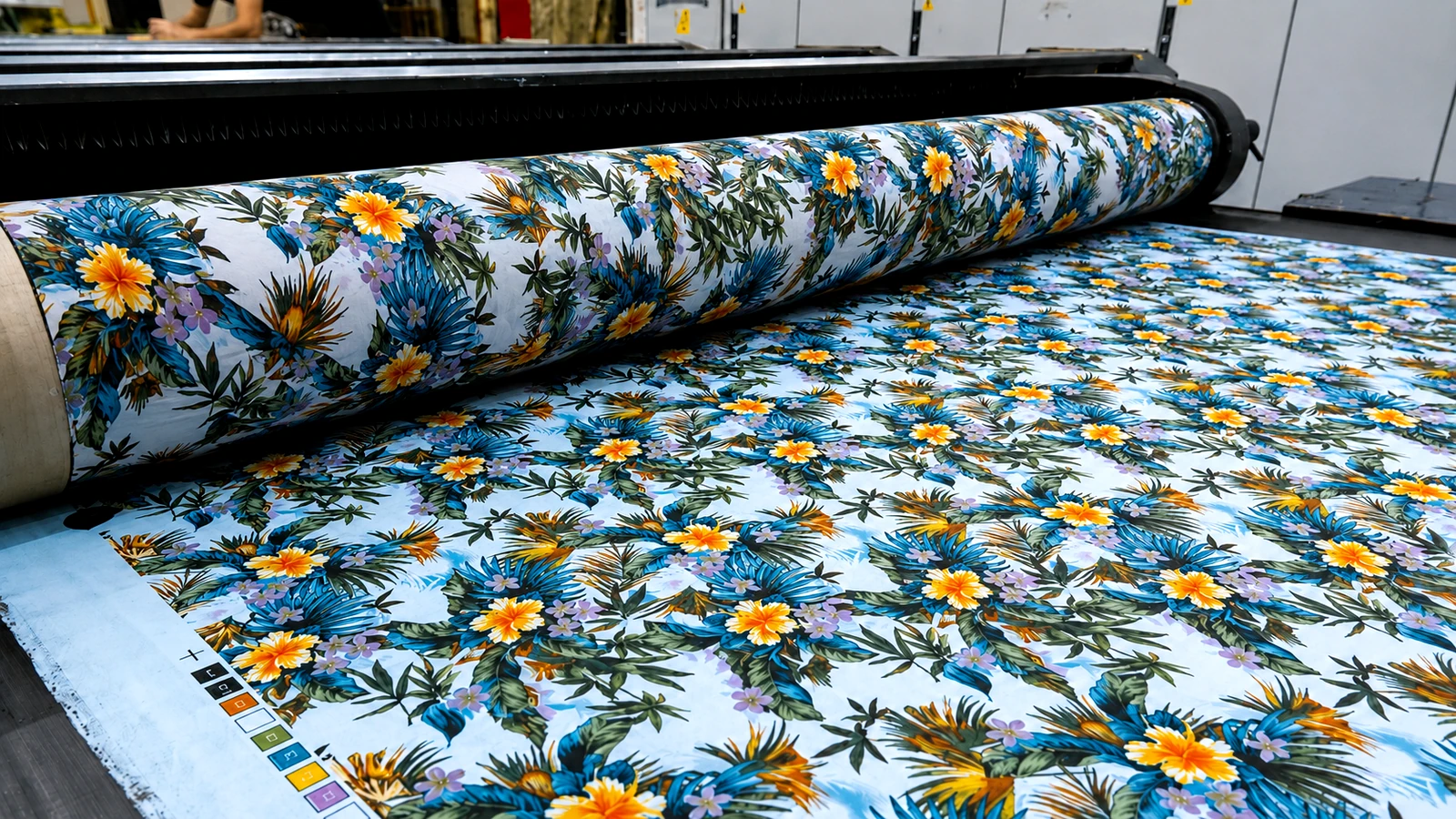
Sodium alginate plays an important role in conventional reactive textile printing. It helps transform a low-viscosity dye solution into a controlled printing paste that can be transferred through a flat or rotary screen and positioned accurately on the fabric.
However, using sodium alginate successfully requires more than selecting a product with a high viscosity value. Different grades can vary in hydration, filtration, rheology, purity, particle profile, chemical response and batch-to-batch consistency.
The complete printing result also depends on the reactive dye, fabric, alkali, salt, humectant, water, preparation sequence, screen, machine speed, drying, steaming and wash-off process.
This guide explains how to select, prepare, test and control sodium alginate throughout the reactive textile printing process. The recommendations are intended as a technical framework. Final conditions should be confirmed using the current product TDS and the printing mill’s actual production system.
What Is Sodium Alginate?
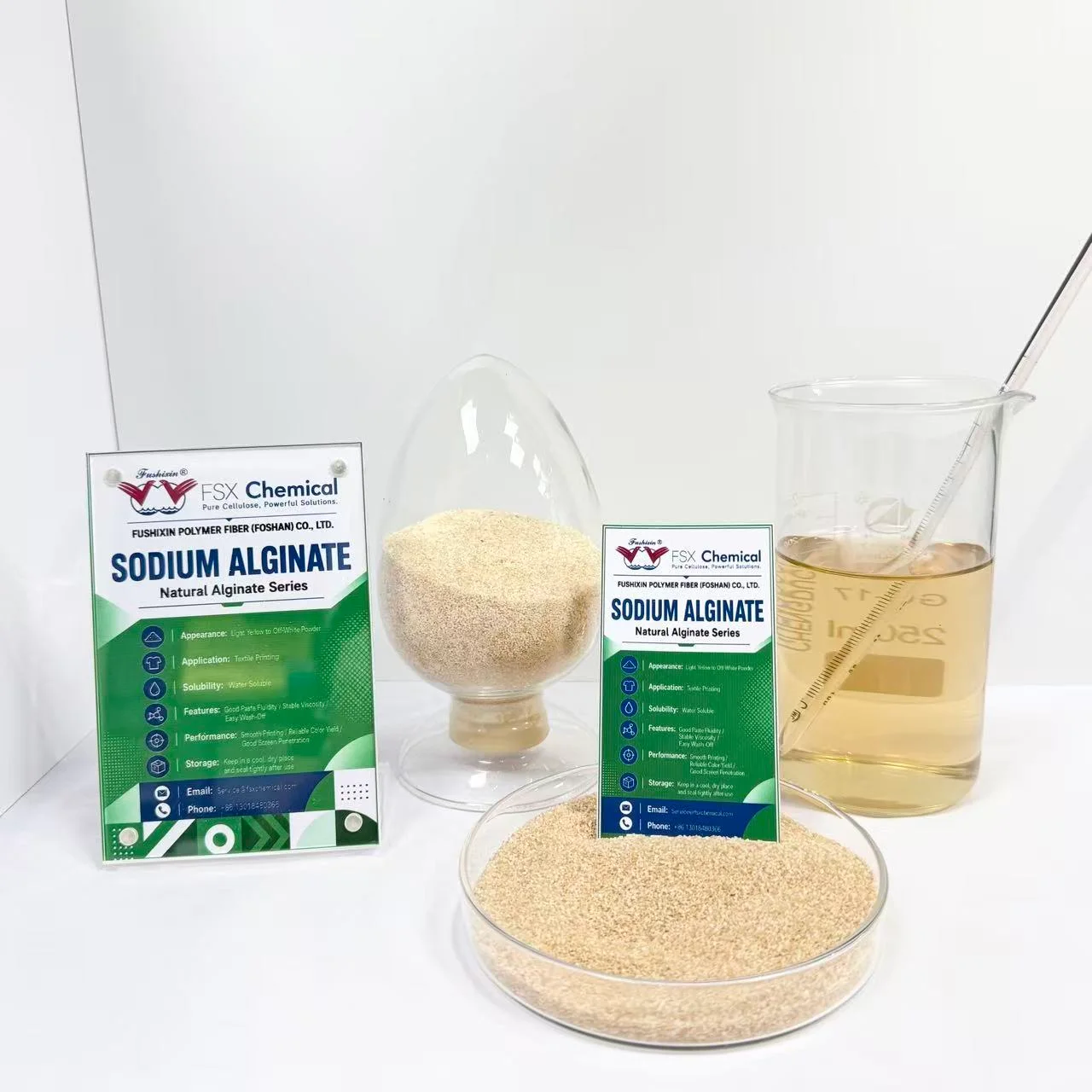
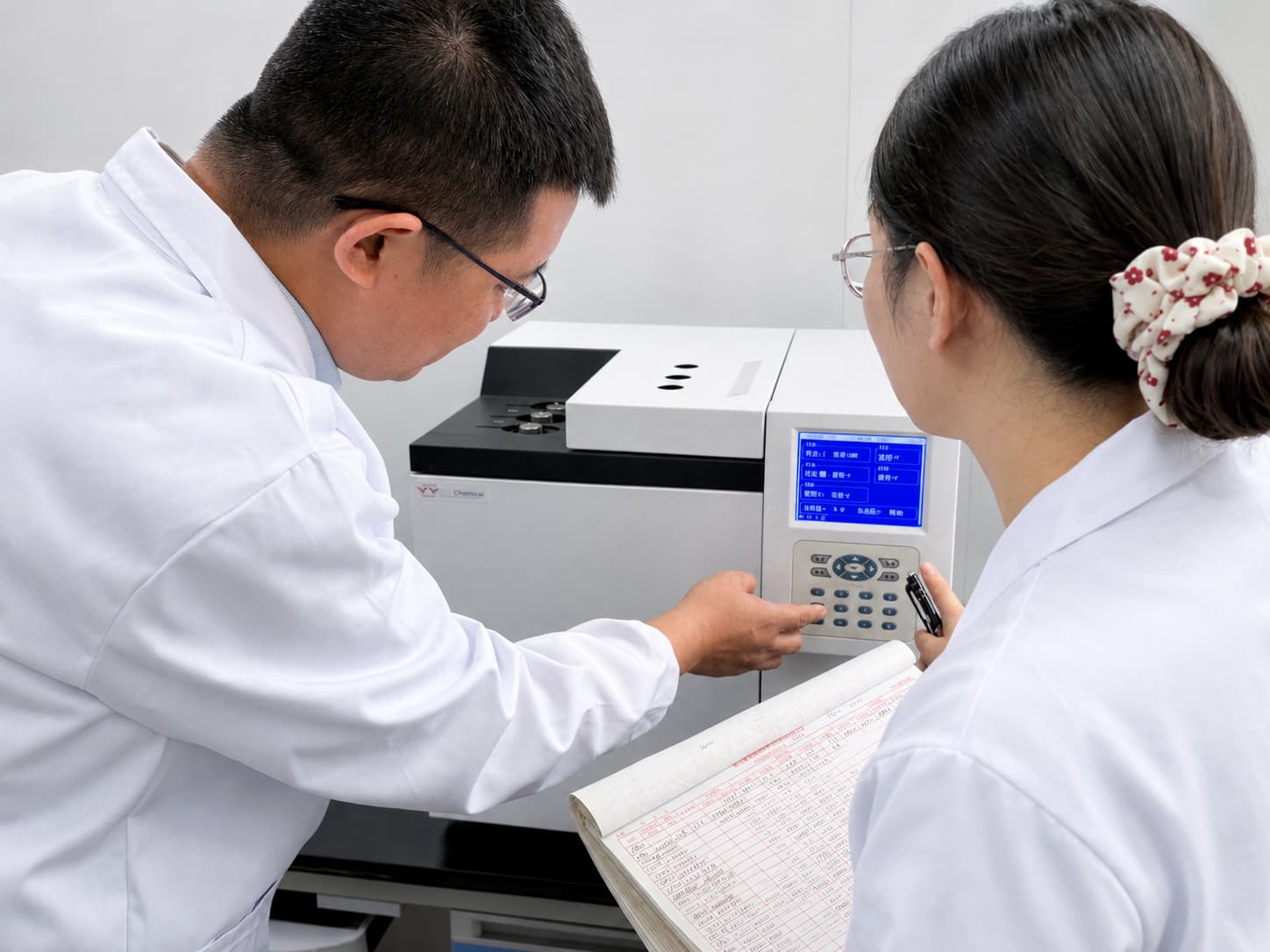
Sodium alginate is the sodium salt of alginic acid, a polysaccharide obtained from brown seaweed. In water, a suitable printing grade can hydrate and develop a viscous solution or stock paste.
In textile printing, sodium alginate is not used simply to make the formulation thicker. Its practical function is to control the movement, transfer and placement of the reactive dye paste before fixation.
Commercial sodium alginate grades are not identical
Commercial grades can differ in molecular characteristics, viscosity, purity, moisture, particle size, hydration rate, filtration and rheological behavior.
Two products may produce a similar viscosity under one laboratory method while behaving differently during pumping, screen passage, printing and wash-off.
Printing grade and general industrial grade
A general industrial sodium alginate should not automatically be treated as a reactive printing grade. Printing applications require additional attention to solution uniformity, filtration, chemical compatibility and final fabric quality.
Reactive dyes are designed to form chemical bonds with suitable textile fibres under controlled alkaline and fixation conditions. The thickener should help position the dye without consuming an unacceptable amount of colorant or interfering excessively with the printing process.
Sodium alginate is commonly selected because its structure generally has a low tendency to react with many reactive dyes under typical printing conditions compared with some other polysaccharide routes.
Controlled color-paste transfer
Sodium alginate provides sufficient paste body for screen printing while allowing the formulation to flow under squeegee or rotary-screen shear.
Pattern definition
Appropriate rheology and structural recovery can help limit uncontrolled spreading after the paste reaches the fabric.
Reactive dye availability
A correctly selected grade can support the transfer of reactive dye to the fibre without creating excessive competing interaction within the thickener phase.
Post-print removal
After steaming or another approved fixation process, the thickener and unfixed dye must be removed during washing. Grade, dosage and wash-off conditions all influence the final result.
Application versatility
Suitable sodium alginate grades can be evaluated for flat-screen and rotary-screen reactive printing on cotton, viscose and other compatible cellulosic fabrics.
The Role of Sodium Alginate in the Printing Process
Sodium alginate performs different functions at different stages of production.
During stock-paste preparation
The powder must disperse and hydrate uniformly. Incomplete hydration can create unstable viscosity, lumps and filter residue.
During color-paste formulation
The alginate phase must remain compatible with dyes, alkalis, salts, humectants and other auxiliaries for the required preparation and holding period.
During pumping and circulation
The paste should move through tanks, pipes and pumps without excessive resistance or uncontrolled thinning.
During screen passage
The paste must pass through the screen openings and transfer evenly to the fabric.
After deposition on the fabric
The paste should recover sufficient structure to support the printed pattern while allowing the required dye penetration.
During steaming and washing
Moisture and heat support dye fixation, while the wash-off process removes unfixed dye, alkali and residual thickener.
How to Select the Right Sodium Alginate Grade
Grade selection should begin with the printing application rather than with the highest available viscosity or lowest price.
Define the printing method
Flat-screen printing
Rotary-screen printing
Normal-speed or high-speed production
Fine-line or large solid-area design
Define the fabric
Cotton, viscose or another suitable cellulosic fibre
Woven or knitted construction
Fabric weight and density
Absorbency and surface preparation
Lightweight, heavy, open or dense construction
Define the reactive dye system
Provide representative dyes, shade depth, salt, alkali, humectant and auxiliary information. A grade that performs well in one shade may behave differently under a higher chemical load.
Define the viscosity method
The supplier should know the concentration, water, preparation, temperature, instrument, spindle and rotational speed used by the buyer.
Define the production problem
Slow hydration
Persistent lumps
Excessive filter residue
Poor screen passage
Weak print definition
Excessive penetration
Viscosity drift during storage
Difficult wash-off
High total cost in use
A recommended grade should be treated as a candidate for testing, not as an automatic one-to-one replacement.
Understanding Viscosity and Rheology
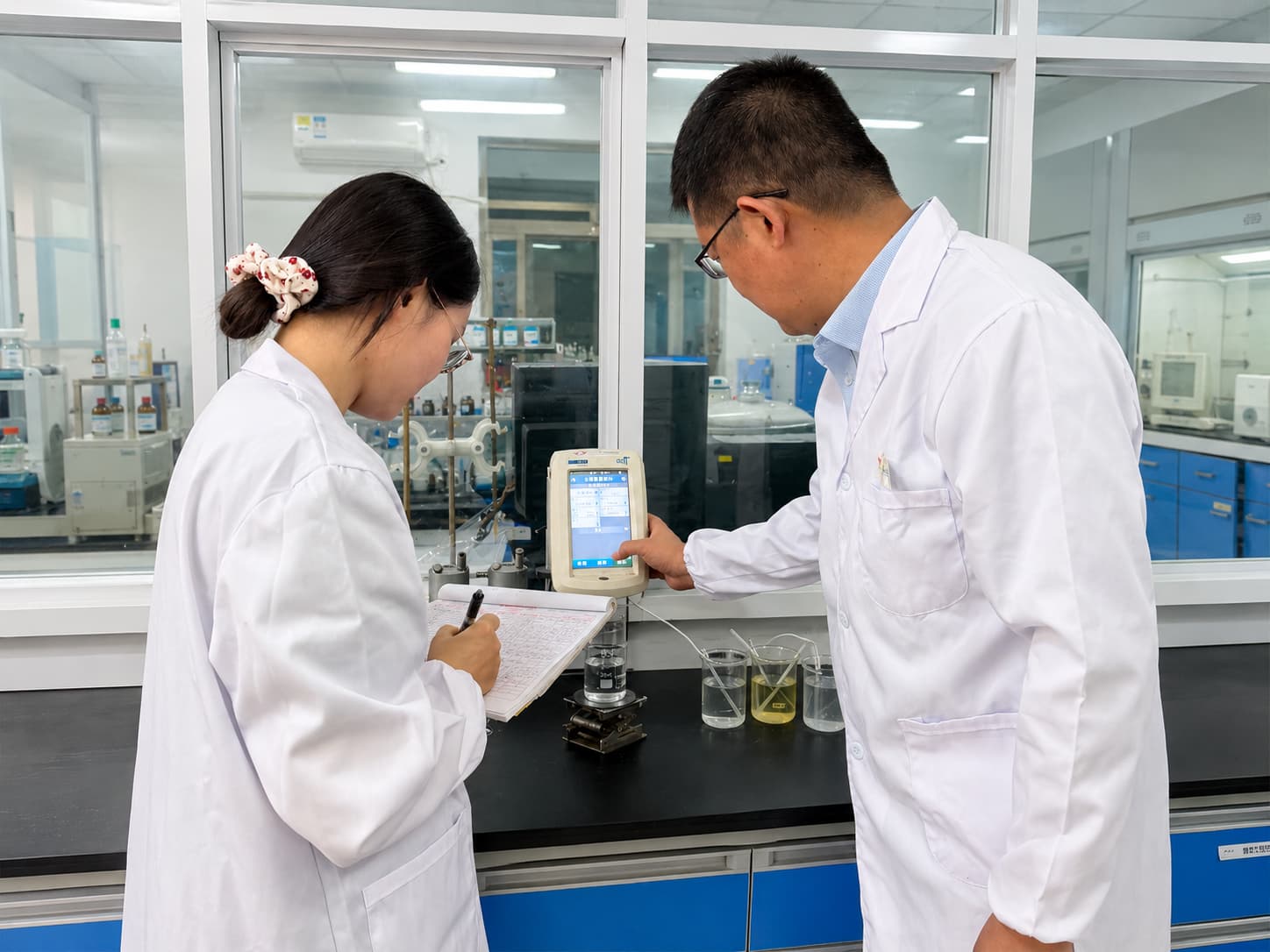
Viscosity is one of the main sodium alginate control parameters, but it must be connected to a complete test method.
A viscosity result should include
Konsentrasi produk
Water source
Powder-addition procedure
Waktu pencampuran dan hidrasi
Suhu pengukuran
Instrument and spindle
Rotational speed
Reading time and reported unit
Why one viscosity value is not enough
Printing pastes are exposed to different mechanical conditions. They may be nearly stationary in a storage tank, moderately sheared during pumping and strongly sheared during screen passage.
Two grades with the same routine-control viscosity may therefore show different flow and recovery behavior.
Shear thinning
A suitable printing paste often becomes easier to move under stronger shear. This can support pumping, circulation and screen transfer.
Structural recovery
After the paste leaves the screen, it should recover enough structure to help control spreading. Excessively slow recovery may reduce definition, while excessively strong recovery may affect leveling and transfer.
Higher viscosity is not automatically better
Excessive viscosity can create difficult circulation, poor screen passage, incomplete transfer and uneven solid areas.
Purity, Particle Size and Filtration
Sodium alginate printing performance depends on more than viscosity. Purity, particle profile, hydration and filtration can affect preparation and machine reliability.
Purity
Purity-related parameters may influence solution uniformity, residual salts, color, chemical response and final wash-off. The required level should be based on the application and agreed commercial specification.
Ukuran partikel
Fine particles may hydrate quickly but can form surface-wetted lumps when added too rapidly. Coarser particles may disperse differently and require a longer hydration period.
Filtration
A defined filtration test helps identify undissolved powder, hydrated gel, coarse material and contamination.
Use a production-relevant filter
The filter material, opening size, sample quantity and test condition should reflect the screen and circulation requirements of the factory.
Test both stock paste and complete color paste
A stock paste may filter well but develop particles after dyes, alkalis, salts or auxiliaries are added.
How to Prepare Sodium Alginate Stock Paste
Stock-paste preparation should follow the current grade instructions. The following workflow provides a general control framework rather than a fixed recipe.
Step 1: Prepare the water phase
Use the approved water source and record its temperature. Confirm that the vessel and mixer are clean and free from residues of incompatible chemicals.
Step 2: Start controlled circulation
Begin mixing before adding the sodium alginate. The liquid should move throughout the vessel without drawing excessive air into the batch.
Step 3: Add the powder gradually
Introduce the sodium alginate in a controlled stream. Avoid dumping the complete quantity into one location.
Step 4: Maintain the approved mixing condition
Record mixer type, impeller, vessel volume, rotational speed, addition time and total mixing duration.
Step 5: Allow complete hydration
The paste may appear smooth before hydration is complete. Follow the defined hydration or resting period before final viscosity measurement.
Step 6: Condition the sample temperature
Mixing can increase temperature. Reference and candidate samples should be measured at the same controlled temperature.
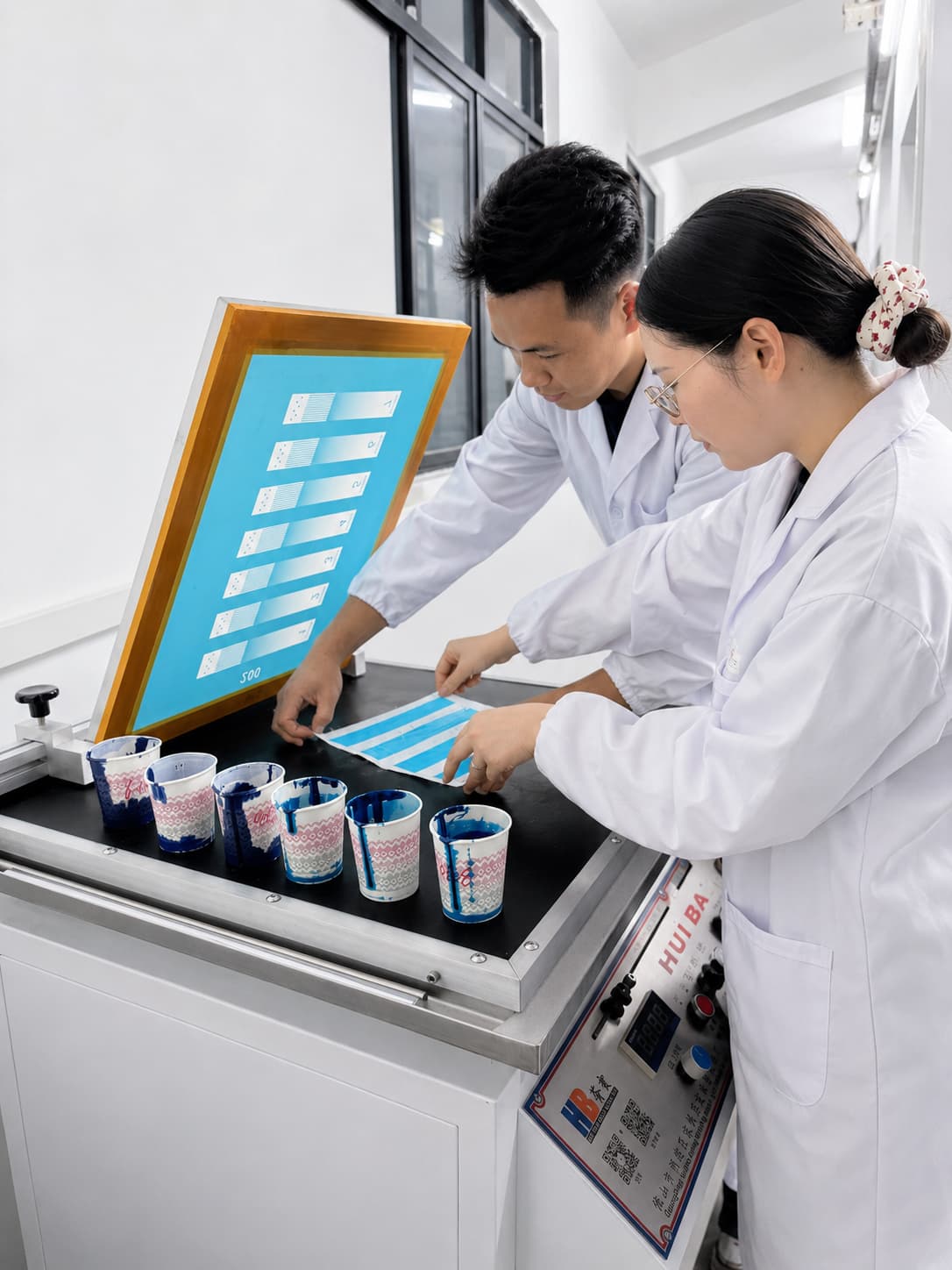
Step 7: Test viscosity and filtration
Use the approved methods and inspect any retained material.
Step 8: Store in a suitable closed container
Cover the stock paste to limit evaporation and contamination. Record preparation time, batch identity and approved holding period.
How to Prepare the Complete Reactive Printing Paste
The stock paste is only one component of the final reactive color paste. Final performance must be evaluated after all required chemicals have been added.
Typical component categories
Sodium alginate stock paste
Reactive dye solution or dispersion
Alkali system
Salt or electrolyte where required
Humectant or moisture-management component
Water
Other process-specific auxiliaries
Control the order of addition
Different addition sequences can change local concentration, polymer interaction and final viscosity. Use one recorded sequence during reference and candidate comparisons.
Avoid local chemical shock
Concentrated alkali or salt added directly into one small area may cause localized thinning, gel formation or nonuniformity.
Measure after the complete formulation is prepared
Record viscosity, pH, appearance, foam and filtration immediately after preparation and after the normal holding period.
Test representative shades
Include a light shade, a dark shade and a formulation representing a relatively high chemical load where practical.
Do not use a universal formula without validation
Dye type, fabric, fixation route and local production practice determine the final component levels and preparation sequence.
Water Quality and Temperature Control
Water is a major part of the stock paste and color paste. Variations in water quality can affect sodium alginate hydration and the complete printing formulation.
Water properties to monitor
Suhu
pH
Hardness where relevant
Conductivity where relevant
Suspended matter or contamination
Seasonal or treatment-system variation
Use the same water for comparisons
The current product and candidate should be prepared with the same water source.
Confirm performance in production water
Deionized water is useful for controlled laboratory work, but final approval should include the water used in the factory.
Control temperature during viscosity testing
A warm sample can show a different apparent viscosity from a cooler sample. Do not add more thickener or water until the temperature has been standardized.
Compatibility with Reactive Dyes and Auxiliaries
Sodium alginate should be evaluated as part of the complete printing system rather than only in clean water.
Reactive dyes
Different reactive dye structures, concentrations and shade combinations may change the apparent viscosity and final color response.
Alkalis
Alkali supports reactive dye fixation but can also change the stability and holding behavior of the color paste. Use the actual production concentration during testing.
Salts and electrolytes
Ionic materials can influence polymer interactions and apparent viscosity. Measure the complete formulation after addition.
Humectants
Moisture-management components can affect drying, steaming and dye fixation. Their influence should be evaluated together with fabric and production conditions.
Other thickeners
CMC , CMS or other polymers may be evaluated in controlled compound systems, but they should not be assumed to be universal one-to-one replacements for sodium alginate.
Using Sodium Alginate in Flat-Screen Printing
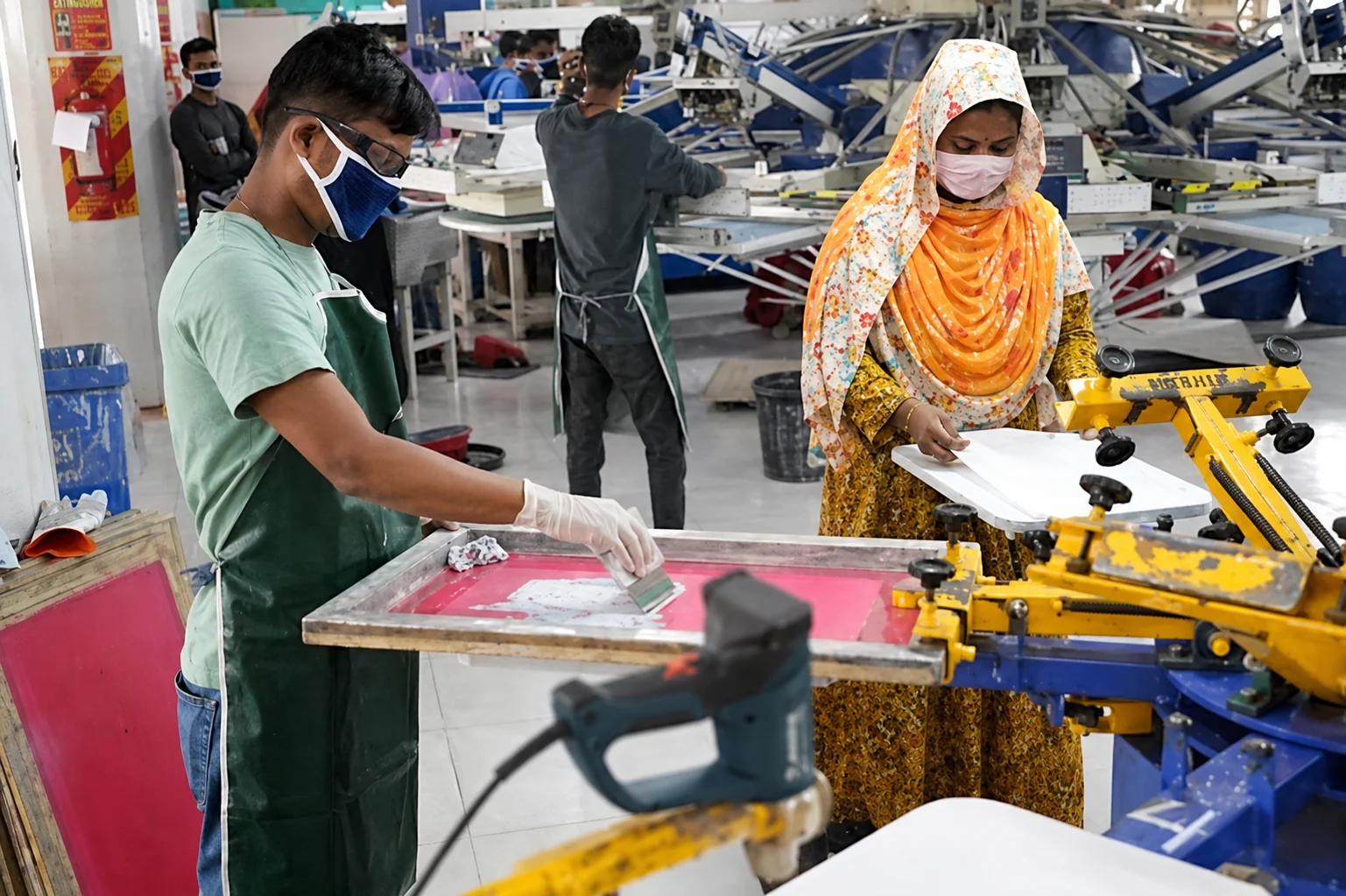
Flat-screen printing applies the paste through a stationary screen using a squeegee. The sodium alginate grade must support controlled transfer and pattern definition.
Important evaluation points
Squeegee transfer
Screen passage
Paste leveling
Fine-line definition
Solid-area uniformity
Penetration into the fabric
Screen cleaning frequency
Design influences the preferred rheology
Fine lines and small text may require stronger control of spreading. Large solid areas may require improved leveling and complete transfer.
Screen and squeegee conditions matter
Screen opening, squeegee hardness, angle, pressure and number of passes can change the required paste behavior.
Using Sodium Alginate in Rotary-Screen Printing
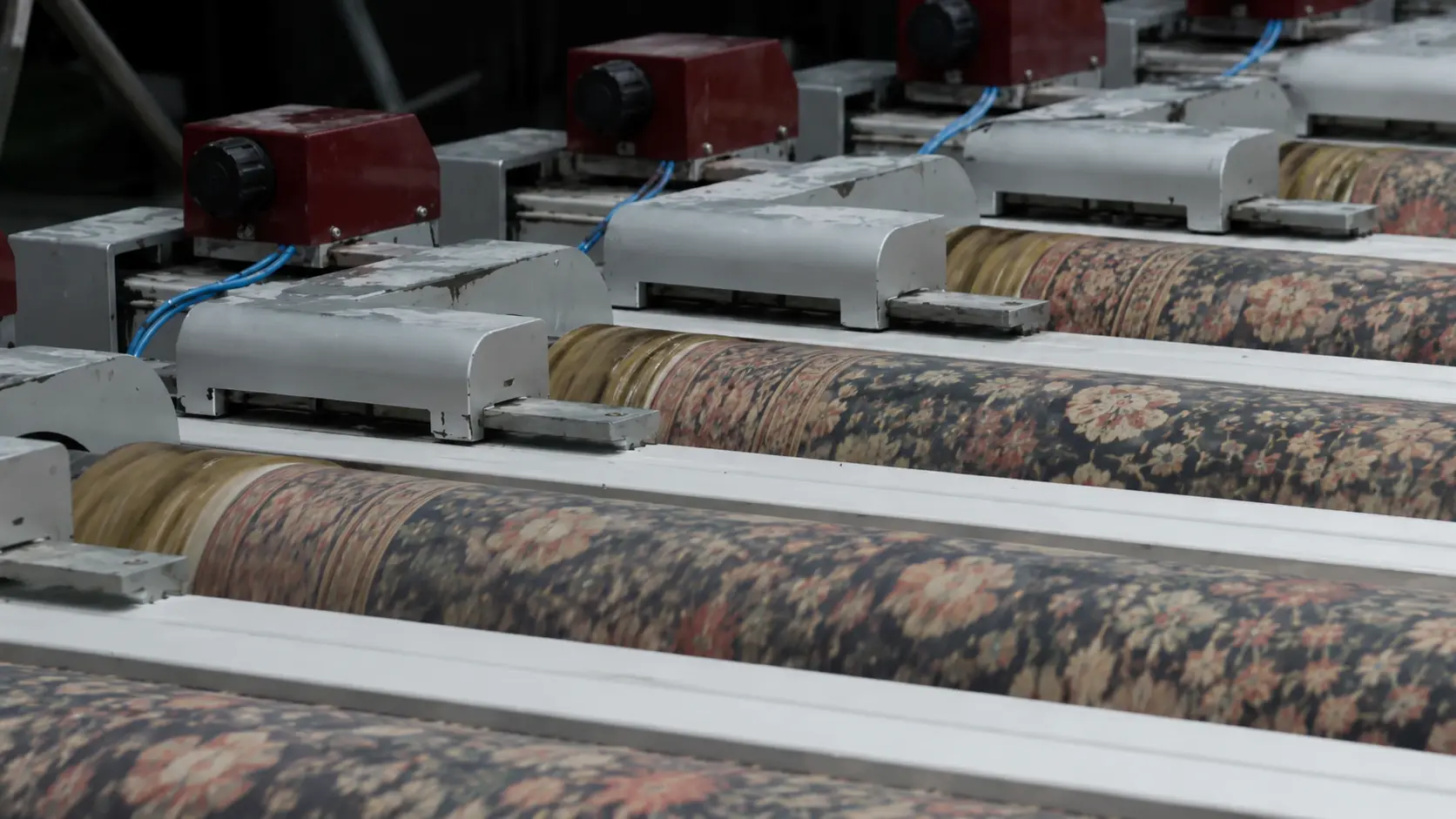
Rotary-screen printing exposes the paste to circulation, pumping, repeated shear and continuous screen passage.
Circulation performance
The paste should move through the supply and return system without excessive pumping resistance or uncontrolled viscosity loss.
Screen-passage performance
Filtration, particle uniformity and flow under shear become especially important during continuous operation.
Structural recovery
After leaving the rotary screen, the paste should recover enough structure to maintain the design on the moving fabric.
Long-run stability
Compare paste and fabric from the beginning, middle and end of the production run. A short acceptable trial does not prove full-shift stability.
High-speed operation
Higher production speed may require a different balance of flow, filtration and recovery. A higher-viscosity grade is not automatically the correct solution.
Fabric Considerations
Sodium alginate selection and dosage should be confirmed using the actual production fabric.
Kapas
Cotton is a common substrate for reactive printing, but different cotton fabrics can vary in weight, density, preparation and absorbency.
Viskosa
Viscose may absorb water and paste differently from cotton. Penetration, edge definition and application quantity should be evaluated separately.
Lightweight fabrics
Lightweight or open constructions may show excessive penetration, reverse-side strike-through or residual stiffness more easily.
Dense fabrics
Dense fabrics may retain more paste near the surface and require suitable transfer and leveling.
Knitted fabrics
Stretch, loop structure and dimensional movement can affect print definition and application uniformity.
Fabric preparation
Residual oils, waxes, softeners, alkalis or water-repellent finishes can create printing defects that cannot be corrected by changing sodium alginate alone.
Drying, Steaming and Dye Fixation
A suitable printing paste is only the first part of reactive printing. Drying and steaming conditions influence dye migration, moisture, reaction and final color.
Controlled drying
The printed fabric should be dried using conditions that limit unwanted color movement and maintain pattern definition.
Moisture during fixation
Reactive dye fixation requires suitable moisture, heat, alkali and time. The thickener and humectant system influence water retention during steaming.
Steaming uniformity
Uneven temperature, moisture or dwell time can create shade variation that may be incorrectly blamed on the sodium alginate.
Process-specific conditions
Fixation conditions depend on the reactive dye class, fabric, equipment and factory process. Use the dye and equipment suppliers’ approved procedures.
Evaluate the finished fabric
Do not approve a sodium alginate grade from the wet or dried print alone. Complete steaming and wash-off before making the final comparison.
Wash-Off and Final Fabric Quality
Wash-off removes residual thickener, unfixed dye, alkali and other water-soluble components from the printed fabric.
Initial rinsing
The first rinse should remove loose chemicals without causing uncontrolled back-staining or color transfer.
Washing stages
The complete sequence should be selected according to the dye, shade, fabric and factory process.
Final evaluation points
Print-edge definition
Shade and color strength
Keseimbangan
Back-staining
Residual surface material
Pegangan dari kain
Required fastness properties
Difficult wash-off is not always caused by sodium alginate
Excessive dosage, dye hydrolysis, fixation conditions, washing sequence, water quality and fabric structure may also influence removal.
Recommended Quality-Control Tests
Quality control should connect raw-material testing with actual printing performance.
Powder checks
Product and batch identity
Penampilan
Package condition
Moisture where relevant
Particle profile where relevant
Stock-paste checks
Dispersion and lump formation
Waktu hidrasi
Viscosity under the approved method
pH where applicable
Filtration and residue
Foam and physical uniformity
Complete color-paste checks
Initial viscosity
Viscosity after holding
pH
Appearance and separation
Filtration
Printing performance
Printed-fabric checks
Definition
Spreading
Penetration
Solid-area uniformity
Shade after fixation and wash-off
Pegangan dari kain
Required fastness
Document checks
Confirm that the sample, TDS, quotation, purchase order, package label and batch COA identify the same commercial grade.
Review dye, alkali, steaming, fabric and wash-off process
Finished fabric feels stiff
Excessive paste pickup, high dosage, incomplete removal or formulation residue
Review dosage, pickup, fixation and washing sequence
Bulk batch differs from sample
Grade identity, method difference, storage, water or batch variation
Compare product codes, COA, retained samples and complete methods
Begin every investigation by confirming the product code, batch number, concentration, water, preparation, temperature and viscosity method. Avoid changing several variables simultaneously.
How to Compare Total Cost in Use
The lowest sodium alginate price per kilogram does not automatically produce the lowest cost per acceptable metre of printed fabric.
Material dosage
Compare the optimized dosage required to achieve the same viscosity, transfer and finished-fabric quality.
Preparation cost
Include powder addition, mixing, hydration, temperature control, labor and filtration.
Machine cost
Include screen cleaning, pumping difficulty, production stops, slower speed and corrective additions.
Paste-loss cost
Include filter residue, unused color paste, tank residue and rejected batches.
Post-treatment cost
Include steaming, washing, additional rinsing and reprocessing.
Quality cost
Include rejected fabric, reprinting, shade correction and customer claims.
Supply cost
Include packaging, freight, import charges, inventory and batch verification.
Cost comparisons should only include candidates that meet the same printing, wash-off and finished-fabric requirements.
How to Evaluate a Sodium Alginate Supplier
Application understanding
The supplier should ask about the printing process, fabric, dye system, viscosity method and current problem before recommending a grade.
Permanent grade identity
The tested sample should be connected to a permanent commercial product code.
Technical documents
Current TDS
Current SDS
Complete viscosity method
Preparation guidance
Proposed batch COA parameters
Sample matching
The supplier should be able to review the current TDS or physical sample and propose a relevant starting grade.
Batch traceability
Commercial packages and documents should provide sufficient product and batch identification.
Sample-to-bulk control
The supplier should explain how the approved sample is connected to later commercial production.
Technical response
A clear process should be available for reviewing viscosity, filtration, printing or batch-related concerns.
A recommended grade remains a candidate for controlled evaluation. Final suitability depends on the customer’s complete formulation, fabric, printing equipment, fixation and washing process.
Pertanyaan yang Sering Diajukan
Why is sodium alginate used in reactive textile printing?
It provides controlled viscosity and rheology while generally showing low reactivity with many reactive dyes under typical printing conditions.
Is every sodium alginate suitable for reactive printing?
No. Printing grades require suitable hydration, filtration, rheology, chemical compatibility and final fabric performance.
What viscosity of sodium alginate should be used?
There is no universal value. The target depends on concentration, test method, fabric, screen, design, machine speed and complete formulation.
Does higher viscosity provide sharper printing?
Not automatically. Excessive viscosity may reduce transfer, while definition also depends on shear response, recovery, fabric absorbency and application quantity.
Why does sodium alginate form lumps?
Common causes include rapid powder addition, weak liquid circulation, unsuitable particle profile and insufficient dispersion control.
Why does viscosity change after adding alkali or salt?
Changes in ionic strength, pH, concentration and addition sequence can affect the polymer system and apparent viscosity.
Can CMC or CMS replace sodium alginate?
They may be evaluated in selected compound formulations, but they are not universal one-to-one replacements for sodium alginate in reactive printing.
Can sodium alginate be used for pigment printing?
Pigment printing normally requires a binder-compatible thickener system. Sodium alginate should not be assumed to be the preferred universal route.
How should sodium alginate samples be compared?
Use the same concentration, water, mixer, hydration time, temperature, instrument and viscosity settings, then test the complete reactive paste and finished fabric.
Sodium alginate is a widely evaluated thickener for reactive printing on cotton, viscose and other suitable cellulosic fabrics. This guide explains grade selection, stock-paste preparation, rheology, filtration, printing, fixation, wash-off and quality control.
Sodium alginate plays an important role in conventional reactive textile printing. It helps transform a low-viscosity dye solution into a controlled printing paste that can be transferred through a flat or rotary screen and positioned accurately on the fabric.
However, using sodium alginate successfully requires more than selecting a product with a high viscosity value. Different grades can vary in hydration, filtration, rheology, purity, particle profile, chemical response and batch-to-batch consistency.
The complete printing result also depends on the reactive dye, fabric, alkali, salt, humectant, water, preparation sequence, screen, machine speed, drying, steaming and wash-off process.
This guide explains how to select, prepare, test and control sodium alginate throughout the reactive textile printing process. The recommendations are intended as a technical framework. Final conditions should be confirmed using the current product TDS and the printing mill’s actual production system.
Sodium alginate is the sodium salt of alginic acid, a polysaccharide obtained from brown seaweed. In water, a suitable printing grade can hydrate and develop a viscous solution or stock paste.
In textile printing, sodium alginate is not used simply to make the formulation thicker. Its practical function is to control the movement, transfer and placement of the reactive dye paste before fixation.
Commercial sodium alginate grades are not identical
Commercial grades can differ in molecular characteristics, viscosity, purity, moisture, particle size, hydration rate, filtration and rheological behavior.
Two products may produce a similar viscosity under one laboratory method while behaving differently during pumping, screen passage, printing and wash-off.
Printing grade and general industrial grade
A general industrial sodium alginate should not automatically be treated as a reactive printing grade. Printing applications require additional attention to solution uniformity, filtration, chemical compatibility and final fabric quality.
Reactive dyes are designed to form chemical bonds with suitable textile fibres under controlled alkaline and fixation conditions. The thickener should help position the dye without consuming an unacceptable amount of colorant or interfering excessively with the printing process.
Sodium alginate is commonly selected because its structure generally has a low tendency to react with many reactive dyes under typical printing conditions compared with some other polysaccharide routes.
Controlled color-paste transfer
Sodium alginate provides sufficient paste body for screen printing while allowing the formulation to flow under squeegee or rotary-screen shear.
Pattern definition
Appropriate rheology and structural recovery can help limit uncontrolled spreading after the paste reaches the fabric.
Reactive dye availability
A correctly selected grade can support the transfer of reactive dye to the fibre without creating excessive competing interaction within the thickener phase.
Post-print removal
After steaming or another approved fixation process, the thickener and unfixed dye must be removed during washing. Grade, dosage and wash-off conditions all influence the final result.
Application versatility
Suitable sodium alginate grades can be evaluated for flat-screen and rotary-screen reactive printing on cotton, viscose and other compatible cellulosic fabrics.
The Role of Sodium Alginate in the Printing Process
Sodium alginate performs different functions at different stages of production.
During stock-paste preparation
The powder must disperse and hydrate uniformly. Incomplete hydration can create unstable viscosity, lumps and filter residue.
During color-paste formulation
The alginate phase must remain compatible with dyes, alkalis, salts, humectants and other auxiliaries for the required preparation and holding period.
During pumping and circulation
The paste should move through tanks, pipes and pumps without excessive resistance or uncontrolled thinning.
During screen passage
The paste must pass through the screen openings and transfer evenly to the fabric.
After deposition on the fabric
The paste should recover sufficient structure to support the printed pattern while allowing the required dye penetration.
During steaming and washing
Moisture and heat support dye fixation, while the wash-off process removes unfixed dye, alkali and residual thickener.
How to Select the Right Sodium Alginate Grade
Grade selection should begin with the printing application rather than with the highest available viscosity or lowest price.
Define the printing method
Flat-screen printing
Rotary-screen printing
Normal-speed or high-speed production
Fine-line or large solid-area design
Define the fabric
Cotton, viscose or another suitable cellulosic fibre
Woven or knitted construction
Fabric weight and density
Absorbency and surface preparation
Lightweight, heavy, open or dense construction
Define the reactive dye system
Provide representative dyes, shade depth, salt, alkali, humectant and auxiliary information. A grade that performs well in one shade may behave differently under a higher chemical load.
Define the viscosity method
The supplier should know the concentration, water, preparation, temperature, instrument, spindle and rotational speed used by the buyer.
Define the production problem
Slow hydration
Persistent lumps
Excessive filter residue
Poor screen passage
Weak print definition
Excessive penetration
Viscosity drift during storage
Difficult wash-off
High total cost in use
A recommended grade should be treated as a candidate for testing, not as an automatic one-to-one replacement.
Understanding Viscosity and Rheology
Viscosity is one of the main sodium alginate control parameters, but it must be connected to a complete test method.
A viscosity result should include
Konsentrasi produk
Water source
Powder-addition procedure
Waktu pencampuran dan hidrasi
Suhu pengukuran
Instrument and spindle
Rotational speed
Reading time and reported unit
Why one viscosity value is not enough
Printing pastes are exposed to different mechanical conditions. They may be nearly stationary in a storage tank, moderately sheared during pumping and strongly sheared during screen passage.
Two grades with the same routine-control viscosity may therefore show different flow and recovery behavior.
Shear thinning
A suitable printing paste often becomes easier to move under stronger shear. This can support pumping, circulation and screen transfer.
Structural recovery
After the paste leaves the screen, it should recover enough structure to help control spreading. Excessively slow recovery may reduce definition, while excessively strong recovery may affect leveling and transfer.
Higher viscosity is not automatically better
Excessive viscosity can create difficult circulation, poor screen passage, incomplete transfer and uneven solid areas.
Purity, Particle Size and Filtration
Sodium alginate printing performance depends on more than viscosity. Purity, particle profile, hydration and filtration can affect preparation and machine reliability.
Purity
Purity-related parameters may influence solution uniformity, residual salts, color, chemical response and final wash-off. The required level should be based on the application and agreed commercial specification.
Ukuran partikel
Fine particles may hydrate quickly but can form surface-wetted lumps when added too rapidly. Coarser particles may disperse differently and require a longer hydration period.
Filtration
A defined filtration test helps identify undissolved powder, hydrated gel, coarse material and contamination.
Use a production-relevant filter
The filter material, opening size, sample quantity and test condition should reflect the screen and circulation requirements of the factory.
Test both stock paste and complete color paste
A stock paste may filter well but develop particles after dyes, alkalis, salts or auxiliaries are added.
How to Prepare Sodium Alginate Stock Paste
Stock-paste preparation should follow the current grade instructions. The following workflow provides a general control framework rather than a fixed recipe.
Step 1: Prepare the water phase
Use the approved water source and record its temperature. Confirm that the vessel and mixer are clean and free from residues of incompatible chemicals.
Step 2: Start controlled circulation
Begin mixing before adding the sodium alginate. The liquid should move throughout the vessel without drawing excessive air into the batch.
Step 3: Add the powder gradually
Introduce the sodium alginate in a controlled stream. Avoid dumping the complete quantity into one location.
Step 4: Maintain the approved mixing condition
Record mixer type, impeller, vessel volume, rotational speed, addition time and total mixing duration.
Step 5: Allow complete hydration
The paste may appear smooth before hydration is complete. Follow the defined hydration or resting period before final viscosity measurement.
Step 6: Condition the sample temperature
Mixing can increase temperature. Reference and candidate samples should be measured at the same controlled temperature.
Step 7: Test viscosity and filtration
Use the approved methods and inspect any retained material.
Step 8: Store in a suitable closed container
Cover the stock paste to limit evaporation and contamination. Record preparation time, batch identity and approved holding period.
How to Prepare the Complete Reactive Printing Paste
The stock paste is only one component of the final reactive color paste. Final performance must be evaluated after all required chemicals have been added.
Typical component categories
Sodium alginate stock paste
Reactive dye solution or dispersion
Alkali system
Salt or electrolyte where required
Humectant or moisture-management component
Water
Other process-specific auxiliaries
Control the order of addition
Different addition sequences can change local concentration, polymer interaction and final viscosity. Use one recorded sequence during reference and candidate comparisons.
Avoid local chemical shock
Concentrated alkali or salt added directly into one small area may cause localized thinning, gel formation or nonuniformity.
Measure after the complete formulation is prepared
Record viscosity, pH, appearance, foam and filtration immediately after preparation and after the normal holding period.
Test representative shades
Include a light shade, a dark shade and a formulation representing a relatively high chemical load where practical.
Do not use a universal formula without validation
Dye type, fabric, fixation route and local production practice determine the final component levels and preparation sequence.
Water Quality and Temperature Control
Water is a major part of the stock paste and color paste. Variations in water quality can affect sodium alginate hydration and the complete printing formulation.
Water properties to monitor
Suhu
pH
Hardness where relevant
Conductivity where relevant
Suspended matter or contamination
Seasonal or treatment-system variation
Use the same water for comparisons
The current product and candidate should be prepared with the same water source.
Confirm performance in production water
Deionized water is useful for controlled laboratory work, but final approval should include the water used in the factory.
Control temperature during viscosity testing
A warm sample can show a different apparent viscosity from a cooler sample. Do not add more thickener or water until the temperature has been standardized.
Compatibility with Reactive Dyes and Auxiliaries
Sodium alginate should be evaluated as part of the complete printing system rather than only in clean water.
Reactive dyes
Different reactive dye structures, concentrations and shade combinations may change the apparent viscosity and final color response.
Alkalis
Alkali supports reactive dye fixation but can also change the stability and holding behavior of the color paste. Use the actual production concentration during testing.
Salts and electrolytes
Ionic materials can influence polymer interactions and apparent viscosity. Measure the complete formulation after addition.
Humectants
Moisture-management components can affect drying, steaming and dye fixation. Their influence should be evaluated together with fabric and production conditions.
Other thickeners
CMC , CMS or other polymers may be evaluated in controlled compound systems, but they should not be assumed to be universal one-to-one replacements for sodium alginate.
Using Sodium Alginate in Flat-Screen Printing
Flat-screen printing applies the paste through a stationary screen using a squeegee. The sodium alginate grade must support controlled transfer and pattern definition.
Important evaluation points
Squeegee transfer
Screen passage
Paste leveling
Fine-line definition
Solid-area uniformity
Penetration into the fabric
Screen cleaning frequency
Design influences the preferred rheology
Fine lines and small text may require stronger control of spreading. Large solid areas may require improved leveling and complete transfer.
Screen and squeegee conditions matter
Screen opening, squeegee hardness, angle, pressure and number of passes can change the required paste behavior.
Using Sodium Alginate in Rotary-Screen Printing
Rotary-screen printing exposes the paste to circulation, pumping, repeated shear and continuous screen passage.
Circulation performance
The paste should move through the supply and return system without excessive pumping resistance or uncontrolled viscosity loss.
Screen-passage performance
Filtration, particle uniformity and flow under shear become especially important during continuous operation.
Structural recovery
After leaving the rotary screen, the paste should recover enough structure to maintain the design on the moving fabric.
Long-run stability
Compare paste and fabric from the beginning, middle and end of the production run. A short acceptable trial does not prove full-shift stability.
High-speed operation
Higher production speed may require a different balance of flow, filtration and recovery. A higher-viscosity grade is not automatically the correct solution.
Fabric Considerations
Sodium alginate selection and dosage should be confirmed using the actual production fabric.
Kapas
Cotton is a common substrate for reactive printing, but different cotton fabrics can vary in weight, density, preparation and absorbency.
Viskosa
Viscose may absorb water and paste differently from cotton. Penetration, edge definition and application quantity should be evaluated separately.
Lightweight fabrics
Lightweight or open constructions may show excessive penetration, reverse-side strike-through or residual stiffness more easily.
Dense fabrics
Dense fabrics may retain more paste near the surface and require suitable transfer and leveling.
Knitted fabrics
Stretch, loop structure and dimensional movement can affect print definition and application uniformity.
Fabric preparation
Residual oils, waxes, softeners, alkalis or water-repellent finishes can create printing defects that cannot be corrected by changing sodium alginate alone.
Drying, Steaming and Dye Fixation
A suitable printing paste is only the first part of reactive printing. Drying and steaming conditions influence dye migration, moisture, reaction and final color.
Controlled drying
The printed fabric should be dried using conditions that limit unwanted color movement and maintain pattern definition.
Moisture during fixation
Reactive dye fixation requires suitable moisture, heat, alkali and time. The thickener and humectant system influence water retention during steaming.
Steaming uniformity
Uneven temperature, moisture or dwell time can create shade variation that may be incorrectly blamed on the sodium alginate.
Process-specific conditions
Fixation conditions depend on the reactive dye class, fabric, equipment and factory process. Use the dye and equipment suppliers’ approved procedures.
Evaluate the finished fabric
Do not approve a sodium alginate grade from the wet or dried print alone. Complete steaming and wash-off before making the final comparison.
Wash-Off and Final Fabric Quality
Wash-off removes residual thickener, unfixed dye, alkali and other water-soluble components from the printed fabric.
Initial rinsing
The first rinse should remove loose chemicals without causing uncontrolled back-staining or color transfer.
Washing stages
The complete sequence should be selected according to the dye, shade, fabric and factory process.
Final evaluation points
Print-edge definition
Shade and color strength
Keseimbangan
Back-staining
Residual surface material
Pegangan dari kain
Required fastness properties
Difficult wash-off is not always caused by sodium alginate
Excessive dosage, dye hydrolysis, fixation conditions, washing sequence, water quality and fabric structure may also influence removal.
Recommended Quality-Control Tests
Quality control should connect raw-material testing with actual printing performance.
Powder checks
Product and batch identity
Penampilan
Package condition
Moisture where relevant
Particle profile where relevant
Stock-paste checks
Dispersion and lump formation
Waktu hidrasi
Viscosity under the approved method
pH where applicable
Filtration and residue
Foam and physical uniformity
Complete color-paste checks
Initial viscosity
Viscosity after holding
pH
Appearance and separation
Filtration
Printing performance
Printed-fabric checks
Definition
Spreading
Penetration
Solid-area uniformity
Shade after fixation and wash-off
Pegangan dari kain
Required fastness
Document checks
Confirm that the sample, TDS, quotation, purchase order, package label and batch COA identify the same commercial grade.
Review dye, alkali, steaming, fabric and wash-off process
Finished fabric feels stiff
Excessive paste pickup, high dosage, incomplete removal or formulation residue
Review dosage, pickup, fixation and washing sequence
Bulk batch differs from sample
Grade identity, method difference, storage, water or batch variation
Compare product codes, COA, retained samples and complete methods
Begin every investigation by confirming the product code, batch number, concentration, water, preparation, temperature and viscosity method. Avoid changing several variables simultaneously.
How to Compare Total Cost in Use
The lowest sodium alginate price per kilogram does not automatically produce the lowest cost per acceptable metre of printed fabric.
Material dosage
Compare the optimized dosage required to achieve the same viscosity, transfer and finished-fabric quality.
Preparation cost
Include powder addition, mixing, hydration, temperature control, labor and filtration.
Machine cost
Include screen cleaning, pumping difficulty, production stops, slower speed and corrective additions.
Paste-loss cost
Include filter residue, unused color paste, tank residue and rejected batches.
Post-treatment cost
Include steaming, washing, additional rinsing and reprocessing.
Quality cost
Include rejected fabric, reprinting, shade correction and customer claims.
Supply cost
Include packaging, freight, import charges, inventory and batch verification.
Cost comparisons should only include candidates that meet the same printing, wash-off and finished-fabric requirements.
How to Evaluate a Sodium Alginate Supplier
Application understanding
The supplier should ask about the printing process, fabric, dye system, viscosity method and current problem before recommending a grade.
Permanent grade identity
The tested sample should be connected to a permanent commercial product code.
Technical documents
Current TDS
Current SDS
Complete viscosity method
Preparation guidance
Proposed batch COA parameters
Sample matching
The supplier should be able to review the current TDS or physical sample and propose a relevant starting grade.
Batch traceability
Commercial packages and documents should provide sufficient product and batch identification.
Sample-to-bulk control
The supplier should explain how the approved sample is connected to later commercial production.
Technical response
A clear process should be available for reviewing viscosity, filtration, printing or batch-related concerns.
A recommended grade remains a candidate for controlled evaluation. Final suitability depends on the customer’s complete formulation, fabric, printing equipment, fixation and washing process📧 Email: Service@fsxchemical.com
Sodium alginat banyak digunakan dalam pencetakan tekstil sebagai pengental yang stabil dan tahan cuci untuk pasta cetak reaktif. Pelajari cara mengevaluasi tingkat viskositas, kemurnian, dan kesesuaian penggunaannya sebelum membeli, serta bagaimana FSX Chemical mendukung pembeli di seluruh dunia dengan data teknis dan sampel.
Memilih pemasok CMC yang tepat tidak hanya sekadar membandingkan harga. Panduan ini membahas kriteria evaluasi, daftar periksa dokumentasi, dan proses uji coba yang harus diikuti oleh tim pengadaan sebelum memutuskan untuk melakukan pemesanan dalam jumlah besar.
Pasta cetak berbasis CMC digunakan dalam pencetakan tekstil pigmen, reaktif, dan digital. Panduan ini menjelaskan parameter apa saja yang penting, cara membandingkan pemasok, serta hal-hal yang perlu diminta sebelum melakukan pemesanan dalam jumlah besar.
Baik natrium alginat maupun CMC digunakan sebagai pengental dalam pencetakan tekstil, namun keduanya cocok untuk sistem pewarnaan dan kondisi proses yang berbeda. Panduan ini menjelaskan perbedaan utama di antara keduanya serta kapan masing-masing harus digunakan.
Pencetakan inkjet digital pada tekstil memiliki persyaratan pasta dan pra-perlakuan yang berbeda dibandingkan dengan pencetakan sablon. Panduan ini menjelaskan bagaimana natrium alginat digunakan dalam pencetakan tekstil digital serta parameter kualitas apa saja yang harus ditentukan oleh tim pengadaan.
Persiapan pasta yang tepat sama pentingnya dengan pemilihan kadar dalam pencetakan tekstil dengan pewarna reaktif. Panduan ini membahas metode pelarutan natrium alginat, kisaran konsentrasi sesuai dengan penggunaannya, kondisi penyimpanan, serta cara mengatasi masalah umum dalam persiapan.
Sodium alginat adalah polimer alami yang dapat terurai secara hayati, namun penggunaannya dalam pencetakan tekstil menghasilkan air limbah yang perlu dikelola. Panduan ini membahas profil lingkungan sodium alginat, karakteristik air limbah hasil pencucian, serta hal-hal yang perlu dipahami oleh tim pengadaan terkait pemilihan bahan pengental dan dampaknya terhadap lingkungan.
Tingkat fiksasi pewarna secara langsung memengaruhi hasil warna, ketahanan luntur saat dicuci, dan beban limbah cair dalam proses pencetakan dengan pewarna reaktif. Panduan ini menjelaskan bagaimana natrium alginat mendukung proses fiksasi pewarna, parameter pasta apa saja yang memengaruhi tingkat fiksasi, serta cara mengatasi masalah fiksasi rendah dalam proses produksi.
Ukuran partikel natrium alginat (mesh) memengaruhi seberapa cepat bubuk tersebut larut, seberapa merata proses hidrasinya, serta bagaimana kinerja pasta yang dihasilkan dalam proses sablon. Panduan ini menjelaskan implikasi praktis dari spesifikasi mesh untuk aplikasi pasta cetak tekstil.
Persiapan pasta yang tepat sama pentingnya dengan pemilihan kadar dalam pencetakan tekstil dengan pewarna reaktif. Panduan ini membahas metode pelarutan natrium alginat, kisaran konsentrasi sesuai dengan penggunaannya, kondisi penyimpanan, serta cara mengatasi masalah umum dalam persiapan.
Spesifikasi kemurnian natrium alginat tidak hanya mencakup satu angka saja. Panduan ini menjelaskan arti dari kandungan aktif, NaCl, zat tak larut, dan data logam berat bagi kinerja pasta cetak tekstil — serta kapan kemurnian yang lebih tinggi layak ditentukan daripada tingkat kemurnian standar industri.
Jenis natrium alginat yang tepat untuk pencetakan dengan pewarna reaktif sangat bergantung pada jenis kain yang akan dicetak. Kain katun, viscose, linen, dan kain campuran memiliki struktur serat serta karakteristik penyerapan pewarna yang berbeda-beda, yang memengaruhi persyaratan viskositas pasta, konsentrasi, dan kondisi fiksasi.
Berikan nama produk, kegunaan, jumlah, tujuan pengiriman, serta TDS,
foto sampel, atau dokumen lain yang sudah Anda miliki. FSX Chemical akan meninjau
informasi tersebut dan merekomendasikan langkah selanjutnya terkait penawaran harga, pencocokan sampel,
atau pemilihan produk.
Informasi ProdukNama produk, kelas, model, foto label, atau referensi pemasok.
Dokumen yang TersediaTDS, SDS, COA, foto sampel, daftar produk, atau data pengujian.
Rincian PesananPerkiraan jumlah, kemasan, negara tujuan, pelabuhan, atau syarat perdagangan.
Permohonan atau MasalahProses pencetakan tekstil, kebutuhan formulasi, masalah terkini, atau target kinerja.

 ID
ID  EN
EN  BN
BN  ES
ES  TR
TR  FR
FR  RU
RU  AR
AR  UR
UR