 UR
UR  EN
EN  BN
BN  ES
ES  TR
TR  FR
FR  ID
ID  RU
RU  AR
AR  VI
VI  TL
TL  HI
HI  UK
UK  KK
KK  KA
KA  UZ
UZ سوڈیم الگنیٹ کی عملی خصوصیات
یہ وہ فعال کردار ہیں جو سوڈیم الگینٹ آپ کے پرنٹنگ سسٹم میں ادا کرتا ہے — یہ عام فروخت کے نعرے نہیں بلکہ عملی خصوصیات ہیں جو طے کرتی ہیں کہ آیا یہ آپ کے عمل کے لیے موزوں ہے یا نہیں۔.
مخملی جسم
ایک مستحکم، ہموار پرنٹنگ پیسٹ بناتا ہے جو تیاری سے لے کر پرنٹنگ تک ساختی تحلیل کے بغیر مستقل چپچپا پن برقرار رکھتا ہے۔.
ردعمل پذیر رنگ کی مطابقت
ایانیک اور زیادہ تر ردعمل پذیر رنگوں اور الکلی نظاموں کے تئیں غیر ردعمل پذیر — بھاپ کے ذریعے فکسیشن کے دوران رنگ اور ریشے کے بانڈنگ میں مداخلت نہیں کرتا۔.
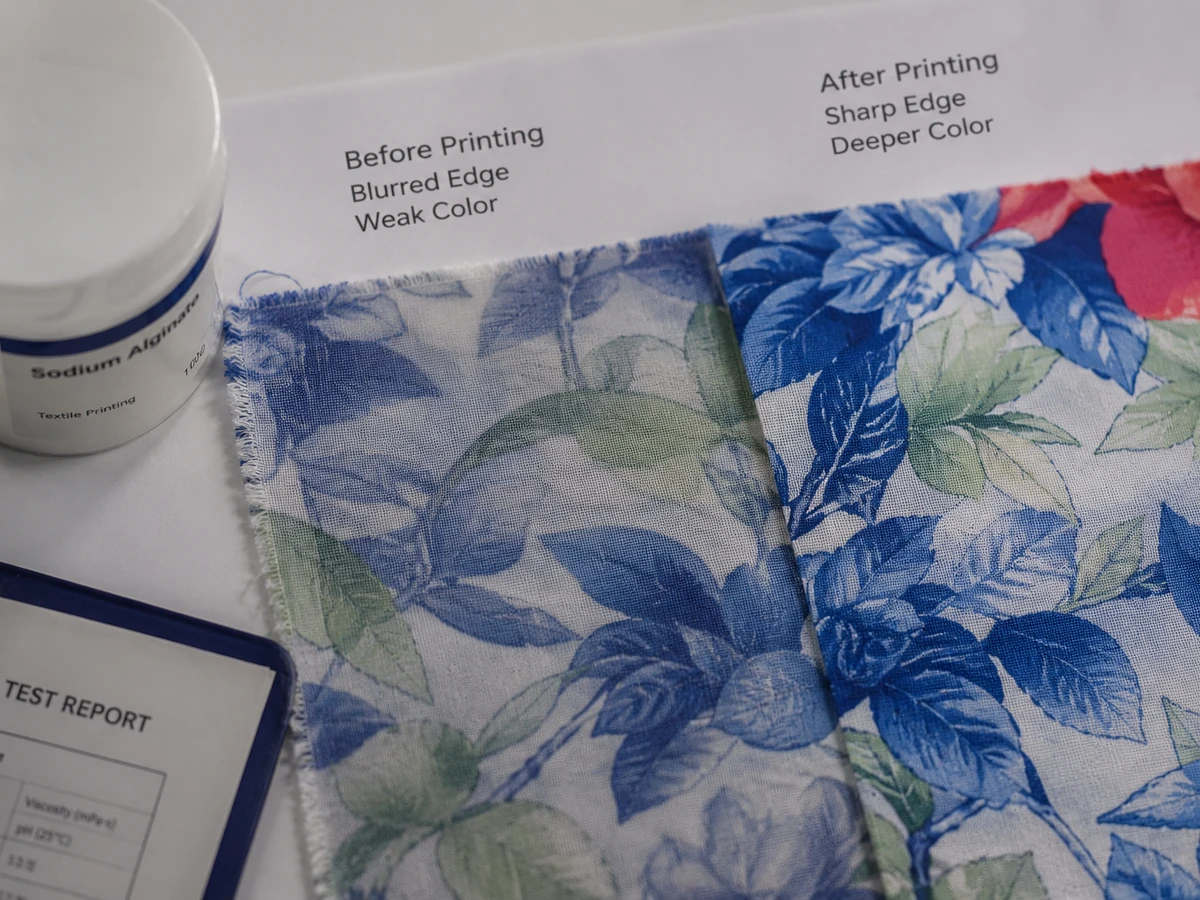
تیز کنارے کی تعریف
چھپائی کے دوران سیاہی کے پھیلاؤ کو روکتا ہے — روٹری اور فلیٹ اسکرین دونوں عملوں میں صاف نمونہ خاکوں کی حمایت کرتا ہے۔.
اچھی سکرین پر نفوذ
مناسب ویسکوسٹی پروفائل پیسٹ کو اسکرین میش سے یکساں طور پر گزرنے کی اجازت دیتا ہے، جس سے کپڑے کی چوڑائی بھر میں رنگ کی یکساں تہہ لگانے میں مدد ملتی ہے۔.
آسانی سے دھل جانے والا
بھاپ دینے کے بعد دھونے کے مرحلے میں صاف طور پر تحلیل ہو جاتا ہے — کم از کم باقیات چھوڑتا ہے، جو نرم ہاتھ کے احساس اور صاف کپڑے کے پس منظر کو برقرار رکھتا ہے۔.
بیچ سے بیچ استحکام
مستحکم تیاری کے حالات میں بیچوں کے دوران مستقل چپچپا پن کا پروفائل — ہر بار چلانے پر دہرائے جانے والے پیداواری نتائج کی حمایت کرتا ہے۔.
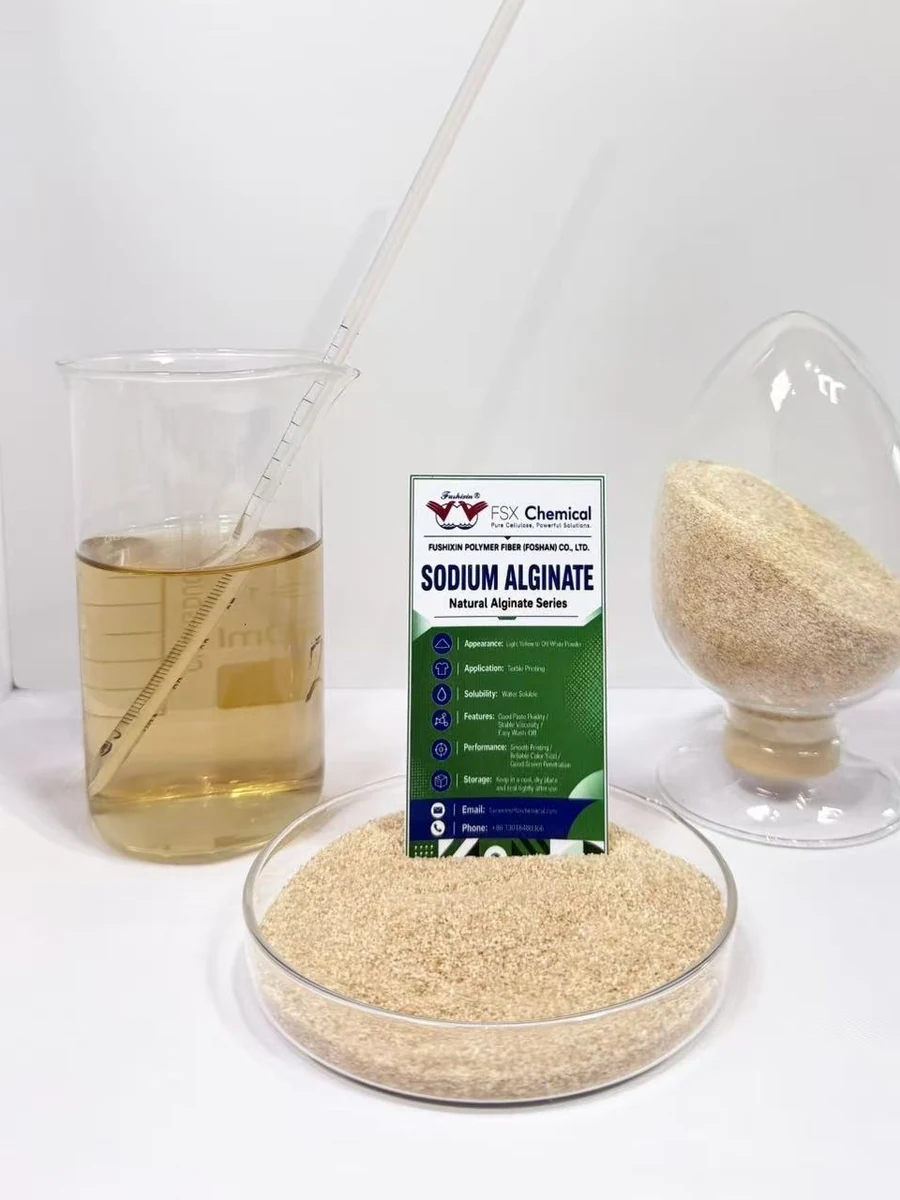
سوڈیم الگینٹ سرد پانی میں تیز گھماؤ والی مکسنگ کے تحت حل ہو جاتا ہے۔ اسٹاک پیسٹ (3–5%) پہلے سے تیار کیا جاتا ہے اور پرنٹنگ سے پہلے ردعمل کرنے والی رنگ پیسٹ کی ترکیب میں ملایا جاتا ہے۔.
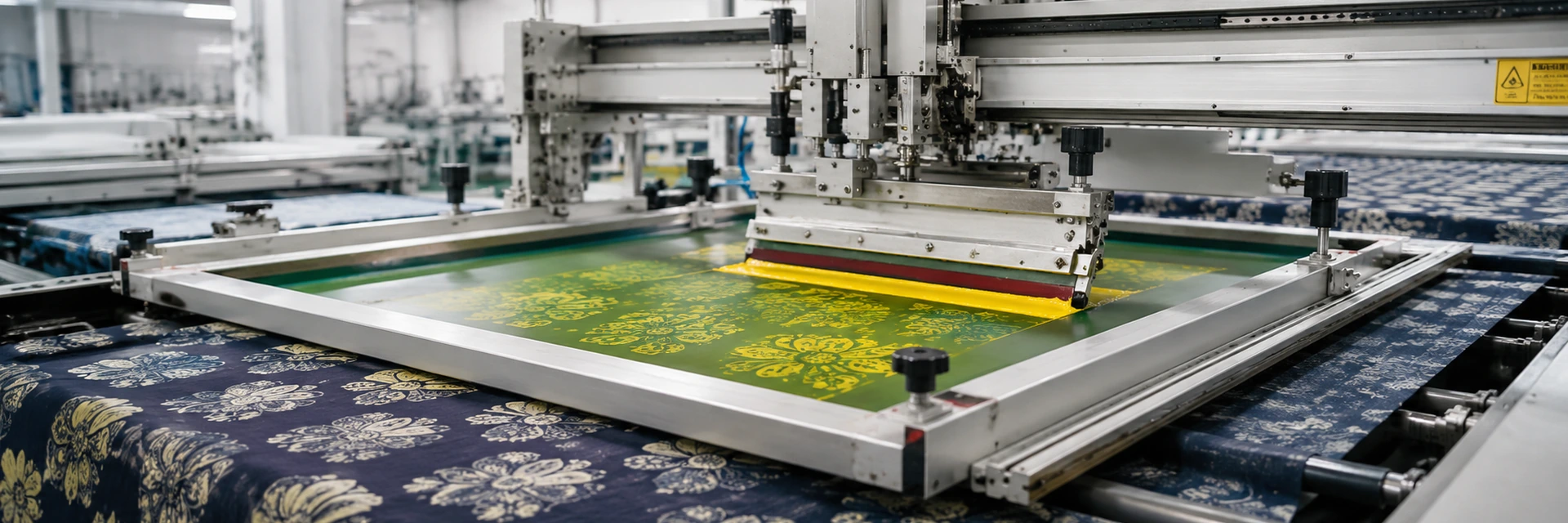
چھپائی اور دھونے کے بعد کیا دیکھنا چاہیے
جب سوڈیم الگینٹ پرنٹ ٹرائل کا جائزہ لیا جاتا ہے، تو یہ وہ بنیادی اشارے ہیں جنہیں تجربہ کار خریدار اور تکنیکی مینیجرز چیک کرتے ہیں۔.