UR
UR  EN
EN  BN
BN  ES
ES  TR
TR  FR
FR  ID
ID  RU
RU  AR
AR 
Carboxymethyl Cellulose · Sodium CMC · Textile Printing
What Is Carboxymethyl Cellulose (CMC) and How Is It Used in Textile Printing?
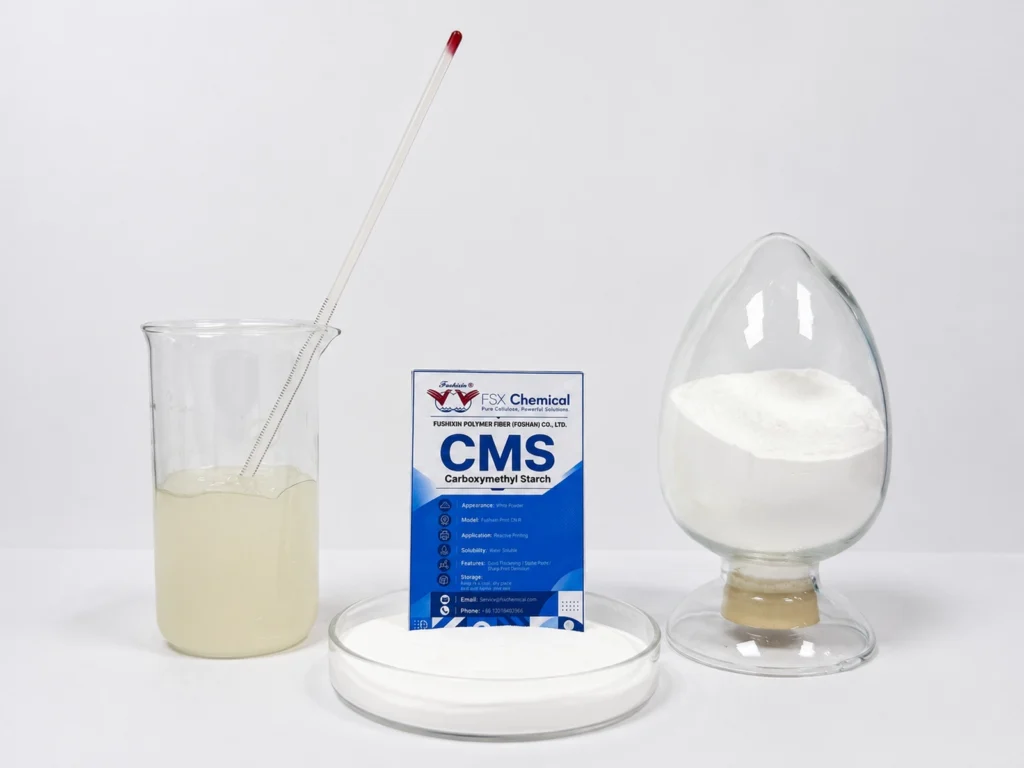
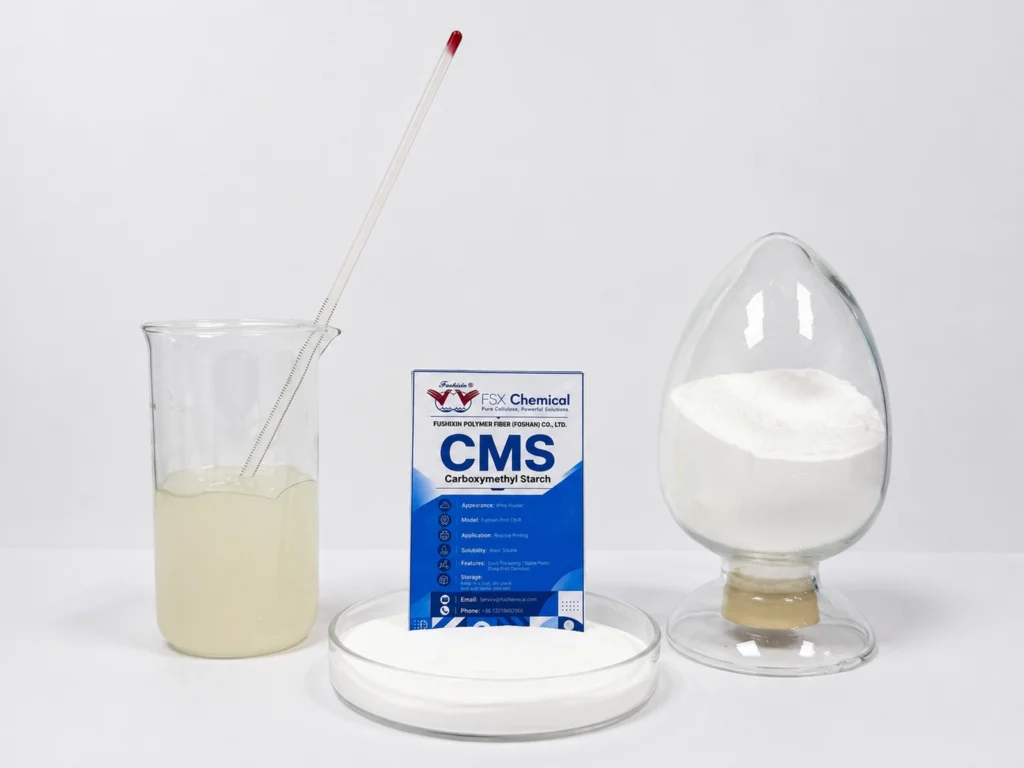
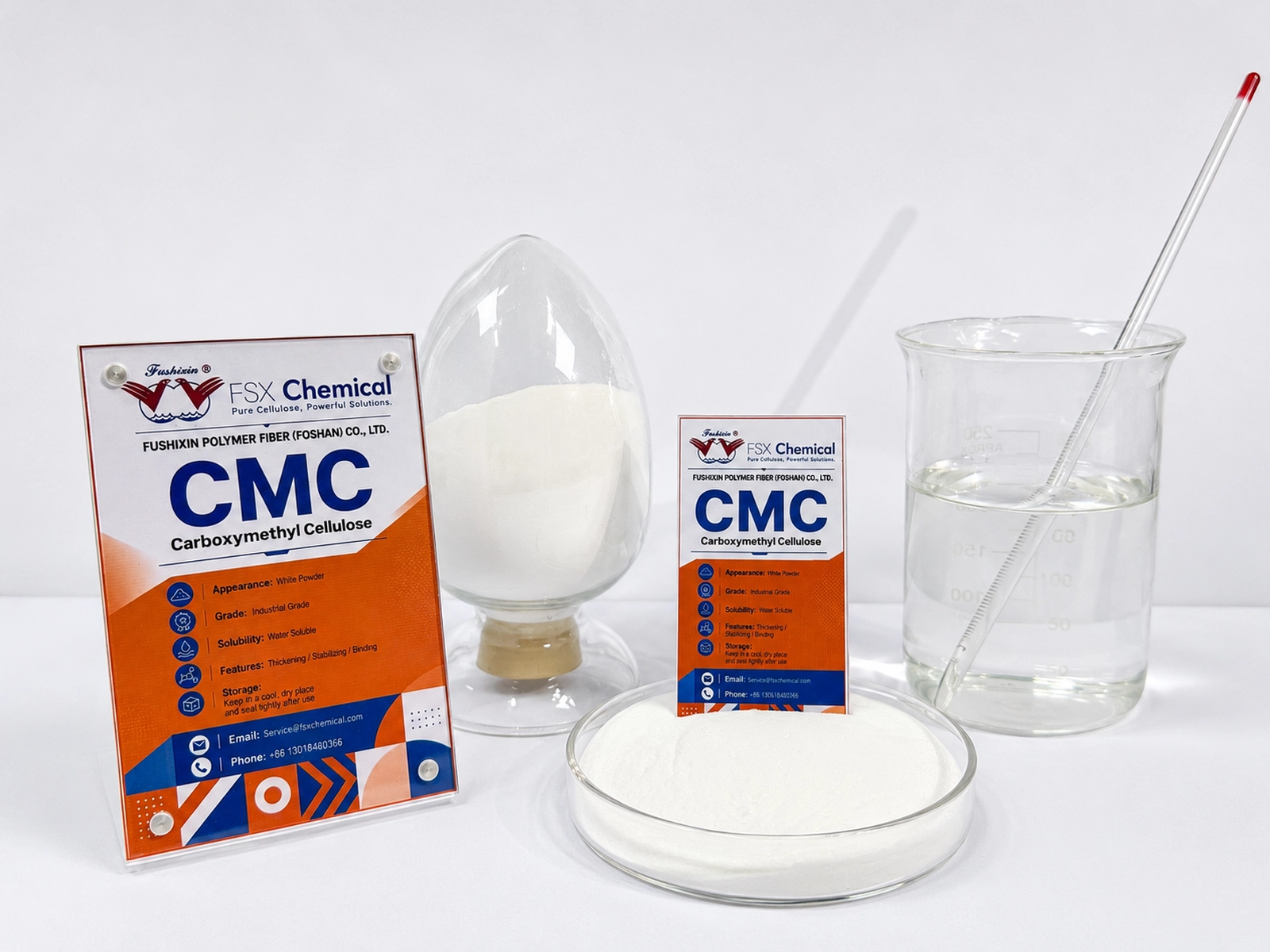
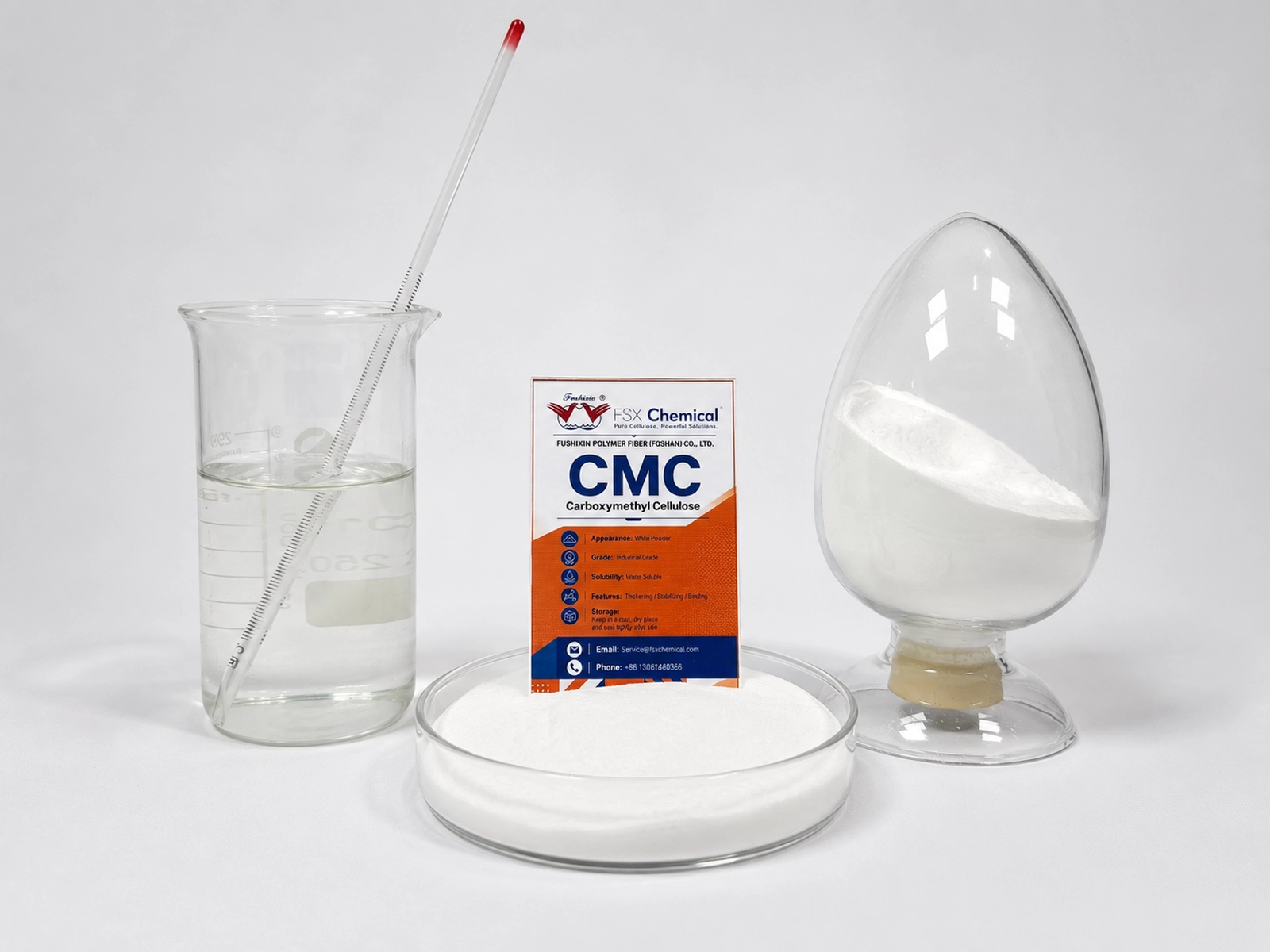
Carboxymethyl cellulose (CMC), commonly supplied as sodium carboxymethyl cellulose or sodium CMC, is a water-soluble cellulose ether used as a thickener and rheology modifier. In textile printing, CMC helps control viscosity, paste body and flow behavior while supporting stable formulation and processing.
CMC is produced from cellulose through chemical modification and is typically supplied as a white or off-white CMC powder. Sodium carboxymethyl cellulose disperses and hydrates in water to form a viscous solution, making it useful for viscosity control, thickening and rheology adjustment in aqueous formulations.
How CMC Works as a Thickener and Rheology Modifier
As a CMC thickener, sodium CMC develops viscosity after dispersion and hydration in water. In textile printing paste, the selected grade can influence paste consistency, flow, screen behavior and formulation stability. CMC viscosity should therefore be evaluated under defined test conditions and in the actual printing formulation.
What Matters When Selecting Textile Grade CMC?
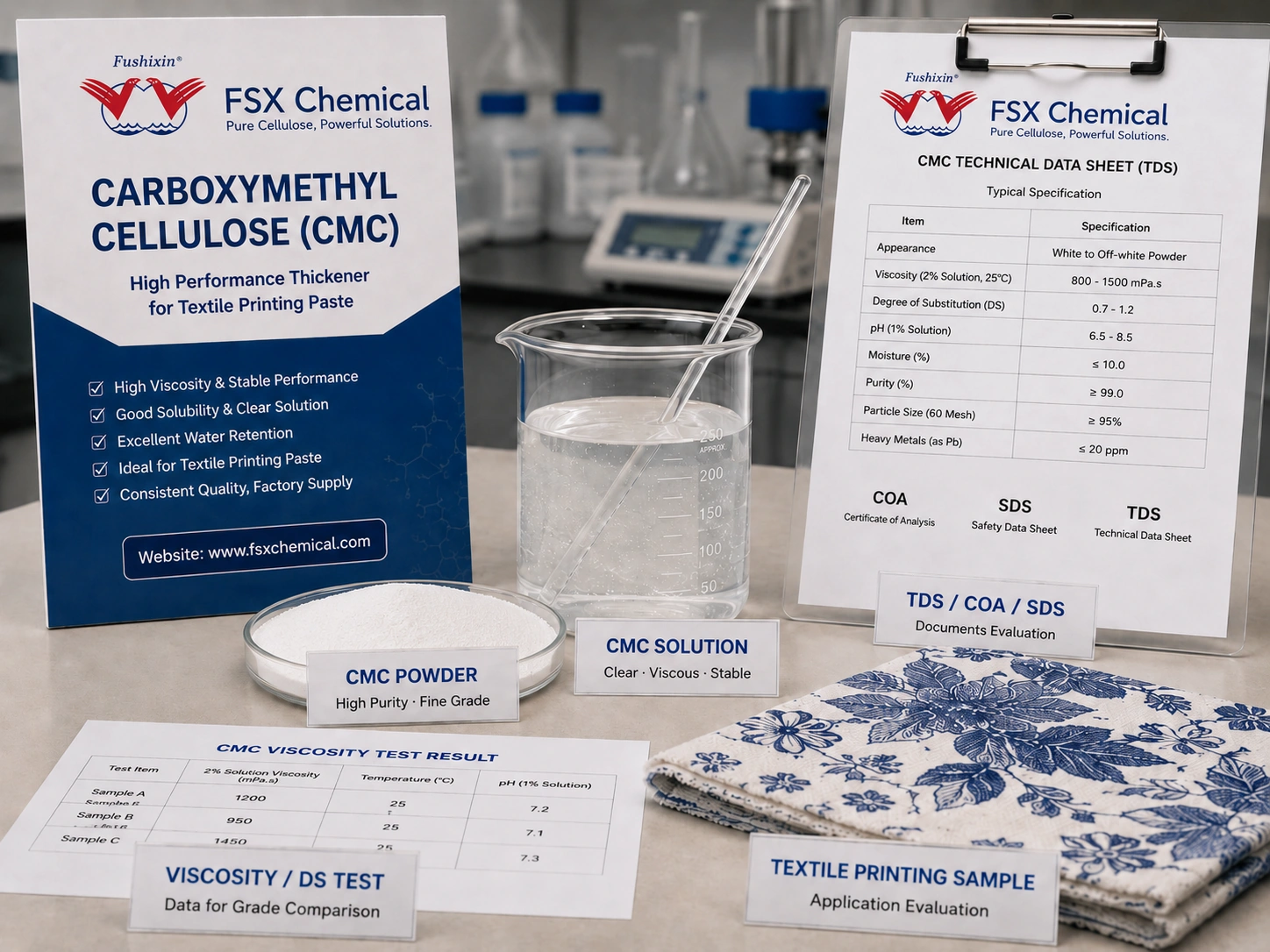
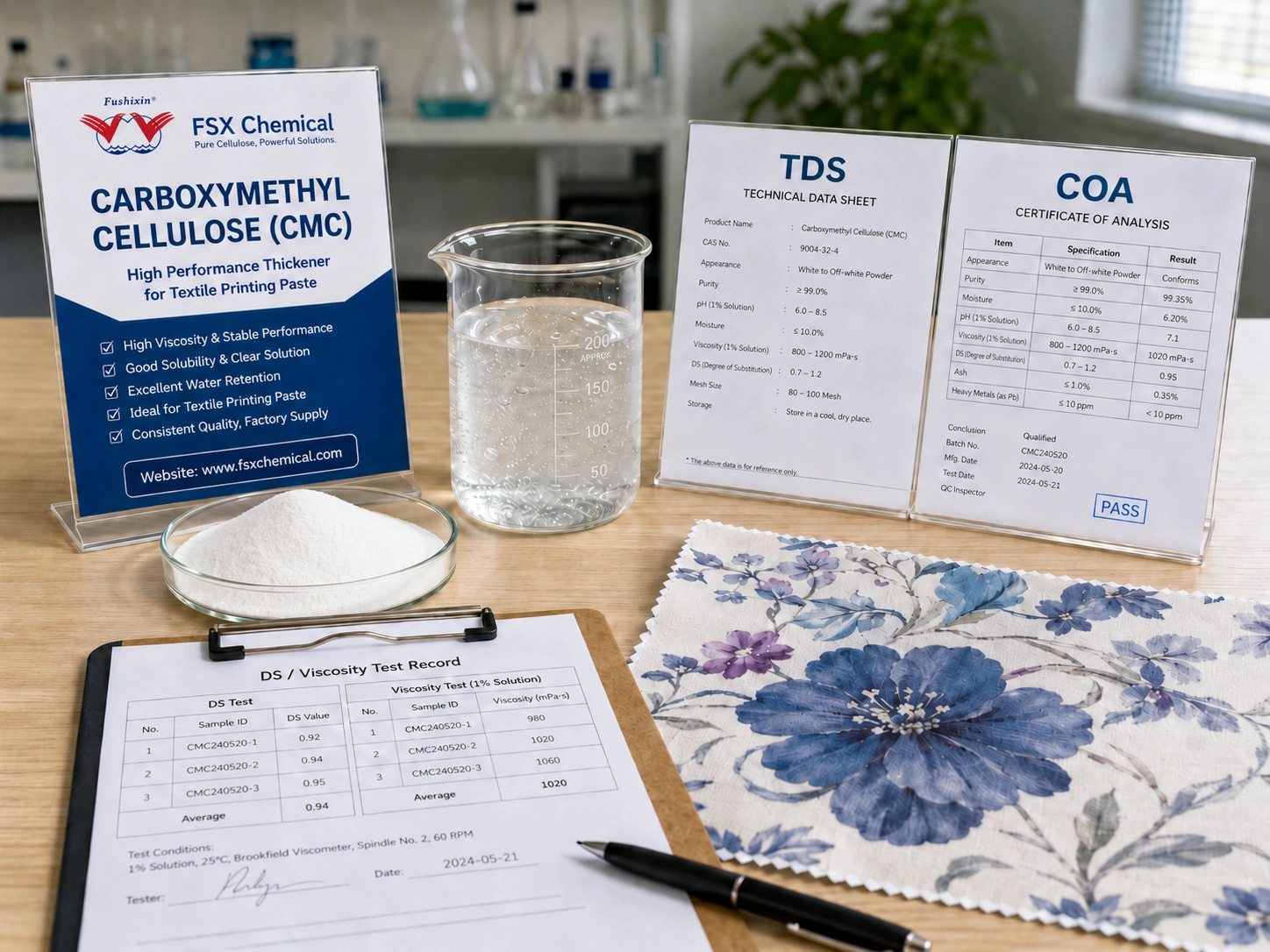
Textile grade CMC should not be selected by viscosity alone. Buyers normally compare degree of substitution (DS), reference viscosity, CMC dissolution and hydration behavior, solution uniformity and compatibility with the intended textile printing paste. Final grade selection should also consider the fabric, dye system, machine and target printing result.
CMC for Textile Printing Paste
In textile printing applications, CMC can be used as a formulation component for viscosity control and paste adjustment. Different CMC grades may suit different printing systems, so laboratory comparison and actual printing trials are more useful than relying on an internal grade name or one specification value alone.
A suitable CMC grade is determined by the combination of DS, viscosity, dissolution, hydration اور end-use performance.
CMC Grade Selection · Buyer Checklist
How to Select the Right CMC Grade for Your Application
CMC-HD, CMC-MD and CMC-LD are FSX Chemical internal grade codes representing different degree-of-substitution routes. Selection should be based on the end-use application, reference viscosity, degree of substitution (DS), dissolution behavior, formulation compatibility and actual sample result rather than the model name alone.
Confirm the End-Use Application
Identify whether the CMC is required for textile printing paste, a blended thickener system, viscosity adjustment, another industrial formulation or comparison with a current supplier grade.
Compare DS and Viscosity Under Matched Conditions
Review degree of substitution, reference viscosity, pH, solution concentration, temperature and test method. Data measured under different conditions should not be compared directly.
Evaluate Dissolution and Application Performance
Test powder dispersion, dissolution and hydration, solution uniformity, viscosity development and formulation stability. For textile printing, also compare paste behavior, screen performance and the final printing result.
Confirm Supply, Packing and Documents
After the trial grade is approved, confirm minimum order quantity, production lead time, 25 kg bags, pallet or export packing and required TDS and SDS. Batch COA is prepared for the confirmed production batch.
فیکٹری / لیب / کوالٹی کنٹرول کا ثبوت
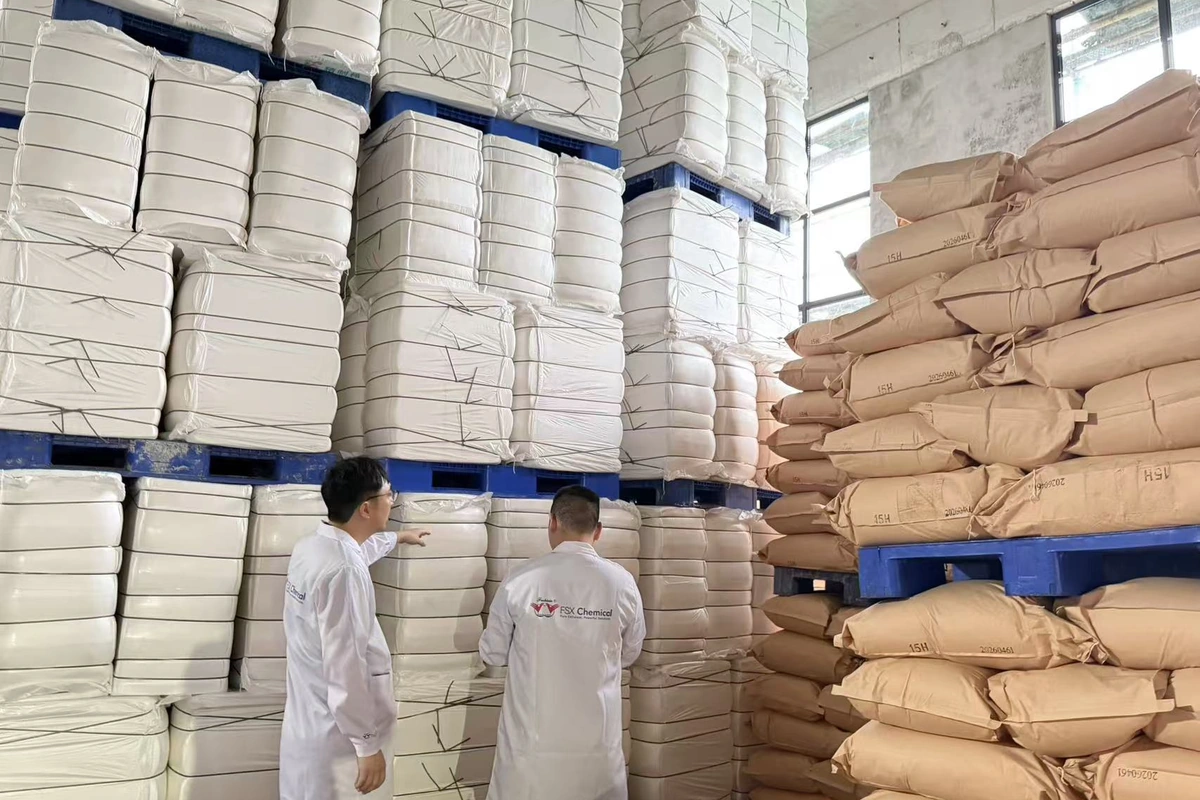
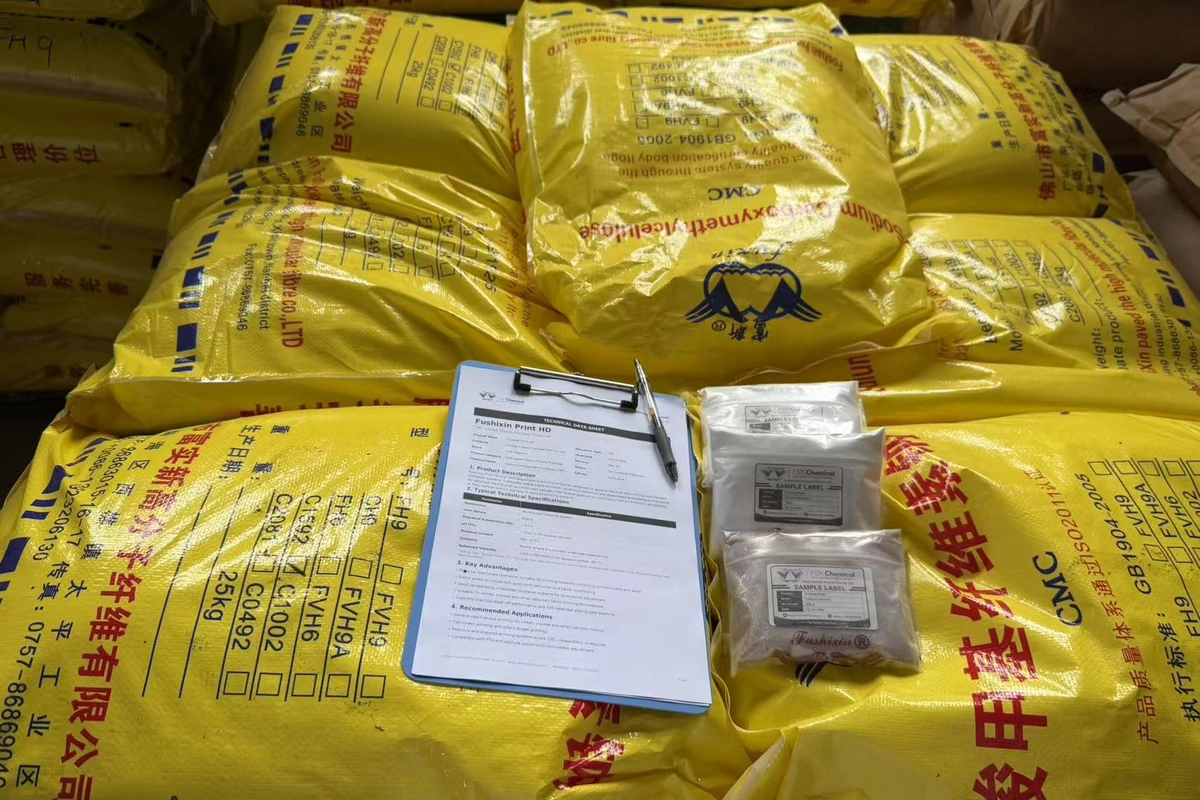
Factory, Lab and QC Proof
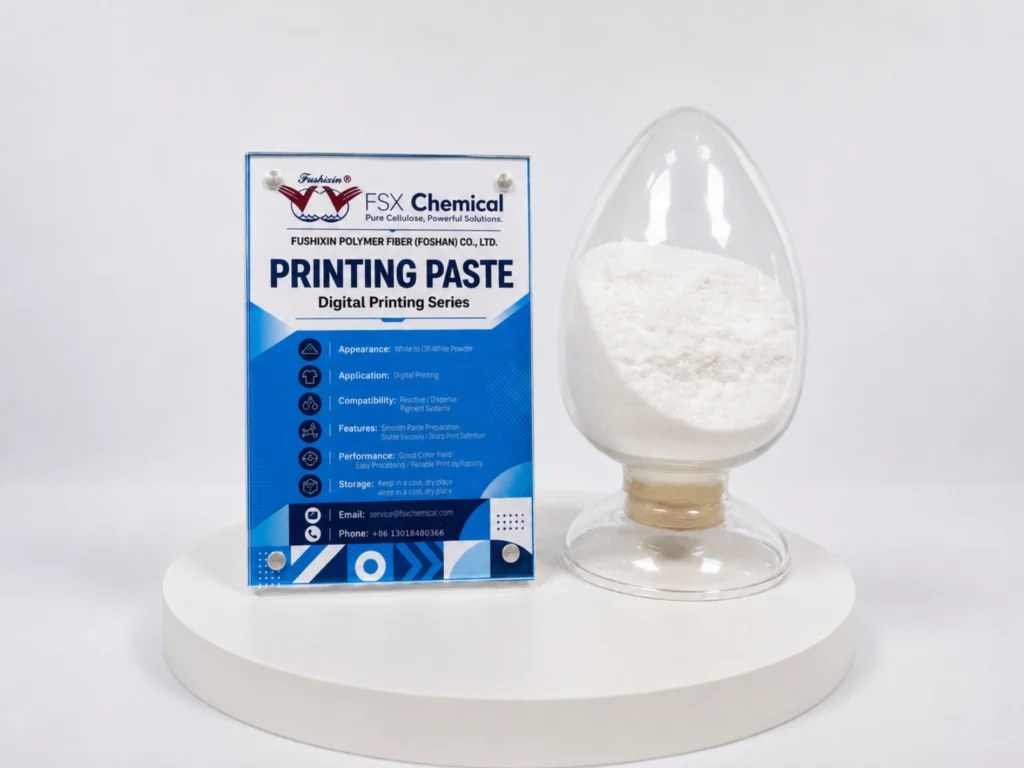
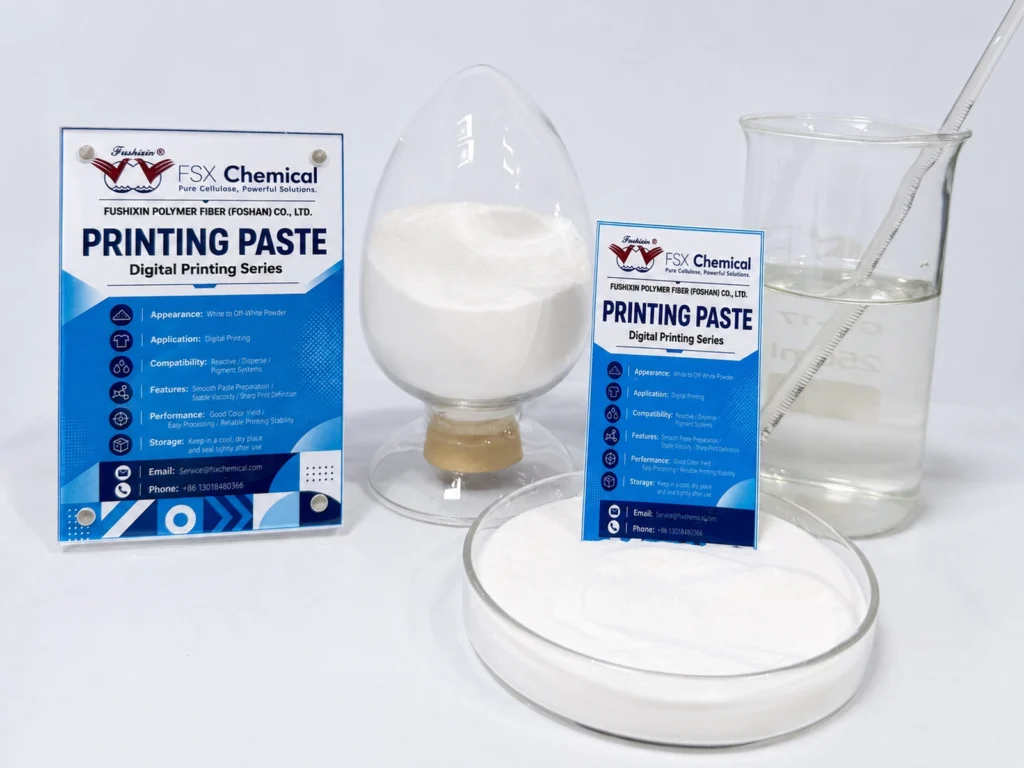
Use real production, testing, document and packing images to verify digital printing paste supply capability before sample evaluation.



CMC Buyer Questions · Technical & Procurement
CMC Purchasing & Technical FAQ
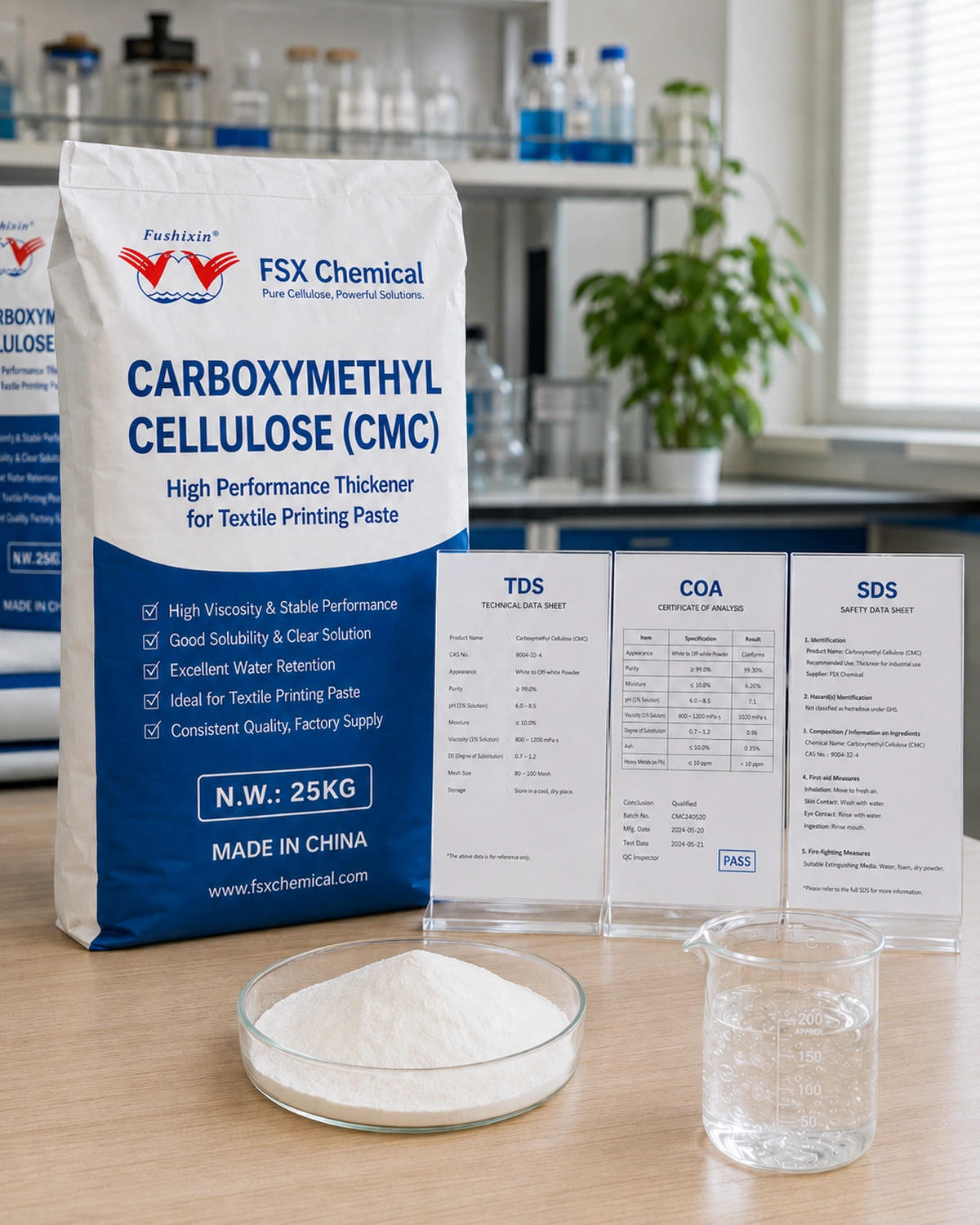
Practical answers for buyers preparing a sodium carboxymethyl cellulose quotation, sample evaluation or bulk purchasing decision, including specification review, current TDS comparison, trial evaluation, order quantity and technical documents.
01 What information is needed for a CMC quotation?
Please provide the intended application, required CMC grade or target specification, viscosity requirement and test method if available, degree of substitution (DS), estimated order quantity and destination. If you already use CMC, your current TDS or sample can also support a more relevant technical comparison.
02 Can I request a CMC sample before placing a bulk order?
Yes. A CMC sample can be evaluated before bulk purchasing. Providing the application, current specification, target viscosity, DS requirement and expected performance helps identify a more suitable sample direction for laboratory comparison.
03 Can FSX compare my current CMC sample or TDS?
Yes. Your current CMC sample or TDS can be reviewed together with the viscosity test conditions, solution concentration, degree of substitution, pH, application and formulation requirements. Where possible, comparison testing should use matched conditions before determining whether a proposed FSX grade should move to the next trial stage.
04 Can I evaluate more than one CMC grade in the same trial?
Yes. When the application or target specification allows more than one possible grade direction, FSX Chemical can recommend suitable CMC samples for side-by-side evaluation. Comparing the samples under the same preparation, viscosity test and application conditions can help identify the more suitable option before bulk purchasing.
05 What are the usual MOQ and standard packing options for CMC?
CMC is commonly supplied in 25 kg bags with an inner moisture-resistant liner. Minimum order quantity depends on the selected grade, quantity and order requirements and should be confirmed together with the quotation.
06 Which CMC technical and batch documents are available?
TDS and SDS are available to support technical evaluation. A batch COA is prepared according to the confirmed production batch. Additional product or quality information can be reviewed according to the selected grade and order requirements.
07 What should be confirmed after a CMC sample passes laboratory testing?
After laboratory evaluation, buyers should confirm performance under the actual formulation or production conditions together with the agreed technical specification. The approved grade, quality requirements, order quantity and batch documentation can then be confirmed before moving to bulk purchasing.
CMC selection should be based on matched technical data and actual application performance rather than model name or a single specification value alone.