
Carboxymethyl Cellulose (CMC) Thickener Manufacturer

FSX Chemical manufactures CMC-HD, CMC-MD and CMC-LD for textile printing and industrial use, with sample matching and factory-direct supply.

CMC Function in Printing Paste

How CMC Supports Textile Printing Paste

Carboxymethyl cellulose is used as a textile printing thickener, viscosity modifier and paste stabilizer. In a matched formulation, CMC can support paste body, print definition, water retention, process stability and cost control in selected textile printing and industrial applications.

Viscosity Development

Builds practical paste viscosity and body at a controlled dosage, helping mills adjust flow and application stability.

Print Definition

Supports stable paste transfer and cleaner pattern edges when the grade, viscosity and formulation are properly matched.

Controlled Paste Flow

Helps balance flow, penetration and screen release for rotary screen, flat screen and selected coating applications.

Water Retention

Supports moisture retention and working stability during paste preparation, storage and the printing process.

ترکیب کی مطابقت

Can be evaluated with dyes, auxiliaries and existing thickener systems under the customer’s actual formulation conditions.

Cost-Control Route

CMC can support formulation cost adjustment after laboratory matching and controlled production trials.
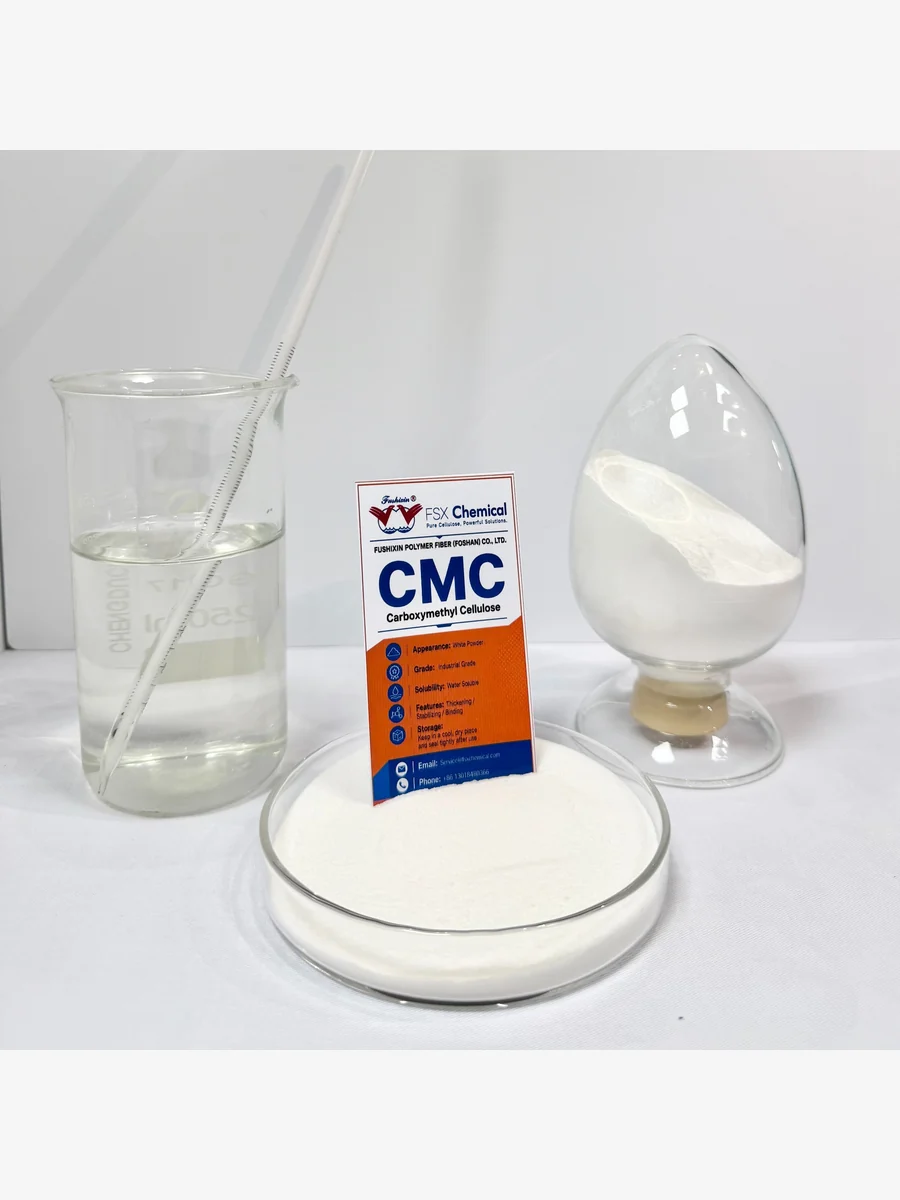
FSX Chemical CMC powder and prepared textile printing paste

CMC Grade Matching by DS and Function

CMC-HD · Higher-DS Route For selected higher-substitution formulations Evaluated where DS, dissolution, compatibility and paste performance require a higher-substitution CMC route.
CMC-MD · Medium-DS Route For balanced formulation evaluation A medium-DS route for comparing viscosity control, dissolution, paste transfer and formulation stability.
CMC-LD · Lower-DS Route For paste body and formulation adjustment Evaluated where a lower-DS route, higher reference viscosity range or specific compatibility adjustment is required.
CMC in the Printing Process

Where CMC Works in Textile Printing

CMC is mainly evaluated during paste preparation, formulation adjustment, printing and wash-off. Its grade, DS, viscosity, dosage and compatibility influence paste flow and final print performance.

Paste
تیاری
CMC is dispersed and hydrated under controlled mixing. Dosage, dissolution and viscosity development are checked at this stage.
Formulation
Adjustment
CMC may be used alone or with an existing thickener system to adjust rheology, paste body, flow and formulation compatibility.
Color Paste
ملاپ
Dyes or pigments and the required auxiliaries are incorporated. Paste uniformity, handling and stability are then reviewed.
چھپائی
During rotary or flat-screen printing, mills evaluate paste transfer, screen release, penetration and edge definition.
Drying /
تثبیت
Drying and fixation are set according to the fabric, colorant, formulation and production equipment.
دھونا
After washing, evaluate paste removal, background clarity, fabric hand feel and any remaining surface residue.
ختم کرنا
Softening and other finishing treatments are selected according to fabric requirements and downstream processing.
نمایاں اقدامات show where CMC most directly affects paste preparation, formulation adjustment, printing and wash-off evaluation. Actual performance varies with CMC grade, DS, viscosity, dosage, dye or pigment system, fabric and equipment. Confirm the final formulation through laboratory and production trials.
CMC Trial Result Evaluation

How to Evaluate CMC Printing Performance

When testing CMC alone or in a blended thickener system, compare paste consistency, print definition, formula compatibility, wash-off, fabric hand feel and trial repeatability under matched production conditions.

FSX Chemical CMC printing trial samples evaluated for print definition, wash-off and background clarity

Compare results under the same fabric, colorant, formula and process conditions. Confirm the selected CMC route through laboratory and controlled production trials.

Six Performance Indicators to Compare

Use the same preparation and printing conditions when comparing a CMC grade with the current thickener system.

Paste Consistency

Check whether viscosity and paste body remain stable during preparation, storage and the printing run.

Print Definition

Compare edge sharpness, fine-line reproduction, penetration and pattern accuracy against the target result.

Formula Compatibility

Look for separation, gel particles, uneven hydration or unexpected viscosity changes after mixing.

Wash-Off and Background Clarity

After washing, check the unprinted background for residue, haze, staining or incomplete paste removal.

Fabric Hand Feel

Assess stiffness, surface residue and overall fabric feel after the intended washing and finishing process.

Trial Repeatability

Repeat the same formula and test method to compare viscosity, paste behavior, shade consistency and final print effect.
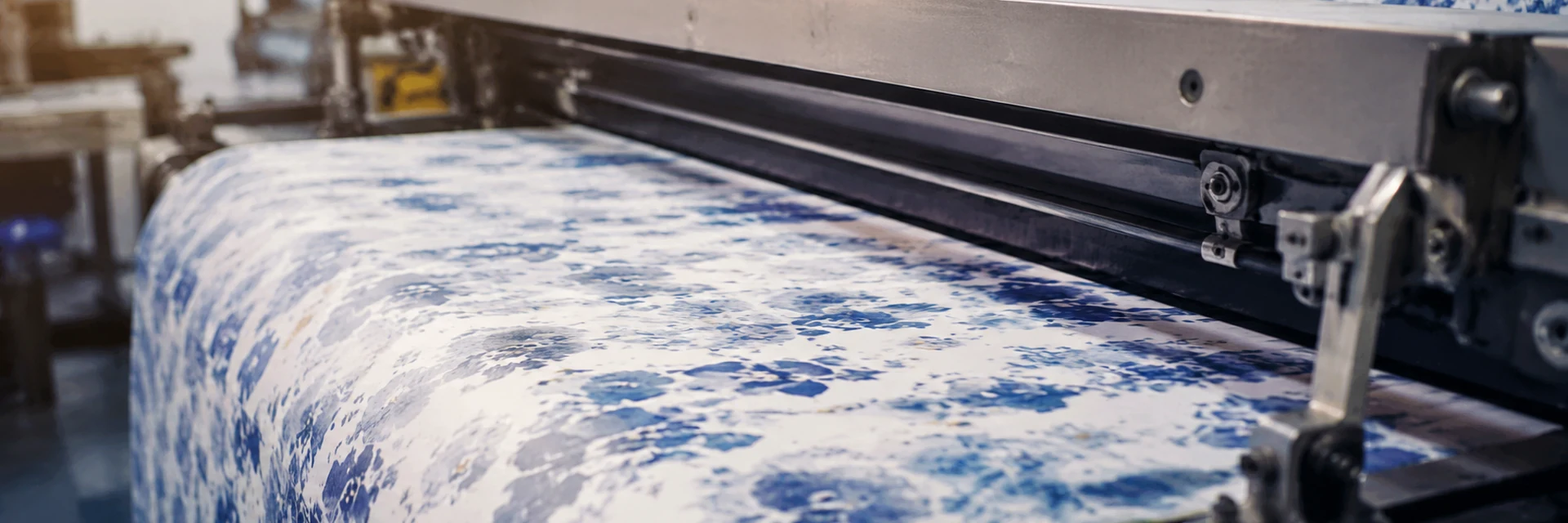

CMC-based textile printing paste application on printed fabric in industrial screen printing process
CMC Route Evaluation

CMC for Printing Paste Adjustment

Where a CMC Route May Add Value

Qualitative guidance only—not laboratory scores or a fixed product ranking.

Rheology
control

Supports viscosity development, paste body and controlled flow.

Primary focus
Blend
compatibility

Can be evaluated with alginate, synthetic thickeners or an existing paste system.

Trial-dependent
تیاری
consistency

Controlled dispersion and hydration can support repeatable paste preparation.

Primary focus
Print
definition

Paste transfer, screen release and edge control depend on the complete formulation.

Formula-dependent
Cost-control
potential

Can be reviewed as a cost-control route after performance and dosage are matched.

Project-dependent
Special
processes

Usually not the first route for vat, discharge or alkaline burn-out systems.

Separate evaluation

When a CMC Route Is Worth Testing

CMC should not be treated as a direct replacement for sodium alginate or CMS. Its value is mainly in viscosity development, paste-body adjustment, flow control and compatibility within a matched formulation.

CMC may be tested alone or as part of a blended thickener system when the goal is to adjust rheology, improve paste handling or evaluate a more practical cost-performance route. The comparison should use the same dosage, fabric, colorant and process conditions.

FSX Chemical manufactures CMC-HD, CMC-MD and CMC-LD and provides factory-direct supply, sample matching and technical document support for textile printing and selected industrial formulations.

CMC should not be added directly to digital inkjet ink. For reactive, disperse or pigment inkjet printing, evaluate a dedicated DP-R, DP-D or DP-P digital printing paste route.

Select the CMC route by application, DS, reference viscosity, dissolution, dosage and formulation compatibility. Confirm whether to use CMC alone or as a blending component through laboratory and controlled production trials.
Grade Selector

Choose a Starting CMC Grade for Your Printing Paste Trial

Select your printing situation below to compare FSX Chemical CMC starting grades. We manufacture CMC in our Foshan factory and can provide direct factory samples, factory price quotation and technical matching support before final grade and dosage confirmation.

High DS Grade

Fushixin Print HD

FSX Chemical CMC Textile Printing Thickener — CAS 9004-32-4

Degree of substitution DS 1.9–2.0
حوالہ ویسکاسٹی 800–1,800 mPa.s (1%, 20°C)
پی ایچ (1%) 7.0–9.0
کے لیے بہترین Reactive printing systems requiring higher DS, improved solubility and compatibility
مصنوعات کے بارے میں استفسار اور معاونت

اپنی مصنوعات کی ضروریات بھیجیں

پروڈکٹ کا نام، استعمال، مقدار، منزل اور کوئی بھی TDS، نمونہ کی تصویر یا دستاویز جو آپ کے پاس موجود ہو، فراہم کریں۔ FSX کیمیکل اس معلومات کا جائزہ لے گا اور کوٹیشن، نمونہ کی مطابقت یا پروڈکٹ کے انتخاب کے لیے اگلا قدم تجویز کرے گا۔.

مصنوعات کی معلومات مصنوعہ کا نام، گریڈ، ماڈل، لیبل کی تصویر یا سپلائر کا حوالہ.
دستیاب دستاویزات ٹی ڈی ایس، ایس ڈی ایس، سی او اے، نمونہ کی تصویر، مصنوعات کی فہرست یا ٹیسٹ کے اعداد و شمار۔.
آرڈر کی تفصیلات متوقع مقدار، پیکیجنگ، منزل ملک، بندرگاہ یا تجارتی اصطلاح۔.
درخواست یا مسئلہ ٹیکسٹائل پرنٹنگ کا عمل، فارمولیشن کی ضرورت، موجودہ مسئلہ یا ہدف کارکردگی۔.