
CMS Thickener for Textile Printing
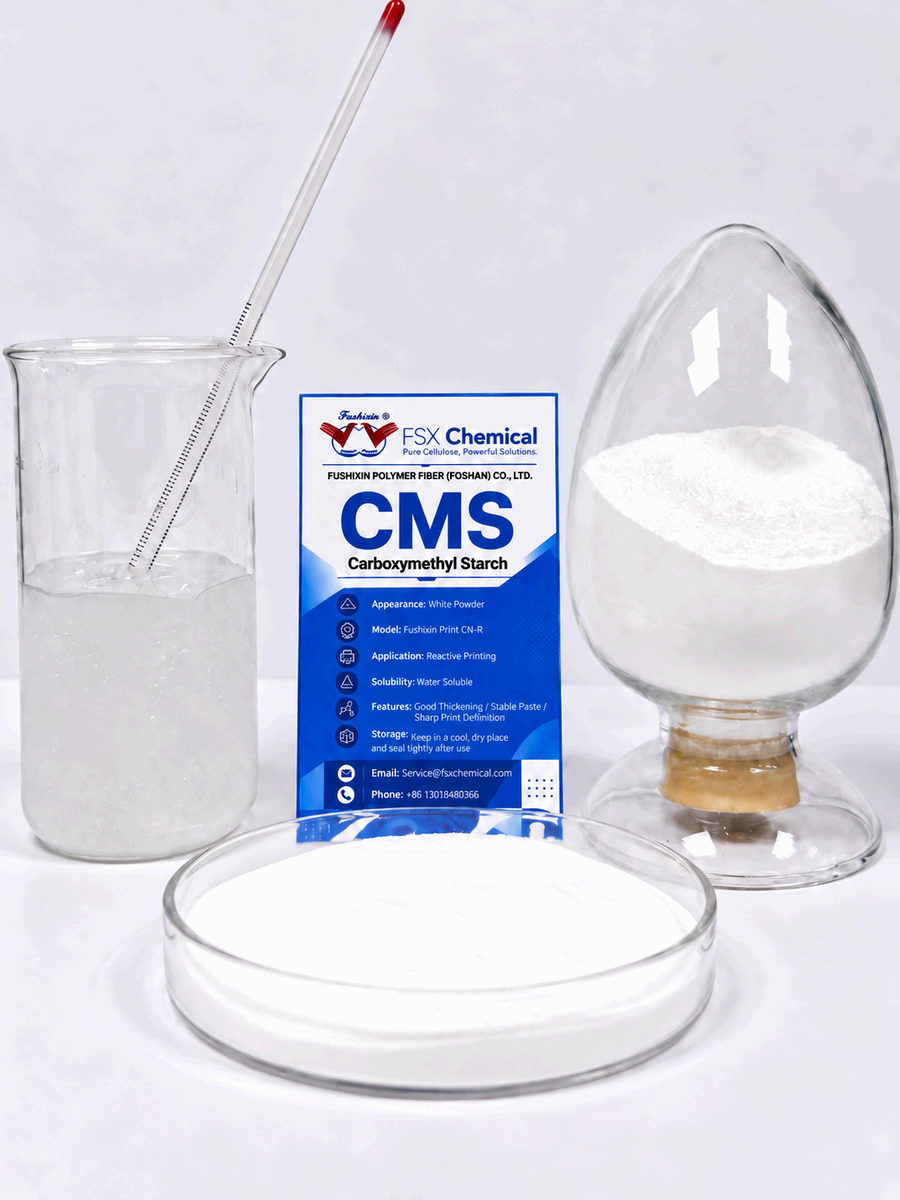
FSX Chemical manufactures and supplies carboxymethyl starch (CMS) thickener for textile printing paste adjustment, helping mills improve paste body, printing stability and cost control across reactive, disperse and blended printing systems.
How CMS Supports Textile Printing Paste
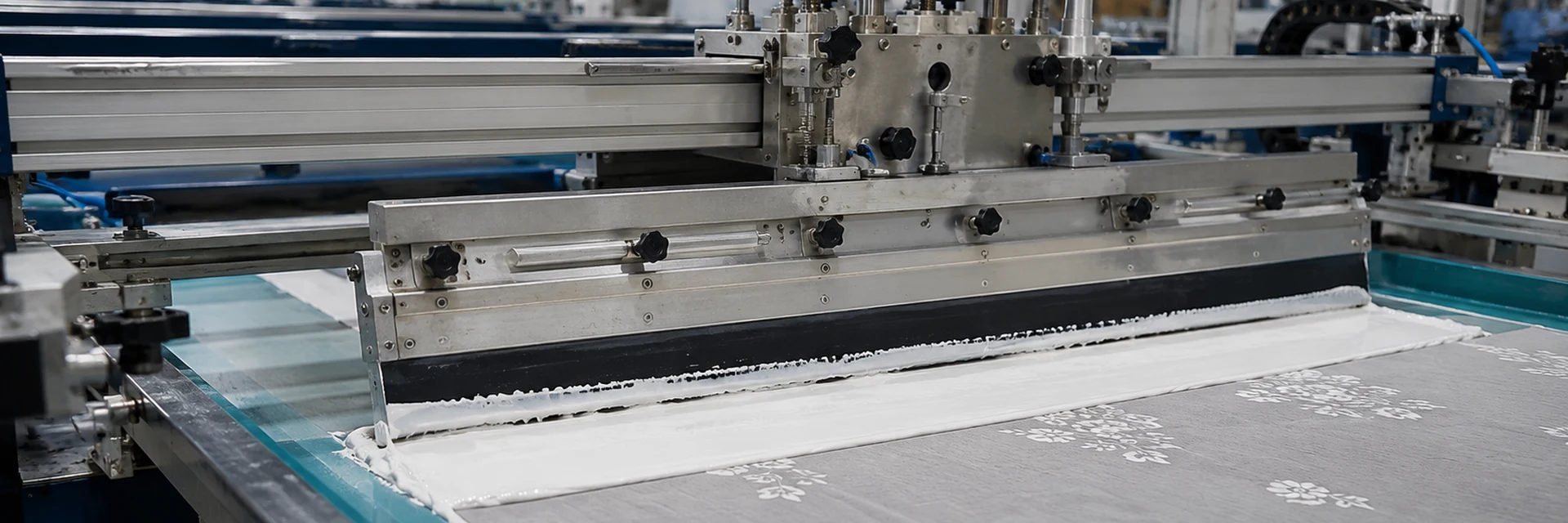
Carboxymethyl starch is used as a textile printing thickener to build viscosity, control paste flow and support stable print transfer. FSX Chemical offers CMS routes for reactive, disperse and selected specialty textile printing processes.
Viscosity and Paste Body
Builds practical viscosity and paste body for rotary-screen, flat-screen and selected textile printing formulations.
Print Definition
Supports controlled paste transfer and cleaner pattern edges when the CMS grade and formulation are properly matched.
Paste Transfer and Screen Release
Helps balance paste flow, screen release and fabric penetration during continuous printing under controlled viscosity and dosage.
Wash-Off Evaluation
After printing and fixation, evaluate paste removal, background clarity, surface residue and fabric hand feel.
Process-Based Grade Matching
CN-R, FS-05 and H5 are selected by printing process, colorant system, fabric and actual formulation conditions.
Cost-Performance Evaluation
CMS can be compared as a cost-performance route after dosage, print quality and total formulation cost are confirmed through trials.
CMS Grades by Printing Route
CMS Applications by Textile Printing Process
FSX Chemical offers CMS grades for reactive, disperse and selected specialty textile printing processes. Compare the fabric, process conditions and starting grade below, then confirm the final route through matched laboratory and production trials.
Reactive Printing on Cellulosic Fabrics
Disperse Printing on Polyester
واٹ اور ڈسچارج پرنٹنگ
Selected Burn-Out / Devoré Printing
Where CMS Works in Textile Printing
CMS is mainly evaluated during stock-paste preparation, color-paste mixing, printing and wash-off. The CMS grade, dosage and formulation influence paste viscosity, screen transfer and the final printed result.
Paste
Paste
کپڑا
Printed Fabric
or Treat
کپڑا
How to Evaluate CMS Printing Performance
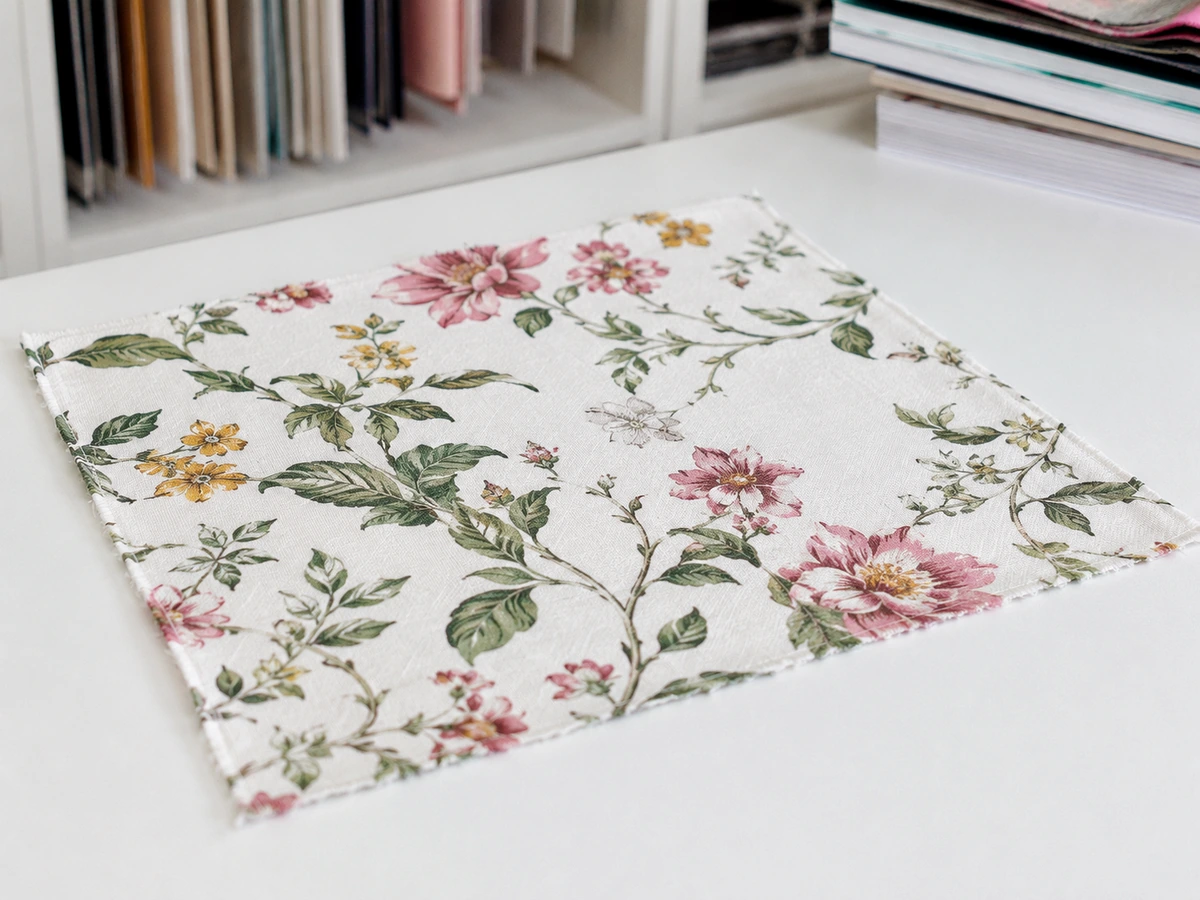
A CMS trial should be evaluated beyond viscosity alone. Compare color performance, print definition, paste transfer, wash-off, fabric hand feel and trial repeatability under the same fabric, formulation and process conditions.
Six Results to Check Before Grade Selection
Keep the fabric, dye recipe, CMS dosage, fixation conditions and washing procedure consistent when comparing CN-R, FS-05, H5 or the current thickener system.
Color Yield and Shade
Compare color depth, brightness and shade consistency with the target sample under the same fabric and recipe conditions.
Edge Sharpness
Check fine lines, pattern outlines and multicolor boundaries for bleeding, spreading or loss of definition.
Paste Transfer and Penetration
Review screen release, fabric penetration and paste transfer for dragging, blocking, uneven coverage or unstable flow.
Wash-Off and Background Clarity
After washing, inspect the unprinted background for residue, haze, staining or dullness, especially on light-colored fabrics.
Fabric Hand Feel
Assess surface residue, stiffness and overall fabric feel after the intended washing and finishing process.
Paste Stability and Trial Repeatability
Repeat the same preparation and printing method to compare viscosity, standing stability, shade and final print results.

When CMS Is Worth Testing as a Cost-Control Route
CMS should not be treated as a simple low-cost substitute. In the right reactive, disperse or special printing system, it can help mills balance paste performance, process stability and formulation cost after sample testing.
Where CMS Usually Makes Sense
CMS is most useful when the mill wants to keep print quality acceptable while improving formulation cost or process flexibility. It is often reviewed in reactive, disperse, pigment, vat discharge and burn-out printing routes, depending on fabric, dye chemistry and production conditions.
In reactive printing, CMS may be tested against sodium alginate when cost control is important. The result should be judged by colour yield, edge sharpness, wash-off, hand feel and paste stability, not by raw material price alone.
CMS should not be described as a complete replacement for sodium alginate. It is better treated as a route to test in selected systems, especially when the customer can provide a current sample, TDS, recipe direction or target viscosity for comparison.
CMS should not be added directly into digital inkjet ink systems. For digital textile printing pretreatment, coating or inkjet preparation applications, refer to the Digital Printing Paste application page.
Start with the CMS Grade That Matches Your Printing Route
Choose the situation closest to your production line. The selector gives a practical starting point for CMS sample testing, while the final grade still needs to be confirmed by fabric, dye system, viscosity target and process conditions.
Fushixin PrintCN-R
CMS route for reactive textile printing paste
Fushixin Print FS-05
CMS route for disperse printing on polyester
Fushixin Print H5
Modified thickener route for discharge and burn-out printing
اپنی مصنوعات کی ضروریات بھیجیں
پروڈکٹ کا نام، استعمال، مقدار، منزل اور کوئی بھی TDS، نمونہ کی تصویر یا دستاویز جو آپ کے پاس موجود ہو، فراہم کریں۔ FSX کیمیکل اس معلومات کا جائزہ لے گا اور کوٹیشن، نمونہ کی مطابقت یا پروڈکٹ کے انتخاب کے لیے اگلا قدم تجویز کرے گا۔.