














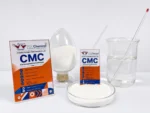
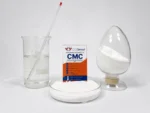
Carboxyméthylcellulose · CMC sodique · Impression textile
Qu'est-ce que la carboxyméthylcellulose (CMC) et comment est-elle utilisée dans l'impression textile ?
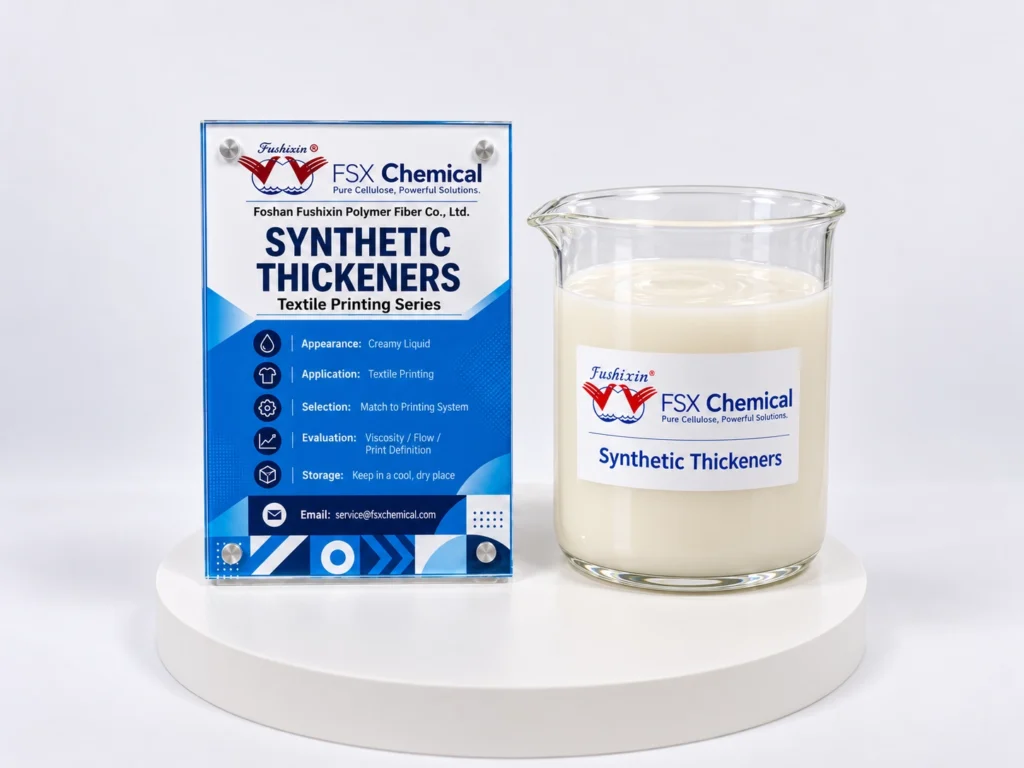
Carboxymethyl cellulose (CMC), commonly supplied as sodium carboxymethyl cellulose or sodium CMC, is a water-soluble cellulose ether used as a thickener and rheology modifier. In textile printing, CMC helps control viscosity, paste body and flow behavior while supporting stable formulation and processing.
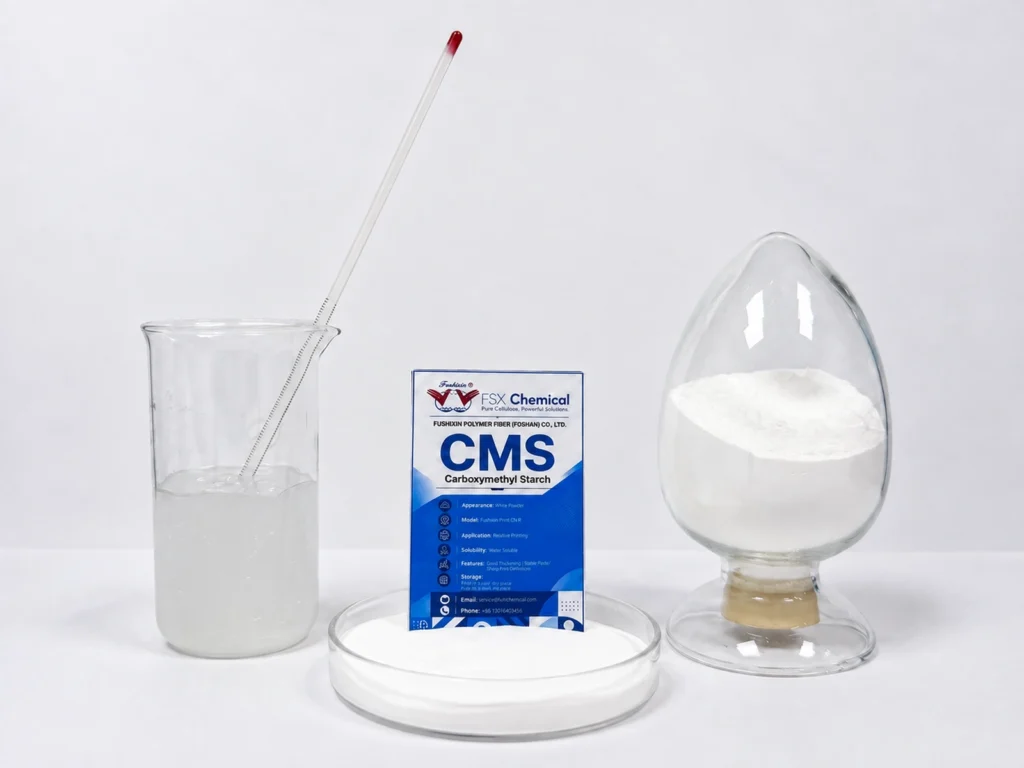
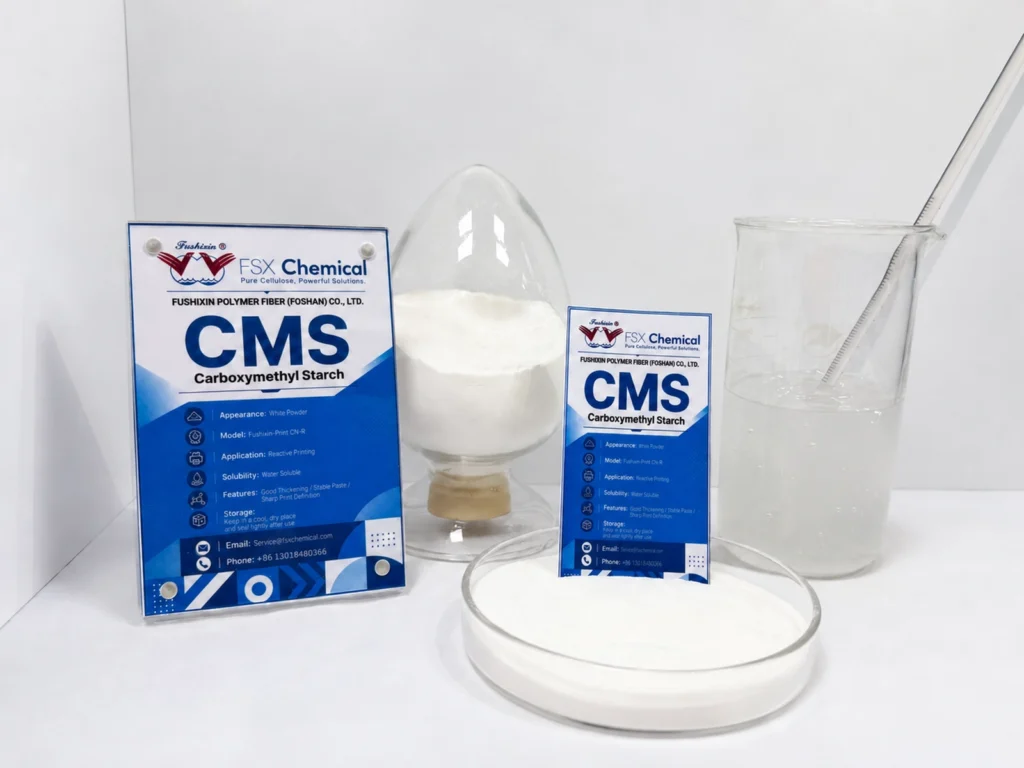
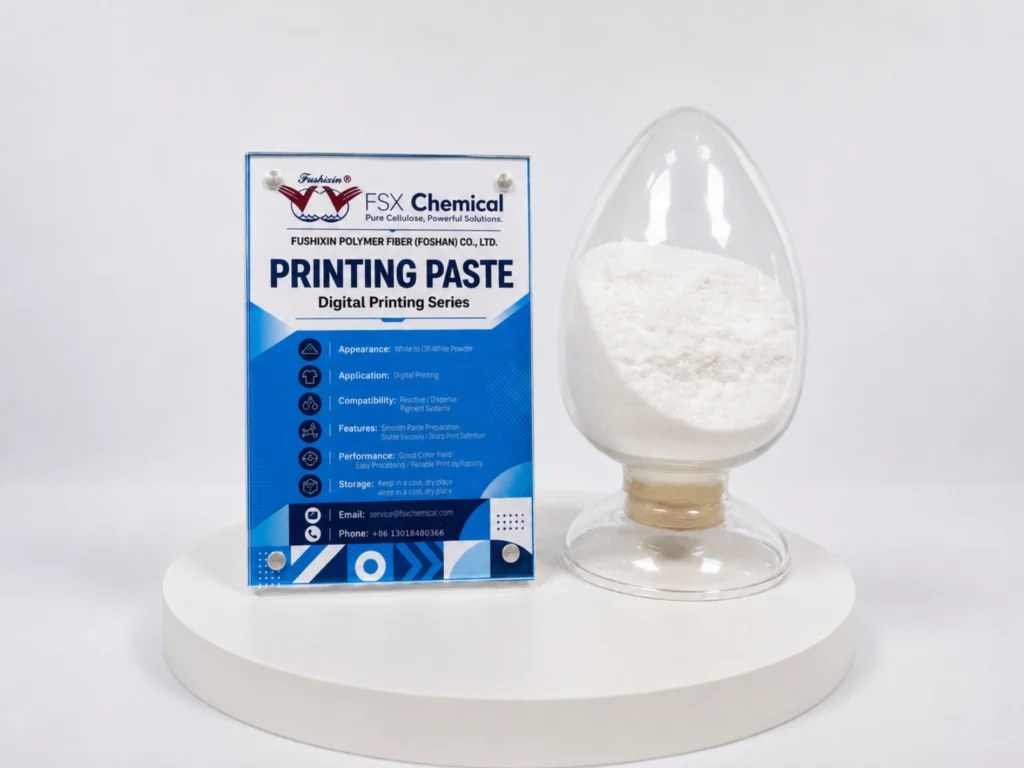
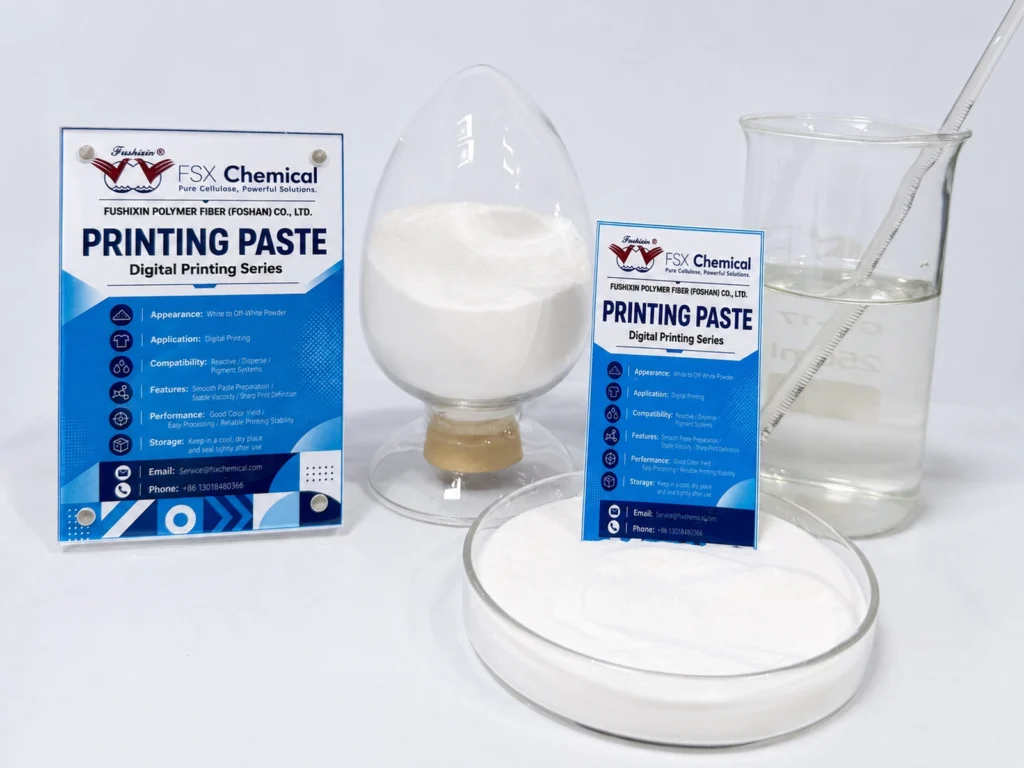
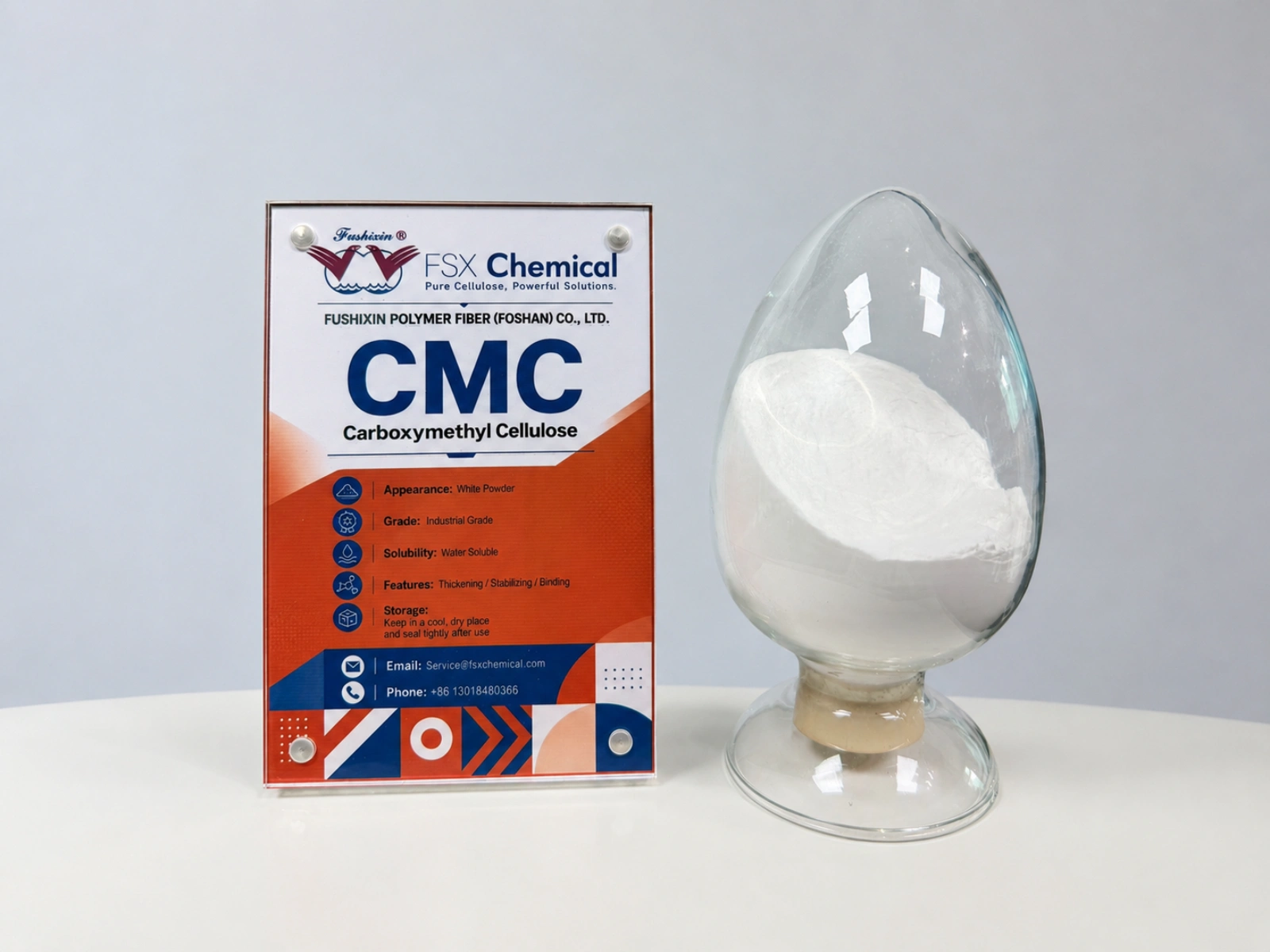
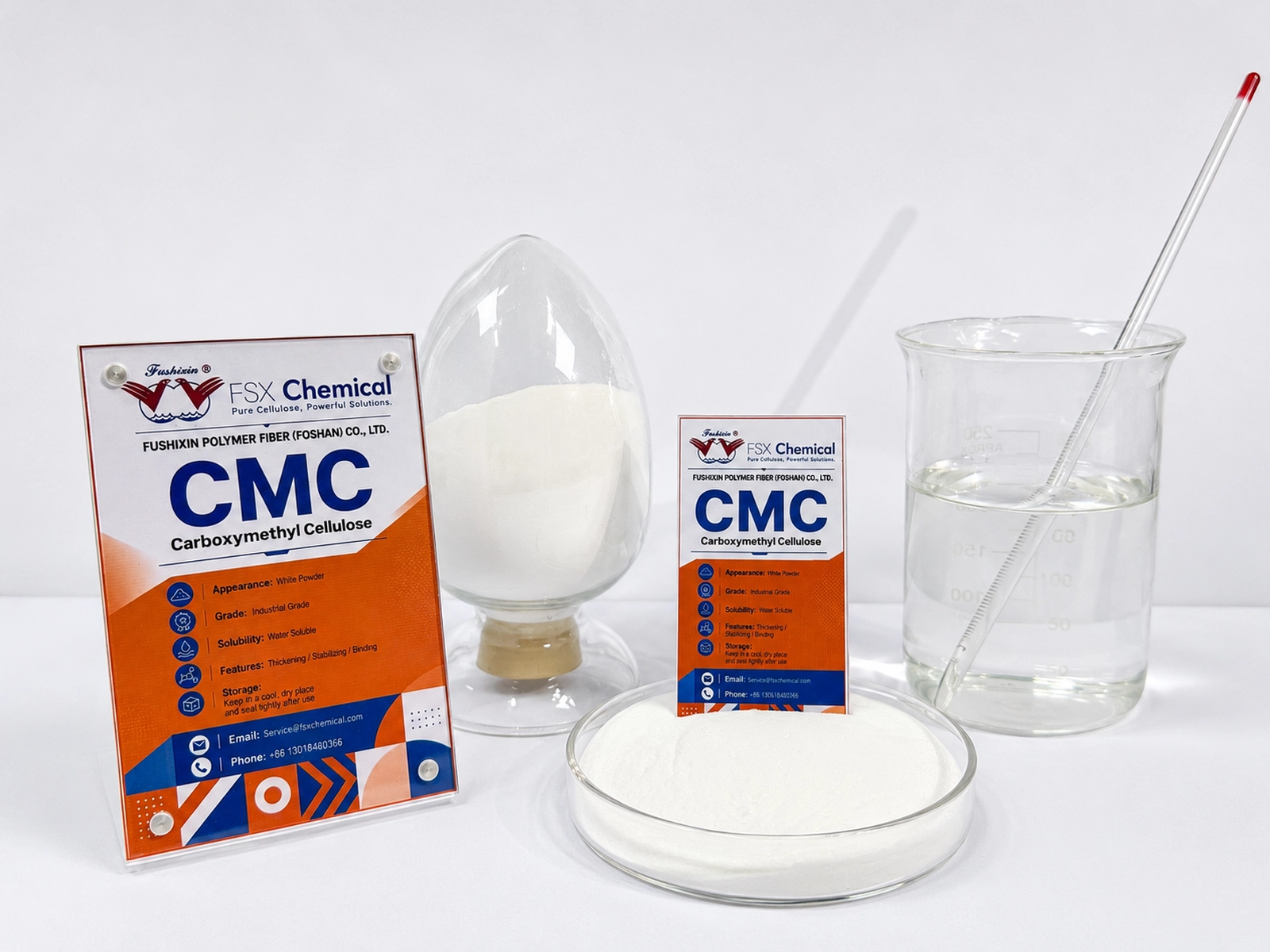
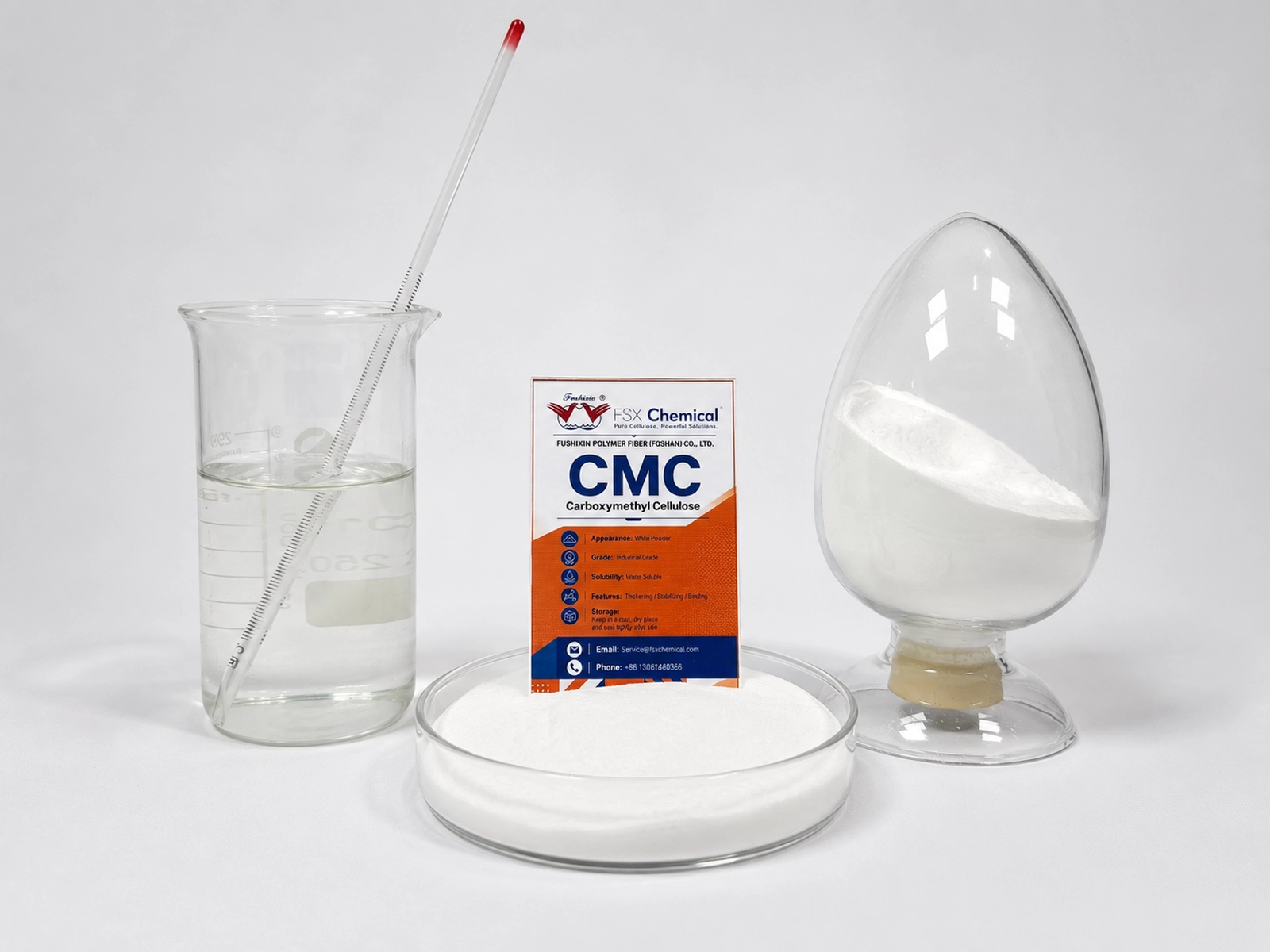
CMC is produced from cellulose through chemical modification and is typically supplied as a white or off-white CMC powder. Sodium carboxymethyl cellulose disperses and hydrates in water to form a viscous solution, making it useful for viscosity control, thickening and rheology adjustment in aqueous formulations.
Comment le CMC agit-il en tant qu'épaississant et modificateur de rhéologie ?
As a CMC thickener, sodium CMC develops viscosity after dispersion and hydration in water. In textile printing paste, the selected grade can influence paste consistency, flow, screen behavior and formulation stability. CMC viscosity should therefore be evaluated under defined test conditions and in the actual printing formulation.
Quels sont les critères à prendre en compte lors du choix d'un CMC de qualité textile ?
Textile grade CMC should not be selected by viscosity alone. Buyers normally compare degree of substitution (DS), reference viscosity, CMC dissolution and hydration behavior, solution uniformity and compatibility with the intended textile printing paste. Final grade selection should also consider the fabric, dye system, machine and target printing result.
CMC pour pâte d'impression textile
In textile printing applications, CMC can be used as a formulation component for viscosity control and paste adjustment. Different CMC grades may suit different printing systems, so laboratory comparison and actual printing trials are more useful than relying on an internal grade name or one specification value alone.
Le choix d'une qualité de CMC adaptée dépend de la combinaison des éléments suivants : DS, viscosité, dissolution, hydratation et performances en conditions réelles d'utilisation.


Sélection des qualités CMC · Liste de contrôle pour l'acheteur
Comment choisir la nuance de CMC adaptée à votre application
CMC-HD, CMC-MD and CMC-LD are FSX Chemical internal grade codes representing different degree-of-substitution routes. Selection should be based on the end-use application, reference viscosity, degree of substitution (DS), dissolution behavior, formulation compatibility and actual sample result rather than the model name alone.
Confirmer l'utilisation finale
Identify whether the CMC is required for textile printing paste, a blended thickener system, viscosity adjustment, another industrial formulation or comparison with a current supplier grade.
Comparaison entre le DS et la viscosité dans des conditions identiques
Review degree of substitution, reference viscosity, pH, solution concentration, temperature and test method. Data measured under different conditions should not be compared directly.
Évaluer les performances de dissolution et d'application
Test powder dispersion, dissolution and hydration, solution uniformity, viscosity development and formulation stability. For textile printing, also compare paste behavior, screen performance and the final printing result.
Confirmation de la livraison, de l'emballage et des documents
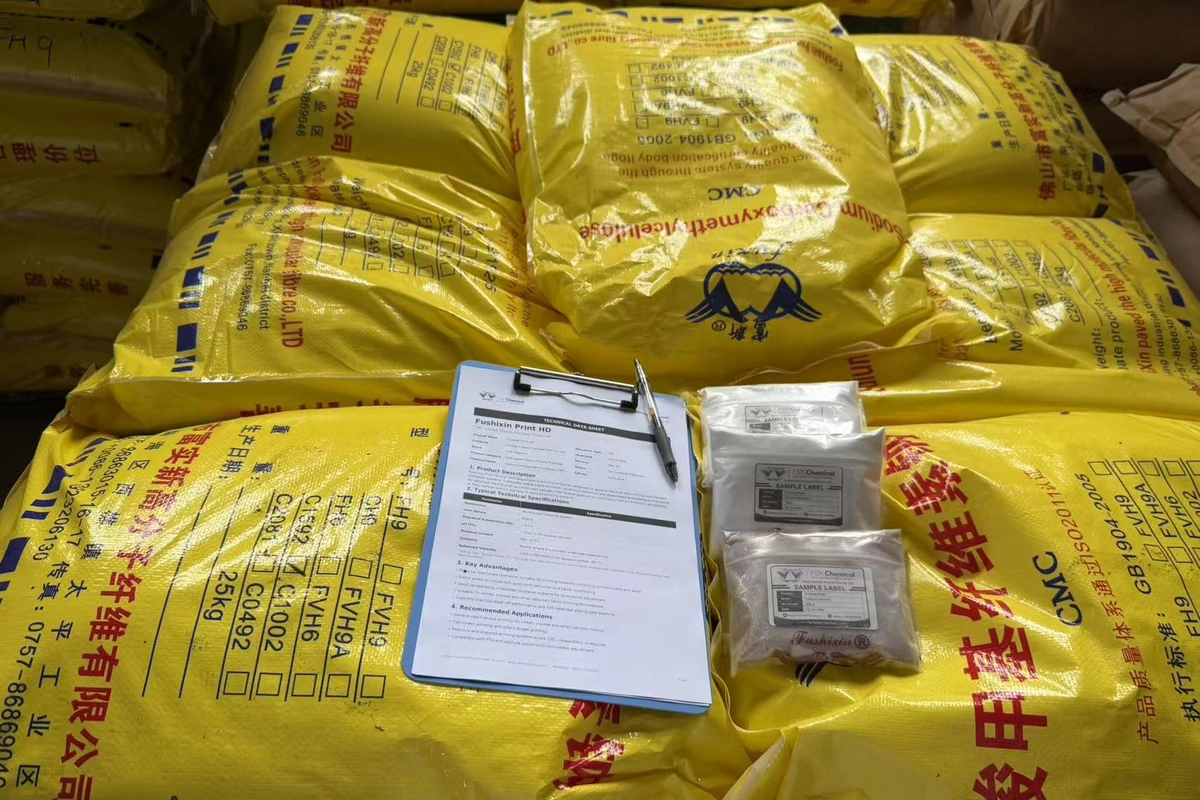
After the trial grade is approved, confirm minimum order quantity, production lead time, 25 kg bags, pallet or export packing and required TDS and SDS. Batch COA is prepared for the confirmed production batch.
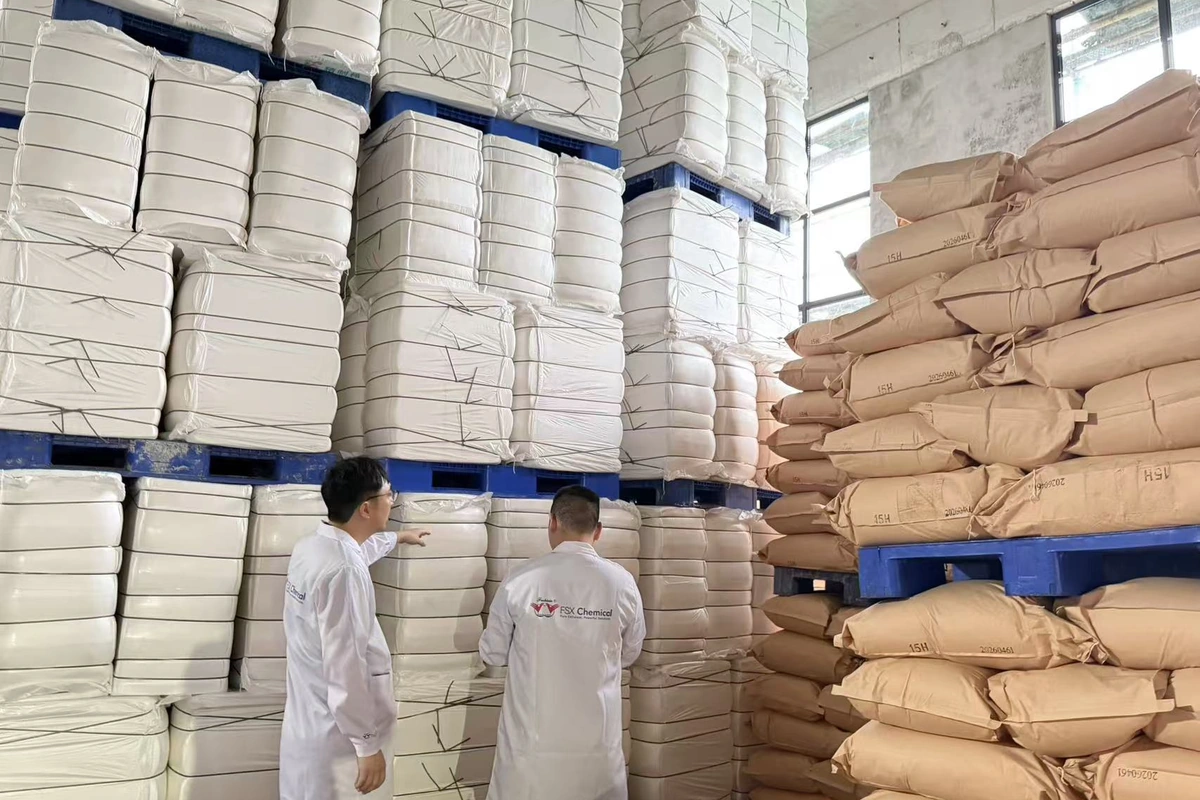
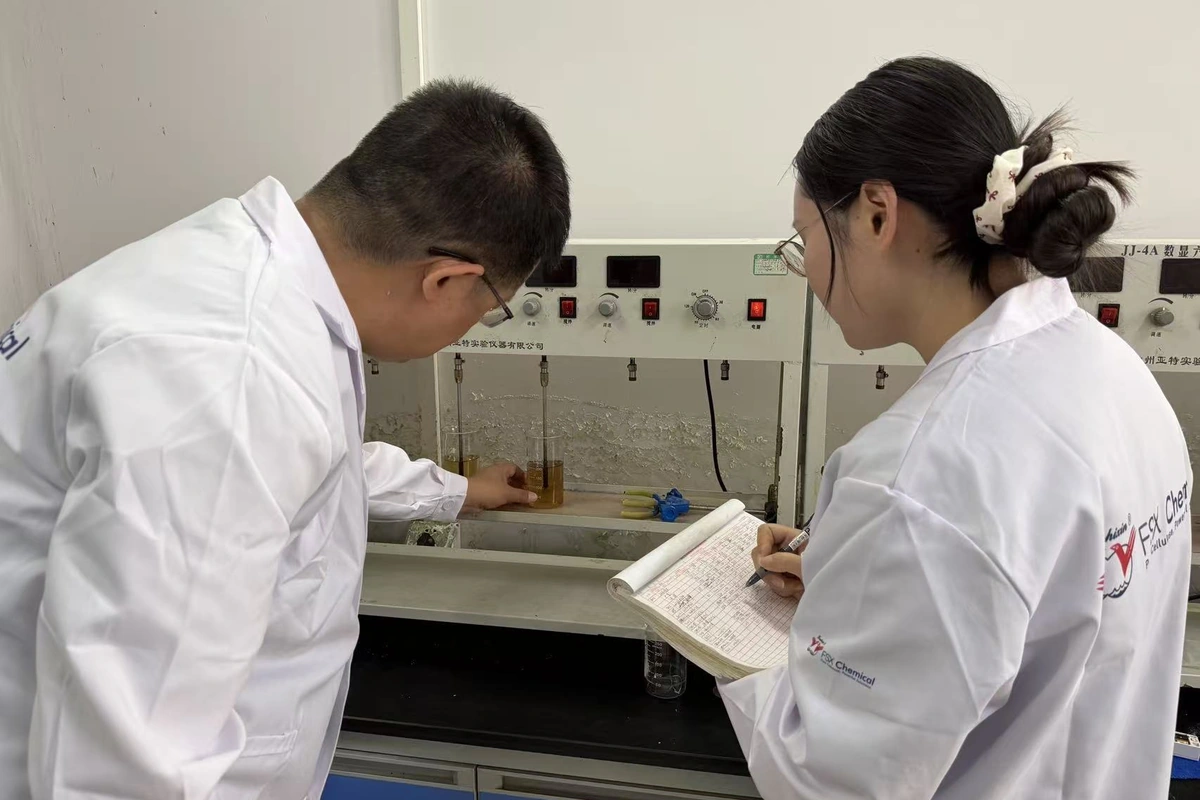
Usine / Laboratoire / Contrôle qualité
Preuve d'usine, de laboratoire et de contrôle qualité
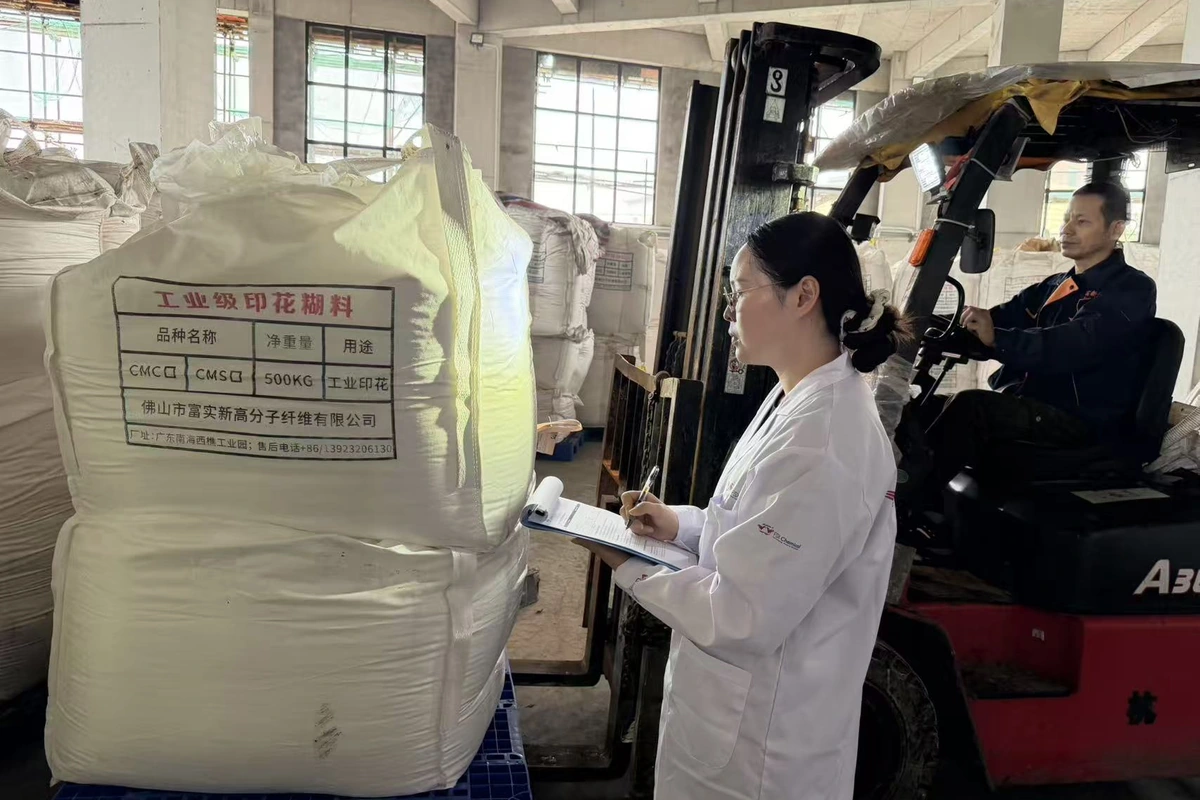
Utilisez des images réelles issues de la production, des essais, de la documentation et de l'emballage pour vérifier la capacité d'alimentation en pâte d'impression numérique avant l'évaluation des échantillons.

Questions des acheteurs CMC · Aspects techniques et achats
FAQ sur les achats et les questions techniques de CMC
Practical answers for buyers preparing a sodium carboxymethyl cellulose quotation, sample evaluation or bulk purchasing decision, including specification review, current TDS comparison, trial evaluation, order quantity and technical documents.

01 Quelles informations faut-il fournir pour obtenir un devis CMC ?
Please provide the intended application, required CMC grade or target specification, viscosity requirement and test method if available, degree of substitution (DS), estimated order quantity and destination. If you already use CMC, your current TDS or sample can also support a more relevant technical comparison.
02 Puis-je demander un échantillon de CMC avant de passer une commande en gros ?
Yes. A CMC sample can be evaluated before bulk purchasing. Providing the application, current specification, target viscosity, DS requirement and expected performance helps identify a more suitable sample direction for laboratory comparison.
03 FSX peut-il comparer mon échantillon CMC ou ma fiche technique (TDS) actuel(le) ?
Yes. Your current CMC sample or TDS can be reviewed together with the viscosity test conditions, solution concentration, degree of substitution, pH, application and formulation requirements. Where possible, comparison testing should use matched conditions before determining whether a proposed FSX grade should move to the next trial stage.
04 Puis-je évaluer plusieurs notes CMC au cours d'un même essai ?
Yes. When the application or target specification allows more than one possible grade direction, FSX Chemical can recommend suitable CMC samples for side-by-side evaluation. Comparing the samples under the same preparation, viscosity test and application conditions can help identify the more suitable option before bulk purchasing.
05 Quelles sont les quantités minimales de commande (MOQ) habituelles et les options d'emballage standard pour CMC ?
CMC is commonly supplied in 25 kg bags with an inner moisture-resistant liner. Minimum order quantity depends on the selected grade, quantity and order requirements and should be confirmed together with the quotation.
06 Quels sont les documents techniques et de lot CMC disponibles ?
TDS and SDS are available to support technical evaluation. A batch COA is prepared according to the confirmed production batch. Additional product or quality information can be reviewed according to the selected grade and order requirements.
07 Que faut-il vérifier une fois qu'un échantillon CMC a passé avec succès les essais en laboratoire ?
After laboratory evaluation, buyers should confirm performance under the actual formulation or production conditions together with the agreed technical specification. The approved grade, quality requirements, order quantity and batch documentation can then be confirmed before moving to bulk purchasing.
CMC selection should be based on matched technical data and actual application performance rather than model name or a single specification value alone.