CMC and CMS in Textile Printing: Selection, Preparation and Process Control
CMC and CMS can support textile printing, warp sizing and selected coating formulations, but they...
CMC and CMS can support textile printing, warp sizing and selected coating formulations, but they require different grade-selection and preparation strategies. This guide explains how to control water, dosage, mixing, hydration, compatibility, filtration and production trials when using these two modified polysaccharides.
Carboxymethyl Cellulose, commonly abbreviated as CMC, and Carboxymethyl Starch, commonly abbreviated as CMS, are widely evaluated in water-based textile formulations. Depending on the grade and process, they may provide thickening, binding, film-forming or formulation-adjustment functions.
Although their names are similar, CMC and CMS are not the same material. CMC is based on cellulose, while CMS is based on starch. Differences in polymer structure, degree of substitution, viscosity grade, purity and particle characteristics can produce different hydration, rheology, film and chemical-compatibility behavior.
Successful use therefore depends on more than selecting either “CMC” or “CMS” from a supplier catalogue. The commercial grade must be matched to the textile application, prepared using a controlled method and tested in the complete formulation before production approval.
The following best practices apply to textile printing, warp sizing and selected coating or finishing systems. Actual conditions should be adjusted according to the current product TDS, factory equipment and required final textile performance.
Understanding CMC and CMS
What is Carboxymethyl Cellulose?
Carboxyméthylcellulose is a chemically modified cellulose derivative. Textile grades may be evaluated for viscosity control, printing-paste formulation, warp sizing, coating and selected finishing applications.
Commercial CMC grades may differ in degree of substitution, viscosity, purity, moisture, particle size and solution behavior. These differences can influence hydration, electrolyte response, film formation and compatibility with the complete textile formulation.
What is Carboxymethyl Starch?
Amidon carboxyméthylé is a chemically modified starch derivative. Textile grades may be evaluated as printing-paste thickeners, components of mixed thickener systems, sizing materials and formulation modifiers.
CMS grades can also vary in substitution level, viscosity, purity, moisture, particle size and film properties. A CMS product designed for disperse printing or a mixed printing paste may not be suitable for warp sizing without separate testing.
Why they cannot be treated as interchangeable
CMC and CMS have different polymer backbones. Even when two grades produce a similar viscosity reading in water, they may respond differently to salts, alkalis, dyes, binders, mechanical shear and drying.
Their dried films may also differ in adhesion, flexibility, strength, moisture response and removability. These properties are particularly important in warp sizing and surface coating.
Quick Comparison of CMC and CMS
Comparison Area
CMC
CMS
Best Practice
Polymer source
Cellulose-derived
Starch-derived
Do not assume equivalent behavior from similar names
Common textile direction
Selected printing, sizing, coating and formulation uses
Selected printing, mixed thickeners and sizing uses
Begin with the intended process rather than product price
Viscosité
Available in multiple viscosity grades
Available in multiple viscosity grades
Compare using the same concentration and test method
Degré de substitution
Can influence solubility, compatibility and performance
Can influence solubility, compatibility and performance
A higher value is not automatically better
Film behavior
Relevant to sizing, binding and coating applications
Relevant to sizing and temporary film applications
Test adhesion, flexibility and removal on the actual textile
Reactive dye printing
Possible in selected grades and formulations
Possible in selected or mixed thickener formulations
Confirm dye interaction, color response and wash-off
Direct replacement
Not a universal replacement for CMS or alginate
Not a universal replacement for CMC or alginate
Use a controlled side-by-side trial
The table provides general selection guidance. The current product TDS and application trial should determine the final decision.
1. Start with the Textile Application
The first best practice is to define exactly what the material must do. Asking for “textile-grade CMC” or “printing-grade CMS” is often too broad to identify the correct commercial grade.
For textile printing
Define the dye or pigment system, fabric, printing method, required paste viscosity, design detail, fixation process and washing conditions.
A thickener used in reactive printing may face different compatibility requirements from a product used in disperse or pigment printing.
For warp sizing
Define the fibre composition, yarn count, twist, hairiness, loom type, weaving speed, target size pickup and desizing process.
Sizing performance depends on adhesion, film flexibility, abrasion resistance and removability rather than solution viscosity alone.
For coating or finishing
Define the coating method, target pickup, active ingredients, drying or curing process, required handle and downstream compatibility.
Write a short application specification
Before requesting samples, record the main function, current product, current dosage, test method and problem to be solved. This gives the supplier a clearer basis for grade selection.
2. Select the Correct Commercial Grade
CMC and CMS are product families rather than single products. Buying by chemical name alone can result in a grade with the wrong viscosity, substitution level, purity or particle profile.
Review the complete viscosity method
Confirm the concentration, preparation procedure, hydration time, temperature, instrument, spindle and rotational speed used for the reported viscosity.
Values measured under different conditions should not be treated as directly equivalent.
Review degree of substitution
Degree of substitution may influence water solubility, ionic behavior, chemical compatibility and film properties. The required range depends on the application.
Review purity and residual salts
Purity can influence solution appearance, electrolyte load and formulation compatibility. Buyers should use an actual specification rather than an unsupported high-purity description.
Review particle size
Fine particles may hydrate quickly but require controlled addition to avoid lumps. Coarser particles may disperse differently and require more hydration time.
Use a permanent grade code
The tested sample, TDS, quotation, purchase order, package label and COA should refer to the same commercial grade.
3. Standardize Water Quality
Water is the main preparation medium for most CMC and CMS textile formulations. Differences in water hardness, conductivity, dissolved ions, temperature and pH can change dispersion and apparent viscosity.
Use the same water for comparisons
Prepare the reference and candidate using one water source. Comparing one product in deionized laboratory water and another in factory process water can produce a misleading result.
Record basic water information
Source d'eau
Température
pH
Hardness where relevant
Conductivity where relevant
Seasonal or treatment-related variation
Test the actual process water
Deionized water is useful for controlled laboratory comparison, but final production approval should include the water used at the textile factory.
Avoid uncontrolled water correction
Operators should not add extra water only to reach a familiar visual consistency without recording the amount. Uncontrolled dilution changes dosage and makes later troubleshooting difficult.
4. Control Powder Addition and Dispersion
Poor powder addition is one of the most common causes of CMC and CMS preparation problems. When the outer surface hydrates too quickly, dry powder can become trapped inside persistent lumps.
Create suitable liquid movement first
Start the mixer and establish a stable circulation pattern before adding the powder. The liquid should move sufficiently to distribute the powder without drawing excessive air into the batch.
Add the powder gradually
Introduce the material in a controlled stream rather than dumping the full quantity into one location. Avoid allowing powder to accumulate on the liquid surface or vessel wall.
Do not add too close to the mixer shaft
Addition directly beside the shaft may cause powder to circulate without dispersing or may create a concentrated mass around the impeller.
Control dust and workplace exposure
Follow the current SDS and factory handling procedure. Avoid unnecessary high-speed powder addition that increases airborne dust.
Record the addition time
Powder-addition duration can affect lump formation and final viscosity. It should be included in the preparation record.
5. Allow Sufficient Hydration
Visible dispersion does not always mean that the polymer is fully hydrated. Some grades continue developing viscosity after mixing stops.
Follow the current TDS first
Use the recommended preparation and hydration procedure for the selected grade. Do not assume that CMC and CMS require the same resting period.
Measure at defined time points
Useful time points may include immediately after mixing, after the recommended hydration period and after the normal production holding period.
Keep containers covered
Evaporation can increase apparent viscosity and make the product appear to continue hydrating. Use covered containers during controlled comparisons.
Check the complete vessel
Inspect the top, middle and bottom of the batch for undispersed material, settling or nonuniform viscosity.
Do not shorten hydration only to increase production speed
Incomplete hydration may produce unstable results during later storage or printing. Preparation time should be optimized only after controlled testing.
6. Control the Order of Addition
CMC and CMS can behave differently depending on when salts, alkalis, dyes, binders or other auxiliaries are introduced.
Prepare the polymer phase under controlled conditions
Unless the product instructions specify another method, it is generally safer to establish adequate polymer dispersion and hydration before exposing the system to high electrolyte concentrations.
Add sensitive components consistently
Use the same order of addition for the reference and candidate. Changing both the thickener and preparation sequence at the same time makes the result difficult to interpret.
Watch for immediate viscosity changes
Record whether each addition causes thinning, over-thickening, separation, gel particles or foam.
Do not correct every change immediately
Allow the formulation to reach its defined mixing or resting condition before making corrective additions. Repeated water or powder correction can hide the original incompatibility.
7. Evaluate pH and Electrolyte Tolerance
CMC and CMS are used in formulations that may contain salts, alkalis, acids, dyes and ionic auxiliaries. Their effect should be evaluated in the complete system.
Do not rely on clean-water viscosity
A product that produces high viscosity in water may thin after salts or alkali are added. Another grade may remain more stable despite having a lower initial water viscosity.
Test realistic chemical concentrations
Use the dye, salt, alkali, binder and auxiliary levels found in production. An unrealistically mild laboratory formula may not reveal the relevant compatibility problem.
Measure after the normal holding period
Some viscosity changes develop gradually. Record both immediate and delayed results.
Separate pH effects from temperature effects
Chemical addition can change both pH and temperature. Measure and record both before concluding that one factor caused the viscosity change.
8. Manage Mixing Shear and Temperature
Mixing is necessary for dispersion, but excessive or inconsistent mechanical treatment can make laboratory comparisons unreliable.
Use repeatable mixer conditions
Record mixer type, impeller, speed, batch volume, vessel dimensions and mixing duration.
Avoid unnecessary high-speed mixing after hydration
Once the material is uniformly prepared, continued high shear may increase temperature, introduce air or alter apparent viscosity.
Control measurement temperature
Viscosity normally changes with temperature. Samples should be conditioned to the agreed temperature before comparison.
Do not cool only one sample
When mixing causes temperature rise, condition both the reference and candidate in the same way.
Consider production-scale shear
Laboratory preparation may not reproduce the pumping, circulation or screen shear found in production. Include a machine-relevant trial before final approval.
9. Check Filtration and Residue
A smooth visual appearance does not prove that a CMC or CMS paste is free from gels, lumps or coarse residue.
Use a defined filter
Record filter material, opening size, sample quantity and filtration procedure. Use the same method for all candidates.
Inspect retained material
Determine whether the residue consists of dry powder, hydrated gel, foreign contamination or another formulation component.
Repeat after chemical addition
A stock solution may filter well but develop particles after salts, dyes or binders are added.
Match the test to the equipment
Screen printing, coating and digital pretreatment may require different filtration standards. A coarse laboratory test may not identify a problem relevant to finer equipment.
10. Control Paste Storage and Holding Time
Textile pastes may be stored before use, transferred between vessels or circulated during production. Their condition should remain acceptable throughout the normal operating period.
Define the required holding time
Test the paste for the period actually used by the factory rather than an arbitrary short laboratory interval.
Use clean, closed containers
Contamination and evaporation can change paste appearance and viscosity. Containers should be suitably clean and covered.
Record storage temperature
Seasonal and workshop temperatures can influence viscosity and microbial stability. Compare samples under the same conditions.
Check more than viscosity
Séparation
Régularisation
Formation de la couche superficielle de la peau
Rétention de mousse
Odor or color change
Filterability
Application behavior after storage
Do not return contaminated paste to the main batch
Material exposed to the machine, screen or open production area can introduce contamination and should be handled according to the factory’s quality procedure.
Best Practices for Textile Printing
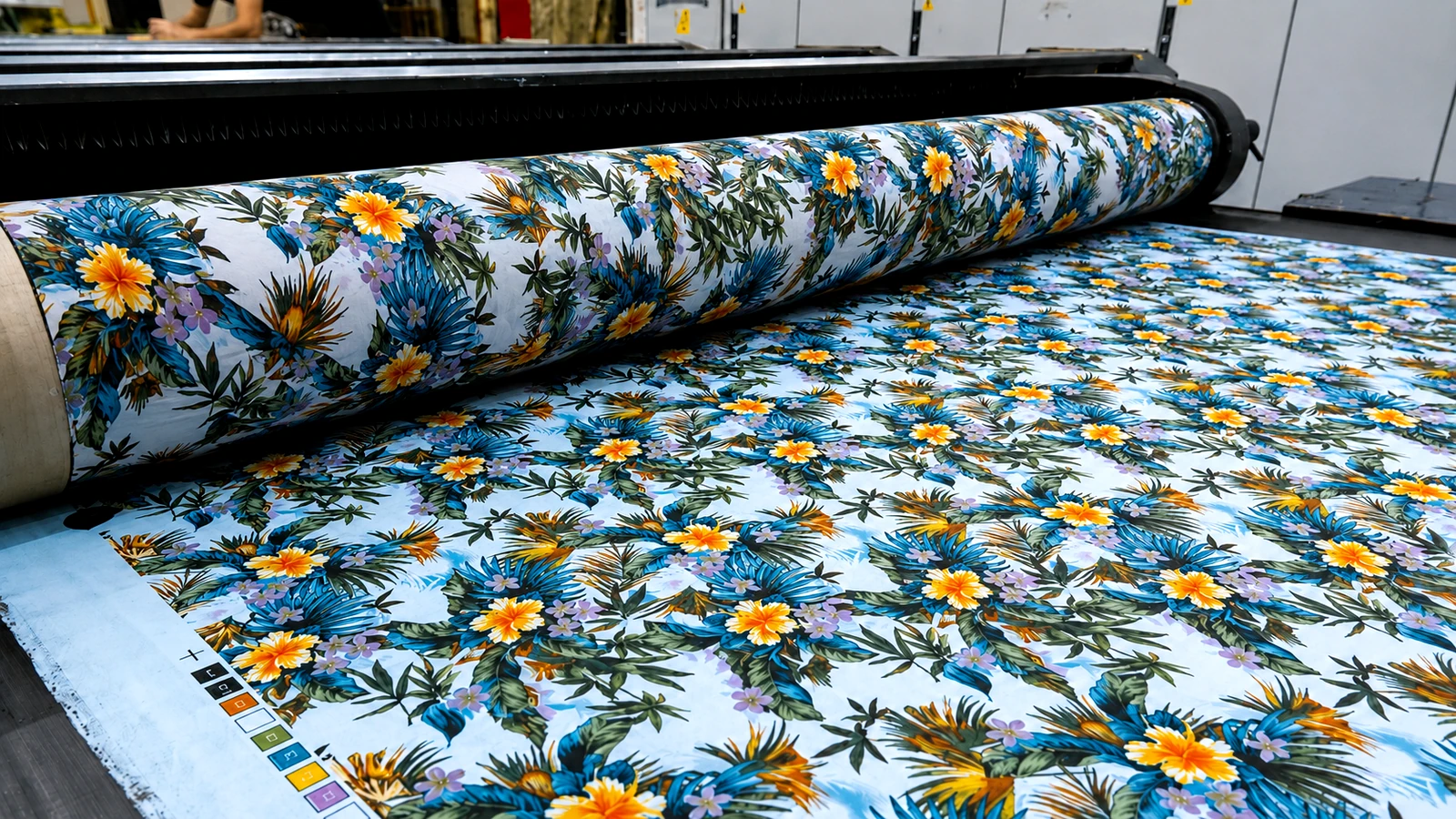
CMC and CMS may be evaluated as printing thickeners or components of compound systems, but printing approval should be based on the complete color paste and final fabric.
Use the actual dye or pigment system
Do not approve a printing grade from a polymer-and-water solution alone. Add the actual dyes, pigments, salts, alkalis, binders and auxiliaries.
Use representative fabrics
Fabric weight, construction, fibre composition and absorbency influence spreading and penetration.
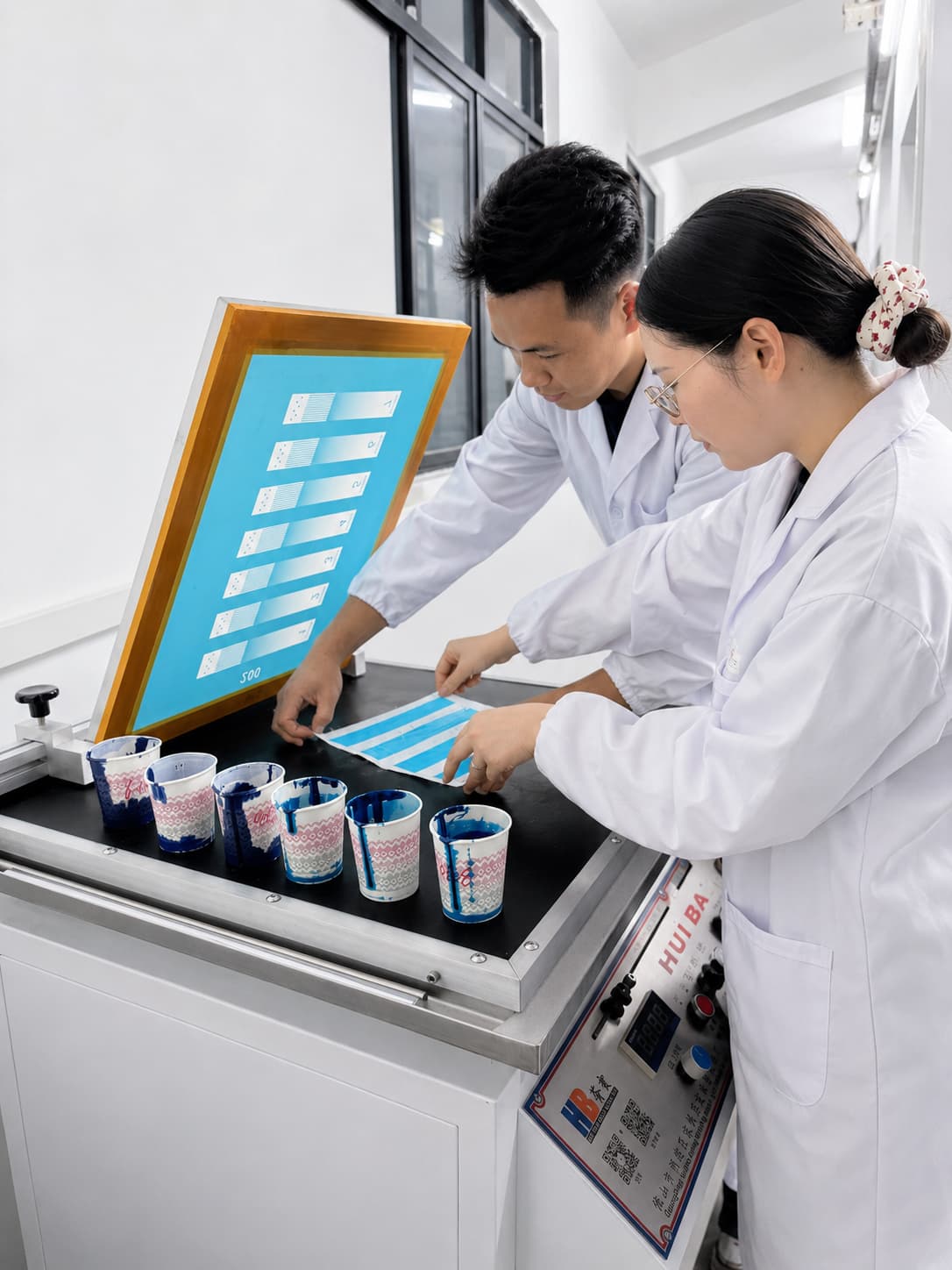
Print a diagnostic test design
Include fine lines, small text, sharp corners, closely spaced elements, solid areas and gradients where relevant.
Evaluate machine behavior
Screen passage or coating transfer
Paste pickup
Épandage et pénétration
Foam and filtration
Consistency during the trial
Cleaning requirements
Evaluate after fixation and washing
Review print definition, color response, levelness, residual paste, fabric handle and relevant fastness or durability requirements.
Use caution in reactive printing
CMC and CMS grades may interact differently with reactive dyes. When sodium alginate is the current reference, do not assume direct replacement without checking color response, wash-off and handle.
Buyers evaluating reactive printing can also compare the candidate with an appropriate Alginate de sodium reference.
Best Practices for Warp Sizing
CMC and selected CMS grades may be evaluated alone or in blends for warp sizing. The purpose of sizing is to protect yarn during weaving while allowing suitable removal during later processing.
Evaluate film properties
Adhesion to the yarn
Film strength
Flexibility
Brittleness
Moisture response
Abrasion behavior
Removability during desizing
Control size-bath viscosity
Viscosity influences penetration and surface coating of the yarn. A bath that is too thick may produce excessive surface size, while one that is too thin may not provide sufficient protection.
Measure size pickup
Compare yarn pickup under controlled machine settings. Different polymer grades may require different concentrations to reach a similar pickup.
Run a weaving trial
Evaluate yarn breakage, hairiness, abrasion, shedding, loom stops and fabric quality rather than relying only on laboratory film testing.
Confirm desizing
The size must be removed sufficiently for the subsequent dyeing, printing or finishing process. Test the actual desizing method used by the mill.
Best Practices for Coatings and Finishing
CMC and CMS may also be evaluated as rheology modifiers, binders or formulation components in selected textile coatings and finishing systems.
Match viscosity to the application method
Knife coating, padding, screen application, impregnation and spraying impose different flow requirements.
Test compatibility with active ingredients
Pigments, particles, microcapsules, softeners, crosslinkers and other finishing chemicals may change viscosity or destabilize the polymer system.
Do not assume the thickener provides the final function
In functional finishes, antimicrobial, conductive or protective performance normally depends on the complete active system. CMC or CMS may serve as part of the carrier or matrix.
Using CMC and CMS in Blended Formulations
Blending can help formulators balance viscosity, flow, film behavior, chemical tolerance and cost. However, polymer mixtures can also produce unexpected interaction.
Define the purpose of the blend
Decide whether the blend is intended to improve rheology, reduce dosage, modify film properties, improve preparation or adjust cost in use.
Begin with simple ratios
Start with a small number of controlled blend ratios. Changing several polymers and additives simultaneously makes the result difficult to interpret.
Evaluate blend order
Compare pre-blending powders with separately prepared polymer solutions where relevant. The order in which polymers are hydrated may affect the final structure.
Check for delayed instability
Measure the blend immediately and after the required holding time. Watch for thinning, over-thickening, separation or gel formation.
Approve the final blend as a complete formulation
Good performance from the individual CMC and CMS solutions does not prove that their mixture will perform well.
How to Optimize Dosage
Dosage should be optimized by performance and cost in use rather than by nominal viscosity alone.
Start with an equal-concentration comparison
This provides a clear first view of hydration and viscosity development relative to the current product.
Adjust one variable at a time
After the initial comparison, change the candidate dosage in controlled steps while keeping the rest of the formulation constant.
Evaluate actual supplied-product basis
Moisture and active-material differences can affect the effective amount of polymer in the formulation.
Do not stop at the viscosity target
Confirm filtration, printing or sizing behavior, final textile quality and storage stability at the optimized dosage.
Calculate total cost in use
Product dosage
Temps de mélange et d'hydratation
Heating or cooling
Filtration
Machine cleaning
Unused paste or size
Desizing or wash-off
Rejected or reprocessed material
Laboratory-to-Production Scale-Up
A laboratory beaker and a production tank do not create the same mixing, heat transfer and circulation conditions.
Record the laboratory method
Retain the concentration, water, addition time, mixer, speed, hydration, temperature and test settings used for sample approval.
Use an intermediate trial where practical
A pilot or limited production batch can reveal scale-related dispersion, foam, filtration and transfer problems before full conversion.
Do not scale mixer speed directly
Identical revolutions per minute do not produce identical mixing in vessels of different sizes. The technical team should consider impeller design, tank geometry and circulation.
Monitor several tank positions
Sample from appropriate points to check whether the production batch is uniform.
Confirm the normal production holding time
Production batches may remain in storage or circulation longer than laboratory samples. Include the real operating period in the trial.
Batch Quality and Incoming Inspection
Once a commercial CMC or CMS grade is approved, buyers should maintain a consistent incoming-quality procedure.
Check product and batch identity
Confirm the grade code, batch number, package condition, quantity and applicable COA.
Use the approved test method
Repeat the same viscosity and preparation method used during product approval.
Powder added too quickly, weak circulation, rapid surface hydration or unsuitable addition point
Review addition rate, mixer pattern, temperature and particle profile
Viscosity below target
Incorrect concentration, incomplete hydration, high electrolyte load, method difference or excess water
Recheck weighing, water, hydration time, formulation and test conditions
Viscosity above target
Excess dosage, evaporation, lower measurement temperature or incorrect concentration basis
Check batch calculation, container closure, temperature and dilution records
Viscosity drops after chemical addition
Salt, alkali, acid, dye or polymer incompatibility
Add components separately and measure after each controlled step
Excessive filter residue
Incomplete dispersion, coarse particles, gel formation or contamination
Inspect residue and repeat preparation with a controlled method
Printing spreads or bleeds
Unsuitable rheology, excessive penetration, low structure recovery or high fabric absorbency
Review dosage, rheology, fabric and application conditions
Poor paste transfer
Excessive viscosity, unsuitable recovery, incomplete screen passage or poor leveling
Compare multi-speed behavior and conduct a machine trial
Stiff fabric after processing
Excess polymer, poor removal, binder interaction or excessive surface film
Review dosage, wash-off, desizing, drying and complete formulation
Brittle sizing film
Unsuitable grade, excessive drying, low flexibility or incorrect blend
Evaluate film properties, auxiliaries and moisture conditions
Batch-to-batch difference
Product variation, test-method variation, water change, storage or preparation difference
Compare batch numbers, COA, retained samples and complete methods
Avoid changing several formulation variables at once during troubleshooting. Begin by confirming product identity, preparation, water, temperature and measurement method.
Liste de contrôle pour les achats
Product information to request
Code permanent du produit et de la qualité
TDS actuel
Current SDS
Méthode complète d'essai de viscosité
Degree of substitution specification where relevant
Moisture, pH, purity and particle-size data where relevant
Recommended preparation procedure
Recommended applications and known limitations
Échantillon représentatif
Paramètres proposés pour le certificat d'analyse (COA) par lot
Application information to send the supplier
Printing, sizing, coating or finishing process
Fabric, fibre or yarn composition
Dye, pigment, ink or auxiliary system
Current product and dosage
Viscosité cible et méthode d'essai
Qualité de l'eau
Mixing and application equipment
Holding time and storage conditions
Principal problème de production
Final textile requirements
Commercial information
Estimated sample and bulk quantity
Preferred packaging
Destination country and port
Preferred trade term
Required technical and export documents
CMC and CMS Best-Practice FAQ
Can CMC and CMS be replaced at the same dosage?
Not as a universal 1:1 replacement. CMC and CMS differ in polymer source, substitution profile, hydration, rheology, film behavior and electrolyte response. Approve the candidate grade by side-by-side testing in the complete formulation and then confirm it on the production machine.
Which thickener is the safer starting point for reactive dye printing?
Sodium alginate is usually the lower-risk reference for reactive printing on cotton and viscose because of its established dye compatibility and wash-off behavior. Selected CMC, CMS or compound systems may be evaluated where cost, rheology or process conditions justify a trial, but performance must be checked with the actual dye, alkali, electrolyte, fabric and fixation route.
How should buyers compare CMC or CMS viscosity?
Use the same concentration basis, water quality, hydration time, temperature, instrument, spindle, speed and reading time. The same reported viscosity does not guarantee the same flow, recovery, filtration or printing performance.
What information is needed for CMC or CMS grade matching?
Provide the textile application, fabric and colorant system, current product and dosage, viscosity test method, water quality, mixing procedure, equipment and the problem to be solved. FSX Chemical can use these details for a sample matching review before bulk qualification.
How FSX Chemical Supports Grade Matching
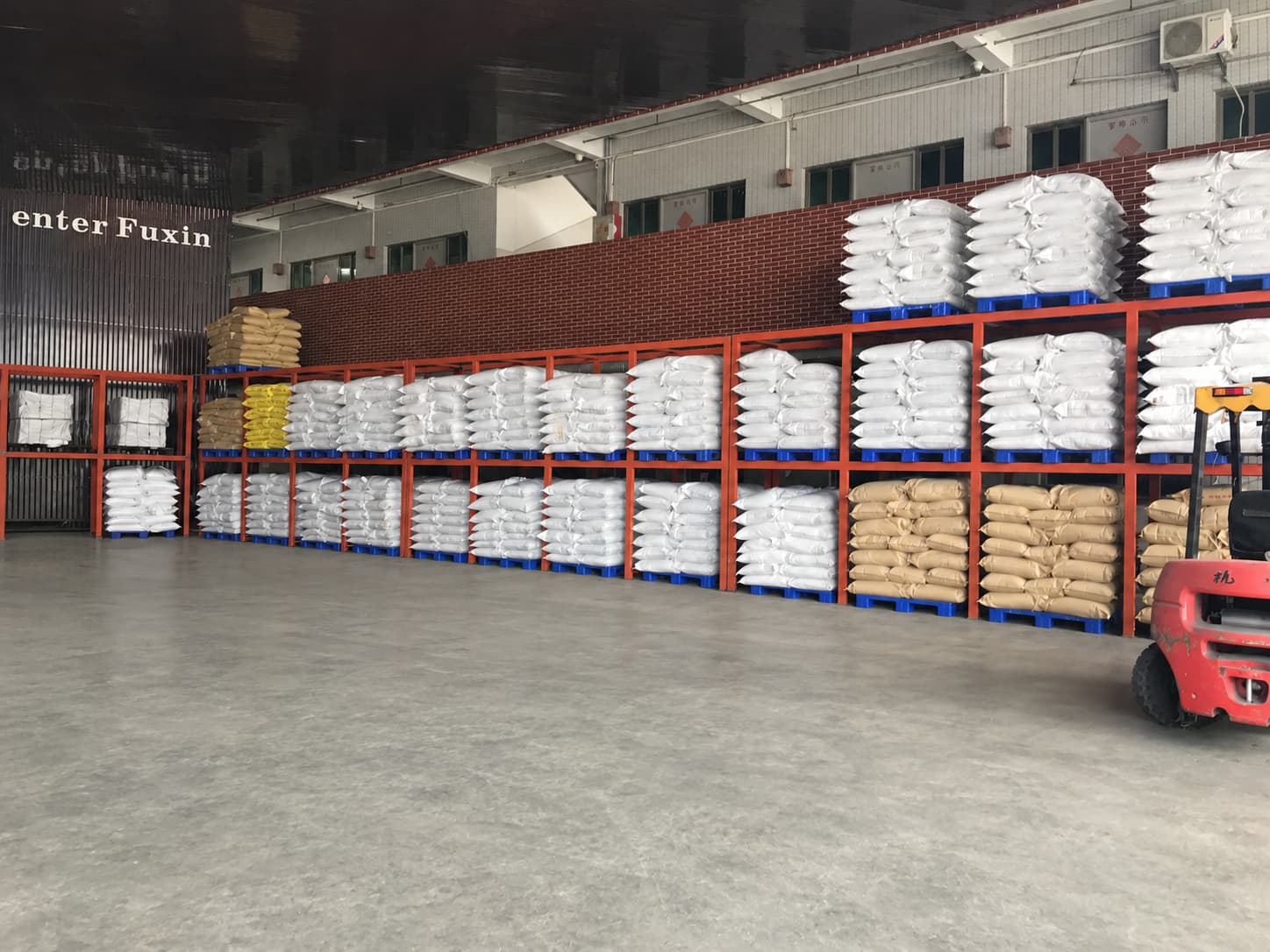
FSX Chemical supplies CMC and CMS grades for textile printing, sizing and selected industrial formulation requirements. Candidate grades can be reviewed according to the buyer’s current material, target viscosity, application and production conditions.
Buyers can provide
Current TDS or product specification
Representative powder or paste sample
Fabric, fibre or yarn information
Printing, sizing or coating process
Current dosage and preparation method
Viscosity value with the complete test conditions
Main technical or cost-in-use objective
Technical review may include
Identification of the appropriate CMC or CMS route
Review of the existing product specification
Recommendation of a candidate commercial grade
Provision of the relevant TDS and SDS
Representative samples for laboratory evaluation
Guidance for side-by-side preparation and testing
Review of laboratory or production-trial feedback
Batch documentation for the confirmed commercial grade
A recommended grade is a starting point for controlled evaluation, not a guaranteed direct replacement. Final approval depends on the buyer’s formulation, equipment and textile-quality requirements📧 E-mail: Service@fsxchemical.com
L'alginate de sodium est largement utilisé dans l'impression textile comme épaississant stable et lavable pour les pâtes d'impression réactives. Découvrez comment évaluer le degré de viscosité, la pureté et l'adéquation à l'application avant tout achat, et comment FSX Chemical accompagne les acheteurs du monde entier en leur fournissant des données techniques et des échantillons.
La carboxyméthylcellulose (CMC) est largement utilisée dans les processus d'impression, d'encollage et de teinture des textiles. Ce guide explique comment évaluer les différentes qualités de CMC, quels sont les paramètres les plus importants et comment FSX Chemical peut vous aider dans vos décisions d'achat.
La carboxyméthylcellulose est utilisée comme épaississant et stabilisant dans les encres à base d'eau, l'impression en héliogravure et le prétraitement pour l'impression à jet d'encre. Ce guide présente les principaux paramètres relatifs aux différentes qualités de ce produit ainsi que les éléments à prendre en compte par les équipes d'approvisionnement.
Le choix d'un fournisseur de CMC ne se résume pas à une simple comparaison des prix. Ce guide présente les critères d'évaluation, la liste de contrôle des documents à fournir et le processus d'essai que les équipes chargées des achats doivent suivre avant de s'engager dans une commande en gros.
La pâte d'impression à base de CMC est utilisée dans l'impression textile pigmentaire, réactive et numérique. Ce guide explique quels sont les paramètres importants, comment comparer les fournisseurs et ce qu'il faut demander avant de passer une commande en gros.
Le CMC de qualité alimentaire et celui de qualité industrielle partagent la même composition chimique de base, mais présentent des différences significatives en termes de pureté, de plage de DS et d'exigences réglementaires. Ce guide explique les principales différences et pourquoi l'utilisation d'une qualité inadaptée peut entraîner des problèmes de production.
Dans l'impression textile aux colorants réactifs, une préparation correcte de la pâte est tout aussi importante que le choix de la qualité du tissu. Ce guide aborde les méthodes de dissolution de l'alginate de sodium, les plages de concentration en fonction de l'application, les conditions de stockage, ainsi que la manière de résoudre les problèmes courants liés à la préparation.
Le taux de fixation des colorants a une incidence directe sur le rendement chromatique, la résistance au lavage et la charge polluante des eaux usées dans l'impression aux colorants réactifs. Ce guide explique comment l'alginate de sodium favorise la fixation des colorants, quels paramètres de la pâte influencent le taux de fixation et comment remédier à une fixation insuffisante en production.
La granulométrie (maillage) de l'alginate de sodium influe sur la vitesse de dissolution de la poudre, l'uniformité de son hydratation et les performances de la pâte obtenue en sérigraphie. Ce guide explique les implications pratiques du choix du maillage pour les applications de pâte d'impression textile.
Dans l'impression textile aux colorants réactifs, une préparation correcte de la pâte est tout aussi importante que le choix de la qualité du tissu. Ce guide aborde les méthodes de dissolution de l'alginate de sodium, les plages de concentration en fonction de l'application, les conditions de stockage, ainsi que la manière de résoudre les problèmes courants liés à la préparation.
Les spécifications de pureté de l'alginate de sodium ne se résument pas à un simple chiffre. Ce guide explique ce que signifient les données relatives à la teneur en substance active, au NaCl, aux matières insolubles et aux métaux lourds pour les performances des pâtes d'impression textile — et dans quels cas il est préférable de privilégier une pureté supérieure à celle d'un produit de qualité industrielle standard.
L'instabilité de la viscosité de la pâte d'impression à base d'alginate de sodium est l'une des causes les plus courantes des variations de couleur et des défauts d'impression dans l'impression aux colorants réactifs. Ce guide explique pourquoi la viscosité varie au cours de la production, quels facteurs contribuent à cette instabilité et comment choisir une qualité offrant une meilleure stabilité adaptée aux conditions de votre processus.
Veuillez nous communiquer le nom du produit, son application, la quantité, la destination, ainsi que toute fiche technique (TDS),
photo ou document dont vous disposez déjà. FSX Chemical examinera ces
informations et vous recommandera la marche à suivre pour obtenir un devis, trouver un échantillon correspondant
ou choisir un produit.
Informations sur le produitNom du produit, référence, modèle, photo de l'étiquette ou référence du fournisseur.
Documents disponiblesFiche technique (TDS), fiche de données de sécurité (SDS), certificat d'analyse (COA), photo d'exemple, liste des produits ou données d'essai.
Détails de la commandeQuantité estimée, conditionnement, pays de destination, port ou conditions commerciales.
Demande ou problèmeProcédé d'impression textile, besoins en matière de formulation, problème actuel ou performances visées.

 FR
FR  EN
EN  BN
BN  ES
ES  TR
TR  ID
ID  RU
RU  AR
AR  UR
UR  VI
VI  TL
TL  HI
HI  UK
UK  KK
KK  KA
KA  UZ
UZ