Comment FSX Chemical garantit une qualité constante des lots dans le secteur des produits chimiques textiles
Consistent textile chemical quality depends on controlled raw materials, repeatable production, defined test methods, finished-batch...
Batch consistency is one of the most important concerns when purchasing textile chemicals. A product may pass an initial laboratory trial, but the buyer still needs confidence that later commercial batches will remain within the agreed specification and perform predictably in production.
For textile printing thickeners, relatively small differences in viscosity, moisture, particle size, purity, substitution level or preparation behavior can affect paste formulation and machine performance. The impact may appear as slower hydration, unstable viscosity, filtration problems, different paste transfer or changes in the final printed fabric.
FSX Chemical manages this risk through a connected quality-control process covering product definition, raw-material review, manufacturing conditions, batch blending, laboratory testing, specification review, documentation, packing and shipment preparation.
Consistent quality does not mean that every measured value is identical. Industrial products are manufactured within defined specification ranges. The objective is to control relevant variation, identify each batch and confirm that required results meet the applicable commercial specification before release.
What Consistent Batch Quality Really Means
Industrial textile chemicals are normally supplied within an agreed specification range. Batch consistency means that each commercial batch is produced, identified, tested and reviewed according to the applicable product requirements.
It does not mean that every laboratory result must be numerically identical. Normal variation can exist within the confirmed range, and the relevance of that variation depends on the product and application.
Specification consistency
Selected properties should remain within the limits defined for the commercial grade. Depending on the product, these properties may include viscosity, moisture, pH, purity, degree of substitution, particle size or appearance.
Method consistency
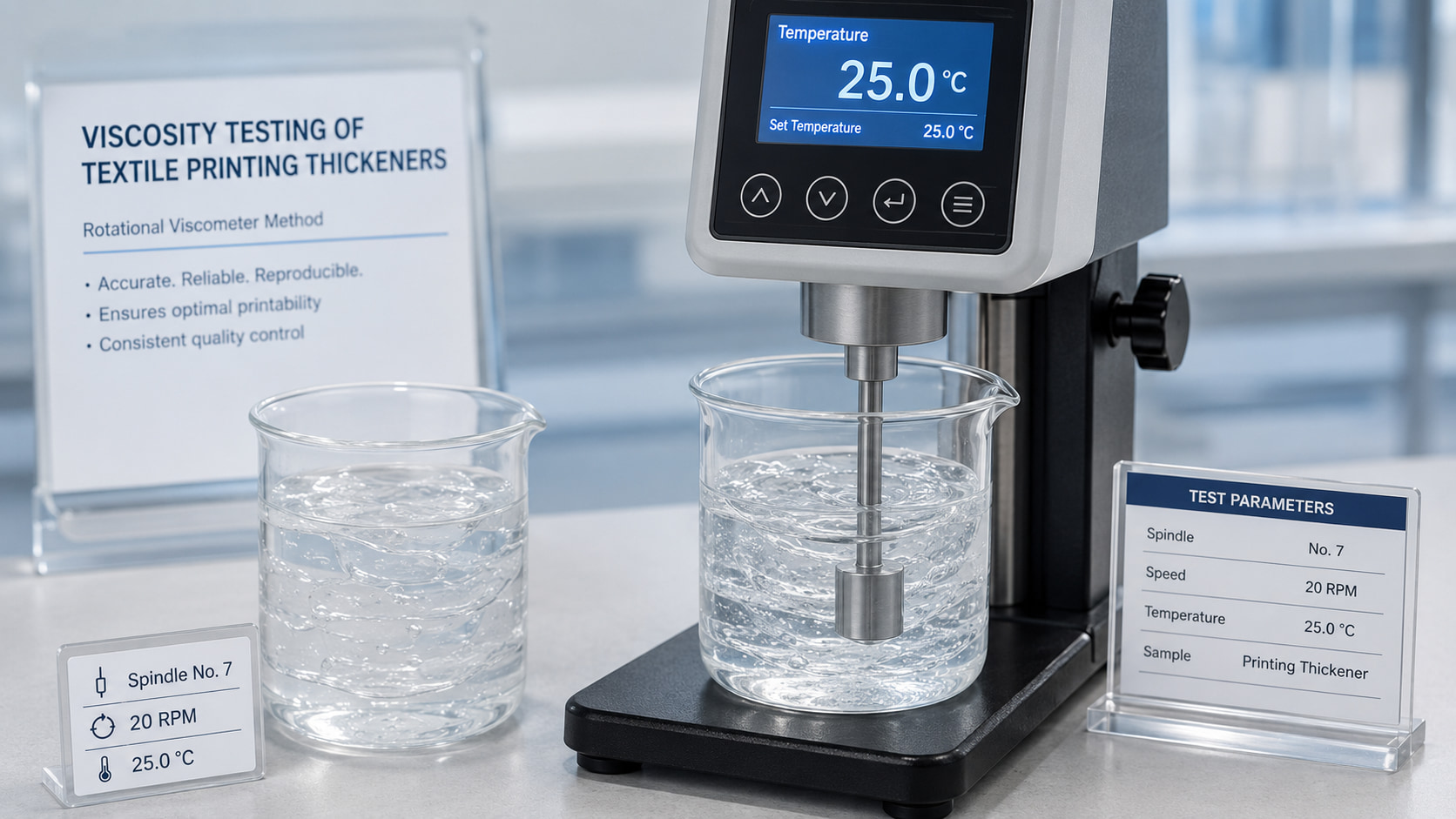
Results are comparable only when sample concentration, preparation, hydration time, temperature, instrument and measurement conditions are clearly defined.
Application consistency
The material should provide repeatable performance when used in the same formulation under controlled factory conditions. However, application results can also change when the buyer changes water quality, dosage, mixing, dyes, auxiliaries, fabric or equipment.
Identification consistency
The sample, TDS, quotation, order, package label and batch document should refer to the same commercial product and grade.
Supply consistency
The supplier should be able to reproduce the approved commercial grade, provide suitable batch information and investigate reported differences using traceable records.
FSX Chemical’s Batch Quality Control Framework
FSX Chemical connects manufacturing control with laboratory review and commercial documentation. The exact production steps and test parameters vary by product, but the general control logic follows a structured path.
Control Stage
Objectif principal
Buyer-Relevant Output
Commercial grade confirmation
Define the product identity and applicable specification
Permanent grade code and current TDS
Raw-material review
Reduce uncontrolled variation before production
Incoming-batch and source records
Process control
Support repeatable execution of the production route
Production and batch records
Particle and moisture control
Manage drying, milling, sieving and handling behavior
Grade-relevant finished-product parameters
Batch blending
Improve uniformity before final sampling
Representative finished batch
Laboratory testing
Measure selected properties using defined conditions
Recorded test results
Specification review
Compare the finished batch with confirmed requirements
Release decision
Batch documentation
Connect selected results to the confirmed batch
Batch-specific COA where applicable
Packing and loading review
Confirm product identity, quantity and packing
Labels, packing details and shipping documents
After-sales review
Investigate batch, packing or application questions
Technical follow-up based on available records
This framework supports quality control, but buyers should still verify product suitability in their own formulation. Supplier batch release and customer application approval are related but separate decisions.
1. Confirming the Commercial Grade and Specification
Batch consistency begins before production. The supplier and buyer first need to identify which commercial grade is being discussed and what specification applies.
A chemical name is not a complete grade
Terms such as CMC, CMS, sodium alginate and digital printing paste describe product families. Each family may contain different grades for different viscosity, substitution, purity, particle-size and application requirements.
Buyers should avoid approving an unnamed sample or purchasing only by a general chemical description.
The approved grade should remain identifiable
A permanent grade code helps connect the laboratory sample with the TDS, quotation, purchase order, package label, COA and later commercial shipments.
Typical values and specification limits are different
A TDS may contain typical or reference data, while the commercial specification defines the applicable acceptance range. Buyers should clarify which values are controlled for the order.
Custom requirements should be documented
Where the buyer requires a special viscosity range, particle size, packing format or test method, the requirement should be confirmed before production rather than added after the batch is completed.
2. Raw-Material Selection and Incoming Review
Finished-product consistency depends partly on the materials entering the manufacturing process. For CMC production, FSX Chemical reviews cotton-linter feedstock against defined incoming requirements before release to production.
Raw-material suitability
The quality and characteristics of the cellulose source can influence process consistency and finished CMC properties. Incoming review helps identify unsuitable material before it enters the production route.
Incoming-batch identification
Supplier, source and incoming-batch information are recorded to support traceability.
Incoming inspection
Appearance, identity and selected incoming parameters are reviewed according to the applicable requirements.
Storage control
Raw materials are identified and stored to reduce moisture exposure, contamination and unintended mixing between material batches.
Product-specific differences
Raw-material controls for CMS, sodium alginate and formulated digital printing products differ from the CMC route. Buyers should not assume that every FSX product uses cotton linter or follows the same incoming inspection parameters.
3. Controlled Manufacturing Conditions
After materials are released, the manufacturing process must be executed under defined operating conditions. For CMC, the production sequence includes raw-material preparation, alkalization, etherification, washing, drying, milling, sieving, blending and finished-product release.
Defined process sequence
A repeatable sequence reduces the risk of uncontrolled changes between production batches.
Selected operating-condition monitoring
Relevant manufacturing conditions are monitored to support repeatable process execution. The exact process variables depend on the product and production stage.
Purification control
Washing and purification stages are used to reduce residual materials in the CMC manufacturing process. The required purity level depends on the grade and intended application.
Production records
Batch and process records provide a basis for reviewing whether the applicable production route was followed and for investigating a later quality question.
Powder handling characteristics are affected by moisture, particle size and product uniformity. These factors can influence weighing, dispersion, hydration, filtration and final viscosity.
Controlled drying
Drying reduces moisture before particle-size processing. Moisture control is important because excessive or inconsistent moisture can change the effective dry material added to the customer’s formulation.
Milling and sieving
The dried material is milled and sieved according to the applicable particle-size requirement. Particle size may affect wetting, dusting, lump formation and hydration speed.
Finished-batch blending
Finished material is blended before sampling and specification review. This step supports greater uniformity across the commercial batch.
Why this matters to textile printers
A product may meet a viscosity target but still create production problems if it contains excessive coarse particles, hydrates unevenly or develops persistent lumps.
Buyers should therefore evaluate powder behavior and filtration together with viscosity.
5. Recorded Laboratory Sample Preparation
Laboratory testing is reliable only when the sample is prepared under controlled and recorded conditions. FSX Chemical’s technical workflow includes identifying the test question, preparing and labeling samples, recording conditions, measuring selected properties and comparing results.
Sample identification
The sample should be linked to the correct product, grade and batch before testing begins.
Preparation concentration
Viscosity can change significantly with concentration. The calculation basis should be stated clearly and applied consistently.
Water and mixing conditions
Water quality, addition sequence, mixer, speed, mixing time and hydration period may influence the test result.
Measurement conditions
Temperature, instrument, spindle or geometry, rotational speed and reading procedure should be recorded for comparable results.
Result comparison
Reference and candidate samples should be compared under the same conditions. Comparing numbers obtained by different methods can create a false conclusion about batch variation.
After production and batch blending, a finished-batch sample is collected according to the applicable sampling procedure.
Representative sampling
Sampling should represent the finished commercial batch rather than an isolated laboratory preparation.
Grade-specific parameters
The required tests depend on the confirmed product and specification. For CMC, typical batch-review parameters may include viscosity, pH, moisture, degree of substitution and particle size.
Not every parameter appears on every COA
The test list should be selected according to the product grade and confirmed commercial requirements. Buyers should request the proposed COA format before ordering when particular data is required.
Laboratory results and application results are different
Finished-batch testing confirms selected product properties. It does not automatically confirm performance in every printing formulation.
A buyer may still need an incoming application test for a critical or newly approved grade.
7. Specification Review and Batch Release
Laboratory testing becomes a quality-control decision when the results are compared with the confirmed specification.
Review against the correct grade
The laboratory should compare the batch with the specification applicable to the product code being manufactured.
Use the agreed test method
A batch should not be judged using a method that differs from the method connected to the specification unless a validated correlation is available.
Release after result review
The batch is prepared for release after the required results have been reviewed against the applicable acceptance criteria.
Out-of-specification results require review
A value outside the confirmed range should not be hidden by changing the test method or reporting only another parameter. The result requires technical review according to the applicable quality procedure.
Batch release controls help reduce the risk that material outside the agreed specification is prepared for shipment.
8. Batch COA and Technical Documentation
Documentation connects product identity, technical review and commercial supply.
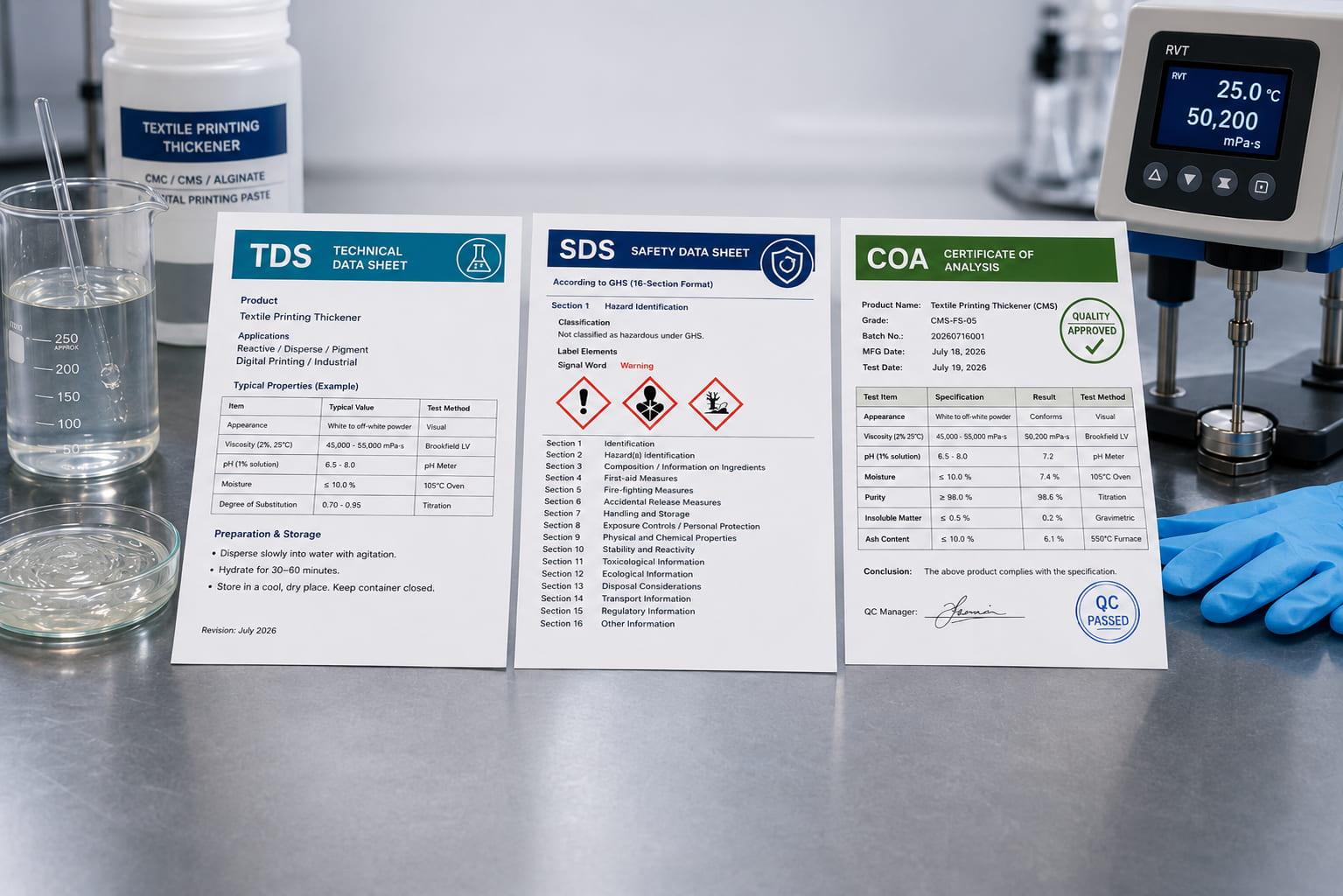
Fiche technique
The TDS provides the current product description, application direction, reference or specified properties and preparation information.
Fiche de données de sécurité
The SDS supports handling, storage, transport and workplace safety review. It should correspond to the selected product.
Certificat d'analyse
The COA provides selected results for a confirmed production or shipment batch. The document should identify the relevant product and batch.
Third-party and certification documents
Where a buyer requires a quality-system certificate, test report or compliance document, the current copy should be requested and checked for holder, product scope, issuer and validity.
Historical or company-level documents should not automatically be treated as current product certification.
Quality can be affected after laboratory release if the wrong product is packed, labels are incomplete or packaging is damaged during handling.
Product identity
The package should identify the product or grade and provide sufficient batch information for warehouse control.
Packaging condition
Powder products require protection from moisture and contamination. Packaging format should be agreed according to product, quantity, destination and handling requirements.
Quantity review
Packed quantity and package count should be checked against the confirmed order.
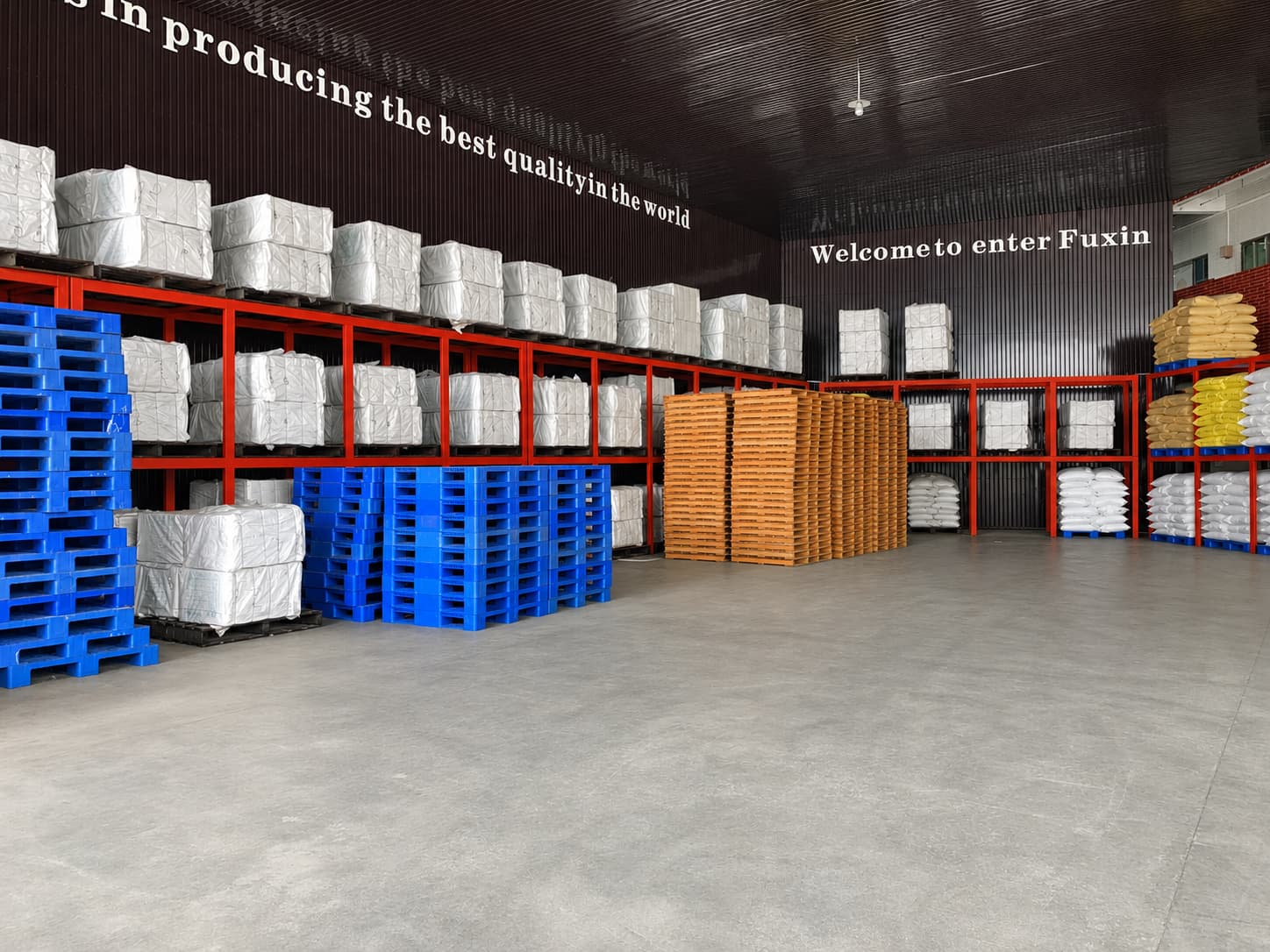
Warehouse staging
Released goods are organized for pallet preparation and loading according to the confirmed order arrangement.
Loading verification
Product identity, quantity, packaging and loading status are reviewed before container dispatch.
Export packing and loading preparation do not replace the buyer’s destination-country import review.
10. Batch Traceability and Retained Information
Traceability allows a later question to be connected with the relevant product, batch and supply records.
Incoming-material information
Raw-material supplier, source and incoming-batch information can support upstream investigation where relevant.
Production-batch identity
The finished material should remain connected to its production and testing records.
Package and shipment identity
Package labels, batch numbers, COA, packing list and order information should allow the delivered material to be identified.
Buyer receiving records
Buyers should record delivery date, batch number, package condition, warehouse location and incoming-test results.
Retained samples
Where retained samples are available, they can help distinguish between a supplied-batch issue, storage change, preparation difference or formulation problem.
11. Sample-to-Bulk Verification
One of the most important controls for a new supplier is confirming that the tested sample and bulk product belong to the same commercial route.
Use a permanent grade code
An approved sample should not remain identified only as “Sample A” or “matching powder.” It should be linked to a commercial grade or a clearly documented trial route.
Record the sample test conditions
Keep the concentration, water, mixing, hydration, temperature and viscosity method used during approval.
Confirm the bulk specification
The quotation and purchase order should identify the agreed grade and any order-specific requirements.
Vérifier le premier lot commercial
Compare the first commercial batch with the approved reference using the same laboratory method and complete printing formulation.
Avoid approving a custom sample without a production route
A laboratory sample may perform well but still be unsuitable for routine purchasing if its specification, grade identity and commercial production route are unclear.
Quality control continues after shipment when a buyer reports a batch, packing or application concern.
Review the supplied-batch information
Begin with the product code, batch number, COA, label, packing condition and delivery details.
Compare the reported test method
Differences in concentration, temperature, instrument, spindle, rotational speed or hydration time may explain why buyer and supplier results do not match.
Review application conditions
Water quality, dosage, order of addition, mixer, storage time, dyes, salts, alkalis, binders and fabric may all affect the result.
Use photographs and samples
Package photographs, labels, retained paste, powder samples, printed fabric and test records can improve the investigation.
Define the next action from evidence
The next step may include method alignment, repeat laboratory testing, retained-sample comparison, application review or another batch-specific follow-up.
FSX Chemical describes its pre-sales and after-sales review routes on the Technical Support page .
Quality Parameters by Product Family
Different textile chemical families require different quality criteria. The following table provides practical review directions rather than a universal COA template.
Product form, pH, viscosity or dosage-related specification, appearance and route-specific parameters
Ink compatibility, paste stability, filtration, print definition, bleeding, hand feel, fixation or curing
Compound printing thickener
Viscosity, pH, moisture or solids, appearance and application-specific control parameters
Complete formulation stability, rheology, machine behavior, print quality and cost in use
The actual parameters and limits should be confirmed using the current TDS, commercial specification and batch-document requirements for the selected product.
What Buyers Should Confirm Before Ordering
Product identity
Code permanent du produit et de la qualité
Current product description
Intended textile application
Standard or custom grade status
Technical specification
Controlled parameters and acceptance ranges
Viscosity concentration and test method
Moisture, pH, particle size or substitution data where relevant
Recommended preparation procedure
Sample approval
Sample code and production route
Date and conditions of customer testing
Approved dosage and formulation
Critical application acceptance criteria
Batch documents
TDS and SDS availability
Proposed COA parameters
Required third-party or compliance documents
Label and batch-number requirements
Commercial requirements
Quantity and packaging
Destination country and port
Trade term
Shipment and import-document requirements
Any agreed change-notification requirement
How Buyers Can Verify the First Commercial Batch
Step 1: Inspect the shipment
Check package condition, product name, grade code, batch number, quantity and labels before moving the goods into routine inventory.
Step 2: Review the batch documents
Confirm that the COA refers to the delivered product and batch and that required results fall within the agreed range.
Step 3: Take a representative incoming sample
Use the buyer’s normal sampling procedure and identify the sample with the supplier batch number.
Step 4: Repeat the approved laboratory method
Use the same concentration, water, mixer, hydration time, temperature, instrument and measurement settings used during sample approval.
Step 5: Compare the complete formulation
Test the material with the actual dyes, pigments, salts, alkalis, binders or auxiliaries rather than relying only on a water solution.
Step 6: Conduct a controlled production trial
Use a limited quantity before releasing the entire shipment to routine production, particularly for a new or critical grade.
Step 7: Retain records and samples
Record the test result, production result and final approval decision. Retain a sample where required by the buyer’s quality system.
Common Misunderstandings About Batch Consistency
Every batch must have exactly the same numerical result
Industrial grades are normally controlled within an agreed range. Numerical identity is not the same as technical consistency.
A COA guarantees printing performance
A COA reports selected batch properties. Printing performance also depends on formulation, water, mixing, fabric, dyes, equipment and post-treatment.
The same chemical name means the same grade
CMC, CMS and sodium alginate are product families with multiple possible grades and specifications.
One viscosity value proves batch equivalence
Viscosity must be compared using the same method. Filtration, hydration, purity and application behavior may also differ.
A passed laboratory sample removes the need for first-batch testing
The first commercial batch should still be verified against the approved sample and specification.
All textile chemicals use the same quality parameters
Product families differ in chemistry, form and application. The relevant control parameters should be selected by grade.
Every certificate on a supplier website applies to every product
Buyers should verify the certificate holder, scope, product coverage, issuer and validity date.
A reported application problem is always caused by the supplied batch
Batch quality is one possible cause. Test method, storage, water, formulation and process conditions should also be reviewed.
How to Report a Suspected Batch Difference
Complete information allows the supplier to investigate more efficiently. Avoid reporting only that the new batch is “different” or “does not work.”
Send product and batch information
Product and grade code
Numéro de lot
Order or invoice reference
Quantity received and quantity affected
Package and label photographs
Send test information
Concentration de l'échantillon
Source d'eau
Mixing and hydration procedure
Température de mesure
Instrument, spindle and rotational speed
Reference and questioned-batch results
Send application information
Complete formulation
Dosage and order of addition
Fabric, dye, pigment or ink system
Machine and processing conditions
Photographs of the paste or printed fabric
Description of when the difference first appeared
Keep the affected material
Do not discard all remaining product, packaging or test samples before the review is completed. Retained evidence may be required for comparison.
Textile chemical buyers need more than a sample that performs well once. They need a commercial grade that can be identified, supplied, tested and reviewed repeatedly.
It reduces sample-to-bulk risk
Permanent grade identification and first-batch verification help connect the approved sample with routine supply.
It makes test results more comparable
Recorded preparation and measurement conditions help separate genuine batch differences from method differences.
It supports production stability
Raw-material review, controlled manufacturing, blending and finished-batch testing help manage variation before the product reaches the printing factory.
It improves complaint investigation
Batch numbers, COA, labels and supply records provide a more reliable basis for technical follow-up.
It supports professional procurement
Buyers can compare suppliers by their product identity, specification, test methods, documentation and response process rather than by price or marketing claims alone.
FSX Chemical’s role is to provide an identifiable grade, relevant technical information and a controlled supply route. The buyer’s role is to verify the product in the actual formulation and maintain suitable incoming-quality controls.
Foire aux questions
Does consistent batch quality mean every batch is identical?
No. Industrial products are normally controlled within an agreed specification range. Consistency means that relevant variation is managed, measured and reviewed before release.
Which parameters does FSX Chemical check for every product?
The required parameters depend on the product and confirmed specification. Possible checks include viscosity, pH, moisture, degree of substitution, particle size, appearance and other grade-relevant properties.
Does every COA contain the same parameters?
No. The COA content should correspond to the selected product, batch and confirmed specification. Buyers should confirm required parameters before ordering.
How does FSX Chemical control CMC raw materials?
Cotton-linter feedstock is reviewed against defined incoming requirements, identified by source and incoming batch and stored under controlled conditions before release to the CMC production process.
Why is batch blending important?
Finished-product blending supports greater uniformity before representative sampling and specification review.
Can a buyer compare its viscosity result directly with the COA?
Only when the concentration, sample preparation, hydration time, temperature, instrument and measurement conditions are the same or have a validated correlation.
Does a passing COA prove that the material will work in my formulation?
No. The COA confirms selected batch properties. Buyers should still test compatibility and performance in the actual printing formulation.
How can I confirm that bulk material matches the approved sample?
Confirm the permanent grade code and specification, review the batch COA, repeat the approved laboratory method and conduct a controlled production-relevant test.
What documents can buyers request?
Depending on the product and order stage, buyers can request the current TDS, SDS, batch COA, product labels, packing information and available supporting documents.
What should I send when reporting a quality issue?
Send the product code, batch number, COA, package photographs, test method, results, formulation, processing conditions and representative samples or printed-fabric evidence where available.
Request Batch Quality Documents or Grade Verification
Send FSX Chemical the product name, current TDS or sample, application, target specification, test method, estimated quantity and required documents.
The team can review the appropriate grade route, sample-testing direction, available TDS or SDS information, proposed batch parameters and commercial supply requirements before bulk ordering.
Découvrez pourquoi les valeurs de viscosité des épaississants utilisés dans l'impression textile ne peuvent pas être comparées sans tenir compte de la concentration, de la température, de l'instrument, de l'axe, de la vitesse, de la méthode de préparation et de la durée de l'essai.
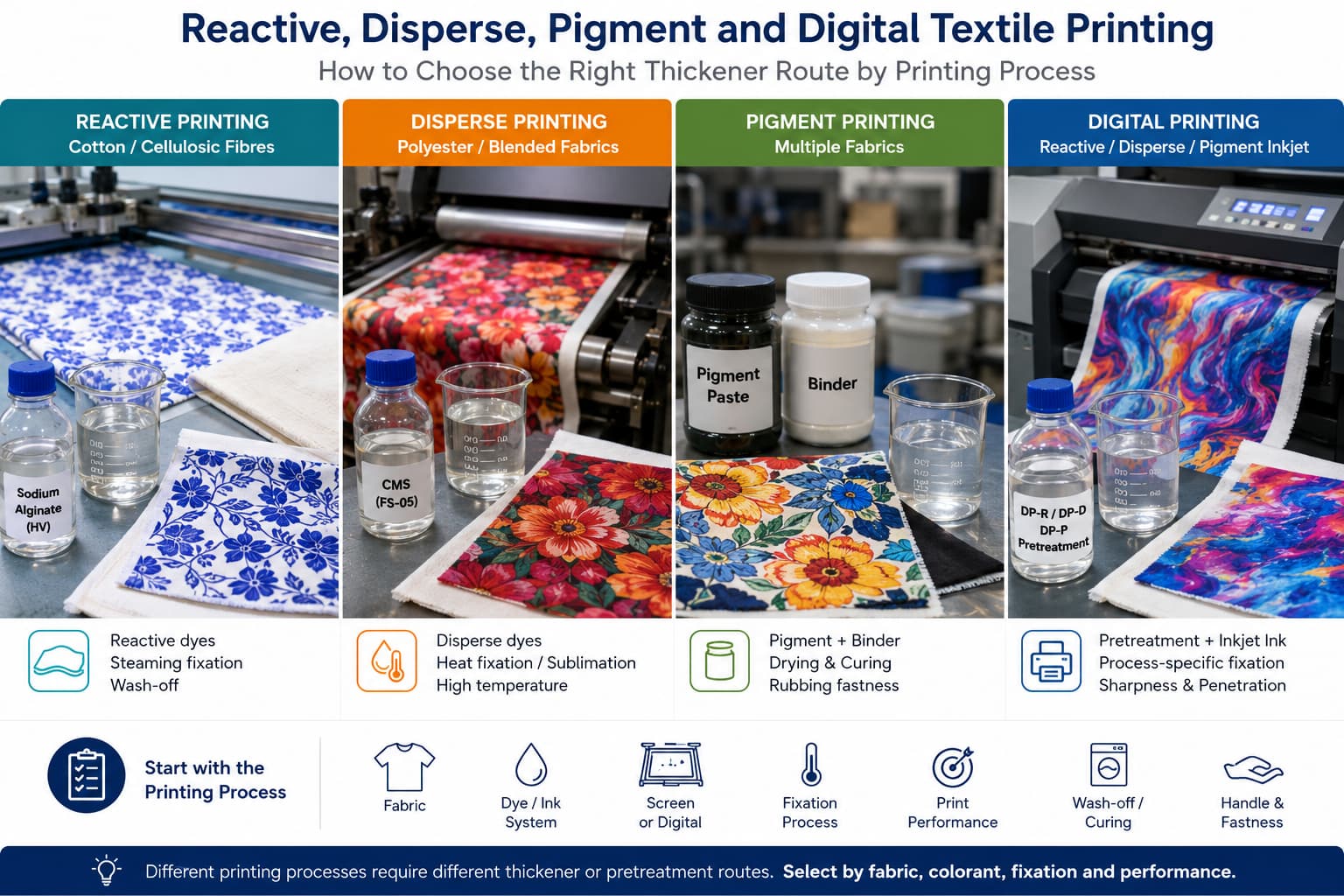
Découvrez comment choisir les agents épaississants et les procédés de prétraitement adaptés à l'impression textile réactive, dispersée, pigmentée et numérique, en fonction des exigences liées au tissu, à la teinture ou à l'encre, à la fixation, à l'élimination au lavage et à la qualité d'impression.
Découvrez la différence entre les documents TDS, SDS et COA, ce que les acheteurs de produits d'impression textile doivent vérifier, ainsi que la manière de contrôler les spécifications, les données de sécurité, les méthodes d'essai, les résultats des lots et les émetteurs des documents.
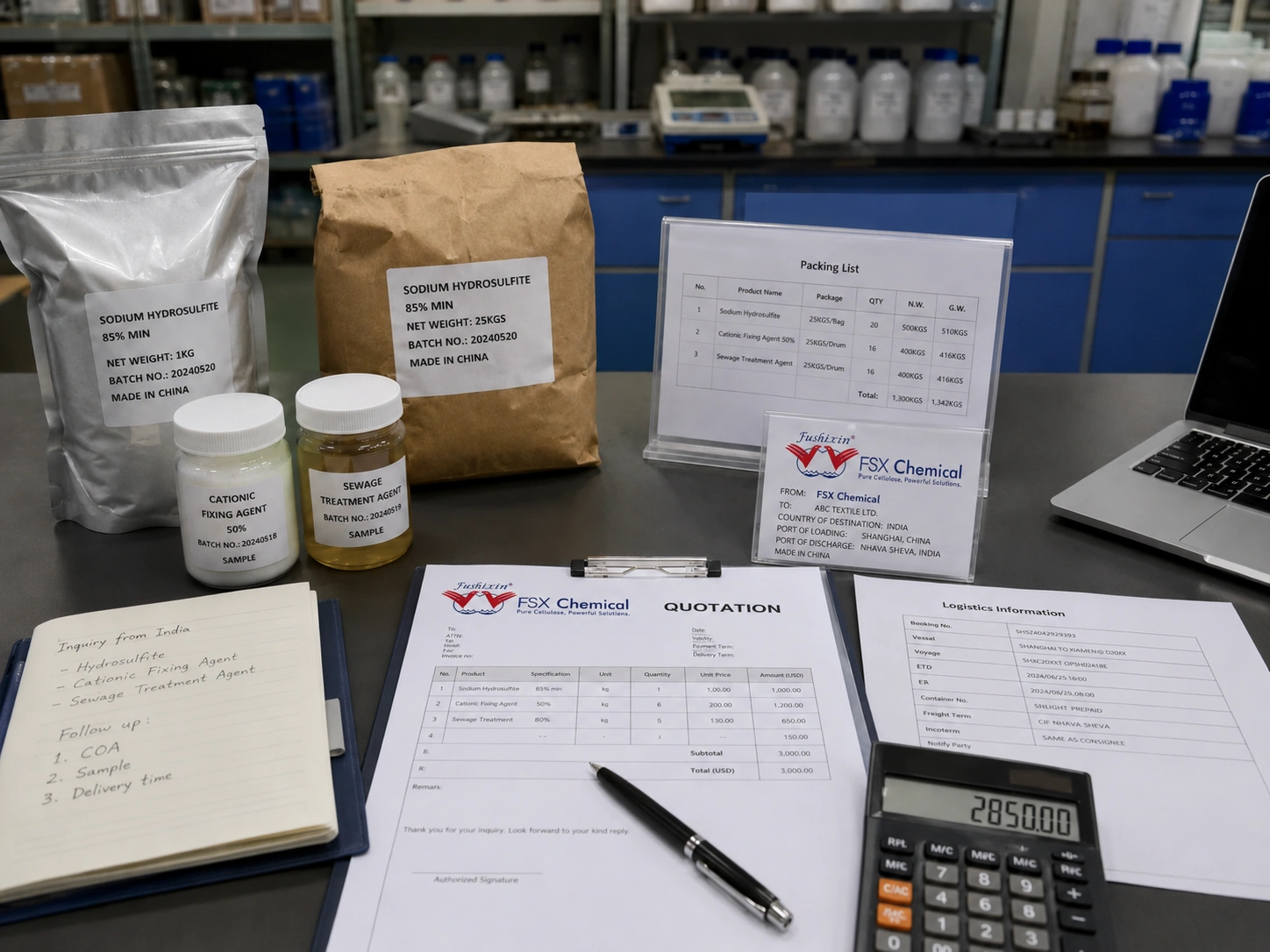
Découvrez comment évaluer un fabricant d'épaississants pour l'impression textile en vérifiant l'identité de l'entreprise, ses capacités de production, ses méthodes d'essai, la traçabilité des lots, la documentation technique, le service d'échantillonnage et ses capacités d'exportation.
Comparez le CMC, le CMS, l'alginate de sodium et la pâte d'impression numérique pour l'impression textile. Découvrez comment chaque solution s'adapte aux procédés réactifs, dispersés, pigmentés et numériques, et ce que les acheteurs doivent vérifier avant de procéder à des tests d'échantillons, à la mise en correspondance des qualités et à l'achat en gros.
L'alginate de sodium est largement utilisé dans l'impression textile comme épaississant stable et lavable pour les pâtes d'impression réactives. Découvrez comment évaluer le degré de viscosité, la pureté et l'adéquation à l'application avant tout achat, et comment FSX Chemical accompagne les acheteurs du monde entier en leur fournissant des données techniques et des échantillons.
La carboxyméthylcellulose (CMC) est largement utilisée dans les processus d'impression, d'encollage et de teinture des textiles. Ce guide explique comment évaluer les différentes qualités de CMC, quels sont les paramètres les plus importants et comment FSX Chemical peut vous aider dans vos décisions d'achat.
Le choix d'un fournisseur de CMC ne se résume pas à une simple comparaison des prix. Ce guide présente les critères d'évaluation, la liste de contrôle des documents à fournir et le processus d'essai que les équipes chargées des achats doivent suivre avant de s'engager dans une commande en gros.
La pâte d'impression à base de CMC est utilisée dans l'impression textile pigmentaire, réactive et numérique. Ce guide explique quels sont les paramètres importants, comment comparer les fournisseurs et ce qu'il faut demander avant de passer une commande en gros.
L'alginate de sodium et la CMC sont tous deux utilisés comme épaississants dans l'impression textile, mais ils conviennent à des systèmes de teinture et à des conditions de traitement différents. Ce guide explique les principales différences entre ces deux produits et précise dans quels cas il convient d'utiliser l'un ou l'autre.
Understanding sodium alginate raw material source and manufacturing process helps procurement teams ask better questions and evaluate suppliers more effectively. This guide covers seaweed species, extraction steps, impurity origins, and what consistent manufacturing looks like in supplier documentation.
Incorrect storage is one of the most common causes of sodium alginate performance problems in textile printing. This guide covers powder and paste storage conditions, shelf life expectations, degradation indicators, and what to check when receiving a new shipment.
Veuillez nous communiquer le nom du produit, son application, la quantité, la destination, ainsi que toute fiche technique (TDS),
photo ou document dont vous disposez déjà. FSX Chemical examinera ces
informations et vous recommandera la marche à suivre pour obtenir un devis, trouver un échantillon correspondant
ou choisir un produit.
Informations sur le produitNom du produit, référence, modèle, photo de l'étiquette ou référence du fournisseur.
Documents disponiblesFiche technique (TDS), fiche de données de sécurité (SDS), certificat d'analyse (COA), photo d'exemple, liste des produits ou données d'essai.
Détails de la commandeQuantité estimée, conditionnement, pays de destination, port ou conditions commerciales.
Demande ou problèmeProcédé d'impression textile, besoins en matière de formulation, problème actuel ou performances visées.

 FR
FR  EN
EN  BN
BN  ES
ES  TR
TR  ID
ID  RU
RU  AR
AR  UR
UR  VI
VI  TL
TL  HI
HI  UK
UK  KK
KK  KA
KA  UZ
UZ