 UR
UR  EN
EN  BN
BN  TR
TR  ID
ID  RU
RU  AR
AR 
This guide covers the basic environmental properties of sodium alginate, what happens to it in the washing-off stage of reactive dye printing, and what procurement teams should understand when evaluating thickener choice from an environmental perspective.
Sodium Alginate as a Natural Polymer: Basic Environmental Properties
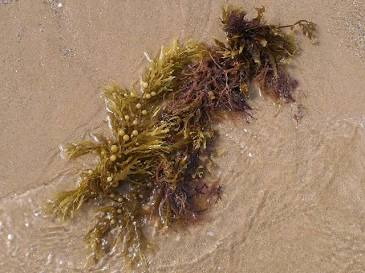
Origin and Biodegradability
This biodegradability is relevant to wastewater treatment: sodium alginate present in washing-off effluent from textile printing can be degraded in biological treatment systems (activated sludge, aerobic lagoons) that are standard in textile wastewater treatment facilities. The rate and completeness of biodegradation depend on the treatment system, operating conditions, and the concentration of alginate entering the system.
Comparison with Synthetic Thickeners
Acrylic-based synthetic thickeners — used in some pigment printing and coating applications — are generally not biodegradable under standard aerobic conditions. They contribute to persistent organic load in wastewater that is not readily removed by biological treatment alone and may require additional physico-chemical treatment steps.
Sodium alginate’s biodegradability is therefore a meaningful differentiator from a wastewater treatment perspective. For textile operations subject to strict effluent COD (chemical oxygen demand) limits or biological oxygen demand (BOD) discharge standards, the choice of thickener can affect the ease and cost of wastewater compliance.
Wastewater Generated in Reactive Dye Printing
Sources of Effluent in the Printing Process
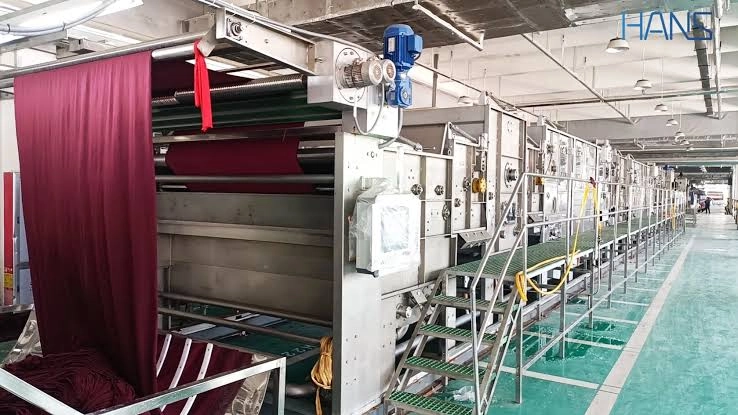
What Washing-Off Wastewater Contains
Washing-off effluent from reactive dye printing typically contains:
- Unfixed and hydrolyzed reactive dye — the most visible component, responsible for the color of the effluent
- Residual thickener — sodium alginate or other paste components that were not fully retained on the fabric
- Alkali — sodium carbonate or bicarbonate from the printing paste
- Urea — if used as a hygroscopic agent in the paste formulation
- Salt — sodium chloride or sodium sulfate used in the dyeing and fixation process
- Soaping agent — from the washing-off step itself
The relative concentrations of these components depend on the paste formulation, dye fixation rate, and washing-off conditions. Higher fixation rate means less unfixed dye in the effluent; more thorough washing means more complete removal of thickener and other paste components from the fabric.
The Role of the Thickener in Effluent Load
Sodium alginate contributes to the organic load (COD and BOD) of washing-off effluent. The amount of alginate entering the effluent depends on the paste concentration, the amount of paste applied per unit area of fabric, and how completely the fabric is washed.
For operations with tight effluent COD limits, reducing paste concentration to the minimum needed for acceptable print quality — and optimizing washing-off to remove paste efficiently — can reduce the organic load entering the treatment system from the thickener component.
Sodium Alginate in Printing Effluent: What to Expect
COD Contribution from Alginate Washout
At typical paste concentrations and application rates in reactive dye printing, sodium alginate contributes a measurable but generally manageable fraction of total effluent COD. The larger COD contributors in most reactive printing effluent streams are unfixed dye and urea.
If your operation has COD discharge limits that require careful management, quantifying the thickener contribution alongside dye and other paste components allows you to identify where reduction efforts will have the most impact.
Color and Turbidity in Washing-Off Effluent
Sodium alginate itself is colorless in solution and does not contribute to the color of washing-off effluent — the color in printing wash water comes from unfixed and hydrolyzed reactive dye. However, sodium alginate at higher concentrations can increase the turbidity of the wash effluent, which may affect the performance of color removal treatment steps (such as coagulation-flocculation) if turbidity interferes with dye removal efficiency.
This is a practical consideration for operations that use coagulation-flocculation as part of their color removal process: very high alginate concentrations in the effluent can affect the performance of some coagulants. At typical paste washout concentrations, this is not usually a significant issue, but it is worth monitoring if your treatment system shows variable color removal performance.
Biodegradation in Wastewater Treatment
For operations with anaerobic pre-treatment before aerobic polishing, sodium alginate also degrades under anaerobic conditions, generating biogas (methane and carbon dioxide). This can be a benefit in treatment systems designed to recover energy from organic waste.
How Thickener Choice Affects Overall Effluent Management
Sodium Alginate vs. Synthetic Thickeners: Effluent Comparison
The key environmental difference between sodium alginate and acrylic-based synthetic thickeners is biodegradability. Synthetic thickeners that are not biodegradable persist in the effluent through biological treatment stages and may be discharged in the treated effluent or accumulate in sludge.
For operations subject to discharge limits on non-biodegradable organics, or where sludge disposal is a cost concern, choosing a biodegradable thickener such as sodium alginate can simplify effluent management compared to synthetic alternatives.
However, biodegradability is not the only consideration. Synthetic thickeners are often used at lower concentrations than sodium alginate to achieve similar viscosity — meaning less total organic material enters the effluent per unit of fabric printed. The net environmental impact depends on the concentration in use, the treatment system available, and the specific discharge limits that apply.
Effect of Thickener Concentration on Washout Load
Higher sodium alginate concentration in the printing paste means more alginate to wash out from the fabric, which increases the organic load entering the washing-off effluent stream. Optimizing paste concentration — using the minimum concentration needed to achieve target viscosity and print quality — reduces the organic load per unit of fabric without affecting print performance.
Implications for On-Site Treatment Systems
When evaluating changes to your paste formulation or thickener grade, consider the downstream impact on your treatment system alongside the upstream impact on print quality.
Procurement Considerations for Environmentally Sensitive Operations
Questions to Ask Your Supplier
If environmental profile is a relevant factor in your sodium alginate procurement, the following questions are worth raising with your supplier:
- Is biodegradability data available for this grade, and what test method was used (e.g., OECD 301)?
- What is the product’s COD value per unit weight, if measured?
- Are there any constituents of concern — such as heavy metals or persistent additives — that could affect effluent compliance?
- Can you provide an SDS with full ingredient disclosure relevant to environmental impact assessment?
Documentation Relevant to Environmental Compliance
For operations subject to buyer sustainability audits or third-party environmental certifications, the following documentation from your sodium alginate supplier may be relevant:
- SDS (Safety Data Sheet) — includes environmental hazard classification and disposal guidance
- TDS (Technical Datasheet) — product composition and specification
- Heavy metal content data — relevant where buyer specifications or local regulations limit heavy metal input from textile chemicals
Note that third-party environmental certifications for sodium alginate have specific scope and criteria. If a certification is relevant to your buyer requirements, confirm the specific standard, the certification number, and the issuing body directly with your supplier, rather than relying on general claims of compliance.
How FSX Chemical Supports Environmentally Aware Procurement
Next steps:
Contact Our Technical Team — for questions on thickener choice and effluent management
Request a TDS and SDS — review product composition and environmental classification before ordering
Request a Sample — run paste trials and confirm washout behavior in your process conditions
Ask for Grade Matching — share your application and any environmental specification requirements: Service@fsxchemical.com