Sodium Alginate for Reactive Dye Printing Applications

Understand how sodium alginate supports reactive dye printing through paste stability, color yield, sharp pattern definition and clean wash-off.

What It Does in the Paste

Functional characteristics of sodium alginate

These are the active roles sodium alginate plays in your printing system — not generic selling points, but functional properties that determine whether it fits your process.

Smooth paste body

Forms a stable, smooth printing paste that holds consistent viscosity from preparation through printing without structural breakdown.

Reactive dye compatibility

Anionic and non-reactive toward most reactive dyes and alkali systems — does not interfere with dye-fibre bonding during steaming fixation.

Sharp edge definition

Resists ink spread during printing — supports clean pattern outlines on both rotary and flat-screen processes.

Good screen penetration

Suitable viscosity profile allows paste to pass through screen mesh consistently, supporting even colour lay-down across the fabric width.

Easy wash-off

Dissolves cleanly in the washing step after steaming — leaves minimal residue, supporting soft hand feel and clean fabric background.

Batch-to-batch stability

Consistent viscosity profile across batches under stable preparation conditions — supports repeatable production outcomes run after run.

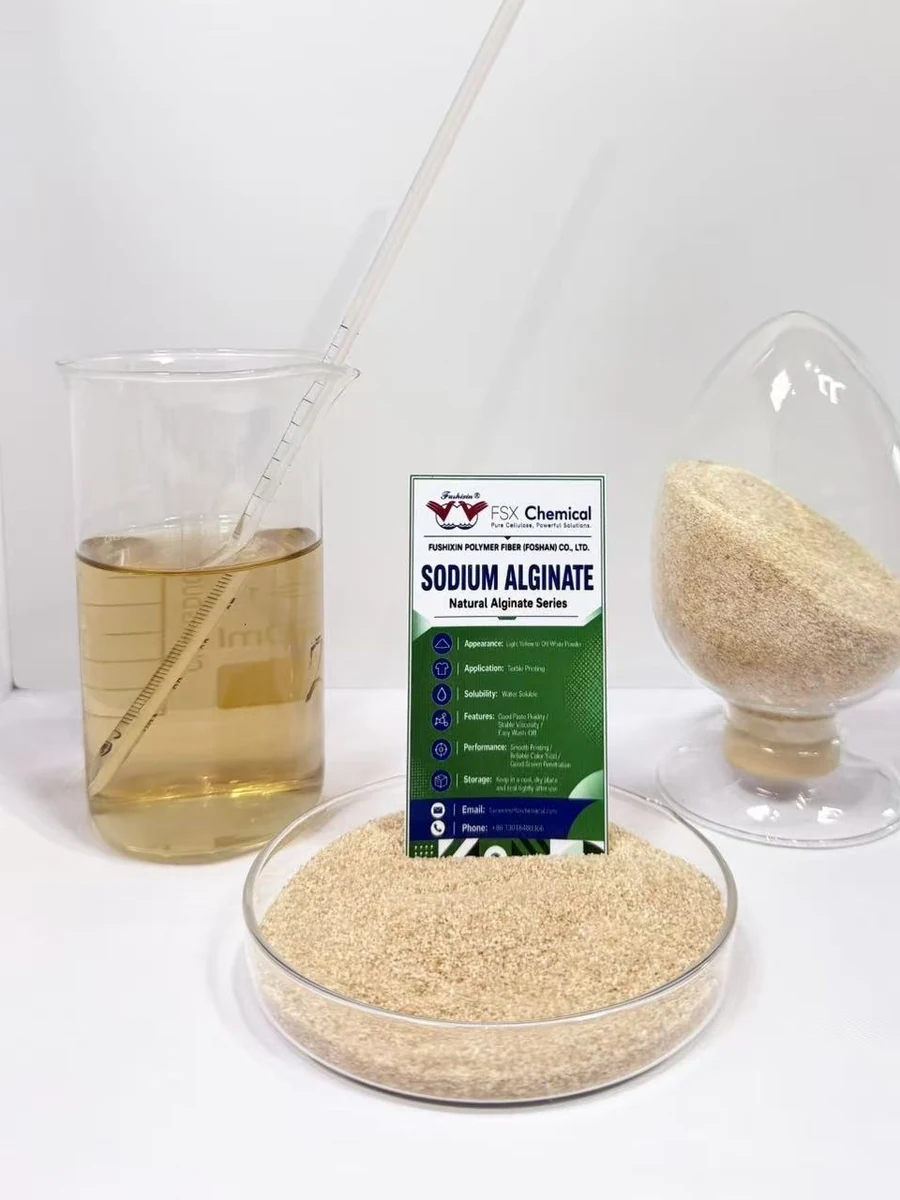
FSX Chemical sodium alginate powder and stock paste solution for reactive textile printing paste preparation

Sodium alginate dissolves in cold water under high-shear stirring. Stock paste (3–5%) is prepared in advance and mixed into the reactive colour paste formulation before printing.

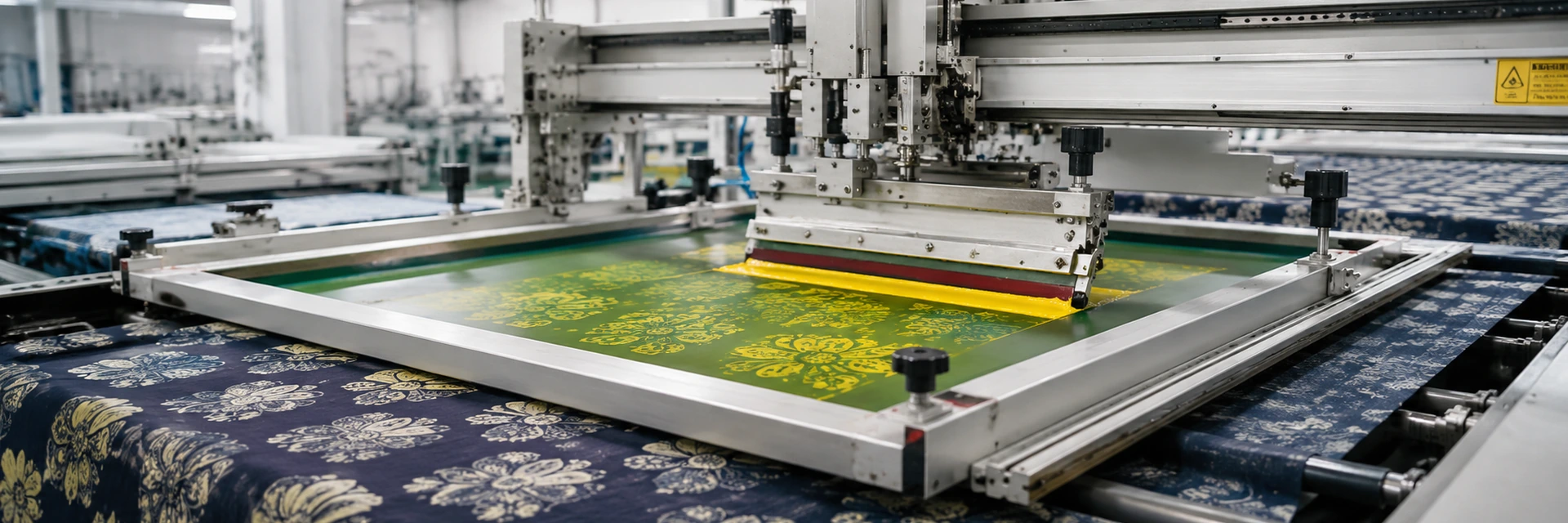
প্রতিক্রিয়াশীল রঞ্জক মুদ্রণের জন্য সোডিয়াম অ্যালজিনেট পেস্ট ব্যবহার করে ফ্ল্যাট স্ক্রিন টেক্সটাইল প্রিন্টিং প্রক্রিয়া
Suitable Applications

Where sodium alginate fits your process

Each scenario maps a printing situation to the typical process and what sodium alginate helps address. Use this to judge whether it matches your current workflow.

Scenario 01

Reactive printing on cotton — color yield priority

Fabric Cotton, viscose, modal, cellulosic blends
Process Paste prep → Printing → Drying → Steaming → Washing
Helps with High color yield, bright shade, clean dye-fibre bonding
Scenario 02

Fine pattern / sharp edge definition requirement

Fabric Cotton, silk, fine-weave cellulosic
Process Paste prep → Flat-screen or rotary printing → Drying → Steaming → Washing
Helps with Minimal ink spread, crisp outline, reduced bleeding at pattern edges
Recommended Fushixin Print HV
Scenario 03

High-speed rotary printing — stable viscosity demand

Fabric Cotton, viscose (continuous roll production)
Process Stock paste prep → Continuous rotary printing → Drying → Steaming → Washing
Helps with Sustained viscosity through run, consistent screen penetration, batch repeatability
Scenario 04

Soft hand feel and wash-off critical (apparel fabric)

Fabric Viscose, modal, Tencel, silk
Process Paste prep → Printing → Drying → Steaming → Full washing
Helps with Complete paste removal in washing, minimal stiffness, good final hand feel
Where It Works in the Process

Typical reactive printing process reference

Sodium alginate is active from paste preparation through washing. Highlighted steps show where it has the most direct influence on print quality.

ধাপ ০৩
Printing
Rotary or flat-screen, paste transferred to fabric
Step 04
Drying
Moisture removed before steaming
Step 05
Steaming
/ Fixation
Dye-fibre reaction under controlled steam conditions
Step 06
Washing
Alginate removed cleanly — determines final hand feel
Step 07
Finishing
Softening, fixing agents applied as required
Highlighted steps show where sodium alginate has direct process influence. Steaming conditions — temperature, duration and atmosphere — vary significantly by fabric, dye system and equipment. All process parameters should be treated as reference only and confirmed through laboratory trial under actual production conditions.
How to Judge the Result

What to look for after printing and washing

When assessing a sodium alginate print trial, these are the primary indicators experienced buyers and technical managers check.

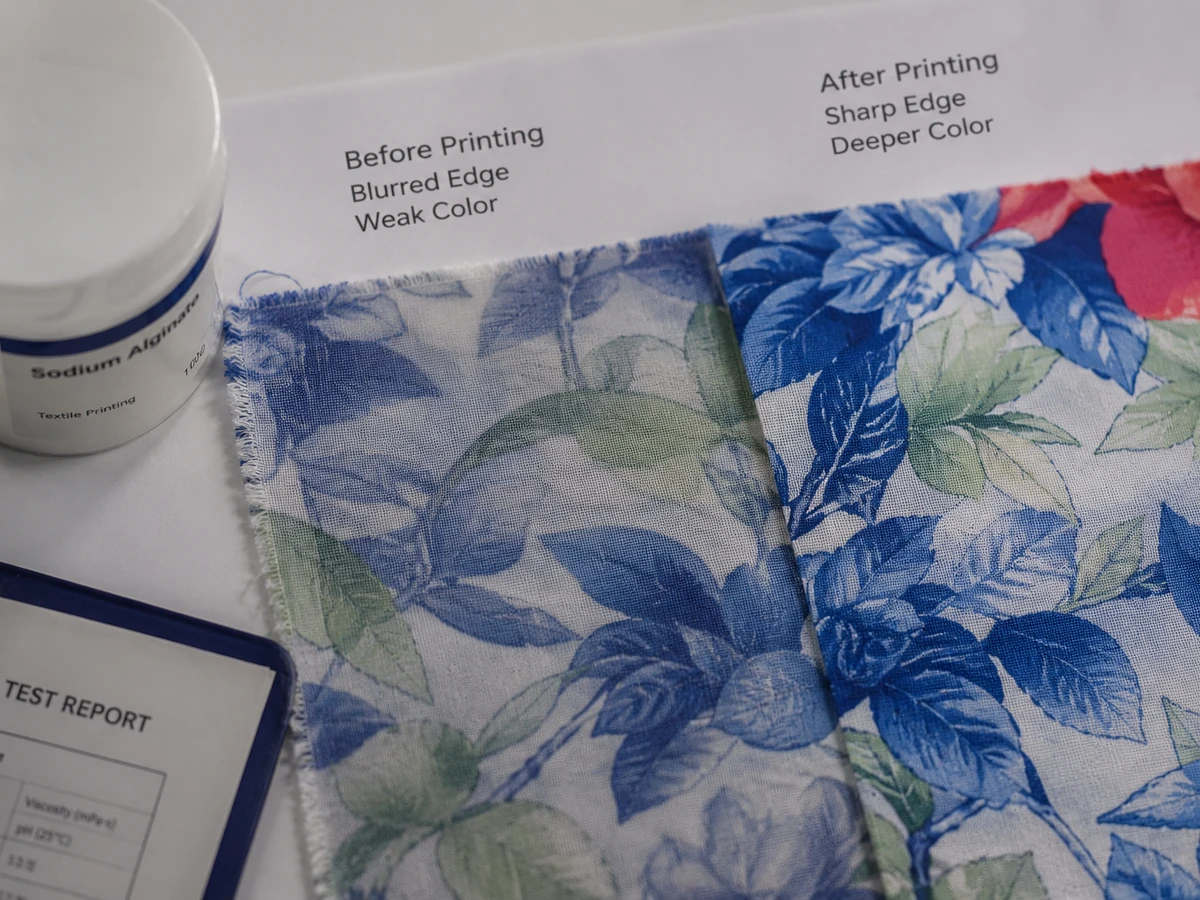
Reactive printed fabric comparison showing edge sharpness and color yield after sodium alginate printing test
Representative comparison for illustration. Results depend on fabric, dye system, steaming conditions and washing process — confirm through sample testing.
Route Evaluation

Sodium alginate as the performance-first route

Sodium alginate is not the lowest-cost thickener option — it is the most established performance route for reactive dye printing.

Dimension
সোডিয়াম অ্যালজিনেট
CMS / CMC Route
Color yield
High, reliable
Good in selected systems
Edge sharpness
Excellent
Good
Reactive dye compat.
Broad, established
Varies by system
Wash-off
Clean, easy
Good under proper washing
Formulation cost
Higher raw material cost
Lower in selected systems
Fine pattern suitability
Strong
Depends on formulation
Product Route

Which sodium alginate grade fits your process?

Select your printing situation below to see which grade is the most relevant starting point. Final selection should always be confirmed through sample testing.

High Viscosity

Fushixin Print HV

Sodium Alginate · CAS 9005-38-3

Reference viscosity 20,000–30,000 mPa·s
Concentration 3% solution
pH (1%) 7.0–8.0
Best for High-body paste, lower dosage
Medium Viscosity

Fushixin Print MV

Sodium Alginate · CAS 9005-38-3

Reference viscosity 20,000–30,000 mPa·s
Concentration 5% solution
pH (1%) 7.0–8.0
Best for General-purpose reactive printing
Low Viscosity

Fushixin Print LV

Sodium Alginate · CAS 9005-38-3

Reference viscosity 20,000–30,000 mPa·s
Concentration 8% solution
pH (1%) 7.0–8.0
Best for High-speed rotary printing