
CMC Manufacturing & Batch Quality Control

From cotton-linter sourcing to controlled CMC production, batch testing, COA traceability and export packing.

What It Does in the Paste

Functional characteristics of CMC in textile printing

CMC (carboxymethyl cellulose) is used as a textile printing thickener, viscosity modifier and paste stabilizer. It helps printing mills improve paste body, print definition, water retention and cost control in selected reactive, disperse and industrial textile printing systems.

Efficient viscosity build-up

Provides practical paste viscosity and body at controlled dosage, helping mills adjust printing paste flow and application stability.

Clear print definition

Supports stable paste transfer and cleaner pattern edges when the grade, viscosity and formula are matched to the printing process.

Controlled paste flow

Helps balance flow, penetration and screen release for rotary screen, flat screen and selected textile coating or printing applications.

Water retention support

Improves paste moisture retention and working stability, helping reduce drying issues during preparation, storage and printing.

Formula compatibility

Can be evaluated with dyes, auxiliaries and existing thickener systems to improve paste handling under customer-specific conditions.

Cost-control option

CMC can be used as a cost-adjustment route in selected printing systems after lab matching and small-batch production testing.
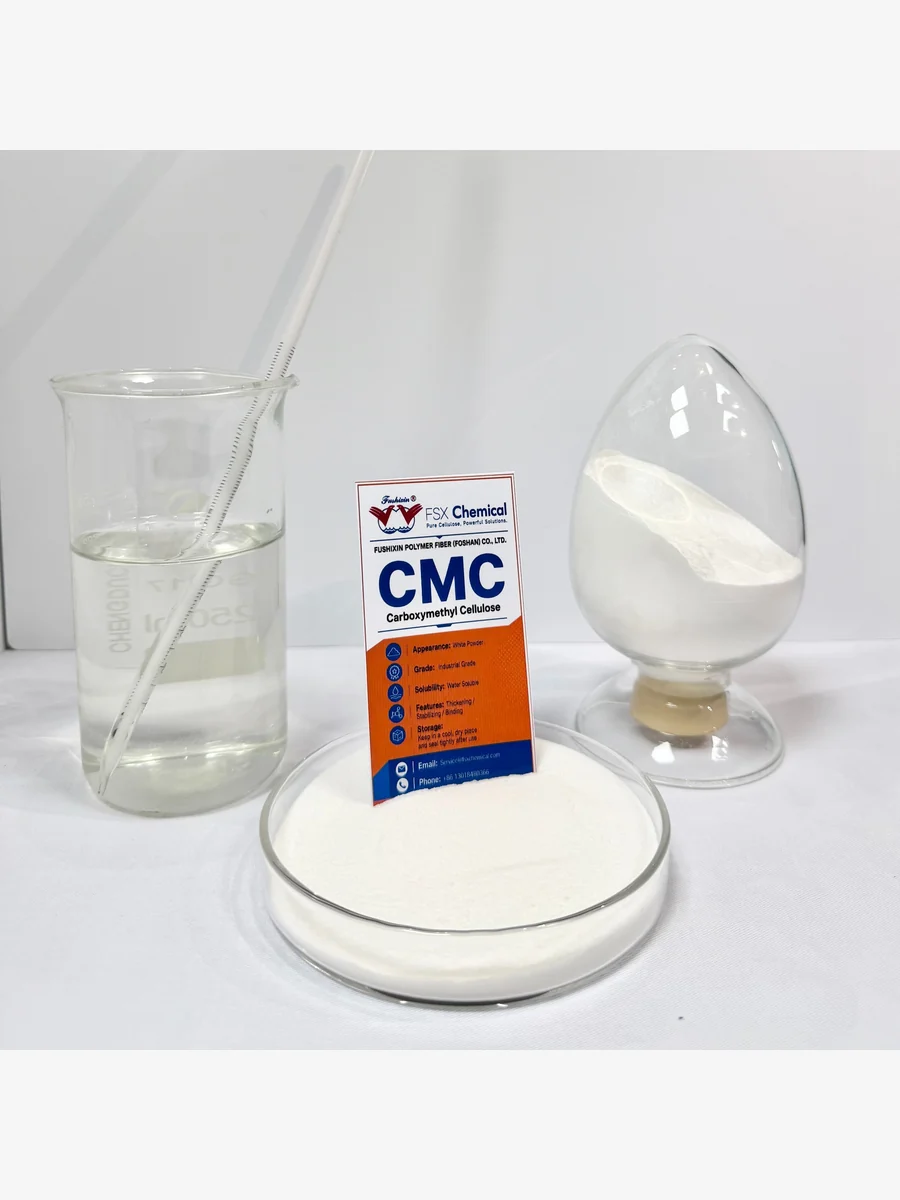
CMC powder and prepared stock paste for textile printing thickener application

CMC Grade Matching by Function

High viscosity CMC For strong paste body Used when higher viscosity, paste stability and stronger thickening effect are required.
Medium viscosity CMC For balanced printing paste Suitable for viscosity control, paste transfer and general textile printing evaluation.
Low viscosity / custom CMC For formula adjustment Recommended when flow, penetration, dosage or compatibility needs fine adjustment.
Where It Works in the Process

CMC position in the typical printing workflow

CMC influences the system from paste preparation through the washing step. Highlighted steps show where its functional properties are most directly active.

Paste
Preparation
CMC dissolved in cold water under high-shear mixing; DS grade selected here
Blended Thickener
Adjustment
CMC added to alginate or PTA system to adjust rheology and paste body
Colour Paste
Mixing
Dye, alkali and auxiliaries added; CMC-based paste contributes stable body
Printing
Rotary or flat-screen; paste viscosity determined by CMC grade and concentration
Drying /
Fixing
CMC remains on fabric; fixing conditions vary by dye and fabric type
Washing
CMC removed in washing step; hand feel and background clarity assessed here
Finishing
Softening or other finishing agents applied as required
Highlighted steps show where CMC directly influences process outcomes. Process conditions - steaming temperature, washing sequence, fixation method - vary by fabric type, dye system and equipment. All parameters should be treated as reference only and confirmed through laboratory trial under actual production conditions.
How to Judge the Result

What to evaluate after printing and washing

When trialling a CMC-based or CMC-blended thickener system, focus on these indicators to judge suitability for your application.

CMC-thickened printed fabric samples after washing showing pattern definition and background clarity

Results depend on fabric type, dye system, CMC grade, concentration and process conditions. Always confirm through laboratory trial before bulk production.

Key indicators to evaluate

Focus on these six process and quality indicators when judging whether a CMC-based or blended system is suitable for your application.

Paste body consistency

Check that paste viscosity remains stable from the start of the print run to the end.

Print definition

Pattern outlines should be clean and reproduce the screen design accurately.

Blending compatibility

Check for phase separation, uneven thickening or unexpected viscosity behaviour before scaling up.

Wash-off and background clarity

After washing, the unprinted ground should be clear without haze or residue.

Hand feel

Fabric should feel soft after proper washing. Residual stiffness means the process needs adjustment.

Batch-to-batch reproducibility

Compare shade and paste viscosity across batches before moving into bulk production.
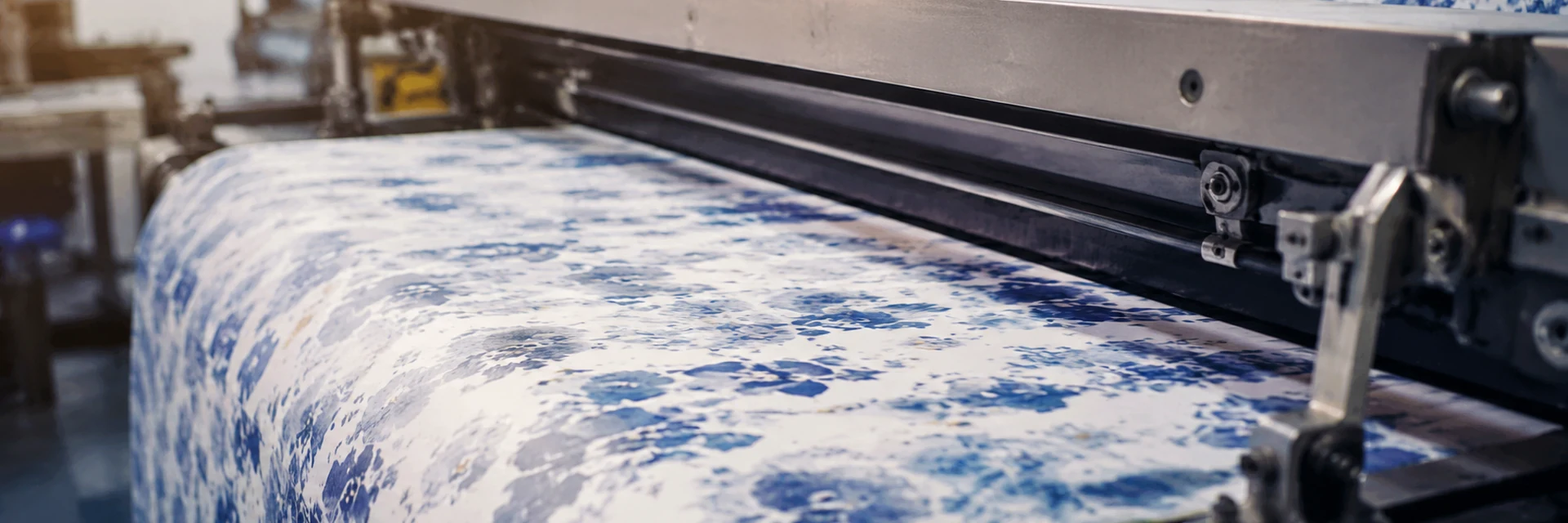
CMC-based textile printing paste application on printed fabric in industrial screen printing process
Route Evaluation

CMC as a formulation adjustment and blending route

CMC in context: route comparison

Relative strengths across key formulation dimensions — for orientation only

Rheology
control

CMC's primary strength — DS-tunable across three grades

Strong
Blending
compat.

Compatible with alginate and PTA systems especially Print LD

Good
Batch
consistency

Stable paste structure supports repeatable production outcomes

Strong
Color yield

Good in reactive systems — not the primary performance driver

Moderate–good
Raw material
cost

Comparable to or below sodium alginate — varies by grade and market

Favourable
Special process
compat.

Not suitable for vat discharge or alkali burn-out — see CMS H5 for those routes

Limited scope

When the CMC route makes sense

CMC is not a direct replacement for sodium alginate, and it is not the same as CMS. Its value lies in what it does to paste structure: CMC can stabilise rheology, improve blending compatibility and support more consistent batch performance in selected reactive printing systems.

For customers already using alginate or PTA-based systems who are experiencing paste body inconsistency or looking to adjust formulation structure, a CMC blending trial is worth evaluating before committing to a full system switch.

CMC should not be added directly into digital inkjet systems. For digital printing pretreatment applications, refer to the Digital Printing Paste application page.

CMC grade selection should be based on your specific fabric type, dye system and target viscosity range. Final selection — including whether to use CMC standalone or as a blending component — should always be confirmed through laboratory sample testing under your actual production conditions.
Grade Selector

Which CMC grade is the right starting point?

Select your situation below to highlight the most relevant grade. All selections are starting points for laboratory evaluation — final grade and dosage should be confirmed by sample trial.

High DS Grade

Fushixin Print HD

CMC Textile Printing Thickener — CAS 9004-32-4

Degree of substitution DS 1.9–2.0
Reference viscosity 800–1,800 mPa.s (1%, 20°C)
pH (1%) 7.0–9.0
Best for Higher DS — improved solubility and compatibility
General Grade

Fushixin Print MD

CMC Textile Printing Thickener — CAS 9004-32-4

Degree of substitution DS 1.5–1.6
Reference viscosity 800–1,800 mPa.s (1%, 20°C)
pH (1%) 7.0–9.0
Best for General reactive printing and blended systems
Broad Compatibility

Fushixin Print LD

CMC Textile Printing Thickener — CAS 9004-32-4

Degree of substitution DS 1.3–1.4
Reference viscosity 1,500–3,000 mPa.s (1%, 20°C)
pH (1%) 7.0–9.0
Best for Reactive and disperse — PTA and alginate blend systems
