
Digital Printing Paste for Textile Pretreatment

FSX Chemical supplies digital printing paste for textile pretreatment and coating processes, helping mills improve fabric surface uniformity, ink penetration control and printed outline clarity before inkjet printing.

What It Does in the System

Functional characteristics of digital printing paste

In digital textile printing, pretreatment paste works differently from traditional screen printing thickeners. It prepares the fabric surface before inkjet printing instead of being added directly into digital ink.

Ink migration control

Forms a pretreatment layer that helps hold inkjet droplets in place and reduce lateral spread before fixation.

Anti-bleeding effect

Helps reduce ink bleeding around colour boundaries in selected textile inkjet printing systems.

Improved color yield

Supports better ink absorption and fixation on the fabric surface for improved colour depth and brightness.

Water retention and sizing

Pre-coats the fabric surface to control moisture, ink absorption and surface uniformity before printing.

No direct ink addition

Used in pretreatment or coating, not directly in inkjet ink. High-polymer thickeners may increase nozzle blockage risk.

Clean wash-off

Removes in the washing step after fixation, supporting acceptable hand feel and background clarity.
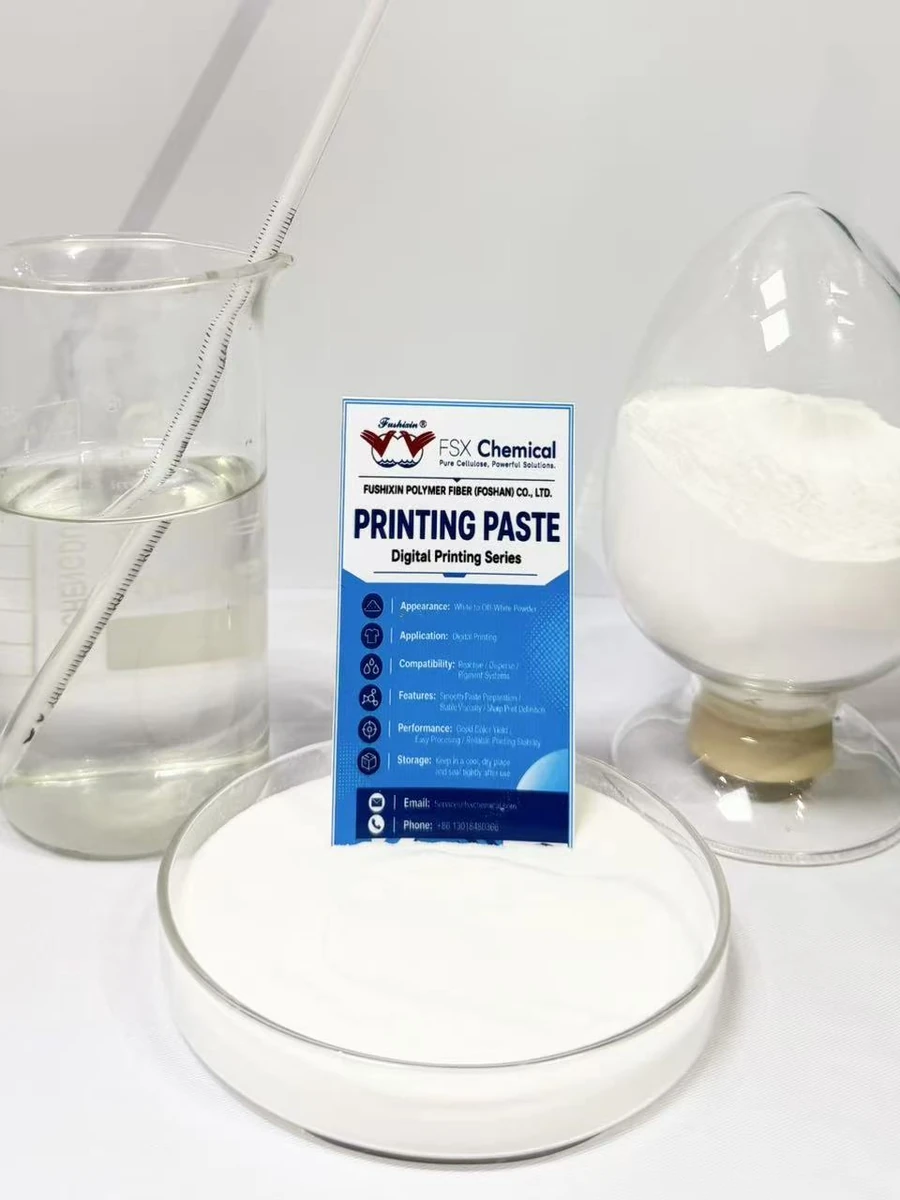
Digital printing paste powder and stock paste preparation for textile inkjet pretreatment
Role in process: traditional vs digital
Traditional printing
Digital printing
Thickener mixed into colour paste with dye
Pretreatment applied to fabric before printing
Carries dye to fabric through screen printing
Forms coating layer to hold inkjet droplets
High concentration in printing paste
Low dosage in pretreatment system
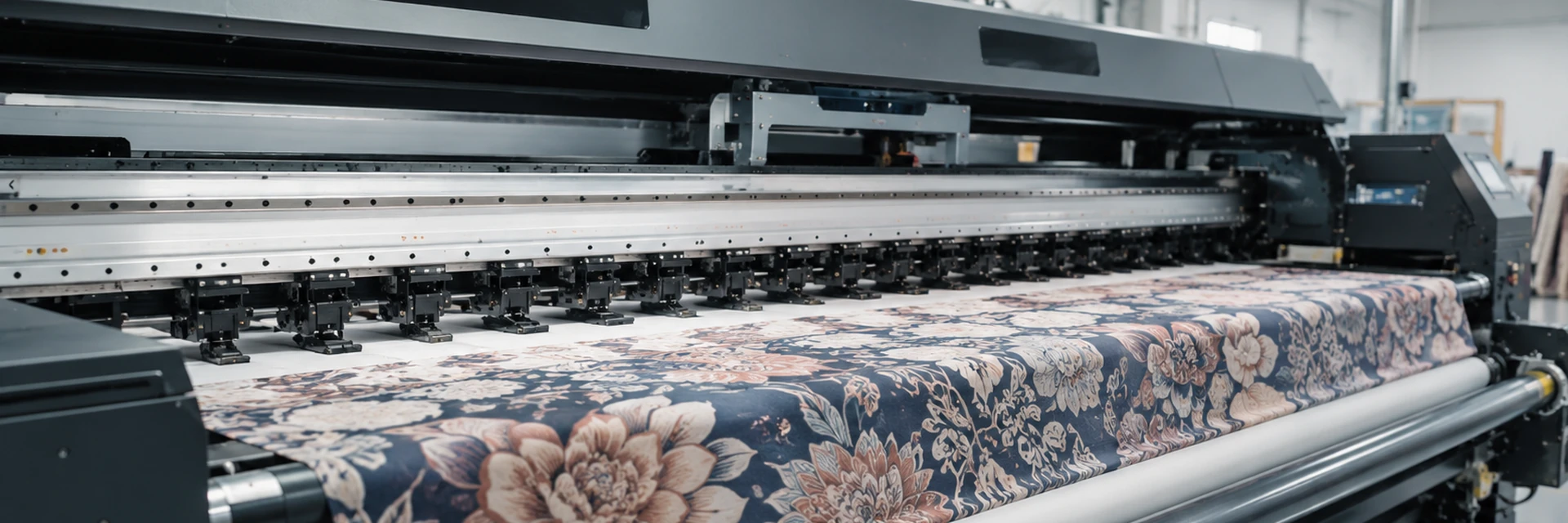
Digital textile printing equipment with fabric feeding through printer
Suitable Applications

Where digital printing paste fits your process

The digital printing series covers three ink systems. Each scenario maps a fibre and ink type to the relevant product and what it helps address in the pretreatment or paste preparation step.

Scenario 01

Reactive inkjet printing on cotton, viscose and natural fibres

Fabric Cotton, viscose, Tencel, Modal, silk and wool
Process Pretreatment → Drying → Digital printing → Steaming → Washing
Helps with Ink migration control, anti-bleeding, improved color yield and sharp edge definition in reactive inkjet systems
Recommended Fushixin Ink DP-R
Scenario 02

Disperse inkjet printing on polyester and synthetic fibres

Fabric Polyester and polyester-blend fabrics
Process Pretreatment if required → Digital printing → Drying → HT fixation → Washing
Helps with Ink absorption control, colour consistency and print definition on polyester in selected digital printing systems
Recommended Fushixin Ink DP-D
Scenario 03

Pigment inkjet printing on various fibre types

Fabric Cotton, polyester, blended and various fibre types
Process Pretreatment → Digital printing → Heat curing / fixation → Optional washing depending on system
Helps with Improved rubbing fastness, reduced ink migration and better colour yield in pigment digital printing systems
Recommended Fushixin Ink DP-P
Scenario 04

Existing digital system with bleeding or edge definition issues

Situation Current digital printing producing ink bleeding, weak colour or inconsistent edge definition
Role Pretreatment or paste additive evaluated to improve surface control before printing — not a change to ink formulation
Helps with Reducing rework, improving first-pass quality and stabilising output consistency in selected systems
Where It Works in the Process

Typical digital textile printing process reference

Digital printing paste or pretreatment additive works mainly in the sizing and pretreatment step before the fabric enters the printer. Highlighted steps show where it has the most direct influence on print quality.

Sizing /
Pretreatment
Paste additive applied to fabric surface and forms the pretreatment coating layer
Drying
Pretreated fabric dried before entering the digital printer
Digital
Printing
Inkjet droplets deposited onto the pretreated fabric surface
Drying
Printed fabric dried before steaming or fixation
Steaming /
Fixation
Ink fixation under process-specific conditions
Washing
Pretreatment residue removed and final hand feel checked
Highlighted steps show where digital printing paste or pretreatment additive has direct process influence. Steaming conditions, fixation method and washing sequence vary by ink system, fabric type and equipment. Pigment digital printing may not require a washing step. All process parameters are reference only and should be confirmed by laboratory trial.
How to Judge the Result

What to look for after digital printing and washing

When evaluating a digital printing pretreatment trial, focus on the visual and handling results after printing, fixation and washing. Some indicators are specific to reactive systems, while others apply across multiple ink types.
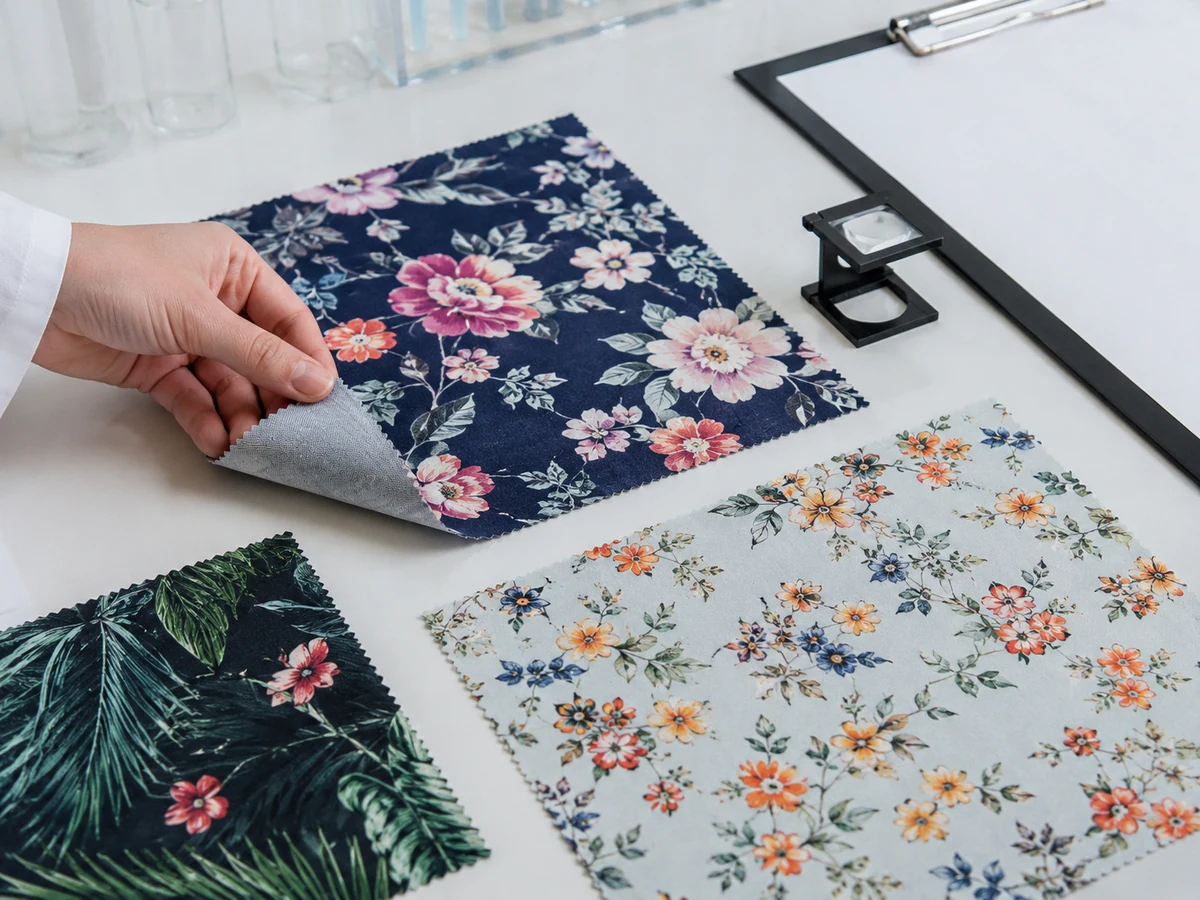
Digital printed fabric samples showing edge sharpness and no bleeding after washing
Results depend on fabric type, ink system, pretreatment dosage, fixation conditions and printer settings. Always confirm through laboratory trial before bulk production.

Key indicators to evaluate

Use these points to judge whether the pretreatment paste is performing correctly in your digital textile printing system.

Edge sharpness and bleeding control

Pattern boundaries should stay clean with no visible ink spreading beyond the printed area.

Color yield and depth

Compare printed colour depth and brightness against the target shade after fixation.

Ink migration on fabric surface

Check whether ink droplets remain contained before fixation, without spreading along fibres.

Rubbing fastness in pigment systems

For pigment digital printing, check dry and wet rubbing fastness after heat fixation.

Wash-off and background clarity

After washing, unprinted areas should remain clean with no staining or residue marks.

Hand feel after processing

The finished fabric should remain soft and natural after proper washing or fixation.

Route Evaluation

Digital printing pretreatment as a quality and consistency route

The value of digital printing paste is not primarily cost reduction. It helps reduce ink migration, improve first-pass print quality and support more consistent output across production runs.

Dimension
With pretreatment
Without pretreatment
Ink migration
Reduced in selected systems
Higher risk on absorbent fabrics
Edge sharpness
Improved in selected systems
Depends on fabric and ink
Color yield
Supported by surface coating
May vary by fabric absorbency
Rubbing fastness
Improved in selected pigment systems
Lower without pretreatment
Rework rate
Potentially lower
Higher with inconsistent output
Nozzle compatibility
Used in pretreatment — not in ink
Not applicable

When pretreatment makes sense

Digital printing pretreatment is not required for every fabric and ink combination. However, for reactive digital printing on cellulosic fabrics, pretreatment is often used to control ink migration and support colour yield.

For disperse and pigment digital printing, the decision depends on fabric type, ink system and quality targets. A pretreatment trial is the most reliable way to assess whether it improves output quality for your specific setup.

FSX Chemical digital printing paste products are designed as pretreatment or paste additives only. They should not be added directly into inkjet ink, because high-polymer additives in ink may increase nozzle blockage risk.

Note: Actual results depend on fabric, ink system, printer settings and process conditions. Confirm through sample testing before bulk production.
Product Route

Which digital printing paste fits your ink system?

Select your ink system and fabric type below to see which product is the most relevant starting point. Final selection should always be confirmed through sample testing with your actual printer, ink and fabric.

Reactive Digital

Fushixin Ink DP-R

Reactive Digital Printing Thickener / Paste Additive

Form White to beige powder
Reference viscosity 2,400–2,800 mPa.s
Test concentration 2.5–3%
Recommended dosage 25–30 g / 1,000 g paste
পিএইচ 7–9
Cotton Viscose Tencel Modal Silk Wool
Disperse Digital

Fushixin Ink DP-D

Disperse Digital Printing Pretreatment

Form Yellowish viscous liquid
Recommended dosage 40–80 g/L
পিএইচ 4–6
প্রয়োগ Pretreatment padding / coating
Polyester Nylon Synthetic fabrics
Pigment Digital

Fushixin Ink DP-P

Pigment Digital Printing Pretreatment

Form Yellowish viscous liquid
Recommended dosage 40–80 g/L
পিএইচ 4–6
Rubbing fastness ref. Dry Gr.4 / Wet Gr.3
Cotton Polyester Blends Various fibres