CMS for Textile Printing: Grade Selection, Paste Preparation and Testing
Carboxymethyl starch is used in selected textile printing and sizing formulations, while emerging research is...
Carboxymethyl starch is used in textile printing, warp sizing and blended thickener systems, while newer formulations are exploring its role in digital pretreatment and functional finishing. This guide explains the main application opportunities, technical limitations and grade-selection criteria for textile manufacturers and chemical buyers.
Carboxymethyl starch, commonly abbreviated as CMS, is a modified starch derivative used in selected textile printing, sizing and formulation applications. By introducing carboxymethyl groups into the starch structure, manufacturers can adjust properties such as water dispersibility, viscosity development, film formation and compatibility with other formulation components.
CMS is not a single standardized product. Commercial grades may differ in raw-material source, degree of substitution, viscosity, purity, particle size, moisture, salt content and rheological behavior. These differences determine whether a grade is suitable for printing paste, warp sizing, blended thickener systems or another textile process.
Modern textile applications are increasingly focused on formulation efficiency, production consistency and the ability to adapt chemicals to a specific process. In this context, CMS is being evaluated not only as a traditional starch derivative, but also as a configurable component in application-specific textile formulations.
What Is Carboxymethyl Starch?
Carboxymethyl starch is produced by chemically modifying starch so that carboxymethyl groups are introduced along the polymer structure. The modification changes the interaction between starch, water and other ingredients in a formulation.
Depending on the grade and manufacturing process, CMS may provide improved water dispersibility, more controllable viscosity, different film properties and better formulation flexibility than unmodified starch. However, these characteristics vary significantly between commercial grades.
CMS is a product family rather than one fixed specification
A product described only as “carboxymethyl starch” does not provide enough information for textile approval. Two CMS grades may have different viscosity curves, hydration rates, electrolyte responses and application performance even when their product names appear similar.
Technical buyers should therefore request a permanent grade code, current Technical Data Sheet, complete viscosity method and representative sample before evaluating a product.
How CMS differs from native starch
Native starch often requires controlled cooking or gelatinization to develop useful paste or film properties. Carboxymethyl modification can change how the starch interacts with water and may allow preparation under different processing conditions.
This does not mean that every CMS grade is immediately cold-water soluble or suitable for every textile formulation. Solubility and preparation behavior should be confirmed from the grade-specific technical information and laboratory trial.
Why CMS Is Relevant to Modern Textile Manufacturing
Textile manufacturers are rarely looking for a chemical based on its name alone. They are looking for a material that performs a defined function within a specific machine, formulation and fabric system.
CMS is relevant because its properties can be adjusted through raw material selection and chemical modification. This makes it possible to develop grades for different viscosity, film-forming, printing and sizing requirements.
Application-specific formulation
A CMS grade can be evaluated as the primary functional polymer or as one component of a compound formulation. In many modern applications, the objective is not to use CMS alone, but to combine it with another thickener, binder, lubricant or auxiliary to achieve a balanced performance profile.
Process flexibility
Depending on its grade, CMS may be considered where the factory needs controllable viscosity, film formation, water-based preparation or compatibility with existing starch-processing equipment.
The practical value of this flexibility must be confirmed against the factory’s water quality, mixing system, formulation, machine conditions and final textile requirements.
Potential for starch-based formulation development
CMS is derived from starch feedstocks, which makes it relevant to development programs focused on starch-based printing and sizing formulations. However, the environmental profile of a commercial product depends on more than the base polymer.
Manufacturing route, purification, formulation additives, product dosage, desizing, washing and wastewater treatment should all be considered before making an environmental claim.
Established and Emerging CMS Applications
Not every reported CMS use has the same level of commercial maturity. Buyers should distinguish between established textile applications, formulation-development opportunities and research-stage concepts.
Application Area
Typical Role of CMS
Application Status
Conventional textile printing
Printing-paste thickener or thickener component
Established, but grade and dye-system dependent
Impresión con pigmentos
Rheology modifier within binder-containing paste
Established in selected formulations
Blended thickener systems
Adjustment of viscosity, paste body, flow and formulation cost
Established formulation strategy
Warp sizing
Film-forming and yarn-protection component
Established or under industrial evaluation by grade
Digital textile pretreatment
Viscosity and coating-control component
Emerging and process-specific
Transfer and specialty printing
Component of mixed polysaccharide coating systems
Specialized development area
Functional finishing
Modified polymer or formulation-support material
Mainly development or research stage
An application described as emerging should not be interpreted as ready for unrestricted production use. It means that CMS has technical potential within the application, but the product, formulation and process still require controlled evaluation.
Application 1: Reactive Textile Printing
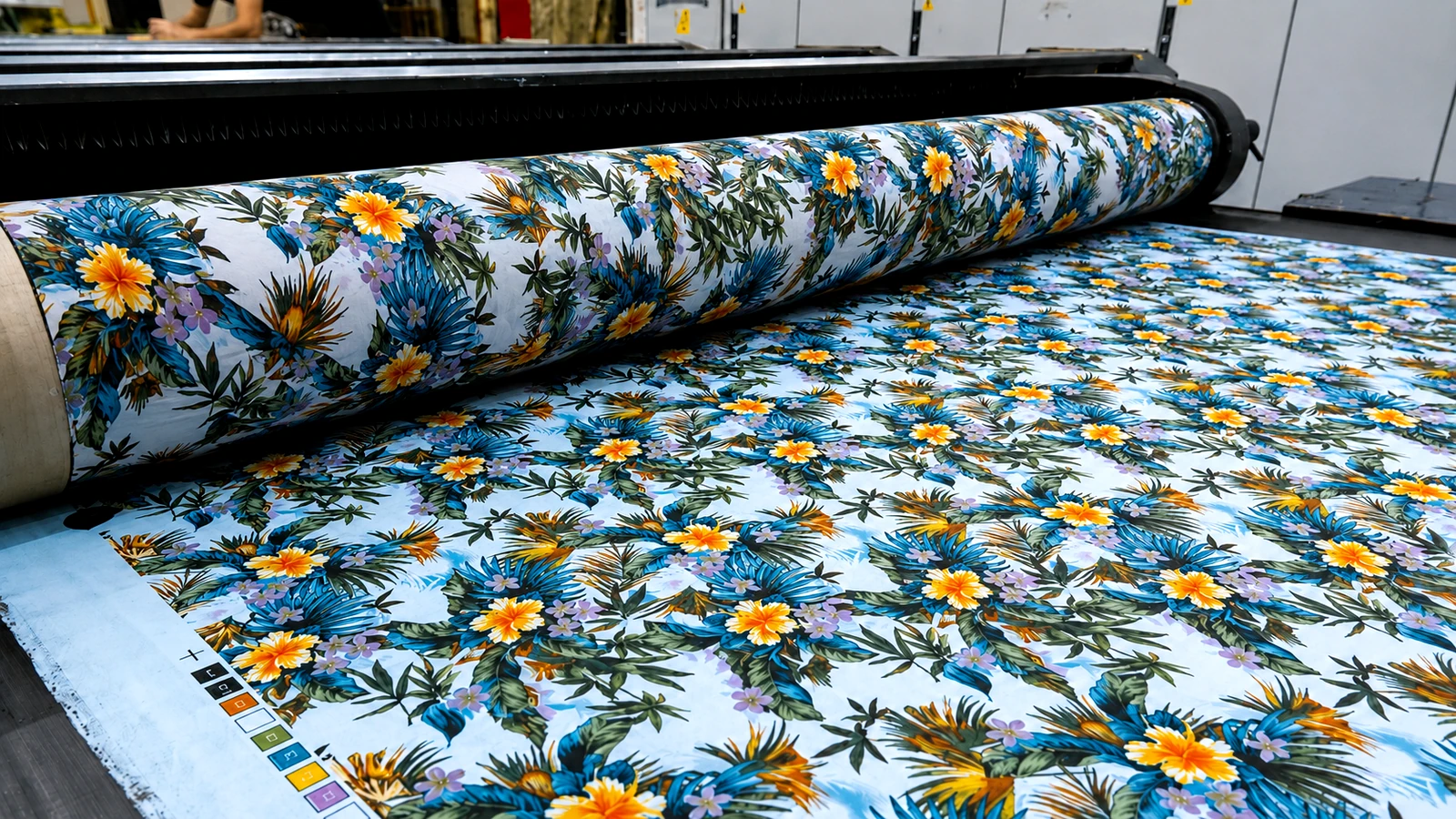
One of the best-known textile applications of CMS is its use as a thickening component in reactive printing paste. The thickener provides the paste body needed to carry the dye and auxiliaries through preparation, screen printing, fixation and washing.
A suitable printing thickener must do more than create a high viscosity. It must provide appropriate flow under printing shear, support design definition, remain compatible with the dye and alkali system and be removable during post-treatment.
CMS as a primary thickener
Selected CMS grades can be evaluated as the primary thickening material in a reactive printing formulation. Their performance depends on viscosity, degree of substitution, solids requirement, paste rheology, electrolyte response and affinity for the dye system.
A grade that gives an acceptable viscosity in water may still behave differently after reactive dye, alkali, urea, salt or other auxiliaries are added. Final selection must therefore be based on the complete printing formulation.
Important reactive-printing checks
Powder dispersion and hydration time
Viscosity before and after all auxiliaries are added
Response to salts, alkali and process-water hardness
Flow through the selected rotary or flat screen
Outline definition and penetration
Color response after fixation
Wash-off and residual thickener behavior
Fabric handle after post-treatment
CMS should not be treated as a universal alginate replacement
Sodium alginate remains an important reference thickener for many reactive printing systems. CMS may be suitable as an alternative or formulation component in selected processes, but it should not be described as a universal one-to-one replacement.
Buyers comparing CMS with alginato de sodio should test equal and optimized dosages, rheology, color response, wash-off and cost in use before making a commercial decision.
Application 2: Pigment Printing
Pigment printing paste normally contains pigment dispersion, binder, thickener and selected auxiliaries. In this system, CMS may be evaluated as a rheology-control component rather than simply as a viscosity builder.
The printing paste must transfer consistently, maintain pattern definition and allow the binder system to form an acceptable film after curing. Thickener selection can influence machine behavior, print surface and fabric handle.
Compatibility with the binder system
Pigment binders, crosslinkers, defoamers and wetting agents may interact with the thickener. A CMS grade that performs well in water should therefore be tested again in the full binder-containing formulation.
Observe whether the paste shows delayed thickening, thinning, separation, excessive foam or instability after storage.
Film and handle considerations
A pigment-printing thickener should support the application process without creating unnecessary residue or an excessively rigid surface. Final fabric handle depends on the thickener, binder level, curing process, pigment concentration and finishing conditions.
Application-specific evaluation
Paste stability with the selected binder
Rheology at printing-machine shear conditions
Screen release and transfer
Pattern edge definition
Surface uniformity
Dry and wet rubbing performance
Fabric handle after curing
Cleaning and paste-removal requirements
Application 3: Blended Thickener Systems
An important modern use of CMS is as one component of a blended thickener system. Blending allows formulators to combine different polymer characteristics instead of expecting one material to provide every required property.
CMS may be combined with another starch derivative, cellulose ether, natural gum, alginate or synthetic rheology modifier. The purpose of the blend should be defined clearly before laboratory development begins.
Why formulators use blends
Adjust low-shear and high-shear viscosity
Improve paste body without excessive solids
Modify screen passage and structural recovery
Balance hydration speed and storage stability
Improve compatibility with dyes, pigments or binders
Adjust wash-off or film behavior
Optimize total formulation cost
Blending is not simple dilution
The performance of a polymer blend cannot always be calculated by averaging the properties of its individual components. Interactions between polymers, salts, surfactants and other ingredients can change viscosity and rheology.
Each blend ratio should therefore be prepared and evaluated under the same concentration, water, mixing, temperature and resting conditions.
CMS and CMC combinations
CMS may be evaluated together with Carboximetilcelulosa where a formulator wants to balance starch-based film characteristics with the solution and viscosity behavior of a cellulose derivative.
The result depends on the grades selected and their ratio. The two materials should not be considered interchangeable merely because both contain carboxymethyl groups.
Application 4: Warp Sizing and Weaving Preparation
Warp yarns experience repeated tension, abrasion and contact with machine components during weaving. Sizing applies a protective polymer film that can improve fibre cohesion, reduce hairiness and support weaving performance.
Modified starches, including selected CMS grades, can be evaluated as primary size materials or as components of a blended sizing formulation. The required properties differ from those of a printing thickener.
Film formation and yarn adhesion
A sizing grade should form a sufficiently continuous film and adhere to the target fibre without becoming excessively brittle or sticky. Film strength alone is not enough; flexibility and abrasion behavior also matter.
CMS in reduced-PVA development
Some mills and formulation developers evaluate modified starches when attempting to reduce reliance on polyvinyl alcohol in selected sizing systems. CMS may contribute film formation and water-based processability, but it should not be presented as a universal direct replacement for PVA.
Cotton, polyester and blended yarns can have different adhesion and desizing requirements. A successful formulation for one yarn count or fibre type may not transfer directly to another.
Key warp-sizing tests
Size-paste viscosity at application temperature
Film tensile strength and elongation
Film flexibility and brittleness
Adhesion to the target fibre
Yarn hairiness after sizing
Yarn abrasion resistance
Yarn breaking strength and elongation
Size add-on consistency
Weaving performance during a controlled trial
Desizing efficiency and wastewater implications
Lubricants and plasticizers remain important
The performance of a CMS sizing formulation depends on more than the polymer. Lubricants, plasticizers, antistatic materials and other sizing auxiliaries may be required to obtain the correct balance of adhesion, flexibility and machine performance.
Application 5: Digital Textile Pretreatment
Digital textile printing often uses a pretreatment layer to control how ink interacts with the fabric. Depending on the ink chemistry and application route, the pretreatment may need to manage wetting, penetration, fixation chemicals and coating uniformity.
CMS has been explored as a thickening or film-forming component in selected digital pretreatment formulations. This should be considered an application-development area rather than a universal commercial use.
Possible roles in digital pretreatment
Adjustment of pretreatment viscosity
Control of coating or padding uniformity
Reduction of uncontrolled liquid penetration
Support for fixation chemicals in the pretreatment layer
Modification of the dried pretreatment film
Digital applications require stricter filtration control
A product used near inkjet systems may require tighter control of insoluble particles, gel residues and contamination than a conventional screen-printing paste. The required filtration level depends on whether CMS is applied to the fabric as a pretreatment or introduced into another process stage.
CMS should not be placed directly into an ink formulation unless the complete ink and printhead system has been specifically developed and validated for that use.
Digital pretreatment tests
Solution or dispersion uniformity
Filtration and residue
Coating or padding stability
Fabric wetting and penetration
Drying behavior
Compatibility with fixation chemicals
Printed outline and color response
Fabric handle after printing and washing
Storage stability of the pretreatment
Buyers developing digital pretreatments may also compare CMS with a dedicated pasta para impresión digital designed for the intended fabric and printing route.
Application 6: Transfer and Specialty Printing
CMS can also be evaluated in specialized coating and transfer-printing systems, particularly as part of a mixed polysaccharide formulation. In these processes, the polymer may need to provide both rheological control and adhesion to a temporary carrier or textile surface.
Mixed polysaccharide coatings
A specialty-printing formulation may combine CMS with a more adhesive polymer or another thickener. The blend can be designed to control coating weight, drying, flexibility and transfer during the subsequent printing or fixation stage.
Double-sided and penetration-sensitive printing
Fabrics such as lightweight woven or georgette materials may require careful control of penetration and strike-through. CMS-containing blends can be investigated where the formulator needs a different balance of flow, film and transfer properties.
Why specialty applications need individual development
Transfer paper, fabric construction, coating equipment, drying and fixation all affect the result. A formulation should therefore be developed around the complete process rather than copied from a conventional printing-paste recipe.
Application 7: Functional Finishing and Surface Modification
Modified CMS materials have also been studied as components in textile finishing and surface-treatment formulations. These applications may use CMS itself or a further modified CMS polymer designed to interact with a finishing agent or fibre surface.
Most of these uses should be regarded as development-stage applications. Their feasibility depends on the chemical modification, curing conditions, required durability and final textile standard.
Easy-care formulation development
Tailored or graft-modified CMS materials have been investigated in easy-care cotton finishing systems. The development objective may include balancing crease-recovery requirements with fabric-strength retention or changing the behavior of the crosslinking formulation.
These results cannot be transferred automatically to a standard commercial CMS grade. Buyers should confirm whether the offered product is an ordinary CMS thickener or a specially grafted or functionalized polymer.
Hydrophilic surface modification
Carboxymethylated starch materials may also be considered in surface treatments where increased water interaction or a hydrophilic polymer layer is required. Film durability, washing resistance and the effect on fabric handle must be evaluated.
Carrier for functional ingredients
CMS may provide viscosity or film support in a formulation containing another functional ingredient. The actual textile property would be supplied mainly by that ingredient, while CMS helps control application and deposition.
It would therefore be misleading to describe CMS alone as antibacterial, flame-retardant, conductive or water-repellent unless the specific modified product has verified performance data for that function.
Key CMS Parameters That Affect Textile Performance
A CMS grade should be evaluated through both specification data and application testing. The most important parameter depends on whether the product will be used for printing, sizing, coating or finishing.
Grado de sustitución
Degree of substitution, or DS, describes the average extent to which hydroxyl groups on the starch structure have been replaced by carboxymethyl groups. DS can influence water interaction, viscosity, solubility and electrolyte response.
A higher DS is not automatically better. The required level depends on the intended application, formulation and performance target.
Viscosidad y método de ensayo
Viscosity should always be reported together with the product concentration, water source, preparation method, hydration time, temperature, instrument, spindle and rotational speed.
Two viscosity values should not be treated as equivalent when their test methods are different.
Rheological behavior
Printing and coating systems experience changing shear conditions. Apparent viscosity at one speed does not fully describe screen passage, pumping, coating or recovery after application.
Where rheology is critical, compare the reference and candidate at multiple test speeds and in an actual application trial.
Purity and residual salts
Residual salts and by-products may affect solution clarity, electrolyte level and compatibility with dyes or other ingredients. The required purity should be based on application performance rather than an unsupported absolute claim.
Moisture and active-product basis
Moisture affects the relationship between supplied product weight and dry polymer content. Buyers comparing dosage and cost should confirm whether calculations are based on the supplied product or dry matter.
Particle size and hydration
Particle size can influence dusting, wetting, lump formation and hydration speed. A fast-hydrating powder still requires a suitable addition rate and mixing pattern.
pH and chemical compatibility
The pH of the CMS solution and the complete formulation should be checked. Alkali, salts, binders, surfactants and other auxiliaries may change the final viscosity or stability.
Filtration and insoluble residue
Filtration is important for fine screens, coating equipment and digital pretreatment systems. The acceptable residue level depends on the process and equipment sensitivity.
Film properties
For warp sizing and coating applications, film strength, elongation, flexibility, adhesion and redissolution may be more important than the viscosity number alone.
How to Select a CMS Grade for Textile Applications
Grade selection should begin with the application rather than a supplier’s general product list. A clear technical request helps the supplier select a suitable starting grade and reduces unnecessary sample testing.
Step 1: Define the textile process
Reactive, pigment or another printing system
Warp sizing or textile coating
Digital pretreatment or specialty printing
Fabric, fibre or yarn composition
Laboratory, pilot or production-scale equipment
Step 2: Define the required function
Primary viscosity development
Rheology adjustment within a blend
Film formation and fibre adhesion
Coating uniformity
Improved preparation or hydration behavior
Cost-in-use optimization
Step 3: Provide the current reference
Where possible, provide the current product name, TDS, viscosity method, dosage, preparation procedure and representative sample. Explain which performance must remain unchanged and which problem should be improved.
Step 4: Request grade-specific documents
TDS actual
Ficha de datos de seguridad (FDS) actual
Permanent product and grade code
Viscosity range and complete method
Grado de sustitución, cuando corresponda
Moisture and pH specification
Procedimiento de preparación recomendado
Recommended application scope
Batch COA parameters
Step 5: Compare cost in use
Do not compare CMS grades by price per kilogram alone. Include the dosage required, hydration time, mixing energy, filtration, machine behavior, wash-off or desizing and production consistency.
Recommended Laboratory and Production Tests
CMS approval should move from simple screening to the complete application. A product should not be approved from a TDS or water-viscosity test alone.
Basic laboratory screening
Powder appearance and package condition
Dispersion and lump formation
Hora de hidratarse
Viscosity under the agreed method
pH and solution appearance
Filtration or screen residue
Stability after the normal resting period
Printing-paste evaluation
Full-formulation viscosity
Electrolyte and alkali tolerance
Paste stability over time
Screen passage and transfer
Print definition and penetration
Color response after fixation
Wash-off and final fabric handle
Warp-sizing evaluation
Application viscosity at the working temperature
Film strength and flexibility
Adhesion to the target fibre
Yarn hairiness and abrasion resistance
Size add-on
Controlled weaving trial
Desizing behavior
Sample-to-bulk verification
Once a sample is approved, confirm that the commercial order uses the same permanent grade code and agreed specification. Test the first commercial batch before releasing the entire shipment to production.
Common CMS Selection Mistakes
Selecting by chemical name alone
“Carboxymethyl starch” does not identify the viscosity, DS, purity, hydration behavior or application performance of a commercial grade.
Assuming the highest viscosity grade is best
Excessive viscosity can create mixing, filtration, pumping, screen or coating problems. The target should be application performance rather than the highest possible number.
Comparing viscosity values from different methods
Concentration, temperature, hydration time, instrument and speed must be the same before two viscosity results can be compared meaningfully.
Testing only in water
Dyes, pigments, binders, salts, alkalis and auxiliaries can change CMS viscosity and stability. The complete formulation must be tested.
Treating CMS as a universal replacement
CMS cannot be assumed to replace sodium alginate, CMC, PVA or a synthetic thickener at the same dosage without application testing.
Using one grade for printing and sizing
Printing paste and warp sizing require different rheological and film properties. A grade approved for one process may be unsuitable for the other.
Approving the sample without locking the grade code
The sample, TDS, quotation, purchase order, package label and COA should refer to the same permanent commercial grade.
CMS Paste Preparation: A Controlled Starting Method
Calculate the dry CMS concentration and condition the water temperature and quality before addition.
Start controlled circulation, then add the powder gradually at a consistent point to reduce surface lumping and fish-eyes.
Keep mixing speed, shear and temperature consistent between samples; excessive shear or heat can make grade comparisons unreliable.
Allow the grade to reach full hydration according to its TDS before final adjustment. Do not judge a sample from an early viscosity reading.
Measure viscosity after a defined rest using the same instrument, spindle, speed and temperature, then check filtration and the complete printing formulation.
This is a comparison framework rather than a universal recipe. Actual concentration, mixing time and order of addition must be confirmed for the commercial grade, water system and factory equipment.
CMS for Textile Printing FAQ
Can CMS replace sodium alginate at the same dosage?
Not as a universal 1:1 replacement. CMS and sodium alginate differ in polymer structure, dye interaction, electrolyte response, rheology and wash-off. Compare them in the complete paste and printed fabric before changing the production dosage.
Which CMS specifications matter for grade selection?
Review degree of substitution, viscosity under a defined method, purity or salt level, moisture, pH, particle size, hydration and filtration. The acceptable range depends on whether CMS is used for printing paste, sizing, pretreatment or a blended thickener system.
Can one CMS grade be used for reactive, disperse and pigment printing?
Do not assume universal compatibility. Each route uses different dyes or pigments, auxiliaries, alkali or binder chemistry, fixation and washing conditions. A grade should be approved separately for the intended application.
How should CMS be qualified from sample to bulk order?
Lock the grade code and test method, compare the sample with the approved reference, run the complete formulation and fabric trial, then verify the first commercial batch against the same acceptance criteria. FSX can support a sample matching review using the buyer’s current product and process data.
How FSX Chemical Supports CMS Grade Matching
FSX Suministros químicos Almidón carboximetílico and other textile thickener products for different printing and formulation requirements.
Because CMS performance depends on the product grade and application, technical matching should begin with the customer’s process information rather than a general request for the lowest price or highest viscosity.
Information customers can provide
Nombre actual del producto, TDS o muestra representativa
Printing, sizing, coating or finishing application
A proposed grade should be considered a starting point for evaluation, not an automatically approved replacement. Final approval should be based on the customer’s own controlled laboratory and production-relevant trials.
El alginato de sodio se utiliza ampliamente en la impresión textil como espesante estable y lavable para las pastas de impresión reactivas. Descubre cómo evaluar el grado de viscosidad, la pureza y la idoneidad para cada aplicación antes de comprar, y cómo FSX Chemical apoya a los compradores de todo el mundo con datos técnicos y muestras.
La carboximetilcelulosa (CMC) se utiliza ampliamente en los procesos de estampado, encolado y teñido de textiles. En esta guía se explica cómo evaluar los distintos grados de CMC, qué parámetros son los más importantes y cómo FSX Chemical puede ayudarte a tomar decisiones de compra.
La pasta de impresión a base de CMC se utiliza en la impresión textil con pigmentos, reactiva y digital. Esta guía explica qué parámetros son importantes, cómo comparar proveedores y qué solicitar antes de realizar un pedido al por mayor.
Tanto el alginato de sodio como la CMC se utilizan como espesantes en la impresión textil, pero se adaptan a diferentes sistemas de tinte y condiciones de proceso. Esta guía explica las diferencias clave y cuándo utilizar cada uno.
La preparación correcta de la pasta es tan importante como la selección del grado en la impresión textil con tintes reactivos. Esta guía aborda los métodos de disolución del alginato de sodio, los rangos de concentración según la aplicación, las condiciones de almacenamiento y cómo resolver problemas comunes en la preparación.
La tasa de fijación del colorante afecta directamente al rendimiento del color, a la solidez al lavado y a la carga de aguas residuales en la estampación con colorantes reactivos. Esta guía explica cómo el alginato de sodio favorece la fijación del colorante, qué parámetros de la pasta influyen en la tasa de fijación y cómo resolver los problemas de baja fijación en la producción.
El tamaño de partícula (malla) del alginato de sodio influye en la rapidez con la que se disuelve el polvo, en la uniformidad con la que se hidrata y en el desempeño de la pasta resultante en la serigrafía. Esta guía explica las implicaciones prácticas de la especificación de la malla para aplicaciones de pastas de impresión textil.
La preparación correcta de la pasta es tan importante como la selección del grado en la impresión textil con tintes reactivos. Esta guía aborda los métodos de disolución del alginato de sodio, los rangos de concentración según la aplicación, las condiciones de almacenamiento y cómo resolver problemas comunes en la preparación.
Las especificaciones de pureza del alginato de sodio van más allá de una simple cifra. Esta guía explica qué significan los datos sobre contenido activo, NaCl, materia insoluble y metales pesados para el rendimiento de las pastas de impresión textil, y en qué casos conviene especificar una pureza más alta en lugar de un grado industrial estándar.
La inestabilidad de la viscosidad en la pasta de impresión de alginato de sodio es una de las causas más comunes de variación de color y defectos de impresión en la impresión con tintes reactivos. Esta guía explica por qué cambia la viscosidad durante la producción, qué factores contribuyen a la inestabilidad y cómo seleccionar un grado con mayor estabilidad para las condiciones de tu proceso.
El almacenamiento incorrecto es una de las causas más comunes de los problemas de rendimiento del alginato de sodio en la impresión textil. Esta guía aborda las condiciones de almacenamiento del producto en polvo y en pasta, la vida útil esperada, los indicadores de degradación y lo que hay que revisar al recibir un nuevo envío.
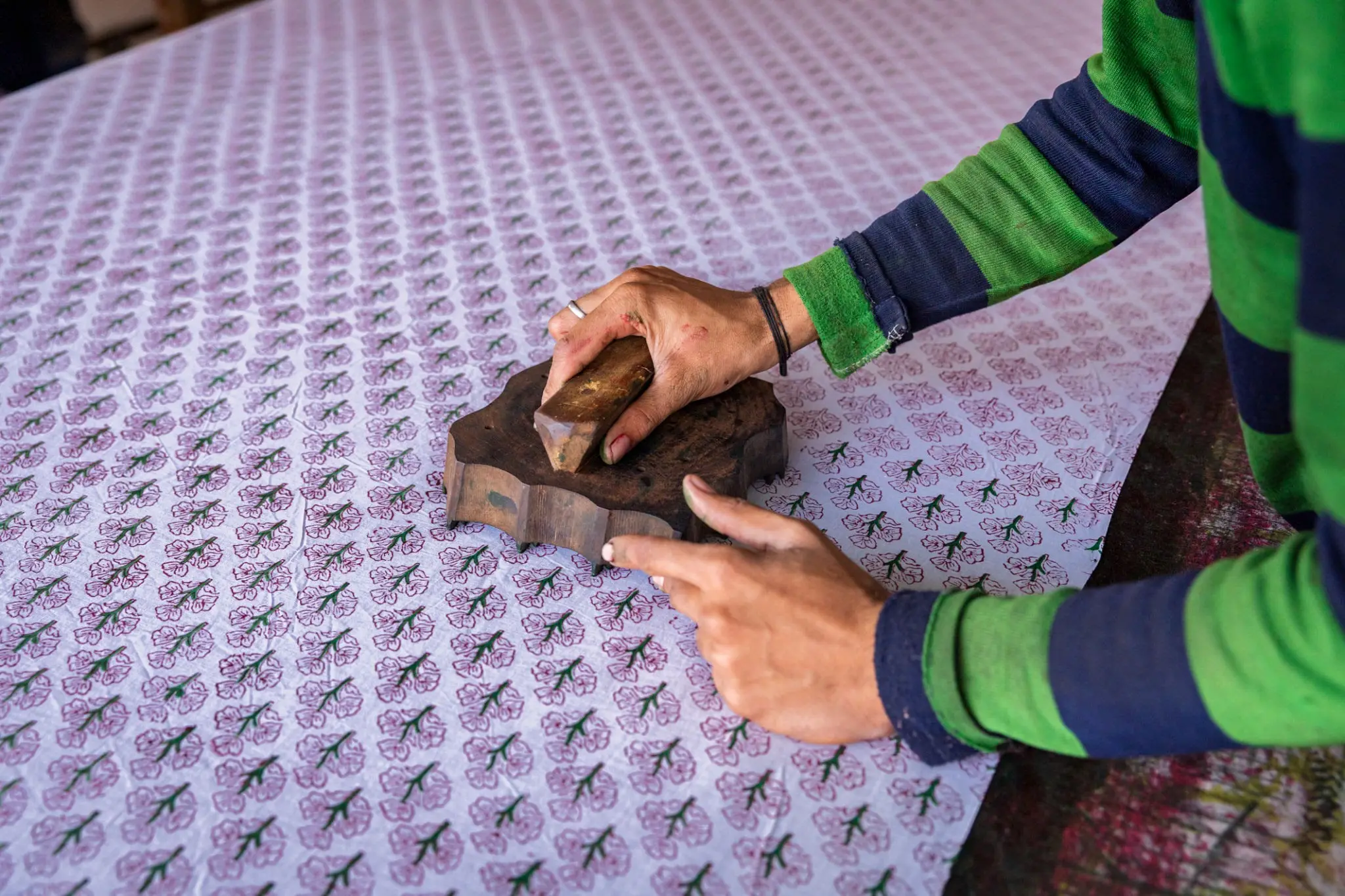
La impresión artesanal con bloques requiere una pasta de impresión con propiedades reológicas diferentes a las de la serigrafía mecánica. Esta guía explica la formulación de la pasta de alginato de sodio para la impresión artesanal con bloques, incluyendo aplicaciones como el Ajrak, el Bagru y el batik, junto con métodos prácticos de evaluación de la pasta para operaciones a pequeña escala.
Comparta el nombre del producto, su aplicación, la cantidad, el destino y cualquier ficha técnica (TDS),
foto de muestra o documento que ya tenga. FSX Chemical revisará la
información y le recomendará el siguiente paso para la cotización, la comparación de muestras
o la selección del producto.
Información del productoNombre del producto, categoría, modelo, foto de la etiqueta o referencia del proveedor.
Documentos disponiblesTDS, SDS, COA, foto de muestra, lista de productos o datos de pruebas.
Detalles del pedidoCantidad estimada, embalaje, país de destino, puerto o término comercial.
Solicitud o problemaProceso de impresión textil, requisitos de formulación, problema actual o objetivo de rendimiento.

 ES
ES  EN
EN  BN
BN  TR
TR  FR
FR  ID
ID  RU
RU  AR
AR  UR
UR  VI
VI  TL
TL  HI
HI  UK
UK  KK
KK  KA
KA  UZ
UZ