This guide explains what buyers should confirm before sourcing industrial grade sodium alginate for textile printing and related industrial applications.
Why Industrial Grade Sodium Alginate Supply Needs Technical Review
Bulk Supply Should Start from Grade Confirmation
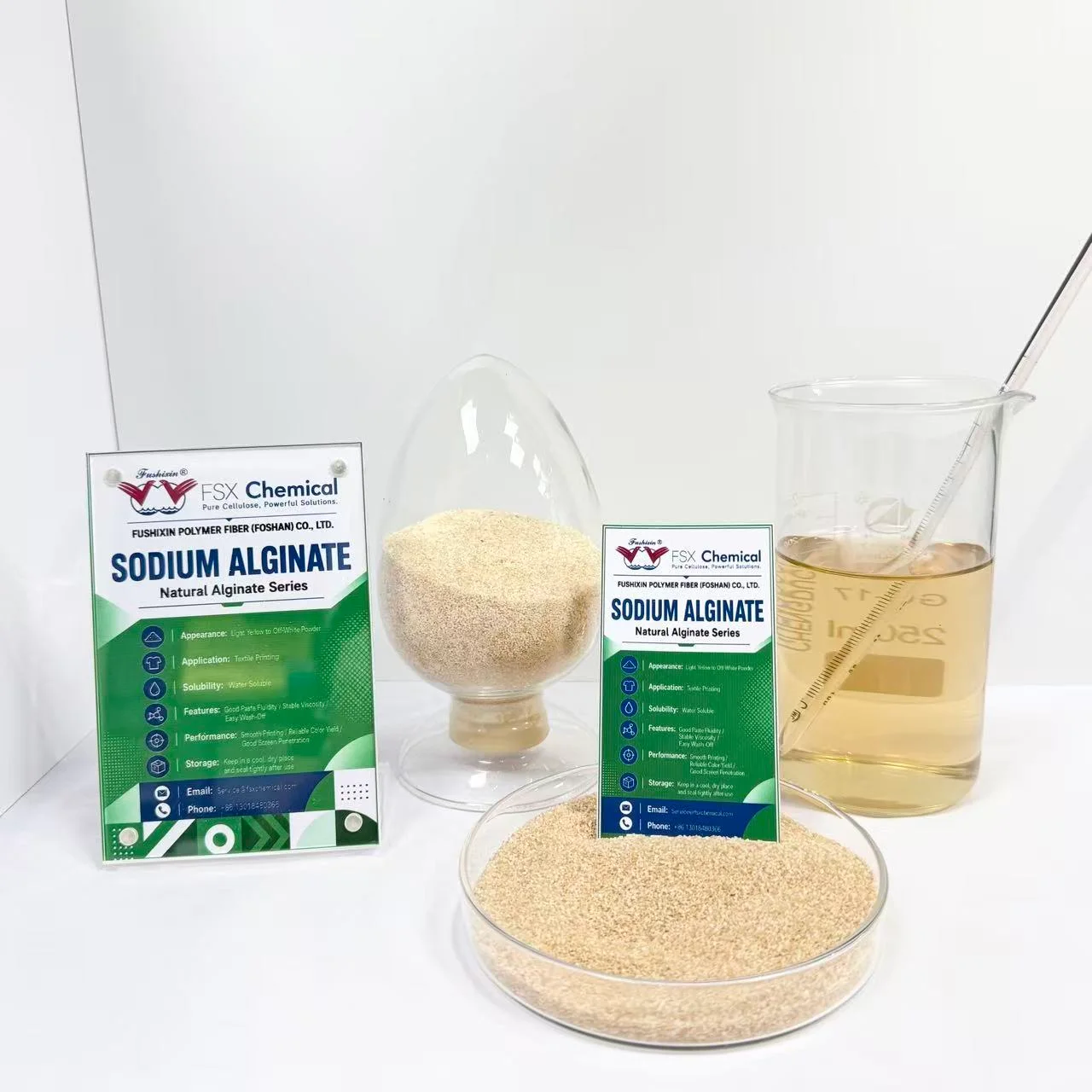
The supplier should provide clear information about viscosity range, mesh size, moisture, pH, appearance, storage conditions, and testing method. These details help buyers decide whether the grade is suitable for sample testing.
Textile Printing Requires Stable Viscosity
For this reason, buyers should review the viscosity test method and compare COA data across shipments when repeat orders are planned.
Sample Approval Should Connect to Bulk Shipment
A sample may perform well in small-scale testing, but bulk purchase still requires confirmation of specification range, COA data, packaging, labels, and batch traceability.
Before placing a bulk order, buyers should ask whether the shipment will follow the same agreed quality range as the approved sample.
Key Specifications Buyers Should Confirm
Grado de viscosidad y método de prueba
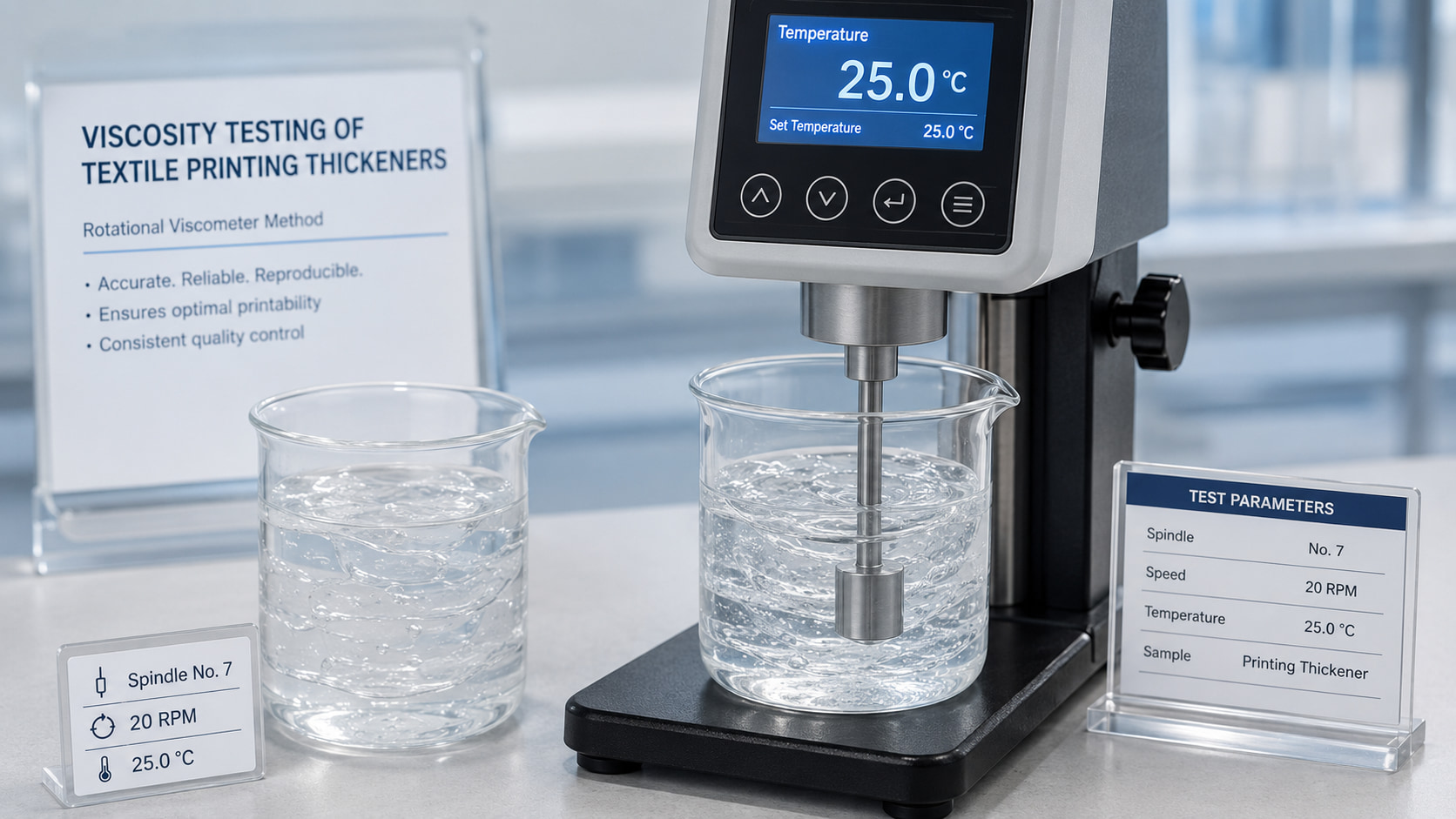
Viscosity is one of the most important parameters for industrial grade sodium alginate used in textile printing paste. Buyers should check the viscosity range together with the test concentration, temperature, instrument method, and unit.
Without a clear testing method, viscosity values from different suppliers may not be directly comparable.
Tamaño de malla y comportamiento de disolución
El tamaño de malla puede influir en la dispersión y la hidratación durante la preparación de la pasta. Sin embargo, el comportamiento real de disolución también depende de la calidad del agua, la velocidad de agitación, el método de adición, el tiempo de preparación y las condiciones de la formulación.
Buyers should test the sodium alginate grade in their own process instead of relying only on the mesh size shown in the TDS.
Humedad, pH y aspecto
La humedad, el pH y la apariencia son indicadores de calidad básicos pero importantes. Influyen en el almacenamiento, la manipulación, el control de calidad y la repetición de compras.
Estos parámetros deben revisarse en la ficha técnica del producto (TDS) y confirmarse mediante los datos del certificado de análisis (COA) para cada lote de producción.
Application Suitability
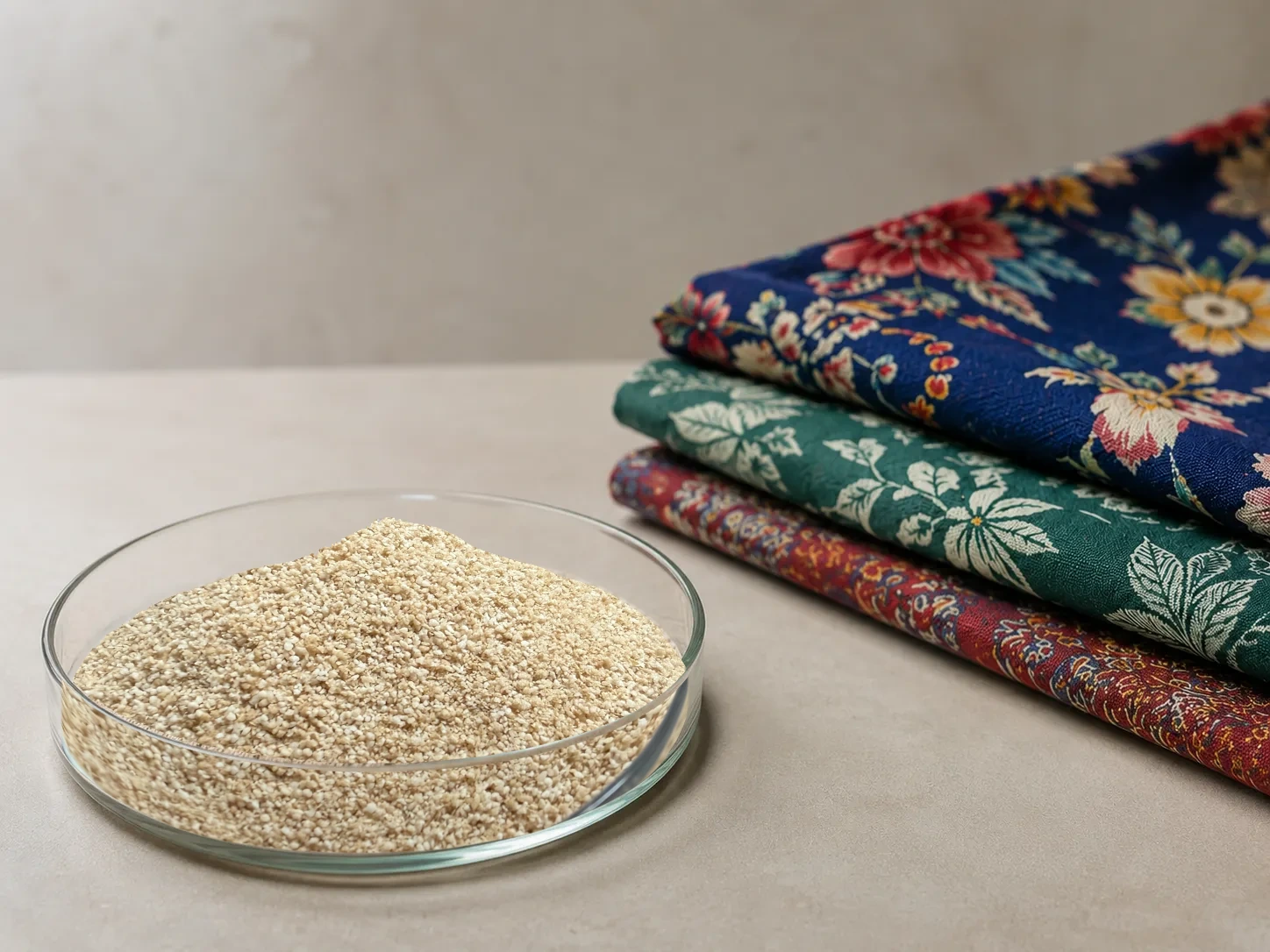
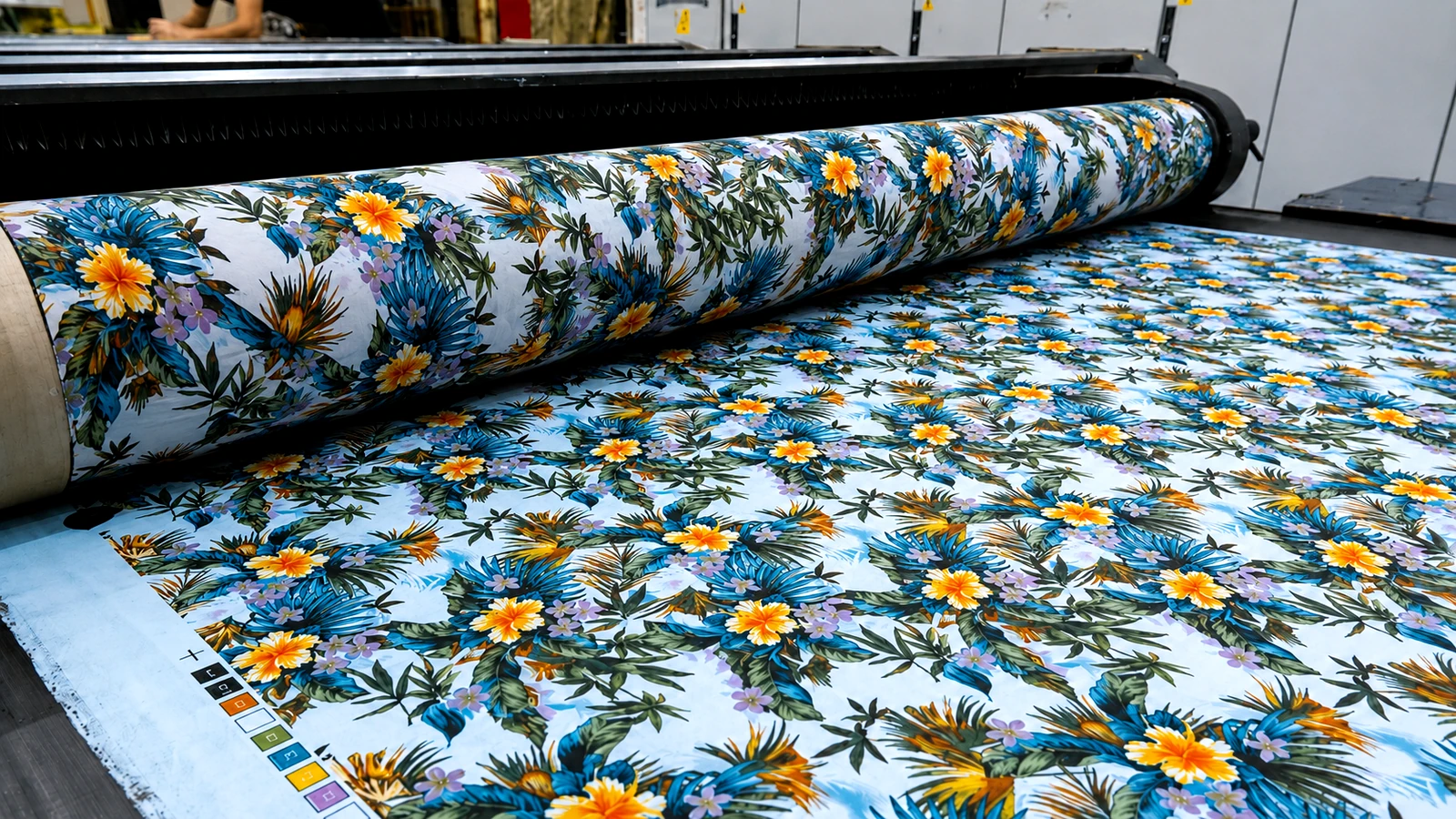
Industrial grade sodium alginate may be used in different application systems, but each application has its own requirements. For textile printing, buyers should focus on paste formation, dissolution behavior, viscosity stability, filtration, and handling.
If the product is being considered for printing ink or another related formulation, the buyer should provide the formulation conditions and confirm compatibility through testing before purchase.
Documents Buyers Should Request Before Bulk Purchase
TDS para la revisión de especificaciones
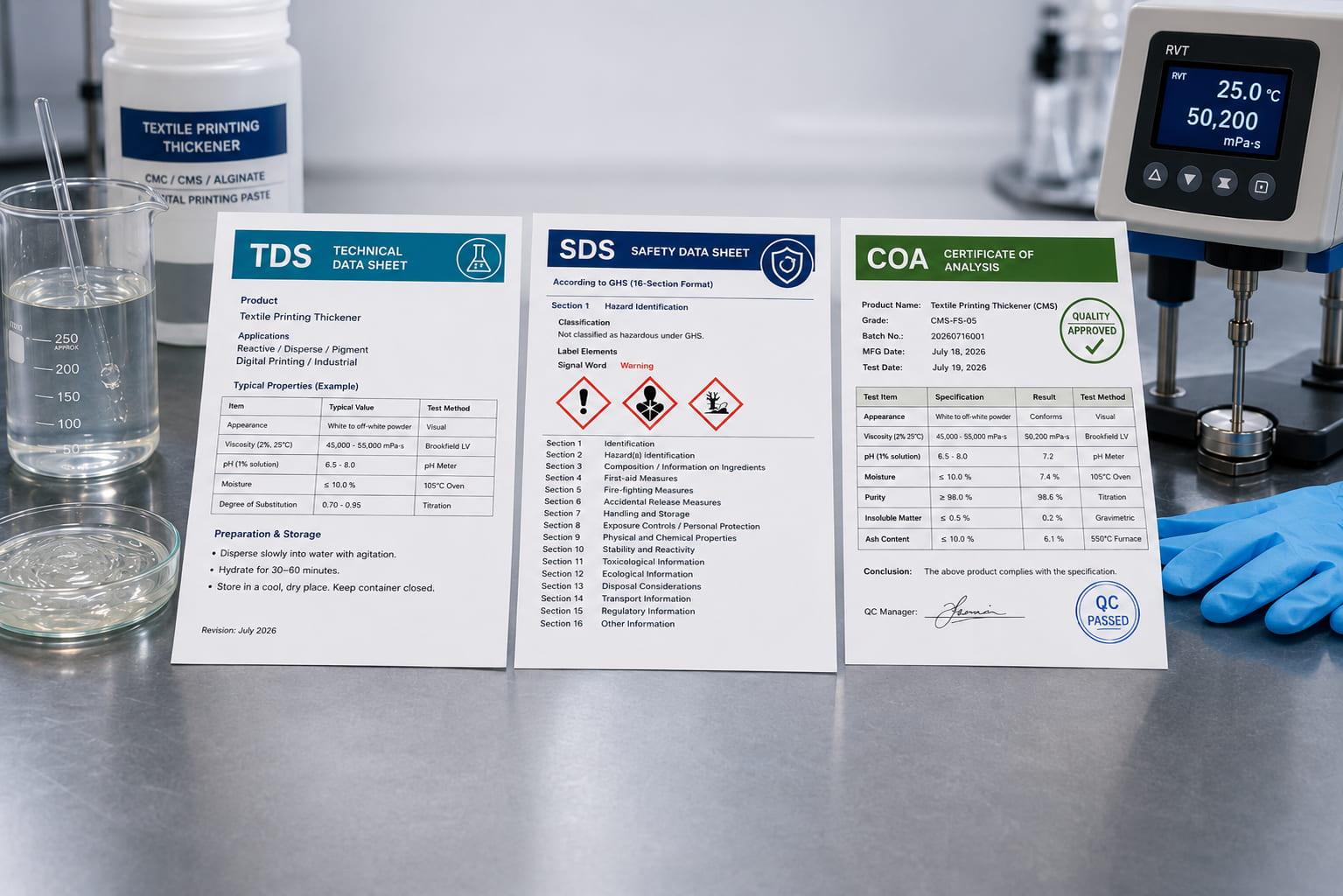
The Technical Data Sheet helps buyers review the standard specification range. It should include key parameters such as appearance, viscosity, mesh size, moisture, pH, storage conditions, and testing method.
For viscosity-related products, the test concentration, temperature, unit, and method should be clearly stated.
COA para la confirmación de lotes
El Certificado de Análisis confirma los datos reales de un lote de producción específico. Es importante para los pedidos al por mayor, las compras recurrentes, el abastecimiento a los distribuidores y el control de calidad interno.
Los compradores pueden comparar los registros de los certificados de análisis (COA) de distintos envíos para verificar si los parámetros clave se mantienen dentro del rango acordado.
Revisión de la ficha de datos de seguridad (FDS) para la manipulación y el transporte
La hoja de datos de seguridad sirve de guía para la manipulación, el almacenamiento, el transporte y la revisión interna de seguridad. En el caso de las compras internacionales, la hoja de datos de seguridad también puede ser necesaria para el envío y las comunicaciones relacionadas con las aduanas.
Los compradores deben asegurarse de que el nombre del producto que figura en la ficha de datos de seguridad (FDS) y la información del proveedor coincidan con los documentos del pedido.
Export Documents and Labels
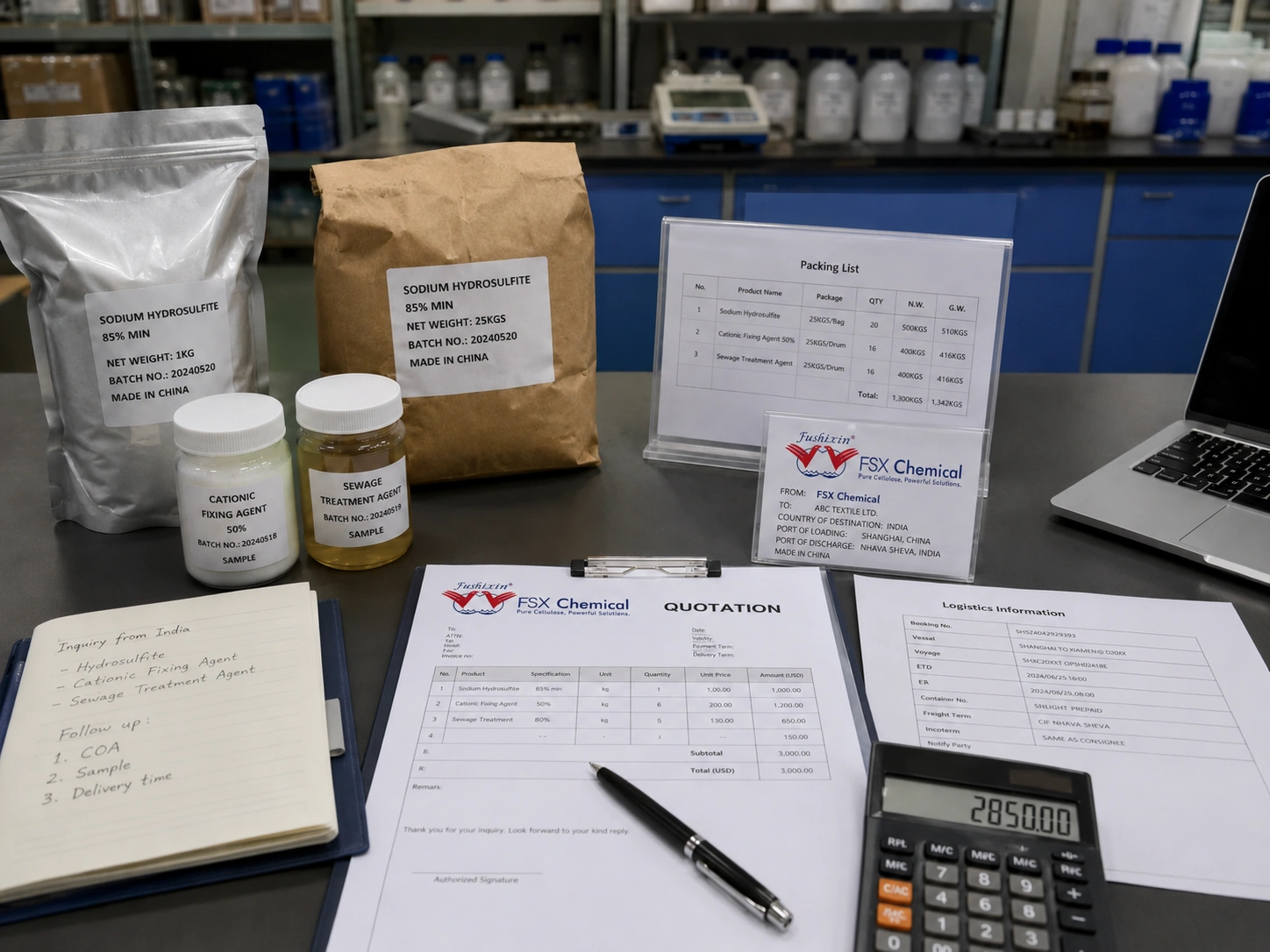
For overseas orders, buyers may need invoice, packing list, COA, SDS, labels, batch information, and other shipment-related documents. The required document list may vary by destination country, product type, and internal purchasing process.
Document requirements should be confirmed before shipment rather than after goods are dispatched.
How to Test Industrial Grade Sodium Alginate Before Bulk Orders
Test in the Actual Paste or Formulation
Sample testing should be done in the buyer’s own formulation whenever possible. Dyes, auxiliaries, water quality, pH, stirring method, preparation time, and storage conditions can all affect the final result.
Testing only in clean water may not be enough to confirm whether the grade is suitable for actual production.
Observe Dissolution, Filtration and Handling
During testing, buyers should observe dissolution speed, paste smoothness, lumps, filtration behavior, viscosity stability, and application handling.
For textile printing paste, these practical observations are often as important as the basic specification data shown in the TDS.
Compare Sample Approval with Bulk Supply
Before confirming a bulk order, buyers should check whether the approved sample and bulk shipment will follow the same viscosity range, mesh size, packaging format, batch traceability, and COA requirements.
Esto ayuda a reducir el riesgo de que haya una discrepancia entre la muestra y el lote.
Bulk Supply Points Buyers Should Confirm
Packaging Size and Storage Conditions
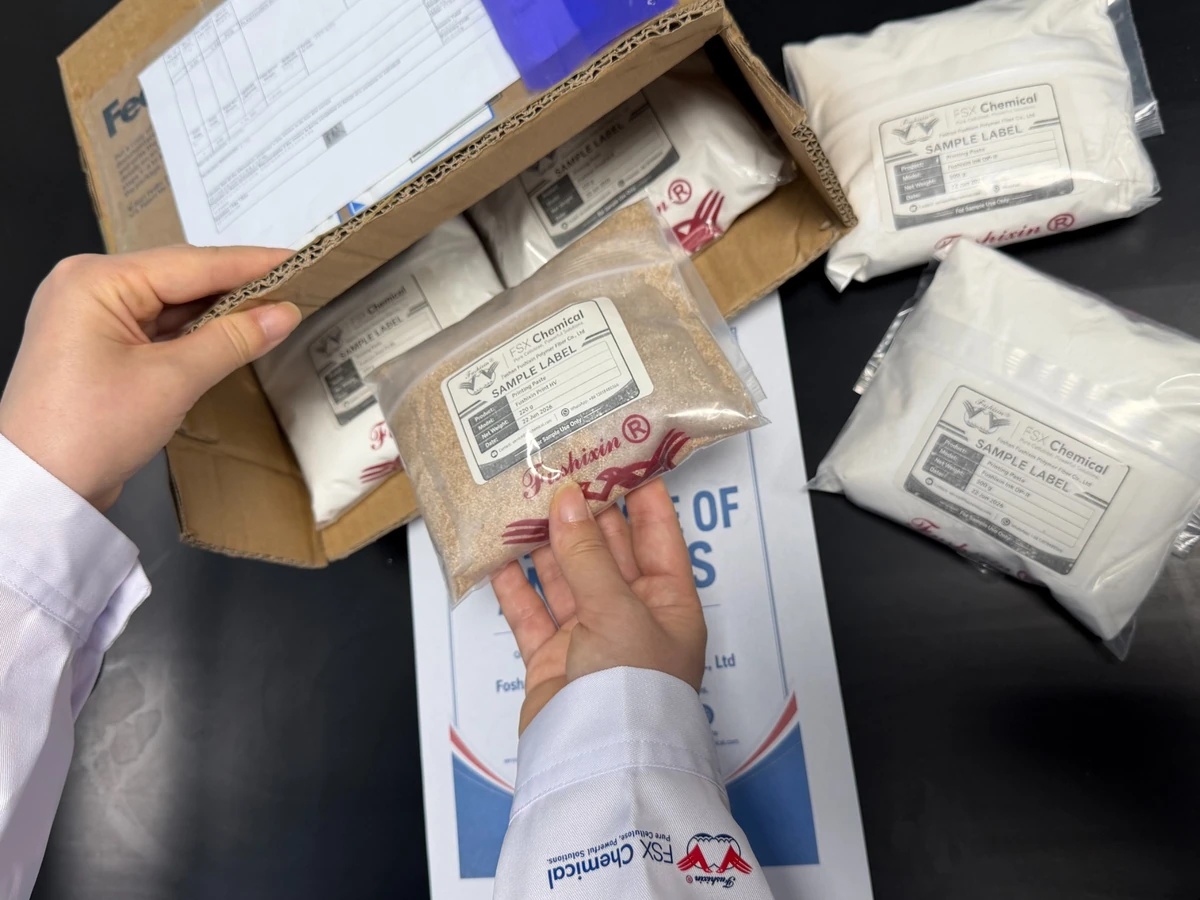
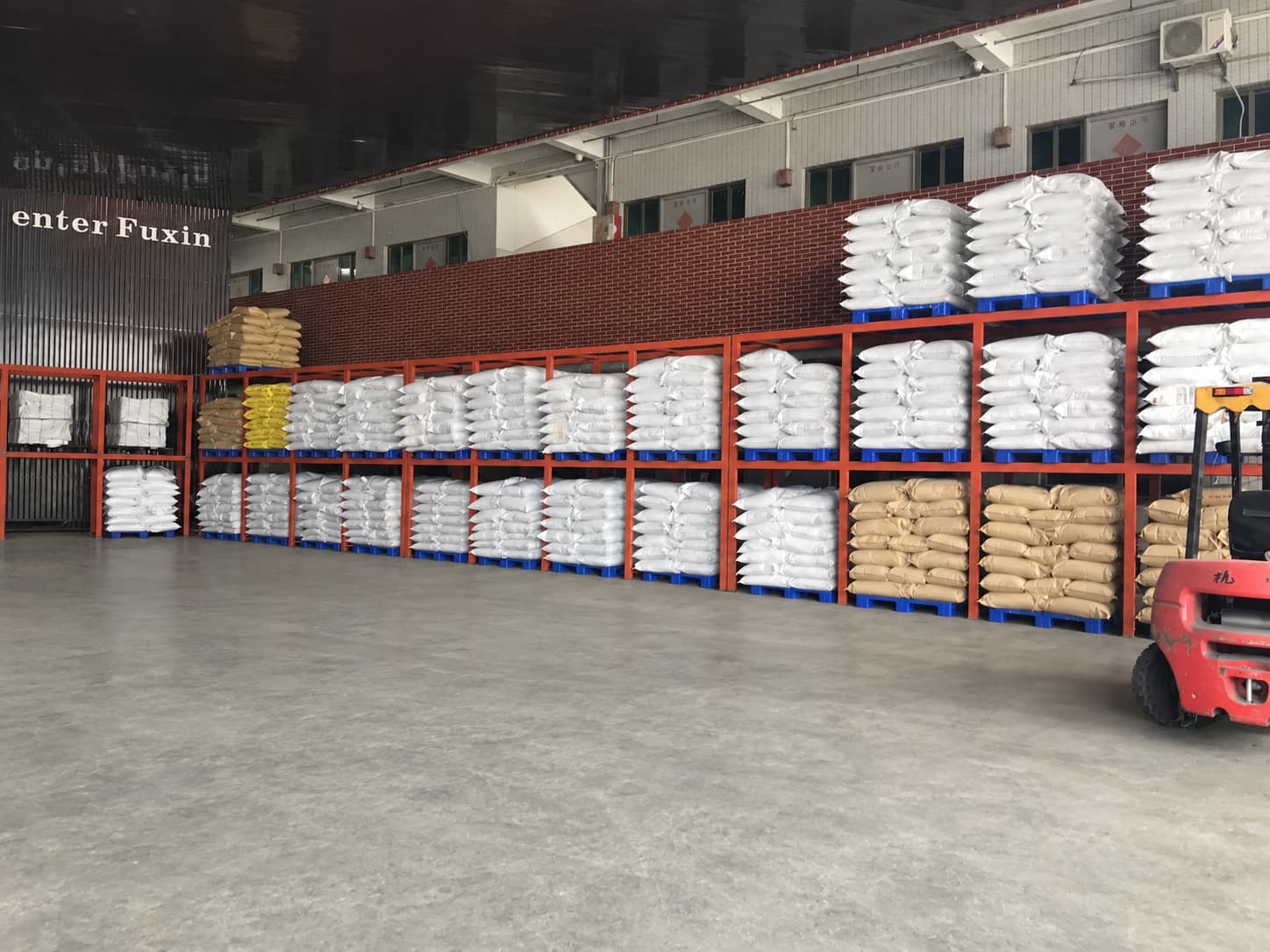
Packaging size, bag type, net weight, pallet requirements, and storage conditions should be confirmed before shipment. These details affect warehouse handling and repeat order management.
If the buyer has specific packaging or label requirements, they should be discussed before order confirmation.
Batch Traceability
Batch traceability is important for quality control and customer feedback handling. Buyers should confirm batch number, production date where applicable, label information, and COA availability.
Clear batch records help buyers compare sample results, shipment data, and repeat order performance.
Realistic Supply Communication
Buyers should be cautious with broad claims such as “fast global supply,” “sustainable supply,” or “high-performance solution” unless these claims are supported by real documents, agreed terms, or test data.
A practical supplier should communicate clearly about product specifications, available documents, sample testing, packaging, and shipment preparation.
How FSX Chemical Supports Sodium Alginate Supply

We do not suggest confirming industrial grade sodium alginate supply only by price, broad performance claims, or general supply statements. The recommended grade should be reviewed through technical documents and tested in the buyer’s own formulation before bulk purchase.
Próximos pasos
- Solicitar un TDS — review viscosity range, mesh size, pH, moisture, appearance, storage conditions, and testing method.
- Solicitar un certificado de análisis (COA) — Verificar que los datos del lote se ajusten al rango de especificaciones acordado antes del envío.
- Solicita la equiparación de calificaciones — share your application, printing process, fabric type, target viscosity, current formulation, and existing product grade if available.
- Solicitar una muestra — test the recommended sodium alginate grade in your own paste preparation or formulation conditions before confirming bulk orders.
- Confirmar los documentos de embalaje y exportación — Verifica el tamaño de las bolsas, las etiquetas, la trazabilidad de los lotes, la ficha de datos de seguridad (FDS), la factura, la lista de embalaje y otros documentos requeridos antes del envío.
- Póngase en contacto con nuestro equipo técnico — discuss which sodium alginate grade is suitable for your textile printing or related industrial application📧 Correo electrónico: Service@fsxchemical.com