Carboxymethyl Starch CMS Manufacturer for Textile Printing

FSX Chemical supplies factory-backed Carboxymethyl Starch (CMS) for textile printing paste adjustment, helping mills improve paste body, printing stability and cost control across reactive, disperse and blended printing systems.

What It Does in the Paste

Functional characteristics of CMS in textile printing

CMS (carboxymethyl starch) is a modified-starch thickener developed for textile printing paste systems. These are the functional properties it brings to reactive, disperse and special printing processes.

High thickening efficiency

Produces stable, high-viscosity paste at relatively low concentration — supporting controlled paste body across rotary and flat-screen printing.

Good print definition

Supports clean pattern outlines and stable paste transfer for fine patterns and multi-colour work on cotton, viscose and polyester.

Good screen penetration

Paste viscosity index supports consistent flow through rotary and flat-screen mesh for high-speed continuous printing.

Practical wash-off

Dissolves cleanly in washing, supporting acceptable fabric background cleanliness and hand feel under proper washing conditions.

Multi-process compatibility

The CMS series covers reactive, disperse and vat discharge printing with different grades for different dye chemistry.

Cost-control route

CMS can be evaluated as a cost-effective alternative in selected reactive and disperse systems after sample testing.
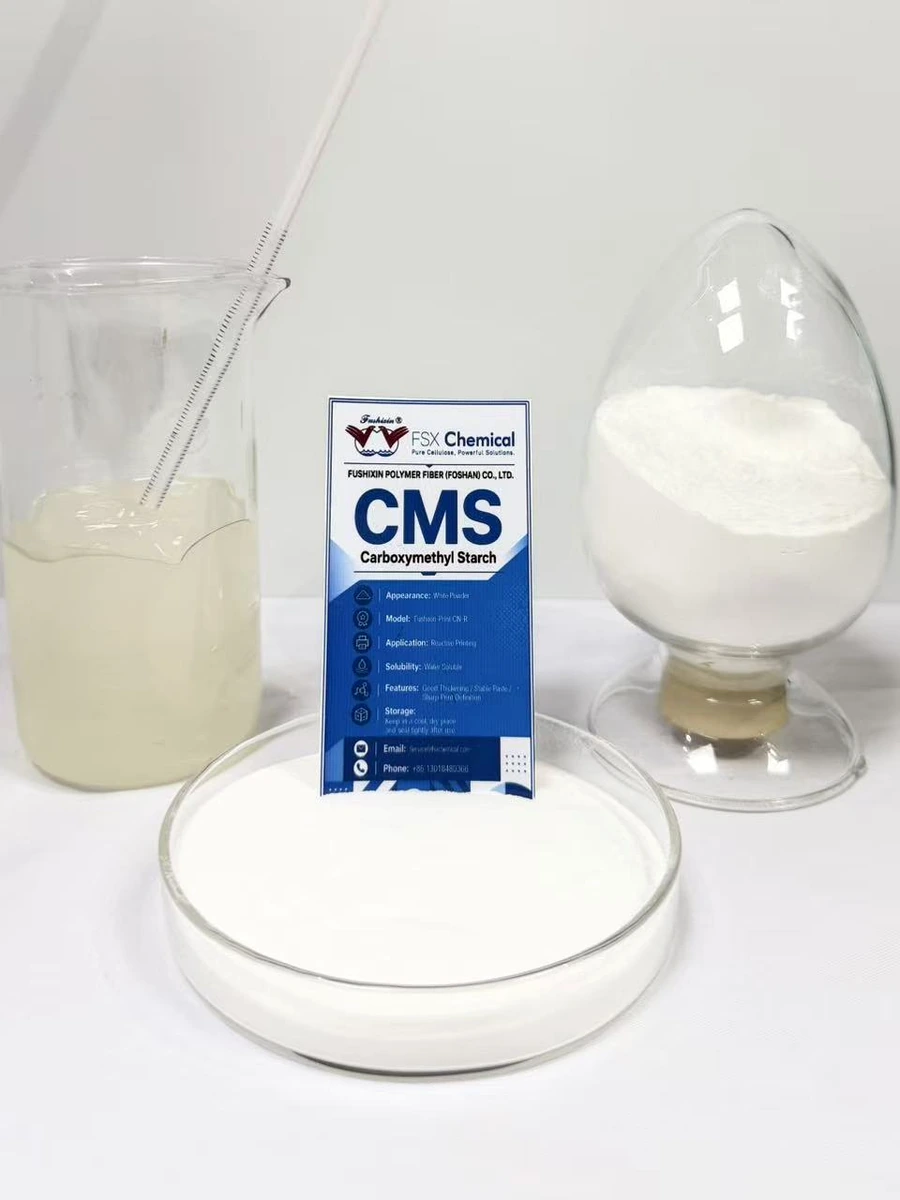
CMS powder and prepared stock paste for textile printing thickener application

Product Series by Process

Reactive printing Fushixin PrintCN-R Cotton and viscose reactive printing
Disperse printing Fushixin Print FS-05 Polyester disperse printing
Discharge / burn-out Fushixin Cetak H5 Vat discharge and alkali burn-out printing
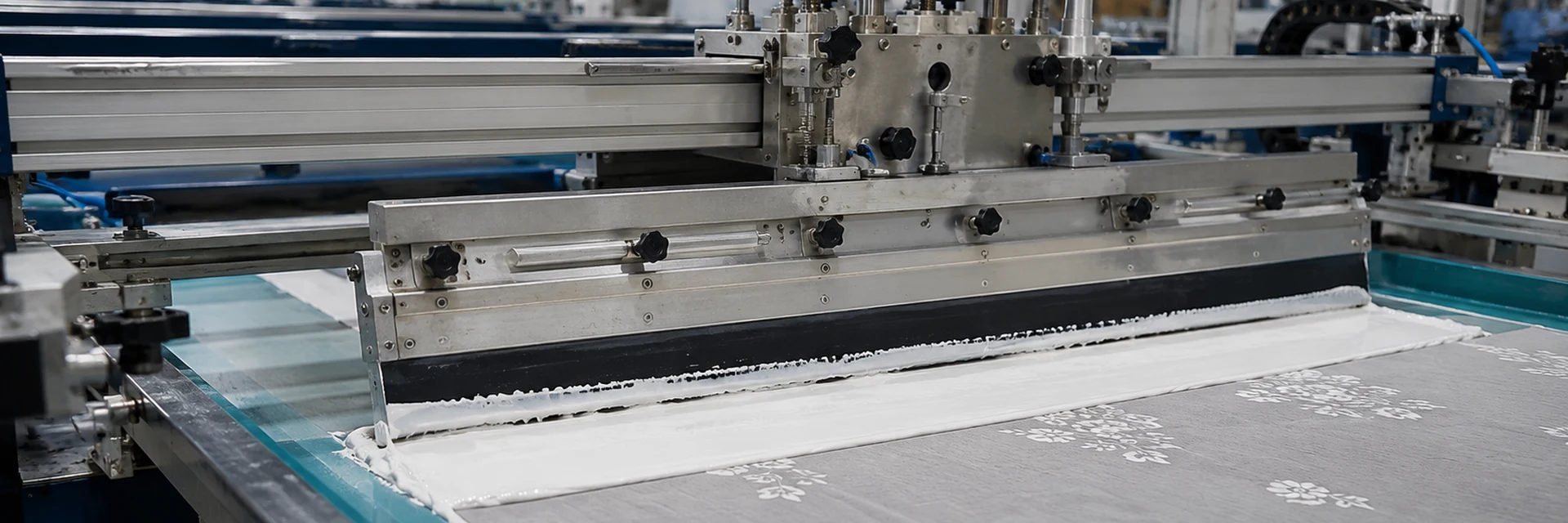
Screen printing process with CMS thickener paste on fabric in textile printing production
Suitable Applications

Where CMS fits your printing process

The CMS series covers three distinct printing routes. Each scenario maps a process type to the relevant product and what it helps address. Use this to identify which route applies to your situation.

Scenario 01

Reactive dye printing on cotton and viscose

Fabric Cotton, viscose and other cellulosic fabrics
Process Stock paste prep → Colour paste mixing → Printing → Drying → Steaming → Washing
Helps with High color yield, clean print outline, stable paste performance and practical wash-off
Recommended Fushixin PrintCN-R
Scenario 02

Disperse dye printing on polyester fabrics

Fabric Polyester and polyester-blend fabrics
Process Stock paste prep → Colour paste mixing → Printing → Drying → HT fixing → Washing
Helps with Good paste fluidity, bright shade development, clear print outlines and stable rotary performance
Recommended Fushixin Print FS-05
Scenario 03

Vat discharge printing on cotton and rayon

Fabric Cotton and rayon fabrics
Process Stock paste prep → Discharge paste mixing → Printing → Drying → Steaming → Washing
Helps with Stable viscosity in reducing agent systems, good shade development and color brightness
Recommended Fushixin Cetak H5
Scenario 04

Alkali burn-out printing on polyester blends

Fabric Polyester or polyester-blended fabrics
Process Burn-out paste prep → Printing → Drying → High-temperature treatment → Washing
Helps with Good resistance to caustic soda, stable viscosity in alkaline systems and fast paste formation
Recommended Fushixin Cetak H5
Where It Works in the Process

Typical printing process reference

CMS is active from paste preparation through washing. Highlighted steps show where it has the most direct influence on print quality and paste stability.

Stock Paste
Preparation
CMS dissolved at 5% concentration in cold water
Colour Paste
Mixing
Stock paste combined with dye and auxiliaries
Printing
Rotary or flat-screen paste transfer to fabric
Drying
Moisture removed before fixing
Steaming /
Fixing
Dye fixation under process-specific conditions
Washing
CMS removed - determines hand feel and background clarity
Finishing
Softening or other agents applied as required
Highlighted steps show where CMS has direct process influence. Steaming and fixation conditions vary significantly by dye system, fabric type and equipment - including differences between reactive, disperse and discharge processes. All process parameters are reference only and should be confirmed through laboratory trial under actual production conditions.
How to Judge the Result

What to look for after printing and washing

When assessing a CMS print trial, check these indicators to determine whether the grade and formulation are suitable for your process.
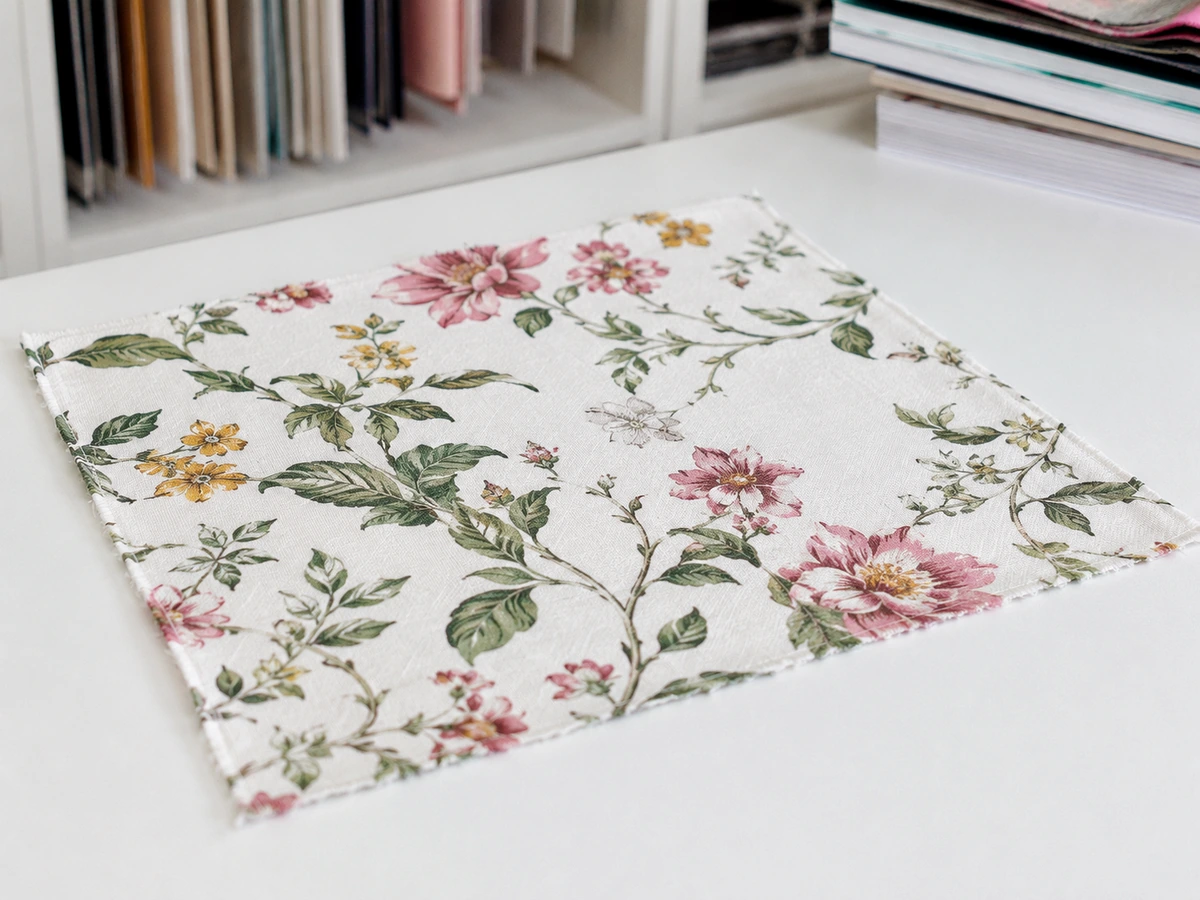
CMS printed fabric result after washing showing edge sharpness shade brightness and background clarity
Use the same fabric, dye recipe, paste dosage and washing procedure when comparing different CMS grades.

Key indicators to evaluate

These indicators apply across reactive, disperse and special CMS printing routes. Some results are process-specific — check the route and dye system before judging.

Color yield and shade brightness

Check color depth and brightness against the target shade on the same fabric and recipe.

Edge sharpness

Pattern outlines should remain clean under close inspection, especially around fine details.

Paste penetration and transfer

Observe whether paste passes through the screen evenly without dragging or unstable transfer.

Background cleanliness

After washing, the fabric background should remain clean with acceptable residue control.

Hand feel after washing

Evaluate softness and handle after the standard washing process used in production.

Process stability

Check viscosity stability, paste standing behavior and repeatability between trial batches.

Route Evaluation

CMS as a cost-control printing thickener route

CMS is not a simple low-cost substitute — it is a practical balance between print performance and formulation cost in selected reactive and disperse printing systems.

Dimension
CMS Route
Sodium Alginat
Color yield
High in selected systems
High, reliable
Edge sharpness
Good
Excellent
Process coverage
Reactive, disperse and discharge
Reactive printing only
Storage stability
Preservative-treated; more stable than natural alginate
Lower without preservative
Electrolyte compat.
Good in practical systems
Good
Formulation cost
Lower in selected systems
Higher raw material cost

When the CMS route makes sense

CMS covers a broader range of printing processes than sodium alginate within a single product series — reactive, disperse and discharge printing are all supported by dedicated grades.

In reactive printing systems where cost control is a priority, CMS can be evaluated as an alternative to sodium alginate after sample testing. It should not be described as a complete replacement.

CMS should not be added directly into digital inkjet systems. For digital printing pretreatment applications, refer to the Digital Printing Paste application page.

Note: Final route selection should be confirmed through laboratory sample testing under your actual fabric, dye system and process conditions. No thickener selection should be made based on this comparison alone.
Product Route

Which CMS grade fits your printing process?

Select your printing situation below to see which grade is the most relevant starting point. Final selection should always be confirmed through sample testing.

Reactive Printing

Fushixin PrintCN-R

CMS Textile Printing Thickener - CAS 9063-38-1

Stock concentration 5%
Reference viscosity 70,000-90,000 mPa.s
PVI Min. 0,23
pH (1%) 7.0-8.0
Best for Pencetakan reaktif pada kain katun dan viscose
Disperse Printing

Fushixin Print FS-05

CMS Textile Printing Thickener - CAS 9063-38-1

Stock concentration 5%
Reference viscosity 40,000-60,000 mPa.s
PVI Min. 0.21
pH 7.0-9.0
Best for Pencetakan dispersi pada poliester
Discharge / Burn-out

Fushixin Cetak H5

Modified Thickener for Discharge Printing

Stock concentration 8%
Reference viscosity 35,000 +/- 3,000 mPa.s
PVI Min. 0.20
pH (8%) 10-12
Best for Vat discharge and alkali burn-out printing