
 TR
TR  EN
EN  BN
BN  UR
UR  ID
ID  RU
RU  AR
AR Functional characteristics of CMS in textile printing
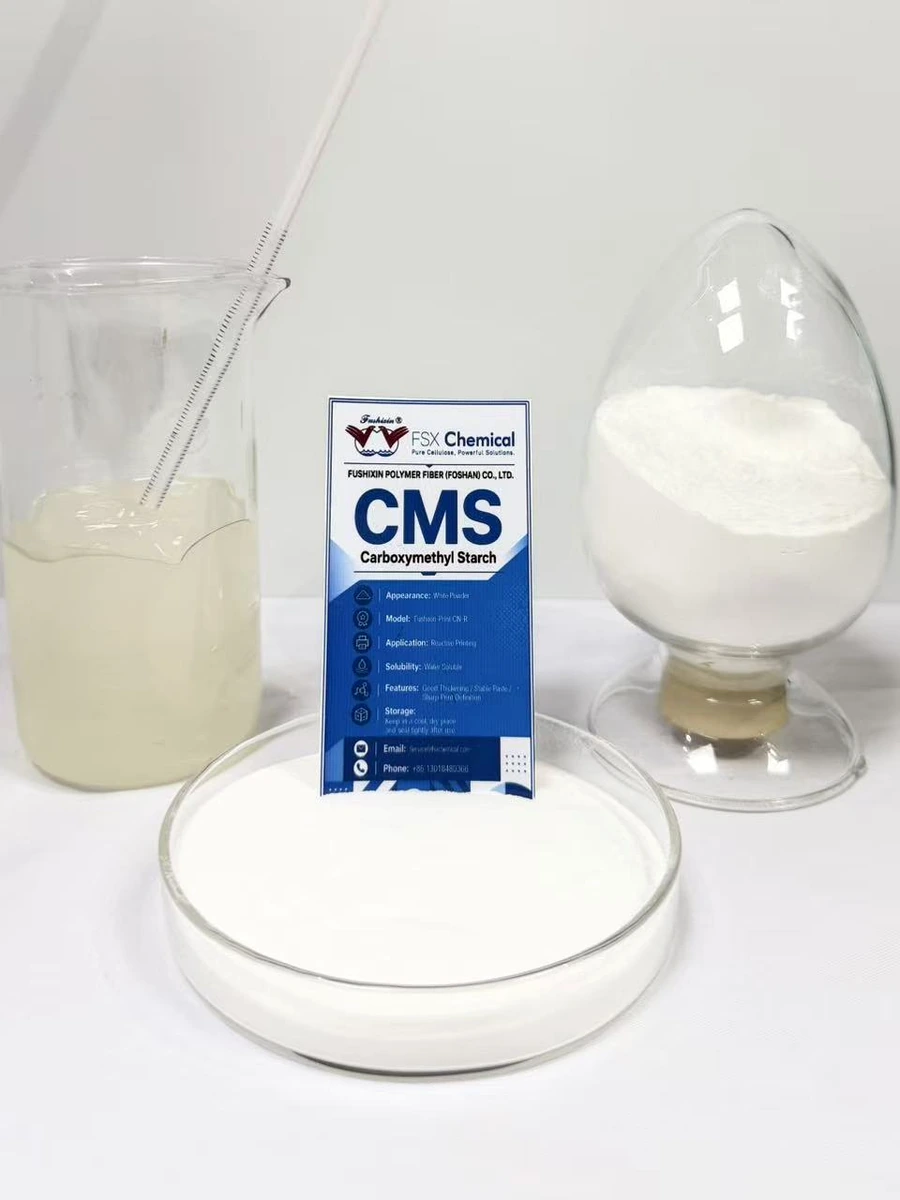
CMS (carboxymethyl starch) is a modified-starch thickener developed for textile printing paste systems. These are the functional properties it brings to reactive, disperse and special printing processes.
High thickening efficiency
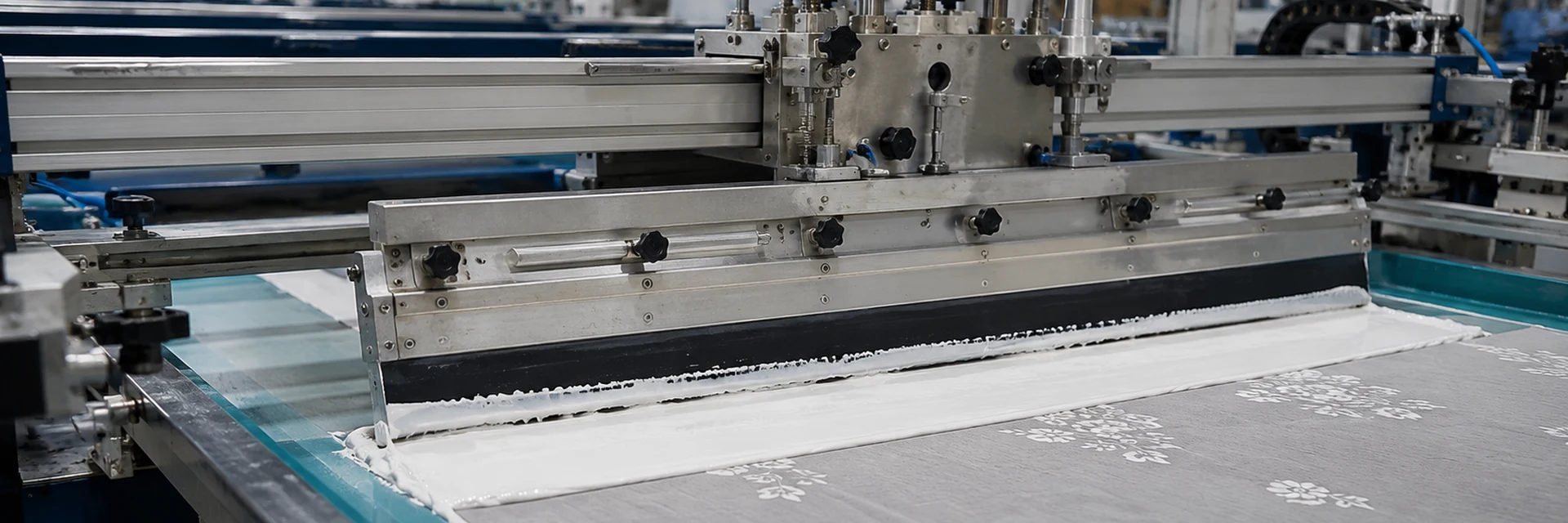
Produces stable, high-viscosity paste at relatively low concentration — supporting controlled paste body across rotary and flat-screen printing.
Good print definition
Supports clean pattern outlines and stable paste transfer for fine patterns and multi-colour work on cotton, viscose and polyester.
Ekrana iyi nüfuz etme
Paste viscosity index supports consistent flow through rotary and flat-screen mesh for high-speed continuous printing.
Practical wash-off
Dissolves cleanly in washing, supporting acceptable fabric background cleanliness and hand feel under proper washing conditions.
Multi-process compatibility
The CMS series covers reactive, disperse and vat discharge printing with different grades for different dye chemistry.
Cost-control route
CMS can be evaluated as a cost-effective alternative in selected reactive and disperse systems after sample testing.
Product Series by Process
Baskı ve yıkama işlemlerinden sonra nelere dikkat edilmeli?
When assessing a CMS print trial, check these indicators to determine whether the grade and formulation are suitable for your process.

Değerlendirme için temel göstergeler
These indicators apply across reactive, disperse and special CMS printing routes. Some results are process-specific — check the route and dye system before judging.
Color yield and shade brightness
Check color depth and brightness against the target shade on the same fabric and recipe.
Kenar keskinliği
Pattern outlines should remain clean under close inspection, especially around fine details.
Paste penetration and transfer
Observe whether paste passes through the screen evenly without dragging or unstable transfer.
Background cleanliness
After washing, the fabric background should remain clean with acceptable residue control.
Yıkamadan sonra kumaşın dokunuş hissi
Evaluate softness and handle after the standard washing process used in production.
Process stability
Check viscosity stability, paste standing behavior and repeatability between trial batches.
