 TR
TR  EN
EN  BN
BN  UR
UR  ID
ID  RU
RU  AR
AR 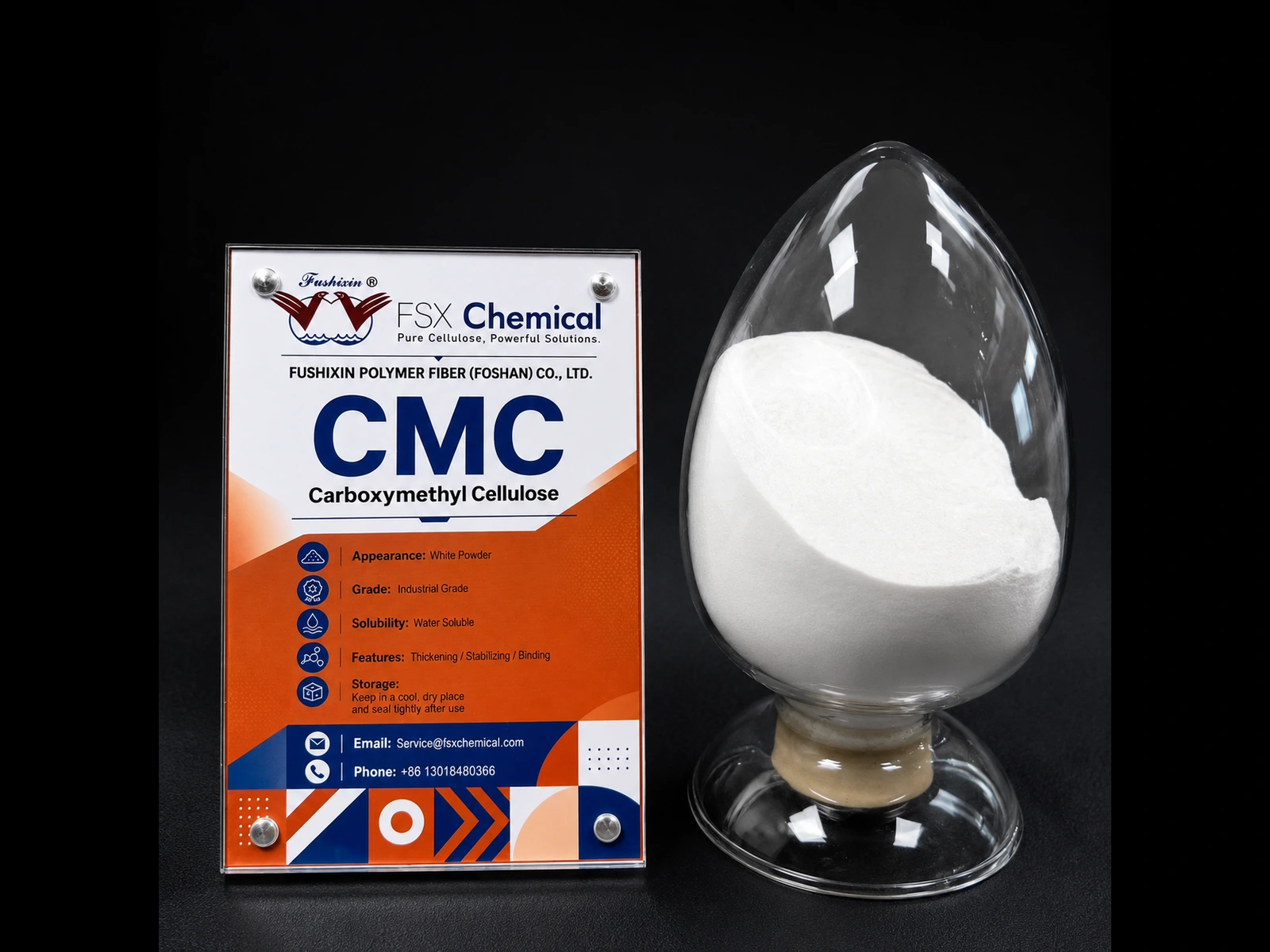
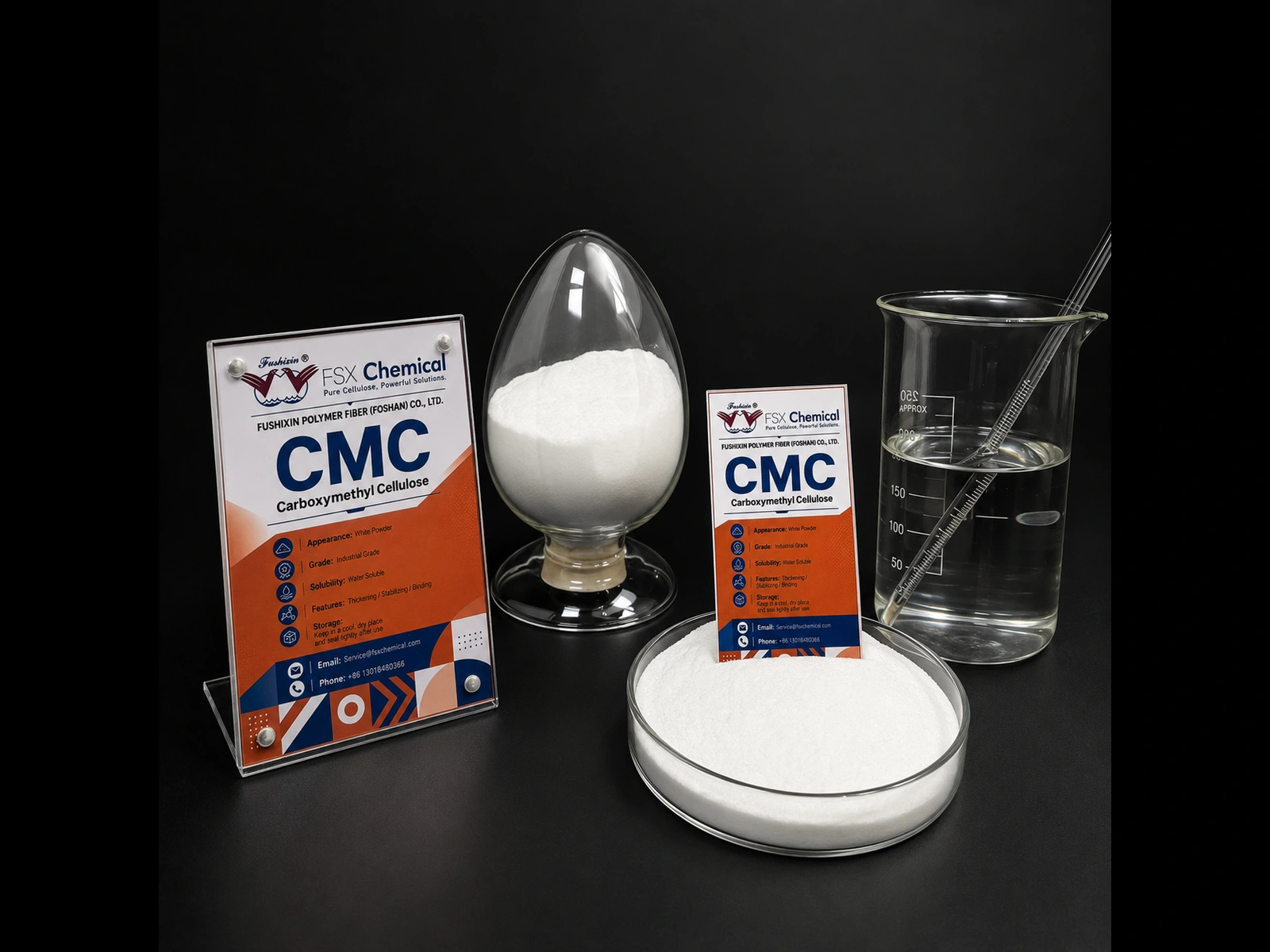
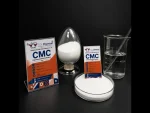
Ürün Tanımı
What is Carboxymethyl Cellulose (CMC)?
What is Carboxymethyl Cellulose?
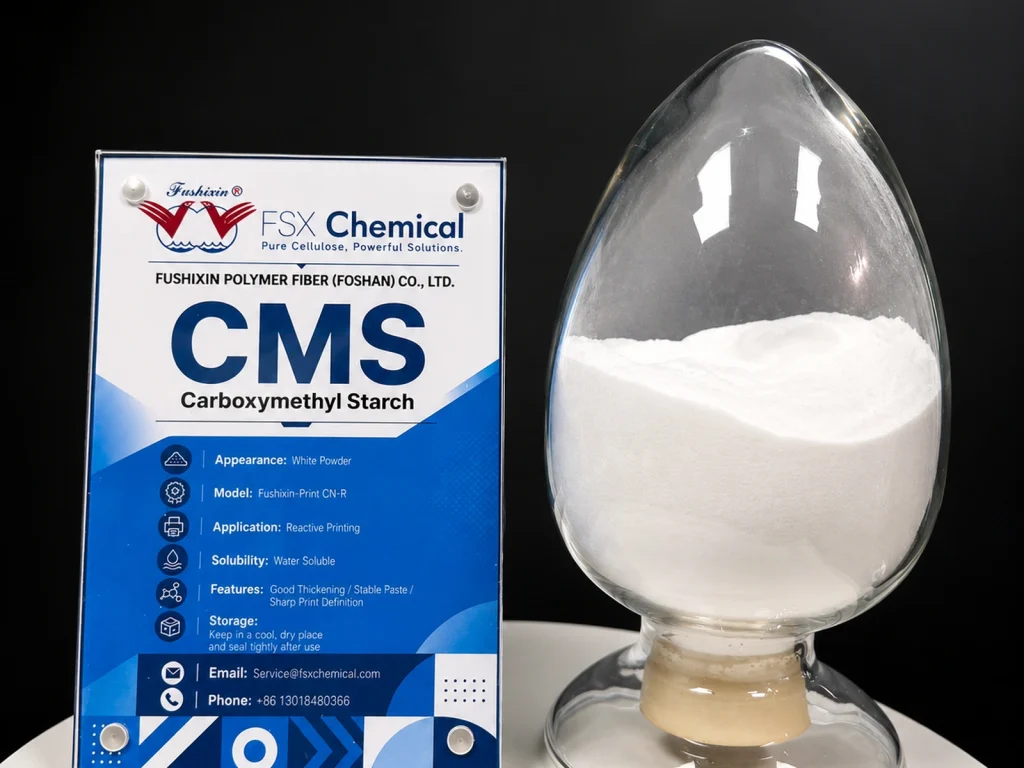
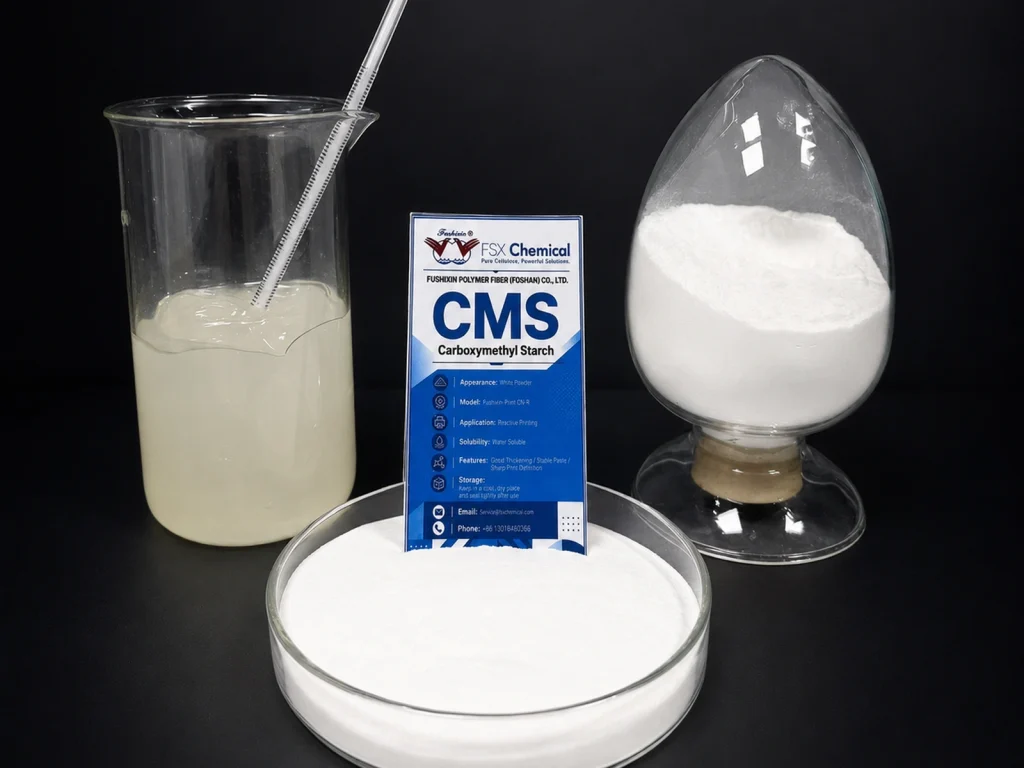
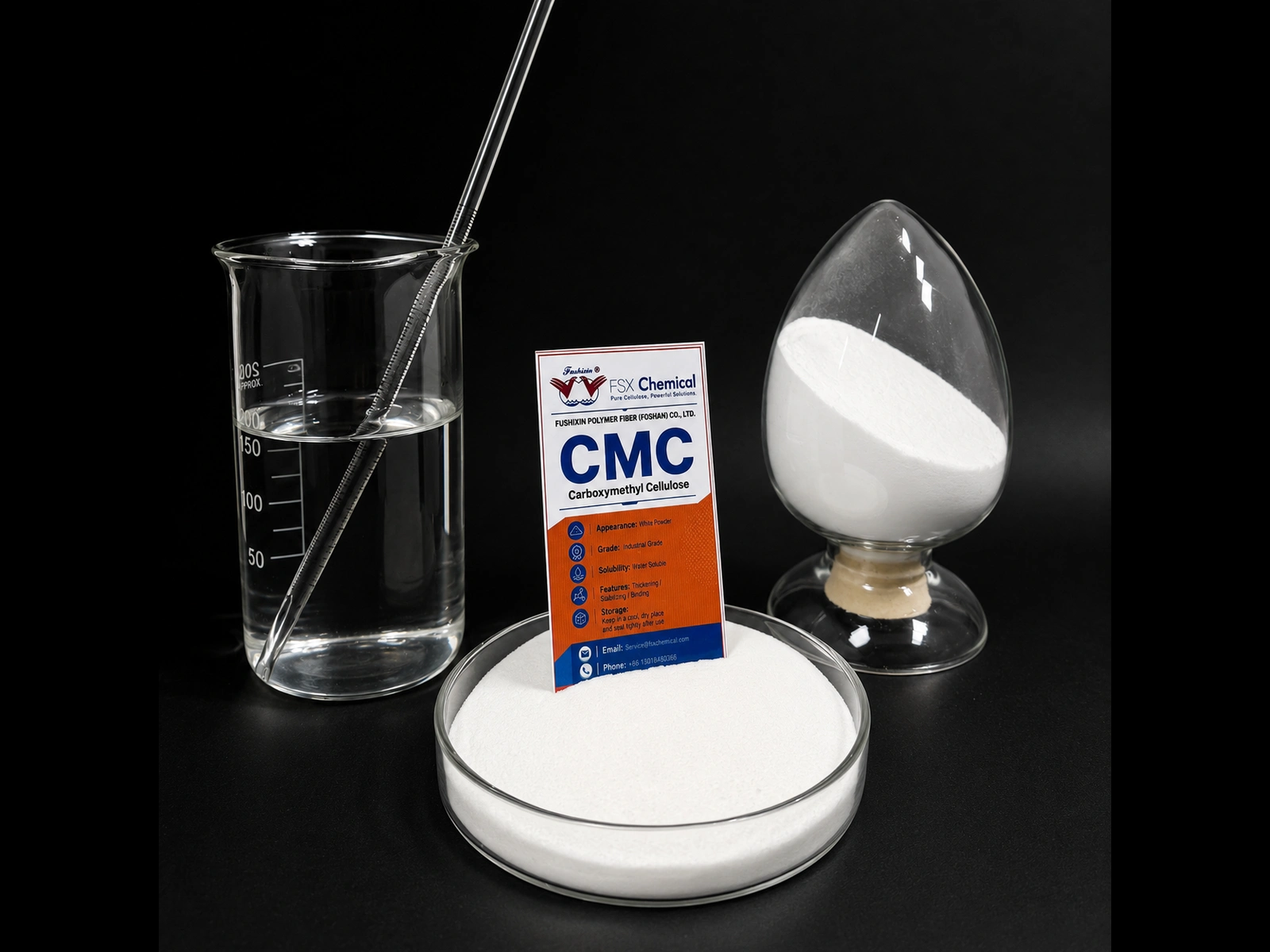
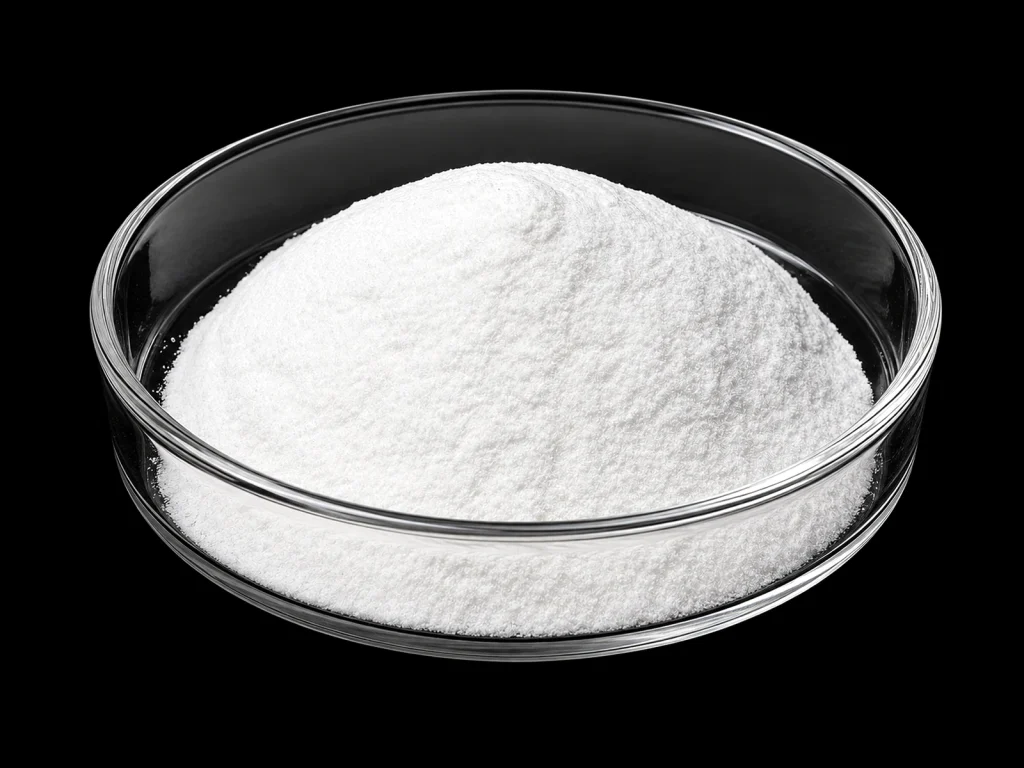
Carboxymethyl Cellulose (CMC) is a water-soluble cellulose derivative used as a thickener, binder, stabilizer and rheology modifier. In textile printing, selected CMC grades can help build paste structure, support print definition and improve processing stability in suitable formulations.
How should CMC grades be compared?
CMC grades should be compared by D.S. value, viscosity range and complete test method, including concentration, temperature, hydration time, instrument, spindle and RPM. Viscosity numbers from different test methods are not directly comparable.
CMC should not be selected by viscosity number alone. Start from the application route, D.S. value, testing method and sample performance under actual production conditions.
Uygulama Seçici
Explore the printing processes connected to this CMC product family
Product pages explain what FSX Chemical supplies. Application pages explain how CMC is evaluated within a specific printing process, formulation route or production problem.
CMC for Reactive Textile Printing
Used for paste body, rheology support and printing-process stability in reactive printing on cotton, viscose and other cellulosic fabrics.
CMC for Blended Thickener Systems
Evaluated with alginate, PTA or other thickener systems when buyers need formulation flexibility, paste body adjustment or cost-performance balance.
CMC for Formulation Adjustment
Used when a current paste recipe needs viscosity adjustment, compatibility review, screen passage improvement or more stable production behavior.
CMC for Sample and Method Comparison
Suitable when buyers want to compare an existing TDS, D.S. value, viscosity method or current supplier sample before changing grade.
Sınıf Karşılaştırması
Compare CMC grades by D.S., viscosity method and application fit
Use this table as a starting point for CMC grade comparison. Viscosity should only be compared under the same concentration, temperature, hydration time and testing method.
Fushixin Print HD data is based on the current HD TDS. Fushixin Print MD and LD data is based on the 2026 product catalogue until grade-specific TDS files are added. Final selection should be confirmed by laboratory or production-side testing.
| Sınıf | Viskozite / Yöntem | Anahtar Parametre | pH / Nem | Başvuru | Önerilen Süreç | Eylem |
|---|---|---|---|---|---|---|
| Fushixin Print HDHigh D.S. CMC Grade | 1,300–1,600 mPa·s1.0% · 20°C | D.S. 1.9–2.0 | 7.0–9.0 / Max. 12.0% | Reactive printing and blended thickener systems | Higher-performance CMC position for reactive textile printing and selected blended thickener systems. Recommended for customers requiring stable paste structure, good print definition and method-based comparison before bulk order. | TDS Talebi |
| Fushixin Print MDMedium D.S. CMC Grade | 800–1,800 mPa·s1.0% · 20°C | D.S. 1.5–1.6 | 7–9 / Confirm by selected TDS / batch COA | General reactive printing and blending | General CMC position for reactive printing and blended thickener systems. Suitable for buyers comparing formulation compatibility, paste structure and practical rheology adjustment. | TDS Talebi |
| Fushixin Print LDLow D.S. CMC Grade | 1,500–3,000 mPa·s1.0% · 20°C | D.S. 1.3–1.4 | 7–9 / Confirm by selected TDS / batch COA | Reactive, disperse-related and blended thickener systems | Lower-D.S. CMC position for reactive, disperse-related and blended thickener system evaluation. Suitable for formulation adjustment where compatibility with PTA or alginate systems is required. | TDS Talebi |
Higher-performance CMC position for reactive textile printing and selected blended thickener systems. Recommended for customers requiring stable paste structure, good print definition and method-based comparison before bulk order.
General CMC position for reactive printing and blended thickener systems. Suitable for buyers comparing formulation compatibility, paste structure and practical rheology adjustment.
Lower-D.S. CMC position for reactive, disperse-related and blended thickener system evaluation. Suitable for formulation adjustment where compatibility with PTA or alginate systems is required.
Not sure which CMC grade matches your current product?
Send your current TDS, COA, viscosity method or target application. FSX Chemical will compare D.S. value, viscosity method and application route before recommending a validation direction.
Not Belirleme Yöntemi
How to choose the right CMC grade
Select CMC by application route, D.S. value, viscosity method and sample performance under your actual formulation and production conditions.
Step 1: Confirm the application route
Start from reactive printing, blended thickener systems or formulation adjustment. Different CMC grades are positioned for different compatibility and rheology targets.
Step 2: Compare D.S. and viscosity method
Check D.S. value, concentration, temperature, hydration time and testing method before judging whether two CMC grades are comparable.
3. Adım: Toplu sipariş vermeden önce test edin
Run laboratory or production-side testing to confirm paste structure, print definition, wash-off and compatibility before commercial use.
Örnek Eşleştirme ve Belgeler
Toplu satın almadan önce mevcut ürününüzle karşılaştırın
Send your current sample, TDS or COA so our technical team can compare grade direction and document support before order confirmation.
Eşleştirme İş Akışı
Güncel TDS, COA, viskozite ölçüm yöntemi veya fiziksel numunenizi gönderin
We compare your current specification with FSX Chemical product data and recommend a matched grade direction for validation.
Karşılaştırma amacıyla TDS, COA veya güncel bir ürün numunesi gönderin.
Confirm concentration, temperature, instrument, spindle and RPM before judging viscosity equivalence.
Compare D.S. value, viscosity range, pH, moisture and application route.
Ticari kullanıma geçmeden önce dahili veya üretim ortamında testler gerçekleştirin.
Fabrika / Laboratuvar / Kalite Kontrol Onayı
Fabrika, laboratuvar ve kalite kontrol belgeleri
Numune değerlendirmesinden önce tedarik kapasitesini doğrulamak için gerçek üretim, test ve paketleme görsellerini kullanın.
Buraya gerçek bir atölye, üretim hattı veya fabrika dış cephe görüntüsünü ancak resmi ekledikten sonra yerleştirin.
Review formal manufacturing and production support for CMC orders.
Viskozite testi, numune karşılaştırması ve yöntem inceleme görsellerini kullanın.
Onaylanmış siparişler için toplu belge ve COA desteği.
Uluslararası sevkiyatlar için paketleme, paletleme ve ihracat belgeleri konusunda destek.
Ürün SSS
Resolve CMC grade risk before sample testing
Gerçek bir laboratuvar, ürün numunesi veya mühendislerin iletişim kurduğu bir görsel kullanın.
Ürün SSS
Questions buyers ask before selecting a CMC grade
These answers help buyers compare grade, testing method, samples and documents before sending an inquiry.
01Can two CMC viscosity values be compared directly?
Only when the concentration, temperature, sample preparation, viscometer, spindle and RPM are identical. Values obtained under different methods should not be treated as equivalent.
02How should I choose between HD, MD and LD?
Start from D.S. value, application route and viscosity method. HD is positioned for higher-performance reactive printing and selected blended systems. MD is used for general reactive printing and blending. LD is used for reactive, disperse-related and blended system evaluation.
03Can CMC match the performance of sodium alginate?
CMC may be evaluated as a partial or alternative thickener route in selected reactive printing or blended systems, but it is not a universal one-to-one replacement. Suitability depends on dye system, fabric, salt and alkali loading, paste recipe and wash-off requirement.
04Is viscosity the only important selection parameter?
No. D.S. value, solubility, pH, moisture, paste behavior, application compatibility and final print result should be reviewed together with viscosity.
05FSX Chemical, sipariş onayı öncesinde hangi belgeleri sunabilir?
TDS and SDS can be provided for the selected CMC product route. A batch-specific COA is normally prepared according to confirmed production batch and order requirements.
06How should CMC be stored?
Store CMC in a cool, dry and well-ventilated warehouse. Keep bags sealed after opening and avoid humidity or direct moisture exposure. Standard packing is normally 25 kg net bag, with export labels and pallet packing available upon request.