Why Sodium Alginate Works in Reactive Dye Printing: Chemistry and Process Effects
Sodium alginate is more than a viscosity builder in reactive dye printing. It controls paste...
Sodium alginate is widely used as a thickener in reactive dye printing on cotton, viscose and other suitable cellulosic fabrics. Its purpose is not simply to make the printing paste thicker. It controls how the paste flows, transfers through the screen, stays within the printed design and releases dye during fixation and washing.
The performance of sodium alginate depends on its grade, concentration, preparation, water quality and interaction with the complete printing formulation. A viscosity value alone cannot determine whether a product is suitable for a particular mill or printing machine.
This guide explains the technical role of sodium alginate, the specifications buyers should review and the production tests required before approving a textile-printing grade.
Key point: Sodium alginate is a printing-paste thickener and process carrier. It does not replace the reactive dye, alkali, steaming or washing stages, and it does not independently guarantee color yield or fastness.
Apa Itu Sodium Alginat?
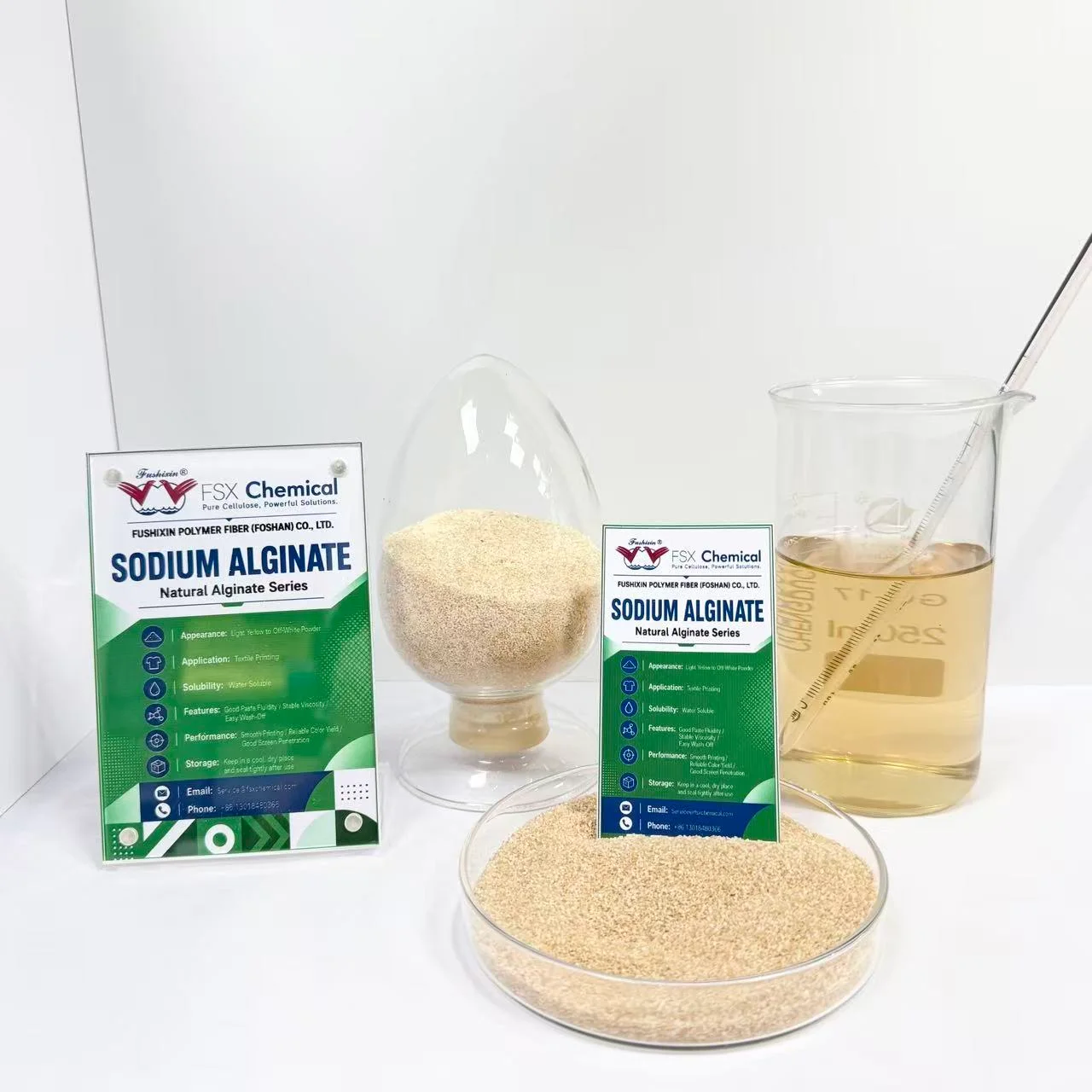
Sodium alginate is the sodium salt of alginic acid, a polysaccharide obtained from brown seaweed. Its polymer chain contains mannuronic and guluronic acid units with negatively charged carboxylate groups in water.
These structural features influence solubility, viscosity, interaction with ions and compatibility with reactive printing systems. Different raw-material and manufacturing routes can produce grades with different molecular-weight distribution, rheology and filtration performance.
An Anionic Water-Soluble Polymer
Sodium alginate forms viscous aqueous solutions and is classified as an anionic polymer. Many reactive dyes also contain negatively charged sulfonate groups.
The electrostatic relationship between the anionic thickener and anionic dye helps limit strong association under suitable printing conditions. This is one reason alginate is commonly used as the reference thickener for reactive dye printing.
Textile Grade Is an Application Grade
A textile-printing grade should be selected for viscosity, hydration, filtration, paste behavior and wash-off. The term does not require a food-grade designation unless the buyer has a separate regulatory or customer requirement.
Industrial suitability should be confirmed through a product-specific TDS and application trial rather than a broad grade label.
Why Reactive Dye Printing Requires a Thickener
Reactive dye solutions are too fluid to remain within a printed pattern without rheology control. If applied without a suitable thickener, the liquid may spread through the fabric and produce bleeding, poor definition or uncontrolled penetration.
The thickener converts the dye solution and other ingredients into a printable paste. The paste must move under the forces generated during printing but recover enough structure to hold the design afterward.
The Thickener Is a Temporary Process Material
Unlike a pigment binder, sodium alginate is not intended to form a permanent film that holds color on the fabric. After the reactive dye has been fixed, the alginate should be removed during washing.
Rheology Is More Important Than Static Thickness
Printing pastes are non-Newtonian fluids. Their apparent viscosity can change as shear rate changes during mixing, pumping and screen application.
For this reason, a paste that appears thick while standing may still pass effectively through a screen under shear. Its recovery after printing influences whether fine lines remain sharp.
Six Roles of Sodium Alginate in Reactive Dye Printing
1. Building the Required Paste Viscosity
Sodium alginate creates the paste body needed for controlled application. The appropriate viscosity depends on the printing machine, screen, fabric, design, dye concentration and other paste ingredients.
If viscosity is too low, paste may spread or penetrate excessively. If it is too high, paste transfer, screen passage, dye diffusion or steam penetration may be affected.
2. Providing Shear-Dependent Flow
Suitable sodium alginate pastes commonly show shear-thinning behavior. Apparent viscosity decreases under the shear produced by mixing, pumping or a squeegee, then partially recovers when the shear is removed.
This behavior can support screen passage and design retention. The degree of shear thinning and recovery is grade- and concentration-dependent, so it should not be assumed from the product name alone.
3. Controlling Dye Migration and Print Definition
After the paste reaches the fabric, it needs to hold the dye within the intended printed area until fixation. Suitable rheology helps reduce uncontrolled lateral movement during printing and drying.
Print definition also depends on fabric absorbency, paste add-on, screen, machine settings and drying. Sodium alginate cannot correct an unevenly prepared fabric or damaged screen by itself.
4. Limiting Undesired Interaction with Reactive Dye
Reactive dyes are designed to react with suitable functional groups on the fiber. Some polysaccharide thickeners contain accessible hydroxyl groups that may compete with the fiber under certain conditions.
Sodium alginate generally has a lower tendency to form undesirable covalent interactions with many reactive dyes than several unmodified starch or gum systems. Its anionic carboxylate groups and the anionic character of many reactive dyes also limit strong association.
It is more accurate to describe this interaction as limited rather than claiming that sodium alginate can never react or interact with any reactive dye.
5. Supporting Dye Transfer During Steaming
During steaming, moisture allows the fiber to swell and the dye to move from the paste toward the fiber. The paste needs to retain sufficient moisture and release dye under the selected fixation conditions.
Sodium alginate supports this environment indirectly through its water affinity and limited interaction with the dye. The alginate itself does not fix the dye; fixation still depends on dye chemistry, alkali, moisture, temperature and time.
6. Allowing Removal During Washing
After fixation, the thickener, unfixed dye and other paste components need to be removed. Sodium alginate is commonly selected because it can be rewetted and washed from the fabric under an appropriate washing process.
Poor wash-off may leave residue, affect fabric handle or contribute to surface staining. Results depend on grade, dosage, fixation and washing conditions.
What Sodium Alginate Does Not Do
It Does Not Fix the Reactive Dye
The chemical bond forms between the reactive dye and the fiber under suitable alkaline and fixation conditions. Sodium alginate acts as the thickener and process medium.
It Does Not Independently Determine Color Yield
Color yield depends on dye strength, fabric preparation, paste formulation, add-on, drying, steaming and washing. A suitable alginate can support the process, but it cannot compensate for every upstream or downstream problem.
It Does Not Guarantee Color Fastness
Fastness depends on dye selection, fixation and removal of hydrolyzed or unfixed dye. Incomplete washing can produce poor wet rubbing or wash fastness even when the alginate grade is appropriate.
It Is Not Automatically Suitable for Every Printing Route
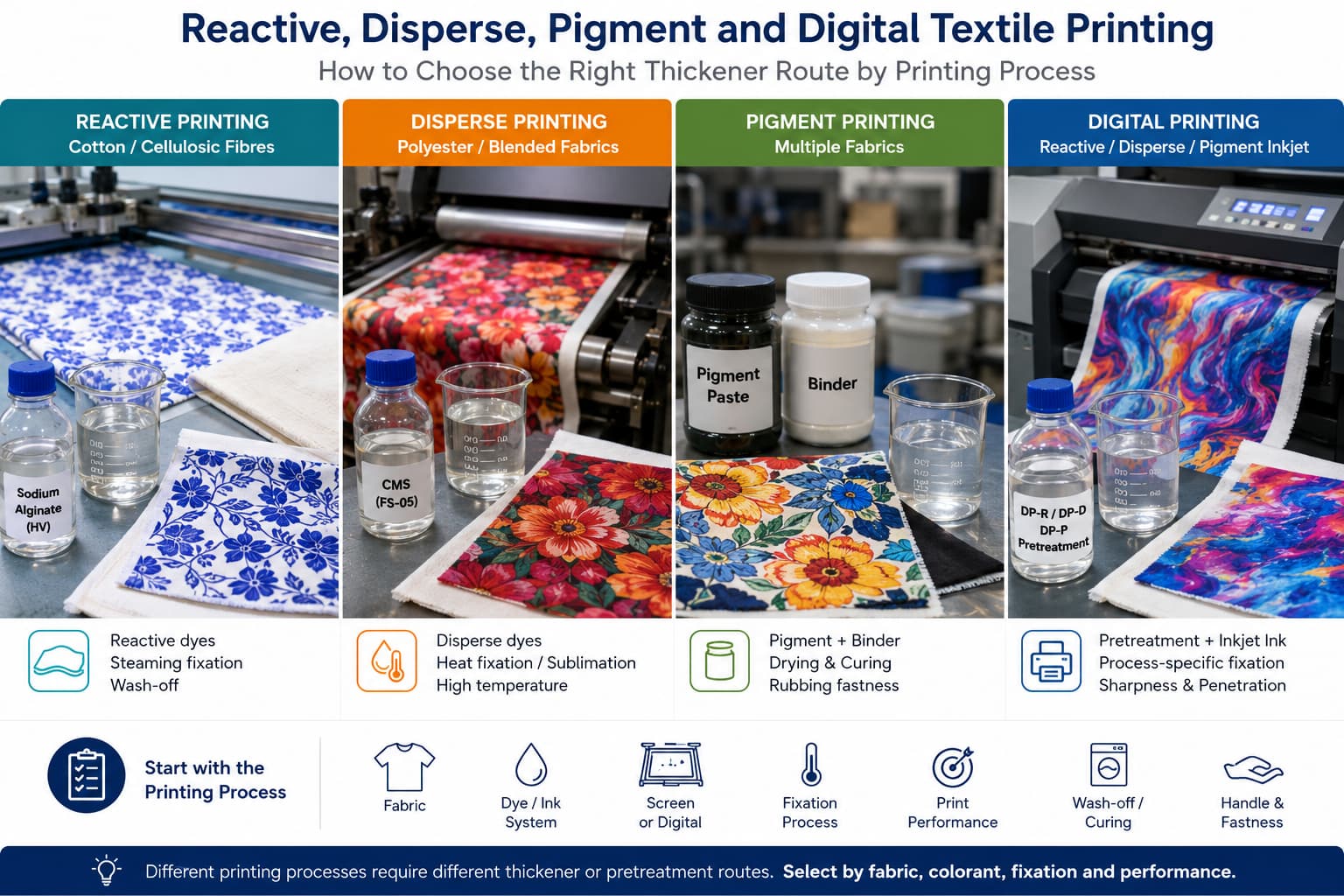
Sodium alginate is mainly associated with reactive dye printing. Disperse, pigment, vat and discharge systems may require different thickeners or specially tested formulations.
Screen Printing vs. Reactive Digital Printing
Flat-Screen and Rotary-Screen Printing
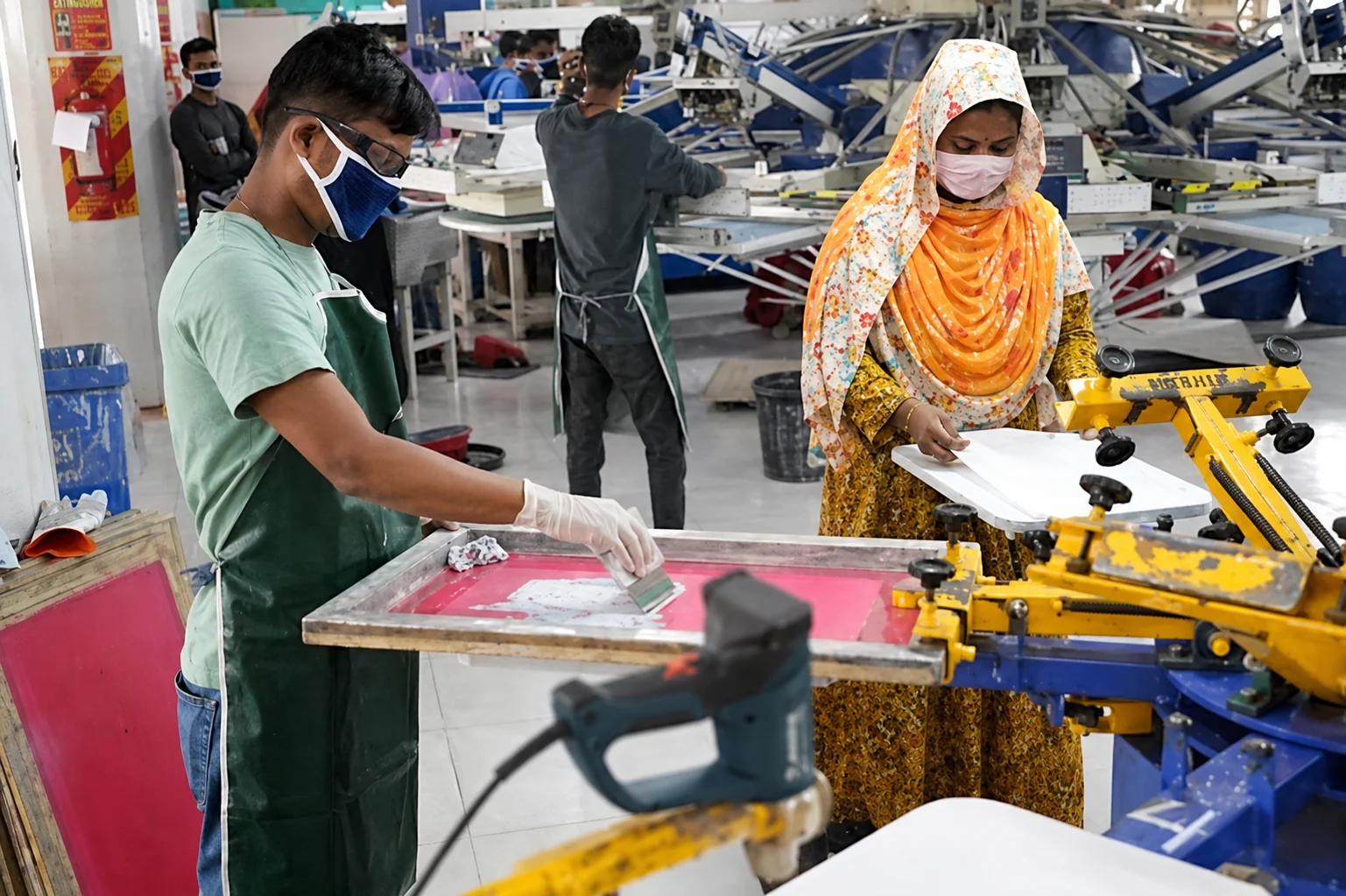
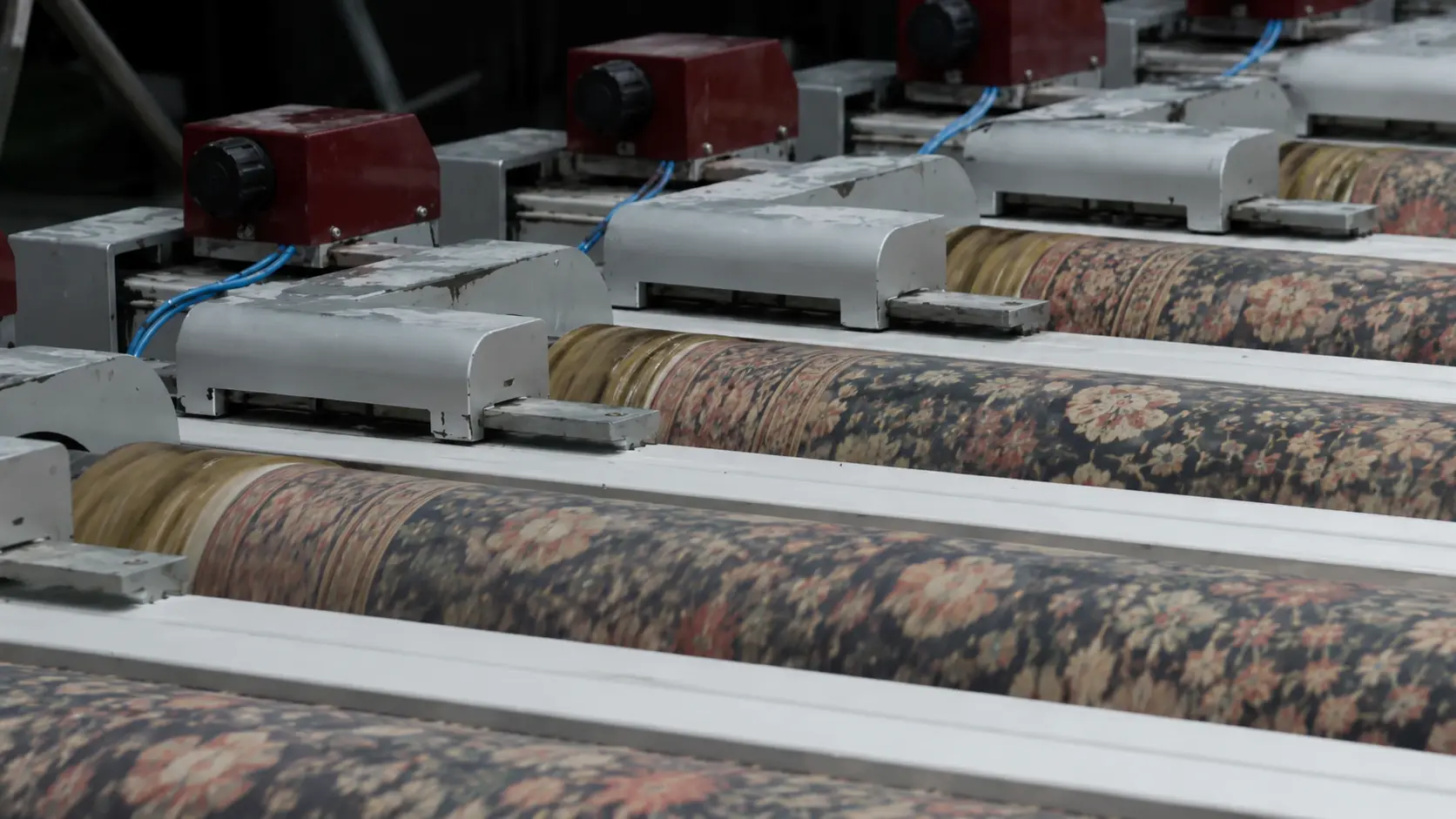
In conventional reactive screen printing, sodium alginate is normally part of the colored printing paste. The paste passes through the screen and deposits the dye, alkali and auxiliaries onto selected areas of the fabric.
The important parameters include screen passage, shear response, print definition, dye compatibility, steaming and wash-off.
Reactive Digital Inkjet Printing
In digital reactive printing, the thickener is commonly used in a fabric pretreatment rather than being added directly to the ink. The ink is subsequently jetted onto the pretreated fabric.
Digital pretreatment requires additional attention to filtration, coating or padding uniformity, dried residue, ink-drop spreading and treated-fabric storage.
A sodium alginate grade approved for screen printing should not automatically be used for digital pretreatment without separate testing.
Key Sodium Alginate Specifications
Viscosity and Test Method
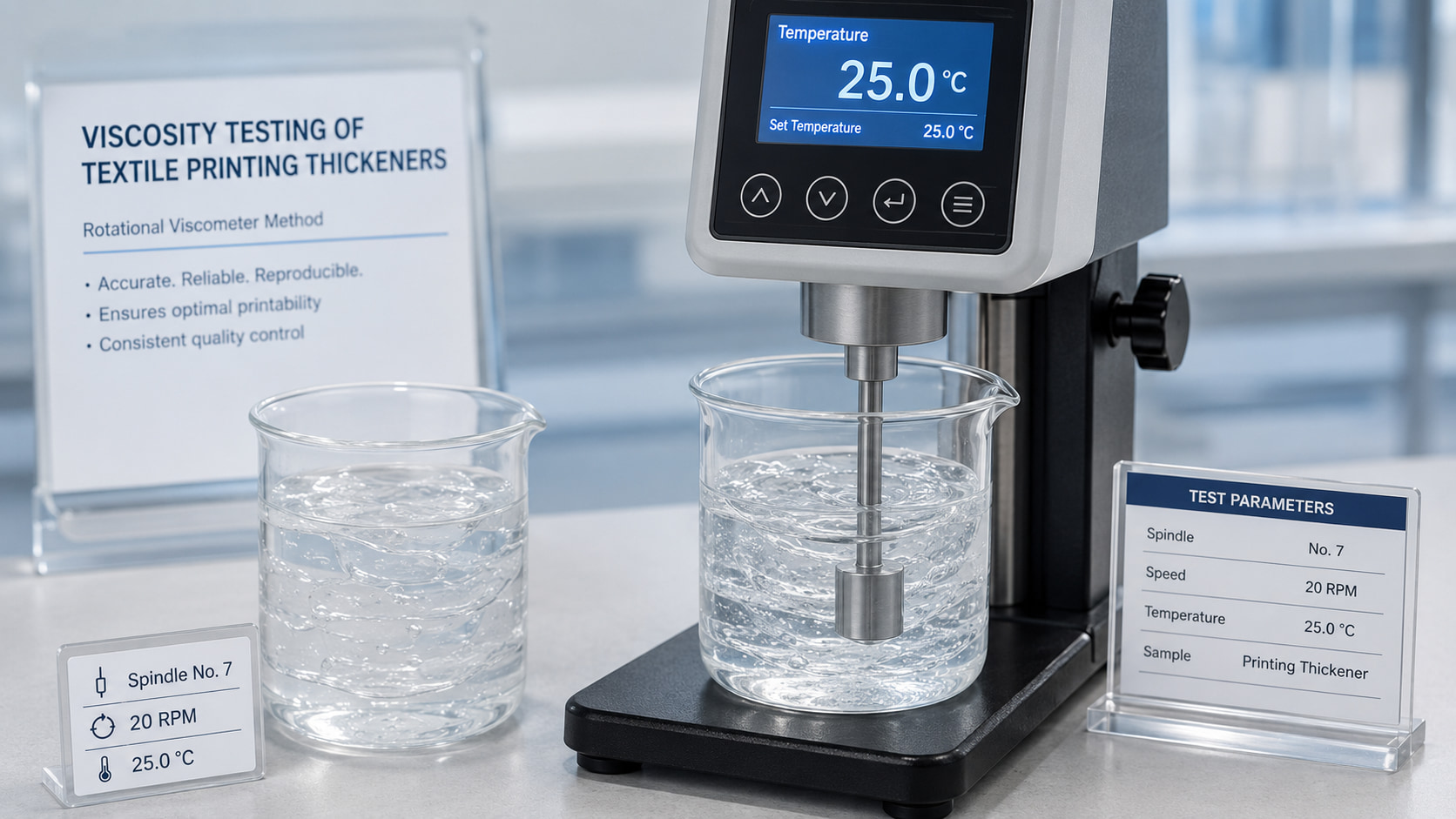
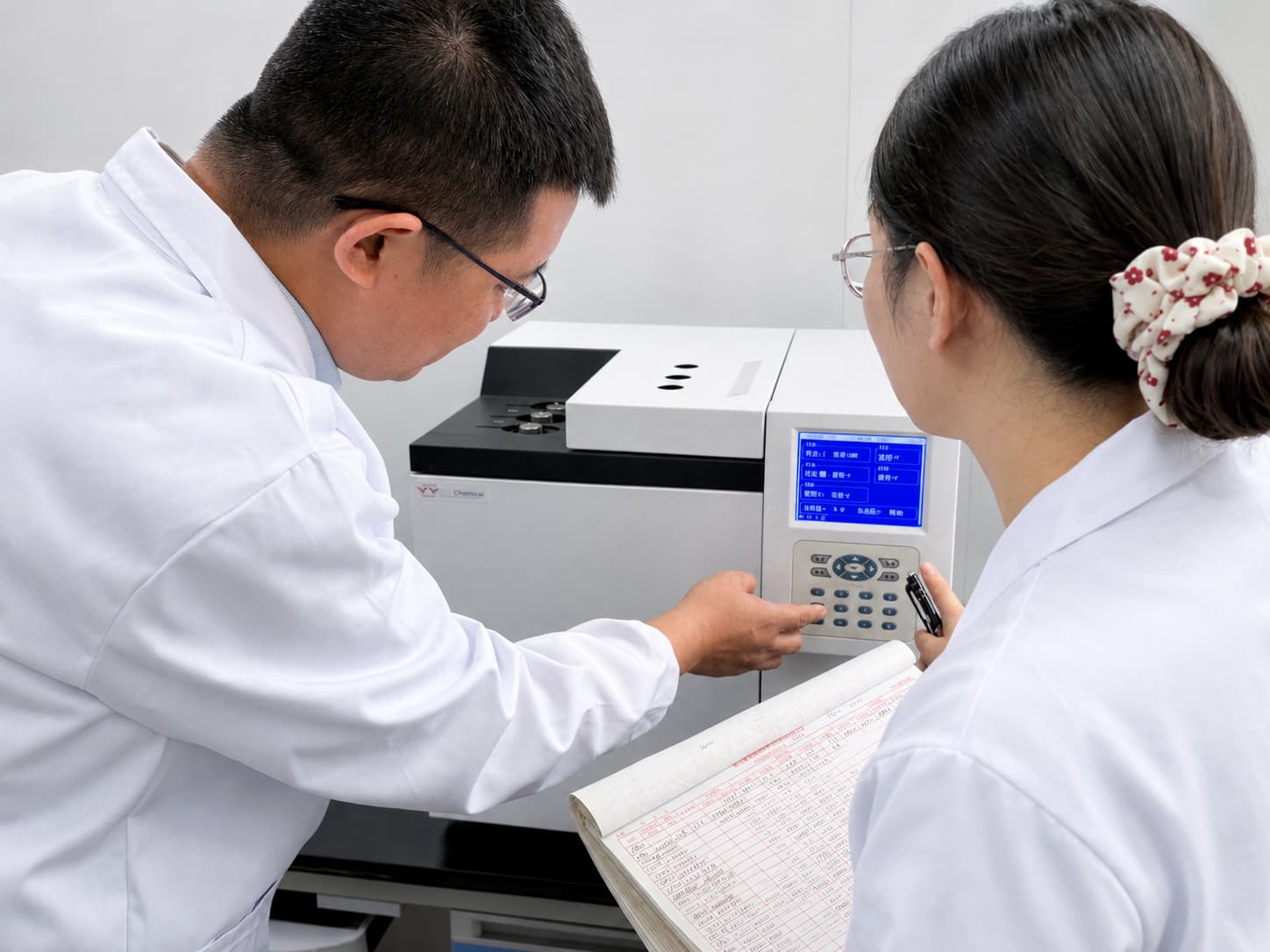
Viscosity should be reported with concentration, water, temperature, hydration time, viscometer, spindle and speed. Values produced using different methods are not directly comparable.
Buyers should select a viscosity range that fits their paste concentration and machine rather than assuming that the highest-viscosity grade is best.
Rheological Behavior
Where production risk is significant, evaluate flow under more than one shear condition. Screen passage and recovery after shear may be more informative than one static viscosity result.
Ukuran Partikel
Particle size affects wetting, dispersion and hydration. Fine powder may hydrate quickly but can form lumps if added too rapidly, while coarse particles may require more time.
Insoluble Matter and Filtration
Insoluble particles or gels can block filters and screens. Filtration should be evaluated after full hydration and with actual production water.
Kelembapan
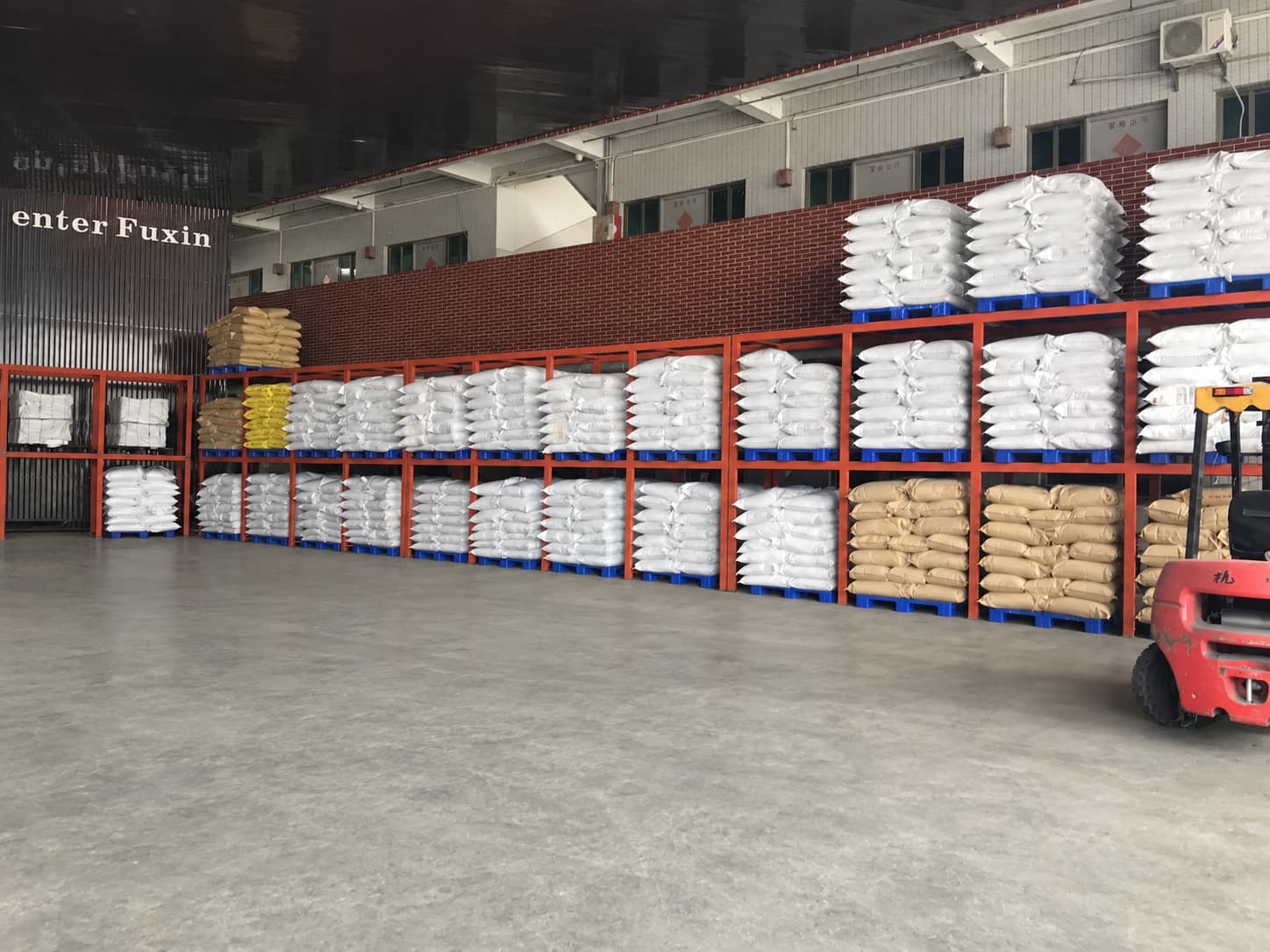
Moisture affects storage behavior and the amount of active dry material purchased. Packages should be protected from humidity and closed after partial use.
pH
Product pH can influence compatibility with the complete formulation. It should be evaluated together with the dye, alkali and auxiliaries rather than as an isolated number.
Sensitivity to Multivalent Ions
Calcium and other multivalent ions can increase sodium alginate viscosity and may eventually produce gel particles or precipitation. Water hardness is therefore an important production variable.
Paste Storage Stability
Prepared alginate paste can change because of temperature, contamination, microorganisms or formulation interaction. Test the paste over the actual production holding period.
How to Prepare Sodium Alginate Paste
Use Controlled Water Quality
Check hardness, pH and visible contamination. If laboratory testing uses different water from production, include a separate comparison with actual process water.
Add Powder Gradually
Create sufficient water movement before adding the powder. Introduce sodium alginate at a controlled rate to reduce fish-eyes and partially hydrated lumps.
Allow Complete Hydration
Do not judge final viscosity immediately after mixing unless the product method specifies this. Record hydration time and temperature as part of the standard operating procedure.
Filter Before Use
Use the mill’s approved filtration or screen method. Filtration can identify undissolved particles, contamination and gel formation before the paste reaches the machine.
Add Other Ingredients in a Defined Sequence
Dyes, salts, alkali, humectants and other auxiliaries can change paste behavior. Use a documented mixing order and measure viscosity after the complete paste is prepared.
Control Paste Age
Record preparation time, alkali-addition time, storage temperature and expected use period. Do not assume that paste can be stored indefinitely without viscosity or dye changes.
Common Production Problems
Masalah yang Diamati
Possible Alginate or Process Causes
First Checks
Fish-eyes or lumps
Powder added too quickly, insufficient mixing or incomplete hydration
Addition rate, mixing pattern, particle size and hydration time
Gel particles
Calcium or other multivalent ions, contamination or incompatible ingredients
Water hardness, ingredient quality and equipment cleanliness
Viscosity too low
Incorrect concentration, incomplete measurement method, degradation or formulation interaction
Weighing, water, hydration, temperature and complete-paste composition
Viscosity too high
Overdosage, low temperature, excessive hydration or multivalent ions
Concentration, temperature, water hardness and method
Hambatan pada layar
Insoluble matter, incomplete hydration, gel particles or undissolved dye
Filtration, water, paste preparation and dye dissolution
Rheology, screen, machine settings, fabric and drying
Low color yield
Unsuitable grade, excessive viscosity, dye interaction or fixation problem
Reference trial, dye, alkali, steaming and washing
Harsh fabric handle
Excess alginate, incomplete wash-off or residual unfixed material
Dosage, fixation, washing and residue
Batch-to-batch variation
Product, water, mixing, fabric or process variation
COA, incoming test, retained samples and production records
Laboratory and Production Evaluation
Stage 1: Review the TDS
Confirm grade code, viscosity method, pH, moisture, particle size and application direction. Identify which values are typical and which are part of the purchasing specification.
Stage 2: Test the Stock Paste
Compare the candidate and reference using the same concentration, water, mixing and hydration procedure. Record dispersion, viscosity, filtration and standing stability.
Stage 3: Test the Complete Printing Paste
Add the actual dyes, alkali and auxiliaries. Measure viscosity and observe compatibility immediately and after the normal holding period.
Stage 4: Conduct a Printing Trial
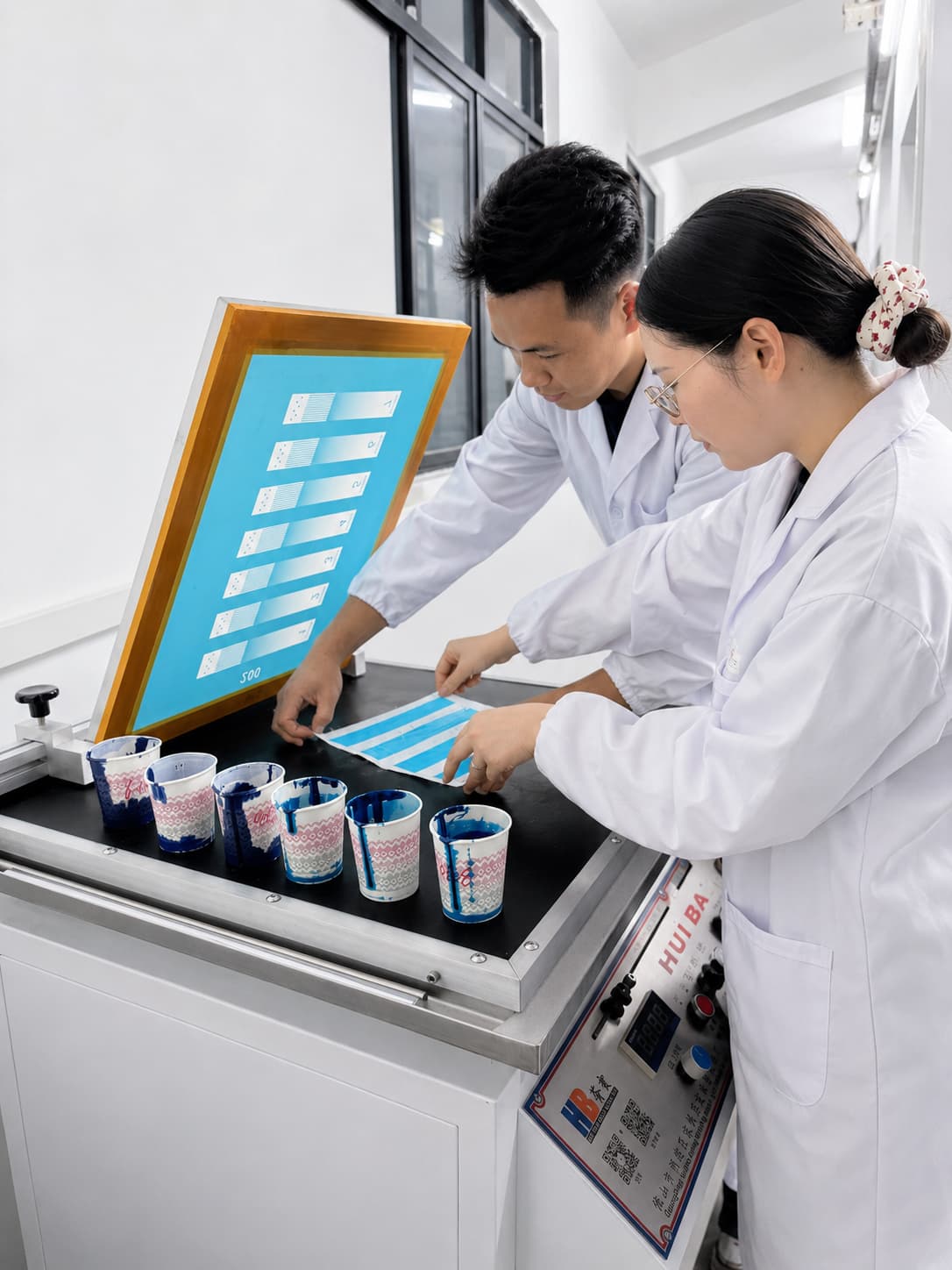
Use the same fabric, screen, machine or laboratory-printing conditions. Include fine details and solid areas that reveal spreading and penetration.
Stage 5: Fix and Wash
Use the mill’s standard drying, steaming and washing process. Evaluate after-wash color, sharpness, staining, fastness and handle.
Stage 6: Complete a Production Trial
Confirm preparation, filtration, pumping, screen behavior and holding stability at normal production scale before approving a large order.
Recommended Acceptance Criteria
Viscosity within the agreed range
Acceptable hydration and filtration
Stable complete printing paste
Screen passage without unacceptable blockage
Print definition comparable with the approved reference
Acceptable after-wash color and shade
Acceptable wash-off, fastness and handle
Competitive total cost in use
Can Sodium Alginate Be Replaced or Blended?
Selected CMC, CMS, modified natural polymers, synthetic thickeners or compound systems may partially or fully replace sodium alginate in some formulations. Replacement is not universally successful.
Alternative thickeners may change dye interaction, rheology, solids content, wash-off and fabric handle. A lower purchase price should be evaluated against dosage and production performance.
Blended Systems
Sodium alginate may be blended with another compatible thickener to adjust rheology or cost. Blend viscosity is not always a simple average of the individual products.
Record the exact ratio, mixing order and complete-paste results. Reactive dye compatibility and wash-off should remain critical acceptance criteria.
What Buyers Should Request from Suppliers
Product-specific TDS
Metode pengujian viskositas lengkap
SDS Terkini
Representative and clearly labeled sample
Recommended preparation procedure
Application direction
Batch-specific COA after order confirmation
Informasi mengenai kemasan dan penyimpanan
Current compliance documents where required
The sample, TDS, quotation, purchase order, package label and COA should use the same grade code.
A supplier recommendation is not a substitute for buyer testing. Final suitability should be confirmed in the intended formulation and process.
Bagaimana FSX Chemical Mendukung Para Pembeli Sodium Alginat
FSX Chemical supplies sodium alginate for textile printing and supports grade selection based on the buyer’s fabric, reactive dye system, printing method, target viscosity and current production problem.
Buyers can provide an existing TDS, viscosity method or retained sample for initial comparison. FSX Chemical can recommend a starting grade and provide a trial sample for internal testing.
Product-specific TDS and SDS documents can be requested during evaluation. A batch-specific COA should be confirmed for the selected product and commercial shipment.
Ketahui mengapa nilai viskositas pengental dalam pencetakan tekstil tidak dapat dibandingkan tanpa menyesuaikan konsentrasi, suhu, alat ukur, spindel, kecepatan, metode persiapan, dan waktu pengujian.
Pelajari cara memilih bahan pengental dan metode pra-perlakuan untuk pencetakan tekstil reaktif, disperse, pigmen, dan digital berdasarkan jenis kain, pewarna atau tinta, proses fiksasi, daya lepas saat pencucian, serta persyaratan kualitas cetakan.
Bandingkan CMC, CMS, natrium alginat, dan pasta cetak digital untuk pencetakan tekstil. Pelajari bagaimana masing-masing bahan tersebut sesuai dengan proses pencetakan reaktif, dispersi, pigmen, dan digital, serta hal-hal apa saja yang perlu diperhatikan pembeli sebelum melakukan pengujian sampel, penyesuaian kualitas, dan pembelian dalam jumlah besar.
Sodium alginat banyak digunakan dalam pencetakan tekstil sebagai pengental yang stabil dan tahan cuci untuk pasta cetak reaktif. Pelajari cara mengevaluasi tingkat viskositas, kemurnian, dan kesesuaian penggunaannya sebelum membeli, serta bagaimana FSX Chemical mendukung pembeli di seluruh dunia dengan data teknis dan sampel.
Pasta cetak berbasis CMC digunakan dalam pencetakan tekstil pigmen, reaktif, dan digital. Panduan ini menjelaskan parameter apa saja yang penting, cara membandingkan pemasok, serta hal-hal yang perlu diminta sebelum melakukan pemesanan dalam jumlah besar.
Baik natrium alginat maupun CMC digunakan sebagai pengental dalam pencetakan tekstil, namun keduanya cocok untuk sistem pewarnaan dan kondisi proses yang berbeda. Panduan ini menjelaskan perbedaan utama di antara keduanya serta kapan masing-masing harus digunakan.
Pencetakan inkjet digital pada tekstil memiliki persyaratan pasta dan pra-perlakuan yang berbeda dibandingkan dengan pencetakan sablon. Panduan ini menjelaskan bagaimana natrium alginat digunakan dalam pencetakan tekstil digital serta parameter kualitas apa saja yang harus ditentukan oleh tim pengadaan.
Persiapan pasta yang tepat sama pentingnya dengan pemilihan kadar dalam pencetakan tekstil dengan pewarna reaktif. Panduan ini membahas metode pelarutan natrium alginat, kisaran konsentrasi sesuai dengan penggunaannya, kondisi penyimpanan, serta cara mengatasi masalah umum dalam persiapan.
Sodium alginat adalah polimer alami yang dapat terurai secara hayati, namun penggunaannya dalam pencetakan tekstil menghasilkan air limbah yang perlu dikelola. Panduan ini membahas profil lingkungan sodium alginat, karakteristik air limbah hasil pencucian, serta hal-hal yang perlu dipahami oleh tim pengadaan terkait pemilihan bahan pengental dan dampaknya terhadap lingkungan.
Tingkat fiksasi pewarna secara langsung memengaruhi hasil warna, ketahanan luntur saat dicuci, dan beban limbah cair dalam proses pencetakan dengan pewarna reaktif. Panduan ini menjelaskan bagaimana natrium alginat mendukung proses fiksasi pewarna, parameter pasta apa saja yang memengaruhi tingkat fiksasi, serta cara mengatasi masalah fiksasi rendah dalam proses produksi.
Ukuran partikel natrium alginat (mesh) memengaruhi seberapa cepat bubuk tersebut larut, seberapa merata proses hidrasinya, serta bagaimana kinerja pasta yang dihasilkan dalam proses sablon. Panduan ini menjelaskan implikasi praktis dari spesifikasi mesh untuk aplikasi pasta cetak tekstil.
Persiapan pasta yang tepat sama pentingnya dengan pemilihan kadar dalam pencetakan tekstil dengan pewarna reaktif. Panduan ini membahas metode pelarutan natrium alginat, kisaran konsentrasi sesuai dengan penggunaannya, kondisi penyimpanan, serta cara mengatasi masalah umum dalam persiapan.
Berikan nama produk, kegunaan, jumlah, tujuan pengiriman, serta TDS,
foto sampel, atau dokumen lain yang sudah Anda miliki. FSX Chemical akan meninjau
informasi tersebut dan merekomendasikan langkah selanjutnya terkait penawaran harga, pencocokan sampel,
atau pemilihan produk.
Informasi ProdukNama produk, kelas, model, foto label, atau referensi pemasok.
Dokumen yang TersediaTDS, SDS, COA, foto sampel, daftar produk, atau data pengujian.
Rincian PesananPerkiraan jumlah, kemasan, negara tujuan, pelabuhan, atau syarat perdagangan.
Permohonan atau MasalahProses pencetakan tekstil, kebutuhan formulasi, masalah terkini, atau target kinerja.

 ID
ID  EN
EN  BN
BN  ES
ES  TR
TR  FR
FR  RU
RU  AR
AR  UR
UR  VI
VI  TL
TL  HI
HI  UK
UK  KK
KK  KA
KA  UZ
UZ