Screen Mesh and Squeegee Pressure: How They Change Textile Printing Paste Requirements
Screen mesh and squeegee pressure change the amount of printing paste transferred, the shear applied...
Screen mesh and squeegee pressure change how textile printing paste is forced through the screen, how much paste is deposited, how deeply it penetrates the fabric and how sharply the printed pattern is retained. A finer mesh does not automatically require a “thin paste,” and higher squeegee pressure does not automatically improve transfer. Mesh opening, open area, thread or screen geometry, pressure, speed, paste rheology and fabric absorbency work together. This guide explains how textile mills should match low-shear body, shear thinning, structural recovery and paste deposit to the selected screen and squeegee conditions instead of correcting every print defect by changing viscosity alone.
Why Mesh, Pressure and Rheology Must Be Treated as One System
Textile screen printing is a pressure-driven transfer process.
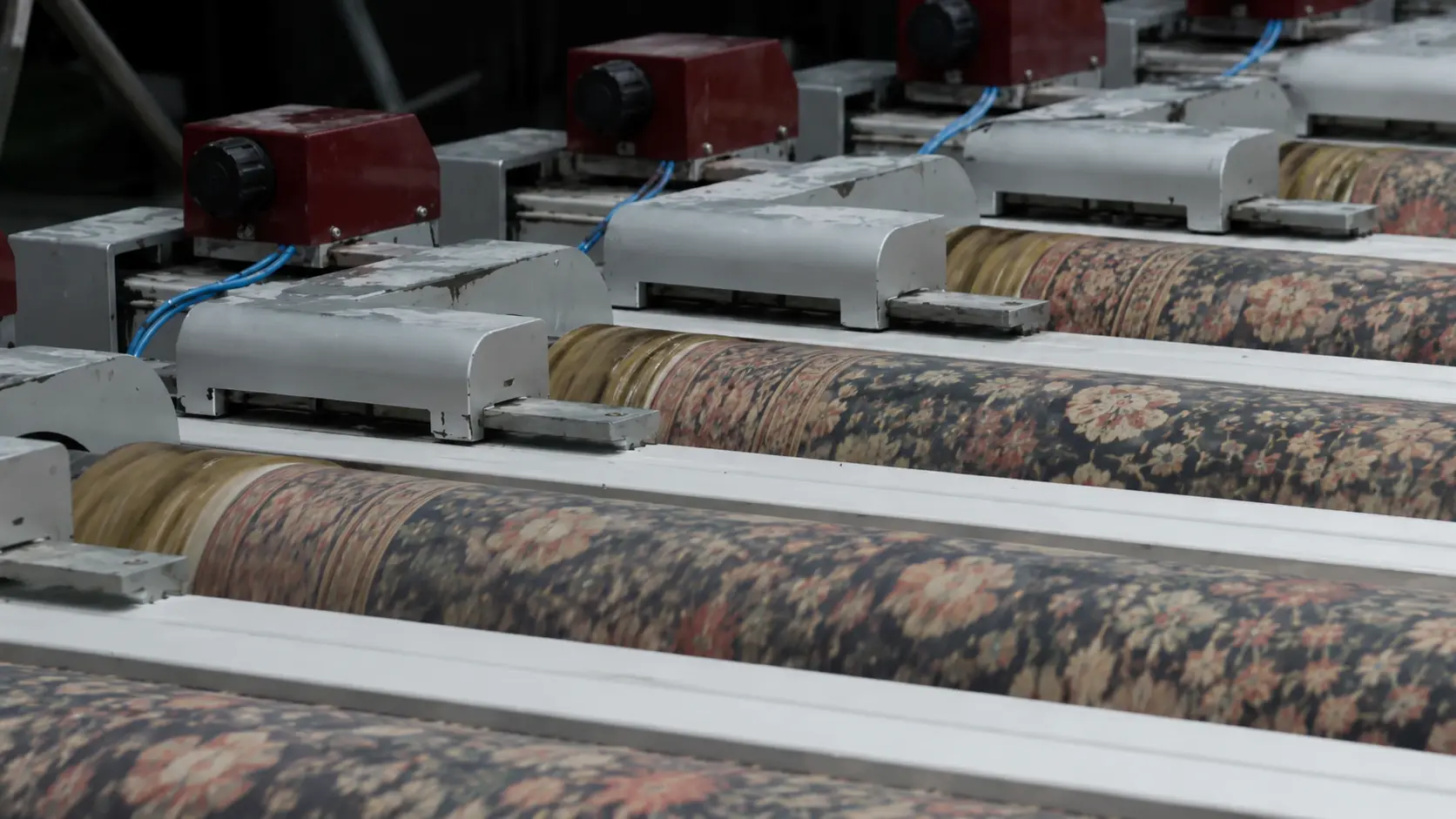
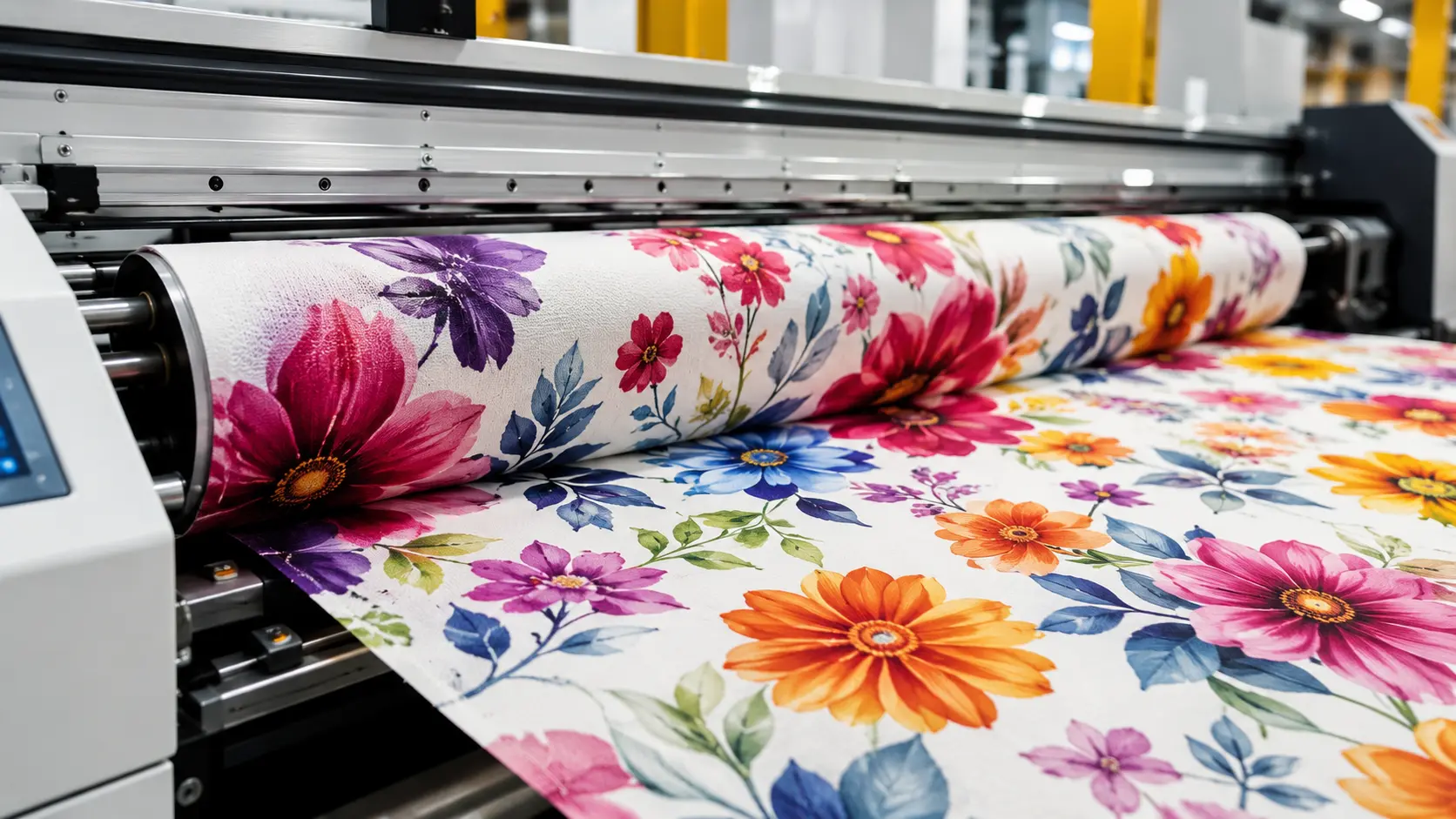
Paste is forced through the open areas of a patterned screen by a squeegee, magnetic rod or related transfer system.
The amount and behavior of the deposited paste depend on several linked variables:
Published rotary-screen research has shown that screen mesh, machine settings and print-paste rheology all influence the amount of paste applied and its penetration into cotton fabric.
This is important because mills often troubleshoot only one variable.
For example:
Poor transfer → increase pressure
Too much penetration → increase viscosity
Fine lines filling in → use a finer mesh
Each action can work in a specific system, but each also changes another part of the process.
A better approach is to define the defect first, hold the other major variables constant, and then change one controlled factor.
What Does Screen Mesh Actually Change?
“Mesh” is often used as shorthand for screen fineness, but mesh count alone does not fully define the screen.
Important screen variables include:
Mesh count or engraving specification
Thread or nickel-wall geometry
Opening size
Open area
Screen thickness
Stencil/emulsion thickness in flat-screen systems
Screen tension
In general, a finer mesh provides smaller or more numerous controlled openings and can reduce the amount of paste transferred per pass, but the actual result depends on opening area and screen construction.
Screen-printing studies outside textiles also confirm that mesh count is a major determinant of deposited ink volume, while textile rotary-screen research specifically shows that mesh variation changes paste application and penetration.
Therefore:
Do not specify thickener viscosity from “mesh count” alone without knowing actual screen geometry and the required deposit.
Fine Mesh: What Changes in the Paste Requirement?
Fine designs and high-detail screens place greater emphasis on controlled flow through smaller openings.
Potential problems with an unsuitable paste include:
Poor screen passage
Missing fine lines
Incomplete dot transfer
High pressure requirement
Screen blockage
A paste for a fine screen often benefits from:
Good shear thinning under application pressure
Low gel-particle content
Good filtration
Controlled elasticity
Reliable recovery after transfer
However, this does not mean:
“Fine mesh always requires low viscosity.”
A paste that is too fluid after shear can pass the screen easily but then spread beyond the intended pattern.
The correct target is:
Easy passage under shear + sufficient structure after the screen.
More Open Screens: What Changes in the Paste Requirement?
A more open screen can allow a larger paste deposit and can be useful when:
High color coverage is required
Deeper penetration is desired
Large solid areas are printed
The fabric structure requires more paste to reach the intended effect
But a larger opening can also increase the risk of:
Over-deposit
Excess penetration
Spreading
Longer drying load
Higher wash-off burden
A thicker or more structured paste can sometimes help control an open screen, but excessive viscosity can create poor leveling or uneven solids.
Therefore:
Open mesh does not automatically mean “use a high-viscosity paste.”
First define the required deposit and penetration, then adjust rheology.
What Does Squeegee Pressure Actually Do?
Squeegee pressure helps bring the screen and paste-transfer zone into the required mechanical condition so paste can be forced through the open areas.
Pressure affects:
Contact between screen and substrate
Hydrodynamic forcing on the paste
Paste passage through the mesh
Printed deposit
Penetration into the textile
Screen deformation
General screen-printing research confirms that squeegee pressure, angle and speed must be optimized together with screen and paste characteristics.
Higher pressure can improve transfer in some systems, but excessive pressure can distort the screen, change deposit or drive the paste deeper into the substrate.
Therefore, pressure should be treated as a controlled process parameter—not as an emergency correction for every rheology problem.
What Happens When Pressure Is Too Low?
If pressure is insufficient for the selected screen, paste and machine, possible symptoms include:
Incomplete transfer
Missing details
Uneven solid areas
Low color deposit
Intermittent screen marks
Before increasing pressure, check:
Paste shear thinning
Screen cleanliness
Mesh/open area
Squeegee condition
Machine alignment
Paste feed level
If the paste is too elastic or does not thin sufficiently under shear, pressure may be compensating for an unsuitable rheology.
Increasing pressure can hide that problem temporarily without solving it.
What Happens When Pressure Is Too High?
Excessive squeegee pressure can create a different set of problems.
Possible symptoms include:
Too much paste penetration
Reduced surface color
Pattern distortion
Screen deformation
Higher mechanical wear
Uneven deposit across the width
High pressure can also change the shear history of the paste.
A strongly shear-thinning thickener may become much more fluid in the transfer zone as pressure and mechanical action increase.
The resulting defect can then be misdiagnosed as “paste viscosity too low,” even though the low-shear QC value is normal.
This is why:
Pressure and rheology should be diagnosed together.
Why Shear Thinning Matters Under the Squeegee
Many textile printing pastes are designed to be pseudoplastic or shear-thinning.
At low shear, they have enough structure to resist spreading.
Under the squeegee, apparent viscosity falls, helping the paste move through the screen.
A useful screen-printing rheology can be summarized as:
Higher Structure at Rest → Lower Apparent Viscosity Under Shear → Controlled Recovery After Transfer
If shear thinning is too weak:
Fine-screen passage can be poor.
Pressure requirement can increase.
Transfer may be incomplete.
If shear thinning is too strong:
Paste can flood through a more open screen.
Penetration can become excessive.
Edges can spread before structure recovers.
This is why the same Brookfield viscosity can give different results on different mesh/pressure combinations.
Why Structural Recovery Matters After Transfer
Once paste leaves the screen, the high-shear condition ends.
The thickener should rebuild enough structure to prevent uncontrolled lateral movement.
Slow recovery can create:
Bleeding
Loss of fine detail
Haloing
Excess penetration
But excessively fast or rigid recovery can reduce leveling and create:
Uneven solid areas
Surface texture
Incomplete penetration
Changing screen mesh or squeegee pressure can change the paste deposit and therefore the time/space available for leveling.
The optimum recovery window can therefore change even when the thickener chemistry stays the same.
Elasticity, Stringiness and Screen Release
Printing pastes are often viscoelastic rather than purely viscous.
Some elasticity supports structure recovery.
Too much elasticity can cause:
Stringing
Poor screen release
Tail defects
Uneven deposit
Fine screens can make these defects more visible because small openings are less tolerant of particles and elastic stringing.
Higher pressure may force an elastic paste through the screen but can worsen separation or penetration behavior.
Therefore, a grade-matching test should record stringiness and screen release—not only viscosity.
Paste Deposit: Mesh and Pressure Change More Than Viscosity
Printed paste deposit is one of the most useful production measurements.
It connects machine settings with:
Colorant delivered
Thickener solids
Ылғалдылық
Penetration
Drying load
Wash-off or curing load
Published rotary-screen work directly monitored paste application and penetration while varying screen mesh, machine settings and paste rheology.
This means a mill comparing two thickeners should not evaluate only:
“Which paste has the right viscosity?”
It should also evaluate:
“How much paste does this mesh/pressure combination actually put onto and into the fabric?”
Where practical, use wet pickup or gravimetric deposit measurement in controlled trials.
Penetration vs. Surface Color
More paste penetration is not automatically better.
The target depends on the design and textile.
Higher penetration may be useful for:
Double-sided appearance
Thicker fabrics
Specific disperse or specialty effects
But excessive penetration can reduce:
Surface color strength
Жиектің өткірлігі
Fine detail
Screen opening, pressure and rheology all influence this balance.
If the print is too pale on the surface, increasing dye concentration should not be the first action before checking whether excessive pressure or low post-shear structure is driving paste too deeply into the fabric.
How Fabric Construction Changes the Result
The same mesh and pressure can deposit paste differently on different textiles.
Important variables include:
Woven vs. knitted
Fabric weight
Yarn density
Absorbency
Surface hairiness
Stretch
Open vs. dense construction
A highly absorbent cotton fabric can draw paste rapidly into the structure.
A dense woven fabric may retain more paste near the surface.
A brushed or hairy substrate can change screen contact and paste transfer.
Therefore, a thickener should not be approved for a mesh/pressure condition on one fabric and assumed to behave identically on another.
Rotary vs. Flat Screen: Why the Same Mesh Number Does Not Tell the Whole Story
Flat and rotary screens use different geometries and mechanical transfer systems.
A numeric mesh specification from one format should not be treated as automatically equivalent to the same-looking number in another format.
Also, the paste experiences different mechanical histories:
Flat screen: intermittent squeegee strokes and pauses
Rotary screen: continuous rotation, feed and repeated shear
This means mesh and pressure should be interpreted inside the machine architecture.
Higher pressure improves transfer but lowers surface K/S
Penetration and paste deposit
More dye is the first solution
Same viscosity behaves differently on two meshes
Opening geometry, shear, elasticity, recovery
One-point viscosity defines screenability
Fine details block during run
Gel particles, filtration, screen drying, elasticity
The mesh is necessarily too fine
More pressure causes edge spreading
Shear thinning, deposit, recovery, fabric
Pressure and viscosity act independently
Pigment print becomes harsh after changing screen
Deposit, binder solids, curing, thickener dosage
The thickener chemistry alone changed hand
Total Cost in Use
Mesh and pressure affect commercial cost through:
Paste consumption
Thickener dosage
Dye/pigment consumption
Machine speed
Screen wear
Drying load
Washing or curing load
Rework
A useful framework is:
Cost per accepted m² = total allocated monetary cost of paste, printing, screen wear and maintenance, finishing and rework ÷ accepted finished-fabric area (m²). Compare screen and pressure settings over the same production boundary, in one currency, after the prints meet the same color, coverage, fastness and hand requirements.
Calculate paste cost from actual paste consumed × its material cost per kg, including measured preparation and cleaning losses. Price labor, machine time and energy using stated rates; allocate screen wear and maintenance consistently.
Record speed, uptime, deposit and penetration as operating measurements rather than adding them directly to cost. Monetize downtime only with a defined rate that does not repeat machine or labor costs already counted; keep any lost-capacity or lost-margin estimate separate.
A finer screen that lowers deposit is commercially useful only while color and coverage pass; higher pressure can increase wear or rework. Compare stable cost per accepted m² after finishing and inspection. Count rejects through the consumed costs and smaller accepted-area denominator; add only distinct rework or disposal charges, not the same rejected material value twice.
What Information Should You Send to a Thickener Supplier?
For useful mesh/pressure grade matching, provide:
Flat or rotary screen
Screen mesh / engraving
Open area where available
Squeegee type
Pressure setting or current relative setting
Squeegee speed/angle where available
Machine speed
Fabric composition and construction
Dye, disperse or pigment route
Current thickener product/TDS
Current dosage
Viscosity and full test method
Complete or simplified formula
Main defect: poor transfer, over-penetration, bleeding, blocking, low K/S or harsh hand
FSX Chemical can use this information through Үлгілер мен сәйкестендіру to compare sodium alginate, CMC, CMS or another route-appropriate thickener under matched machine conditions.
How Should a Mill Match Thickener Rheology to Mesh and Pressure?
Screen mesh affects paste passage and deposit, but mesh count alone does not define the screen.
Squeegee pressure changes transfer, penetration and mechanical shear; it is not only an on/off force.
Fine mesh does not universally require low viscosity, and open mesh does not universally require high viscosity.
Same Brookfield viscosity can behave differently when screen geometry or pressure changes.
Paste deposit and penetration should be measured or observed alongside viscosity.
The final acceptance standard is a stable print result after the complete fixation, washing or curing process.
Frequently Asked Questions
1. Does a finer screen mesh require lower-viscosity printing paste?
Not as a universal rule. Fine mesh usually requires good flow under shear and clean filtration, but the paste must still recover enough structure after transfer to prevent spreading.
2. Does a more open screen require higher-viscosity paste?
Not automatically. A more open screen can increase paste deposit, but the correct rheology depends on fabric, penetration target and screen pressure.
3. What happens when squeegee pressure is increased?
Pressure can improve paste transfer, but it can also change screen deformation, shear, paste deposit and penetration. Excess pressure can reduce surface definition or increase wear.
4. Can higher squeegee pressure compensate for a paste that is too thick?
Only within a limited process window. If high pressure is needed because the paste does not shear-thin or release correctly, changing pressure may hide the rheology problem rather than solve it.
5. Why does the same viscosity work on one mesh but not another?
Different mesh openings create different flow resistance, shear and deposit conditions. One-point viscosity does not describe the full rheology.
6. Why does higher pressure sometimes reduce surface color?
More pressure can drive paste deeper into the fabric. Increased penetration can reduce the amount of color concentrated at the surface.
7. Can fine mesh increase screen blockage?
Yes. Fine openings are less tolerant of gel particles, incomplete hydration and contamination. Filtration and paste homogeneity become more important.
8. Does mesh affect paste consumption?
Yes. Mesh/open area and screen thickness influence deposited volume, together with pressure, rheology and fabric.
9. Should pressure be increased when fine lines are missing?
Not immediately. Check screen cleanliness, filtration, high-shear flow, paste feed and screen geometry first, then adjust pressure in a controlled range.
10. Can changing mesh alter fabric hand?
Indirectly, yes. A heavier paste deposit can increase thickener or binder solids and therefore change wash-off or cured hand.
11. Should mesh and pressure be optimized before selecting the thickener?
They should be developed together. Define the intended machine/screen window, then qualify the thickener under those conditions rather than selecting from viscosity alone.
12. What should I send FSX Chemical for mesh/pressure troubleshooting?
Send machine type, mesh/engraving, pressure, squeegee conditions, fabric, printing route, current thickener, dosage, viscosity method, formula and the observed print defect.
Match Printing Paste Rheology to Your Screen and Squeegee Conditions
If changing screen mesh or squeegee pressure causes poor transfer, excess penetration, missing detail or unstable color, FSX Chemical can help separate machine-setting effects from thickener-rheology effects.
For a useful technical comparison, send:
Your current thickener sample, TDS or COA
Flat or rotary screen
Screen mesh/engraving
Open area where available
Squeegee type and current pressure
Squeegee speed/angle where available
Machine speed
Fabric composition and construction
Reactive, disperse or pigment route
Current thickener dosage
Viscosity and complete test method
Complete or simplified formula
Current transfer, penetration, sharpness, color or hand target
The right printing paste is not the one that simply matches a viscosity number. It is the one that passes the selected screen under controlled squeegee force, deposits the required amount of paste, recovers after shear and delivers the target penetration and finished print quality.
Натрий альгинаты реактивті басу пастасы үшін тұрақты әрі жуылатын қалыңдатқыш ретінде тоқыма басуда кеңінен қолданылады. Сатып алар алдында тұтқырлық дәрежесін, тазалық дәрежесін және қолдануға жарамдылығын қалай бағалау керектігін және FSX Chemical компаниясының әлемдік сатып алушыларға техникалық мәліметтер мен үлгілер арқылы қалай қолдау көрсететінін біліңіз.
Choose CMC for textile printing by application, DS, viscosity method and formulation trials. Use a practical checklist to compare grades before bulk purchase.
CMC негізіндегі басып шығару пастасы пигменттік, реактивті және цифрлық тоқыма басып шығаруда қолданылады. Бұл нұсқаулық қандай параметрлер маңызды екенін, жеткізушілерді қалай салыстыру керектігін және ірі көлемдегі тапсырыс бергенге дейін нені сұрау керектігін түсіндіреді.
Prepare sodium alginate printing paste with a grade-specific concentration and controlled powder dispersion. Validate hydration, viscosity, filtration, air removal and holding time before production.
Реактивті бояғыш басу кезінде бояғыштың бекіту жылдамдығы түс өнімділігіне, жууға төзімділігіне және ағынды сулардың көлеміне тікелей әсер етеді. Бұл нұсқаулық натрий альгинатының бояғышты бекітуге қалай көмектесетінін, қандай қамыр параметрлері бекіту жылдамдығына әсер ететінін және өндірісте бекітудің төмен болуының себептерін анықтап, оларды қалай жоюға болатынын түсіндіреді.
Mesh size describes sodium alginate powder particle size, not final viscosity or print quality. Compare dispersion, hydration, retained matter and complete-paste performance under a defined method.
Evaluate sodium alginate for warp sizing through grade-specific bath, yarn and desizing trials. Compare dry size add-on, yarn protection and removal using appropriate residue methods and downstream fabric checks.
Sodium alginate purity specifications cover more than a single number. This guide explains what active content, NaCl, insoluble matter, and heavy metal data mean for textile printing paste performance — and when higher purity is worth specifying over a standard industrial grade.
Diagnose sodium alginate paste viscosity drift using matched temperature, concentration, hydration and shear history. Separate flow response, timed recovery and holding stability before changing a grade or recipe.
Reactive dye screen printing with sodium alginate requires correct paste formulation, viscosity control, and steaming conditions. This guide covers flat and rotary screen paste requirements, alkali timing, common production defects, and how to diagnose paste-related causes.
Sodium alginate is the standard thickener for reactive dye printing on cotton, but it is not suitable for disperse dye printing on polyester. This guide explains why, what dye chemistry differences are involved, and what thickener types are appropriate for polyester and polyester-blend printing.
Diagnose sodium alginate printing defects through controlled checks for bleeding, blockage, viscosity drift, low shade and wash-off. Treat causes as hypotheses, and verify them against the approved paste and process.
Өнімнің атауын, қолдану саласын, мөлшерін, жеткізу орнын және сізде бар кез келген TDS, үлгі фотосуреті немесе құжатты жіберіңіз. FSX Chemical бұл ақпаратты қарап шығып, баға ұсынысын алу, үлгі сәйкестендіру немесе өнімді таңдау бойынша келесі қадамды ұсынады.
Өнім туралы ақпаратӨнімнің атауы, сорты, моделі, жапсырмадағы фотосурет немесе жеткізушінің сілтемесі.
Қолжетімді құжаттарTDS, SDS, COA, үлгі фотосуреті, өнім тізімі немесе сынақ деректері.
Тапсырыс мәліметтеріЕсептелген мөлшер, қаптама, тағайындалған ел, порт немесе сауда шарты.
Өтінім немесе мәселеТекстиль басу процесі, формулалау қажеттілігі, ағымдағы мәселе немесе мақсатты көрсеткіштер.