Before buying industrial grade sodium alginate for textile printing, identify the commercial grade, agree the test methods and link sample approval to labelled bulk lots. Then verify the first delivery under the approved paste and printing conditions. “Industrial grade” is a broad use category, not a complete acceptance specification or proof that the material is suitable for printhead ink.
Sodium alginate is commonly used as a thickener in reactive textile printing paste. Some buyers may also evaluate sodium alginate for related formulation applications, but the suitable grade should always be confirmed through technical documents and sample testing. Different grades may vary in viscosity, mesh size, dissolution behavior, moisture, pH, appearance, and paste handling.
This guide explains what buyers should confirm before sourcing industrial grade sodium alginate for textile printing and related industrial applications.
Why Industrial Grade Sodium Alginate Supply Needs Technical Review
Bulk Supply Should Start from Grade Confirmation
For bulk purchasing, buyers should first confirm the required grade. A broad product name such as “industrial grade sodium alginate” is not enough to define application suitability.
Request the exact commercial grade and current TDS/SDS identity, then agree the relevant specification and method version. For viscosity, include concentration and basis, instrument model and geometry or spindle, speed, temperature, container and volume, reading time, water and preparation history. A product name or matching viscosity number alone does not establish equivalent grade performance.
Textile Printing Requires Stable Viscosity
In textile printing paste, viscosity affects paste preparation, screen passing, pattern control, and production handling. If viscosity changes significantly between batches, the factory may need to adjust the formulation again.
For this reason, buyers should review the viscosity test method and compare COA data across shipments when repeat orders are planned.
Sample Approval Should Connect to Bulk Shipment
A sample may perform well in small-scale testing, but bulk purchase still requires confirmation of specification range, COA data, packaging, labels, and batch traceability.
Before ordering, record which grade, sample lot, formulation, fabric and test conditions were approved. Retain a labelled reference under agreed storage conditions, and state the incoming-lot checks and response to deviations. Sample approval for one application does not automatically approve every shipment or process.
Key Specifications Buyers Should Confirm
Viscosity Grade and Testing Method
Viscosity is one of the most important parameters for industrial grade sodium alginate used in textile printing paste. Buyers should check the viscosity range together with the test concentration, temperature, instrument method, and unit.
Without a clear testing method, viscosity values from different suppliers may not be directly comparable.
Mesh Size and Dissolution Behavior
Powder size and preparation conditions can affect dispersion and hydration rate. Alginate dissolution guidance distinguishes lumps caused by uneven dispersion from the material’s ability to dissolve. Keep observations of wetting, viscosity development and residual material separate, and follow the current grade’s preparation instructions.
Buyers should test the sodium alginate grade in their own process instead of relying only on the mesh size shown in the TDS.
Moisture, pH and Appearance
Moisture, pH, and appearance are basic but important quality indicators. They affect storage, handling, quality control, and repeat purchasing.
These parameters should be reviewed in the TDS and confirmed through COA data for each production batch.
Application Suitability
Industrial grade sodium alginate may be used in different application systems, but each application has its own requirements. For textile printing, buyers should focus on paste formation, dissolution behavior, viscosity stability, filtration, and handling.
State where the product will be added: conventional printing paste, fabric pretreatment, or ink that circulates through a printhead. These are different qualification routes. Do not put ordinary textile alginate into nozzle ink based on a low-viscosity result or a paste trial. Obtain dedicated qualification from the ink and printhead suppliers for the named system. FUJIFILM’s printhead technology overview identifies ink compatibility as a selection consideration; it does not qualify an FSX alginate grade.
Documents Buyers Should Request Before Bulk Purchase
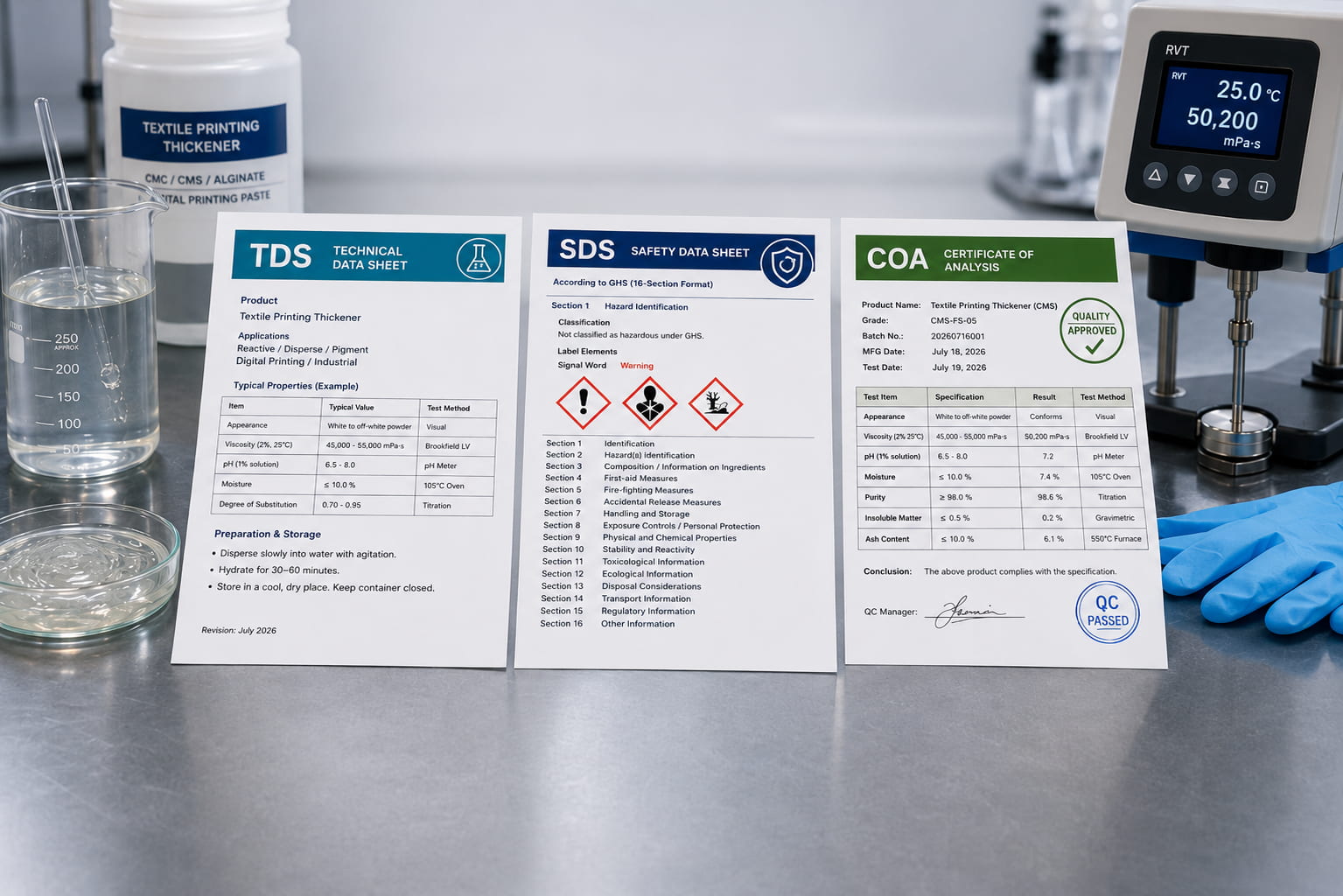
TDS for Specification Review
The Technical Data Sheet helps buyers review the standard specification range. It should include key parameters such as appearance, viscosity, mesh size, moisture, pH, storage conditions, and testing method.
For viscosity-related products, confirm that the TDS method and revision match the agreed specification. An independently measured result made at another concentration, temperature, spindle or speed cannot be judged against that range without an agreed comparison method.
COA for Batch Confirmation
A supplier COA reports the selected test results for the grade and lot stated on the document. Match the batch number to the delivered labels and compare each reported method, unit and result with the agreed specification. The document is not independent verification of all results or evidence of every application, safety or environmental claim.
Trend comparable COA results across lots, and apply the agreed incoming verification plan. Investigate a mismatch before using the delivery; do not silently adjust the paste until it passes. Keep the questioned lot identified and separate while the buyer and supplier resolve the cause and disposition.
SDS for Handling and Transport Review
The Safety Data Sheet supports handling, storage, transport, and internal safety review. For international purchasing, SDS may also be needed for shipment and customs-related communication.
Buyers should make sure the SDS product name and supplier information match the order documents.
Export Documents and Labels
For overseas orders, buyers may need invoice, packing list, COA, SDS, labels, batch information, and other shipment-related documents. The required document list may vary by destination country, product type, and internal purchasing process.
Document requirements should be confirmed before shipment rather than after goods are dispatched.
How to Test Industrial Grade Sodium Alginate Before Bulk Orders
Test in the Actual Paste or Formulation
Sample testing should be done in the buyer’s own formulation whenever possible. Dyes, auxiliaries, water quality, pH, stirring method, preparation time, and storage conditions can all affect the final result.
Testing only in clean water may not be enough to confirm whether the grade is suitable for actual production.
Observe Dissolution, Filtration and Handling
During testing, buyers should observe dissolution speed, paste smoothness, lumps, filtration behavior, viscosity stability, and application handling.
For textile printing paste, these practical observations are often as important as the basic specification data shown in the TDS.
Compare Sample Approval with Bulk Supply
Before confirming a bulk order, buyers should check whether the approved sample and bulk shipment will follow the same viscosity range, mesh size, packaging format, batch traceability, and COA requirements.
For the first delivery, use a documented receipt-to-trial sequence: confirm label and document identity; sample under the agreed plan; prepare the solution with the approved method; compare the full paste and finished print with the retained reference; and record the authorized disposition. Hold a lot with unresolved identity or critical specification failures. A controlled trial is not unrestricted production approval.
Bulk Supply Points Buyers Should Confirm
Packaging Size and Storage Conditions
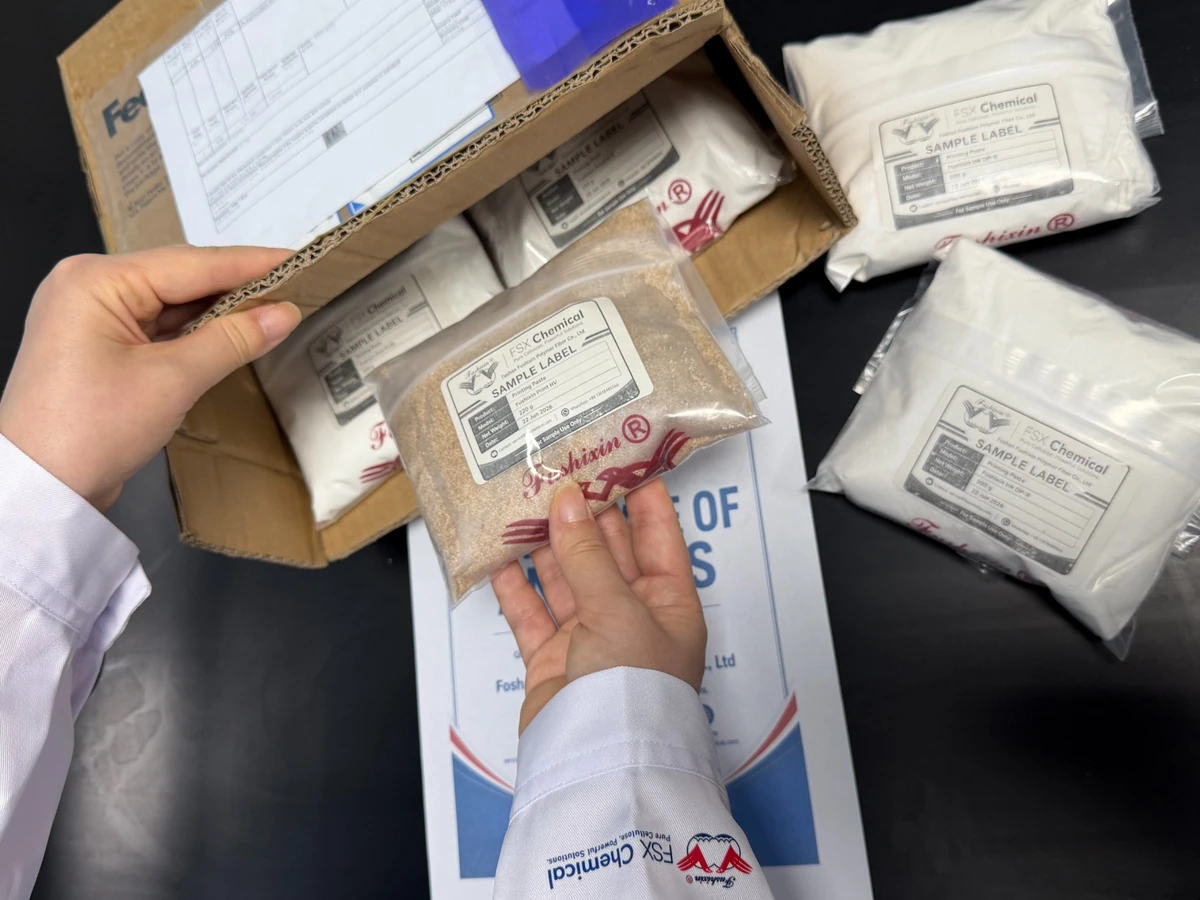
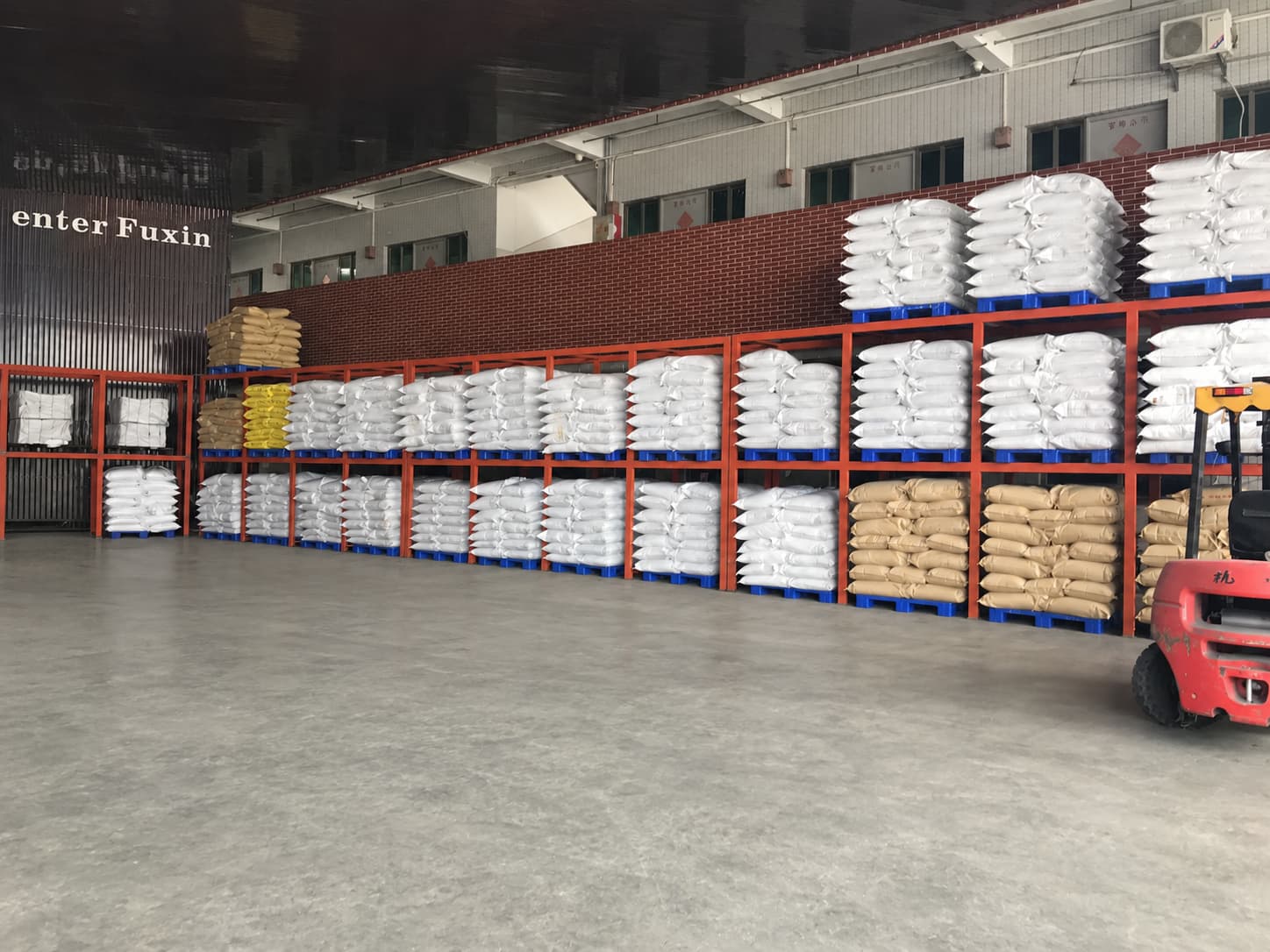
Packaging size, bag type, net weight, pallet requirements, and storage conditions should be confirmed before shipment. These details affect warehouse handling and repeat order management.
If the buyer has specific packaging or label requirements, they should be discussed before order confirmation.
Batch Traceability
Batch traceability is important for quality control and customer feedback handling. Buyers should confirm batch number, production date where applicable, label information, and COA availability.
Connect the supplier lot, received quantity, COA, retained sample, test record and production-use record. If the commercial grade, manufacturing source or agreed specification changes, obtain a documented review of whether requalification is needed; do not extend an old approval solely because the product name is unchanged.
Realistic Supply Communication
Buyers should be cautious with broad claims such as “fast global supply,” “sustainable supply,” or “high-performance solution” unless these claims are supported by real documents, agreed terms, or test data.
A practical supplier should communicate clearly about product specifications, available documents, sample testing, packaging, and shipment preparation.
How FSX Chemical Supports Sodium Alginate Supply

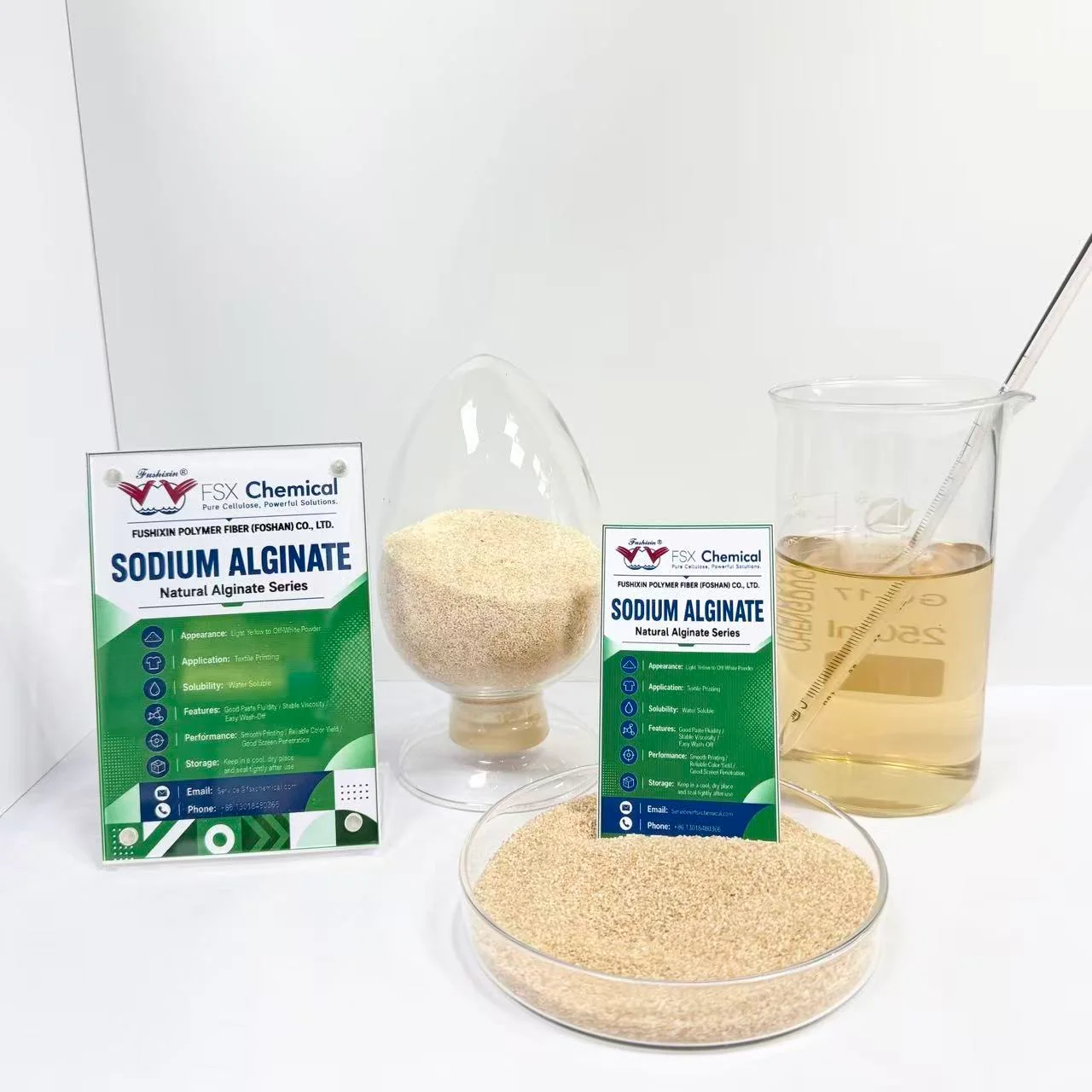
FSX Chemical’s sodium alginate product information provides a route to grade and document requests. Confirm the current commercial grade and its applicable documents before comparing a sample or bulk offer.
Our support is focused on practical grade matching and export procurement. We can provide TDS, COA, SDS where applicable, sample support, and grade matching suggestions based on the customer’s printing process, target viscosity, fabric type, paste formulation, packaging needs, and document requirements.
We do not suggest confirming industrial grade sodium alginate supply only by price, broad performance claims, or general supply statements. The recommended grade should be reviewed through technical documents and tested in the buyer’s own formulation before bulk purchase.
Next Steps
- Request a TDS — review viscosity range, mesh size, pH, moisture, appearance, storage conditions, and testing method.
- Request a COA — confirm whether batch data matches the agreed specification range before shipment.
- Ask for Grade Matching — share your application, printing process, fabric type, target viscosity, current formulation, and existing product grade if available.
- Үлгіні сұрау — test the recommended sodium alginate grade in your own paste preparation or formulation conditions before confirming bulk orders.
- Confirm Packaging and Export Documents — check bag size, labels, batch traceability, SDS, invoice, packing list, and other required documents before shipment.
- FSX Chemical-пен байланысыңыз — share the intended printing route, current grade and required batch checks. Email: service@fsxchemical.com.