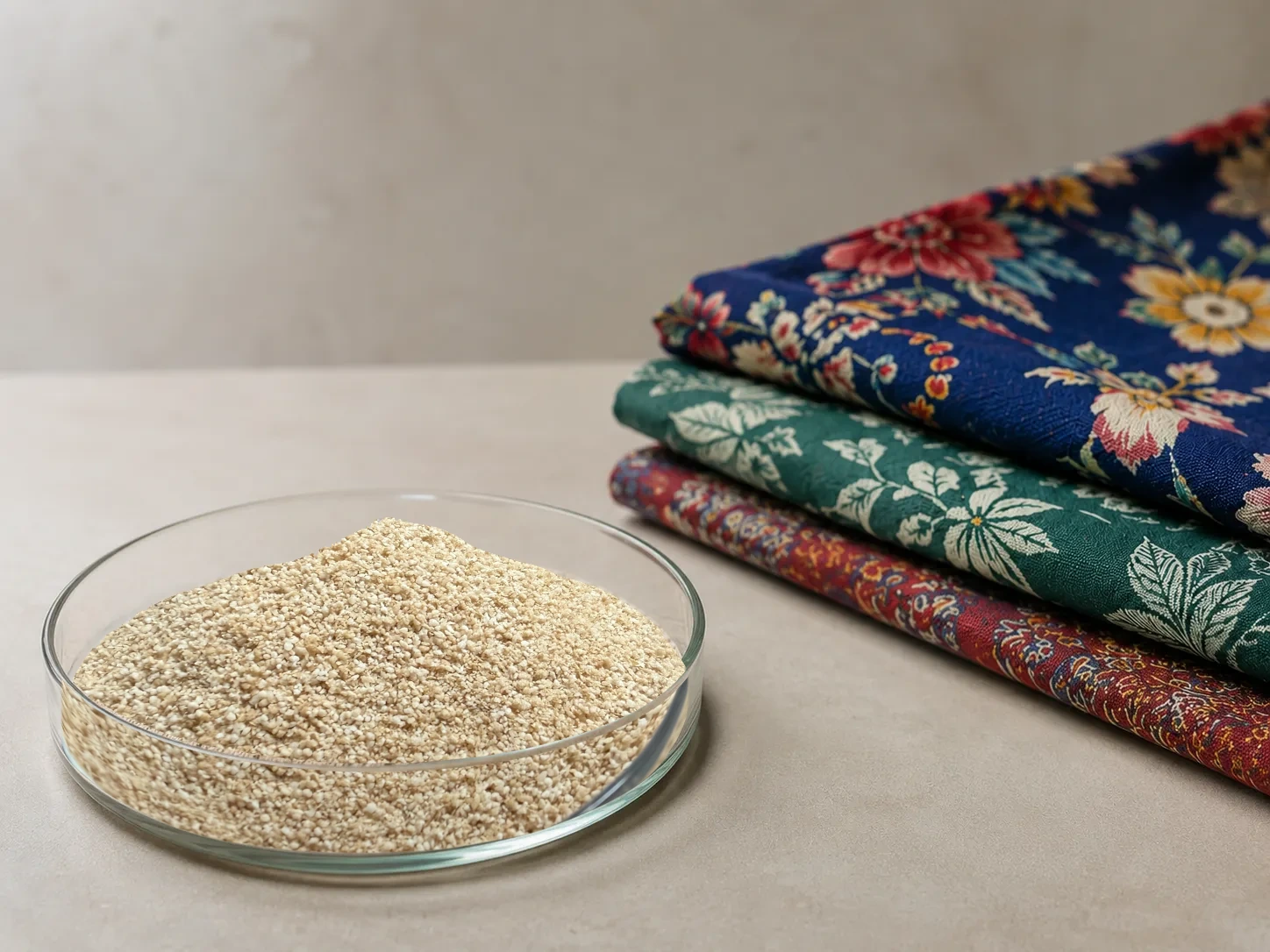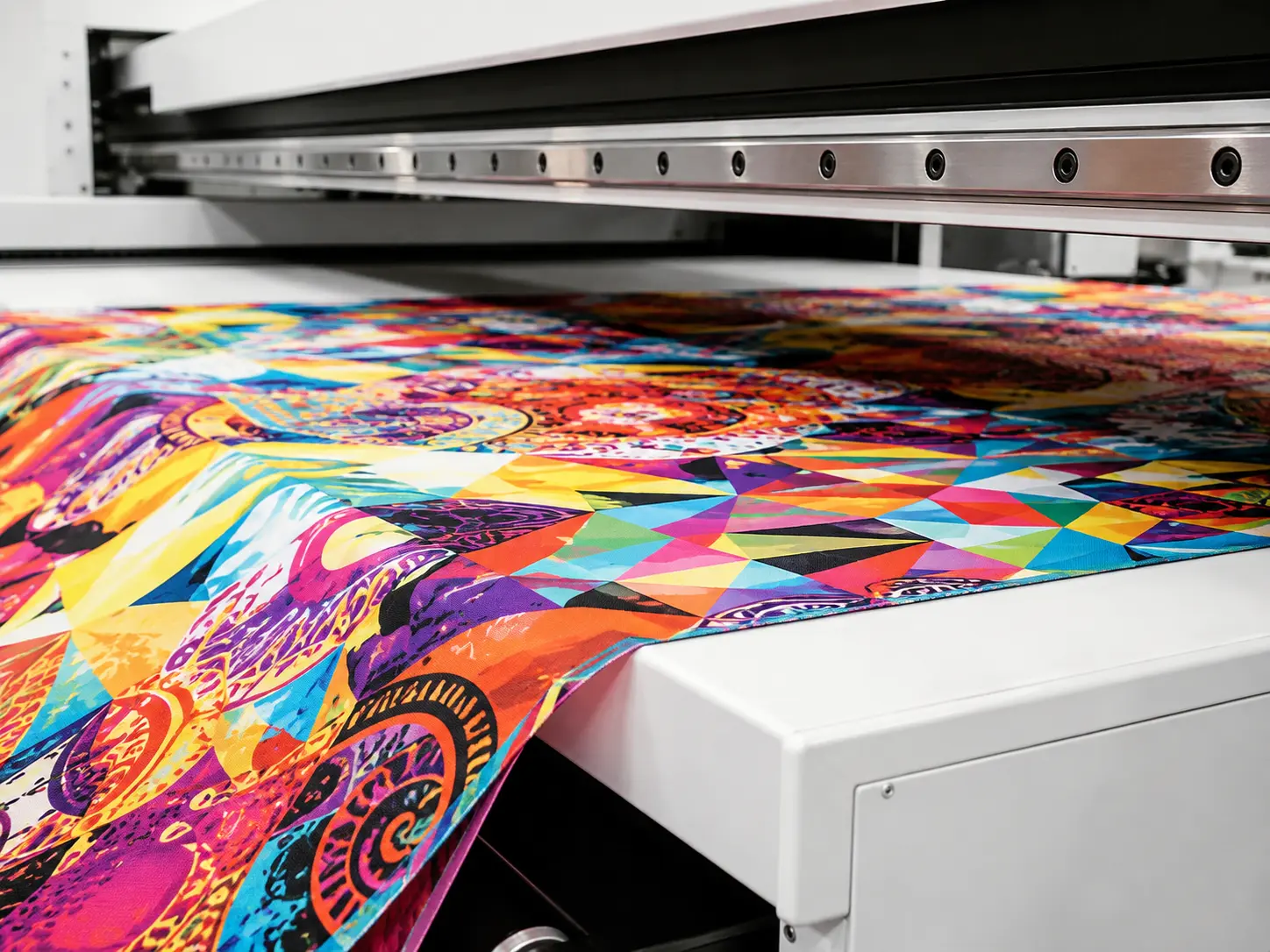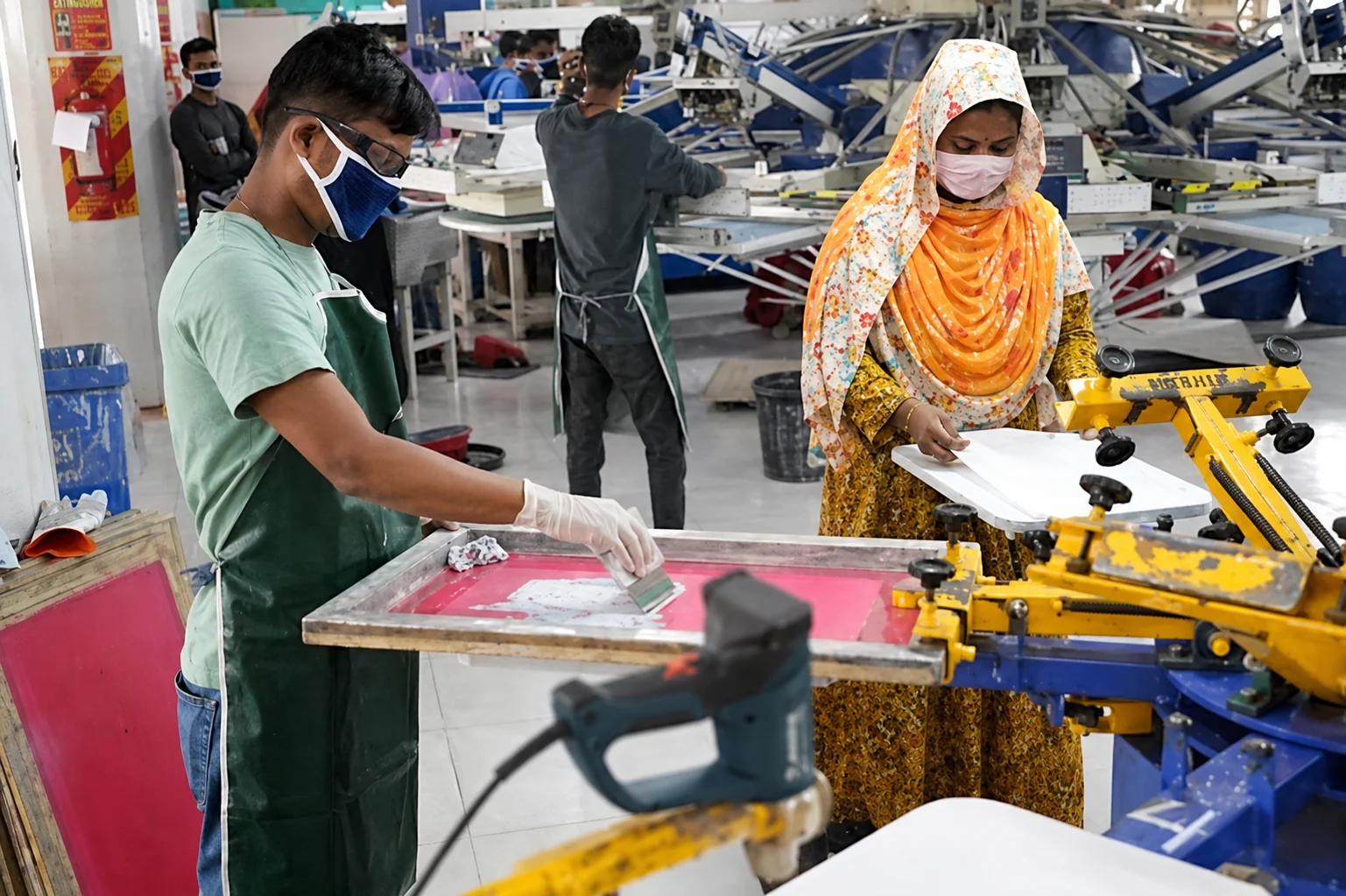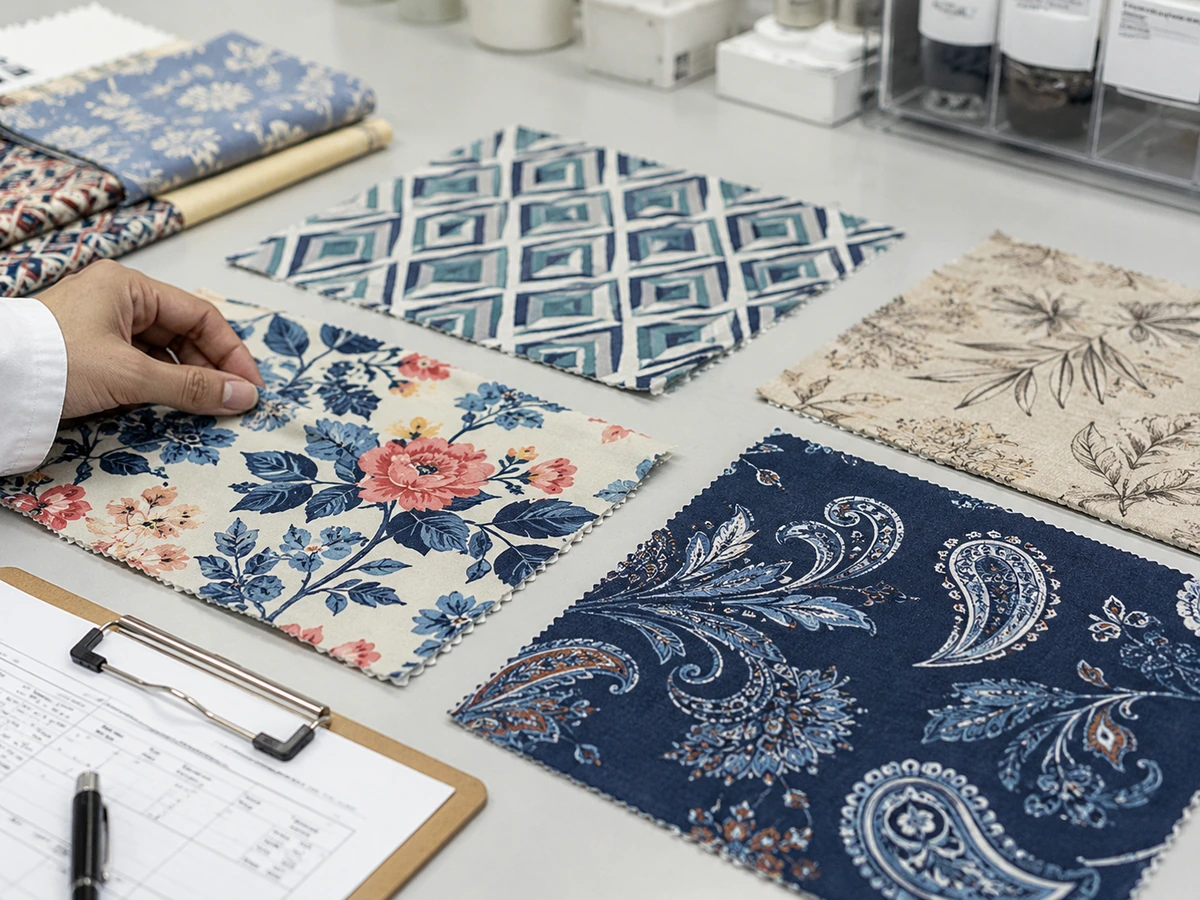















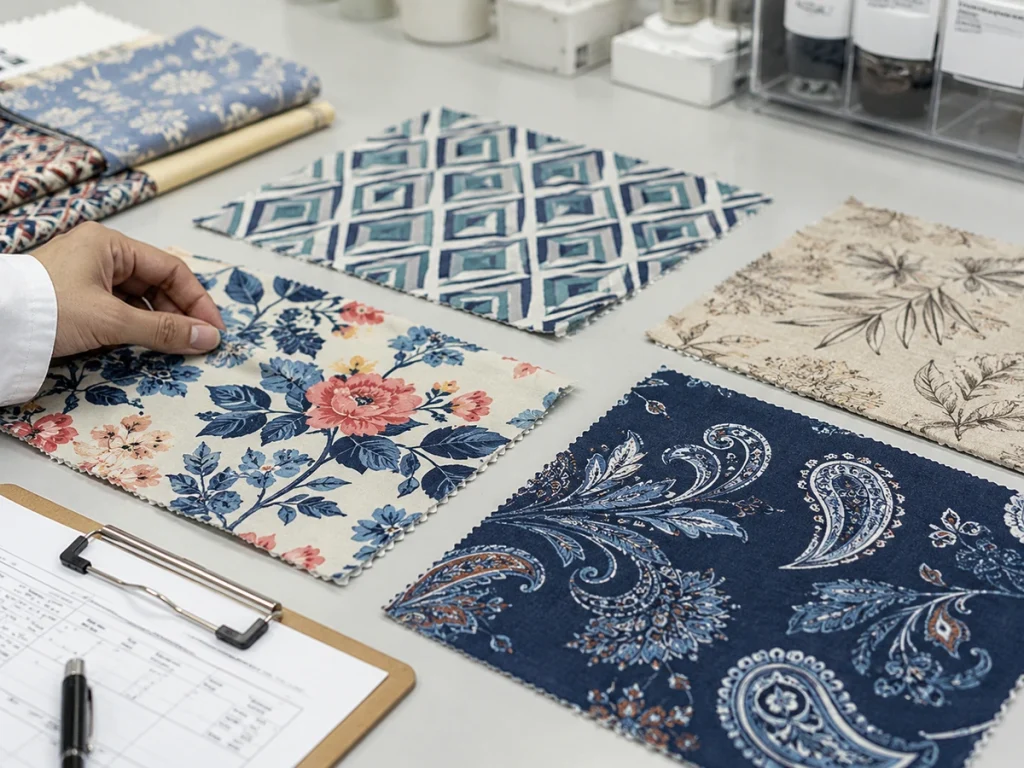
A printing thickener is not selected only to reach a target viscosity. It must help the paste move through the printing system, transfer to the fabric, recover after shear, hold the printed pattern and remain compatible with the colorant and auxiliaries.
The thickener must also tolerate storage, fixation and post-treatment conditions. A grade that performs well in reactive printing on cotton may not work in pigment printing on polyester or in a digital pretreatment formula.
This guide covers the main commercial thickener families used in textile printing. The applications described below are starting directions rather than universal recommendations. Final suitability should be confirmed through grade-specific TDS review and controlled printing trials.
What Does a Textile Printing Thickener Do?
A textile printing paste usually contains a dye or pigment, a thickener and the auxiliaries required for the selected fixation process. The thickener provides the physical structure that allows the paste to be handled and applied in a controlled pattern.
The main functions of a printing thickener
- Build the required stock-paste and color-paste viscosity
- Control flow during mixing, pumping and printing
- Support screen transfer and paste release
- Reduce uncontrolled spreading after application
- Balance surface coverage and fabric penetration
- Keep dyes, pigments and auxiliaries uniformly distributed
- Remain stable during the normal paste-holding period
- Support practical fixation and post-treatment
- Leave the fabric during washing when the process requires removal
These functions depend on rheology, not only on one viscosity result. Pastes with similar apparent viscosity can behave differently under screen or squeegee shear.
Quick Comparison of Textile Printing Thickener Types
| Thickener family | Common application direction | Important selection concerns |
|---|---|---|
| سوڈیم الگینٹ | Reactive printing on cotton, viscose and selected other substrates | Viscosity method, hydration, water quality, filtration, print definition and wash-off |
| Carboxymethyl starch (CMS) | Selected reactive, disperse, vat, discharge, pigment or blended-thickener systems | Grade-specific application, confirmed chemistry, substitution where applicable, alkali stability, rheology and dye compatibility |
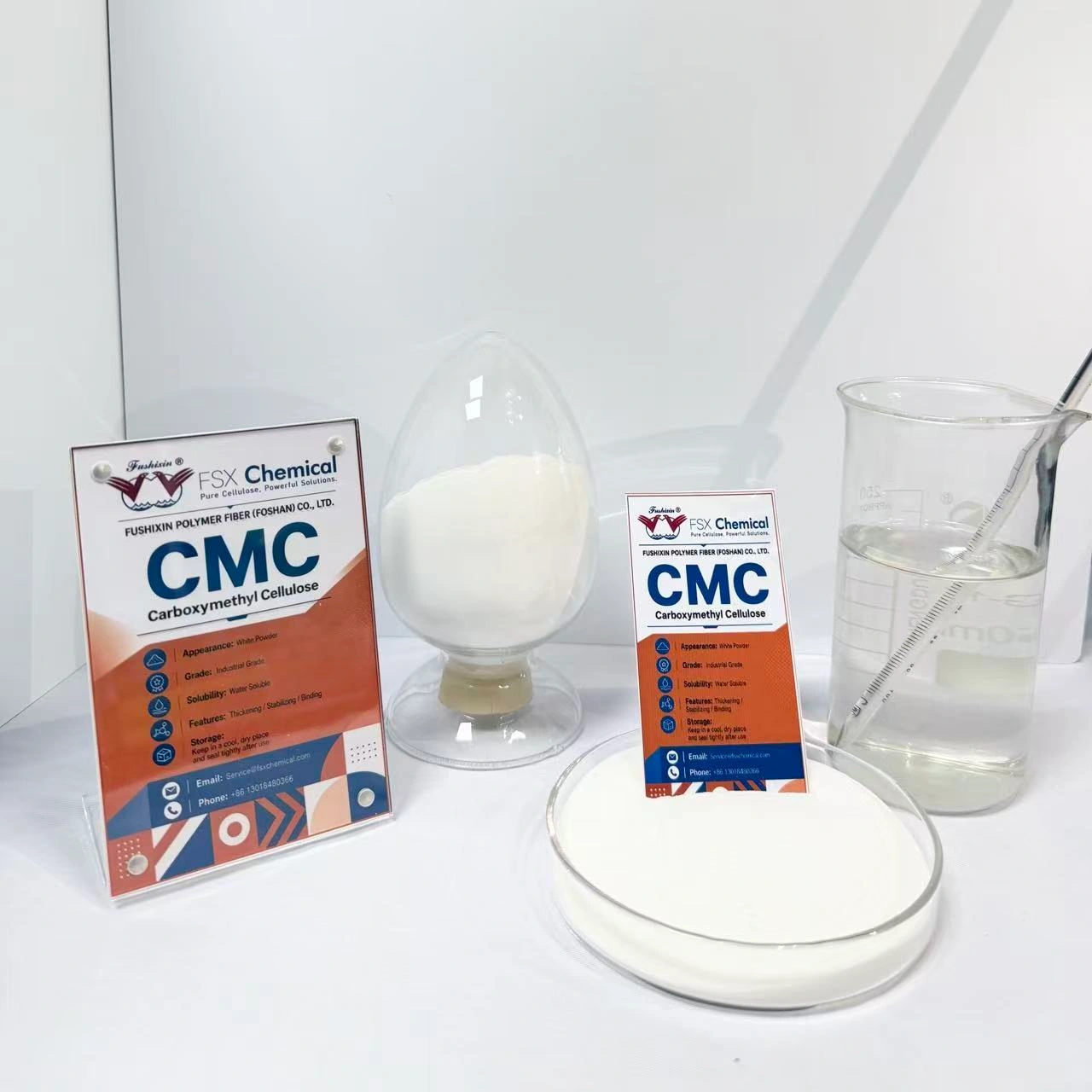
| Carboxymethyl cellulose (CMC) | Selected pigment, supporting thickener, specialty printing and industrial paste systems | Degree of substitution, salts, solubility, binder compatibility and reactive-dye limitations |
| Modified starch thickeners | Selected disperse, vat, discharge and conventional printing systems | Modification type, film formation, wash-off, dye interaction and fabric handle |
| Guar gum derivatives | Selected acid, disperse, reactive and specialty printing systems | Modification level, hydration, dye interaction, residue and batch consistency |
| Tamarind and other seed gums | Selected conventional dye-printing and blended-thickener systems | Purity, modification, filtration, microbial stability and application scope |
| Xanthan and microbial polysaccharides | Specialty formulations and rheology adjustment | High elasticity, recovery, stringiness, wash-off and compatibility |
| Synthetic polyacrylate thickeners | Pigment printing and selected process-specific formulations | Electrolyte sensitivity, pH activation, binder compatibility and storage stability |
| Emulsion thickening systems | Traditional or legacy pigment-printing formulations | Hydrocarbon content, VOC, fire safety, SDS, ventilation and local restrictions |
| Compound or blended thickeners | Application-specific reactive, pigment, disperse and cost-performance formulations | Composition, reproducibility, compatibility and supplier-specific preparation method |
| Digital printing pretreatment pastes | Reactive, acid, disperse or pigment inkjet pretreatment according to the ink and fabric | Filtration, coating uniformity, drying, ink response and storage stability |
1. Sodium Alginate
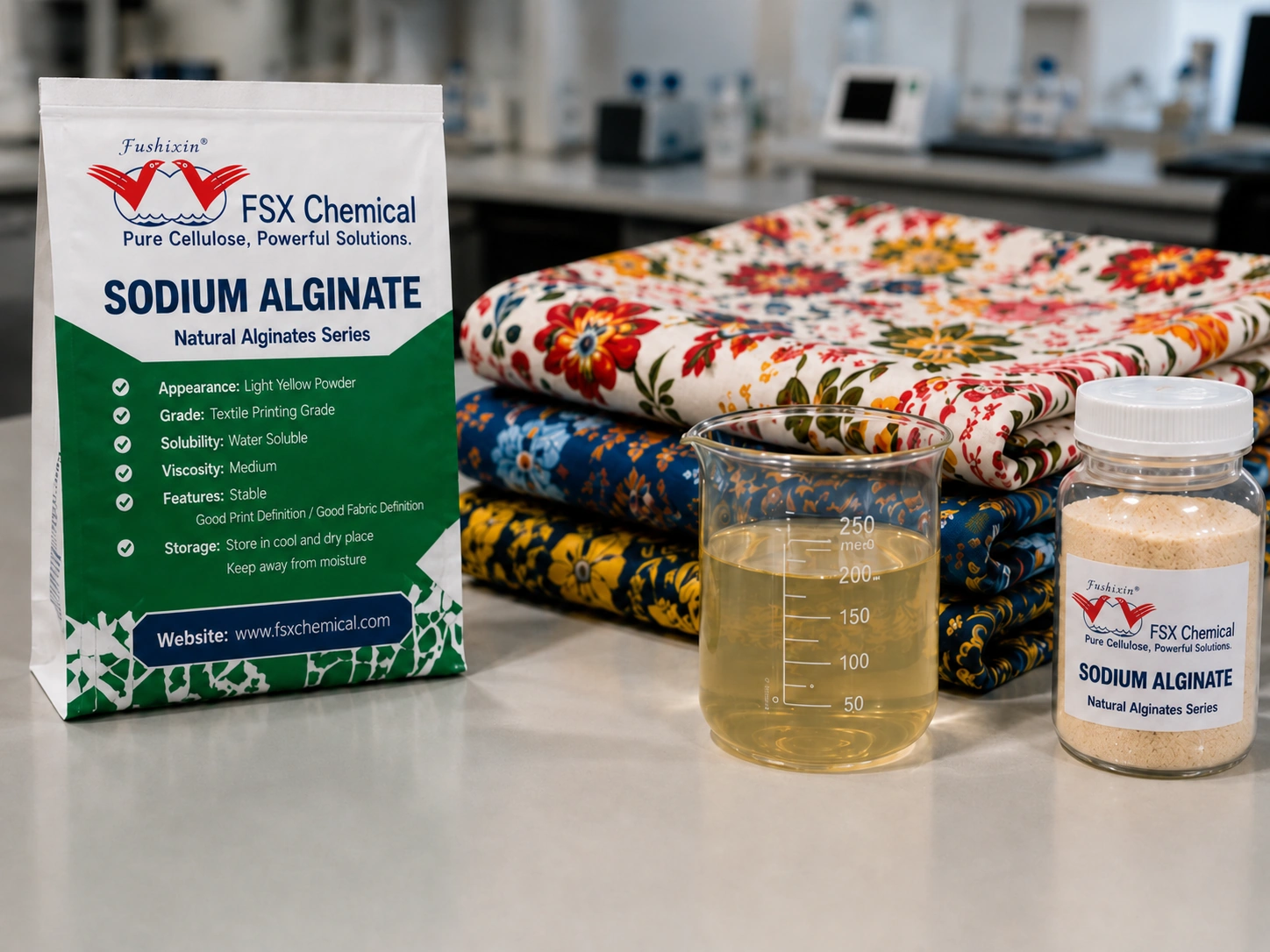
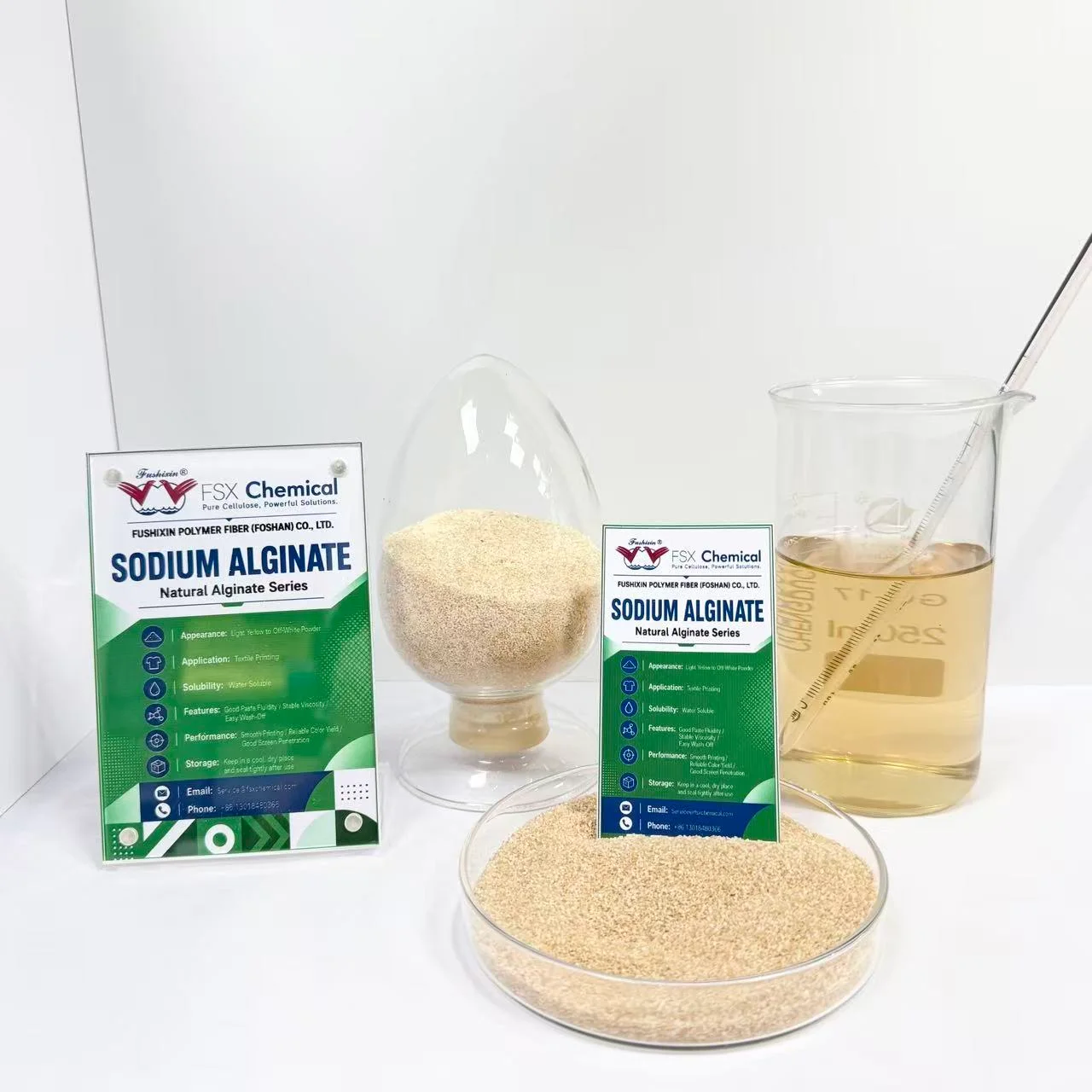
سوڈیم الگینٹ is one of the most established thickeners for reactive dye printing on cotton, viscose and other suitable substrates.
Its chemical structure has a relatively low tendency to react with reactive dyes compared with many unmodified starch- or cellulose-based gums. This helps make it suitable for processes in which the dye should remain available for reaction with the fibre.
Common application directions
- Reactive screen printing on cotton
- Reactive screen printing on viscose
- Selected reactive printing on silk or other substrates after separate validation
- Selected reactive digital-printing pretreatment systems
Advantages to evaluate
- Established compatibility direction for reactive dyes
- Useful paste body and screen-transfer behavior
- Potential for clean print definition
- Practical wash-off when the grade and process are matched
- Availability in different viscosity directions
Purchasing concerns
HV, MV and LV are not universal standards. Buyers must compare the viscosity concentration, temperature, hydration time and test method.
Water hardness, multivalent ions, powder moisture, mixing conditions and incomplete hydration can affect paste behavior. Grade selection should include filtration, screen performance, fixation and washing-off—not viscosity alone.
2. Carboxymethyl Starch (CMS)
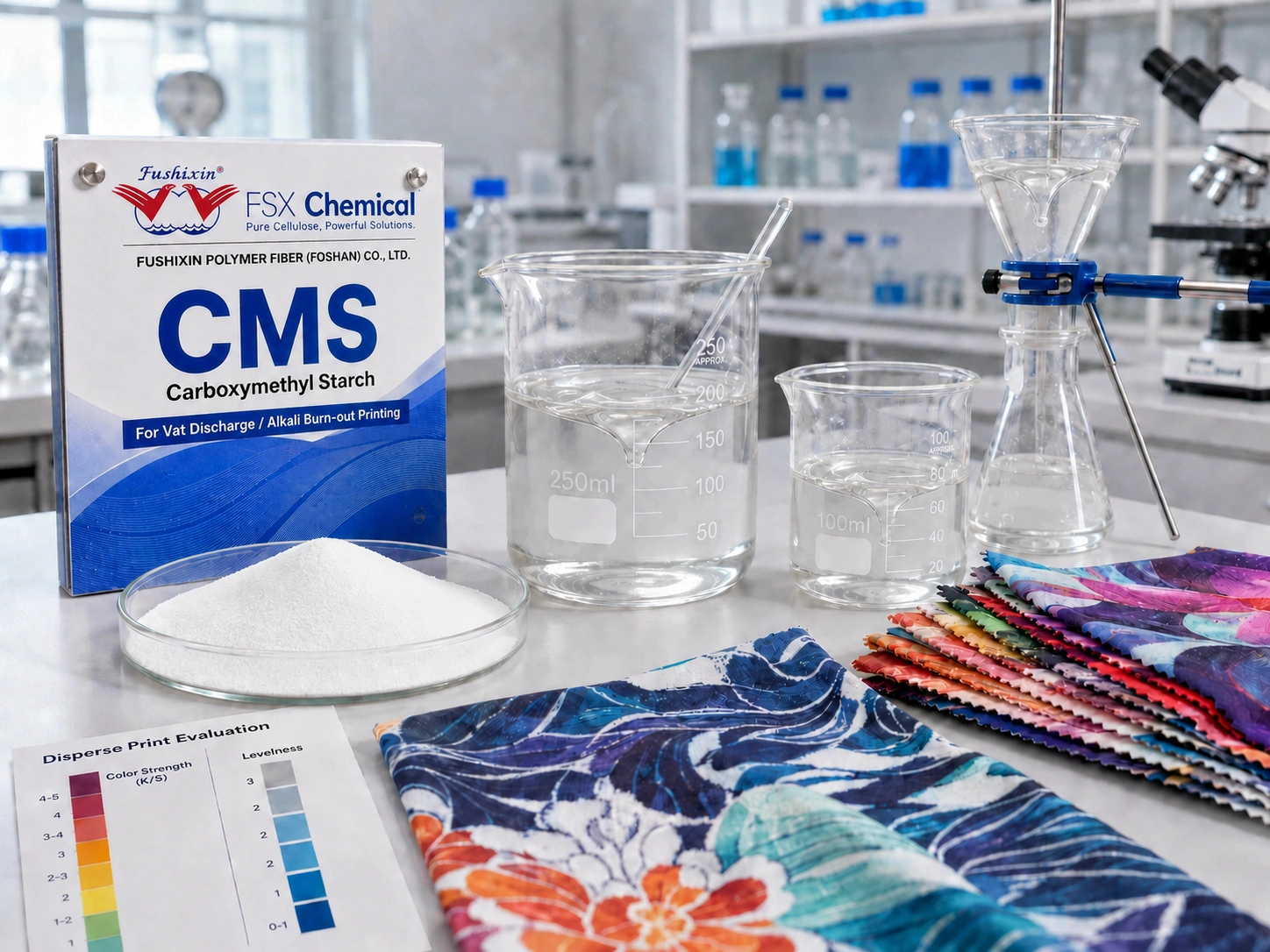
کاربوکسی میتھل نشاستہ is a modified starch in which carboxymethyl groups are introduced to change solubility, viscosity, dye interaction and process stability.
For a material confirmed as carboxymethyl starch, starch source, degree of substitution and other modifications may affect suitability. An FSX commercial thickener route or compound formulation must instead be assessed from its own product identity, current TDS and application tests; the CMS category label alone does not establish its full chemistry.
Common application directions
- Selected reactive printing grades
- Disperse printing on polyester
- Vat and discharge printing systems
- Selected pigment-printing formulations
- Blended or compound thickener systems
Advantages to evaluate
- Flexible viscosity and substitution directions
- Potential use in several dye-printing processes
- Ability to support compound formulations
- Possible cost-performance adjustment relative to other thickener routes
Purchasing concerns
A CMS grade intended for disperse printing should not automatically be used in reactive, vat or discharge printing. Confirm the intended process on the TDS.
For reactive printing, review dye compatibility carefully. Research on mixed alginate, CMS and synthetic systems shows that rheology and printing results can be dye-dependent.
Important parameters include viscosity test conditions, degree of substitution where specified, solubility, paste stability, alkali or reducing-agent tolerance, wash-off and final fabric handle.
3. Carboxymethyl Cellulose (CMC)
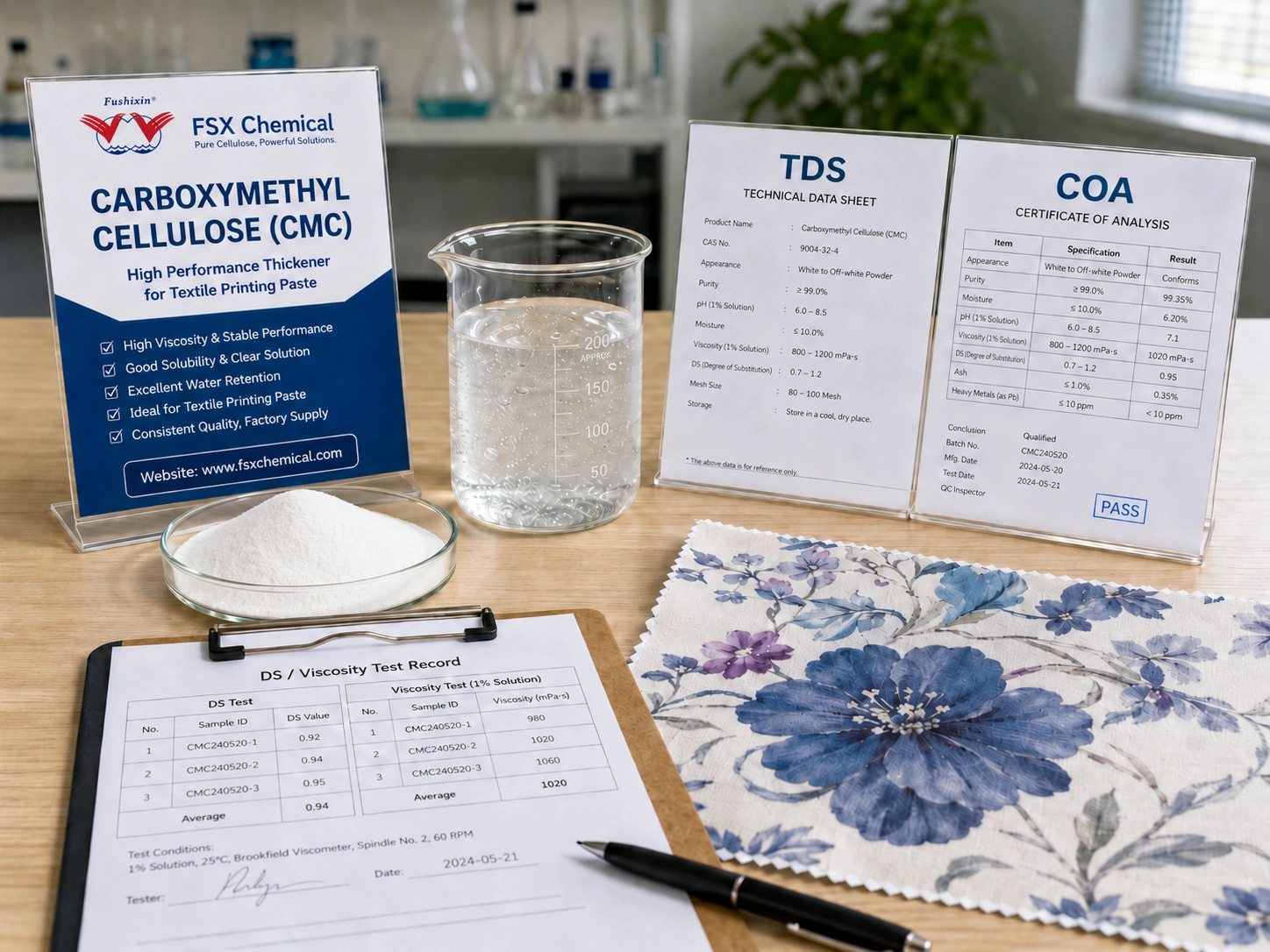
کاربوکسی میتھل سیلولوز is a water-soluble cellulose derivative used as a rheology modifier, thickener, binder-supporting material and film-forming polymer.
Common application directions
- Selected pigment-printing formulations
- Supporting component in compound thickener systems
- Selected specialty dye-printing routes
- Textile sizing and related industrial applications
- Selected digital pretreatment formulations
Advantages to evaluate
- Wide viscosity range
- Water solubility in appropriate grades
- Useful film-forming and binding characteristics
- Compatibility with selected pigment and auxiliary systems
Purchasing concerns
CMC should not be treated as a universal replacement for sodium alginate in reactive dye printing. Reactive dyes can interact with hydroxyl groups in inadequately substituted cellulose derivatives.
Highly substituted or specially designed CMC grades may be evaluated in selected reactive processes, but application suitability must be confirmed by the supplier and through printing trials.
Compare degree of substitution, viscosity method, purity-related specifications, residual salts, pH, dissolution and compatibility with the binder, pigment or dye system.
4. Modified Starch Thickeners
Native starch has a long history in textile printing, but unmodified starch has limitations in solubility, preparation, dye interaction, film formation and washing-off. Chemical or physical modification is therefore commonly used to adjust its performance.
Common modified starch types
- Carboxymethylated starch
- Oxidized starch
- Hydroxyalkyl starch
- Starch ethers and esters
- Crosslinked or compound starch systems
Common application directions
- Disperse dye printing
- Vat and discharge printing
- Selected acid or direct dye systems
- Blended thickener formulations
Purchasing concerns
The term “modified starch” does not identify the exact chemistry. Buyers should request the application scope, modification type, viscosity method, preparation procedure and compatibility guidance.
Evaluate film formation, fabric stiffness, residue, washing-off, storage stability and reaction with the selected dye system.
5. Guar Gum and Guar Derivatives
Guar gum is a galactomannan polysaccharide obtained from guar seeds. Native guar hydrates strongly in water, while modified guar grades are designed to adjust solubility, rheology and chemical compatibility.
Common guar derivatives
- Carboxymethyl guar
- Hydroxypropyl guar
- Carboxymethyl hydroxypropyl guar
- Oxidized or specially modified guar
Common application directions
- Selected acid dye printing
- Selected disperse or conventional printing systems
- Specially modified grades for reactive printing
- Blended polysaccharide thickener systems
Purchasing concerns
Native guar contains functional groups that can interact with reactive dyes or contribute to fabric stiffness and difficult wash-off. Reactive-printing use should therefore be limited to appropriately modified grades with supporting application data.
Check hydration time, filtration, substitution, microbial stability, paste recovery, residue and batch consistency.
6. Tamarind Seed Gum and Other Plant Gums
Tamarind seed gum, locust bean gum and other plant-derived polysaccharides have been used in textile printing, often after modification or as components of blended systems.
Possible application directions
- Selected conventional dye-printing pastes
- Acid or disperse printing routes
- Specialty or regional formulations
- Compound thickeners with starch, alginate or synthetic polymers
Purchasing concerns
Plant-gum performance can vary with raw-material source, purification, modification and microbiological control. Confirm insoluble matter, filtration, storage stability and batch consistency.
Do not assume that a natural gum is automatically more sustainable or safer. Environmental and compliance statements require product-specific evidence and a defined comparison method.
7. Cellulose Ether Specialty Thickeners
In addition to conventional CMC, specialty cellulose ethers such as hydroxyethyl cellulose, hydroxypropyl cellulose and carboxymethyl hydroxypropyl cellulose may be used in selected textile-printing or pretreatment systems.
Possible application directions
- Inkjet-printing pretreatment
- Specialty coating and film-forming systems
- Selected reactive, acid or pigment formulations
- Rheology adjustment in compound products
Purchasing concerns
The balance between viscous and elastic behavior can influence coating uniformity, ink spreading, penetration and printed-line definition. A grade that produces suitable viscosity may still form an unsuitable film or alter fabric handle.
Confirm substitution type, solution clarity, film formation, wash-off and ink or dye compatibility.
8. Xanthan Gum and Microbial Polysaccharides
Xanthan gum is a microbial polysaccharide known for strong shear-thinning and elastic behavior. It can build viscosity efficiently, but its rheology differs significantly from sodium alginate and many starch derivatives.
Possible application directions
- Specialty printing formulations
- Rheology adjustment in blended systems
- Research and modified-polysaccharide applications
Purchasing concerns
Research comparing xanthan and sodium alginate shows that the two can have different thixotropic recovery and viscoelastic behavior at the same concentration.
Potential concerns include excessive elasticity, stringiness, slow structural recovery, difficult washing-off or reduced color response in some reactive systems. Modified grades require application-specific trials.
9. Synthetic Polyacrylate Thickeners
Synthetic polyacrylate thickeners are widely evaluated in pigment printing and other formulations that need high thickening efficiency at relatively low polymer concentration.
Some grades are supplied as emulsions that develop viscosity after neutralization or pH adjustment. Others are designed as ready-to-use synthetic or associative rheology modifiers.
Common application directions
- Pigment printing on cotton, polyester and blends
- Selected coating applications
- Compound thickener systems
- Selected reactive or disperse formulations after compatibility testing
Advantages to evaluate
- اعلیٰ گاڑھا کرنے کی کارکردگی
- Low-solids formulation potential
- Tailored shear-thinning behavior
- Potential for soft fabric handle in suitable formulations
- Consistent industrially designed product properties
Purchasing concerns
Synthetic thickeners can be sensitive to electrolytes, salts, pH and other formulation components. A viscosity result measured in water may not predict behavior in a pigment paste containing binder, pigment dispersion, fixer and auxiliaries.
Evaluate pH activation, electrolyte tolerance, storage stability, binder compatibility, foam, curing conditions and final rubbing performance.
10. Emulsion Thickening Systems
Traditional pigment-printing formulations sometimes use oil-in-water emulsions containing hydrocarbon solvents as the thickening medium. These systems can provide useful printing rheology and low solid residue.
However, their use may be limited by VOC requirements, fire risk, worker exposure, ventilation needs, odor, wastewater controls and local regulations.
Purchasing concerns
- Hydrocarbon type and concentration
- Flash point and fire-safety controls
- VOC and air-emission requirements
- SDS and worker-handling procedures
- Ventilation and storage requirements
- Local regulatory and customer restrictions
Do not replace an emulsion system with a synthetic thickener by changing only one ingredient. The complete pigment paste and curing process should be reformulated and tested.
11. Compound and Blended Thickeners
Compound thickeners combine two or more polymers to balance viscosity, flow, recovery, penetration, wash-off, fabric handle or cost-in-use.
Examples may include alginate-CMS blends, starch-synthetic blends, cellulose-synthetic systems or proprietary combinations designed for one printing route.
Common application directions
- ردعمل پر مبنی طباعت
- Pigment printing
- Disperse printing
- Vat or discharge printing
- Specialty coating and pretreatment
Advantages to evaluate
- Balanced rheological behavior
- Application-specific formulation design
- Potential cost-performance optimization
- Ability to adjust penetration and definition
Purchasing concerns
The performance of a compound product can be difficult to predict from the names of its components. Small formulation changes can alter rheology and dye compatibility.
Request a grade-specific TDS, preparation method and application recommendation. Compare the complete product rather than attempting to judge it only by the listed raw materials.
12. Digital Printing Pretreatment Pastes
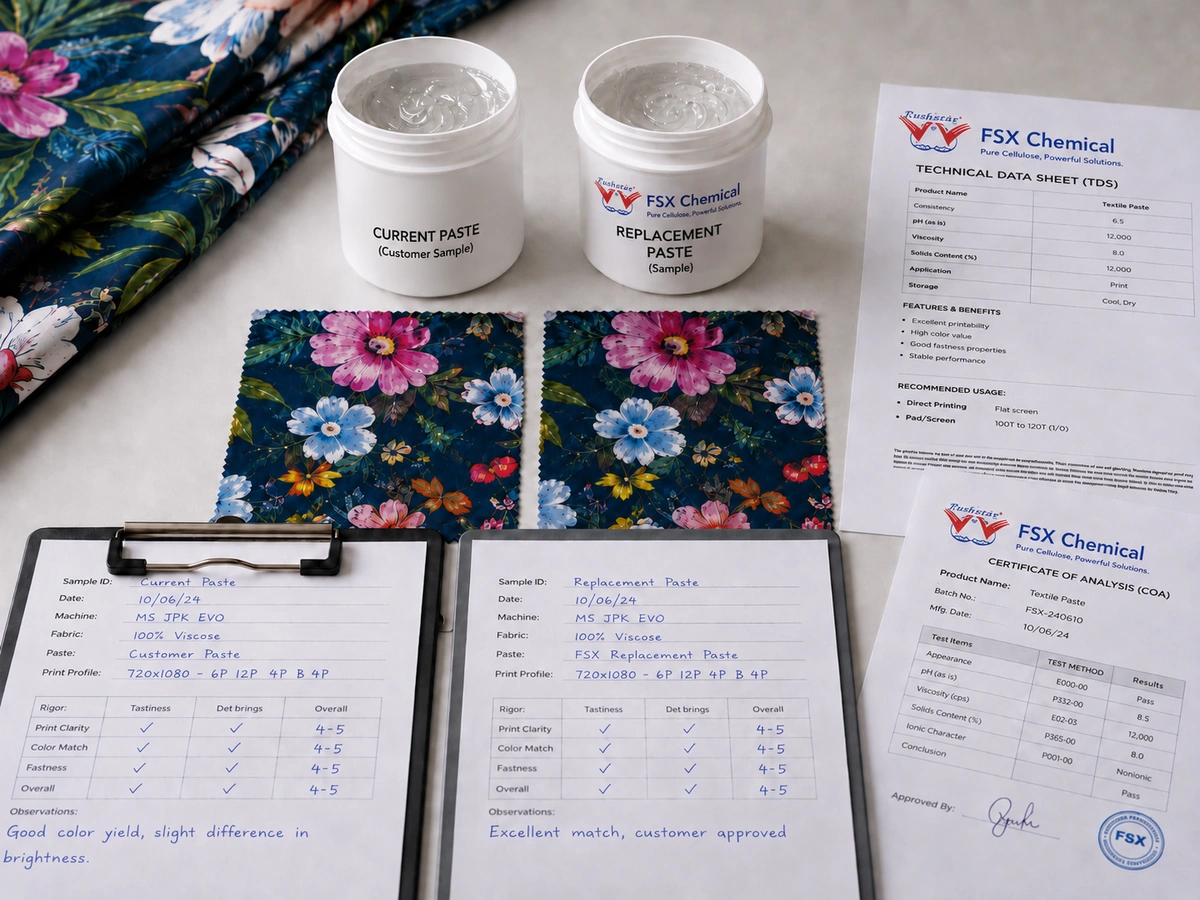
ڈیجیٹل پرنٹنگ پیسٹ and pretreatment products should be treated as dedicated application systems rather than as ordinary screen-printing thickeners.
The pretreatment helps control ink spreading, colorant retention, penetration, fixation and pattern definition. The required chemistry depends on whether the system uses reactive, acid, disperse or pigment ink.
Important evaluation parameters
- ابتدائی چپچپا پن
- Filtration and insoluble matter
- Coating or padding uniformity
- Fabric pickup and drying behavior
- Ink compatibility
- Line definition and color response
- Storage stability
- بھاپ دینے، نمک لگانے یا مستحکم کرنے کے حالات
- Washing-off and final fabric handle
A screen-printing paste should not be transferred directly into a digital pretreatment process. Run a separate coating, printing and post-treatment trial.
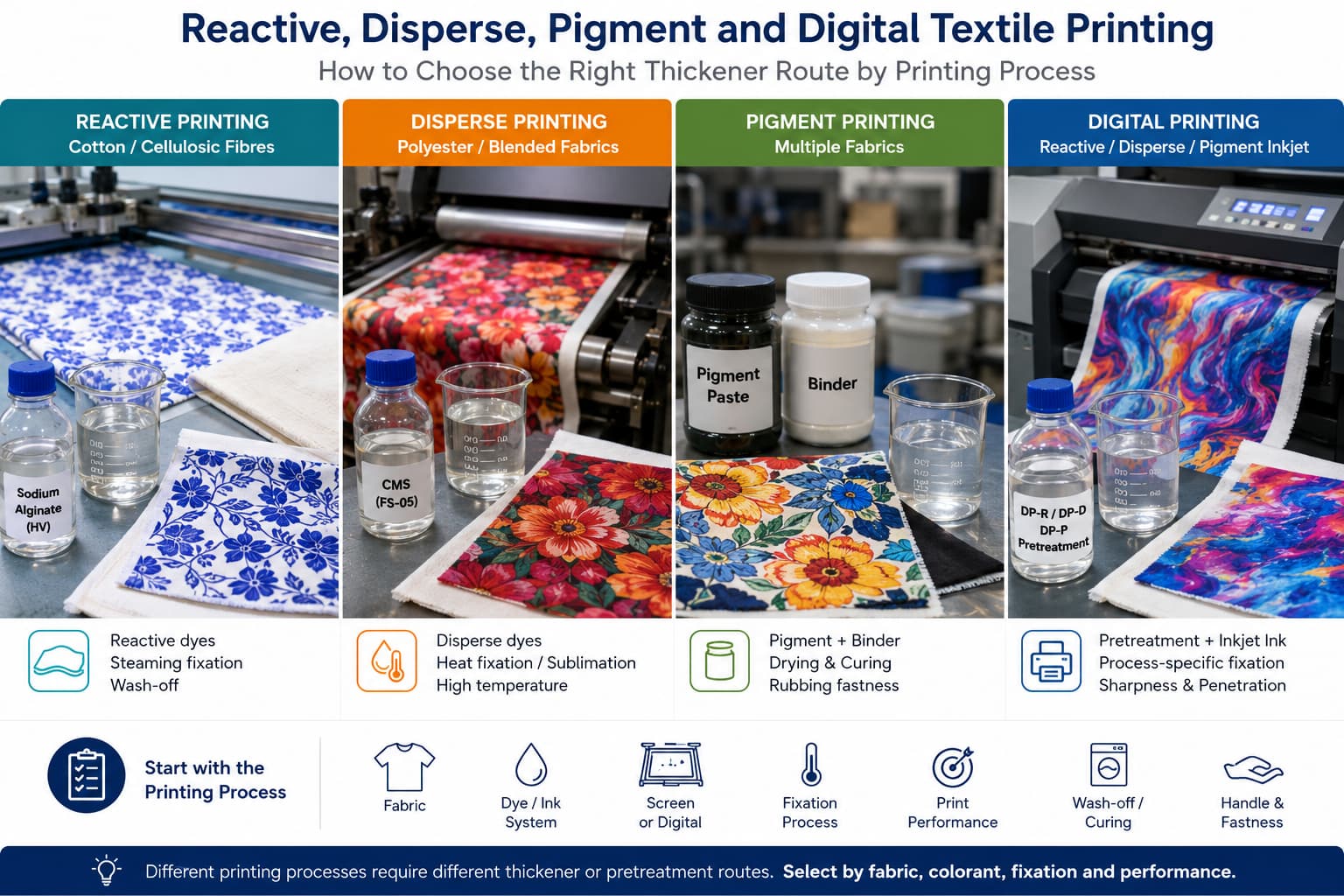
How to Select a Thickener by Printing Process
| چھپائی کا عمل | Common starting directions | What must be verified |
|---|---|---|
| ردعمل پر مبنی طباعت | Sodium alginate; application-validated modified-polysaccharide or compound grades | Dye interaction, viscosity method, alkali stability, fixation, color response and wash-off |
| Pigment printing | Synthetic polyacrylate, selected CMC or CMS, emulsion or compound systems | Binder compatibility, electrolyte tolerance, storage, print definition, curing, rubbing and handle |
| Disperse printing | CMS, modified starch, synthetic or compound thickeners | High-temperature stability, penetration, fixation route, residue and reduction clearing |
| Acid printing | Modified guar, plant gums, alginate or specialty cellulose derivatives | Acid stability, dye compatibility, fibre type, fixation, wash-off and handle |
| Vat or discharge printing | Application-specific CMS, modified starch or resistant compound systems | Alkali or reducing-agent stability, paste holding, discharge effect and washing |
| Digital pretreatment | Dedicated alginate, cellulose derivative, synthetic or compound pretreatment paste | Filtration, application uniformity, ink response, drying, fixation and storage |
This table provides common starting directions only. Thickener chemistry, dye structure and auxiliary composition can create process-specific exceptions.
Specifications Buyers Should Compare
Viscosity test conditions
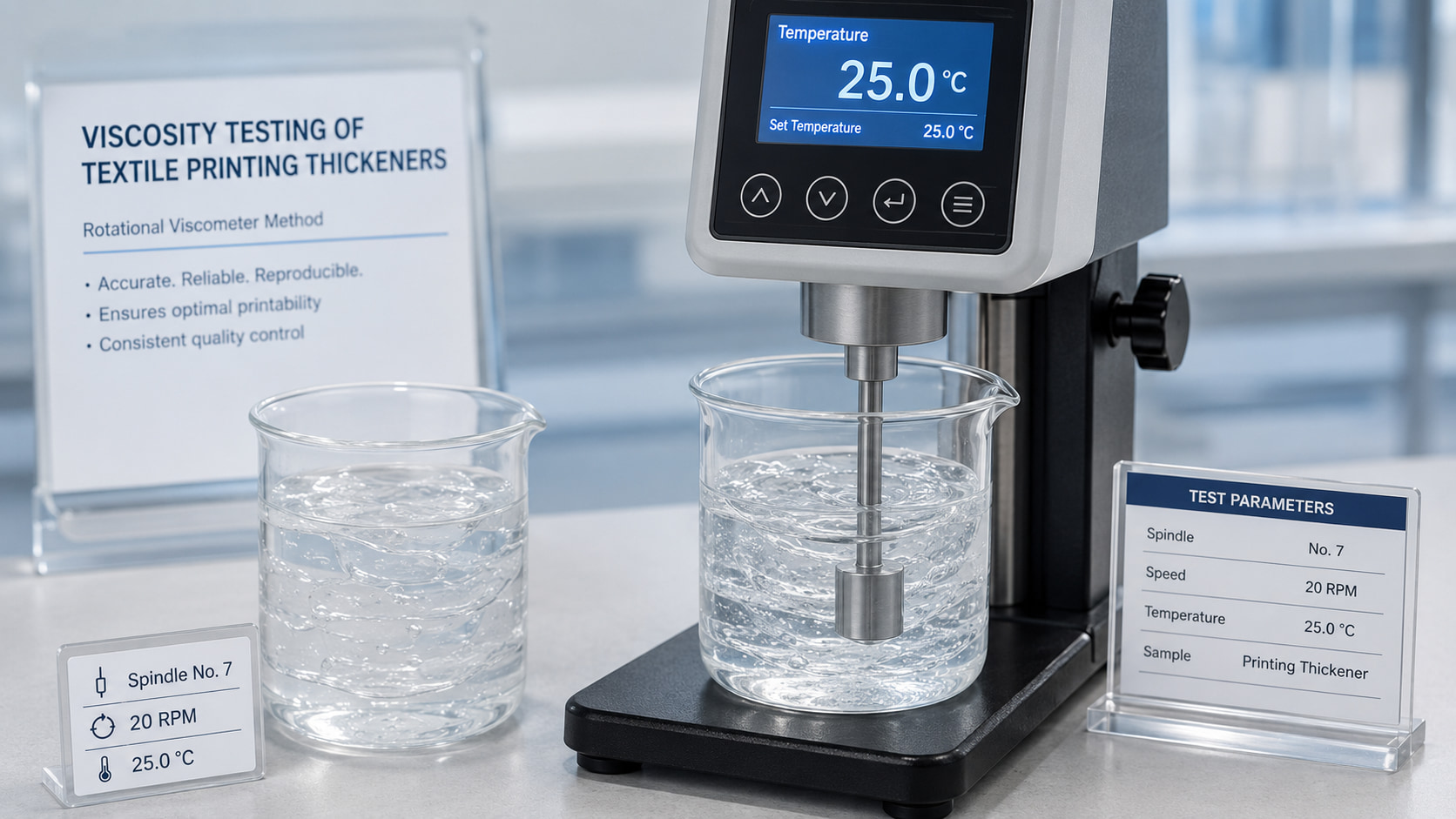
Always compare concentration, temperature, hydration time, instrument, spindle, speed and measurement unit. “High viscosity” is not a complete technical specification.
Rheology and shear recovery
Evaluate how the paste flows under printing shear and how quickly it recovers after application. Screen passing, penetration and edge definition may not correlate with one low-shear viscosity result.
Solids content and working concentration
Compare the amount of thickener required to achieve the target paste behavior. Equal dosage is not always a fair comparison between products with different thickening efficiency.
pH and electrolyte tolerance
Dyes, salts, alkalis, binders, fixers and auxiliaries can change viscosity. Test the candidate in the complete formula, not only in water.
Hydration and filtration
Record wetting, lump formation, hydration time, foam, insoluble matter and filtration behavior using factory-relevant preparation equipment.
استحکام برقرار رکھنا
Monitor viscosity, separation and appearance over the normal production holding period. A paste that is stable for one hour may not remain suitable for an entire production shift.
Wash-off, residue and fabric handle
Evaluate the final printed fabric after the complete fixation and post-treatment process. Thickener residue can affect shade, surface appearance and handle.
بیچ دستاویزات
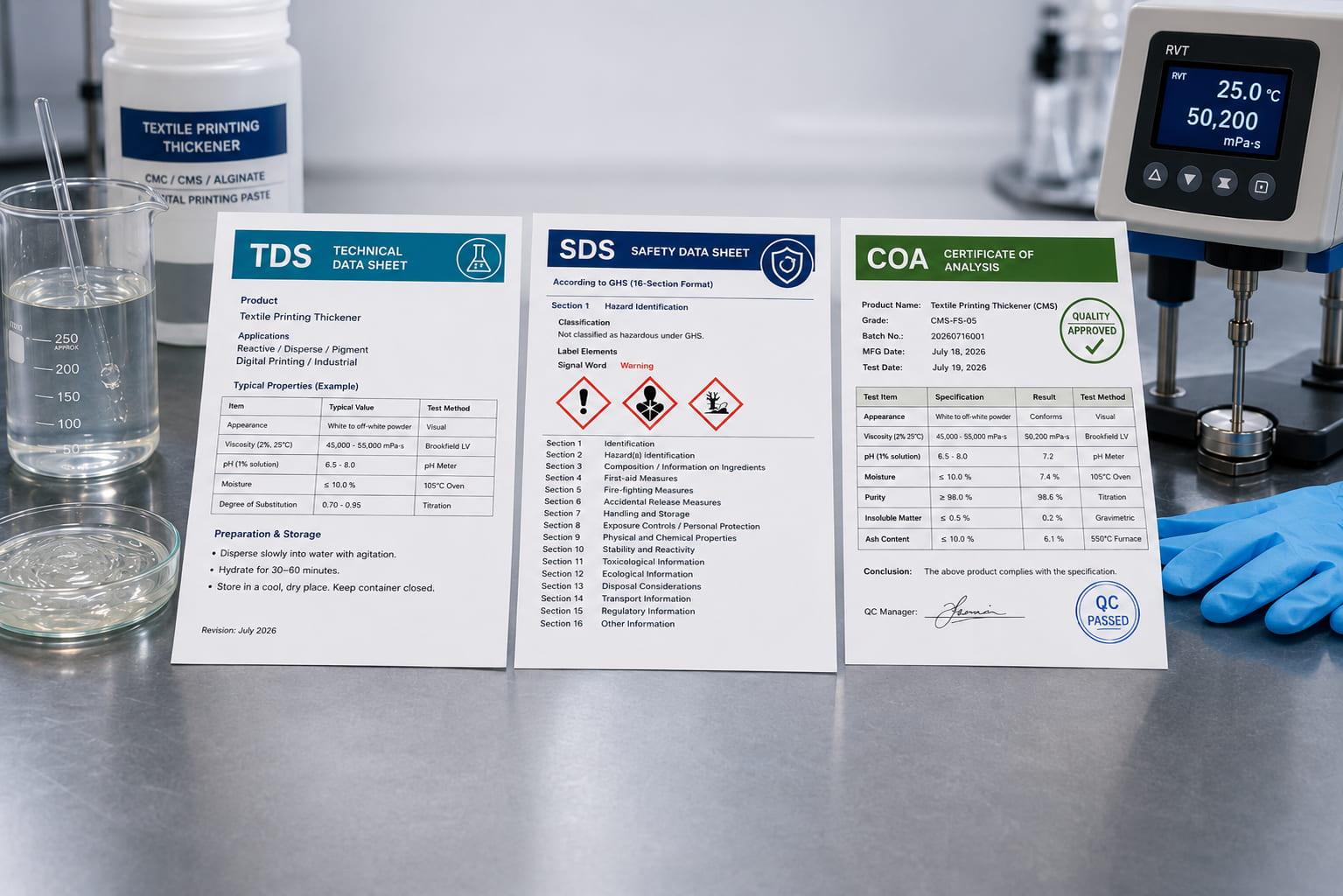
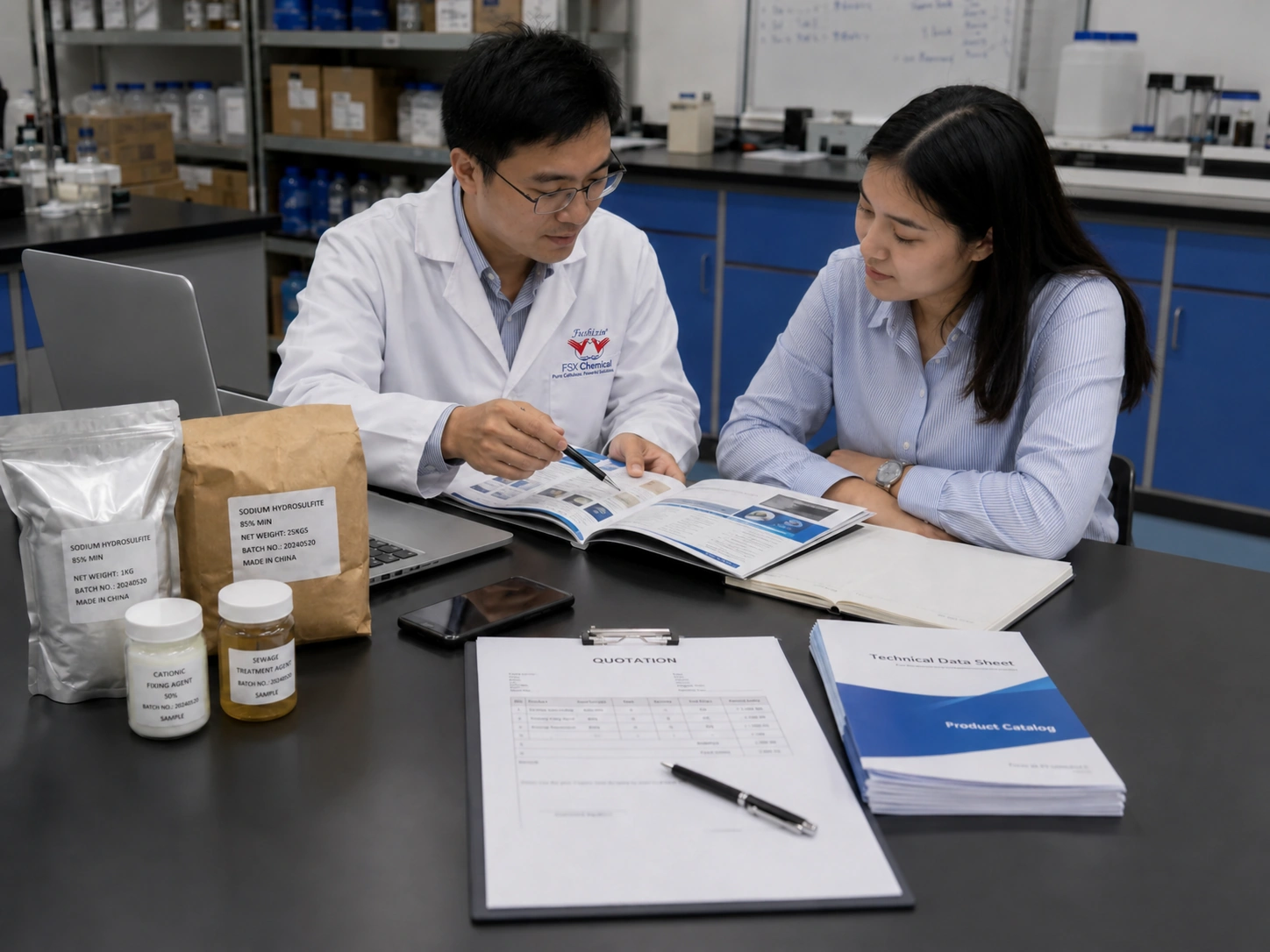
Request TDS, SDS, the agreed specification and a batch-specific COA when available. Confirm packaging, shelf life, batch code and traceability.
How to Run a Fair Thickener Comparison
- Define the application: Record the fabric, dye or pigment, printing method, machine and fixation route.
- Establish the reference: Document the current thickener, formula, viscosity method and production result.
- Normalize preparation: Keep water, temperature, mixing, hydration and resting time consistent.
- Test the base paste: Compare viscosity, rheology, hydration, filtration and holding stability.
- Test the complete formula: Add the actual colorant, binder, alkali, salts and auxiliaries.
- Run a printing trial: Evaluate machine behavior, transfer, definition, penetration and stability.
- Apply the same post-treatment: Compare fixation, wash-off, residue, shade and handle.
- Calculate cost-in-use: Include dosage, preparation, cleaning, downtime and post-treatment.
- Confirm sample-to-bulk controls: Agree on specification, COA, packaging and traceability.
Common Thickener Selection Mistakes
- Selecting by fabric name without confirming the dye or pigment system
- Assuming all natural gums are suitable for reactive dyes
- Treating HV, MV and LV labels as universal specifications
- Comparing viscosity values measured at different concentrations
- Testing the thickener in water but not in the complete formula
- Ignoring salts, binders, alkalis and other auxiliaries
- Approving a product without a printing and post-treatment trial
- Comparing unit price without calculating working dosage
- Assuming one compound thickener will cover every printing route
- Accepting compliance or environmental claims without grade-specific evidence
Textile Printing Thickener FAQ
Which thickener is the usual starting point for reactive printing?
For reactive printing on cotton or viscose, sodium alginate is usually the lower-risk starting route because of its established dye compatibility and wash-off behavior. Selected CMC, CMS or compound systems may be evaluated when the complete formulation and production trial support the change.
Is thickener added directly to textile inkjet ink?
Usually not. In many textile inkjet systems, the thickener is used in a fabric pretreatment or coating rather than in the ink delivered to the printhead. Confirm the ink chemistry, fabric and exact addition point before selecting a digital printing paste.
Can textile printing thickeners be selected by viscosity alone?
No. The same apparent viscosity can hide different shear-thinning, recovery, penetration, filtration, electrolyte response and wash-off behavior. Always compare viscosity under one defined method and evaluate the complete print result.
How should a mill compare an alternative thickener?
Record the reference grade and test method, prepare both samples under identical conditions, test the complete paste and printed fabric, optimize dosage only after the first comparison, and confirm the selected grade in a controlled production trial.
How FSX Chemical Can Support Thickener Selection
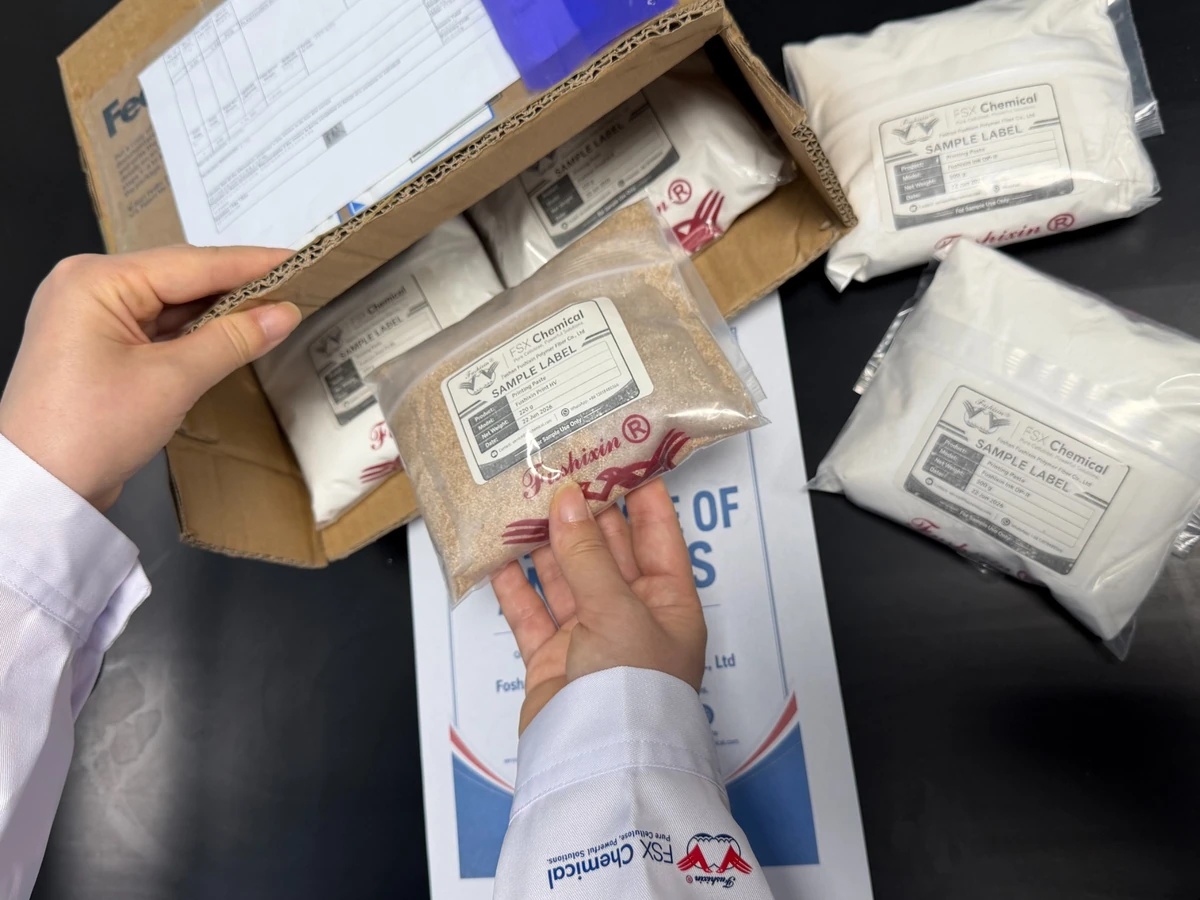
For a more useful grade-matching review, provide:
- Fabric and fibre composition
- رنگ، پگمنٹ یا سیاہی کا نظام
- چھپائی کا طریقہ اور مشین کی قسم
- Current product name, TDS or representative sample information
- Stock-paste concentration and viscosity method
- Complete formula information where confidentiality permits
- Main production problem and required result
- Estimated quantity, packaging requirement and destination
The first recommendation should be treated as a controlled trial direction. Final suitability remains subject to the buyer’s paste preparation, printing, fixation and post-treatment validation.
Ask for Textile Printing Thickener Grade Matching
Send your current TDS, fabric, colorant system, target viscosity and printing process. FSX Chemical can review whether sodium alginate, CMS, CMC or a dedicated digital printing paste should be considered for sample evaluation📧 ای میل: Service@fsxchemical.com