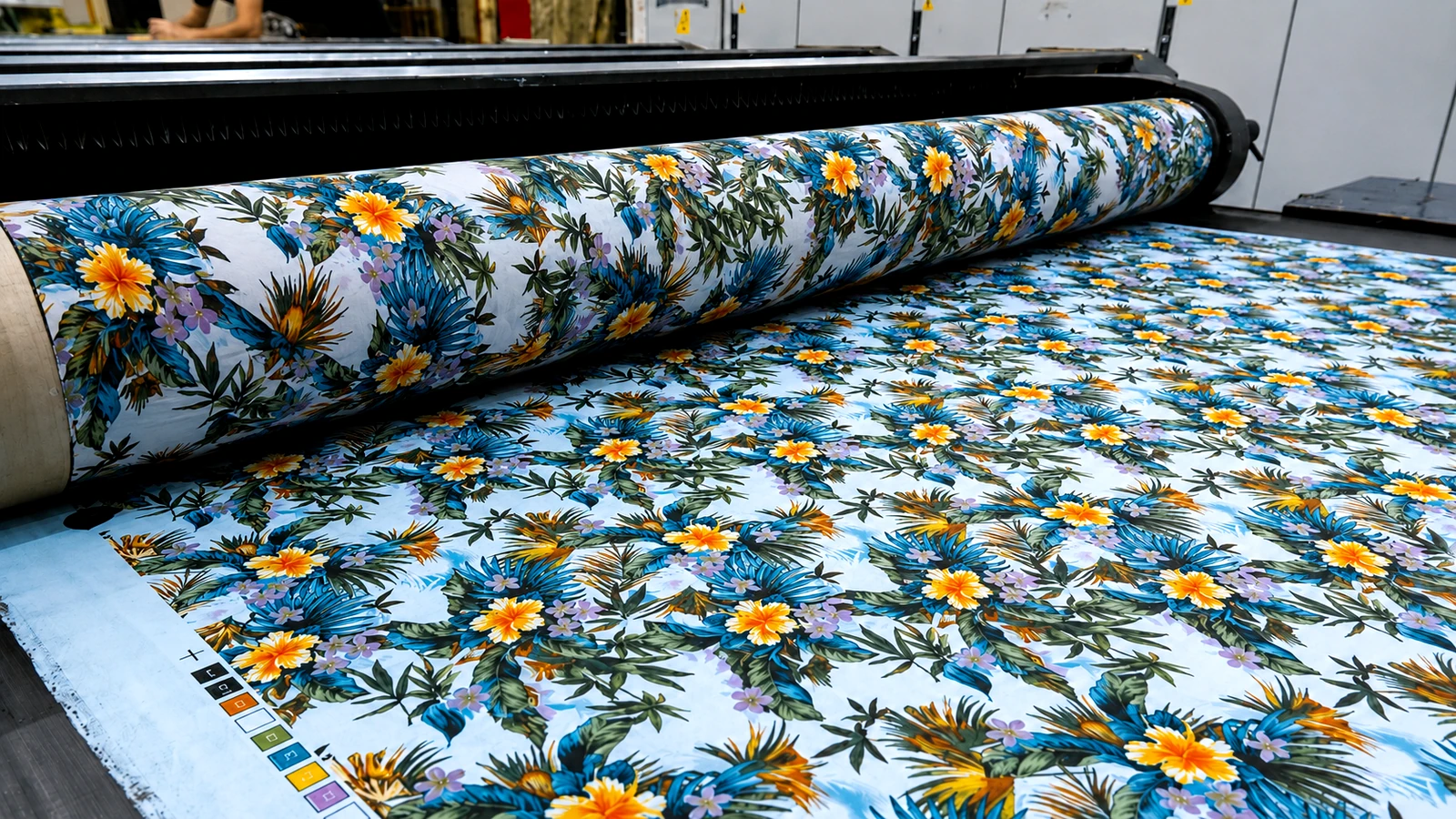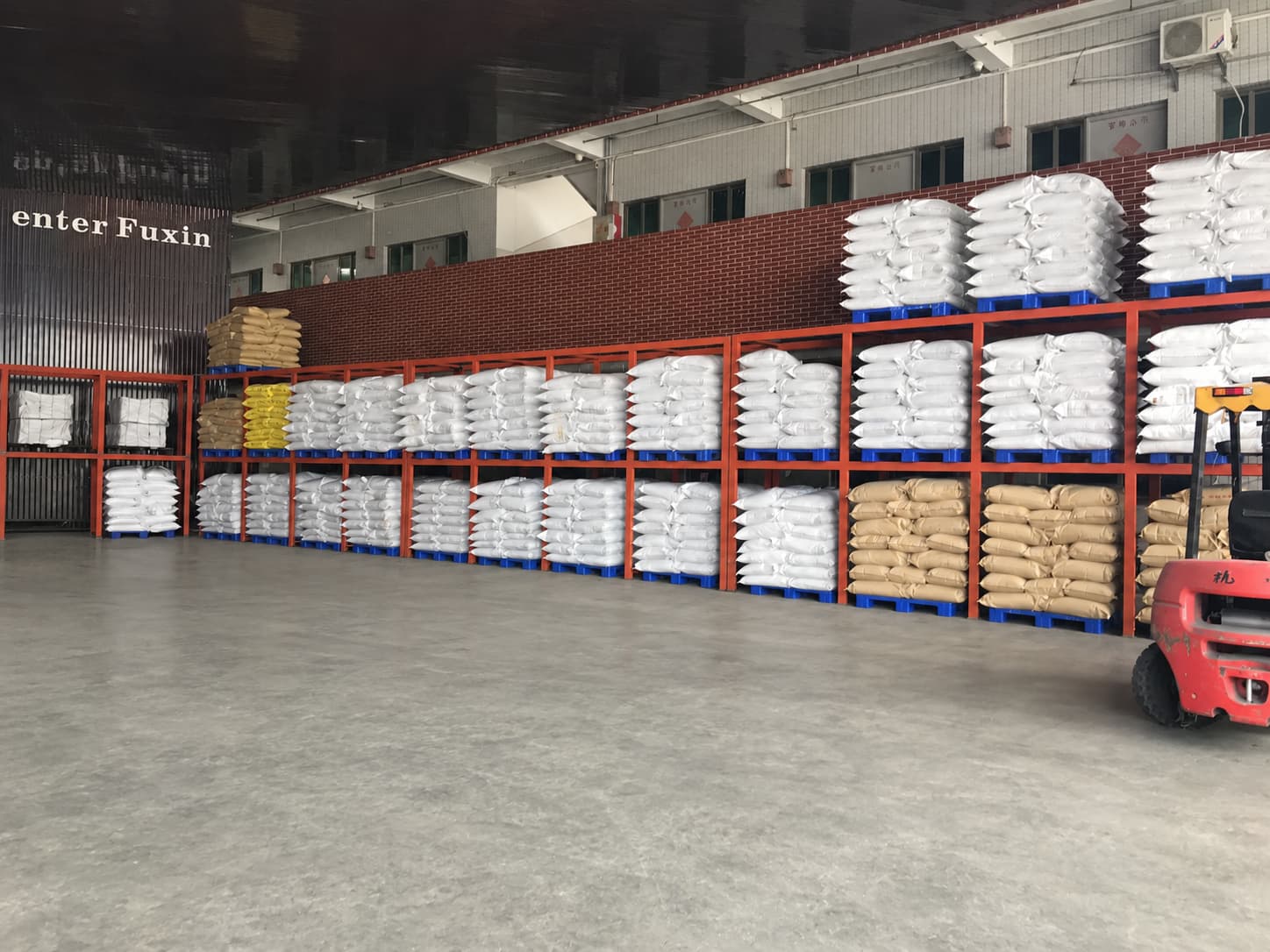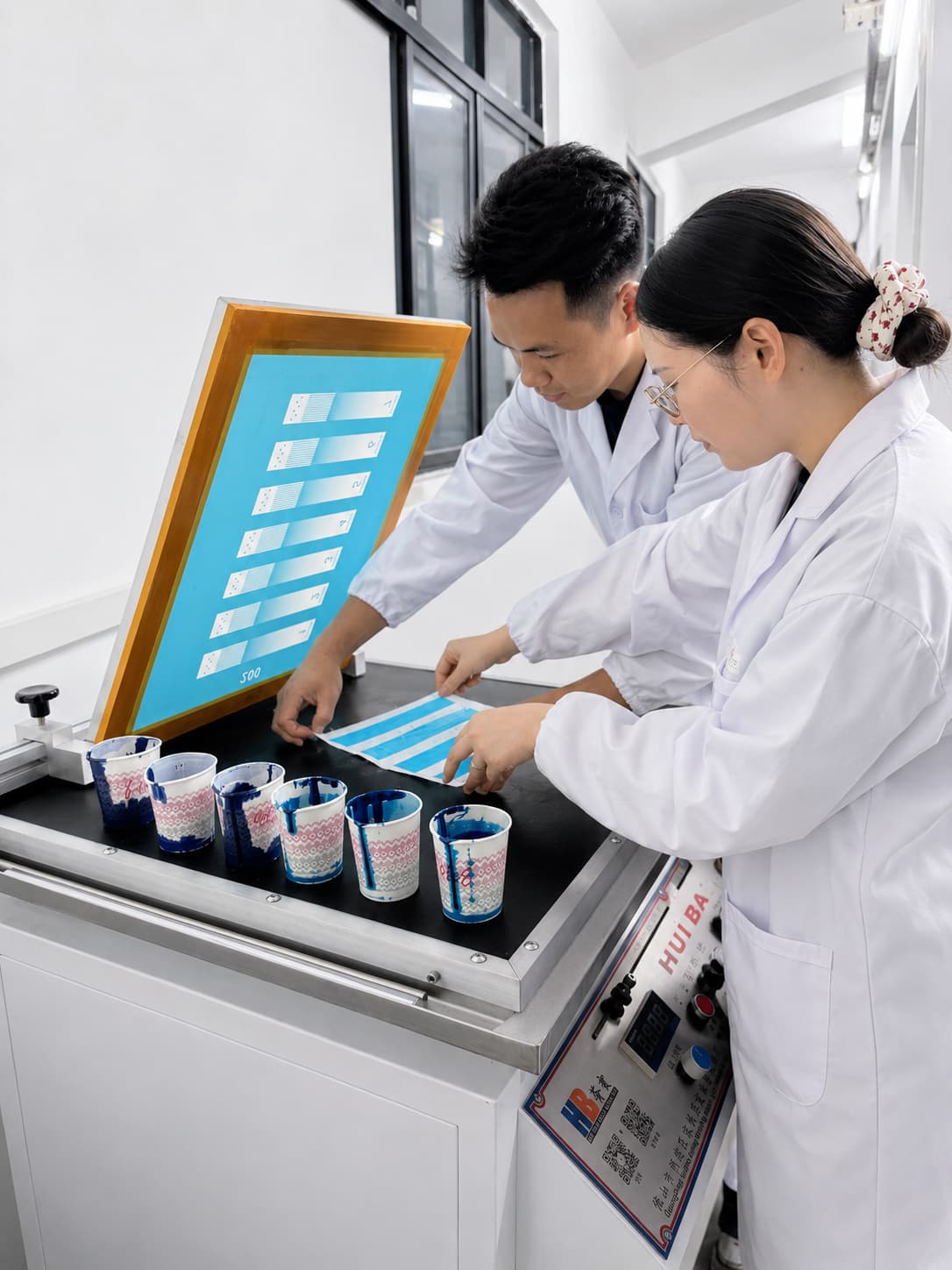
















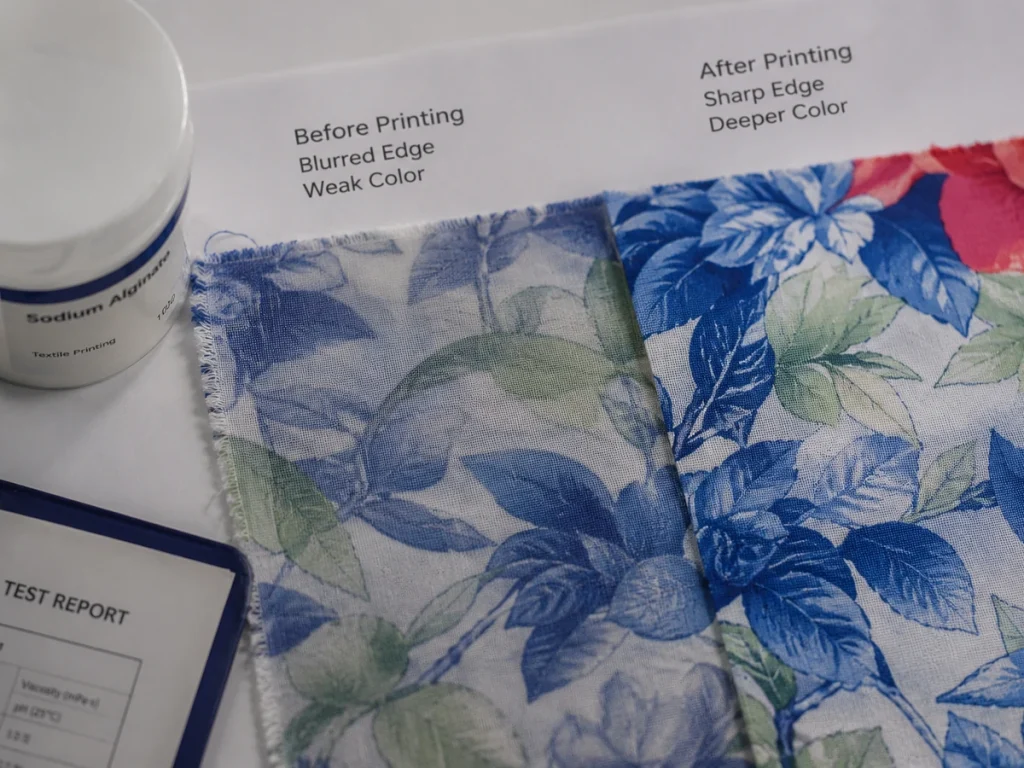
Evaluate a textile grade sodium alginate manufacturer by connecting three records: the agreed grade specification and test method, the sample approved in your reactive-printing process, and acceptance of the first commercial lot. A matching product name or water-viscosity value alone does not demonstrate that the delivered material will meet the same printing requirements.
This guide explains what buyers should check when sourcing textile grade sodium alginate from a manufacturer.
Why Textile Grade Sodium Alginate Needs Technical Review
Product Name Alone Is Not Enough
The term “textile grade sodium alginate” can cover different grades. Two products may look similar as powder, but they may perform differently in printing paste preparation.
Buyers should review the actual specification range, test method, sample performance, and batch data before confirming a product.
Viscosity Stability Matters in Printing Paste
In textile printing paste, viscosity affects paste preparation, screen passing, pattern control, and production handling. If viscosity changes significantly between batches, the factory may need to adjust the formulation again.
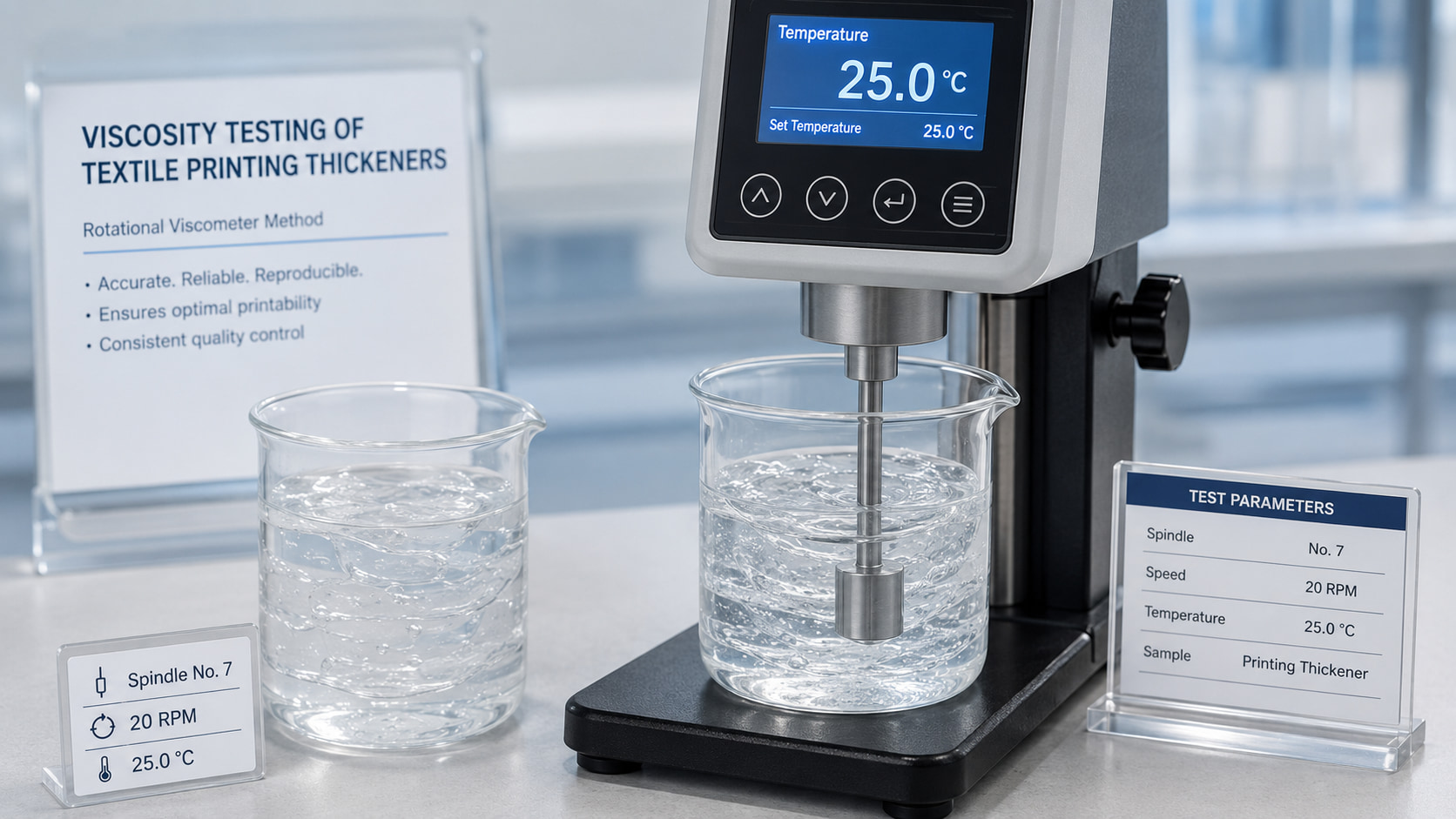
A reliable manufacturer should provide clear viscosity data and explain the testing concentration, temperature, unit, and method used in the TDS.
Sample Approval Should Connect to Bulk Supply
A sample result is useful, but buyers should confirm whether the bulk shipment will follow the same specification range as the approved sample.
Before placing a bulk order, buyers should review COA data, batch information, packaging details, and agreed quality parameters.
Key Specifications to Confirm
درجة اللزوجة وطريقة الاختبار
Viscosity is one of the most important parameters when sourcing textile grade sodium alginate. A higher viscosity grade is not always better. The suitable grade depends on the printing process, paste concentration, fabric type, and target paste behavior.
For comparable viscosity data, specify concentration and its mass basis, water and preparation conditions, hydration and rest time, temperature, instrument, spindle, speed, container and reading time, together with the unit. Compare the same method; equal apparent viscosity still does not establish equal screen-printing performance.
حجم الشبكة وسلوك الذوبان
Mesh size can affect how sodium alginate disperses and hydrates during paste preparation. However, the actual dissolution result also depends on water quality, stirring speed, addition method, and preparation time.
Buyers should test dissolution behavior in their own process instead of relying only on mesh size data.
الرطوبة، ودرجة الحموضة، والمظهر
تعد الرطوبة ودرجة الحموضة والمظهر مؤشرات أساسية لكنها مهمة للجودة. فهي تؤثر على التخزين والمناولة ومراقبة الجودة وتكرار الشراء.
Review the agreed limits and methods in the current specification. Identify which results are reported on the batch COA and which need a separate incoming check; absence from a COA is not evidence of a passing result.
Application Suitability for Reactive Printing Paste
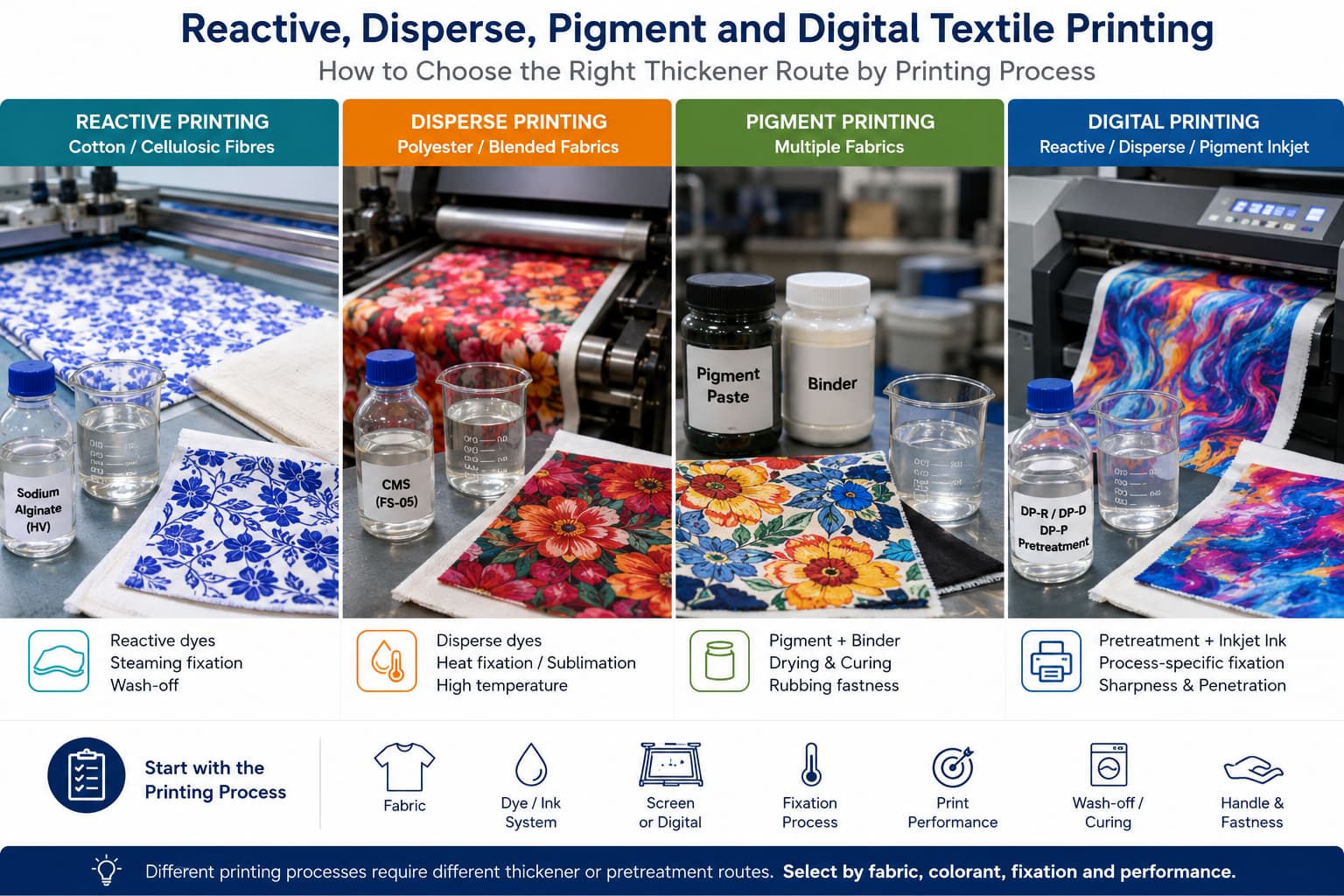
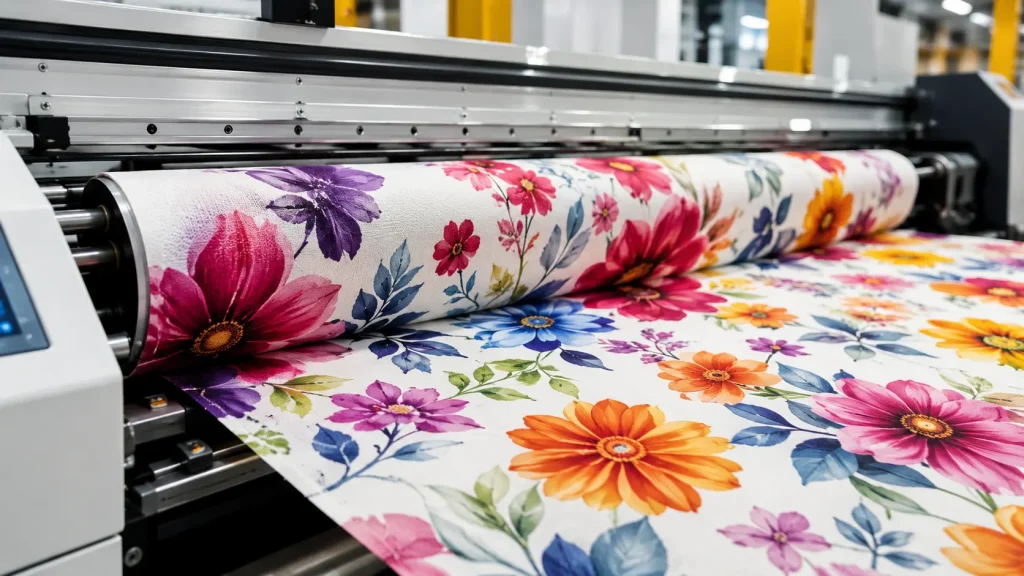
Textile grade sodium alginate is often selected for reactive printing paste, but the suitable grade still depends on the customer’s formulation and process conditions.
Buyers should share their printing method, fabric type, target viscosity, paste preparation method, and current production issue before requesting a recommendation.
المستندات التي ينبغي على المشترين طلبها
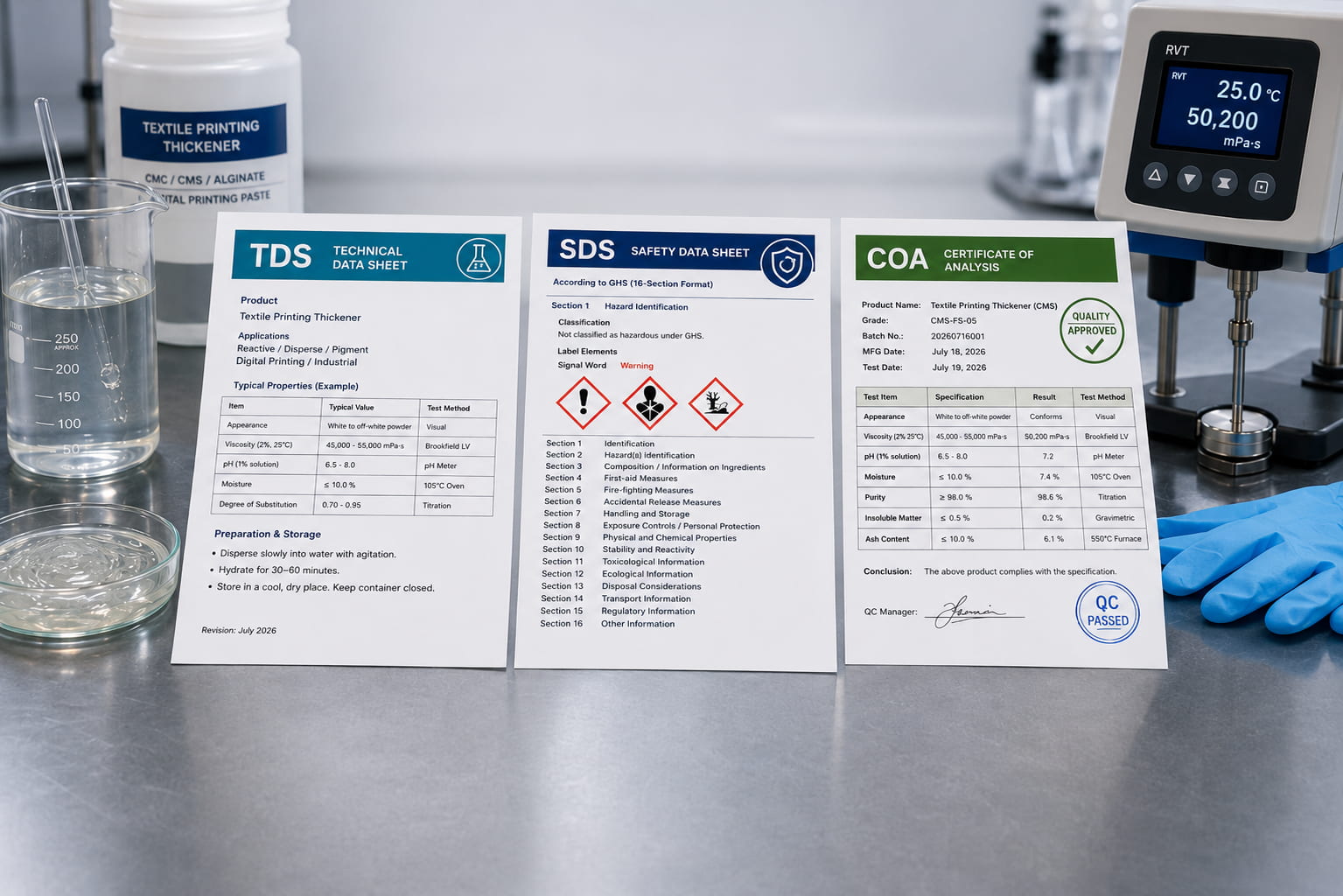
TDS لمراجعة المواصفات
تساعد ورقة البيانات الفنية المشترين على الاطلاع على نطاق المواصفات القياسية. وينبغي أن تتضمن المعلمات الرئيسية مثل المظهر، واللزوجة، وحجم الشبكة، والرطوبة، ودرجة الحموضة (pH)، وظروف التخزين، وطريقة الاختبار.
For textile printing applications, the viscosity test method should be clearly stated.
تقرير التوافق (COA) لتأكيد الدفعة
A Certificate of Analysis reports the results listed for an identified batch. Check the commercial grade, lot number, units, limits and test methods against the order; it does not establish unlisted properties or finished-print performance.
يمكن للمشترين مقارنة سجلات شهادات المنشأ (COA) عبر الشحنات للتحقق مما إذا كانت المعلمات الرئيسية لا تزال ضمن النطاق المتفق عليه.
SDS ووثائق التصدير عند الحاجة
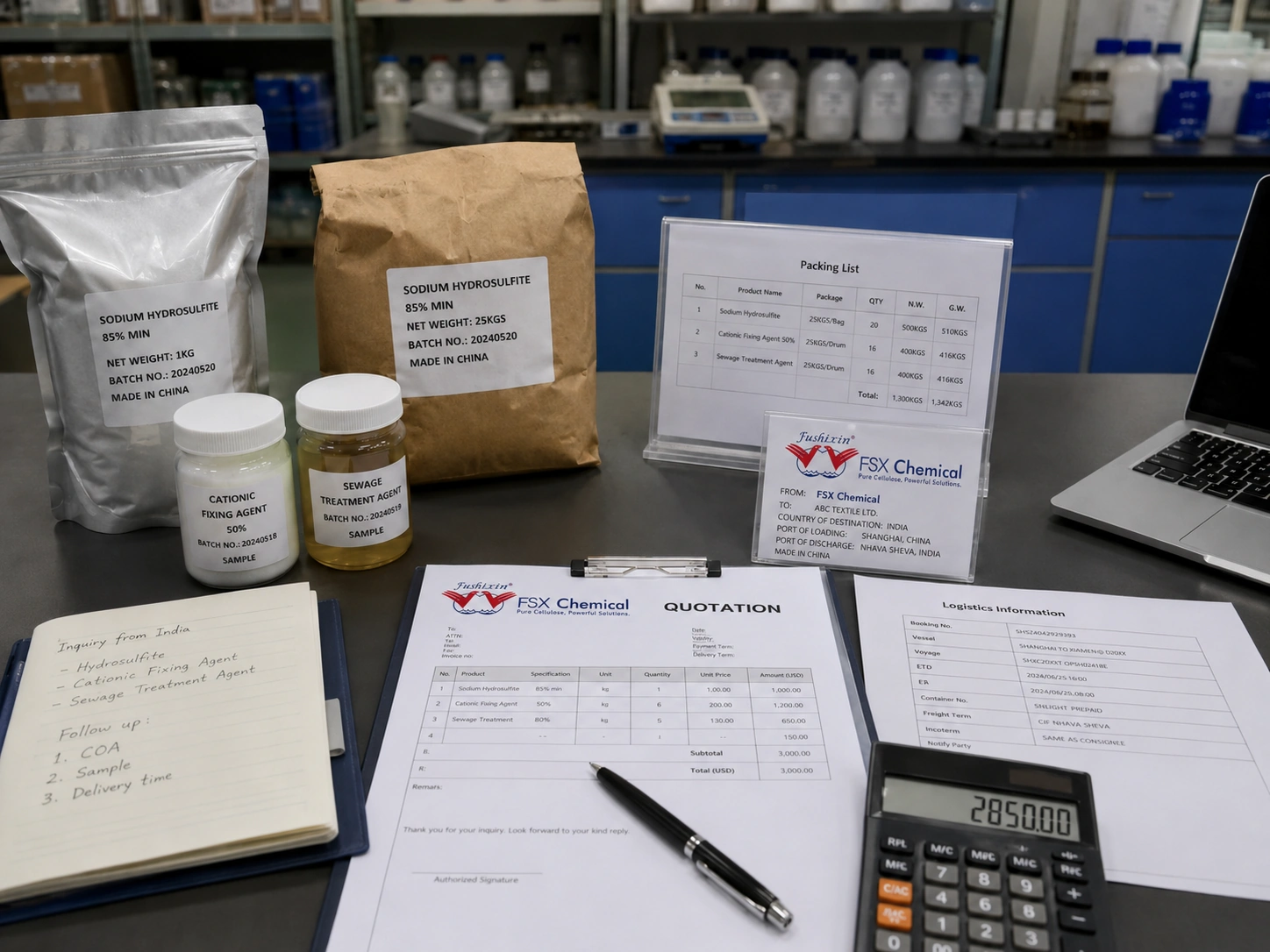
بالنسبة لعمليات الشراء الدولية، قد يحتاج المشترون أيضًا إلى صحيفة بيانات السلامة (SDS)، والفاتورة، وقائمة التعبئة، والملصقات، وغيرها من المستندات المتعلقة بالتصدير. وقد تختلف قائمة المستندات المطلوبة حسب البلد المقصود ونوع المنتج وإجراءات الشراء الداخلية.
يجب التأكد من متطلبات المستندات قبل الشحن لتجنب أي تأخير في المراجعة الداخلية أو التواصل مع الجمارك.
How to Test Textile Grade Sodium Alginate
Test in the Actual Paste Formulation
Sample testing should be done in the buyer’s own paste formulation whenever possible. Dyes, auxiliaries, water quality, pH, stirring method, and storage time can all affect the final paste behavior.
Testing only in clean water may not be enough to confirm whether the sodium alginate grade is suitable for real production.
مراقبة سلاسة اللصق والترشيح
During sample testing, buyers should observe dissolution speed, paste smoothness, lumps, filtration behavior, viscosity stability, and application handling.
For printing paste applications, these practical observations are often as important as basic specification data.
Compare Approved Sample and Bulk Order
Before confirming a bulk order, buyers should ask whether the approved sample and bulk shipment will follow the same viscosity range, mesh size, packaging standard, batch traceability, and COA data requirements.
وهذا يساعد على تقليل مخاطر عدم تطابق العينة مع الكمية الإجمالية.
Agree a Quality Record Before the First Commercial Lot
Use the following record as a proposed buyer–manufacturer review. Set the actual limits and sampling plan together.
| Record | Define before ordering | Decision supported |
|---|---|---|
| Grade specification | Exact commercial code, specification revision, method for each accepted attribute and which results appear on the COA. | Whether the offered and received grade are being assessed on the same basis. |
| Approved reference | Sample lot, retained quantity and storage, complete paste recipe, fabric, screen settings, fixation and wash-off, and agreed print requirements. | What the sample approval actually covers; it is not approval of every future batch. |
| First commercial lot | Lot-to-package traceability, agreed representative sampling, incoming tests and a controlled print comparison against the retained reference. | Whether to release the material, hold it for investigation or conduct a limited production trial. |
If results disagree, first reconcile sample identity, preparation and measurement conditions. Record any recipe adjustment as a separate trial rather than silently changing the comparison. Agree who reviews deviations and what changes require a new sample approval. See Brookfield guidance on comparable viscosity measurements for the measurement controls.
What Makes a Manufacturer More Reliable?
Clear Technical Communication
A reliable textile grade sodium alginate manufacturer should be able to discuss product specifications clearly. This includes viscosity range, mesh size, moisture, pH, appearance, storage conditions, and testing method.
If the buyer has an existing grade, the manufacturer should be able to compare the target specification and recommend a suitable starting grade for testing.
Batch Traceability and Packaging Control
For bulk orders, batch traceability is important. Buyers should confirm product label information, batch number, net weight, production date, and packaging format before shipment.
Clear packaging and batch information can help with warehouse management, COA comparison, and customer feedback handling.
Realistic Discussion Instead of Broad Claims
A professional manufacturer should avoid exaggerated claims. Final performance still depends on the buyer’s formulation and process conditions.
The supplier should explain what can be matched by grade selection and what needs to be confirmed through sample testing.
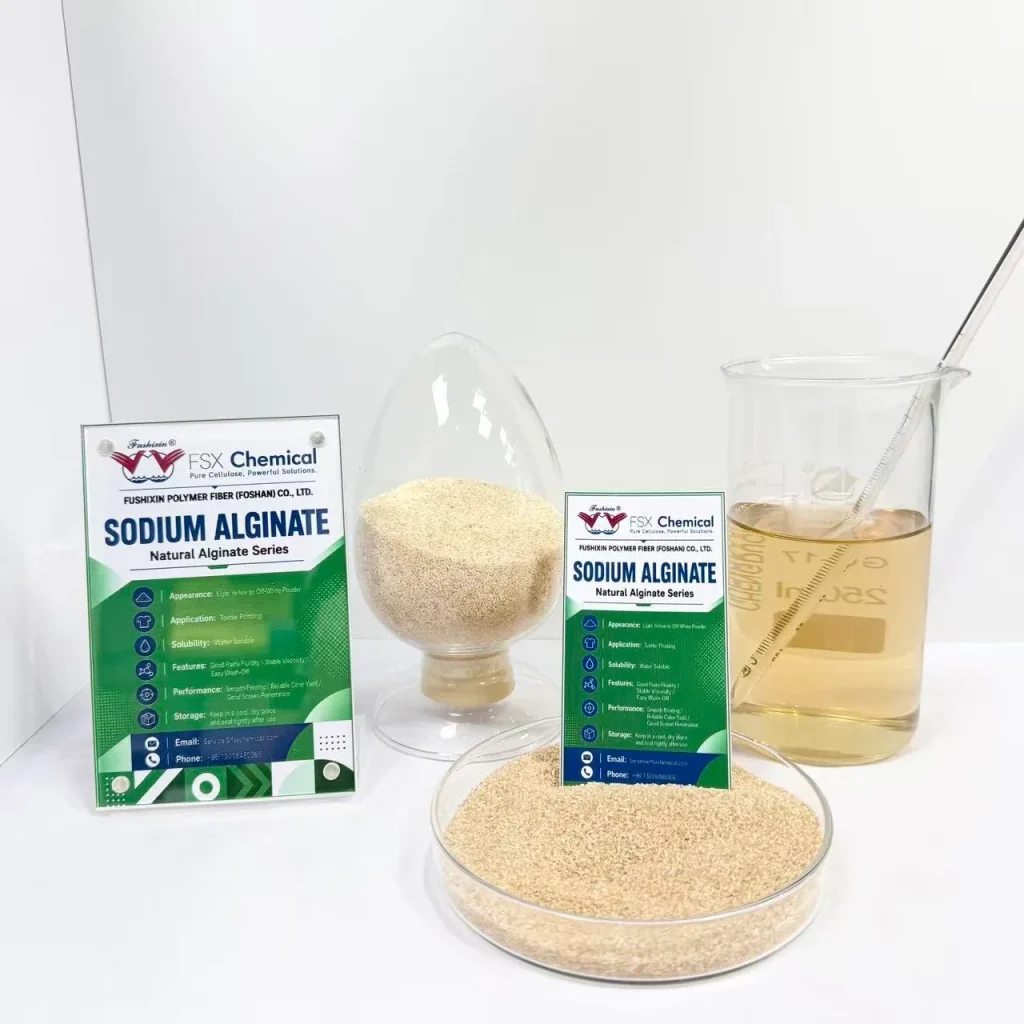
كيف تدعم شركة FSX Chemical مشتري ألجينات الصوديوم
We do not suggest confirming textile grade sodium alginate only by price, product name, or broad supplier claims. The recommended grade should be reviewed through technical documents and tested in the buyer’s own formulation before bulk purchase.
الخطوات التالية
- طلب تقرير TDS — مراجعة نطاق اللزوجة، وحجم الشبكة، ودرجة الحموضة، والرطوبة، والمظهر، وظروف التخزين، وطريقة الاختبار.
- طلب شهادة المنشأ — التأكد من مطابقة بيانات الدفعة لنطاق المواصفات المتفق عليه قبل الشحن.
- اطلب مطابقة الدرجات — يرجى ذكر عملية الطباعة، ونوع القماش، واللزوجة المستهدفة، والتركيبة الحالية، ودرجة جودة المنتج الحالية إن كانت متوفرة.
- اطلب عينة — test the recommended textile grade sodium alginate in your own paste preparation and printing conditions before confirming bulk orders.
- التحقق من مستندات التعبئة والتغليف والتصدير — التحقق من حجم الحقيبة، والملصقات، وإمكانية تتبع الدفعة، وورقة بيانات السلامة (SDS)، والفاتورة، وقائمة التعبئة، وغيرها من المستندات المطلوبة قبل الشحن.
- Request sample and grade matching — send the current grade, complete viscosity method and reactive-printing route. Ask FSX to review the sample reference and first-lot acceptance requirements before bulk purchase.