















Why Sodium Alginate Purchases Go Wrong
The Product Name Is Too General
The purchase should therefore be linked to a specific grade, agreed specification range, test method, packaging, and batch documentation.
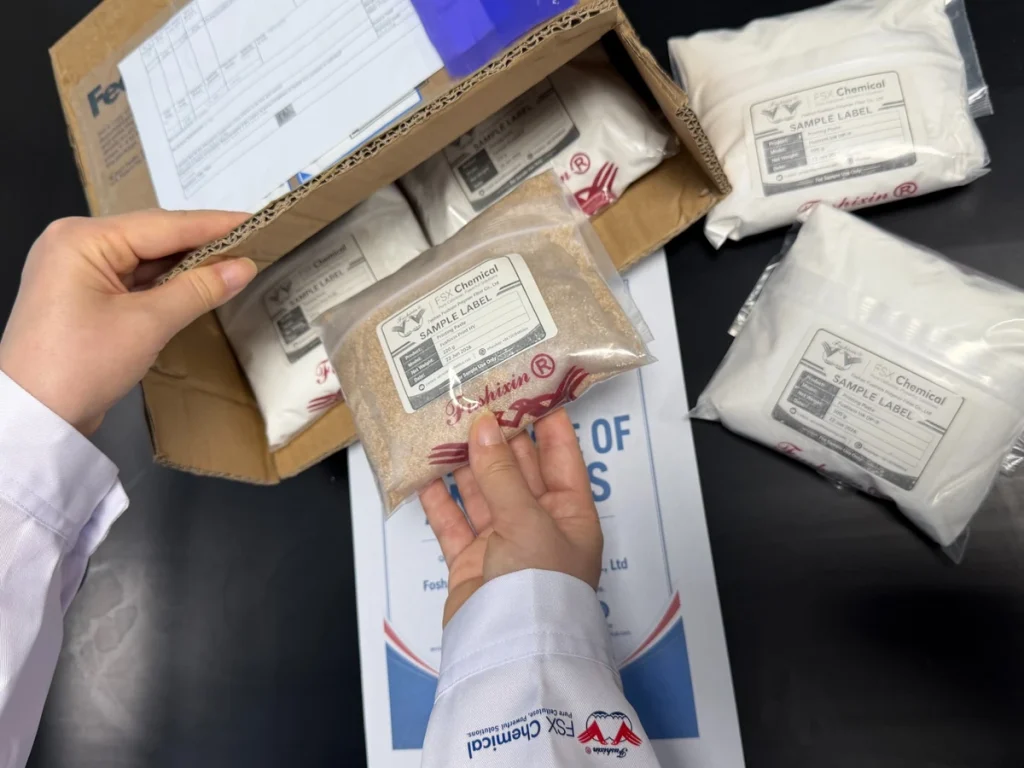
The Sample and Bulk Order Are Not Properly Connected
A sample may pass testing, but the commercial order can still create problems if the sample identity, quoted grade, production specification, and bulk COA are not connected.
Buyers should record the sample reference and use it during purchase order approval.
The Purchase Order Covers Price but Not Quality Control
A purchase order that only states product name, quantity, and price leaves important questions unanswered. It may not define viscosity method, COA requirements, packaging, labels, batch traceability, change notification, or complaint evidence.
Incoming Inspection Is Treated as a Warehouse Task Only
Receiving staff may check the number of bags but not confirm batch numbers, moisture damage, label consistency, COA matching, or retained samples.
A technical raw material should be released only after the agreed receiving checks are completed.
Purchase Pitfall 1: Comparing Viscosity Numbers Without Test Methods
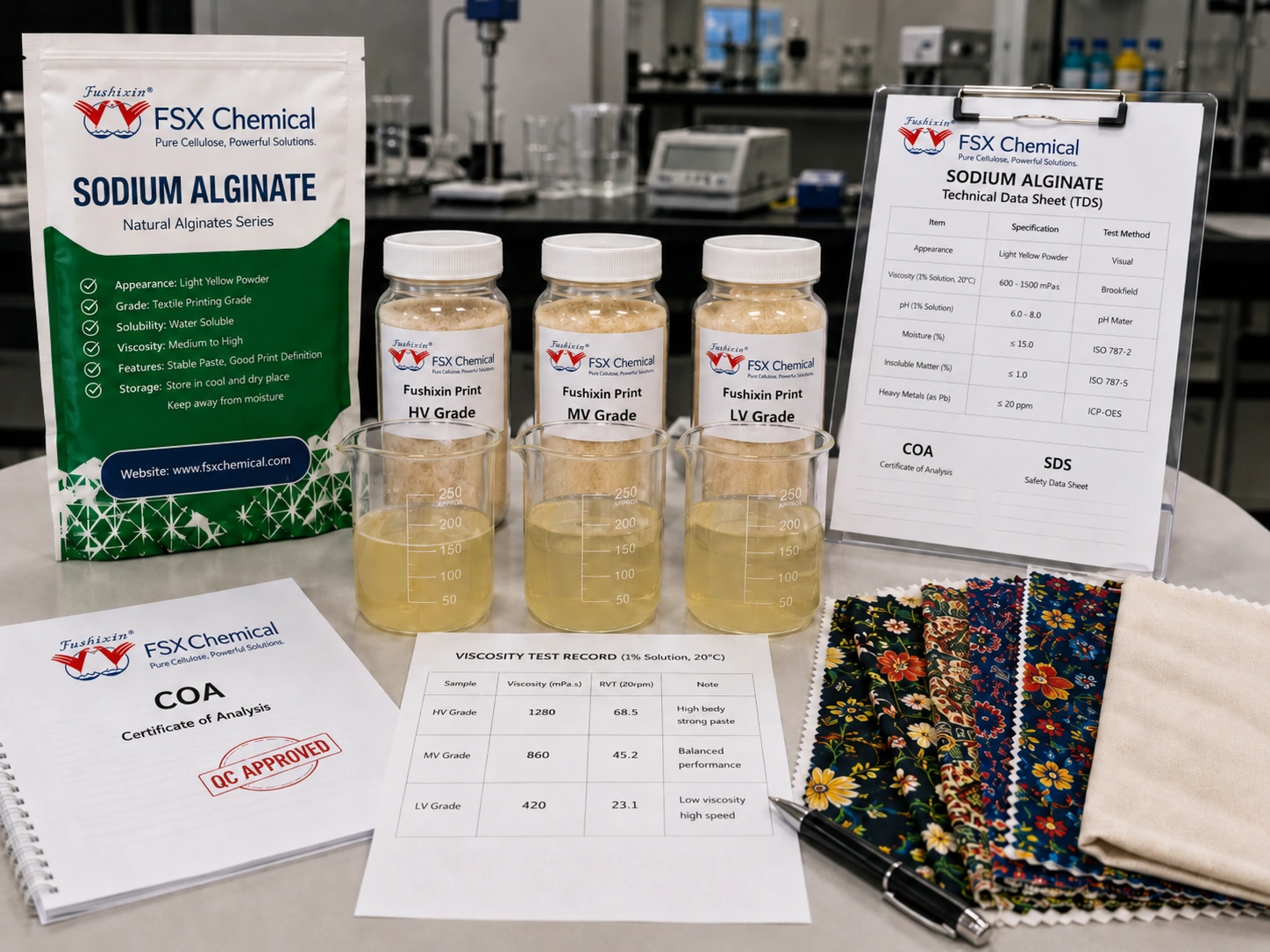
Viscosity is one of the most important sodium alginate purchasing parameters, but a number without a method can be misleading.
The purchase specification should state:
- পরীক্ষার ঘনত্ব
- Test temperature
- Instrument or method
- Spindle and speed where applicable
- Viscosity unit
- Standing time before measurement
If the supplier and buyer use different methods, both methods should be documented. One result should not automatically be treated as equivalent to another.
Purchase Pitfall 2: Choosing a Grade by Marketing Language
Terms such as high purity, high performance, quick dissolving, eco-friendly, low residue, or premium grade may be useful descriptions, but they are not complete purchase specifications.
Buyers should convert marketing language into measurable or testable criteria such as viscosity range, dissolution behavior, filtration result, pH, moisture, appearance, mesh size, and performance in the actual printing formula.
Purchase Pitfall 3: Assuming Grade Names Define Printing Performance
Grade labels may refer to different specification systems or intended markets, but they do not automatically predict textile printing performance.
Purchase Pitfall 4: Accepting Generic Documents
TDS Must Match the Quoted Grade
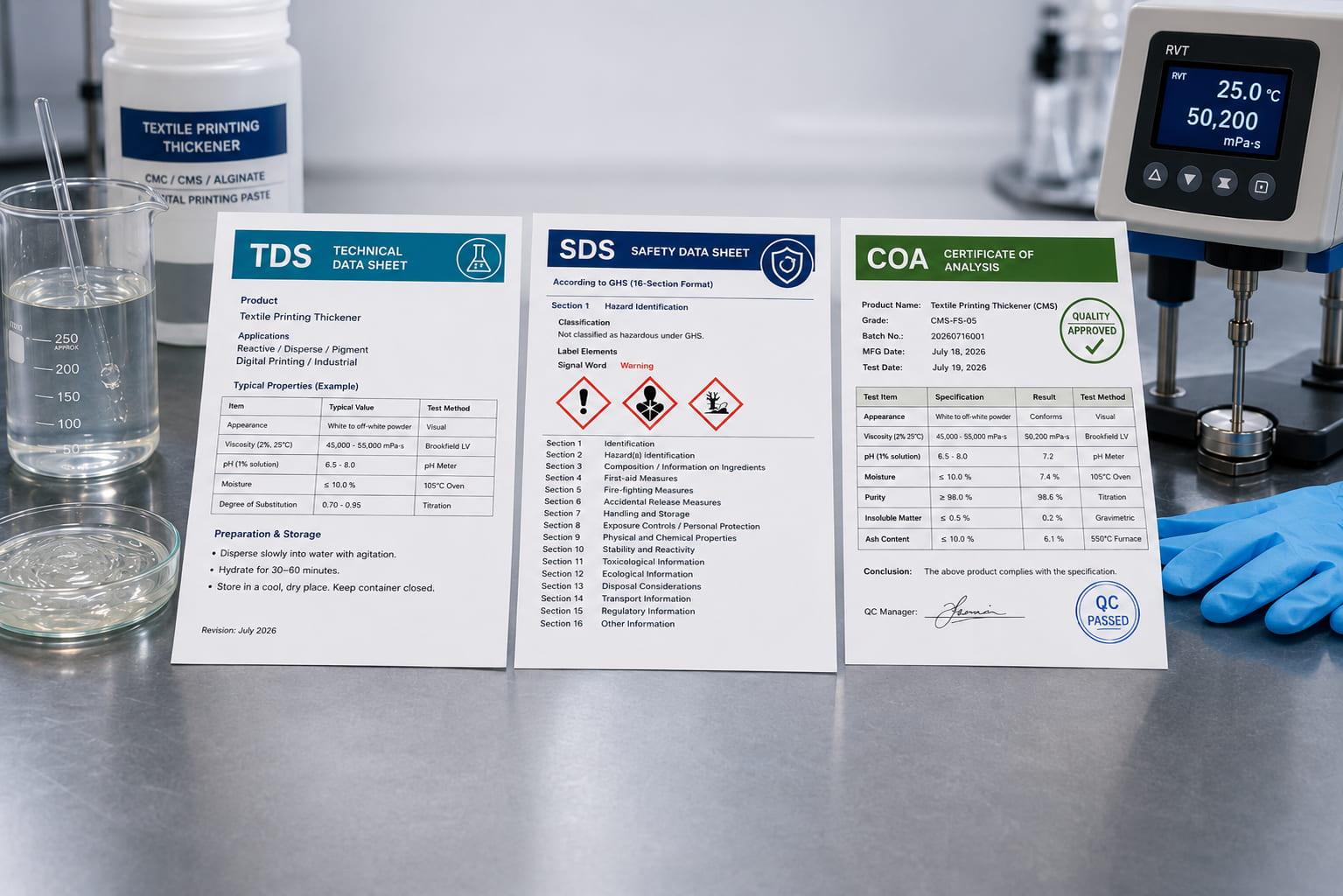
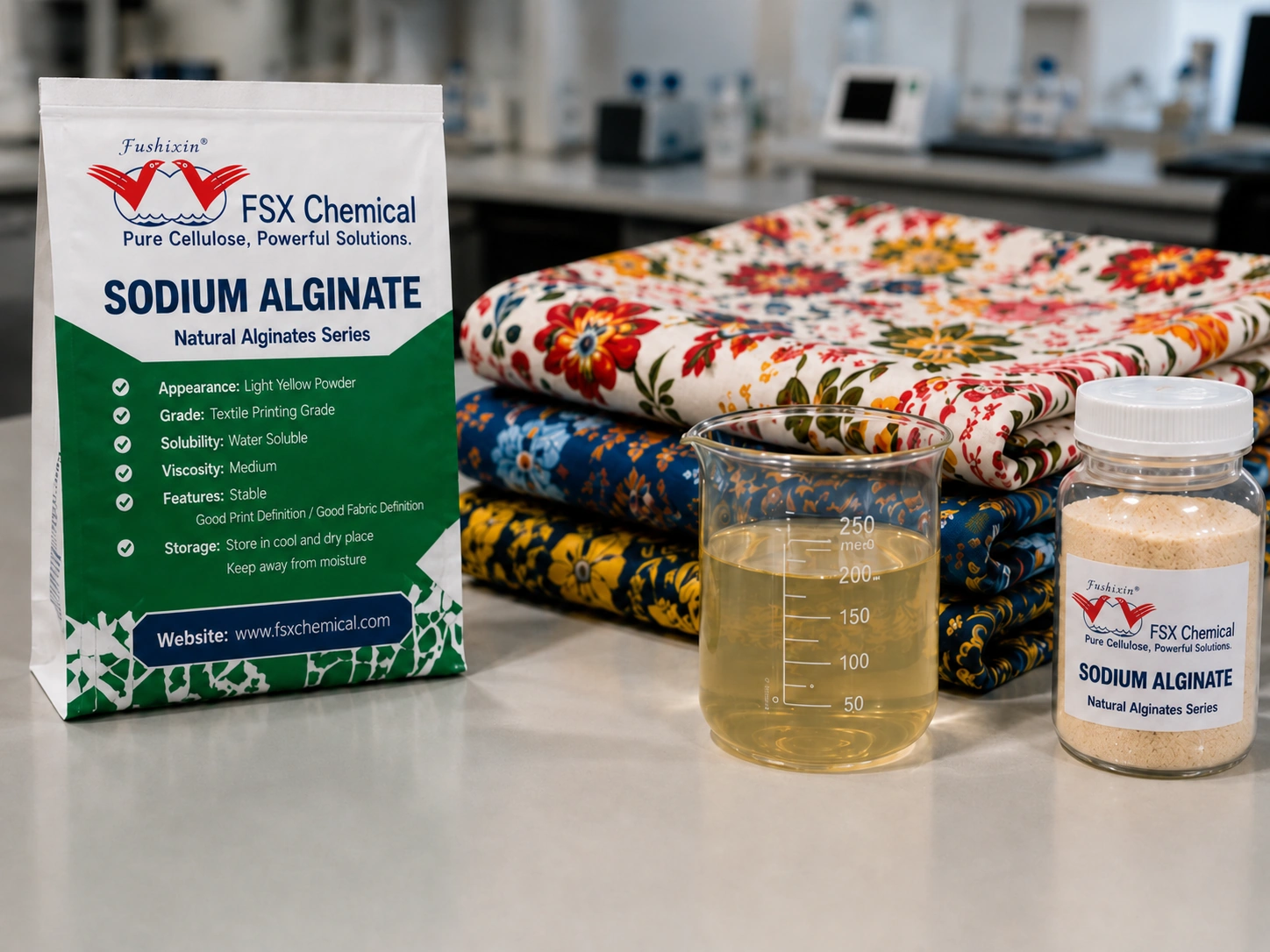
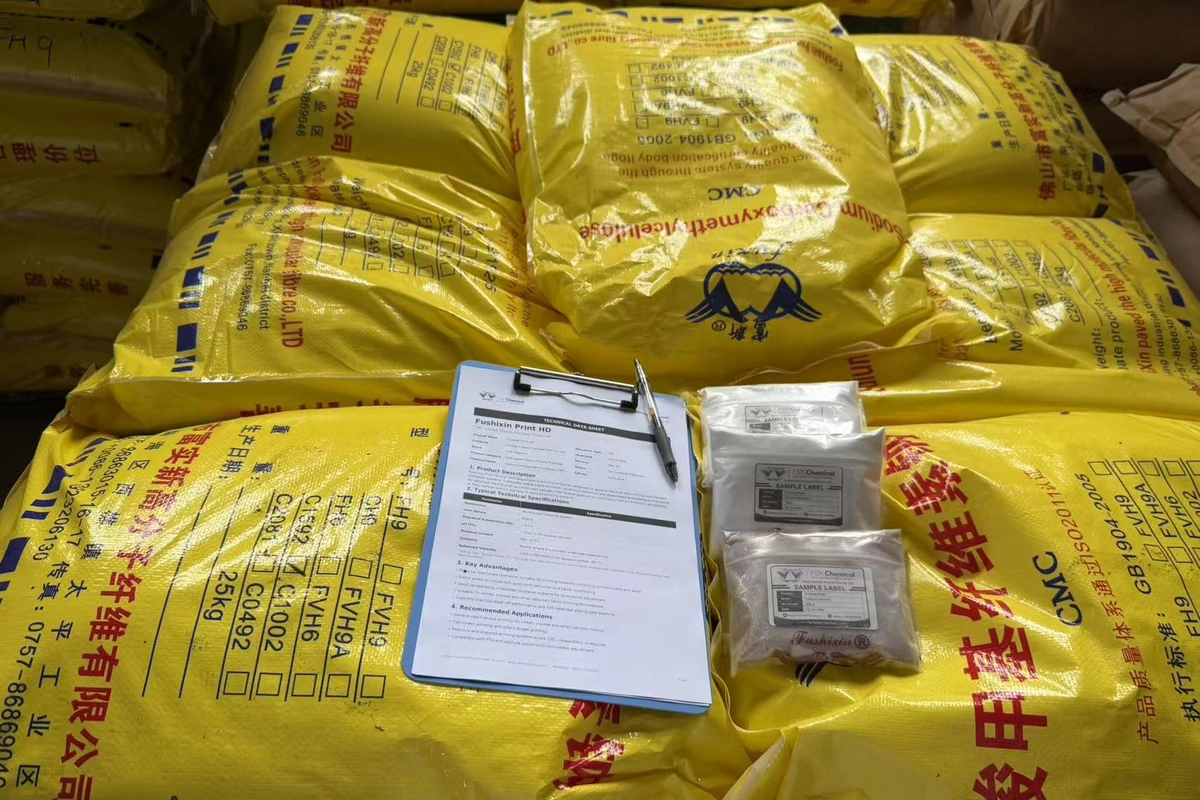
The Technical Data Sheet should identify the exact grade being offered and provide the relevant specification and test method.
COA Must Match the Supplied Batch
The Certificate of Analysis should relate to the actual shipment batch. A general sample COA should not replace batch-specific data for a commercial order.
SDS Must Match the Product and Supplier
The Safety Data Sheet should use the same product identity and supplier details as the order and shipment documents.
Certificates and Statements Need Scope Review
If a buyer requires a certificate, restricted-substance statement, customer questionnaire, or third-party report, the buyer should confirm its validity, product scope, site scope, and revision date.
Purchase Pitfall 5: Approving a Sample Without an Approval Record
A sample approval should record:
- Supplier name
- Grade name
- Sample reference or batch number
- Sample date
- Test formulation
- Preparation method
- সান্দ্রতা পদ্ধতি
- Comparison product
- Acceptance result
- Approver and approval date
Without this record, later teams may not know which material was approved or how the test was performed.
Purchase Pitfall 6: Not Defining Sample-to-Bulk Consistency
The bulk order should follow an agreed specification range rather than relying on one sample value. The purchase order or technical agreement should connect the approved sample with:
- Commercial grade name
- Agreed specification range
- Test methods
- Batch-specific COA
- Packaging and labels
- Batch traceability
- Change notification requirements
This helps reduce the risk that the sample and commercial shipment are technically different.
Purchase Pitfall 7: Comparing Prices Under Different Conditions
A lower unit price may be based on a different quantity, packaging, Incoterm, pallet condition, document scope, or payment term.
Before comparing prices, align:
- Quoted grade and specification
- Order quantity
- Packaging size and pallet requirement
- Currency
- Incoterm and named place
- Freight inclusion
- Payment terms
- Quotation validity
- Required documents
- Custom label or inspection requirements
A price comparison is useful only when the technical and commercial basis is equivalent.
Purchase Pitfall 8: Leaving Change Control Undefined
Buyers should discuss whether the supplier will notify them before significant changes to the product grade, specification, production route, packaging, label, document version, or other agreed supply condition.
When a change may affect printing performance, the buyer may require an updated document, new sample, or requalification test before accepting the changed material.
Step-by-Step Sodium Alginate Purchase Risk Control
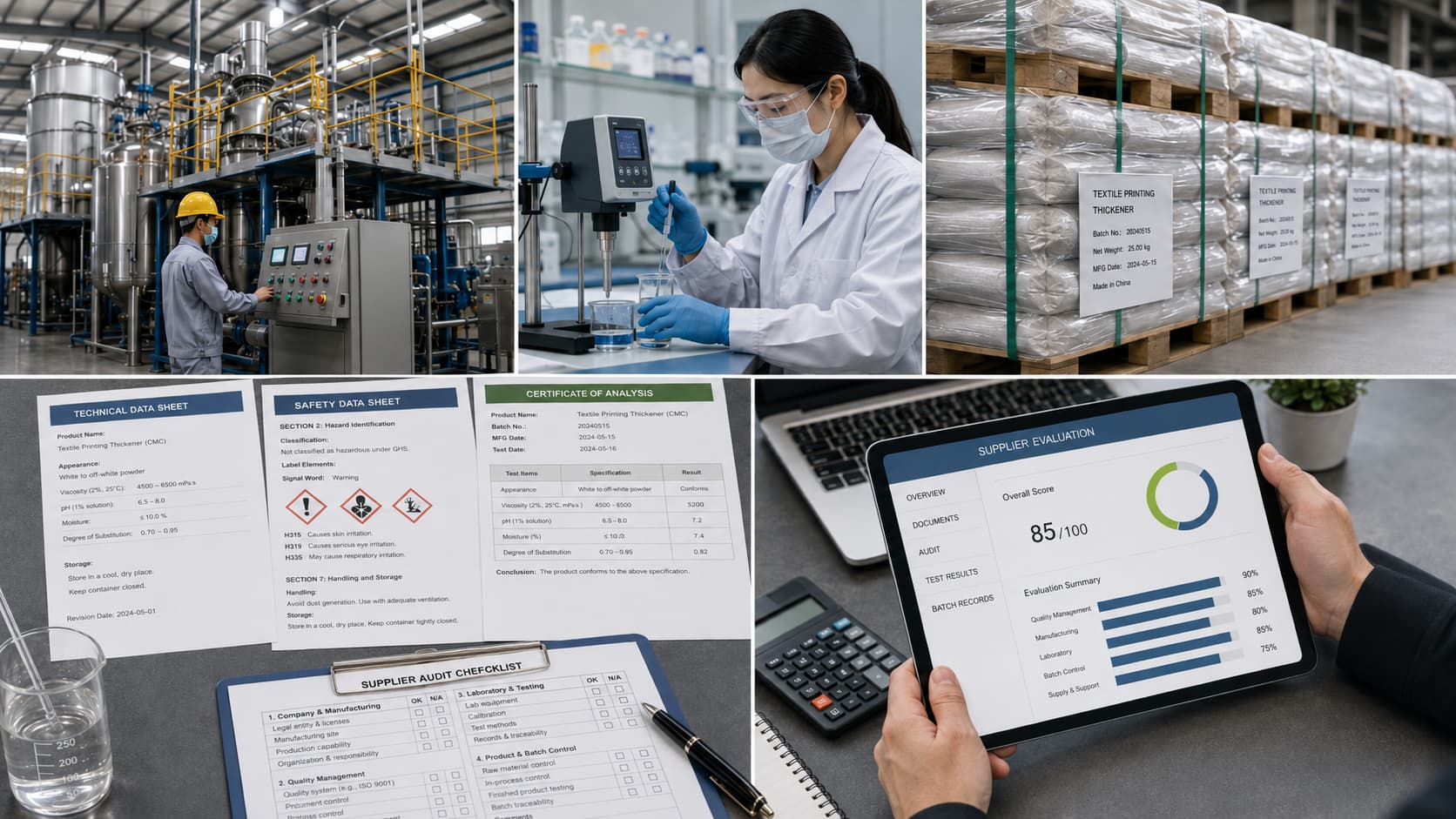
Step 1: Lock the Technical Purchase Specification
Create a short technical purchase specification containing the application, grade, viscosity range, test method, mesh size where relevant, pH, moisture, appearance, packaging, COA requirements, and other agreed parameters.
The specification should be realistic, measurable, and accepted by both sides.
Step 2: Approve an Identified Sample
Test the proposed sample against the current product under controlled conditions. Record the sample identity and approval result.
Step 3: Place a Controlled Trial Order
A trial order allows the buyer to verify whether the commercial shipment matches the sample, specification, COA, packaging, and actual production process.
Step 4: Add Quality Terms to the Purchase Order
The purchase order should state the agreed grade, quantity, packaging, Incoterm, destination, payment terms, COA requirement, sample reference, and any critical quality conditions.
Step 5: Review Documents Before Shipment
Before shipment, review the product name, grade, quantity, batch details, labels, COA, SDS, packing list, invoice, and any additional agreed documents.
Step 6: Perform Incoming Inspection
Receiving inspection should check packaging condition, quantity, label consistency, batch numbers, moisture damage, COA matching, and any required quick laboratory test.
Step 7: Keep a Retained Sample
A retained sample from the received batch can support later comparison or complaint investigation. The sample should be labeled with supplier, grade, batch, arrival date, and purchase order reference.
Step 8: Release the Batch for Production
The batch should be released only after the agreed document and inspection requirements are completed.
Step 9: Record First-Use Performance
For a new supplier or new batch, record preparation behavior, dissolution, viscosity, filtration, printing performance, and any production adjustment.
Step 10: Review Supplier Performance Over Time
Track COA consistency, shipment accuracy, document quality, complaint response, packaging condition, and actual production performance across repeat orders.
Incoming Inspection Checklist
Purchase Order: ____________________
Supplier: ____________________
Product Grade: ____________________
Supplier Batch Number: ____________________
Arrival Date: ____________________
Quantity Received: ____________________
Packaging Condition: Pass / Hold / Reject
Label Matches Order: Yes / No
Batch Number Matches COA: Yes / No
COA Received and Reviewed: Yes / No
SDS Available: Yes / No
Visible Moisture or Damage: Yes / No
Appearance Check: Pass / Hold / Reject
Quick Viscosity Test: Pass / Hold / Reject / Not Required
Retained Sample Prepared: Yes / No
Final Status: Released / Conditional / Hold / Rejected
Inspector: ____________________
What to Include in the Purchase Order
A sodium alginate purchase order can include:
- Exact product and grade name
- Application reference
- Agreed specification and test method
- Approved sample reference
- Quantity and packaging
- Label requirements
- Batch-specific COA requirement
- SDS and other document requirements
- Incoterm and named destination
- Currency and payment terms
- Inspection or retained-sample requirements
- Change notification condition
- Complaint evidence and review process
How to Handle a Quality Discrepancy
Quarantine the Affected Batch
Do not continue normal use until the issue has been reviewed. Separate the affected batch and record the remaining quantity.
Collect Objective Evidence
Useful evidence may include:
- Supplier batch number
- COA and purchase order
- Photos of packaging and labels
- Preparation record
- Water source and pH
- Viscosity method and result
- ছাঁকন অবশিষ্টাংশ
- Printing test result
- Retained sample
- Comparison with the current or approved material
Separate Product and Process Causes
Lumps, viscosity drift, filtration difficulty, or poor printing behavior may be related to the raw material, water quality, mixing method, formulation compatibility, storage, or scale-up conditions.
A useful complaint review should examine both product and process evidence.
Agree on the Resolution
Depending on the confirmed cause and purchase agreement, the resolution may involve additional testing, replacement, credit, return, process adjustment, or revised supply controls.
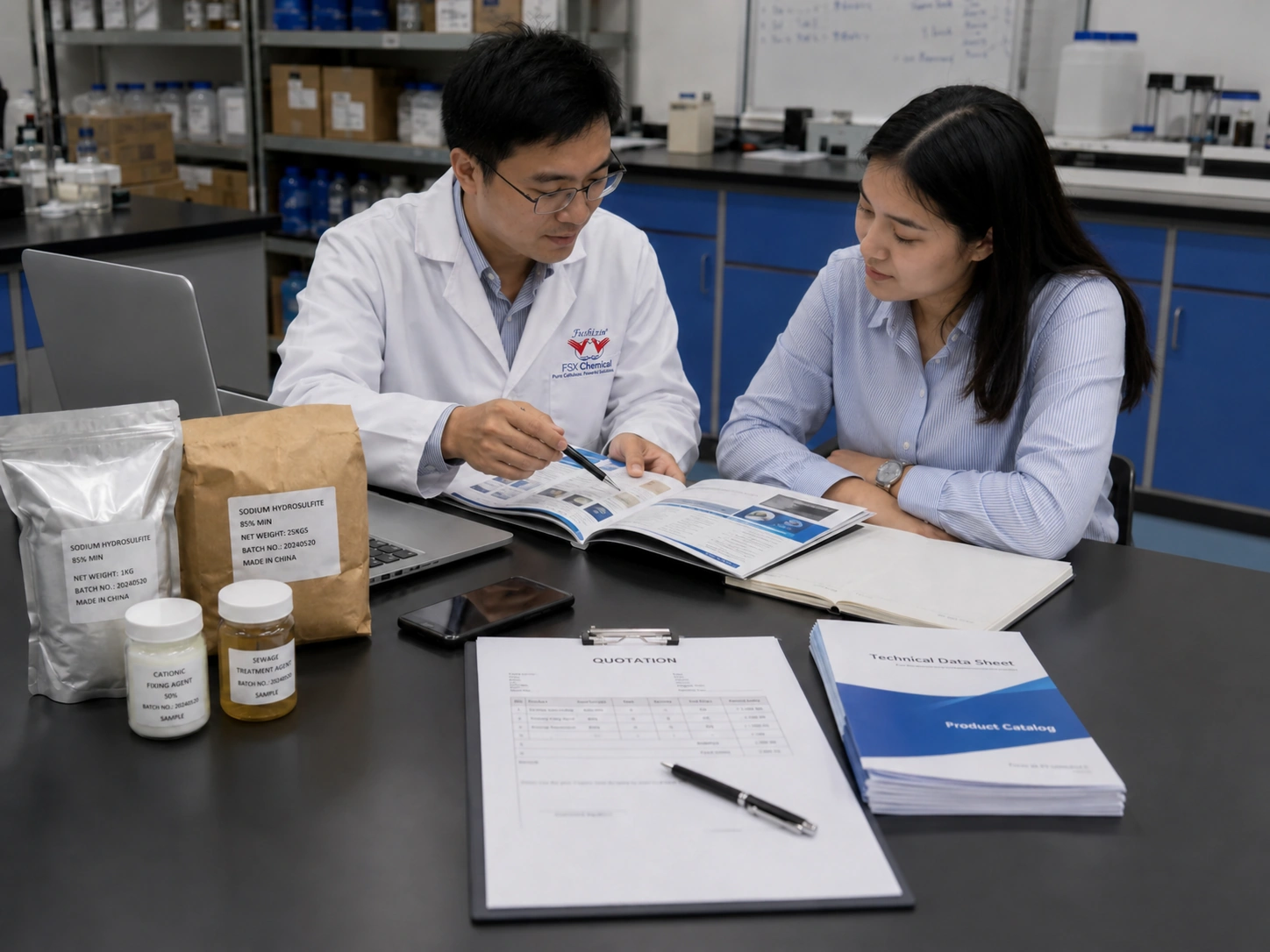
How FSX Chemical Supports Sodium Alginate Purchases
পরবর্তী পদক্ষেপ
- Define the Application — provide printing process, fabric, dye system, current product, and main production concern.
- Lock the Viscosity Method — confirm concentration, temperature, instrument method, unit, and standing time.
- Request TDS, COA and SDS — verify that the documents match the proposed grade.
- Approve an Identified Sample — record the grade, sample reference, test method, and approval result.
- Prepare a Controlled Purchase Order — include specification, packaging, documents, Incoterm, labels, and sample-to-bulk requirements.
- Review Documents Before Shipment — check grade, batch, COA, labels, invoice, packing list, and agreed export documents.
- Perform Incoming Inspection — verify packaging, labels, batch numbers, retained samples, and quick test results.
- Track Repeat-Order Performance — compare COA data, production behavior, document accuracy, and supplier response.
- আমাদের প্রযুক্তিগত দলের সাথে যোগাযোগ করুন — send your sodium alginate purchase requirements to Service@fsxchemical.com