

















Carboxymethyl cellulose (CMC) can be used in textile sizing and selected printing systems, but the correct grade depends on degree of substitution (DS), viscosity method, purity, salt tolerance and process chemistry. Reactive printing requires particular care: sodium alginate remains a common benchmark, while a purified or high-DS CMC grade or blend should be approved only after compatibility, color-yield and wash-off trials.

Where CMC Fits in Textile Processing
| Solicitud | CMC role | Qualification priority |
|---|---|---|
| Warp sizing | Film formation, adhesion and viscosity control | Yarn strength, abrasion, add-on and desizing |
| Impresión con pigmentos | Rheology component in compatible binder systems | Binder compatibility, outline, handle and curing |
| Selected reactive printing systems | Possible high-DS or purified CMC/blend after trials | Dye/alkali/salt compatibility, color yield and wash-off |
| Disperse or other printing systems | Grade and route dependent | Rheology, filtration, fixation and residue |
| Digital pretreatment | Separate application—not inferred from screen-printing grade | Fabric-bath filtration, applied add-on, coating uniformity and ink interaction on fabric; no printhead-ink approval inferred |
CMC en el encolado textil
Cómo funciona el CMC como agente espesante
En el encolado de la urdimbre, el hilo se recubre con un agente de encolado antes del tejido para reducir las roturas causadas por la fricción y la tensión mecánica en el telar. El CMC forma una película flexible y soluble en agua alrededor de la superficie del hilo que brinda protección temporal durante el tejido sin alterar de manera permanente la fibra.
Compare the CMC sizing film with the existing size formulation on the intended yarn. Record adhesion, flexibility, abrasion resistance, shedding and removal after weaving; do not infer superior film uniformity or easier desizing from the polymer name alone.
Grados de viscosidad recomendados para el encolado
Viscosity is one selection parameter, alongside film adhesion and flexibility, yarn abrasion resistance, applied add-on, bath stability and desizing. Select a workable viscosity at the actual sizing-bath temperature, concentration and application speed. Confirm protection and shedding in the subsequent loom trial; loom speed is not the speed at which the sizing bath is applied.
Sizing concentration is process-specific. Establish the working solids from yarn count and blend, add-on target, loom conditions, desizing requirement and compatibility with starch or synthetic sizing agents; confirm performance in a controlled loom trial instead of applying a universal dosage.
Consideraciones sobre el desencolado y el lavado
CMC water solubility can support desizing, but it does not establish a universal warm-water-only removal process. Test the complete size recipe, including starch, synthetic polymers, lubricants and any changes during drying or storage, under the intended wash temperature, water quality, time and mechanical action. Other recipe components may require their own removal treatment.
Before reactive or vat dyeing, verify residual size and fabric absorbency after the proposed desizing sequence, then check dyeing uniformity. A supplier solubility statement alone does not prove complete removal from the woven fabric.

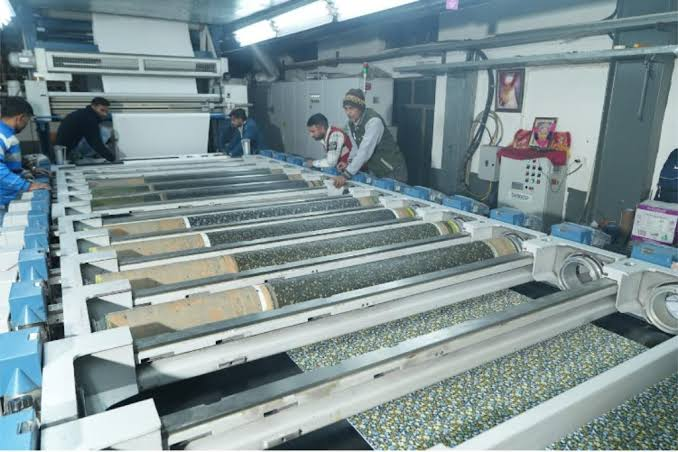
CMC en pasta para impresión textil
Función como espesante en formulaciones de pasta
In printing paste, CMC can modify viscosity, screen flow and transfer to the fabric. A shear-thinning paste may show lower apparent viscosity at higher shear rate; this is different from time-dependent structural recovery after the squeegee passes. Measure flow and recovery with a defined shear history and reading schedule when required, then verify transfer and print definition. Do not assume rapid recovery from the CMC name or one viscosity reading.
Selected CMC grades can be evaluated in compatible pigment formulations or as components of tested reactive-printing blends. In reactive printing on cellulosic fabric, compare the candidate with the established alginate reference for dye interaction, rheology, retained color and wash-off rather than inferring suitability from DS or viscosity alone.
Gama DS recomendada para aplicaciones de impresión
Do not specify one universal DS range for textile printing. DS affects solubility, electrolyte tolerance and interaction with dyes and auxiliaries; the appropriate value depends on the printing route and the supplier’s grade design. Request the current grade-specific FSX TDS and the declared DS test method and acceptance range. Use a common controlled screening recipe, then validate the candidate in the intended application with appropriate preparation.
Higher DS can improve solubility and salt tolerance, but DS alone does not guarantee print performance. Purity, substitution uniformity, molecular-weight distribution and the full dye/alkali/electrolyte system also influence rheology, color yield and wash-off.
Compatibilidad con sistemas de tintes pigmentados y reactivos
Antes de utilizar CMC en una nueva fórmula de pasta, realiza una prueba de compatibilidad con el aglutinante, el fijador y cualquier otro aditivo incluido en la fórmula. Algunas combinaciones pueden provocar inestabilidad en la viscosidad o separación de fases durante el almacenamiento.
Define paste holding time from the customer’s actual temperature and recipe. Measure viscosity, homogeneity and print result at preparation and at the intended production intervals; do not assume a universal 24- or 48-hour stability claim.
CMC en auxiliares para el teñido textil
Función como dispersante y estabilizador
CMC is not a primary dyeing auxiliary in every process. Any use in a dye bath should be treated as a customer-specific formulation question and evaluated for dye chemistry, electrolyte level, liquor flow, filtration and wash-off.
Método de aplicación y rango de concentración
Avoid a generic dye-bath dosage. Begin with the dye or machine supplier’s validated process, then screen the CMC grade at laboratory scale and confirm that it does not impair leveling, filtration, shade or fastness.
Si está considerando utilizar el CMC como auxiliar de teñido, solicite las pautas de aplicación a su proveedor y realice pruebas a pequeña escala antes de ajustar la composición química de su baño de tinte. La interacción entre el CMC y su sistema de tinte específico debe confirmarse experimentalmente.

Cómo elegir el grado de CMC adecuado para su proceso
Viscosidad baja, media y alta
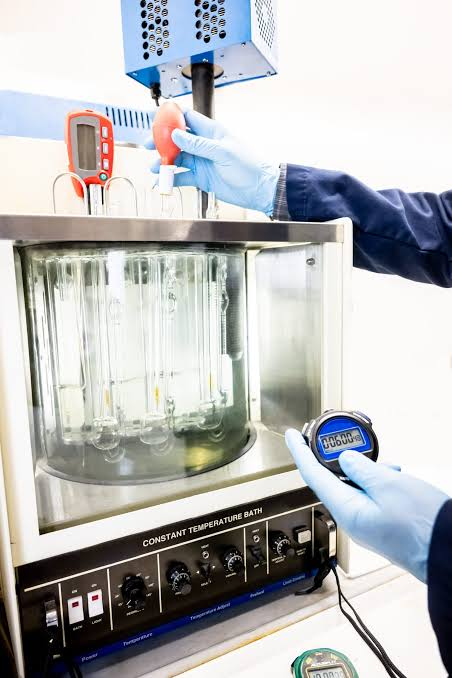
CMC viscosity is measured in a solution at a specified concentration and temperature. Report the concentration basis, water, preparation, instrument, spindle, speed and reading time; do not impose one test condition across all commercial grades. The following labels are screening descriptions, not application approvals:
- Baja viscosidad grades may be screened where low solution viscosity is needed, but dye-bath or fabric-pretreatment suitability requires separate chemistry and application checks
- Viscosidad media grades are candidates for sizing only when film properties, application behavior, add-on, weaving and desizing meet the defined requirements
- Alta viscosidad grades may build the required paste body at a useful concentration; that label does not establish screenability, recovery, dye compatibility or finished-print quality
Grado de sustitución (DS) y su efecto en el rendimiento
DS is the average number of carboxymethyl substituents per anhydroglucose unit. It influences solubility and ionic interactions, but it does not guarantee uniform behavior across temperature, pH or recipes. Molecular weight, substitution distribution, concentration and the complete formulation also matter.
For textile procurement, specify DS together with the analytical method and acceptance range. Compare supplier data with solubility, salt-tolerance, viscosity and application tests; a DS number without method and grade context is insufficient.
Lo que debes confirmar con tu proveedor
Antes de realizar el pedido, solicita lo siguiente a tu proveedor de CMC:
- Ficha técnica (TDS) — Gama DS, especificación de viscosidad, pureza y solubilidad
- Ficha de datos de seguridad (FDS) — condiciones de almacenamiento, vida útil y requisitos de manejo
- CoA (Certificado de análisis) — resultados de pruebas específicos de cada lote
- Cantidad de la muestra — para pruebas internas antes de comprometerse con un volumen a granel
Si vas a cambiar de otro agente de calibrado o espesante al CMC, una prueba comparativa en la que se comparen tu producto actual con el nuevo grado es la forma más confiable de validar el desempeño antes de adoptarlo en la producción a gran escala.
Preguntas frecuentes
What DS is best for textile-grade CMC?
There is no universal value. Match DS to solubility, electrolyte tolerance and the exact sizing or printing chemistry, and specify the analytical method. FSX offers high-DS textile options for controlled trials.
Can CMC replace sodium alginate in reactive printing?
Not automatically. Compare a purified or high-DS CMC grade or blend with the alginate reference for rheology, color yield, fixation, wash-off and fabric handle.
How should CMC viscosity be compared between suppliers?
For a fixed-SOP QC comparison, match concentration basis, water, preparation and hydration schedule, temperature, instrument, spindle, speed and reading time. For application selection, also confirm appropriate preparation for each grade. An identical elapsed hydration time does not establish that both samples are fully prepared.
What matters when selecting CMC for warp sizing?
Evaluate adhesion, film flexibility, yarn abrasion resistance, add-on consistency, loom performance and desizing—not viscosity alone.
How should a mill approve a new CMC grade?
Review specification and COA, run controlled lab preparation and filtration checks, then conduct an application trial against the approved reference. Request sample matching with your process conditions.
Cómo FSX Chemical te ayuda en tu proceso de abastecimiento
Nuestro equipo técnico puede ayudarte a elegir el grado más adecuado según tu aplicación: compártanos los detalles sobre el tipo de fibra, el método de impresión o la formulación de la pasta, y te recomendaremos una especificación inicial.
Próximos pasos:
- Solicitar un TDS — para el grado de CMC que corresponda a tu solicitud
- Solicitar una muestra — para realizar pruebas internas antes de hacer un pedido a granel
- Solicita la equiparación de calificaciones — Comparte los detalles de tu proceso para recibir una recomendación personalizada
- Póngase en contacto con nuestro equipo técnico — para preguntas sobre cómo dejar de usar el apresto de almidón u otros espesantes: Service@fsxchemical.com
