
















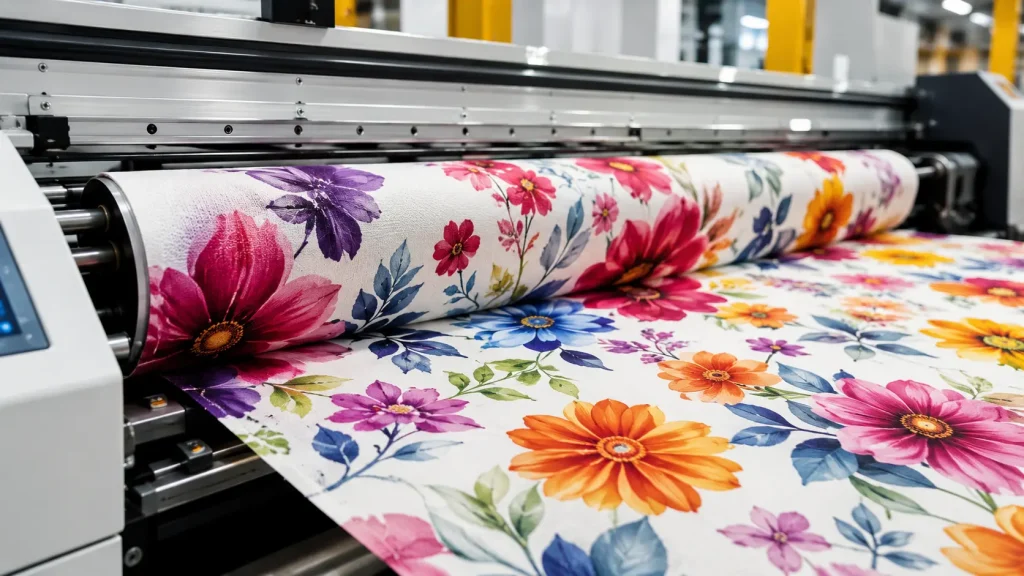
Carboxymethyl cellulose (CMC) can be used in textile sizing and selected printing systems, but the correct grade depends on degree of substitution (DS), viscosity method, purity, salt tolerance and process chemistry. Reactive printing requires particular care: sodium alginate remains a common benchmark, while a purified or high-DS CMC grade or blend should be approved only after compatibility, color-yield and wash-off trials.

Where CMC Fits in Textile Processing
| التطبيق | CMC role | Qualification priority |
|---|---|---|
| Warp sizing | Film formation, adhesion and viscosity control | Yarn strength, abrasion, add-on and desizing |
| الطباعة الصبغية | Rheology component in compatible binder systems | Binder compatibility, outline, handle and curing |
| Selected reactive printing systems | Possible high-DS or purified CMC/blend after trials | Dye/alkali/salt compatibility, color yield and wash-off |
| Disperse or other printing systems | Grade and route dependent | Rheology, filtration, fixation and residue |
| المعالجة المسبقة الرقمية | Separate application—not inferred from screen-printing grade | Fabric-bath filtration, applied add-on, coating uniformity and ink interaction on fabric; no printhead-ink approval inferred |
CMC في معالجة المنسوجات
كيف يعمل CMC كعامل تحديد الحجم
في عملية تلميع السداة، يتم طلاء الخيوط بعامل تلميع قبل النسيج للحد من التمزق الناتج عن الاحتكاك والضغط الميكانيكي على النول. ويشكل مركب الكربونات الميتيلية (CMC) طبقة مرنة قابلة للذوبان في الماء حول سطح الخيوط، مما يوفر حماية مؤقتة أثناء النسيج دون إحداث تغيير دائم في الألياف.
Compare the CMC sizing film with the existing size formulation on the intended yarn. Record adhesion, flexibility, abrasion resistance, shedding and removal after weaving; do not infer superior film uniformity or easier desizing from the polymer name alone.
درجات اللزوجة الموصى بها لتحديد الحجم
Viscosity is one selection parameter, alongside film adhesion and flexibility, yarn abrasion resistance, applied add-on, bath stability and desizing. Select a workable viscosity at the actual sizing-bath temperature, concentration and application speed. Confirm protection and shedding in the subsequent loom trial; loom speed is not the speed at which the sizing bath is applied.
Sizing concentration is process-specific. Establish the working solids from yarn count and blend, add-on target, loom conditions, desizing requirement and compatibility with starch or synthetic sizing agents; confirm performance in a controlled loom trial instead of applying a universal dosage.
اعتبارات إزالة المادة المثبتة والغسل
CMC water solubility can support desizing, but it does not establish a universal warm-water-only removal process. Test the complete size recipe, including starch, synthetic polymers, lubricants and any changes during drying or storage, under the intended wash temperature, water quality, time and mechanical action. Other recipe components may require their own removal treatment.
Before reactive or vat dyeing, verify residual size and fabric absorbency after the proposed desizing sequence, then check dyeing uniformity. A supplier solubility statement alone does not prove complete removal from the woven fabric.

CMC في معجون طباعة المنسوجات
تعمل كمكثف في تركيبات المعجون
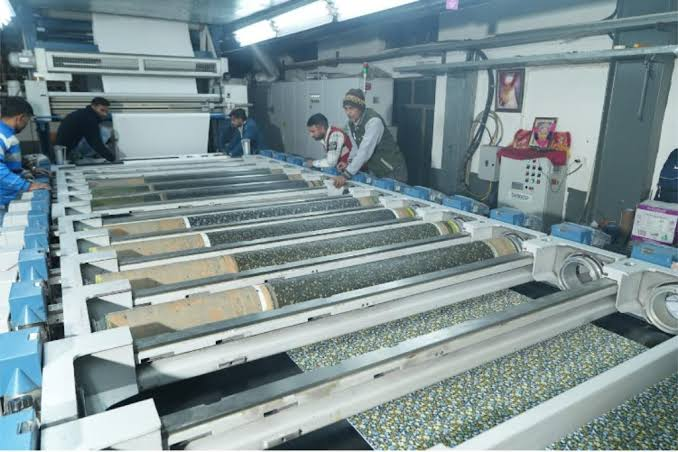
In printing paste, CMC can modify viscosity, screen flow and transfer to the fabric. A shear-thinning paste may show lower apparent viscosity at higher shear rate; this is different from time-dependent structural recovery after the squeegee passes. Measure flow and recovery with a defined shear history and reading schedule when required, then verify transfer and print definition. Do not assume rapid recovery from the CMC name or one viscosity reading.
Selected CMC grades can be evaluated in compatible pigment formulations or as components of tested reactive-printing blends. In reactive printing on cellulosic fabric, compare the candidate with the established alginate reference for dye interaction, rheology, retained color and wash-off rather than inferring suitability from DS or viscosity alone.
مجموعة DS الموصى بها لتطبيقات الطباعة
Do not specify one universal DS range for textile printing. DS affects solubility, electrolyte tolerance and interaction with dyes and auxiliaries; the appropriate value depends on the printing route and the supplier’s grade design. Request the current grade-specific FSX TDS and the declared DS test method and acceptance range. Use a common controlled screening recipe, then validate the candidate in the intended application with appropriate preparation.
Higher DS can improve solubility and salt tolerance, but DS alone does not guarantee print performance. Purity, substitution uniformity, molecular-weight distribution and the full dye/alkali/electrolyte system also influence rheology, color yield and wash-off.
التوافق مع أنظمة الأصباغ الصبغية والتفاعلية
قبل استخدام مادة CMC في تركيبة معجون جديدة، قم بإجراء اختبار التوافق مع المادة الرابطة والمثبت وأي مواد مساعدة أخرى موجودة في الوصفة. فقد تؤدي بعض التركيبات إلى عدم استقرار اللزوجة أو انفصال الطور أثناء التخزين.
Define paste holding time from the customer’s actual temperature and recipe. Measure viscosity, homogeneity and print result at preparation and at the intended production intervals; do not assume a universal 24- or 48-hour stability claim.
شركة CMC في مجال المواد المساعدة لصبغ المنسوجات
دوره كمُشتت ومُثبِّت
CMC is not a primary dyeing auxiliary in every process. Any use in a dye bath should be treated as a customer-specific formulation question and evaluated for dye chemistry, electrolyte level, liquor flow, filtration and wash-off.
طريقة الاستخدام ونطاق التركيز
Avoid a generic dye-bath dosage. Begin with the dye or machine supplier’s validated process, then screen the CMC grade at laboratory scale and confirm that it does not impair leveling, filtration, shade or fastness.
إذا كنت تفكر في استخدام مادة CMC كمواد مساعدة في عملية الصباغة، فاطلب إرشادات الاستخدام من المورد الخاص بك وقم بإجراء تجارب على نطاق صغير قبل تعديل التركيب الكيميائي لحمام الصباغة. وينبغي التأكد تجريبياً من التفاعل بين مادة CMC ونظام الصباغة الذي تستخدمه.

اختيار الدرجة المناسبة من مادة CMC لعملية التصنيع الخاصة بك
اللزوجة المنخفضة مقابل المتوسطة مقابل العالية
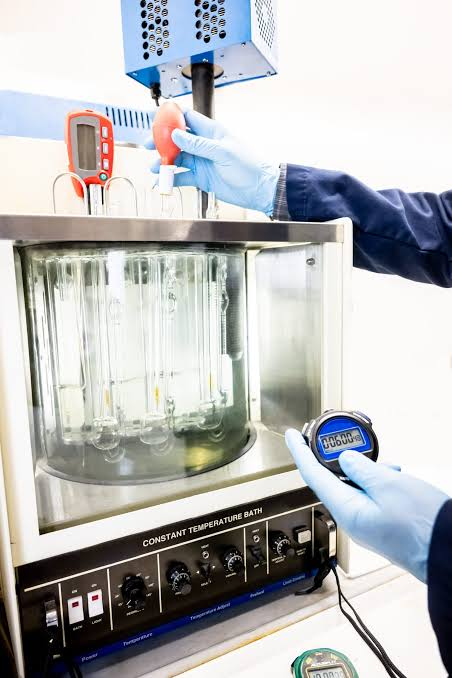
CMC viscosity is measured in a solution at a specified concentration and temperature. Report the concentration basis, water, preparation, instrument, spindle, speed and reading time; do not impose one test condition across all commercial grades. The following labels are screening descriptions, not application approvals:
- لزوجة منخفضة grades may be screened where low solution viscosity is needed, but dye-bath or fabric-pretreatment suitability requires separate chemistry and application checks
- لزوجة متوسطة grades are candidates for sizing only when film properties, application behavior, add-on, weaving and desizing meet the defined requirements
- لزوجة عالية grades may build the required paste body at a useful concentration; that label does not establish screenability, recovery, dye compatibility or finished-print quality
درجة الاستبدال (DS) وتأثيرها على الأداء
DS is the average number of carboxymethyl substituents per anhydroglucose unit. It influences solubility and ionic interactions, but it does not guarantee uniform behavior across temperature, pH or recipes. Molecular weight, substitution distribution, concentration and the complete formulation also matter.
For textile procurement, specify DS together with the analytical method and acceptance range. Compare supplier data with solubility, salt-tolerance, viscosity and application tests; a DS number without method and grade context is insufficient.
الأمور التي يجب التأكد منها مع المورد
قبل تقديم الطلب، اطلب ما يلي من مورد CMC الخاص بك:
- TDS (ورقة البيانات الفنية) — مجموعة DS، ومواصفات اللزوجة، والنقاء، والقابلية للذوبان
- SDS (ورقة بيانات السلامة) — شروط التخزين، ومدة الصلاحية، ومتطلبات المناولة
- شهادة التحليل (CoA) — نتائج الاختبارات الخاصة بكل دفعة
- كمية العينة — لإجراء تجارب داخلية قبل الشروع في إنتاج كميات كبيرة
إذا كنت تنوي التحول من عامل تحديد الحجم أو مادة مثخنة أخرى إلى مادة CMC، فإن إجراء تجربة مقارنة مباشرة بين المنتج الحالي والدرجة الجديدة يُعد الطريقة الأكثر موثوقية للتحقق من الأداء قبل اعتمادها بشكل كامل في الإنتاج.
الأسئلة الشائعة
What DS is best for textile-grade CMC?
There is no universal value. Match DS to solubility, electrolyte tolerance and the exact sizing or printing chemistry, and specify the analytical method. FSX offers high-DS textile options for controlled trials.
Can CMC replace sodium alginate in reactive printing?
Not automatically. Compare a purified or high-DS CMC grade or blend with the alginate reference for rheology, color yield, fixation, wash-off and fabric handle.
How should CMC viscosity be compared between suppliers?
For a fixed-SOP QC comparison, match concentration basis, water, preparation and hydration schedule, temperature, instrument, spindle, speed and reading time. For application selection, also confirm appropriate preparation for each grade. An identical elapsed hydration time does not establish that both samples are fully prepared.
What matters when selecting CMC for warp sizing?
Evaluate adhesion, film flexibility, yarn abrasion resistance, add-on consistency, loom performance and desizing—not viscosity alone.
How should a mill approve a new CMC grade?
Review specification and COA, run controlled lab preparation and filtration checks, then conduct an application trial against the approved reference. Request sample matching with your process conditions.
كيف تدعم FSX Chemical عملية التوريد الخاصة بك
يمكن لفريقنا الفني مساعدتك في اختيار الدرجة المناسبة بناءً على الاستخدام المقصود — ما عليك سوى إطلاعنا على نوع الألياف أو طريقة الطباعة أو تفاصيل تركيبة المعجون، وسنقدم لك توصية بالمواصفات الأولية.
الخطوات التالية:
- طلب تقرير TDS — بالنسبة لدرجة CMC التي تتوافق مع طلبك
- اطلب عينة — لإجراء تجارب داخلية قبل تقديم طلب شراء بكميات كبيرة
- اطلب مطابقة الدرجات — شاركنا تفاصيل العملية التي تتبعها للحصول على توصية مخصصة
- اتصل بفريقنا الفني — للأسئلة المتعلقة بالتحول عن استخدام النشا كمكثف أو أي مكثفات أخرى: Service@fsxchemical.com
