

















Carboxymethyl cellulose (CMC) can be used in textile sizing and selected printing systems, but the correct grade depends on degree of substitution (DS), viscosity method, purity, salt tolerance and process chemistry. Reactive printing requires particular care: sodium alginate remains a common benchmark, while a purified or high-DS CMC grade or blend should be approved only after compatibility, color-yield and wash-off trials.

Where CMC Fits in Textile Processing
| განაცხადი | CMC role | Qualification priority |
|---|---|---|
| Warp sizing | Film formation, adhesion and viscosity control | Yarn strength, abrasion, add-on and desizing |
| Pigment printing | Rheology component in compatible binder systems | Binder compatibility, outline, handle and curing |
| Selected reactive printing systems | Possible high-DS or purified CMC/blend after trials | Dye/alkali/salt compatibility, color yield and wash-off |
| Disperse or other printing systems | Grade and route dependent | Rheology, filtration, fixation and residue |
| Digital pretreatment | Separate application—not inferred from screen-printing grade | Fabric-bath filtration, applied add-on, coating uniformity and ink interaction on fabric; no printhead-ink approval inferred |
CMC in Textile Sizing
How CMC Works as a Sizing Agent
In warp sizing, yarn is coated with a sizing agent before weaving to reduce breakage caused by friction and mechanical stress on the loom. CMC forms a flexible, water-soluble film around the yarn surface that provides temporary protection during weaving without permanently altering the fiber.
Compare the CMC sizing film with the existing size formulation on the intended yarn. Record adhesion, flexibility, abrasion resistance, shedding and removal after weaving; do not infer superior film uniformity or easier desizing from the polymer name alone.
Recommended Viscosity Grades for Sizing
Viscosity is one selection parameter, alongside film adhesion and flexibility, yarn abrasion resistance, applied add-on, bath stability and desizing. Select a workable viscosity at the actual sizing-bath temperature, concentration and application speed. Confirm protection and shedding in the subsequent loom trial; loom speed is not the speed at which the sizing bath is applied.
Sizing concentration is process-specific. Establish the working solids from yarn count and blend, add-on target, loom conditions, desizing requirement and compatibility with starch or synthetic sizing agents; confirm performance in a controlled loom trial instead of applying a universal dosage.
Desizing and Washout Considerations
CMC water solubility can support desizing, but it does not establish a universal warm-water-only removal process. Test the complete size recipe, including starch, synthetic polymers, lubricants and any changes during drying or storage, under the intended wash temperature, water quality, time and mechanical action. Other recipe components may require their own removal treatment.
Before reactive or vat dyeing, verify residual size and fabric absorbency after the proposed desizing sequence, then check dyeing uniformity. A supplier solubility statement alone does not prove complete removal from the woven fabric.

CMC in Textile Printing Paste
Function as a Thickener in Paste Formulations
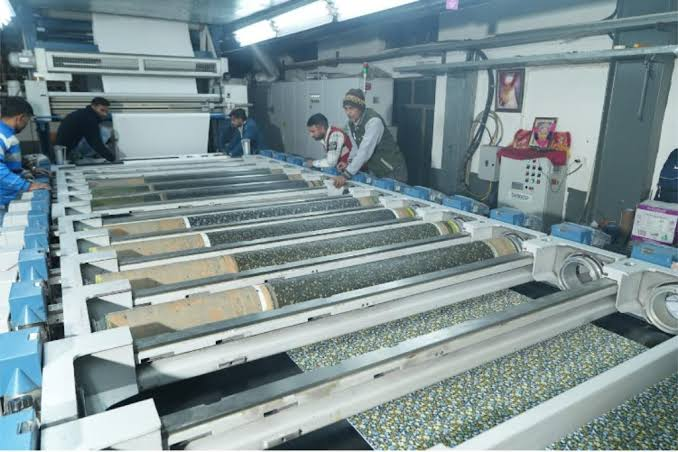
In printing paste, CMC can modify viscosity, screen flow and transfer to the fabric. A shear-thinning paste may show lower apparent viscosity at higher shear rate; this is different from time-dependent structural recovery after the squeegee passes. Measure flow and recovery with a defined shear history and reading schedule when required, then verify transfer and print definition. Do not assume rapid recovery from the CMC name or one viscosity reading.
Selected CMC grades can be evaluated in compatible pigment formulations or as components of tested reactive-printing blends. In reactive printing on cellulosic fabric, compare the candidate with the established alginate reference for dye interaction, rheology, retained color and wash-off rather than inferring suitability from DS or viscosity alone.
Recommended DS Range for Printing Applications
Do not specify one universal DS range for textile printing. DS affects solubility, electrolyte tolerance and interaction with dyes and auxiliaries; the appropriate value depends on the printing route and the supplier’s grade design. Request the current grade-specific FSX TDS and the declared DS test method and acceptance range. Use a common controlled screening recipe, then validate the candidate in the intended application with appropriate preparation.
Higher DS can improve solubility and salt tolerance, but DS alone does not guarantee print performance. Purity, substitution uniformity, molecular-weight distribution and the full dye/alkali/electrolyte system also influence rheology, color yield and wash-off.
Compatibility with Pigment and Reactive Dye Systems
Before using CMC in a new paste formulation, run a compatibility check with your binder, fixative, and any other auxiliaries in the recipe. Some combinations can cause viscosity instability or phase separation during storage.
Define paste holding time from the customer’s actual temperature and recipe. Measure viscosity, homogeneity and print result at preparation and at the intended production intervals; do not assume a universal 24- or 48-hour stability claim.
CMC in Textile Dyeing Auxiliaries
Role as a Dispersant and Stabilizer
CMC is not a primary dyeing auxiliary in every process. Any use in a dye bath should be treated as a customer-specific formulation question and evaluated for dye chemistry, electrolyte level, liquor flow, filtration and wash-off.
Application Method and Concentration Range
Avoid a generic dye-bath dosage. Begin with the dye or machine supplier’s validated process, then screen the CMC grade at laboratory scale and confirm that it does not impair leveling, filtration, shade or fastness.
If you are considering CMC as a dyeing auxiliary, request application guidelines from your supplier and run small-scale trials before adjusting your dye bath chemistry. The interaction between CMC and your specific dye system should be confirmed experimentally.

Selecting the Right CMC Grade for Your Process
Low vs. Medium vs. High Viscosity
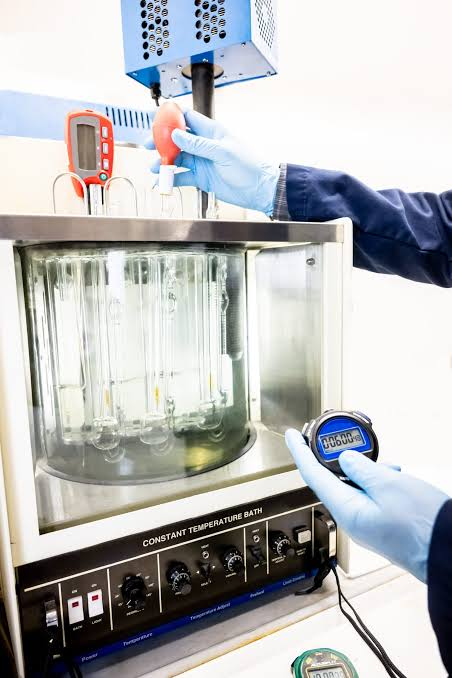
CMC viscosity is measured in a solution at a specified concentration and temperature. Report the concentration basis, water, preparation, instrument, spindle, speed and reading time; do not impose one test condition across all commercial grades. The following labels are screening descriptions, not application approvals:
- Low viscosity grades may be screened where low solution viscosity is needed, but dye-bath or fabric-pretreatment suitability requires separate chemistry and application checks
- Medium viscosity grades are candidates for sizing only when film properties, application behavior, add-on, weaving and desizing meet the defined requirements
- High viscosity grades may build the required paste body at a useful concentration; that label does not establish screenability, recovery, dye compatibility or finished-print quality
Degree of Substitution (DS) and Its Effect on Performance
DS is the average number of carboxymethyl substituents per anhydroglucose unit. It influences solubility and ionic interactions, but it does not guarantee uniform behavior across temperature, pH or recipes. Molecular weight, substitution distribution, concentration and the complete formulation also matter.
For textile procurement, specify DS together with the analytical method and acceptance range. Compare supplier data with solubility, salt-tolerance, viscosity and application tests; a DS number without method and grade context is insufficient.
What to Confirm with Your Supplier
Before ordering, request the following from your CMC supplier:
- TDS (Technical Datasheet) — DS range, viscosity specification, purity, and solubility
- SDS (Safety Data Sheet) — storage conditions, shelf life, and handling requirements
- CoA (Certificate of Analysis) — batch-specific test results
- ნიმუშის რაოდენობა — for internal trials before committing to bulk volume
If you are switching from another sizing agent or thickener to CMC, a side-by-side trial comparing your current product with the new grade is the most reliable way to validate performance before full production adoption.
ხშირად დასმული კითხვები
What DS is best for textile-grade CMC?
There is no universal value. Match DS to solubility, electrolyte tolerance and the exact sizing or printing chemistry, and specify the analytical method. FSX offers high-DS textile options for controlled trials.
Can CMC replace sodium alginate in reactive printing?
Not automatically. Compare a purified or high-DS CMC grade or blend with the alginate reference for rheology, color yield, fixation, wash-off and fabric handle.
How should CMC viscosity be compared between suppliers?
For a fixed-SOP QC comparison, match concentration basis, water, preparation and hydration schedule, temperature, instrument, spindle, speed and reading time. For application selection, also confirm appropriate preparation for each grade. An identical elapsed hydration time does not establish that both samples are fully prepared.
What matters when selecting CMC for warp sizing?
Evaluate adhesion, film flexibility, yarn abrasion resistance, add-on consistency, loom performance and desizing—not viscosity alone.
How should a mill approve a new CMC grade?
Review specification and COA, run controlled lab preparation and filtration checks, then conduct an application trial against the approved reference. Request sample matching with your process conditions.
How FSX Chemical Supports Your Sourcing Process
Our technical team can assist with grade selection based on your application — share your fiber type, printing method, or paste formulation details and we will recommend a starting specification.
შემდეგი ნაბიჯები:
- Request a TDS — for the CMC grade that matches your application
- შეიძინეთ ნიმუში — to run internal trials before bulk ordering
- მოითხოვეთ მარკის შერჩევა — share your process details for a targeted recommendation
- დაუკავშირდით ჩვენს ტექნიკურ გუნდს — for questions on switching from starch sizing or other thickeners: Service@fsxchemical.com
