Cellulose-based textile printing pastes use derivatives such as CMC to control viscosity, flow and transfer. The correct grade depends on the dye or pigment route, fabric, electrolyte level, viscosity method, filtration and final wash-off or curing result. A supplier should be approved using an application trial, not a viscosity number or “cellulose paste” label alone.
Cellulose Paste Route Selection
| आवेदन | CMC or cellulose-paste role | Critical approval checks |
|---|---|---|
| Pigment screen printing | Rheology component in a binder system | Binder compatibility, outline, curing, handle and fastness |
| प्रतिक्रियाशील स्क्रीन प्रिंटिंग | Candidate high-DS/purified grade or blend | Dye/alkali/salt compatibility, color yield and wash-off |
| Disperse printing | Route- and formulation-dependent thickener | Rheology, fixation, residue and cleaning |
| Digital textile pretreatment | Coating or padding formulation component, not ink additive | Filtration, coating uniformity, pickup, ink response and storage |
What Is Cellulose-Based Printing Paste
Role of CMC in Printing Paste Formulations
Carboxymethyl cellulose (CMC) can act as a thickener or rheology component in selected printing-paste formulations. It can help control paste placement, but migration and pattern definition also depend on the complete formulation, fabric, deposit, drying and fixation or curing route.
Compatibility must be established for the exact CMC grade and complete formulation. Pigment binder systems, reactive dye pastes and blends impose different requirements. Confirm preparation, viscosity development, filtration and printing results rather than treating water solubility as proof of application compatibility.

How It Differs from Sodium Alginate-Based Paste
Sodium alginate is a common reference thickener for reactive printing on cellulosic fabrics because of its relatively low reactivity with reactive dyes. This is not absolute chemical inertness or a guarantee of constant color yield. CMC or a CMC-containing blend needs its own grade-specific dye, alkali, rheology and wash-off evaluation.
For reactive printing on cotton, use the current approved alginate paste as a benchmark where applicable. Evaluate a candidate CMC grade or blend on the same fabric and dye system; record unchanged-recipe and separately optimized-recipe comparisons. Any cost advantage should be calculated only after both routes meet the agreed finished-print requirements.
Key Performance Parameters to Evaluate
When assessing printing paste suppliers, these parameters should appear in the technical datasheet and be verifiable through sample trials.
Viscosity and Rheology
Measure the flow response at defined shear conditions and assess recovery with a separate, timed shear-history sequence. Shear thinning describes a decrease in apparent viscosity as shear rate increases; it does not by itself establish how quickly structure recovers after application. A rotational speed is not automatically a defined shear rate across different spindle geometries.
Agree the usable working-paste viscosity and holding window for the actual printing route. Record concentration basis, preparation, hydration, temperature, instrument, spindle, speed, rest history and reading time. Test fresh paste and the intended maximum holding time; a generic 24–72-hour interval is not a shelf-life specification for every dye-containing paste.
Wash Fastness and Color Stability
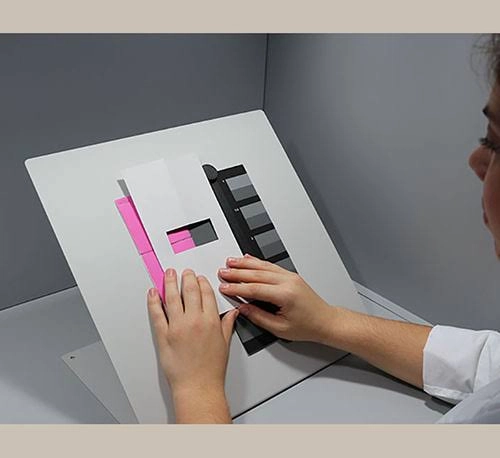
Wash fastness is a critical end-product requirement, particularly for export orders where buyer specifications often reference ISO or AATCC test standards. The paste formulation — including the thickener type, binder, and fixative — all influence the final wash fastness result.
When requesting samples, specify the wash fastness standard your buyers require (e.g., ISO 105-C06 or equivalent) so you can run trials under comparable conditions. Paste performance on this metric should be confirmed through your own lab testing, not taken from supplier claims alone.
Compatibility with Dye Systems
Not all CMC grades are compatible with every dye system. Some dye auxiliaries, fixatives, or binders can cause viscosity breakdown or paste instability when combined with certain CMC formulations.
Before scaling up, run a small compatibility test with your existing dye chemistry. Share your current paste recipe and dye system details with your supplier — this allows them to recommend the appropriate CMC grade and flag any known compatibility issues.
Common Applications by Printing Method
वर्णक मुद्रण
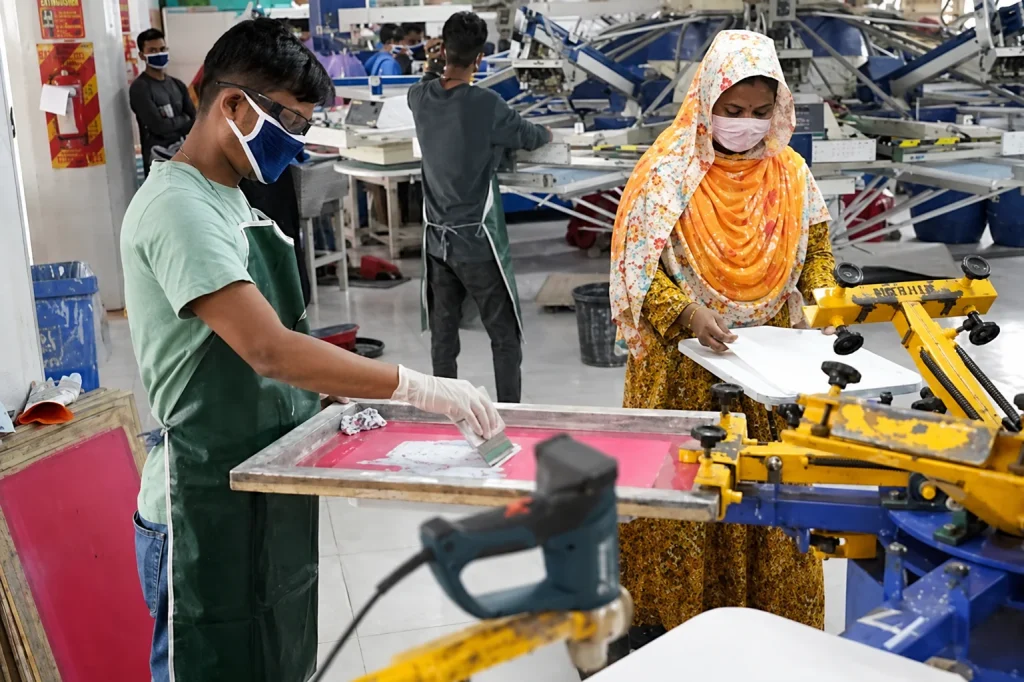
In pigment printing, insoluble pigment is held on the textile by the binder system after the specified drying and curing process. A candidate CMC component must be checked with that binder, pigment and auxiliary package. Evaluate shade, definition, handle and required fastness on the finished fabric.
A low-viscosity grade does not automatically produce a softer print. Compare actual thickener and binder consumption, deposited solids, curing and finished-fabric handle at acceptable print quality. Record any dosage change separately from the original-recipe comparison.
प्रतिक्रियाशील रंग मुद्रण
Sodium alginate remains a common benchmark for reactive printing on cellulosic fabrics. A purified or high-DS CMC grade, or a CMC-containing blend, may be screened only after checking dye, alkali and electrolyte compatibility, color yield, print definition and wash-off. Do not promise a universal one-to-one replacement.
If you are considering CMC as a substitute or supplement in reactive dye paste, run a direct comparison trial on your substrate and confirm color yield and pattern sharpness before changing your production recipe.
Digital and Inkjet Textile Printing
In digital textile printing, CMC is used in pre-treatment paste applied to fabric before inkjet printing, rather than as a direct ink component. Pre-treatment helps improve ink uptake, reduce bleeding, and enhance color definition on the fabric surface.
For digital fabric pretreatment, select a grade and working concentration that suit the actual padding, coating or spray equipment. Check hydration, filtration, application uniformity, dried deposit and interaction with the selected ink. A screen-paste approval does not establish pretreatment suitability or suitability for addition to printhead ink.

What to Ask a Printing Paste Supplier Before Ordering
Technical Documentation Checklist
Before committing to a supplier, request the following documents and review them against your production requirements:
- Technical Datasheet (TDS) — viscosity range, solids content, recommended dilution, and application method
- सुरक्षा डेटा शीट (एसडीएस) — safety and handling information; request the current TDS or supplier storage specification for technical storage conditions and shelf life
- Certificate of Analysis (CoA) — batch-specific test results confirming key parameters
- Compatibility notes — any known limitations with specific dye systems or auxiliaries
If a supplier is unable to provide these documents on request, that is a meaningful signal in your evaluation.

Sample Trial Recommendations
- Preparing reference and candidate pastes on a recorded final-mass basis, then comparing fresh paste and the intended maximum holding time with the same viscosity method
- Running a small-scale print on your target fabric using your standard dye and fixation process
- Recording initial deposit and definition, then assessing shade, sharpness and handle after the route-specific fixation or curing and required wash-off
- Running a wash fastness test under your buyer’s specified standard
Document your trial results so you have a clear baseline for comparison if you later need to switch grades or suppliers.
अक्सर पूछे जाने वाले प्रश्न
Is every cellulose-based printing paste a CMC product?
No. The description may cover CMC, modified cellulose blends or formulated products. Request the exact grade identity, TDS, SDS and batch COA.
क्या सीएमसी प्रतिक्रियाशील प्रिंटिंग में सोडियम अल्जिनेट की जगह ले सकता है?
Not universally. Screen a suitable high-DS or purified CMC grade or blend against the alginate reference under the same dye, alkali, salt, fixation and wash-off conditions.
Which CMC parameters matter for textile printing?
Review DS with its method, purity, salt tolerance, viscosity with the complete test method, solubility, filtration and batch consistency.
Does the thickener determine wash fastness?
It can affect paste placement and wash-off, but dye or pigment chemistry, binder, fixation or curing and washing conditions determine the complete result.
How should a new supplier be qualified?
Compare documents and retained samples, prepare both products with the same method, then run lab and production-relevant trials. Use नमूने और मिलान with your current TDS and process data.
How FSX Chemical Supports Your Sourcing Process
FSX Chemical supplies CMC and related textile printing thickeners. Request grade-specific technical documents and sample-matching information for the intended printing route, then qualify the complete formulation before bulk purchase.
If you are currently using a different thickener and considering a transition to CMC-based paste, our technical team can assist with grade selection and provide guidance on trial formulation adjustments.
अगले कदम:
- टीडीएस का अनुरोध करें — review specifications for the paste grade relevant to your application
- नमूना अनुरोध करें — run paste trials before committing to bulk volume
- ग्रेड मिलान के लिए अनुरोध करें — share your dye system, fabric type, and printing method for a specific recommendation
- हमारी तकनीकी टीम से संपर्क करें — for formulation support or supplier transition guidance: Service@fsxchemical.com