Technical Comparison: CMC, CMS, and Sodium Alginate for Textiles
CMC, CMS and sodium alginate can all thicken textile printing systems, but their chemistry, rheology,...
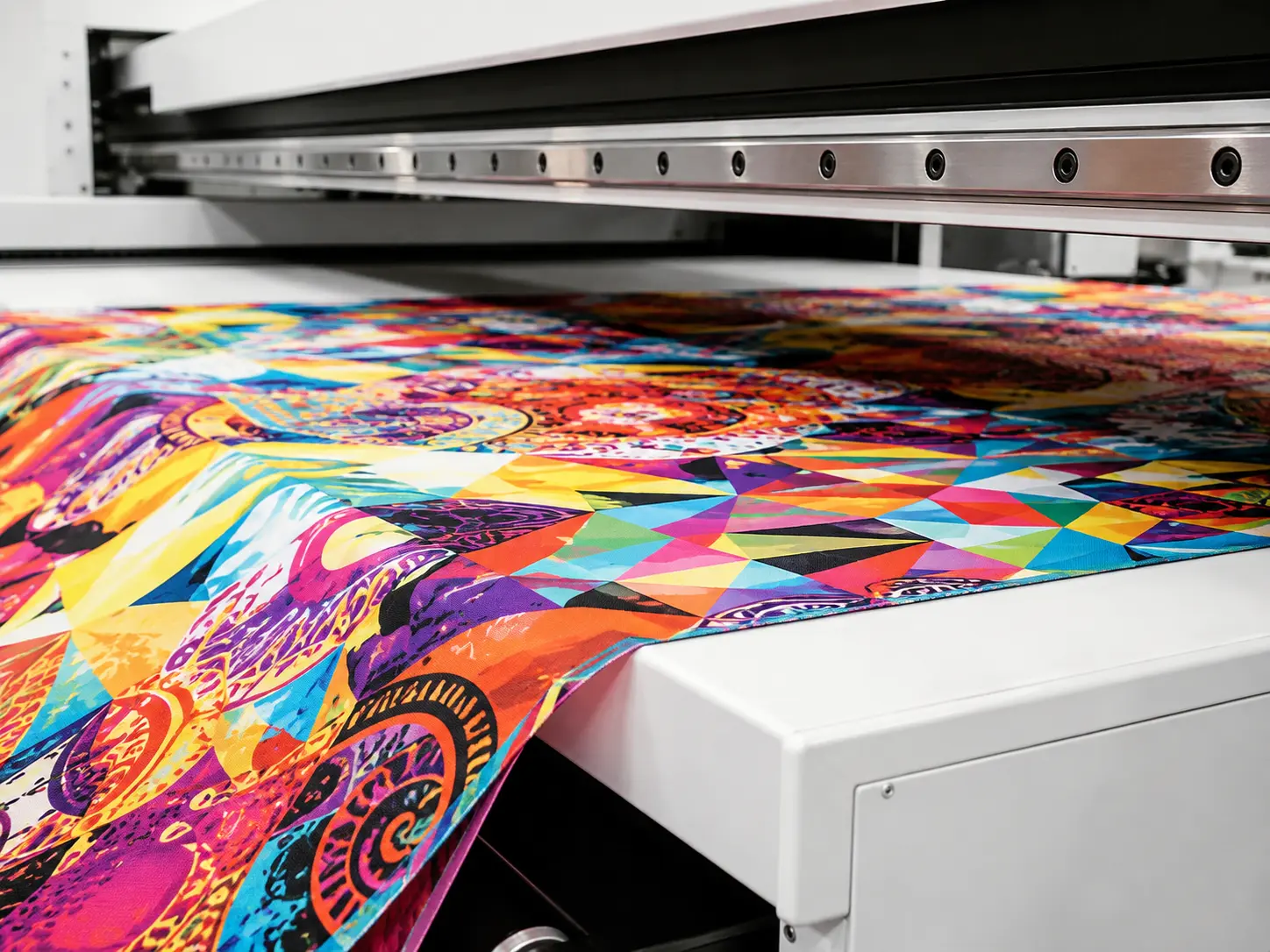
CMC, CMS and sodium alginate can all function as rheology-control materials in textile printing, but they are not interchangeable versions of the same thickener. Their polymer origin, substitution chemistry, hydration, electrolyte response, rheology, dye compatibility, filtration and application behavior can differ substantially. This technical comparison explains where each route fits and how to evaluate them under real textile printing conditions.
Textile printing thickeners are often compared by only two numbers: viscosity and price. That approach is too narrow for reliable technical selection.
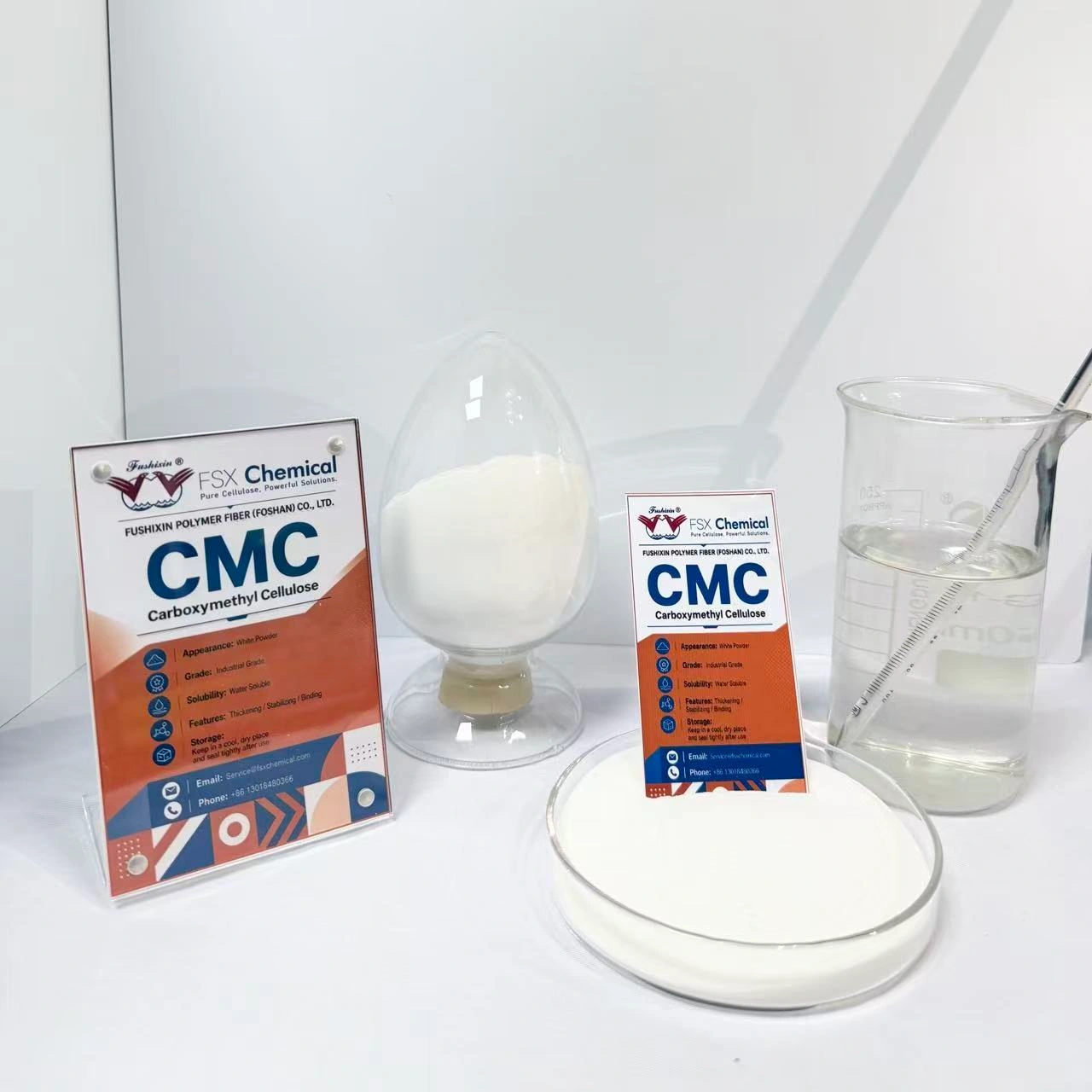
Carboxymethyl cellulose (CMC), carboxymethyl starch (CMS) and sodium alginate are three important polymer routes used in textile printing and related rheology-control applications. All three can increase viscosity in aqueous systems, but their chemical structures and application behavior are different.
A sodium alginate grade that performs well in conventional reactive printing should not automatically be replaced weight for weight with CMC or CMS. Likewise, a CMC or CMS grade that performs well in a selected compound, disperse or specialty system should not be judged only by whether its viscosity matches an alginate reference.
The right comparison therefore begins with the printing process, fabric, dye or pigment system, test method and finished-fabric requirements.
This guide compares CMC, CMS and sodium alginate from the perspective of textile printing performance, grade selection, laboratory testing, supplier qualification and total cost in use.
Quick Comparison: CMC vs CMS vs Sodium Alginate
Parameter
CMC
CMS
Natrium Alginat
Polymer Origin
Modified cellulose
Modified starch
Alginate from brown algae
Main Structural Modification
Carboxymethyl substitution
Carboxymethyl substitution
Natural alginate salt structure
Reactive Printing Position
Selected formulations or compound systems
Selected formulations or compound systems
Common benchmark route
Disperse / Specialty Position
Selected systems
Common candidate in selected disperse and compound systems
This table gives a starting framework. Final suitability depends on the commercial grade and the printing system in which it is tested.
What Are CMC, CMS and Sodium Alginate?
CMC, CMS and sodium alginate are water-compatible polysaccharide-based rheology-control materials, but they come from different polymer families.
CMC
Carboxymethyl cellulose is produced by introducing carboxymethyl groups into cellulose. Commercial grades can differ in degree of substitution, viscosity, purity-related parameters, molecular characteristics and application behavior.
CMS
Carboxymethyl starch is a modified starch in which carboxymethyl groups are introduced into the starch structure. Grades can be designed for different viscosity, hydration and application requirements.
Sodium alginat
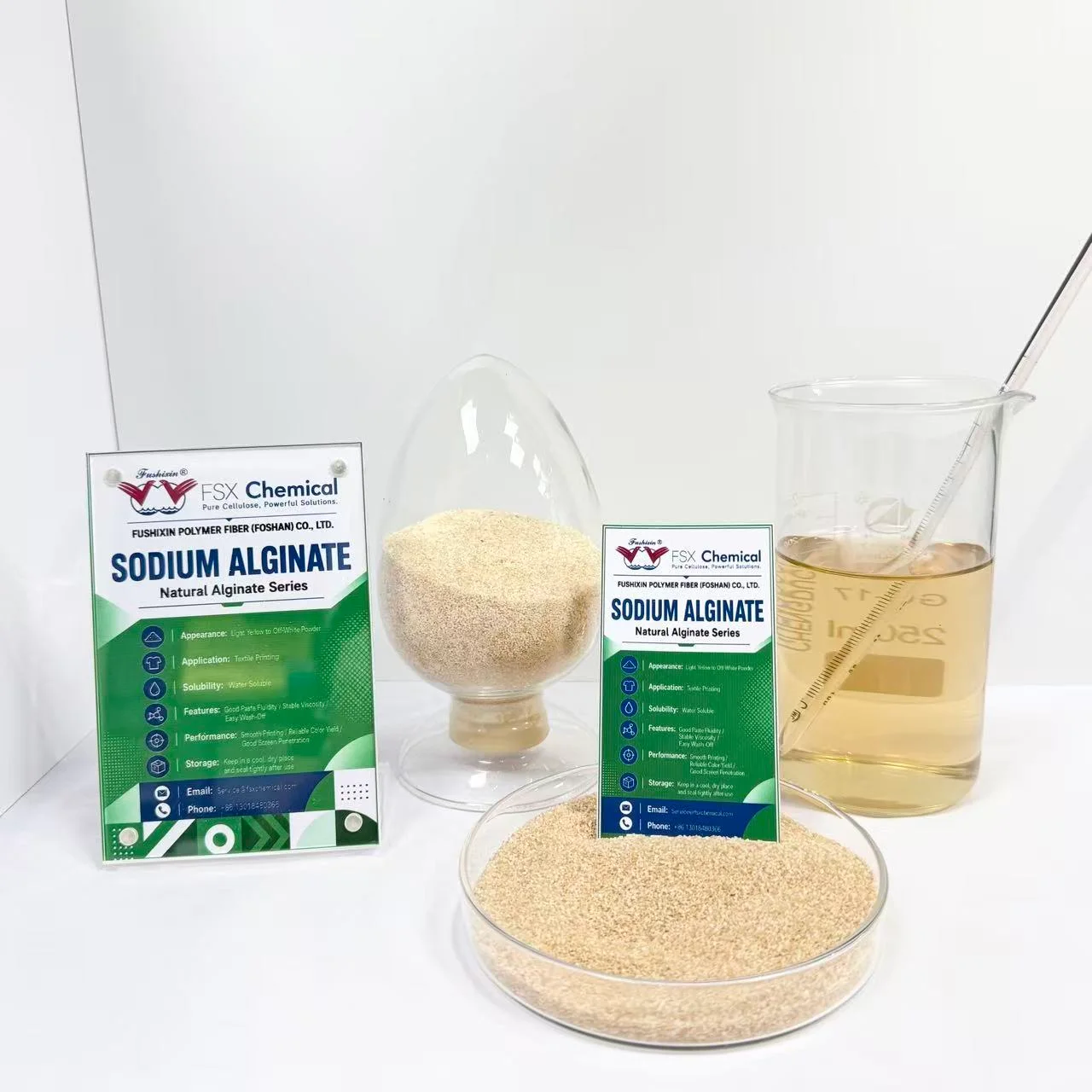
Sodium alginate is the sodium salt of alginic acid, a polysaccharide obtained from brown algae. It has a long history as a thickener in conventional reactive textile printing.
The fact that all three are polysaccharide-based does not make their printing behavior identical.
1. Polymer Origin and Structure
Polymer origin influences the chemical structure from which each commercial thickener begins.
Cellulose-derived CMC
Cellulose is a linear polysaccharide. Carboxymethyl substitution changes its water solubility and ionic behavior, allowing CMC to function as a water-soluble thickener in many industrial systems.
Starch-derived CMS
Starch has a different molecular architecture from cellulose. After carboxymethyl modification, the resulting CMS can provide thickening and rheology functions suitable for selected textile formulations.
Algal sodium alginate
Alginate contains mannuronic-acid and guluronic-acid units. The sequence and molecular characteristics influence viscosity and gel-related behavior, particularly in the presence of multivalent ions.
These structural differences help explain why similar laboratory viscosity does not guarantee similar printing behavior.
2. Substitution Chemistry
CMC and CMS are chemically modified polymers, so substitution-related parameters can be important when comparing grades.
CMC degree of substitution
Degree of substitution, often abbreviated as DS, describes the average extent to which hydroxyl positions in the cellulose structure have been substituted by carboxymethyl groups.
DS can influence solubility and ionic behavior, but a higher DS should not automatically be interpreted as higher quality or better textile printing performance.
CMS substitution
Substitution can also be relevant for CMS, but the importance of the parameter depends on the specific commercial grade and supplier specification.
Sodium alginat
Sodium alginate is not selected through a CMC-style DS specification. Buyers should instead focus on the actual alginate grade, viscosity method, hydration, filtration and application behavior.
3. Viscosity
All three materials can generate viscosity in water, but viscosity comparisons are meaningful only when the test conditions are aligned.
Always define
Polymer concentration
Concentration basis
Kualitas air
Prosedur pencampuran
Waktu hidrasi
Suhu pengukuran
Viskosimeter
Poros, rotor, atau geometri
Kecepatan putaran
Waktu membaca
A 5,000 mPa·s result for one polymer cannot be treated as equivalent to 5,000 mPa·s for another polymer if the concentrations or methods differ.
Even with the same method, viscosity is still only one part of the technical comparison.
4. Rheology and Shear Response
Rheology is often more important than single-point viscosity for predicting printing behavior.
A textile paste experiences different shear conditions during storage, pumping, circulation, screen passage and transfer to fabric.
A useful printing thickener should balance
Low-shear structure
Flow under application shear
Structural recovery after transfer
Controlled penetration
Limited lateral spreading
CMC, CMS and sodium alginate can produce different shear-thinning and recovery profiles even when their measured viscosities are similar.
This is why a technical comparison should include multi-speed or other controlled rheological testing where possible.
5. Hydration and Dissolution
Powder preparation strongly influences the performance of all three polymer families.
Important preparation variables include
Powder addition rate
Mixing intensity
Water temperature
Waktu hidrasi
Batch size
Kualitas air
Poor wetting can create lumps that hydrate slowly and later appear as filtration residue.
Different CMC, CMS and alginate grades can also reach stable viscosity at different rates. A fair comparison must therefore use a defined hydration procedure.
6. Filtration and Screen Passage
Filtration is one of the most useful practical tests for textile printing thickeners.
High residue can come from
Incomplete hydration
Gel particles
Foreign contamination
Chemical incompatibility
Fine screens and detailed designs can be especially sensitive to poorly hydrated or gelled material.
Use the same filtration method
Concentration, preparation, filter opening, sample quantity and holding time should be standardized when comparing CMC, CMS and sodium alginate.
Good filtration does not guarantee zero screen blockage, but it is a valuable comparative indicator.
7. Electrolyte and Chemical Response
All three materials are used inside multi-component formulations where salts, alkalis, dyes, pigments and other auxiliaries can change apparent viscosity or stability.
CMC
CMC grades can respond differently to ionic strength depending on grade characteristics and the complete formulation.
CMS
CMS should also be evaluated in the actual chemical environment rather than approved from clean-water viscosity alone.
Sodium alginat
Alginate is especially sensitive to multivalent ions such as calcium, which can create stronger structures or gel-like behavior.
Water quality and the complete chemical addition sequence should therefore remain controlled during comparison.
8. Compatibility with Reactive Dye Printing
Reactive dye printing is one of the areas where the differences among CMC, CMS and sodium alginate are particularly important.
Sodium alginate is a common benchmark because it provides useful rheological behavior while being comparatively less reactive toward reactive dyes than many hydroxyl-rich carbohydrate thickeners.
CMC and CMS contain modified carbohydrate structures and can be evaluated in selected reactive or compound formulations, but direct one-to-one replacement should not be assumed.
For reactive printing, compare
Complete paste viscosity
Reologi
Kompatibilitas pewarna reaktif
Bagian layar
Definisi cetak
Fiksasi
Pencucian residu pengental
Final suitability should be determined from the finished textile after fixation and washing.
9. Use in Disperse Printing
Disperse printing, particularly on polyester, uses a different colorant and fixation route from reactive cotton printing.
CMS and selected CMC or compound systems can be evaluated depending on the commercial grade, disperse formulation and machine.
Important comparison areas include
Stabilitas pasta
Penyaringan
Bagian layar
Transfer
Keseragaman area padat
Kompatibilitas fiksasi termal
The best thickener route for reactive cotton should not be transferred automatically to disperse polyester.
10. Use in Pigment and Compound Systems
Pigment printing introduces binder chemistry, which changes the thickener requirements.
In these systems, CMC, CMS or alginate should not be selected independently of the binder, pigment dispersion and curing package.
Menilai
Kompatibilitas pengikat
Toleransi elektrolit
Stabilitas pasta
Reologi
Definisi cetak
Pengeringan
Tekstur kain saat disentuh
Application-specific compound thickeners may be useful when one polymer alone cannot provide the preferred balance.
11. Print Definition and Edge Sharpness
Sharp edges depend on the way the paste flows during application and recovers after transfer.
A useful thickener should support
Clean screen passage
Controlled transfer
Limited lateral spreading
Fast enough structural recovery
Stable fine-line reproduction
Higher viscosity is not automatically better. A high-viscosity paste can produce poor fine-line transfer if it is too resistant under application shear.
CMC, CMS and alginate should therefore be compared on actual diagnostic print patterns rather than by viscosity alone.
12. Penetration and Surface Control
Penetration depends on both the thickener and the fabric.
Excessive penetration can create
Weak surface appearance
Loss of fine detail
Unwanted strike-through
Insufficient penetration can create
Surface-heavy printing
Poor coverage in some constructions
Uneven visual appearance
The correct balance is fabric-specific. A candidate should therefore be printed on the actual production textile whenever possible.
13. Fixation and Wash-Off
The role of the thickener does not end when printing is complete.
Reactive systems require fixation and washing, while disperse and pigment routes use their own thermal or curing processes.
After post-treatment, compare
Final color
Kebersihan latar belakang
Definisi cetak
Sisa bahan pada permukaan
Pegangan dari kain
Sodium alginate has an established position in reactive printing partly because its chemistry can support practical dye fixation and subsequent wash-off. CMC and CMS candidates should be evaluated through the same complete process before substitution decisions are made.
14. Holding Stability
Printing paste may remain in storage, circulation or production for hours. A technically acceptable thickener must therefore maintain useful behavior over the actual holding period.
Monitor
Viskositas
nilai pH jika berlaku
Penampilan
Separation
Busa
Penyaringan
A product that gives the correct viscosity immediately after preparation but drifts significantly during production may require reformulation or a different grade.
Sodium Alginate: Where It Is Strongest
Sodium alginat is especially important as a benchmark thickener for conventional reactive printing on suitable cellulosic textiles.
Its main strengths in this context include
Established reactive-printing use
Useful rheological behavior
Comparatively low reactivity toward reactive dyes
Good potential for print definition when properly matched
Practical wash-off in suitable formulations
Its limitations still need attention
Kualitas air
Multivalent-ion contamination
Hidrasi
Penyaringan
Supplier-to-supplier grade differences
Sodium alginate should therefore be selected by full application behavior, not only HV, MV or LV labels.
CMC: Where It Can Be Evaluated
CMC can be evaluated in selected textile printing, viscosity-control and compound-thickener systems.
Important CMC selection factors include
Derajat substitusi
Viscosity grade
Konsentrasi uji
Hidrasi
Penyaringan
Respon elektrolit
Reologi
CMC can be attractive when the formulation benefits from its specific viscosity or compatibility profile, but it should not be described as a universal sodium alginate replacement.
CMS: Where It Can Be Evaluated
CMS can be evaluated in selected disperse, compound and specialty printing systems and in selected reactive systems where the complete formulation has been validated.
Important CMS evaluation factors include
Efisiensi viskositas
Hidrasi
Penyaringan
Stabilitas pasta
Bagian layar
Kompatibilitas sistem warna
Dosis yang efektif
CMS is often considered when cost-performance and compound formulation flexibility are important, but the final decision should be based on printing and post-treatment results.
When Compound Thickener Systems Make Sense
A compound system can combine CMC, CMS, alginate or other rheology-control components when one polymer alone does not provide the preferred balance.
Compound formulation may target
Viskositas dasar
Penurunan viskositas akibat geseran
Pemulihan struktural
Penyaringan
Toleransi elektrolit
Menjaga stabilitas
Definisi cetak
Total biaya operasional
Compound does not automatically mean better. More components create more interactions, so the complete formula must be developed and controlled carefully.
Why the Same Viscosity Does Not Mean the Same Performance
One of the most common purchasing mistakes is to treat equal viscosity as proof of functional equivalence.
CMC, CMS and sodium alginate can differ in:
Polymer chemistry
Molecular characteristics
Substitution pattern
Tingkat hidrasi
Perilaku pengenceran akibat geser
Pemulihan struktural
Respon elektrolit
Penyaringan
Interaction with dyes or binders
Matching viscosity is therefore only the beginning of grade matching.
HV, MV, LV and Supplier Grade Labels
High-, medium- and low-viscosity labels are useful inside a supplier’s own product system but should not be treated as universal standards.
For sodium alginate
HV, MV and LV may represent different viscosity routes, but suppliers can define their ranges differently.
For CMC and CMS
Commercial grade names can also be supplier-specific. The grade code should be connected to the actual specification and test method.
Buyers should compare data rather than grade names.
How to Compare Grades Correctly
A controlled comparison should align the laboratory method before the products are judged.
Comparison Area
What to Standardize
Konsentrasi
Same calculation basis
Air
Same source and quality
Persiapan
Same powder addition and mixing method
Hidrasi
Same defined waiting time
Viskositas
Same instrument, temperature, spindle and speed
Penyaringan
Same filter and sample quantity
Complete Paste
Same dye, pigment and auxiliaries
Kain
Same lot where possible
Pencetakan
Same machine and design conditions
Pasca-Perawatan
Same fixation, curing or washing
Recommended Laboratory Comparison Workflow
Step 1: Define the process
Confirm reactive, disperse, pigment or another printing route.
Step 2: Define the fabric
Record fiber composition, construction and relevant preparation.
Step 3: Define the current benchmark
Record the current commercial grade, TDS, dosage and viscosity method.
Step 4: Align the laboratory method
Standardize concentration, water, preparation, hydration and temperature.
Step 5: Compare stock properties
Penampilan
Viskositas
Hidrasi
Penyaringan
nilai pH jika berlaku
Step 6: Compare rheology where possible
Multi-speed measurements can help explain differences hidden by one viscosity number.
Step 7: Prepare the complete printing paste
Use the actual production colorant and auxiliaries.
Step 8: Test holding stability
Repeat critical measurements after a production-representative waiting period.
Step 9: Print the actual fabric
Use a diagnostic design containing fine details and solid areas.
Step 10: Complete post-treatment
Evaluate the finished textile after fixation, curing and washing as required.
Step 11: Optimize dosage
Each candidate should be optimized separately after the baseline comparison.
Reactive Printing Comparison Example
Consider a cotton mill currently using sodium alginate successfully for flat-screen reactive printing.
Reference route
Sodium alginate is used as the benchmark because the current process has already established acceptable definition, fixation and wash-off.
CMC or CMS candidate
A CMC or CMS grade should not be selected solely to match the alginate viscosity. The candidate should be treated as a different polymer system.
Bandingkan
Stock viscosity under the same method.
Hydration and filtration.
Rheological behavior.
Complete reactive paste stability.
Screen passage.
Fine-line and solid-area printing.
Fixation.
Wash-off.
Effective dosage.
If the candidate produces acceptable final performance, it can be considered a validated alternative for that specific process. It should not be described as universally identical to sodium alginate.
Disperse Printing Comparison Example
A polyester printing mill may compare a current CMS or compound thickener with a new CMS, CMC or application-specific candidate.
Key comparison points include
Efisiensi viskositas
Hidrasi
Penyaringan
Stabilitas pasta
Bagian layar
Transfer
Keseragaman area padat
Fiksasi termal
The polymer with the closest viscosity is not necessarily the one that behaves most similarly on polyester.
Total Biaya Penggunaan
CMC, CMS and sodium alginate should not be compared by raw-material price alone.
Total cost can include
Delivered product price
Dosis yang efektif
Hydration and preparation time
Kerugian akibat penyaringan
Pembersihan layar
Machine downtime
Paste waste
Fixation and washing
Kain yang ditolak
Pencetakan ulang
A cheaper kilogram can become a more expensive printing system if the practical dosage is higher or the production window is less stable.
Commercial comparison should therefore be made only after the candidate dosage and production performance have been optimized.
How to Compare Suppliers
Supplier qualification should combine product data, test-method alignment and actual application testing.
Ask for
Exact commercial grade
TDS
SDS
Available batch-specific COA or quality data
Viscosity method
Recommended preparation conditions
Application guidance
Provide the supplier with
Current product and grade
TDS saat ini atau sampel
Viscosity method
Dosis saat ini
Printing formula
Kain
Mesin
Current problem or target
A supplier should recommend a candidate for trial rather than guarantee universal equivalence before testing.
Sample-to-Bulk Verification
A successful laboratory candidate should remain connected to the commercial product delivered later.
The qualification chain should connect
Candidate grade
TDS and defined test method
Sampel yang representatif
Laboratory evaluation
Percobaan pencetakan
Approved dosage
Penawaran harga komersial
Batch produksi
Batch-specific quality documentation
Verifikasi pengiriman pertama
This is especially important when changing polymer family or supplier.
Bagaimana FSX Chemical Mendukung Penyesuaian Kualitas
FSX Chemical provides CMC , CMS dan natrium alginat routes for textile printing and related thickener applications.
Instead of selecting a new grade by polymer name or viscosity alone, customers can use their current product as the benchmark.
Melalui Sampel & Pencocokan Grade , the current TDS, physical sample, viscosity method, formula and printing conditions can be reviewed before a trial candidate is selected.
Useful matching information includes
Kelas pabrikan dan komersial saat ini
CMC, CMS, sodium alginate or compound system
TDS atau COA terbaru
Physical reference sample
Viscosity concentration and complete test method
Tingkat substitusi, jika berlaku
Dosis saat ini
Reactive, disperse, pigment or other process
Komposisi kain
Mesin cetak
Fixation or washing process
Main technical or commercial target
The recommended product should be treated as a matched trial grade. Final suitability depends on the customer’s actual formulation, fabric, equipment and production conditions.
Pertanyaan yang Sering Diajukan
What is the main difference between CMC, CMS and sodium alginate?
CMC is a modified cellulose polymer, CMS is a modified starch polymer and sodium alginate is an alginate salt derived from brown algae. Their chemistry, rheology, hydration and application behavior differ.
Which is best for reactive textile printing?
Sodium alginate is a common benchmark route for conventional reactive printing on suitable cellulosic fabrics. CMC, CMS and compound systems can be evaluated in selected formulations, but application testing is necessary.
Can CMC replace sodium alginate?
A universal one-to-one replacement should not be assumed. CMC has different chemistry and should be evaluated through full-paste printing, fixation and washing trials.
Apakah CMS dapat menggantikan natrium alginat?
Selected CMS or compound grades can be evaluated in suitable systems, but the replacement must be validated for viscosity, rheology, dye compatibility, definition, fixation and wash-off.
Is CMC better than CMS?
Neither is universally better. Their suitability depends on the commercial grade, printing chemistry, fabric, required rheology, dosage and cost in use.
Does higher DS mean better CMC?
No. DS influences solubility and ionic behavior, but higher DS does not automatically mean better printing performance.
Do CMC and CMS have the same viscosity behavior?
No. Even when measured viscosity is similar, their hydration, molecular characteristics, shear response and formulation compatibility can differ.
Why is sodium alginate commonly used with reactive dyes?
It combines useful rheology with comparatively low reactivity toward many reactive dye systems, making it a well-established benchmark thickener.
Which thickener is suitable for disperse printing?
CMS and application-specific compound systems are common candidates in selected disperse printing applications. CMC and other routes may also be evaluated depending on the formulation.
Is the same viscosity enough to compare CMC, CMS and sodium alginate?
No. Compare viscosity under the same method, then evaluate rheology, hydration, filtration, complete-paste stability and actual printing.
Which one is cheapest?
Raw-material price varies by grade and market, but price per kilogram does not determine total printing cost. Effective dosage, preparation, filtration, machine efficiency and rejected fabric also matter.
How should I test a new thickener?
Establish the current benchmark, align the test method, compare stock properties, prepare the complete printing paste, print the actual fabric, complete post-treatment and then optimize dosage.
Can FSX Chemical match my current CMC, CMS or sodium alginate?
Customers can provide the current TDS, sample, viscosity method, dosage and printing process so that a technically relevant trial grade can be selected for controlled side-by-side evaluation.
Need to Compare CMC, CMS or Sodium Alginate for Your Printing Process?
Send FSX Chemical the TDS or physical sample of the thickener you currently use together with your printing formula, fabric, viscosity method and current dosage📧 Email: Service@fsxchemical.com
If you are considering a change from sodium alginate to CMC, CMS or a compound system, include the reason for the change, such as cost, filtration, edge definition, paste stability, supply diversification or effective dosage.
A technically relevant candidate can then be selected for controlled laboratory, printing and production evaluation.
Final approval should be based on the complete printing process rather than polymer name, viscosity or purchase price alone.
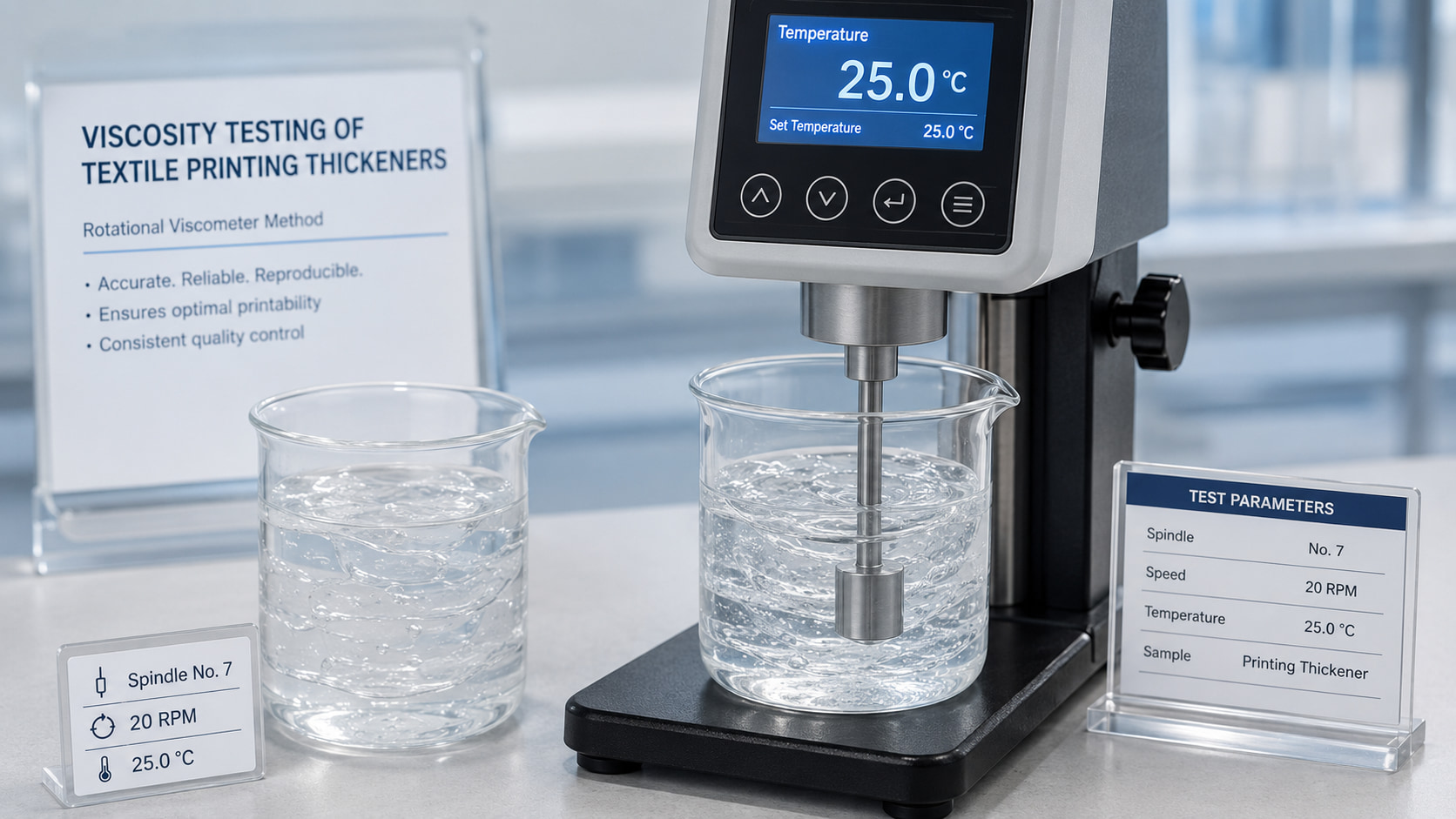
Ketahui mengapa nilai viskositas pengental dalam pencetakan tekstil tidak dapat dibandingkan tanpa menyesuaikan konsentrasi, suhu, alat ukur, spindel, kecepatan, metode persiapan, dan waktu pengujian.
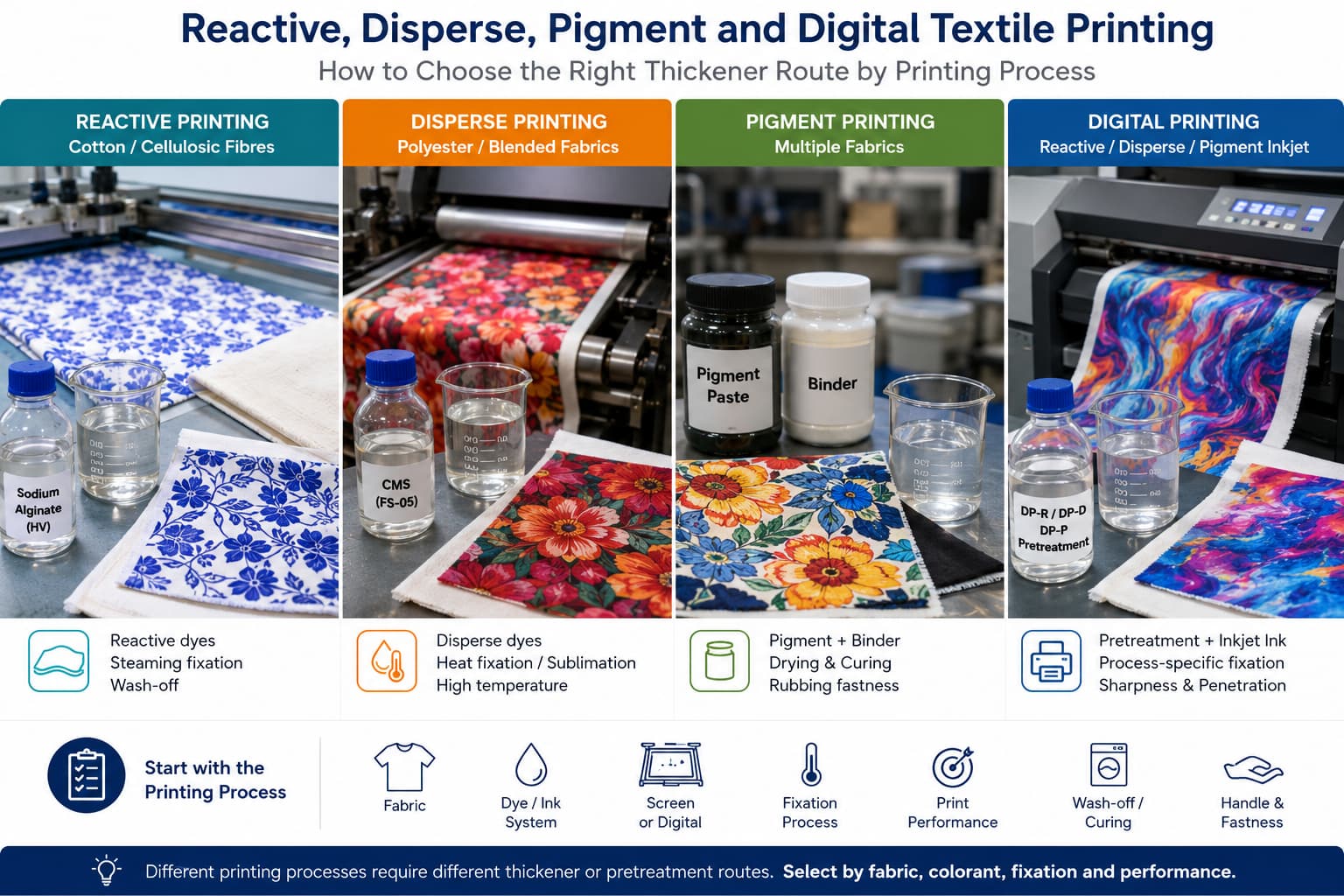
Pelajari cara memilih bahan pengental dan metode pra-perlakuan untuk pencetakan tekstil reaktif, disperse, pigmen, dan digital berdasarkan jenis kain, pewarna atau tinta, proses fiksasi, daya lepas saat pencucian, serta persyaratan kualitas cetakan.
Bandingkan CMC, CMS, natrium alginat, dan pasta cetak digital untuk pencetakan tekstil. Pelajari bagaimana masing-masing bahan tersebut sesuai dengan proses pencetakan reaktif, dispersi, pigmen, dan digital, serta hal-hal apa saja yang perlu diperhatikan pembeli sebelum melakukan pengujian sampel, penyesuaian kualitas, dan pembelian dalam jumlah besar.
Sodium alginat banyak digunakan dalam pencetakan tekstil sebagai pengental yang stabil dan tahan cuci untuk pasta cetak reaktif. Pelajari cara mengevaluasi tingkat viskositas, kemurnian, dan kesesuaian penggunaannya sebelum membeli, serta bagaimana FSX Chemical mendukung pembeli di seluruh dunia dengan data teknis dan sampel.
Karboximetil selulosa (CMC) banyak digunakan dalam proses pencetakan, pelapisan, dan pewarnaan tekstil. Panduan ini akan menjelaskan cara mengevaluasi jenis-jenis CMC, parameter mana yang paling penting, serta bagaimana FSX Chemical dapat mendukung keputusan pembelian.
Karboximetil selulosa digunakan sebagai pengental dan penstabil dalam tinta berbasis air, pencetakan gravure, serta pra-perlakuan pencetakan inkjet. Panduan ini membahas parameter utama setiap jenis produk serta pertimbangan dalam pemilihan pemasok bagi tim pengadaan.
Baik natrium alginat maupun CMC digunakan sebagai pengental dalam pencetakan tekstil, namun keduanya cocok untuk sistem pewarnaan dan kondisi proses yang berbeda. Panduan ini menjelaskan perbedaan utama di antara keduanya serta kapan masing-masing harus digunakan.
Pencetakan inkjet digital pada tekstil memiliki persyaratan pasta dan pra-perlakuan yang berbeda dibandingkan dengan pencetakan sablon. Panduan ini menjelaskan bagaimana natrium alginat digunakan dalam pencetakan tekstil digital serta parameter kualitas apa saja yang harus ditentukan oleh tim pengadaan.
CMC kelas pangan dan kelas industri memiliki struktur kimia dasar yang sama, namun berbeda secara signifikan dalam hal kemurnian, rentang DS, dan persyaratan regulasi. Panduan ini menjelaskan perbedaan-perbedaan utama tersebut serta mengapa penggunaan kelas yang salah dapat menimbulkan masalah dalam proses produksi.
Persiapan pasta yang tepat sama pentingnya dengan pemilihan kadar dalam pencetakan tekstil dengan pewarna reaktif. Panduan ini membahas metode pelarutan natrium alginat, kisaran konsentrasi sesuai dengan penggunaannya, kondisi penyimpanan, serta cara mengatasi masalah umum dalam persiapan.
Sodium alginat adalah polimer alami yang dapat terurai secara hayati, namun penggunaannya dalam pencetakan tekstil menghasilkan air limbah yang perlu dikelola. Panduan ini membahas profil lingkungan sodium alginat, karakteristik air limbah hasil pencucian, serta hal-hal yang perlu dipahami oleh tim pengadaan terkait pemilihan bahan pengental dan dampaknya terhadap lingkungan.
Tingkat fiksasi pewarna secara langsung memengaruhi hasil warna, ketahanan luntur saat dicuci, dan beban limbah cair dalam proses pencetakan dengan pewarna reaktif. Panduan ini menjelaskan bagaimana natrium alginat mendukung proses fiksasi pewarna, parameter pasta apa saja yang memengaruhi tingkat fiksasi, serta cara mengatasi masalah fiksasi rendah dalam proses produksi.
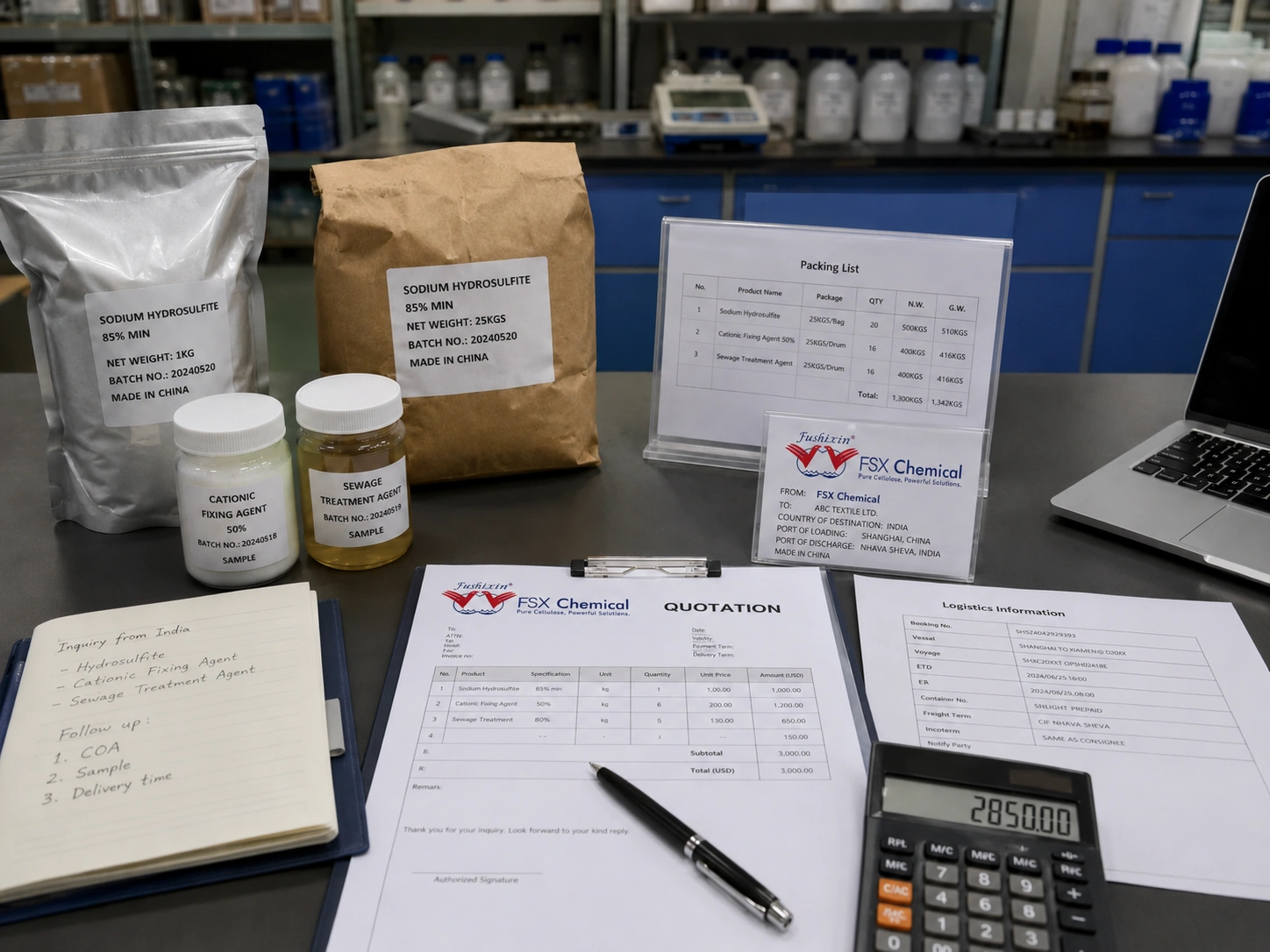
Berikan nama produk, kegunaan, jumlah, tujuan pengiriman, serta TDS,
foto sampel, atau dokumen lain yang sudah Anda miliki. FSX Chemical akan meninjau
informasi tersebut dan merekomendasikan langkah selanjutnya terkait penawaran harga, pencocokan sampel,
atau pemilihan produk.
Informasi ProdukNama produk, grade, model, foto label, atau referensi pemasok.
Dokumen yang TersediaTDS, SDS, COA, foto sampel, daftar produk, atau data pengujian.
Rincian PesananPerkiraan jumlah, kemasan, negara tujuan, pelabuhan, atau syarat perdagangan.
Aplikasi atau KendalaProses pencetakan tekstil, kebutuhan formulasi, masalah terkini, atau target kinerja.