CMC vs CMS vs Sodium Alginate vs Digital Printing Paste: A Practical Selection Guide
Compare CMC, CMS, sodium alginate and digital printing paste for textile printing. Learn how each...
Technical Guide Textile Printing Thickener Selection Updated July 2026 Direct Answer
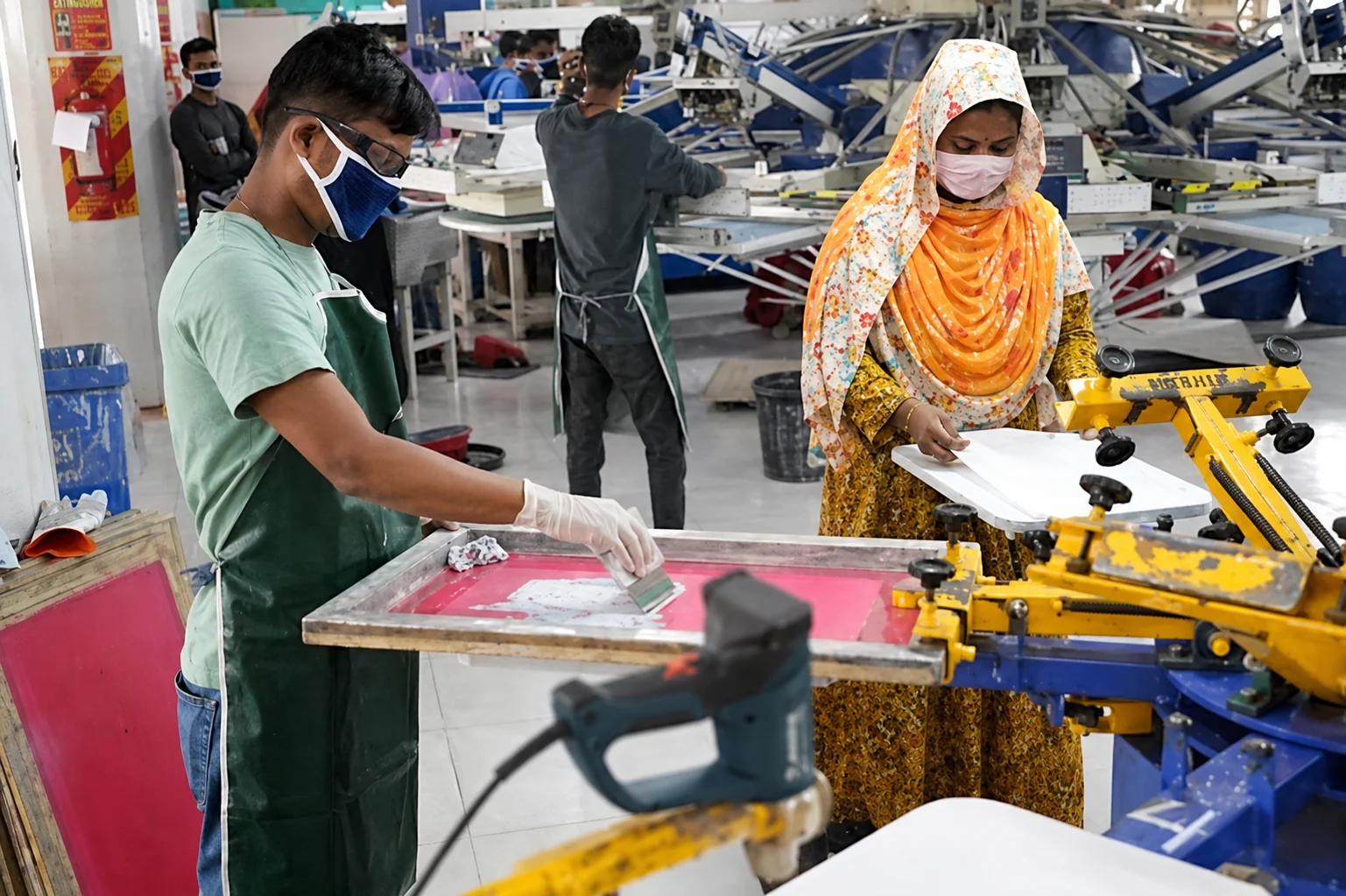
CMC, CMS, sodium alginate and digital printing paste are not four interchangeable versions of the same textile chemical. CMC, CMS and sodium alginate are polymer-based thickener routes used to control viscosity and printing-paste behavior. Digital printing paste is a process-specific pretreatment or paste system selected according to reactive, disperse or pigment inkjet printing. The correct route depends on the dye or ink system, fabric, printing method, viscosity test conditions, paste preparation, fixation process and final print result.
Important Comparison Boundary
Digital printing paste is not simply a fourth raw-material polymer. It is a functional product route designed around textile inkjet pretreatment and printing conditions. It should be compared with CMC, CMS and sodium alginate at the process-selection level, but its dosage, test method and performance data should not be compared directly with conventional screen-printing thickener specifications.
Four Product Routes
Quick Comparison for Textile Printing Buyers
Use this table to identify a reasonable starting route. It is not a substitute for a matched laboratory test or production trial.
Do not assume direct alginate replacement from viscosity alone
Different CMS grades are not interchangeable across all processes
HV, MV and LV are selection routes, not quality rankings
Screen-printing and digital-printing data cannot be compared directly
Trial requirement
Laboratory and production validation
Laboratory and production validation
Recipe and print-trial validation
Ink, fabric and pretreatment validation
FSX model names are internal product codes rather than universal industry grade names. Confirm the applicable TDS and trial conditions before comparing products.
Practical Selection
When Should Each Route Be Considered?
The product should be selected by the printing process first, followed by test method, paste behavior and final fabric result. 01
CMC
CMC is considered when a formulation requires cellulose-based viscosity control, water retention, paste stability or a selected specialty printing route.
CMS is selected by printing process rather than by the general product name alone. Reactive, disperse and specialty routes require different grade behavior.
CN-R for reactive printing evaluation
FS-05 for disperse printing evaluation
H5 for vat, discharge and selected burn-out processes
Digital printing paste is selected according to the inkjet process, fabric and pretreatment route. Reactive, disperse and pigment inks require different product directions.
A thickener proven in one dye, ink or machine route should not automatically be transferred to another process.
Proses Pencetakan
Suggested Starting Route
Important Evaluation Points
Do Not Assume
Sablon reaktif
Sodium alginate as a benchmark; CN-R CMS may be evaluated as another route
Dye compatibility, color yield, edge definition, wash-off and handle
That equal viscosity means equal reactive-printing performance
Disperse screen printing
FS-05 CMS or another process-specific disperse thickener route
Dispersion, paste stability, screen running, fixation and definition
That a reactive-printing grade will work on polyester
Vat, discharge or burn-out printing
H5 specialty CMS or a validated specialty CMC route
Paste preparation, discharge chemistry, screen behavior and post-treatment
That a general-purpose thickener is suitable for specialty chemistry
Reactive digital printing
DP-R
Fabric pretreatment, ink compatibility, bleeding, definition, fixation and wash-off
That a screen-printing paste can be used as inkjet pretreatment
Disperse digital printing
DP-D
Polyester route, dosage, dispersion, filtration, drying and fixation
That a reactive digital paste is suitable for disperse ink
Pigment digital printing
DP-P
Binder compatibility, curing, rubbing fastness, sharpness and fabric handle
That pigment and dye ink systems use the same chemistry
Pencetakan Reaktif
Why Sodium Alginate Is Commonly Used as the Benchmark
Sodium alginate is widely used in reactive printing because its structure generally has limited reaction with reactive dyes compared with many carbohydrate thickeners. This can support useful color yield, wash-off and fabric-handle performance when the complete recipe and process are properly controlled.[1]
This does not mean that every sodium alginate grade produces the same result. Molecular structure, concentration, hydration, paste preparation, water quality, dye system and machine conditions all influence final performance.
HV, MV and LV Are Selection Routes
These labels describe different viscosity and paste-body directions. A higher-viscosity grade is not automatically a higher-quality product, and a lower-viscosity route is not automatically inferior.
Trial the Complete Printing Recipe
Compare paste preparation, screen release, pattern sharpness, color result, penetration, fixation, wash-off and fabric handle under the buyer’s real production conditions.
Modified Starch Route
When CMS May Be Evaluated
Carboxymethyl starch is not one universal textile printing product. Its substitution level, starch source, molecular structure, product form and preparation behavior can differ substantially between grades. The selected CMS route must therefore match the intended printing process.
CN-R
A starting CMS route for reactive textile printing evaluation. Compare viscosity using the same method, then evaluate paste behavior, print definition, color result, wash-off and batch consistency.
FS-05
A starting CMS route for disperse printing evaluation. Review dispersion, preparation, screen running, paste stability, pattern definition and fixation under the buyer’s polyester process.
H5
A specialty flake-form CMS grade for vat dye, discharge and selected burn-out or devoré printing trials. Confirm the discharge chemistry, screen behavior, pattern effect and post-treatment result.
Replacement Must Be Proven
CMS may provide a useful alternative or blended route in selected recipes, but it should not be presented as a universal one-to-one replacement for sodium alginate.
Cellulose Ether Route
When CMC May Be Evaluated
Carboxymethyl cellulose is a water-soluble cellulose derivative used as a rheology modifier, stabilizer, binder and water-retention agent in many industrial formulations. Textile suitability depends on the specific CMC grade, degree of substitution, viscosity, purity, hydration and interaction with the complete printing recipe.
Selected CMC materials have been studied in discharge, resist and other specialty textile printing routes, but this does not mean that every CMC can directly replace sodium alginate in conventional reactive printing.[3]
Confirm CMC degree of substitution
Confirm reference viscosity and concentration
Check solution clarity and hydration
Review paste stability over production time
Test compatibility with dyes and auxiliaries
Evaluate wash-off and printed fabric handle
CMC has wider industrial use beyond textile printing.
FSX Chemical also supplies selected CMC grades for ceramics, detergent, paper and other industrial formulation requirements. Industrial grades should be selected according to their own application specifications rather than textile criteria alone.
Textile Inkjet Route
Why Digital Printing Paste Requires a Separate Decision
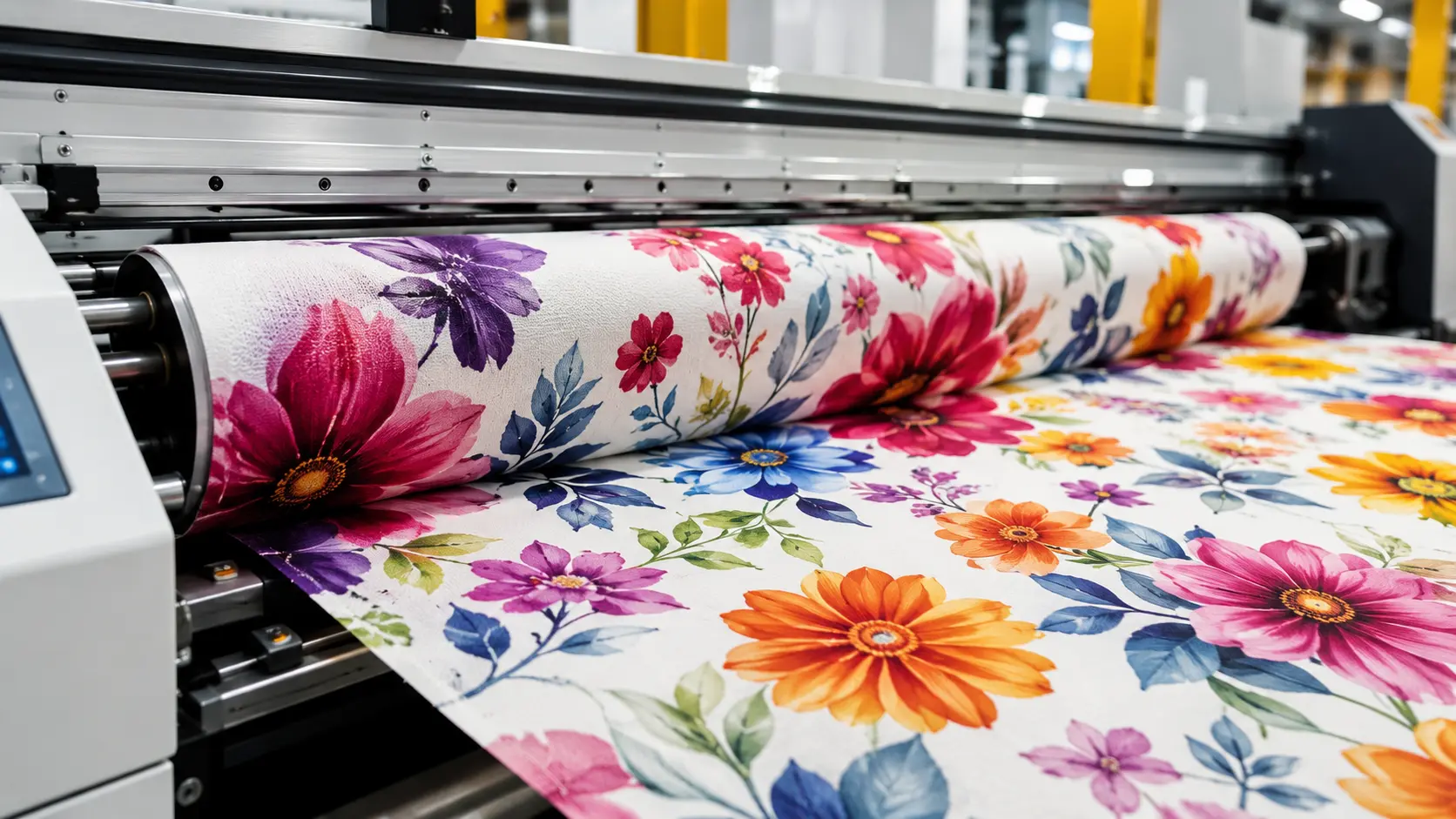
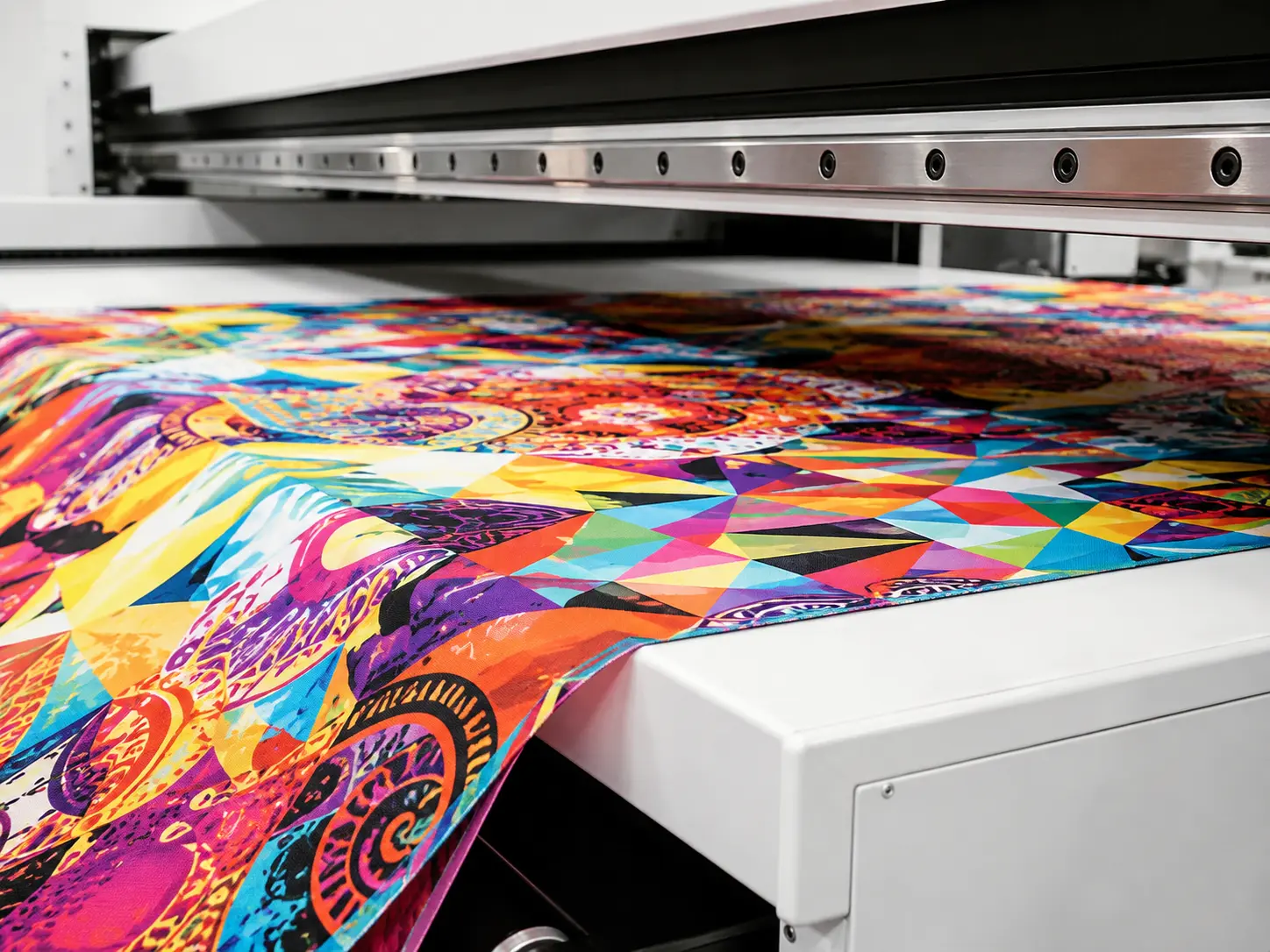
In digital textile printing, the functional chemicals are commonly applied through a fabric pretreatment route rather than simply mixed into the ink in the same way as a conventional screen-printing color paste. Pretreatment affects ink spreading, edge definition, color development, penetration and fixation.[4]
The first selection question is therefore not “high viscosity or low viscosity?” It is: Which ink system and fabric process are being used?
DP-R · Reactive Inkjet
Evaluate on cotton, viscose, lyocell, modal, silk or other suitable fibre systems. Confirm pretreatment, paste stability, print definition, color result, fixation and wash-off.
DP-D · Disperse Inkjet
Evaluate on polyester and suitable blends. Confirm dosage, dispersion, filtration, drying, fixation and compatibility with the complete disperse-printing process.
DP-P · Pigment Inkjet
Evaluate pigment-ink and binder compatibility, curing, rubbing fastness, edge sharpness, color performance and final fabric hand feel.
Powder and Liquid Data Differ
Product form, dosage and reference test data may differ between digital routes. Do not compare a powder viscosity value directly with the dosage or process indicators of a liquid paste.
Metode Pengujian
Why Viscosity Numbers Cannot Be Compared Alone
Printing performance is related to rheology and shear behavior, not only one static viscosity value.[2]
Test Condition
Why It Matters
Buyer Check
Konsentrasi
A 1% result cannot be directly compared with a 2%, 5% or 8% result.
Confirm solution concentration by weight.
Temperature
Polymer solution viscosity changes with test temperature.
Confirm whether the result is measured at 25°C or another condition.
Instrument
Brookfield, NDJ and other instruments may not give directly equivalent values.
Record the instrument model.
Spindle and RPM
Shear-sensitive materials can show different readings at different spindle and speed settings.
Confirm spindle number and rotational speed.
Persiapan
Mixing, hydration, resting time and water quality affect the test solution.
Use the same preparation method for both samples.
Product form
Powder, liquid and flake products may use different control indicators.
Do not force all product routes into one viscosity comparison.
Example of a valid comparison
Compare the current product and candidate sample at the same concentration, temperature, instrument, spindle, RPM, hydration time and water condition. Then continue to an application trial. Matching laboratory viscosity alone does not confirm identical printing performance.
Cost and Performance
Compare Total Production Cost, Not Only Price per Kilogram
A lower product quotation does not automatically create a lower printing cost. Buyers should compare the cost required to produce an acceptable and repeatable metre of printed fabric.
Actual thickener or paste dosage
Color yield and dye or ink consumption
Edge definition and rejected fabric rate
Wash-off water, energy and processing time
Fabric handle and residue
Paste stability during production
Machine interruption and cleaning
Batch-to-batch recipe adjustment
More useful purchasing measure
Compare the total thickener or pretreatment cost per accepted metre of printed fabric—not only the supplier price per kilogram.
Decision Workflow
Six Steps for Selecting a Textile Printing Thickener Route
STEP 01
Identify the Process
Confirm screen or digital printing, followed by reactive, disperse, pigment, vat, discharge or another process. STEP 02
Confirm the Fabric
Record cotton, viscose, polyester, silk, wool or blend composition and relevant pretreatment conditions. STEP 03
Review Current Data
Collect the current TDS, COA, product name, dosage, viscosity method and production recipe. STEP 04
Match the Test Method
Compare samples using the same concentration, temperature, instrument, spindle, RPM and preparation method. STEP 05
Confirm grade, specification, packing, batch documents, lead time and commercial conditions after trial approval.
Buyer Information
What to Send for Grade or Route Matching
Complete application information produces a more useful initial recommendation than a request based only on the chemical name.
Dye or ink system
Fabric composition
Screen or digital printing method
Current product or supplier grade
Current TDS or COA
Target viscosity and test method
Current dosage or preparation ratio
Main production problem
Required print-performance result
Monthly or annual demand
Packing and destination country
Required TDS, SDS and batch COA
FSX Chemical Support
Sample Matching Before Bulk Purchase
Route A · Request an FSX Sample
Send the fabric, dye or ink system, printing method, target viscosity, test conditions and expected demand. FSX Chemical can review a suitable CMC, CMS, sodium alginate or digital printing paste starting route.
Route B · Compare a Current Product
Send the current sample, TDS, COA or product information together with the production conditions. Available indicators can be reviewed before a controlled comparison trial.
Production validation remains necessary.
A matched laboratory value or small sample does not guarantee full production performance. Final suitability should be confirmed under the buyer’s own recipe, machinery, fabric and operating conditions.
Pertanyaan Umum Pembeli
Frequently Asked Questions
Are CMC, CMS, sodium alginate and digital printing paste interchangeable?
No. CMC, CMS and sodium alginate are polymer-based thickener routes with different chemical structures and application behavior. Digital printing paste is a process-specific pretreatment or paste system. Selection must be based on the printing process and validated through trials. Which route is usually considered first for reactive screen printing?
Sodium alginate is commonly used as the benchmark for conventional reactive printing on cotton, viscose and other suitable cellulosic fabrics. A suitable CMS route may also be evaluated, but it should be tested against the intended recipe and performance target. Can CMS replace sodium alginate?
Not in every formulation. A suitable CMS grade may provide a partial, blended or full alternative in selected processes, but color yield, definition, wash-off, dosage and fabric handle must be compared under controlled conditions. Can CMC directly replace sodium alginate in reactive printing?
It should not be assumed. The result depends on the CMC grade, degree of substitution, purity, dye chemistry and complete printing formulation. Laboratory and production trials are required before replacement. Can conventional screen-printing thickener be used for digital textile printing?
Not automatically. Digital printing relies on a different inkjet workflow and fabric pretreatment system. The product must be selected according to reactive, disperse or pigment ink, fabric, dosage, drying and fixation conditions. Can viscosity values from different TDS documents be compared directly?
Only when concentration, temperature, instrument, spindle, RPM, preparation method and units are consistent. Otherwise, similar numbers may describe very different products or test conditions. What information does FSX Chemical need for sample matching?
Provide the printing method, dye or ink system, fabric, current product, target viscosity, test method, dosage, production issue, expected demand and available TDS, COA or sample information.
About This Technical Guide
Prepared by the FSX Chemical Technical Content Team for textile printing mills, paste formulators, chemical distributors and procurement teams comparing CMC, CMS, sodium alginate and digital printing paste before sample testing or bulk purchasing.
FSX Kimia Foshan Fushixin Polymer Fiber Co., Ltd.
Technical References
Supporting Research
These references provide technical context. Commercial product selection must still be confirmed using the applicable supplier TDS, batch data and customer production trial.
Kumbasar, E. P. A. et al. “Reactive dye printing with mixed thickeners on viscose.” Dyes and Pigments. View research record
Fijan, R. et al. “Rheological properties of printing pastes and their influence on printing performance.” Carbohydrate Polymers. View research record
Ragheb, A. A. et al. Study of carboxymethyl cellulose derivatives as thickeners in discharge, resist and specialty textile printing. Carbohydrate Polymers. View research record
Soleimani-Gorgani, A. et al. Research discussing fabric pretreatment requirements for reactive-dye textile inkjet printing. Carbohydrate Polymers. View research record
Compare the Right Route Before Bulk Purchase
Send your current sample or TDS together with the printing process, fabric, dye or ink system, target viscosity and trial requirements. FSX Chemical can review a suitable CMC, CMS, sodium alginate or digital printing paste starting route for controlled evaluation.
Compare CMC, CMS, sodium alginate and digital printing paste for textile printing. Learn how each route fits reactive, disperse, pigment and digital processes, and what buyers should review before sample testing, grade matching and bulk purchase.
Harga natrium alginat bervariasi secara signifikan antar pemasok dan tingkat kualitas, namun tidak semua perbedaan harga mencerminkan perbedaan kualitas yang sesungguhnya. Panduan ini menjelaskan faktor-faktor yang memengaruhi biaya, cara menyusun perbandingan penawaran yang setara, serta hal-hal yang perlu diwaspadai saat mengevaluasi proposal pemasok.
Sodium alginat banyak digunakan dalam pencetakan tekstil sebagai pengental yang stabil dan tahan cuci untuk pasta cetak reaktif. Pelajari cara mengevaluasi tingkat viskositas, kemurnian, dan kesesuaian penggunaannya sebelum membeli, serta bagaimana FSX Chemical mendukung pembeli di seluruh dunia dengan data teknis dan sampel.
Sodium alginat untuk pencetakan tekstil banyak digunakan sebagai pengental dalam pasta pencetakan reaktif. Artikel ini menjelaskan fungsi utamanya, aplikasi yang sesuai, parameter pembelian utama, serta cara pembeli dapat meminta TDS, sampel, dan dukungan penyesuaian kualitas sebelum melakukan pemesanan dalam jumlah besar.
Karboximetil selulosa (CMC) banyak digunakan dalam proses pencetakan, pelapisan, dan pewarnaan tekstil. Panduan ini akan menjelaskan cara mengevaluasi jenis-jenis CMC, parameter mana yang paling penting, serta bagaimana FSX Chemical dapat mendukung keputusan pembelian.
Pasta cetak berbasis CMC digunakan dalam pencetakan tekstil pigmen, reaktif, dan digital. Panduan ini menjelaskan parameter apa saja yang penting, cara membandingkan pemasok, serta hal-hal yang perlu diminta sebelum melakukan pemesanan dalam jumlah besar.
Karboximetil selulosa memiliki berbagai fungsi dalam proses pengikatan serat tekstil, pasta cetak, dan bahan pembantu pewarnaan. Panduan ini menjelaskan cara kerja masing-masing aplikasi tersebut serta parameter kualitas apa saja yang perlu ditentukan saat melakukan pengadaan.
Karboximetil selulosa digunakan sebagai pengental dan penstabil dalam tinta berbasis air, pencetakan gravure, serta pra-perlakuan pencetakan inkjet. Panduan ini membahas parameter utama setiap jenis produk serta pertimbangan dalam pemilihan pemasok bagi tim pengadaan.
Memilih pemasok CMC yang tepat tidak hanya sekadar membandingkan harga. Panduan ini membahas kriteria evaluasi, daftar periksa dokumentasi, dan proses uji coba yang harus diikuti oleh tim pengadaan sebelum memutuskan untuk melakukan pemesanan dalam jumlah besar.
CMC kelas pangan dan kelas industri memiliki struktur kimia dasar yang sama, namun berbeda secara signifikan dalam hal kemurnian, rentang DS, dan persyaratan regulasi. Panduan ini menjelaskan perbedaan-perbedaan utama tersebut serta mengapa penggunaan kelas yang salah dapat menimbulkan masalah dalam proses produksi.
Pencetakan inkjet digital pada tekstil memiliki persyaratan pasta dan pra-perlakuan yang berbeda dibandingkan dengan pencetakan sablon. Panduan ini menjelaskan bagaimana natrium alginat digunakan dalam pencetakan tekstil digital serta parameter kualitas apa saja yang harus ditentukan oleh tim pengadaan.
Baik natrium alginat maupun CMC digunakan sebagai pengental dalam pencetakan tekstil, namun keduanya cocok untuk sistem pewarnaan dan kondisi proses yang berbeda. Panduan ini menjelaskan perbedaan utama di antara keduanya serta kapan masing-masing harus digunakan.
Berikan nama produk, kegunaan, jumlah, tujuan pengiriman, serta TDS,
foto sampel, atau dokumen lain yang sudah Anda miliki. FSX Chemical akan meninjau
informasi tersebut dan merekomendasikan langkah selanjutnya terkait penawaran harga, pencocokan sampel,
atau pemilihan produk.
Informasi ProdukNama produk, kelas, model, foto label, atau referensi pemasok.
Dokumen yang TersediaTDS, SDS, COA, foto sampel, daftar produk, atau data pengujian.
Rincian PesananPerkiraan jumlah, kemasan, negara tujuan, pelabuhan, atau syarat perdagangan.
Permohonan atau MasalahProses pencetakan tekstil, kebutuhan formulasi, masalah terkini, atau target kinerja.

 ID
ID  EN
EN  BN
BN  ES
ES  TR
TR  FR
FR  RU
RU  AR
AR  UR
UR