BN
BN  EN
EN  ES
ES  TR
TR  FR
FR  ID
ID  RU
RU  AR
AR  UR
UR  VI
VI  TL
TL  HI
HI  UK
UK  KK
KK  KA
KA  UZ
UZ 
Technical Guide Textile Printing Thickener Selection Updated July 2026 Direct Answer
CMC, CMS, sodium alginate and digital printing paste are not four interchangeable versions of the same textile chemical. CMC, CMS and sodium alginate are polymer-based thickener routes used to control viscosity and printing-paste behavior. Digital printing paste is a process-specific pretreatment or paste system selected according to reactive, disperse or pigment inkjet printing. The correct route depends on the dye or ink system, fabric, printing method, viscosity test conditions, paste preparation, fixation process and final print result.
Important Comparison Boundary
Digital printing paste is not simply a fourth raw-material polymer. It is a functional product route designed around textile inkjet pretreatment and printing conditions. It should be compared with CMC, CMS and sodium alginate at the process-selection level, but its dosage, test method and performance data should not be compared directly with conventional screen-printing thickener specifications.
Four Product Routes
Quick Comparison for Textile Printing Buyers
Use this table to identify a reasonable starting route. It is not a substitute for a matched laboratory test or production trial.
| তুলনা | সিএমসি | সিএমএস | সোডিয়াম অ্যালজিনেট | ডিজিটাল প্রিন্টিং পেষ্ট |
|---|---|---|---|---|
| What it is | Cellulose-derived, water-soluble rheology modifier | Chemically modified starch thickener | Seaweed-derived polysaccharide thickener | Inkjet pretreatment or functional paste formulation |
| Typical starting route | Selected textile paste, specialty printing and viscosity-control systems | Reactive, disperse, vat, discharge and selected specialty routes, depending on grade | Conventional reactive printing on cellulosic fabrics | Reactive, disperse or pigment digital textile printing |
| Main selection factors | Viscosity, DS, purity, solution stability and formulation compatibility | Printing process, paste preparation, viscosity, screen behavior and wash-off | Viscosity route, stock-paste concentration, flow, color yield and wash-off | Ink system, fabric, product form, dosage, pretreatment and fixation route |
| FSX Chemical routes | এইচডি / এমডি / এলডি Internal CMC grade routes | সিএন-আর / এফএস-০৫ / এইচ৫ Reactive, disperse and specialty routes | উচ্চ ভোল্টেজ / মধ্য ভোল্টেজ / নিম্ন ভোল্টেজ Different paste-body and flow directions | ডিপি-আর / ডিপি-ডি / ডিপি-পি Reactive, disperse and pigment inkjet routes |
| Main caution | Do not assume direct alginate replacement from viscosity alone | Different CMS grades are not interchangeable across all processes | HV, MV and LV are selection routes, not quality rankings | Screen-printing and digital-printing data cannot be compared directly |
| Trial requirement | Laboratory and production validation | Laboratory and production validation | Recipe and print-trial validation | Ink, fabric and pretreatment validation |
FSX model names are internal product codes rather than universal industry grade names. Confirm the applicable TDS and trial conditions before comparing products.
Practical Selection
When Should Each Route Be Considered?
The product should be selected by the printing process first, followed by test method, paste behavior and final fabric result. 01
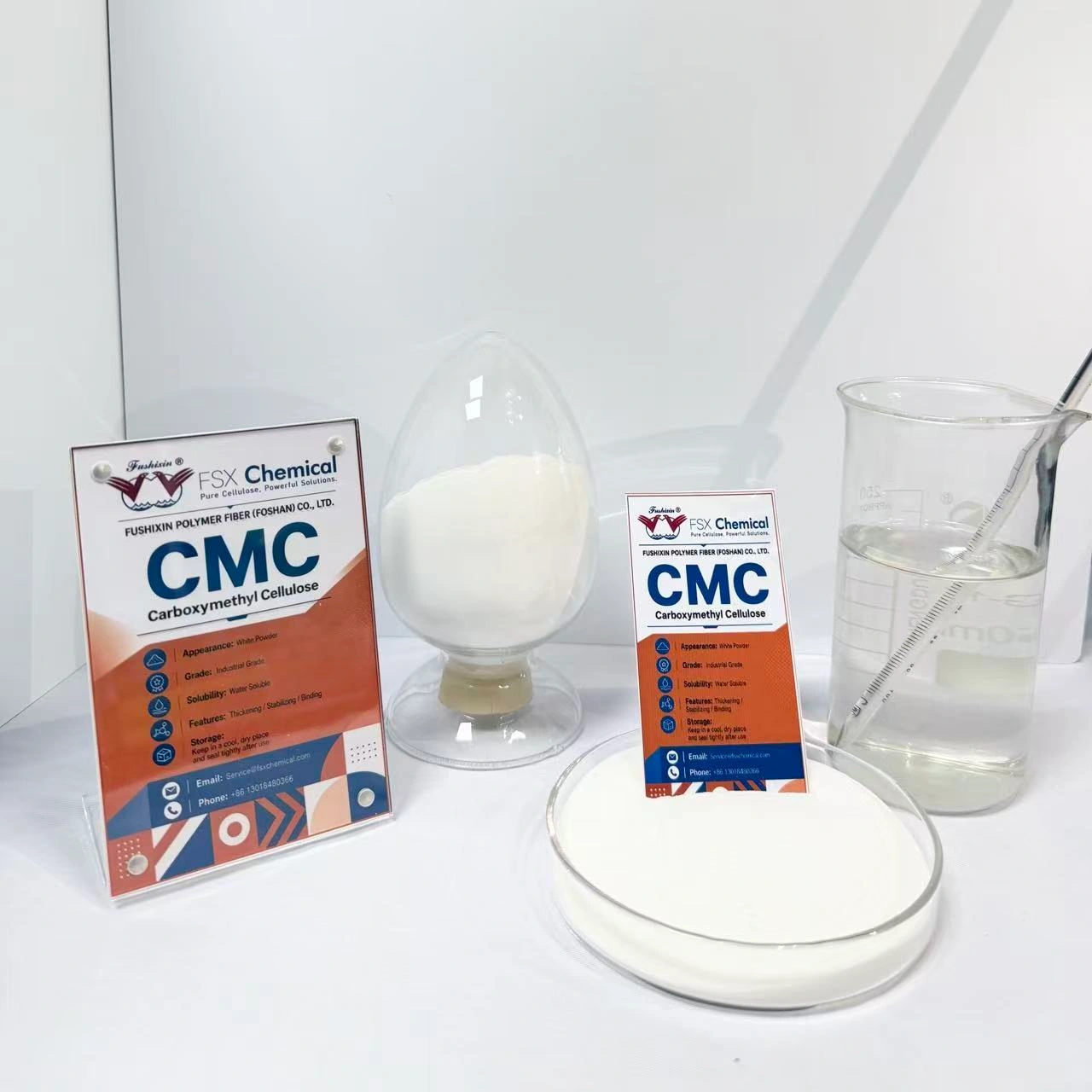
সিএমসি
CMC is considered when a formulation requires cellulose-based viscosity control, water retention, paste stability or a selected specialty printing route.
- Check viscosity and test concentration
- Confirm degree of substitution
- Review purity and solution stability
- Validate dye and auxiliary compatibility
সিএমএস
CMS is selected by printing process rather than by the general product name alone. Reactive, disperse and specialty routes require different grade behavior.
- CN-R for reactive printing evaluation
- FS-05 for disperse printing evaluation
- H5 for vat, discharge and selected burn-out processes
- Confirm paste preparation and post-treatment
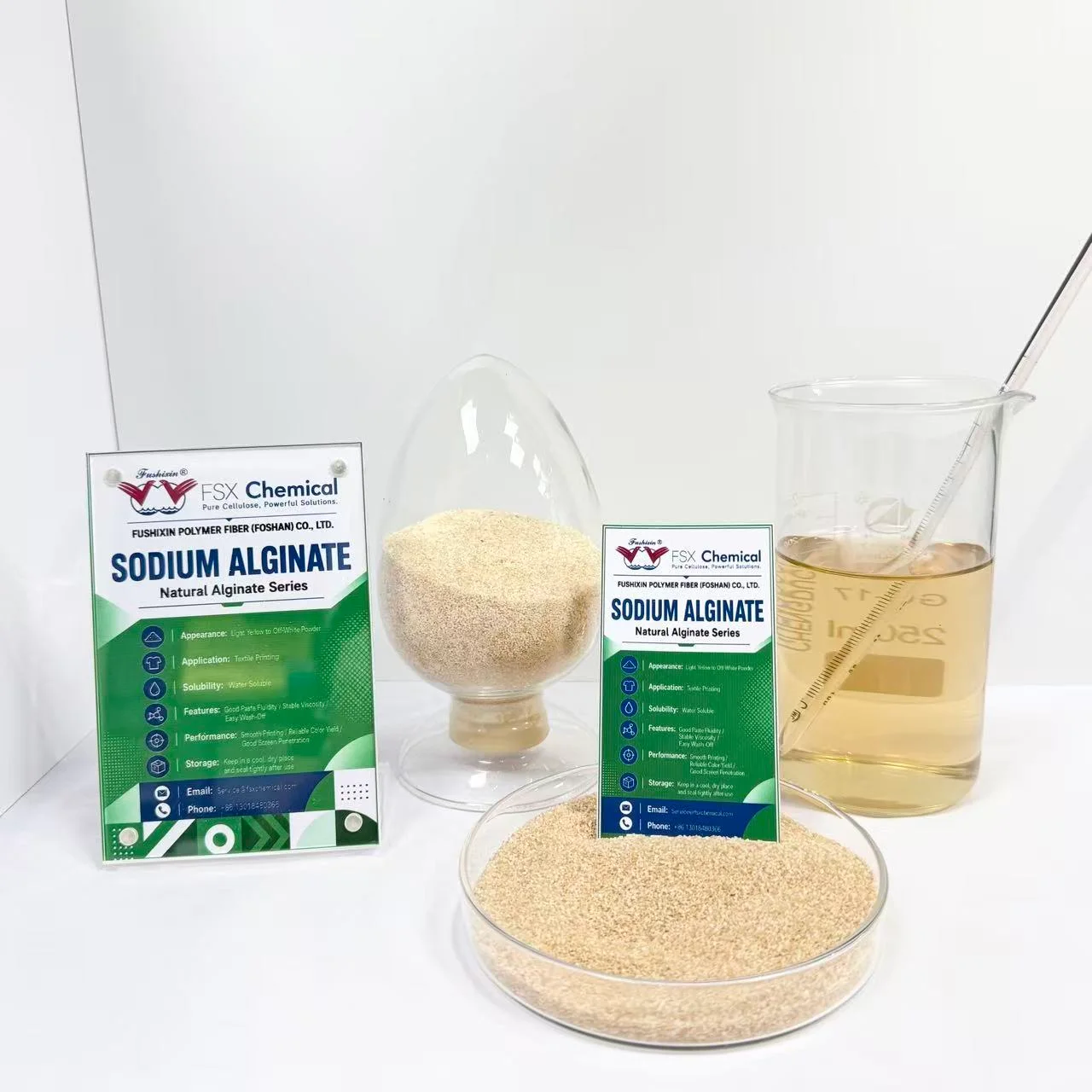
সোডিয়াম অ্যালজিনেট
Sodium alginate is commonly used as a benchmark thickener for reactive printing on cotton, viscose and other suitable cellulosic fabrics.
- Compare HV, MV and LV by actual paste requirement
- Check stock-paste concentration
- Assess color yield and edge definition
- Confirm wash-off and fabric handle
সোডিয়াম অ্যালজিনেট গ্রেডসমূহ পর্যালোচনা করুন 04
ডিজিটাল প্রিন্টিং পেষ্ট
Digital printing paste is selected according to the inkjet process, fabric and pretreatment route. Reactive, disperse and pigment inks require different product directions.
- DP-R for reactive inkjet evaluation
- DP-D for disperse inkjet evaluation
- DP-P for pigment inkjet evaluation
- Confirm dosage, fixation, fastness and hand feel
Process Matrix
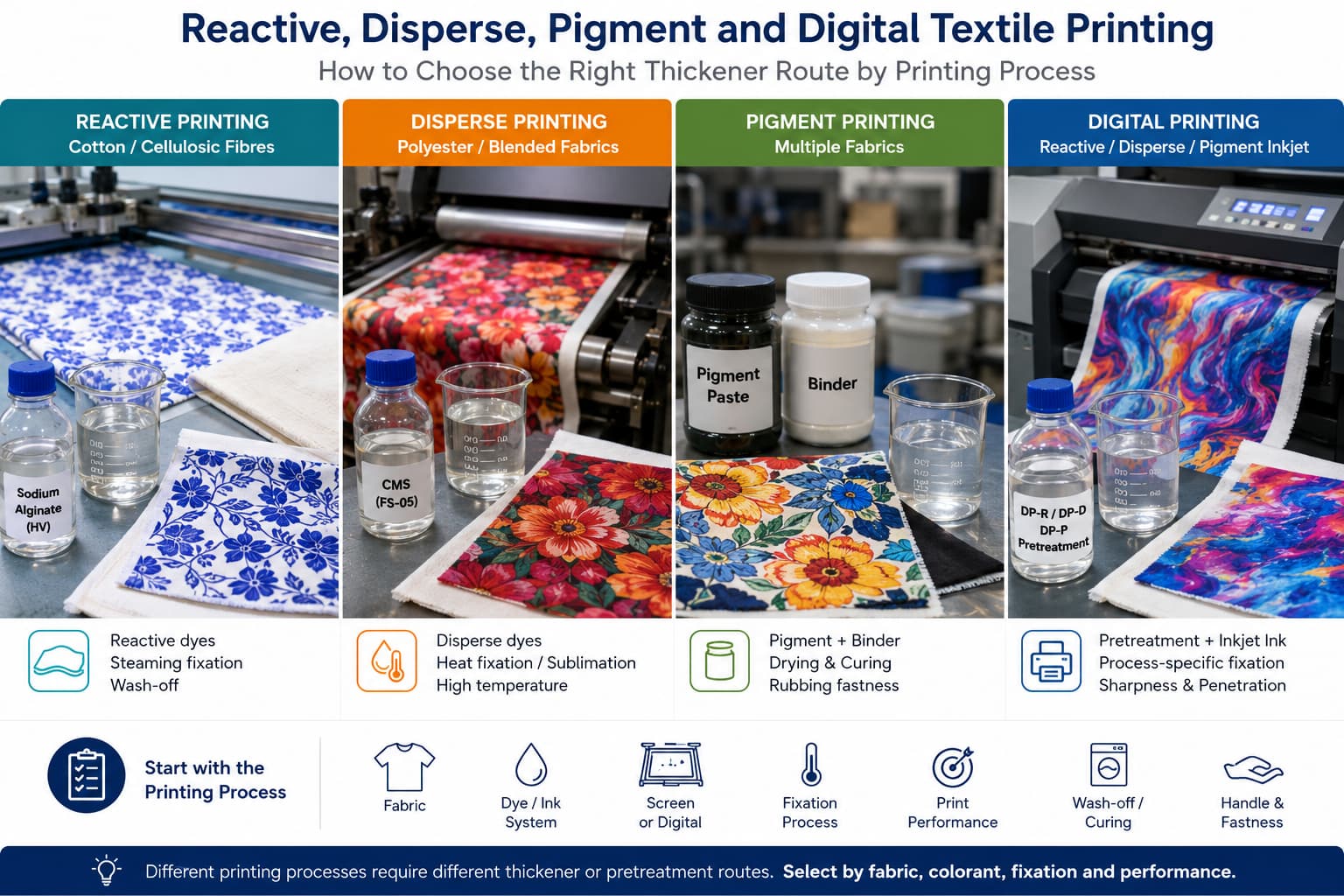
Selection by Printing Process
A thickener proven in one dye, ink or machine route should not automatically be transferred to another process.
| ছাপানোর প্রক্রিয়া | Suggested Starting Route | Important Evaluation Points | Do Not Assume |
|---|---|---|---|
| প্রতিক্রিয়াশীল স্ক্রিন প্রিন্টিং | Sodium alginate as a benchmark; CN-R CMS may be evaluated as another route | Dye compatibility, color yield, edge definition, wash-off and handle | That equal viscosity means equal reactive-printing performance |
| বিস্তৃত স্ক্রিন প্রিন্টিং | FS-05 CMS or another process-specific disperse thickener route | Dispersion, paste stability, screen running, fixation and definition | That a reactive-printing grade will work on polyester |
| Vat, discharge or burn-out printing | H5 specialty CMS or a validated specialty CMC route | Paste preparation, discharge chemistry, screen behavior and post-treatment | That a general-purpose thickener is suitable for specialty chemistry |
| প্রতিক্রিয়াশীল ডিজিটাল মুদ্রণ | ডিপি-আর | Fabric pretreatment, ink compatibility, bleeding, definition, fixation and wash-off | That a screen-printing paste can be used as inkjet pretreatment |
| ডিজিটাল প্রিন্টিং ছড়িয়ে দিন | ডিপি-ডি | Polyester route, dosage, dispersion, filtration, drying and fixation | That a reactive digital paste is suitable for disperse ink |
| পিগমেন্ট ডিজিটাল প্রিন্টিং | ডিপি-পি | Binder compatibility, curing, rubbing fastness, sharpness and fabric handle | That pigment and dye ink systems use the same chemistry |
প্রতিক্রিয়াশীল মুদ্রণ
Why Sodium Alginate Is Commonly Used as the Benchmark
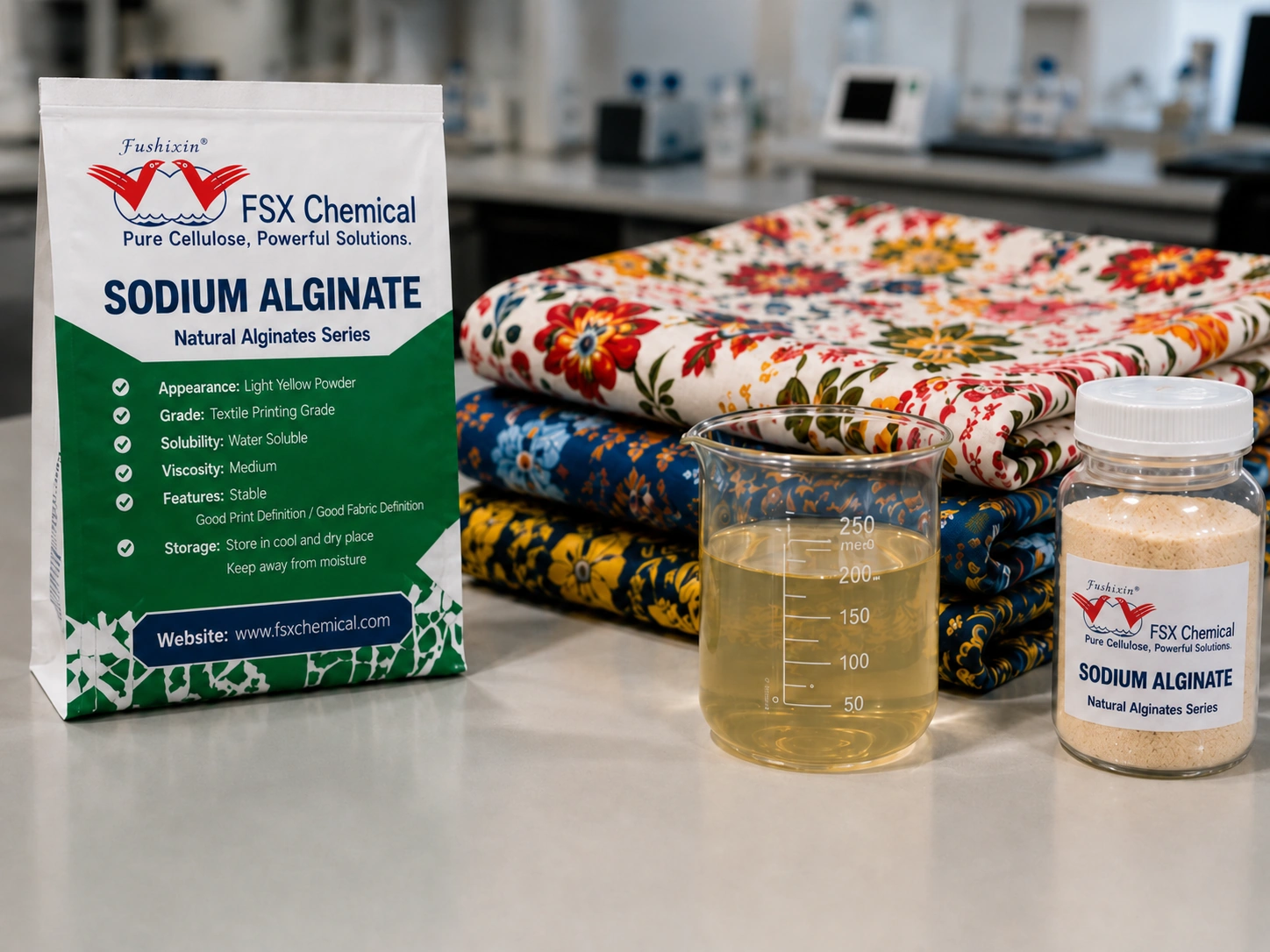
Sodium alginate is widely used in reactive printing because its structure generally has limited reaction with reactive dyes compared with many carbohydrate thickeners. This can support useful color yield, wash-off and fabric-handle performance when the complete recipe and process are properly controlled.[1]
This does not mean that every sodium alginate grade produces the same result. Molecular structure, concentration, hydration, paste preparation, water quality, dye system and machine conditions all influence final performance.
HV, MV and LV Are Selection Routes
These labels describe different viscosity and paste-body directions. A higher-viscosity grade is not automatically a higher-quality product, and a lower-viscosity route is not automatically inferior.
Trial the Complete Printing Recipe
Compare paste preparation, screen release, pattern sharpness, color result, penetration, fixation, wash-off and fabric handle under the buyer’s real production conditions.
Modified Starch Route
When CMS May Be Evaluated
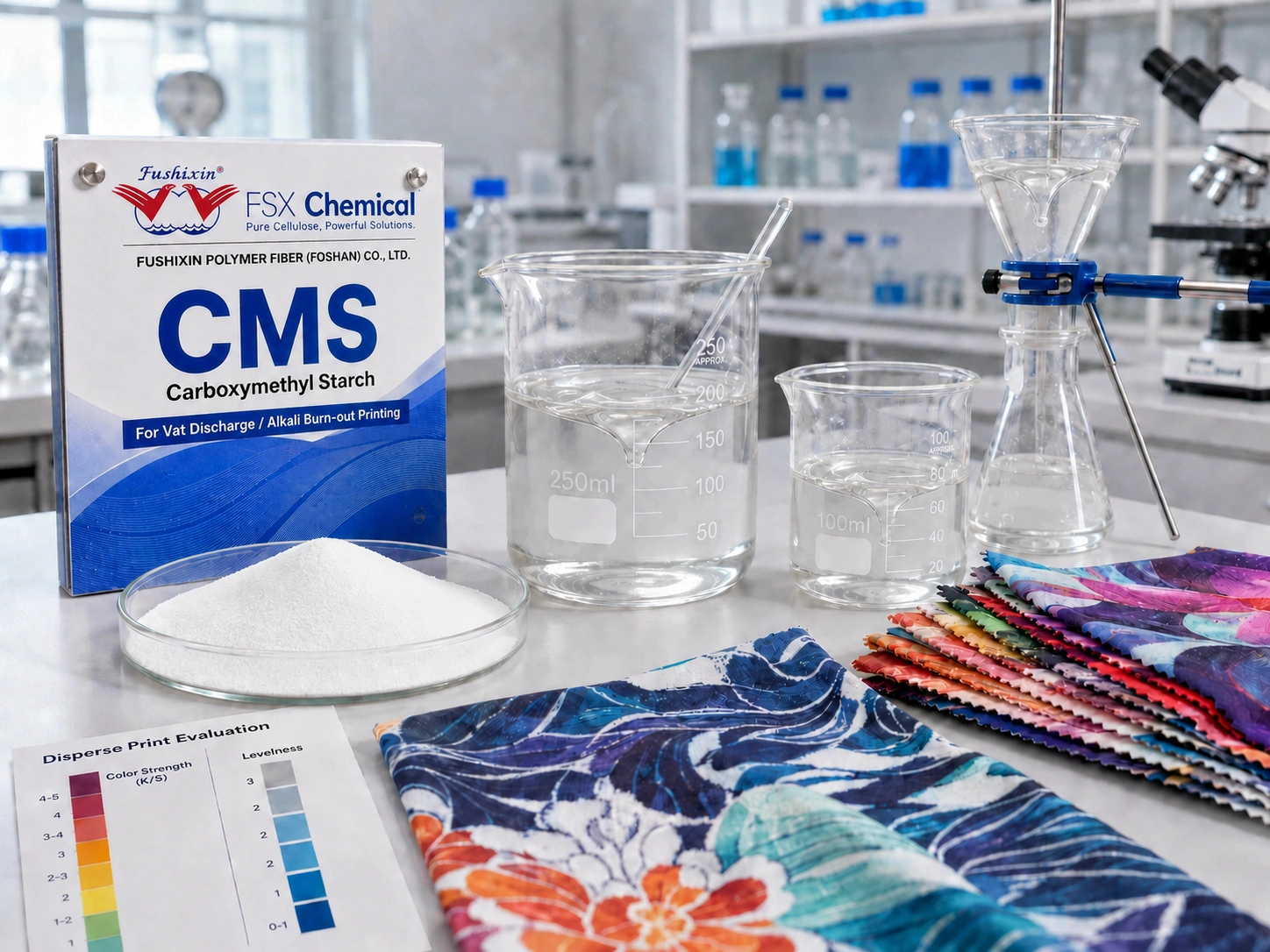
Carboxymethyl starch is not one universal textile printing product. Its substitution level, starch source, molecular structure, product form and preparation behavior can differ substantially between grades. The selected CMS route must therefore match the intended printing process.
সিএন-আর
A starting CMS route for reactive textile printing evaluation. Compare viscosity using the same method, then evaluate paste behavior, print definition, color result, wash-off and batch consistency.
এফএস-০৫
A starting CMS route for disperse printing evaluation. Review dispersion, preparation, screen running, paste stability, pattern definition and fixation under the buyer’s polyester process.
এইচ৫
A specialty flake-form CMS grade for vat dye, discharge and selected burn-out or devoré printing trials. Confirm the discharge chemistry, screen behavior, pattern effect and post-treatment result.
Replacement Must Be Proven
CMS may provide a useful alternative or blended route in selected recipes, but it should not be presented as a universal one-to-one replacement for sodium alginate.
Cellulose Ether Route
When CMC May Be Evaluated
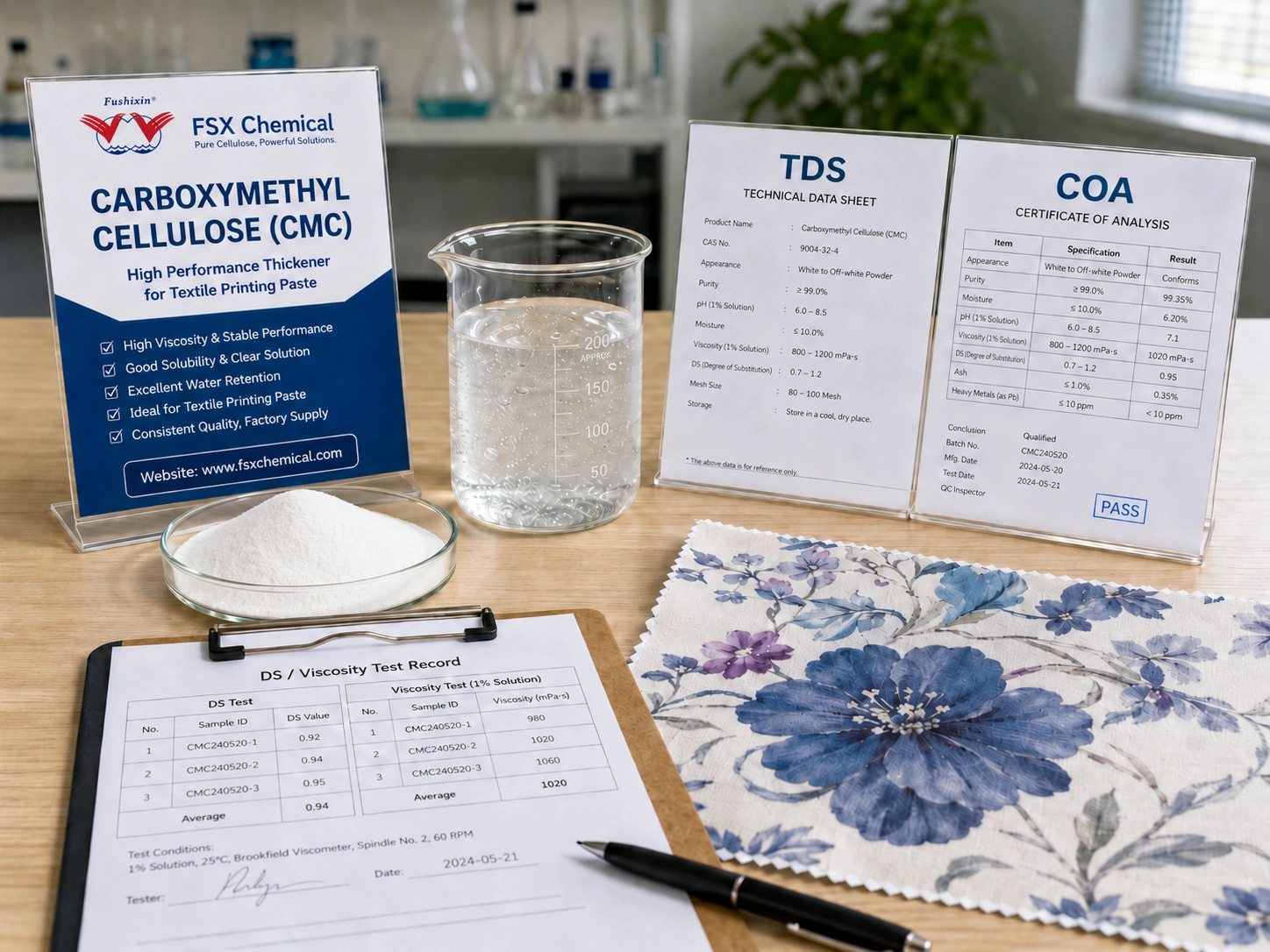
Carboxymethyl cellulose is a water-soluble cellulose derivative used as a rheology modifier, stabilizer, binder and water-retention agent in many industrial formulations. Textile suitability depends on the specific CMC grade, degree of substitution, viscosity, purity, hydration and interaction with the complete printing recipe.
Selected CMC materials have been studied in discharge, resist and other specialty textile printing routes, but this does not mean that every CMC can directly replace sodium alginate in conventional reactive printing.[3]
- Confirm CMC degree of substitution
- Confirm reference viscosity and concentration
- Check solution clarity and hydration
- Review paste stability over production time
- Test compatibility with dyes and auxiliaries
- Evaluate wash-off and printed fabric handle
CMC has wider industrial use beyond textile printing.
FSX Chemical also supplies selected CMC grades for ceramics, detergent, paper and other industrial formulation requirements. Industrial grades should be selected according to their own application specifications rather than textile criteria alone.
Textile Inkjet Route
Why Digital Printing Paste Requires a Separate Decision
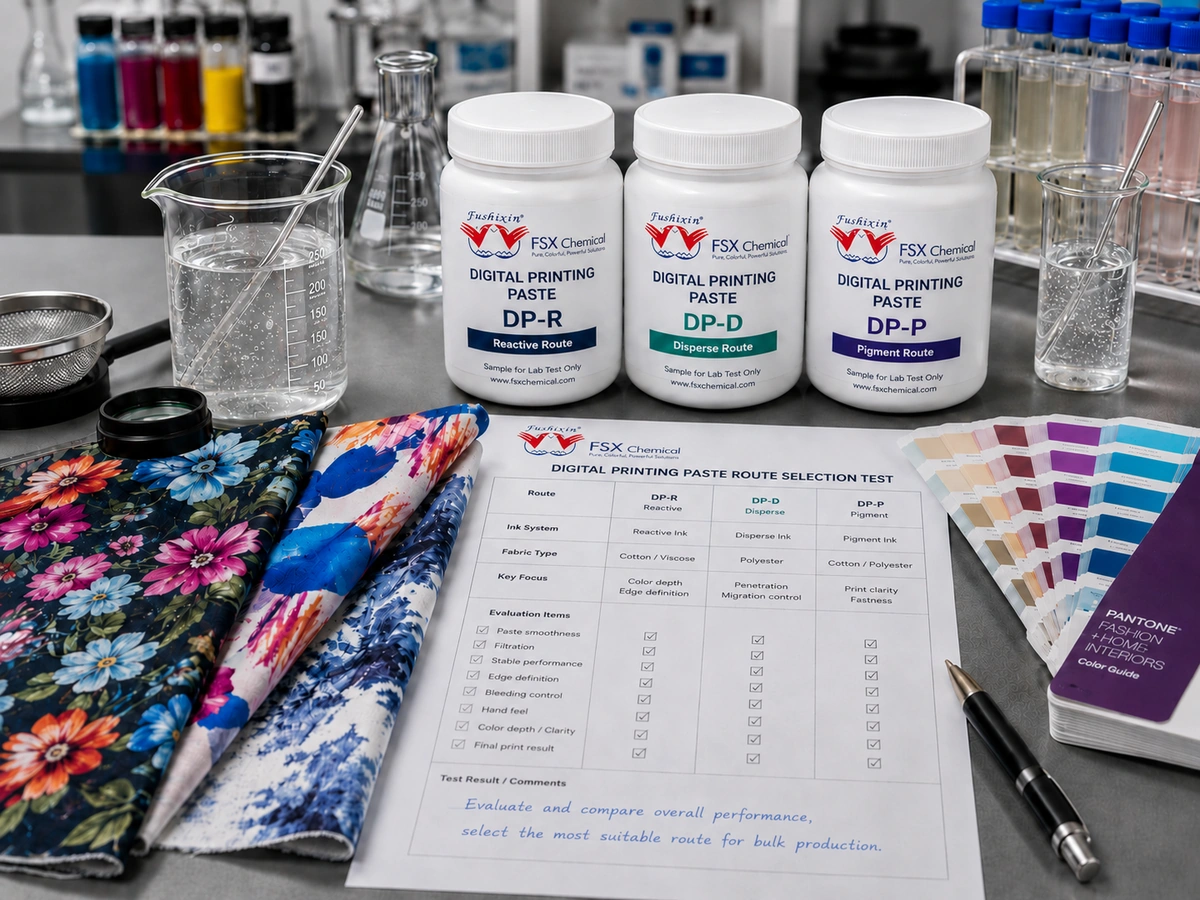
In digital textile printing, the functional chemicals are commonly applied through a fabric pretreatment route rather than simply mixed into the ink in the same way as a conventional screen-printing color paste. Pretreatment affects ink spreading, edge definition, color development, penetration and fixation.[4]
The first selection question is therefore not “high viscosity or low viscosity?” It is: Which ink system and fabric process are being used?
DP-R · Reactive Inkjet
Evaluate on cotton, viscose, lyocell, modal, silk or other suitable fibre systems. Confirm pretreatment, paste stability, print definition, color result, fixation and wash-off.
DP-D · Disperse Inkjet
Evaluate on polyester and suitable blends. Confirm dosage, dispersion, filtration, drying, fixation and compatibility with the complete disperse-printing process.
DP-P · Pigment Inkjet
Evaluate pigment-ink and binder compatibility, curing, rubbing fastness, edge sharpness, color performance and final fabric hand feel.
Powder and Liquid Data Differ
Product form, dosage and reference test data may differ between digital routes. Do not compare a powder viscosity value directly with the dosage or process indicators of a liquid paste.
পরীক্ষণ পদ্ধতি
Why Viscosity Numbers Cannot Be Compared Alone
Printing performance is related to rheology and shear behavior, not only one static viscosity value.[2]
| পরীক্ষার শর্ত | Why It Matters | Buyer Check |
|---|---|---|
| সমন্বয় | A 1% result cannot be directly compared with a 2%, 5% or 8% result. | Confirm solution concentration by weight. |
| তাপমাত্রা | Polymer solution viscosity changes with test temperature. | Confirm whether the result is measured at 25°C or another condition. |
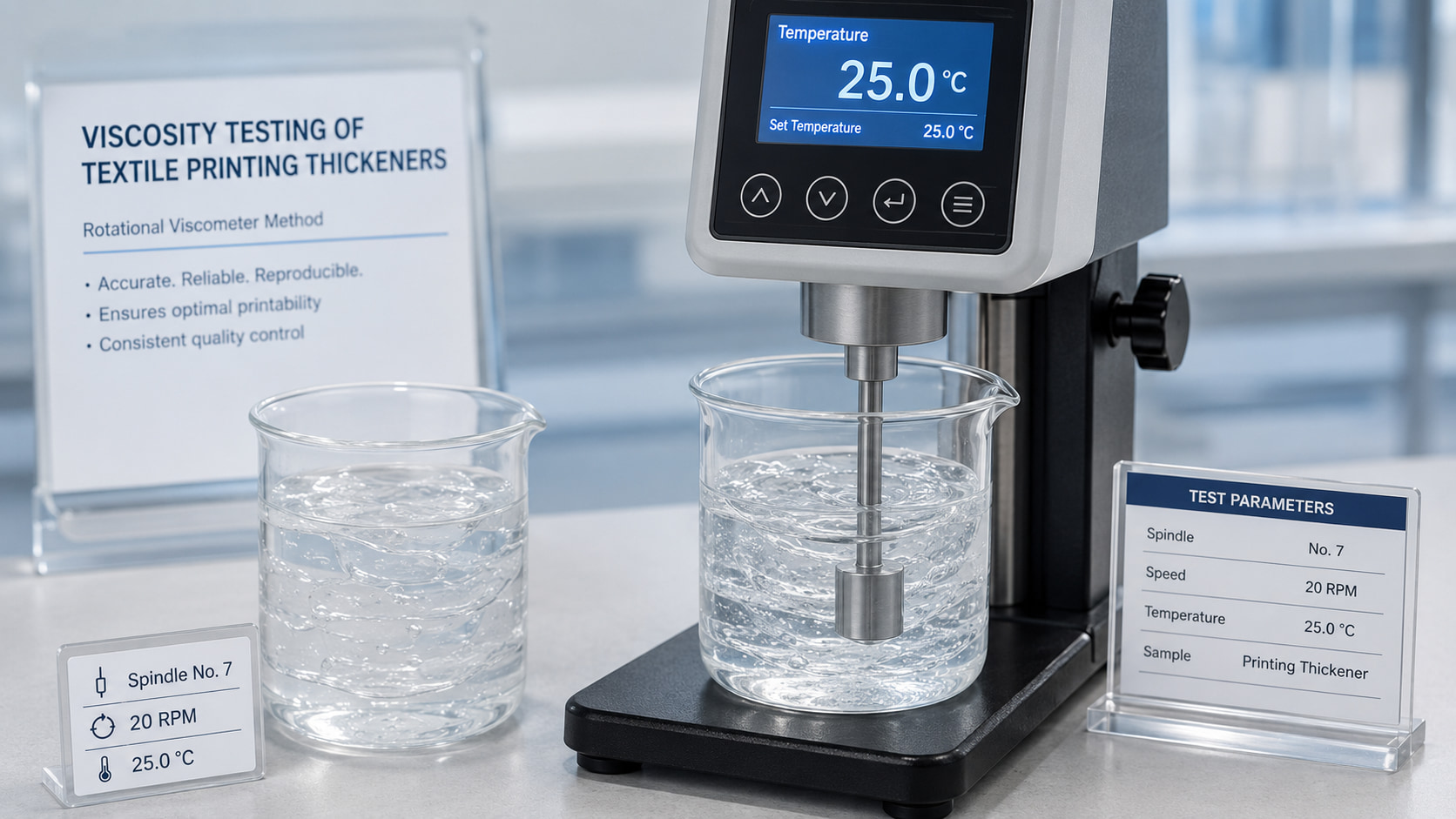
| Instrument | Brookfield, NDJ and other instruments may not give directly equivalent values. | Record the instrument model. |
| Spindle and RPM | Shear-sensitive materials can show different readings at different spindle and speed settings. | Confirm spindle number and rotational speed. |
| প্রস্তুতি | Mixing, hydration, resting time and water quality affect the test solution. | Use the same preparation method for both samples. |
| Product form | Powder, liquid and flake products may use different control indicators. | Do not force all product routes into one viscosity comparison. |
Example of a valid comparison
Compare the current product and candidate sample at the same concentration, temperature, instrument, spindle, RPM, hydration time and water condition. Then continue to an application trial. Matching laboratory viscosity alone does not confirm identical printing performance.
Cost and Performance
Compare Total Production Cost, Not Only Price per Kilogram
A lower product quotation does not automatically create a lower printing cost. Buyers should compare the cost required to produce an acceptable and repeatable metre of printed fabric.
- Actual thickener or paste dosage
- Color yield and dye or ink consumption
- Edge definition and rejected fabric rate
- Wash-off water, energy and processing time
- Fabric handle and residue
- Paste stability during production
- Machine interruption and cleaning
- Batch-to-batch recipe adjustment
More useful purchasing measure
Compare the total thickener or pretreatment cost per accepted metre of printed fabric—not only the supplier price per kilogram.
Decision Workflow
Six Steps for Selecting a Textile Printing Thickener Route
STEP 01
Identify the Process
Confirm screen or digital printing, followed by reactive, disperse, pigment, vat, discharge or another process. STEP 02
Confirm the Fabric
Record cotton, viscose, polyester, silk, wool or blend composition and relevant pretreatment conditions. STEP 03
Review Current Data
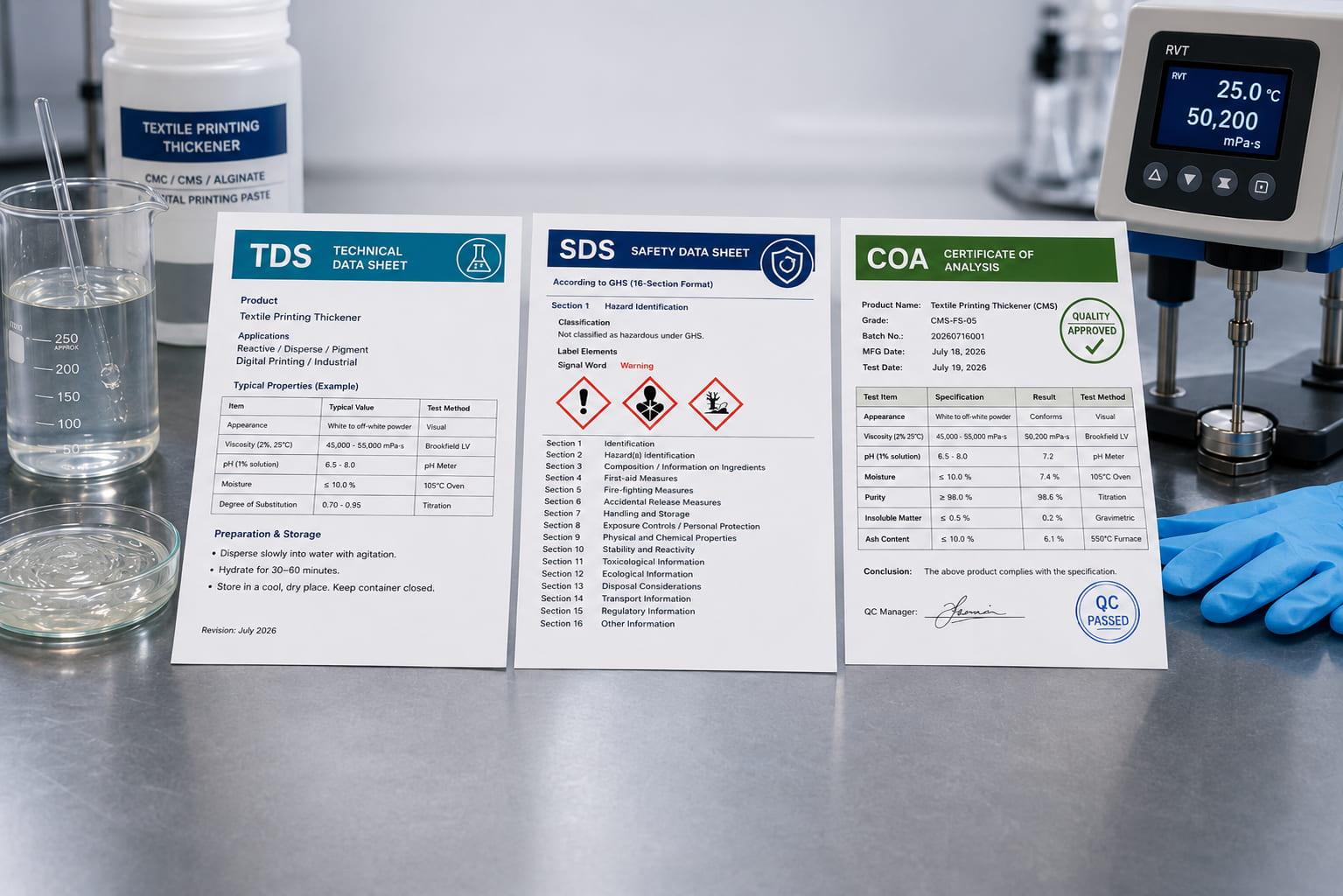
Collect the current TDS, COA, product name, dosage, viscosity method and production recipe. STEP 04
Match the Test Method
Compare samples using the same concentration, temperature, instrument, spindle, RPM and preparation method. STEP 05
Run the Print Trial
Evaluate definition, penetration, color, bleeding, wash-off, fastness, handle and paste stability. STEP 06
Confirm Bulk Supply
Confirm grade, specification, packing, batch documents, lead time and commercial conditions after trial approval.
ক্রেতার তথ্য
What to Send for Grade or Route Matching
Complete application information produces a more useful initial recommendation than a request based only on the chemical name.
- Dye or ink system
- Fabric composition
- স্ক্রিন বা ডিজিটাল প্রিন্টিং পদ্ধতি
- Current product or supplier grade
- Current TDS or COA
- লক্ষ্য সান্দ্রতা এবং পরীক্ষার পদ্ধতি
- Current dosage or preparation ratio
- প্রধান উৎপাদন সমস্যা
- Required print-performance result
- Monthly or annual demand
- Packing and destination country
- প্রয়োজনীয় TDS, SDS এবং ব্যাচের COA
FSX Chemical Support
Sample Matching Before Bulk Purchase
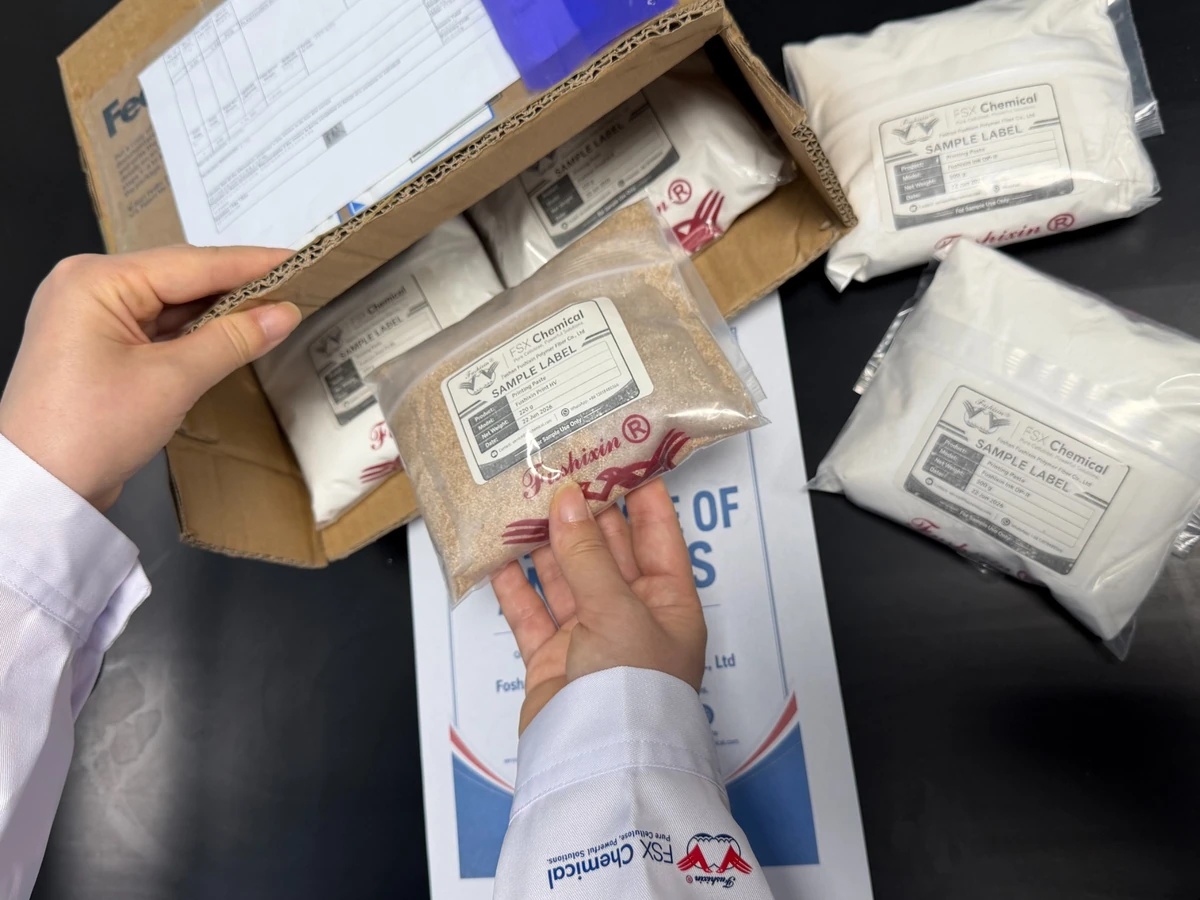
Route A · Request an FSX Sample
Send the fabric, dye or ink system, printing method, target viscosity, test conditions and expected demand. FSX Chemical can review a suitable CMC, CMS, sodium alginate or digital printing paste starting route.
Route B · Compare a Current Product
Send the current sample, TDS, COA or product information together with the production conditions. Available indicators can be reviewed before a controlled comparison trial.
Production validation remains necessary.
A matched laboratory value or small sample does not guarantee full production performance. Final suitability should be confirmed under the buyer’s own recipe, machinery, fabric and operating conditions.
ক্রেতার প্রায়শই জিজ্ঞাসিত প্রশ্নাবলী
প্রায়শই জিজ্ঞাসিত প্রশ্নাবলী
Are CMC, CMS, sodium alginate and digital printing paste interchangeable?
No. CMC, CMS and sodium alginate are polymer-based thickener routes with different chemical structures and application behavior. Digital printing paste is a process-specific pretreatment or paste system. Selection must be based on the printing process and validated through trials. Which route is usually considered first for reactive screen printing?
Sodium alginate is commonly used as the benchmark for conventional reactive printing on cotton, viscose and other suitable cellulosic fabrics. A suitable CMS route may also be evaluated, but it should be tested against the intended recipe and performance target. Can CMS replace sodium alginate?
Not in every formulation. A suitable CMS grade may provide a partial, blended or full alternative in selected processes, but color yield, definition, wash-off, dosage and fabric handle must be compared under controlled conditions. Can CMC directly replace sodium alginate in reactive printing?
It should not be assumed. The result depends on the CMC grade, degree of substitution, purity, dye chemistry and complete printing formulation. Laboratory and production trials are required before replacement. Can conventional screen-printing thickener be used for digital textile printing?
Not automatically. Digital printing relies on a different inkjet workflow and fabric pretreatment system. The product must be selected according to reactive, disperse or pigment ink, fabric, dosage, drying and fixation conditions. Can viscosity values from different TDS documents be compared directly?
Only when concentration, temperature, instrument, spindle, RPM, preparation method and units are consistent. Otherwise, similar numbers may describe very different products or test conditions. What information does FSX Chemical need for sample matching?
Provide the printing method, dye or ink system, fabric, current product, target viscosity, test method, dosage, production issue, expected demand and available TDS, COA or sample information.
এই প্রযুক্তিগত নির্দেশিকা সম্পর্কে
Prepared by the FSX Chemical Technical Content Team for textile printing mills, paste formulators, chemical distributors and procurement teams comparing CMC, CMS, sodium alginate and digital printing paste before sample testing or bulk purchasing.
এফএসএক্স কেমিক্যাল
ফোশান ফুশি xin পলিমার ফাইবার কোং, লিমিটেড.
প্রযুক্তিগত রেফারেন্সসমূহ
Supporting Research
These references provide technical context. Commercial product selection must still be confirmed using the applicable supplier TDS, batch data and customer production trial.
- Kumbasar, E. P. A. et al. “Reactive dye printing with mixed thickeners on viscose.” Dyes and Pigments. গবেষণা রেকর্ড দেখুন
- Fijan, R. et al. “Rheological properties of printing pastes and their influence on printing performance.” Carbohydrate Polymers. গবেষণা রেকর্ড দেখুন
- Ragheb, A. A. et al. Study of carboxymethyl cellulose derivatives as thickeners in discharge, resist and specialty textile printing. Carbohydrate Polymers. গবেষণা রেকর্ড দেখুন
- Soleimani-Gorgani, A. et al. Research discussing fabric pretreatment requirements for reactive-dye textile inkjet printing. Carbohydrate Polymers. গবেষণা রেকর্ড দেখুন
Compare the Right Route Before Bulk Purchase
Send your current sample or TDS together with the printing process, fabric, dye or ink system, target viscosity and trial requirements. FSX Chemical can review a suitable CMC, CMS, sodium alginate or digital printing paste starting route for controlled evaluation.
নমুনা অনুযায়ী পণ্য নির্বাচনের অনুরোধ করুন মূল্য প্রস্তাবের অনুরোধ করুন📧 ইমেইল: Service@fsxchemical.com