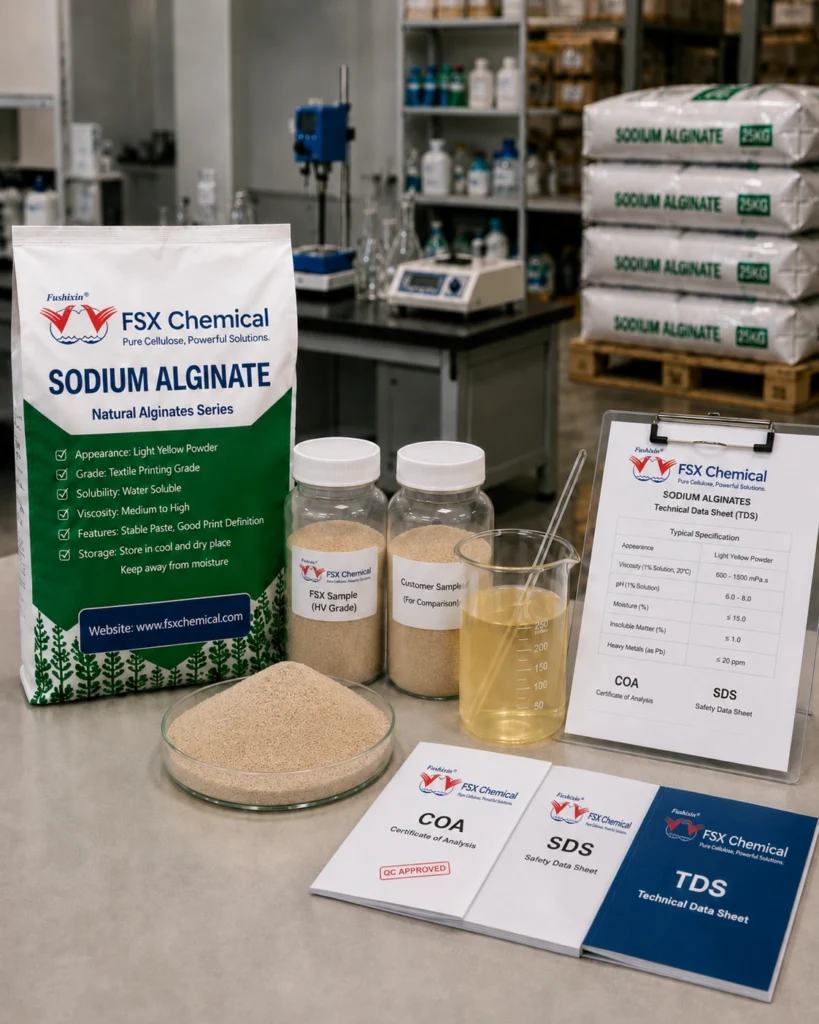
Evaluate sodium alginate for textile coating as a formulation component whose role must be defined: rheology control, temporary film formation or another tested function. Approve the exact grade against coating uniformity, adhesion, water exposure and finished-fabric requirements. A thickening result does not establish that alginate can replace a durable coating binder.
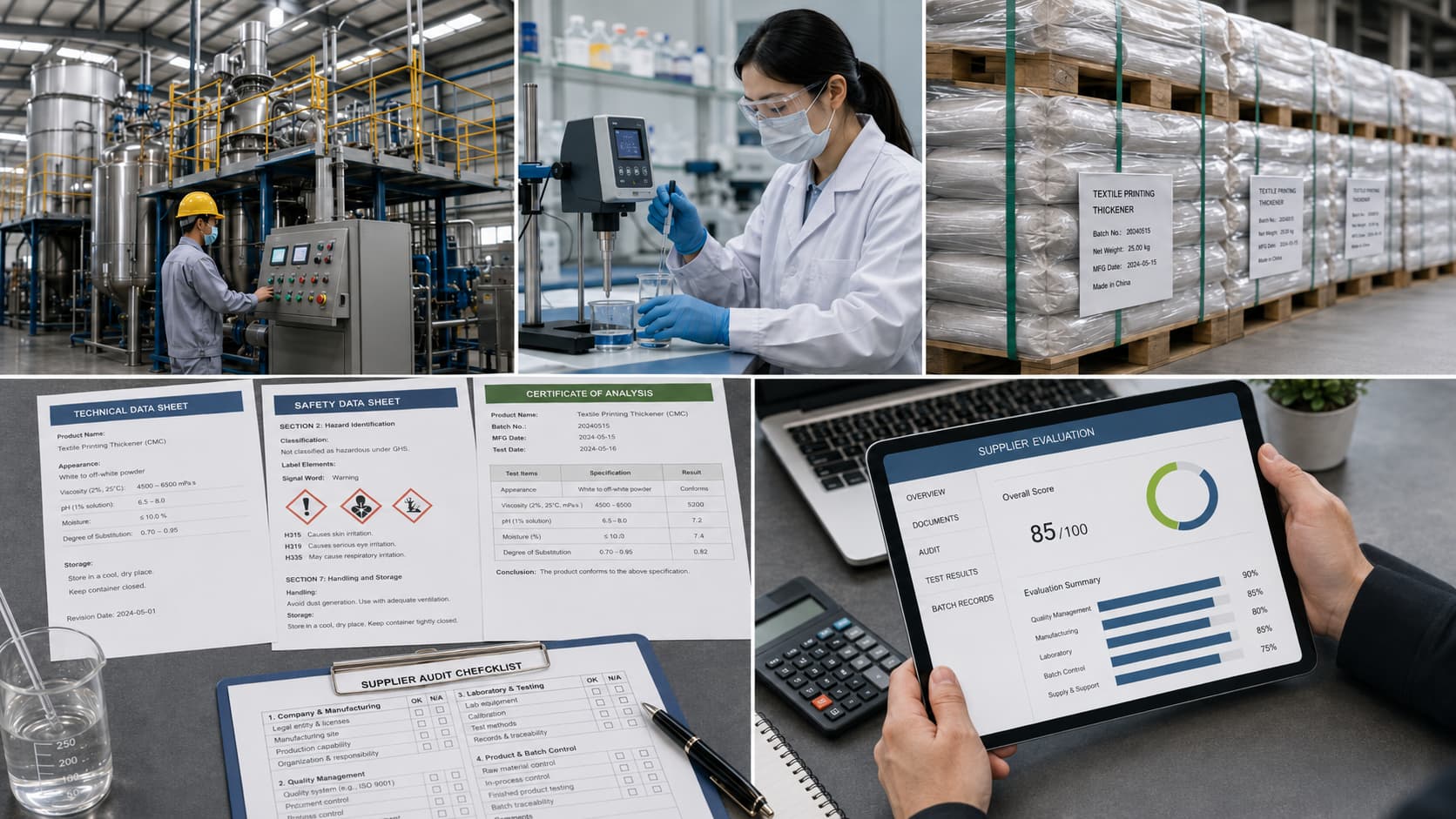
This guide explains how buyers can evaluate sodium alginate for textile coating by reviewing technical specifications, adhesion testing, film behavior, document support, sample testing, batch consistency, packaging, and export requirements.
Can Sodium Alginate Be Used for Textile Coating?
It Depends on the Formulation System
Before selecting sodium alginate for textile coating, buyers should define the target application clearly and test the grade in their own coating system.
Product Name Alone Is Not Enough
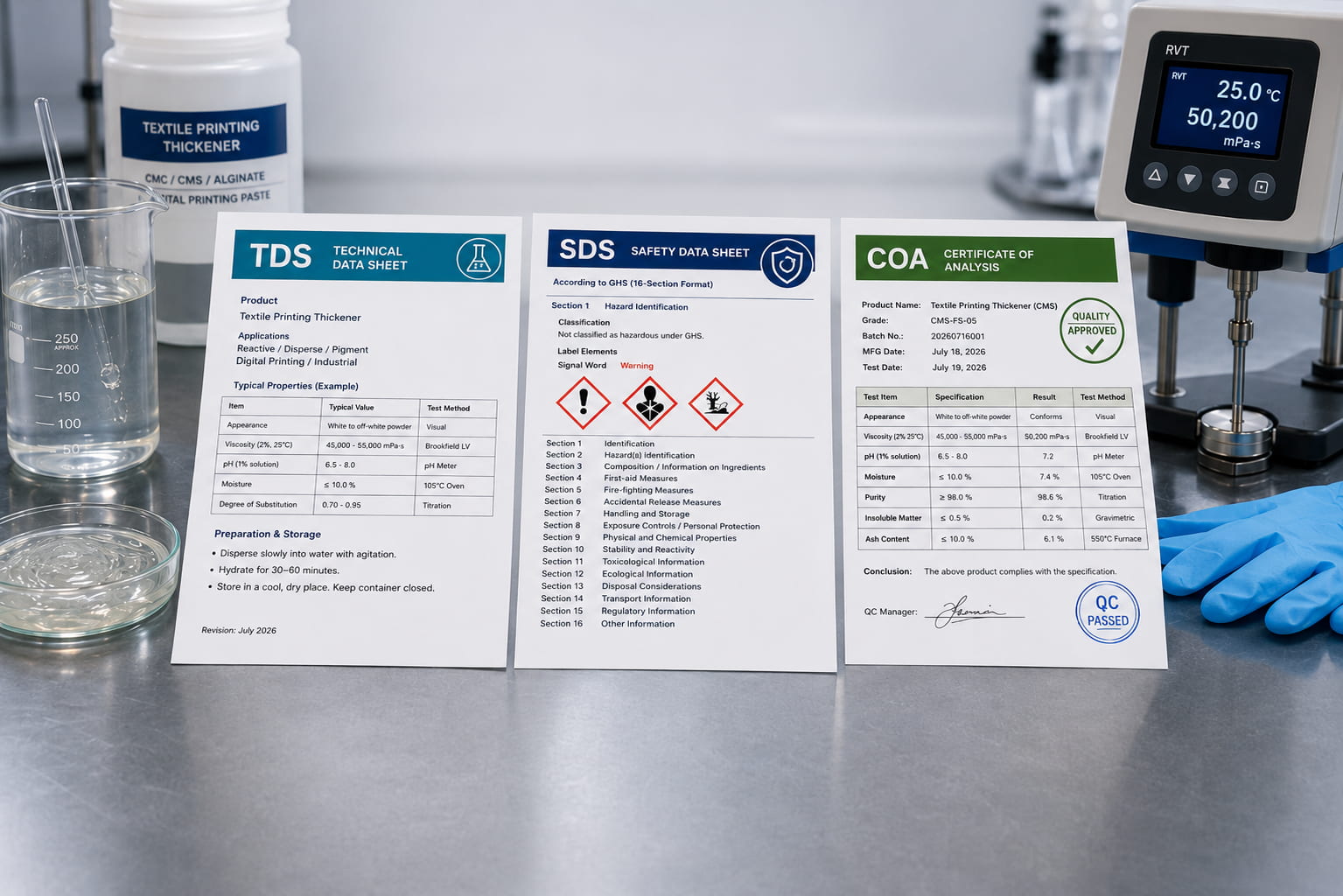
Buyers should review the TDS and test samples before discussing bulk purchase.
Adhesion and Film Behavior Must Be Tested
These results cannot be confirmed by supplier claims alone. They need testing under the buyer’s actual process conditions.
Key Application Questions Before Grade Selection
What Fabric Type Will Be Coated?
Cotton, polyester, blended fabrics, and specialty textiles may respond differently to the same coating formulation. The buyer should confirm the fabric type, surface structure, pretreatment status, and required end-use performance.
This information helps the supplier recommend a more suitable starting grade for testing.
What Is the Target Viscosity?
Coating viscosity affects application method, coating uniformity, penetration, surface leveling, and handling. Buyers should share their target viscosity range and the test method used internally.
Without the test concentration, temperature, instrument method, and unit, viscosity data from different suppliers may not be directly comparable.
What Application Method Is Used?
Knife coating, padding, screen coating, roller coating, printing-related coating, or other application methods may require different rheology and handling behavior.
The sodium alginate grade should be tested under the same application method and process conditions used in production.
What Downstream Tests Are Required?
Buyers may need to evaluate hand feel, adhesion, wash behavior, rubbing, flexibility, drying performance, storage stability, or customer-specific test requirements.
These test requirements should be shared before grade recommendation and sample testing.
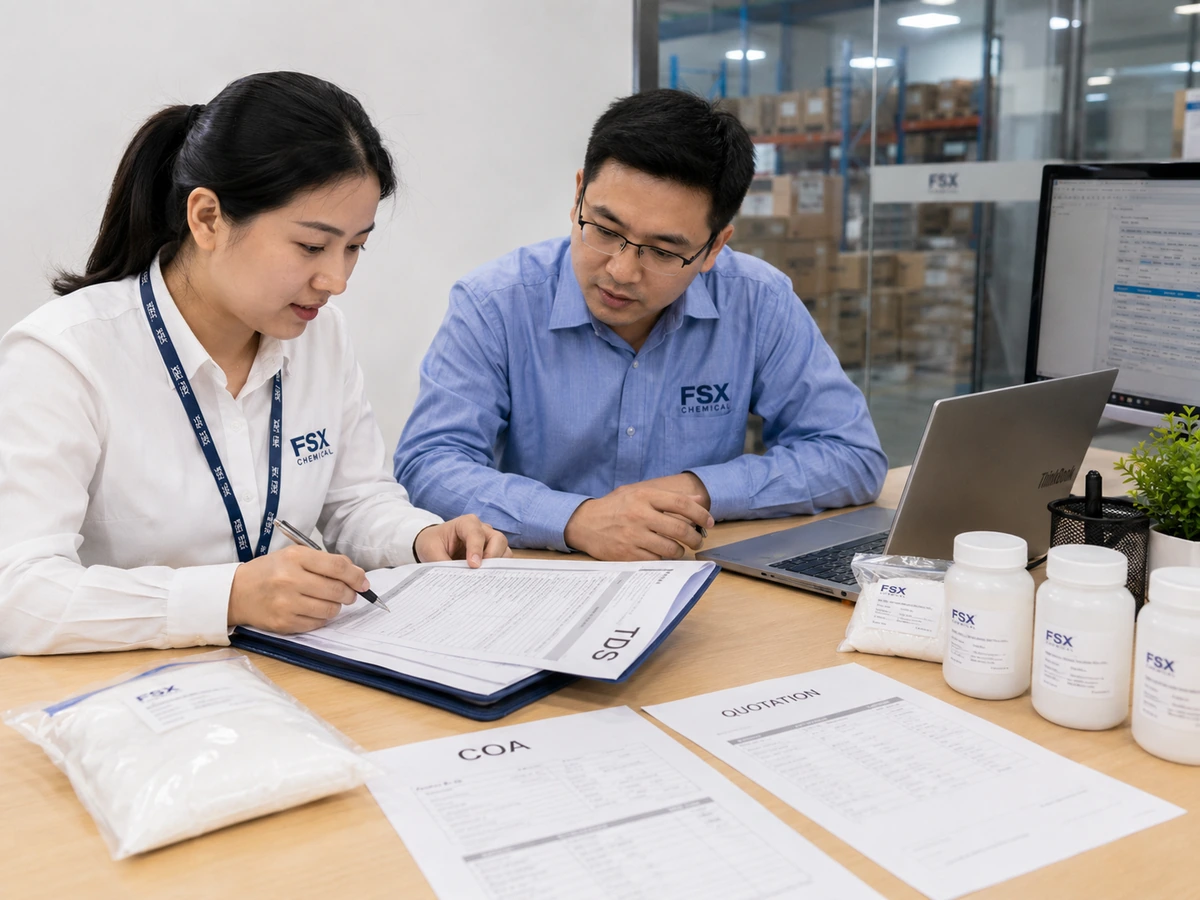
Specifications Buyers Should Review
Viscosity Grade and Testing Method
Viscosity is one of the first parameters to confirm when evaluating sodium alginate for textile coating. Buyers should check the viscosity range together with the test concentration, temperature, instrument method, and unit.
This prevents misleading comparisons between suppliers using different testing conditions.
Ukuran Jaring dan Perilaku Pelarutan
Mesh size can influence dispersion and hydration during preparation. However, actual dissolution behavior also depends on water quality, stirring speed, addition method, preparation time, and formulation conditions.
Buyers should test dissolution speed, lump formation, coating smoothness, filtration behavior, and stability under their own conditions.
Kelembapan, pH, dan Penampilan
Kelembapan, pH, dan penampilan merupakan indikator kualitas yang mendasar namun penting. Ketiga hal tersebut memengaruhi penyimpanan, penanganan, pengendalian kualitas, dan keputusan pembelian ulang.
Parameter-parameter ini harus ditinjau dalam TDS dan dikonfirmasi melalui data COA untuk setiap batch produksi.
Compatibility with Other Coating Ingredients
Sodium alginate should be tested with the buyer’s actual binder, additives, pigments, auxiliaries, pH adjusters, and process water. Compatibility issues may appear as viscosity drift, separation, lumps, poor film formation, or unstable coating behavior.
Compatibility testing is especially important when the buyer plans to replace an existing thickener or binder support material.
How to Test Sodium Alginate for Textile Coating
Test in the Actual Coating Formula
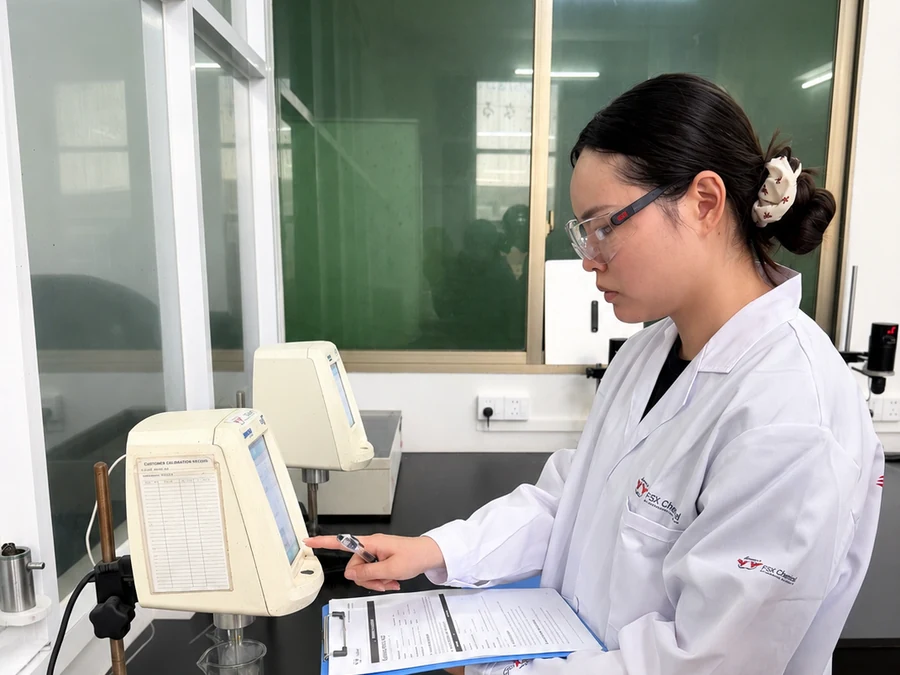
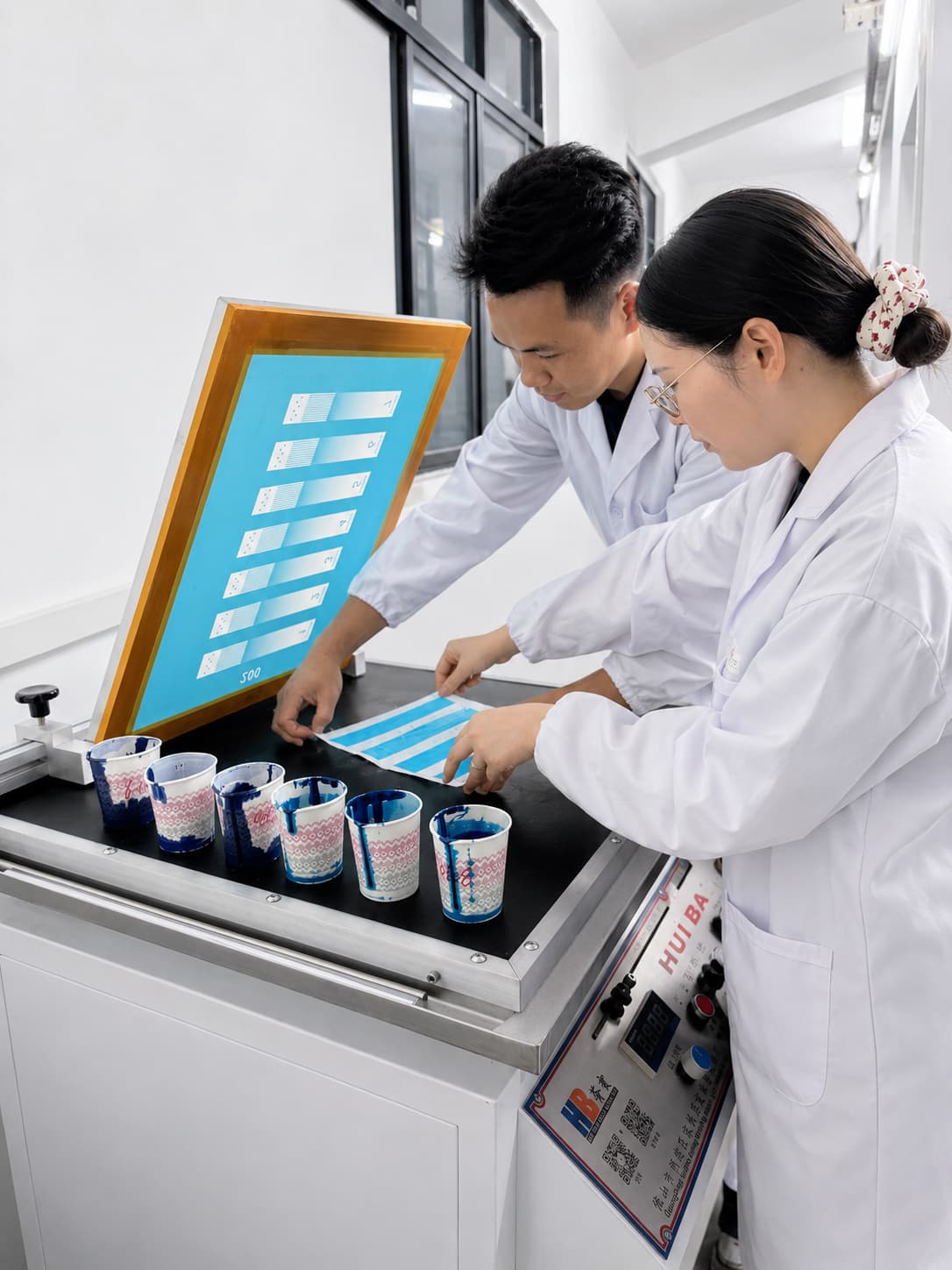
Sample testing should be done in the buyer’s own formulation whenever possible. Water quality, pH, binder type, additives, mixing order, stirring speed, and preparation time can all affect the result.
Testing only in clean water may not be enough to confirm coating suitability.
Observe Preparation and Coating Behavior
During preparation, buyers should observe dispersion, dissolution speed, lump formation, viscosity development, filtration behavior, and storage stability.
During coating, buyers should evaluate coating smoothness, leveling, penetration, surface feel, drying behavior, and defect risk.
Run Adhesion and Downstream Tests
Compare reference and candidate at a documented dry coating mass per area, substrate condition and drying or curing schedule. Record adhesion failure location, flexibility and performance after the specified water or laundering exposure. A hand-feel comparison alone is not an adhesion test.
The result should be compared against the current coating system under the same test conditions.
Confirm Sample-to-Bulk Consistency
Before confirming a bulk order, buyers should check whether the approved sample and bulk shipment will follow the same viscosity range, specification range, packaging format, batch traceability, and COA requirements.
This helps reduce the risk of sample approval but unstable production performance later.
Dokumen yang Harus Diminta oleh Pembeli
TDS untuk Tinjauan Spesifikasi
The Technical Data Sheet helps buyers review the standard product specification. It should include appearance, viscosity, mesh size where applicable, moisture, pH, storage conditions, and testing method.
The TDS supports initial grade screening, but it should not replace sample testing in the buyer’s own coating formulation.
COA untuk Konfirmasi Batch
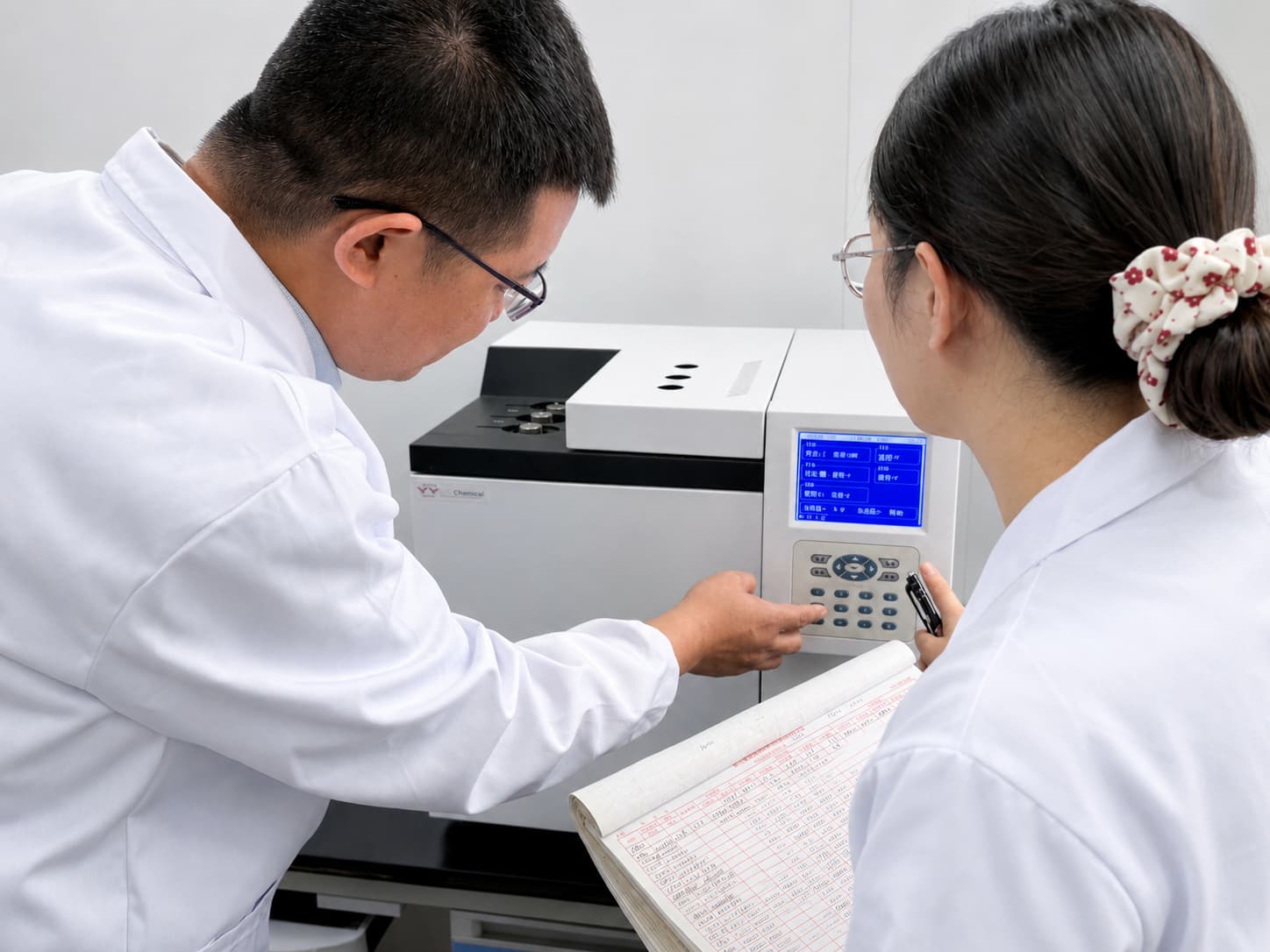
A COA reports selected supplier test results for an identified batch. Check the product code, lot, method and acceptance range; it does not independently verify every coating property or replace an application trial.
Pembeli dapat membandingkan catatan COA dari berbagai pengiriman untuk memeriksa apakah parameter-parameter utama tetap berada dalam kisaran yang telah disepakati.
SDS for Handling and Shipment Review
The Safety Data Sheet supports handling, storage, transport, and internal safety review. For international purchasing, SDS may also be needed for shipment and customs-related communication.
Buyers should make sure the SDS product name and supplier information match the order documents.
Additional Customer or Compliance Documents
If the buyer needs restricted-substance statements, environmental documents, customer audit questionnaires, or third-party certification support, those requirements should be discussed before order confirmation.
A practical supplier should clearly explain which documents can be provided and which claims require formal third-party testing or certification.
How to Compare Sodium Alginate with Other Coating Materials
Compare Under the Same Formulation Conditions
When replacing a rheology modifier, first retain the approved binder system and compare candidate dosage within that role. Replacing acrylic or polyurethane binder is a different formulation project and requires separate durability validation. Do not compare these functions simply at equal weight or equal viscosity.
Important comparison points may include viscosity, stability, coating smoothness, adhesion, film flexibility, surface feel, drying behavior, wash or handling performance, and total use cost.
Avoid Absolute Material Claims
No single material is suitable for every textile coating system. Sodium alginate, synthetic binders, cellulose derivatives, starch-based materials, and blended systems each have different advantages and limits depending on the formulation.
Buyers should avoid decisions based only on claims such as “more sustainable,” “non-toxic,” “better adhesion,” or “lower cost” unless supported by documents and their own test results.
Check Total Use Cost
Total use cost may include dosage, preparation time, filtration behavior, production stability, coating defects, rework, downstream testing, and customer approval.
Buyers should compare total use cost rather than only the raw material unit price.
Common Issues and Troubleshooting Points
Poor Adhesion
Poor adhesion may be related to fabric surface, binder system, coating thickness, drying conditions, pH, or grade mismatch. Buyers should adjust the full formulation and test again before rejecting or approving a grade.
Lumps or Poor Dissolution
Lumps may be related to fast addition, insufficient dispersion, unsuitable stirring, water quality, or preparation method. Buyers should record preparation conditions during each test.
Unstable Viscosity
Viscosity drift may be caused by water quality, temperature, pH, preparation time, formulation compatibility, or grade mismatch. Buyers should compare test conditions with the supplier’s viscosity method.
Surface Defects After Coating
Surface defects may be related to filtration, foam, leveling, fabric surface, coating method, or drying conditions. The sodium alginate grade should be evaluated as part of the full coating system.
Separate Coating Adhesion from Water Resistance
For an appropriate rubber- or plastics-coated fabric, ISO 2411:2024 provides a coating-adhesion test framework. Confirm that its scope and specimen preparation suit the coating; a thin temporary alginate finish may need a different validated method. Agree acceptance limits with the buyer before testing.
| Pertanyaan | Rekor | What It Does Not Prove |
|---|---|---|
| Does the coating adhere? | Conditioned specimen, test geometry, force per width and failure mode | Resistance to prolonged wet exposure |
| Does it tolerate the end use? | Defined water, wash or flex exposure followed by the relevant test | Durability in every environment |
| Is the comparison fair? | Same fabric, binder basis, dry deposit and thermal history | Equivalent function at the same liquid viscosity |
How FSX Chemical Supports Textile Coating Buyers
Langkah Selanjutnya
- Share Your Coating Application — tell us your fabric type, coating method, binder system, target viscosity, and current formulation.
- Clarify Performance Requirements — explain adhesion, film behavior, hand feel, wash or handling tests, and customer-specific requirements.
- Minta Pencocokan Grade — ask for a suitable sodium alginate grade based on your actual textile coating or formulation conditions.
- Ajukan Permohonan TDS — review viscosity, mesh size where applicable, pH, moisture, appearance, storage conditions, and testing method.
- Ajukan Permohonan COA — pastikan apakah data batch sesuai dengan rentang spesifikasi yang telah disepakati sebelum pengiriman.
- Minta Sampel — test the recommended grade in your own coating formulation before confirming bulk orders.
- Memastikan Keabsahan Dokumen Pengemasan dan Ekspor — periksa ukuran karung, label, jejak pelacakan batch, SDS, faktur, daftar kemasan, dan dokumen lain yang diperlukan sebelum pengiriman.
- Hubungi Tim Teknis Kami — discuss whether sodium alginate is suitable for your textile coating or related formulation application📧 Email: service@fsxchemical.com