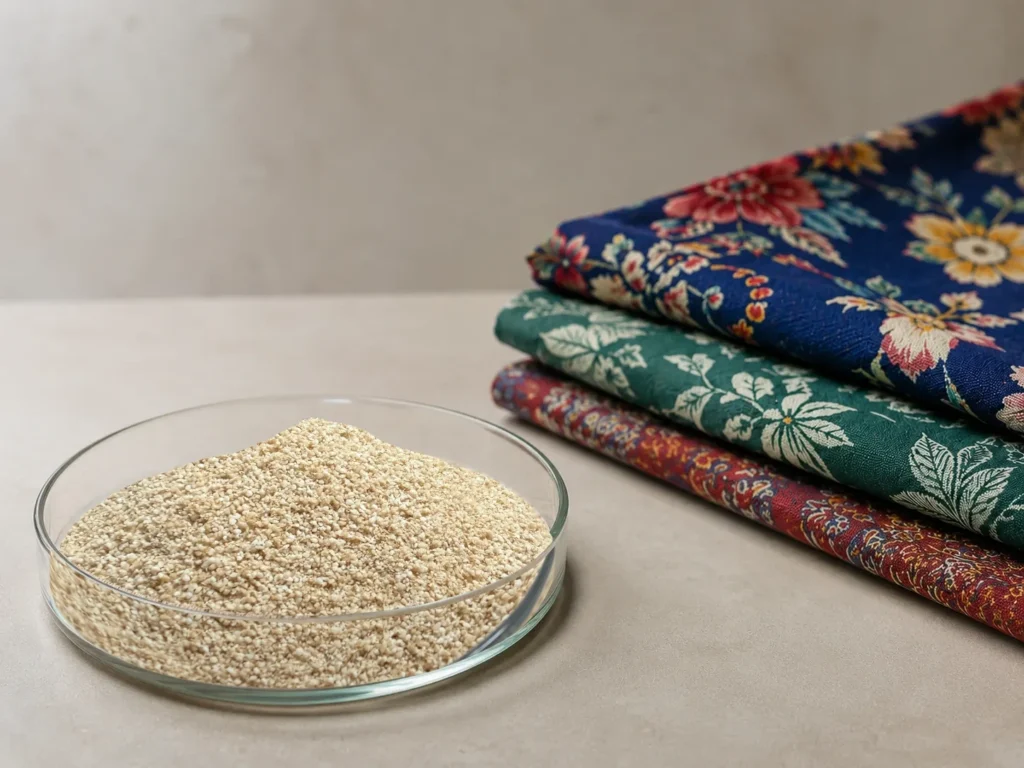
This guide explains how buyers can evaluate sodium alginate printing paste through technical specifications, application testing, document review, batch consistency, packaging, and export requirements.
What Is Sodium Alginate Printing Paste Used For?
Reaktif Tekstil Baskı Pastası
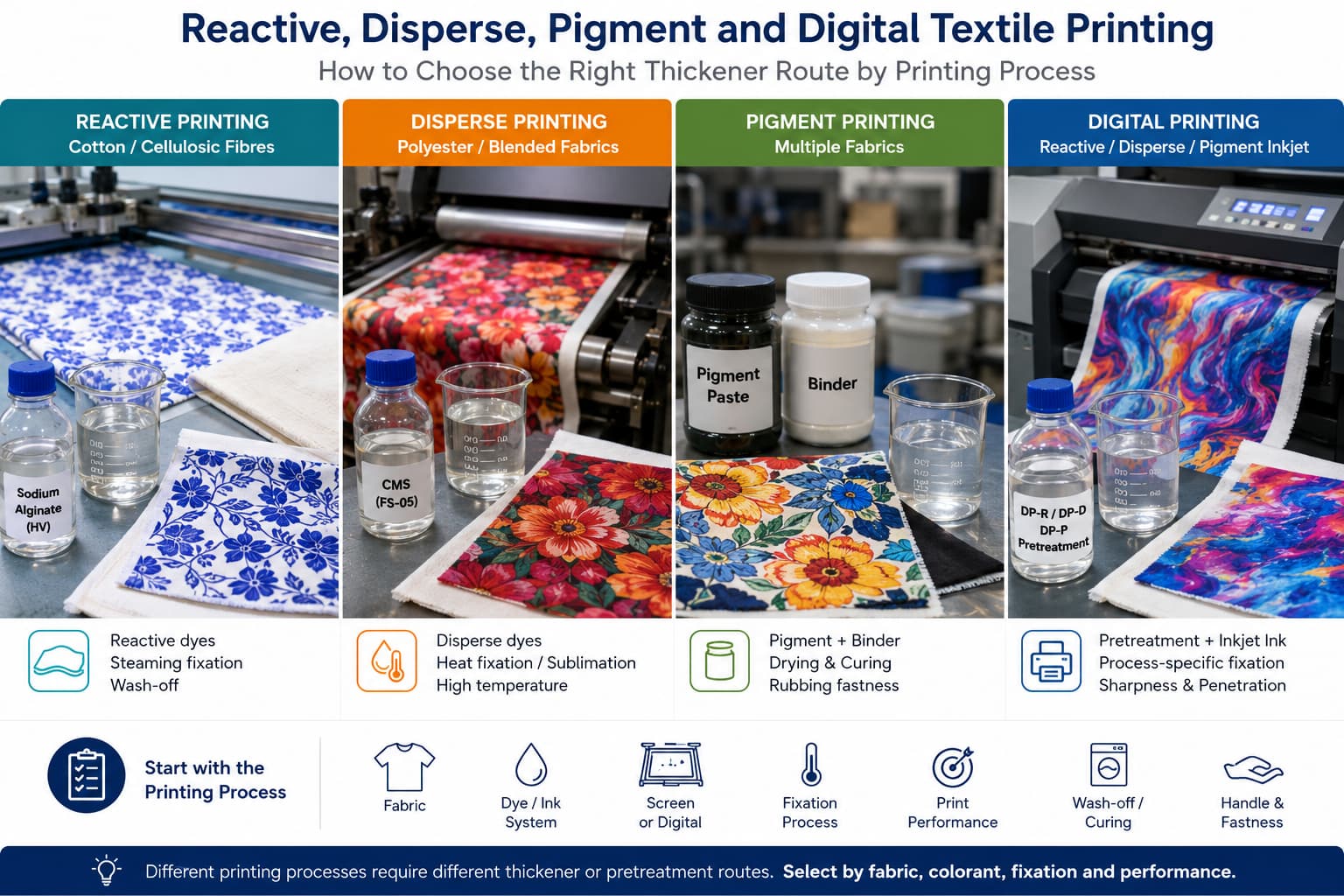
The suitable grade depends on the buyer’s dye system, fabric type, printing method, target paste viscosity, preparation conditions, and production requirements.
Screen Printing and Rotary Printing
For screen printing and rotary printing, buyers often focus on paste smoothness, screen passing, filtration, viscosity stability, and handling during production.
The sodium alginate grade should be tested under the buyer’s real preparation conditions, including water quality, stirring speed, addition method, preparation time, and paste concentration.
Digital Printing Pretreatment or Related Formulations
Some buyers may evaluate sodium alginate in digital printing pretreatment or related water-based textile formulations. In these cases, compatibility and stability testing are especially important.
A grade suitable for reactive printing paste should not be assumed to fit every digital printing or pigment formulation without sample testing.
Why Product Claims Need Practical Verification
“High Performance” Depends on the Buyer’s Formula
Performance in textile printing depends on the full system, including fabric type, dyes or pigments, auxiliaries, pH, water quality, preparation process, printing equipment, drying conditions, and washing process.
For this reason, buyers should test sodium alginate printing paste in their own formulation before confirming bulk purchase.
“Low Clogging” Should Be Checked by Filtration and Screen Passing
Low clogging performance cannot be confirmed by supplier wording alone. Buyers should check dissolution, paste smoothness, lump formation, filtration behavior, and screen passing under their own process conditions.
These observations are important for both laboratory testing and production-scale evaluation.
Compliance or Environmental Claims Need Documents
If a buyer needs restricted-substance statements, environmental documents, customer audit questionnaires, or third-party certification support, those requirements should be discussed before order confirmation.
Pratik bir tedarikçi, hangi belgelerin temin edilebileceğini ve hangi beyanların resmi bir üçüncü taraf testi veya sertifikasyonu gerektirdiğini açıkça açıklamalıdır.

Alıcıların Gözden Geçmesi Gereken Temel Özellikler
Viskozite Sınıfı ve Test Yöntemi
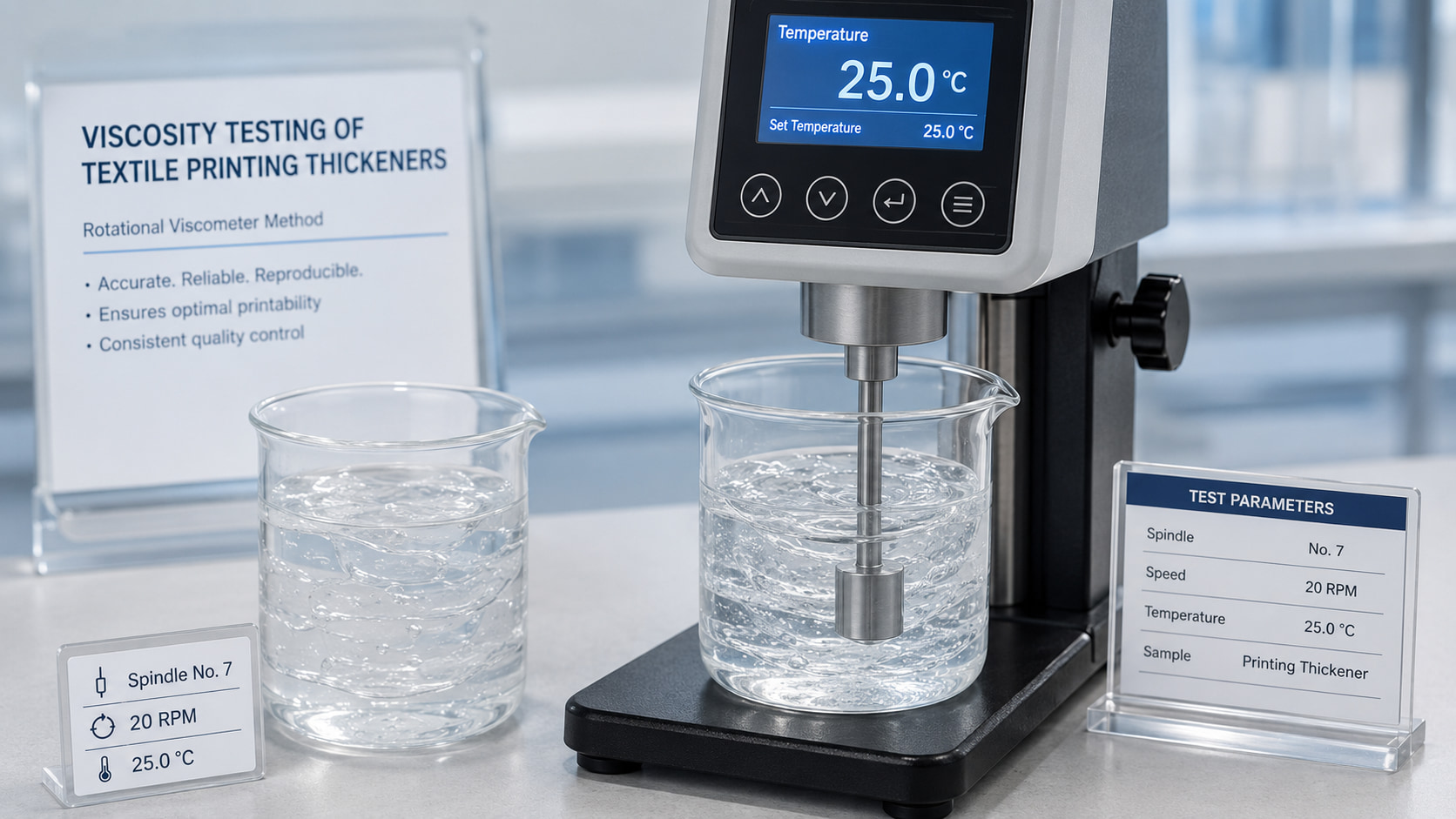
Viscosity is one of the most important parameters for sodium alginate printing paste. Buyers should review the viscosity range together with the test concentration, temperature, instrument method, and unit.
Net bir viskozite test yöntemi olmadan, farklı tedarikçilerden gelen değerler doğrudan karşılaştırılamayabilir.
Ağ Gözü Boyutu ve Çözünme Davranışı
Ağ gözü boyutu, macun hazırlığı sırasında dağılım ve hidrasyonu etkileyebilir. Bununla birlikte, gerçek çözünme davranışı aynı zamanda su kalitesine, karıştırma hızına, ilave yöntemine, hazırlık süresine ve formülasyon koşullarına da bağlıdır.
Alıcılar, kendi üretim koşulları altında çözünme hızını, topaklanma durumunu, macunun pürüzsüzlüğünü ve süzülme davranışını test etmelidir.
Nem, pH ve Görünüm
Nem, pH ve görünüm temel ancak önemli kalite göstergeleridir. Bunlar, depolama, elleçleme, iç kalite kontrol ve tekrar satın almayı etkiler.
Bu parametreler, TDS’de gözden geçirilmeli ve her üretim partisi için COA verileriyle teyit edilmelidir.
Compatibility with Dyes, Pigments and Auxiliaries
Sodium alginate printing paste should be tested with the buyer’s actual dye or pigment system, auxiliaries, pH adjusters, water quality, and fabric type.
Compatibility issues may appear as viscosity drift, separation, poor leveling, filtration difficulty, uneven printing, or unstable color performance.
How to Test Sodium Alginate Printing Paste
Gerçek Baskı Formülünde Test
Sample testing should be done in the buyer’s own printing paste formulation whenever possible. Dyes, pigments, auxiliaries, water quality, pH, stirring method, paste concentration, and standing time can all affect final paste behavior.
Sadece temiz suda yapılan testler, sodyum aljinat türünün üretime uygun olup olmadığını doğrulamak için yeterli olmayabilir.
Observe Preparation and Printing Behavior
During testing, buyers should observe dissolution speed, paste smoothness, lump formation, filtration behavior, viscosity stability, screen passing, leveling, penetration, and pattern edge control.
Bu pratik gözlemler, genellikle Teknik Veri Sayfası’nda (TDS) gösterilen teknik özellik verileri kadar önemlidir.
Mevcut Ürünle Karşılaştırın
If the buyer is replacing an existing sodium alginate, printing paste, CMC, CMS, or blended thickener, the new sample should be tested against the current product under the same conditions.
Bu, alıcının toplu tedarik konusunu görüşmeye başlamadan önce önerilen kalitenin teknik açıdan uygun olup olmadığını değerlendirmesine yardımcı olur.
Örnek ile Toplu Ürün Arasındaki Tutarlılığı Doğrulama
Toplu siparişi onaylamadan önce, alıcılar onaylanmış numune ile toplu sevkiyatın aynı viskozite aralığı, elek gözü boyutu, teknik özellik aralığı, ambalaj biçimi, parti izlenebilirliği ve COA gerekliliklerine uygun olup olmadığını kontrol etmelidir.
Bu, numunenin onaylanmasının ardından daha sonra toplu üretimde istikrarsız performans ortaya çıkma riskini azaltmaya yardımcı olur.
Alıcıların Talep Etmesi Gereken Belgeler
Teknik Şartname İncelemesi için TDS
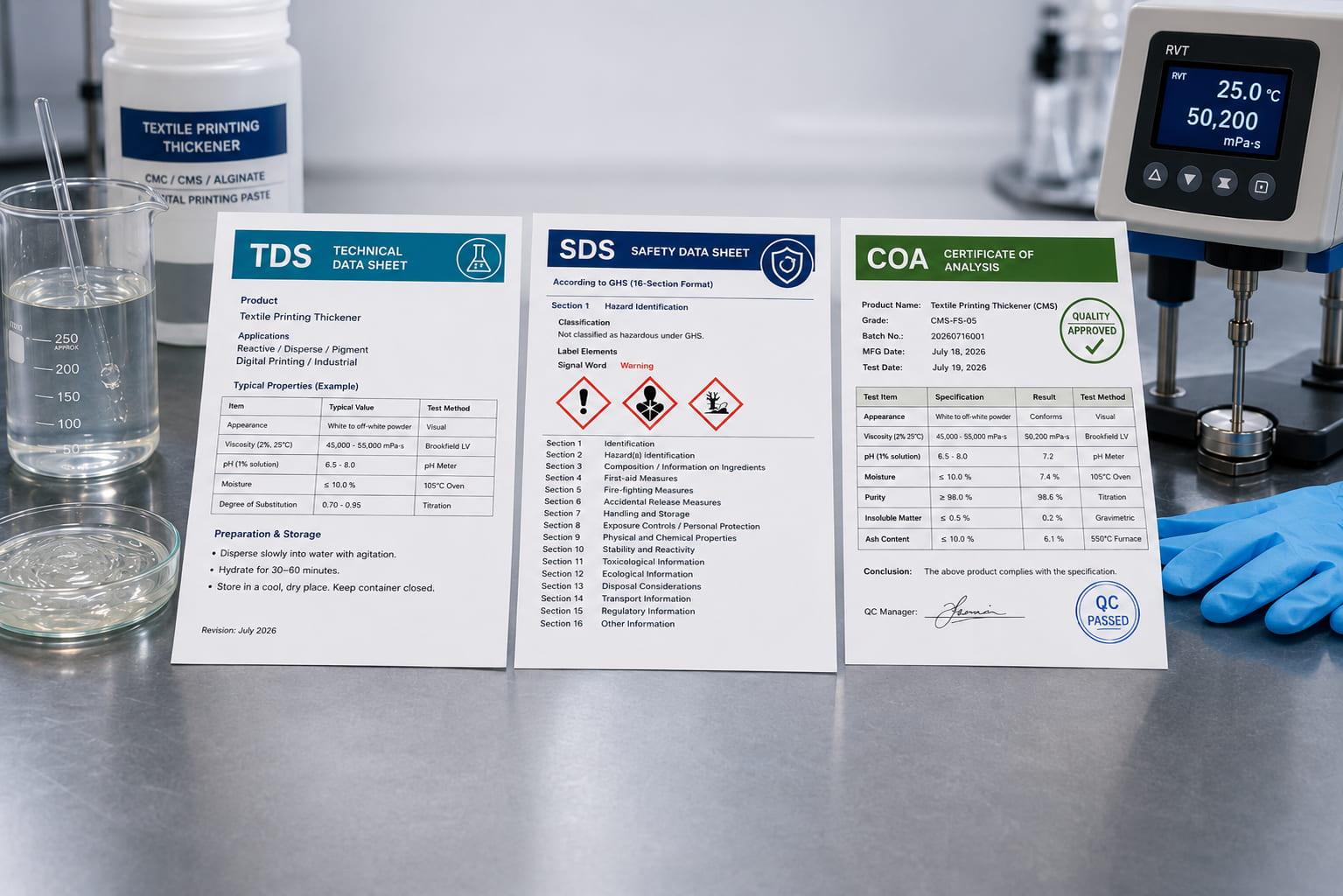
Teknik Veri Sayfası, alıcıların standart ürün özelliklerini incelemelerine yardımcı olur. Bu sayfada görünüm, viskozite, elek gözü boyutu, nem, pH, depolama koşulları ve test yöntemi gibi bilgiler yer almalıdır.
TDS, ilk kalite kontrolünü destekler; ancak alıcının kendi baskı formülasyonunda yapılacak numune testlerinin yerini almamalıdır.
Toplu Onay için COA
Analiz Sertifikası, belirli bir üretim partisine ait gerçek verileri teyit eder. Bu belge, toplu siparişler, tekrar alımlar, distribütör tedarikleri ve kurum içi kalite kontrolü açısından önemlidir.
Alıcılar, sevkiyatlar arasındaki COA kayıtlarını karşılaştırarak temel parametrelerin kararlaştırılan aralıkta kalıp kalmadığını kontrol edebilirler.
Taşıma ve Sevkiyatla İlgili Güvenlik Bilgi Formu (SDS) İncelemesi
Güvenlik Bilgi Formu (SDS), ürünün kullanımı, depolanması, nakliyesi ve şirket içi güvenlik değerlendirmelerine destek sağlar. Uluslararası satın alımlarda ise sevkiyat ve gümrükle ilgili iletişim için SDS’ye ihtiyaç duyulabilir.
Alıcılar, SDS’deki ürün adı ve tedarikçi bilgilerinin sipariş belgelerindeki bilgilerle uyumlu olduğundan emin olmalıdır.
Ek Müşteri veya Uyum Belgeleri
Alıcının kısıtlanmış madde beyanlarına, çevre belgelerine, müşteri denetim anketlerine, sertifika kopyalarına veya üçüncü taraf test desteğine ihtiyacı olması durumunda, bu gereklilikler sipariş onayı öncesinde görüşülmelidir.
The supplier should explain which documents can be provided, which product or site they apply to, and which claims require formal third-party testing.
How to Compare Sodium Alginate Printing Paste Suppliers
Compare Equivalent Grades and Applications
Before comparing suppliers, buyers should confirm whether each quotation is based on the same application, viscosity range, testing method, packaging, order quantity, and trade terms.
A lower price may not be useful if it is based on a different grade or an unsuitable specification.
Review Batch Traceability
Batch traceability helps buyers manage quality control, repeat orders, and customer feedback. Buyers should confirm batch number, label information, COA availability, and packaging format before shipment.
Ambalaj ve İhracat Belgelerini Doğrulama
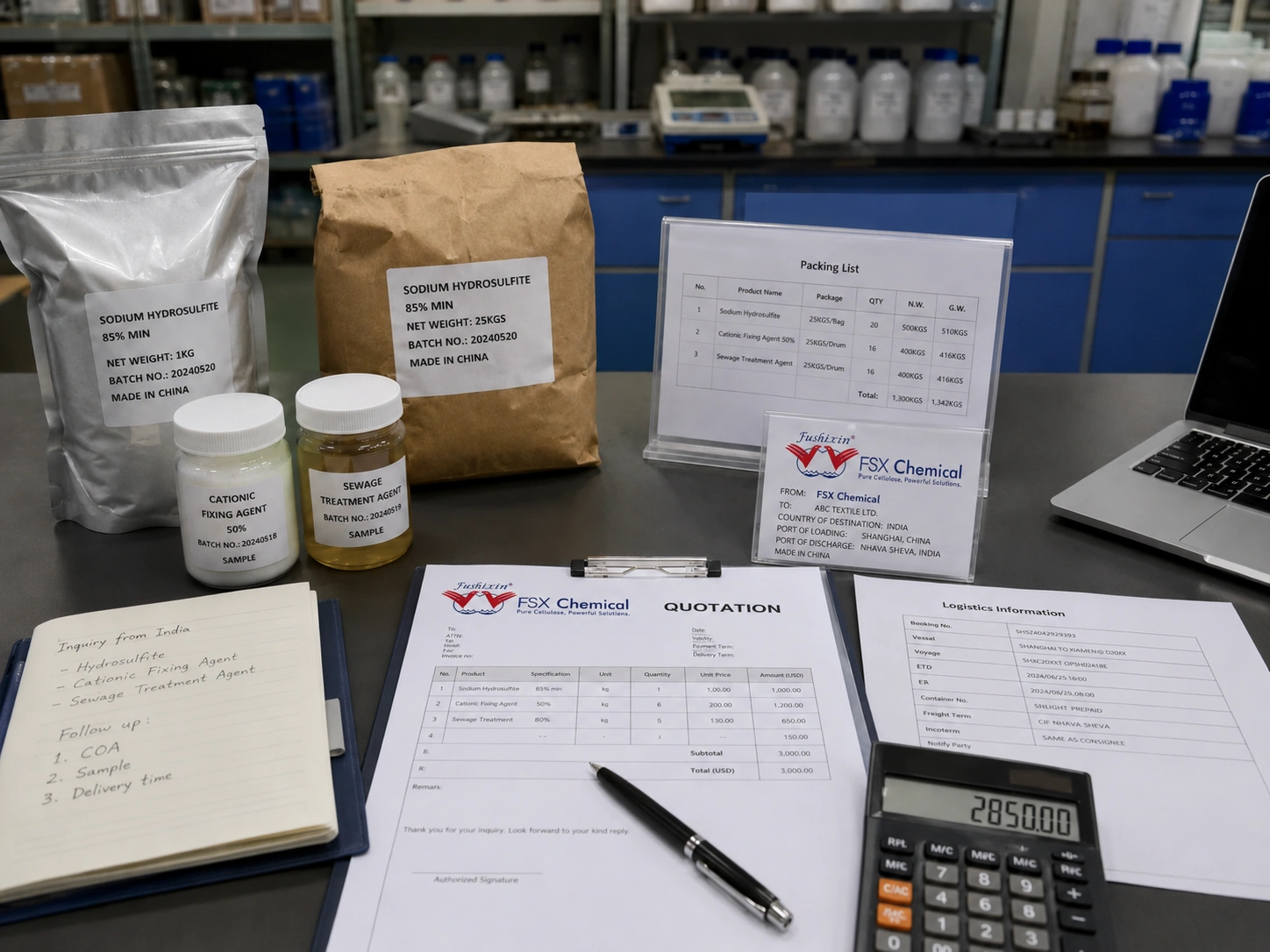
Packaging size, bag type, net weight, pallet requirements, labels, invoice, packing list, COA, SDS, and other export-related documents should be confirmed before shipment.
Belge gereklilikleri, hedef ülkeye, ürün türüne ve alıcının kurum içi satın alma sürecine göre değişiklik gösterebilir.
Avoid Broad Claims Without Test Results
Claims such as “high-performance,” “eco-friendly,” “low clogging,” “high color fastness,” or “stable for long-term storage” should be supported by documents, agreed test methods, or the buyer’s own evaluation results when they are important to purchasing decisions.
Sık Karşılaşılan Sorunlar ve Çözüm Yolları
Lumps or Poor Dissolution
Lumps may be related to fast addition, insufficient dispersion, unsuitable stirring, water quality, or preparation method. Buyers should record preparation conditions during sample testing.
Ekran Engelleme veya Yetersiz Filtreleme
Screen blocking or filtration difficulty may come from poor dissolution, formulation incompatibility, particle contamination, unsuitable viscosity, or insufficient filtration before printing.
Kararsız Viskozite
Viskozite sapması, su kalitesi, sıcaklık, pH, bekleme süresi, formülasyon uyumluluğu veya kalite uyuşmazlığından kaynaklanabilir.
Alıcılar, üretim koşullarını tedarikçinin viskozite test yöntemiyle karşılaştırmalıdır.
Uneven Printing or Poor Pattern Control
Tek bir hammaddeyi değiştirmeden önce, baskı sisteminin tamamı gözden geçirilmelidir.
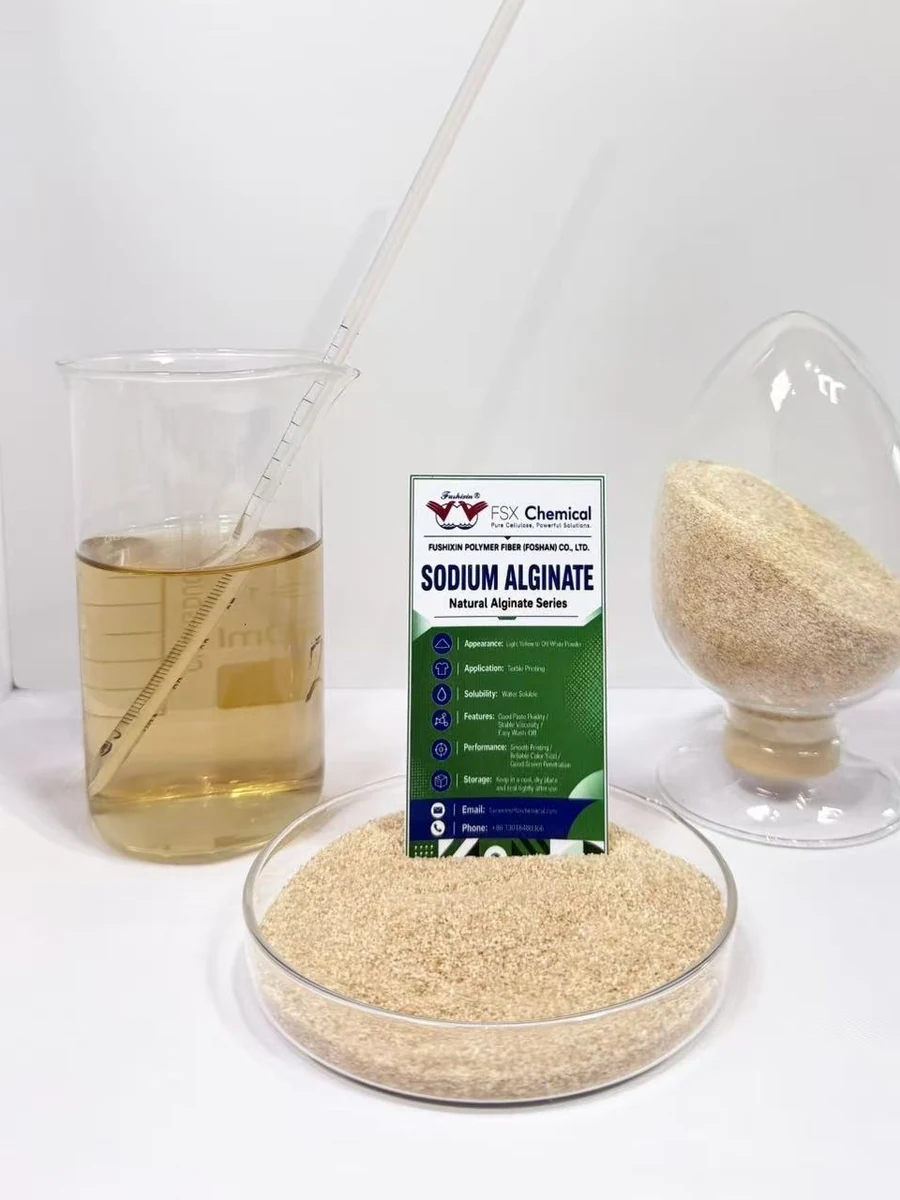
How FSX Chemical Supports Sodium Alginate Printing Paste Buyers
We do not suggest choosing sodium alginate printing paste only by product name, broad performance claims, compliance claims, or price. The recommended sodium alginate grade should be reviewed through technical documents and tested in the buyer’s own printing system before bulk purchase.
Sonraki Adımlar
- Baskı Sürecinizi Paylaşın — tell us whether you use reactive printing, screen printing, rotary printing, digital pretreatment, pigment printing, or another process.
- Clarify Fabric and Formula Conditions — provide fabric type, dye or pigment system, auxiliaries, water quality, pH, and preparation method.
- Hedef Viskozitenizi Belirleyin — Viskozite aralığını, test konsantrasyonunu, sıcaklığı, kullanılan ölçüm yöntemini ve mümkünse mevcut ürün sınıfını belirtiniz.
- Not Eşleştirme Talebi — ask for a suitable sodium alginate printing paste grade based on your actual production conditions.
- TDS Talep Et — viskozite, elek gözü boyutu, pH, nem, görünüm, depolama koşulları ve test yöntemini gözden geçirin.
- COA Talep Et — sevkiyat öncesinde parti verilerinin kararlaştırılan spesifikasyon aralığına uygun olup olmadığını doğrulayın.
- Bir SDS talep edin — işleme, depolama, nakliye ve ürün bilgilerini kontrol edin.
- Örnek İsteyin — test the recommended grade in your own printing formulation before confirming bulk orders.
- Ambalaj ve İhracat Belgelerini Doğrulama — Sevkiyat öncesinde çanta boyutunu, etiketleri, parti izlenebilirliğini, faturayı, sevk irsaliyesini, COA’yı, SDS’yi ve diğer gerekli belgeleri kontrol edin.
- Teknik Ekibimizle İletişime Geçin — discuss which sodium alginate printing paste grade is suitable for your textile printing başvuru📧 E-posta: Service@fsxchemical.com